• Skip to primary navigation
  • Skip to main content
  • Skip to primary sidebar

Carnegie Museum of Natural History

One of the Four Carnegie Museums of Pittsburgh

  • Visit
    • Buy Tickets
    • Visitor Information
    • Exhibitions
    • Events
    • Dining at the Museum
    • Celebrate at the Museum
    • Powdermill Nature Reserve
    • Event Venue Rental
  • Learn
    • Field Trips
    • Educator Information
    • Programs at the Museum
    • Bring the Museum to You
    • Guided Programs FAQ
    • Programs Online
    • Climate and Rural Systems Partnership
  • Research
    • Scientific Sections
    • Science Stories
    • Science Videos
    • Senior Science & Research Staff
    • Museum Library
    • Science Seminars
    • Scientific Publications
    • Specimen and Artifact Identification
  • About
    • Mission & Commitments
    • Directors Team
    • Museum History
  • Tickets
  • Give
  • Shop

extinction

October 22, 2018 by wpengine

This is not about the Anthropocene, or is it?

by Gil Oliveira

“How many times do you need to see the evidence? How many times must the point be made? We’re causing our own extinction. Too many red lines have been crossed. […] We’re going to have to adjust to new threats we can’t even imagine. We’ve entered a new era.”

This is not about climate change, mass extinction, or ocean acidification. Rather, this quote comes from the closing scene of the recent movie Jurassic World: Fallen Kingdom. It’s about the beginning of a new fictional Jurassic-Age, where humans and dinosaurs must learn to coexist.

sunset

The final scene is visually spectacular. But what really caught my attention was the idea connecting dinosaurs and a new era. Similarly, the Anthropocene is a newly proposed time period when geological and human timescales are colliding. It entails Earth’s distant past, and also invites us to consider our actions and decisions in light of their effects long into the future. In order to link past, present and future, and make sense of it, humans construct narratives.

In a time of uncertainty, when we are indeed crossing red lines at the planetary scale in real life, one can’t help but wonder what will the future look like? What narratives do we need to live better in this new world? At their most fundamental level, narratives speak about the human condition (and its limits), so how can we better understand the role of humans as actors capable of affecting the entire Earth System?

Yuval Noah Harari, the author of Sapiens. A Brief History of Humankind, posits that humans rule the world because they are the only animal that can cooperate flexibly in large numbers (see Harari’s website). But, he asks, what is the mysterious glue that enables millions of us to cooperate seemingly more effectively than other animal societies. The glue, he argues, is the stories we tell ourselves. It is our ability to create and believe in fiction. As Jonathan Gottschall puts it: sapiens are “the great ape with the storytelling mind.”

Humans use stories to understand the world. You and I think in them. Today, dominant cultural narratives gravitate around unlimited technology, endless progress and growth, and ferocious competition. Museums have not been spared. They too have been telling stories, focused on the law of the jungle and the survival of the fittest, on nature as a realm distinct from human life, on the progress of evolution and humans as its most highly evolved product. These imaginaries have contributed to shape our representations of the world. They shape our attitudes, our beliefs, our behaviors.

Coming back to Jurassic World: Fallen Kingdom, the last scene shows a scientist appearing before a congressional committee and declaring that “Humans and Dinosaurs are now going to be forced to co-exist. These creatures were here before us and if we’re not careful they’re going to be here after.” This new pretend era seems to be characterized by a dependence between dinosaurs and humans, and humility regarding the human place in the world.

This moral may have relevance to the Anthropocene. The stories we tell and consume shape us profoundly. Stories can help us connect with the non-human world. Like science fiction, museums too are powerful spaces for storytelling. They hold great potential for generating new stories and sensibilities that may help adapt our understanding and connection to nature to better serve us in confronting the challenges of the Anthropocene.

Gil Oliveira is a postgraduate student working as an intern in the section of the Anthropocene at the Carnegie Museum of Natural History. Museum employees are encouraged to blog about their unique experiences working at the museum.
Filed Under: Blog Tagged With: Anthropocene, climate change, dinosaurs, extinction

January 11, 2018 by wpengine

Humans and Nature: The Pizzly

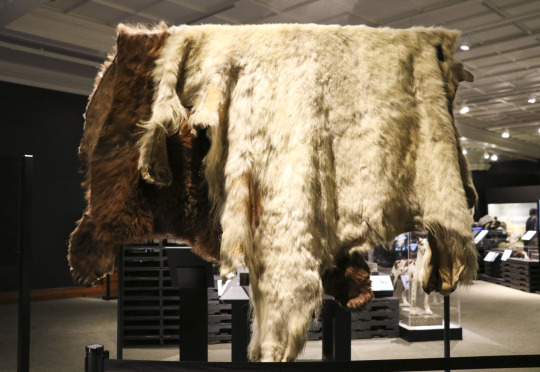
bear pelt displayed in We Are Nature

When you think of climate change, the image that might come to mind is a distressed polar bear perched on a tiny piece of ice in a warming ocean. In fact, a Google image search for “global warming” will show a handful of those exact images.

However moving the image, it doesn’t tell the full story of how climate change is affecting this particular species. As arctic ice shrinks, polar bears have been migrating inland into new territories to hunt. Warmer temperatures are also driving grizzlies north into the same territories, which has let to interbreeding and a new hybrid type of bear—the pizzly.

Pelts and skulls of both types of bears and the story of the impact climate change is having on them is on display in We Are Nature: Living in the Anthropocene, a new exhibition at Carnegie Museum of Natural History that explores the interconnectedness of humanity and nature in the Anthropocene.


The Anthropocene is the current geological era in which humans are making a profound impact on the geological strata. While the term itself is still being debated by geologists, the museum is embracing it as a social and cultural tool for exploring the broad sum effect humans are having on the planet in the exhibition We Are Nature: Living in the Anthropocene—open now through summer 2018.

Filed Under: Blog Tagged With: extinction, We Are Nature, We Are Nature: Living in the Anthropocene

December 4, 2017 by wpengine

Rethinking the Dodo

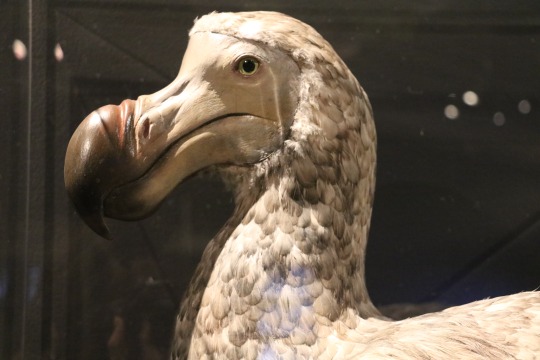
Dodo found in the hall of birds

by Barbara Klein

History—not to mention humanity—has not been kind to the dodo bird. As the story goes, the demise of this flightless, clueless, graceless big galoot of a bird was no surprise (except, one imagines, to the dodos themselves).

A descendant of the pigeon, dodos were living the good life on the island of Mauritius (located east of Madagascar in the Indian Ocean), but that all changed when Dutch settlers began arriving in the late 1590s.

With no natural predators to fear, the feathered creatures greeted the new arrivals as friends. The settlers, however, were not quite as amicable. They soon realized how comically easy it was to walk up to an unsuspecting bird and club it over the head. Dodos, it’s what was for dinner.

Speaking of dinner. Where ships are docked, inevitably rats and cats disembark. From the dodo’s perspective, that just meant more mouths to feed. No longer ruling the roost, the dodo’s days were numbered. In fact, it took less than 100 years for the dodo to become a no go.

Back then, the idea of wiping out an entire species forever was inconceivable in the truest sense of the word. It was a concept no one considered.

But times have changed, right? Well, yes and no. Although we humans now understand the consequences of our actions, that knowledge is not always enough to quell our baser instincts.

With that in mind, the exhibition We Are Nature: Living in the Anthropocene is asking visitors to vote for the creature most likely not to succeed. Contenders for this dubious distinction are the black rhino, Sumatran elephant, pangolin, leatherback turtle, and mountain gorilla.

Votes are tallied in the form of donations to the World Wildlife Fund.

Admittedly, this sounds like a joke, and not a particularly funny one. But it is no laughing matter. The goal here is to help humans understand how their actions—or inactions—can make all the difference in the world. It is truly life or death for these animals.


The Anthropocene is the current geological era in which humans are making a profound impact on the geological strata. While the term itself is still being debated by geologists, the museum is embracing it as a social and cultural tool for exploring the broad sum effect humans are having on the planet in the exhibition We Are Nature: Living in the Anthropocene—open now through summer 2018.

Filed Under: Blog Tagged With: Birds, extinction, We Are Nature, We Are Nature: Living in the Anthropocene

August 11, 2016 by wpengine

Fedexia striegeli

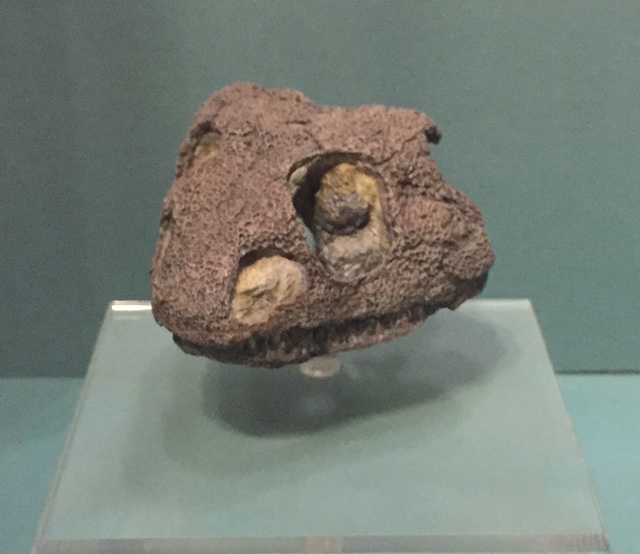
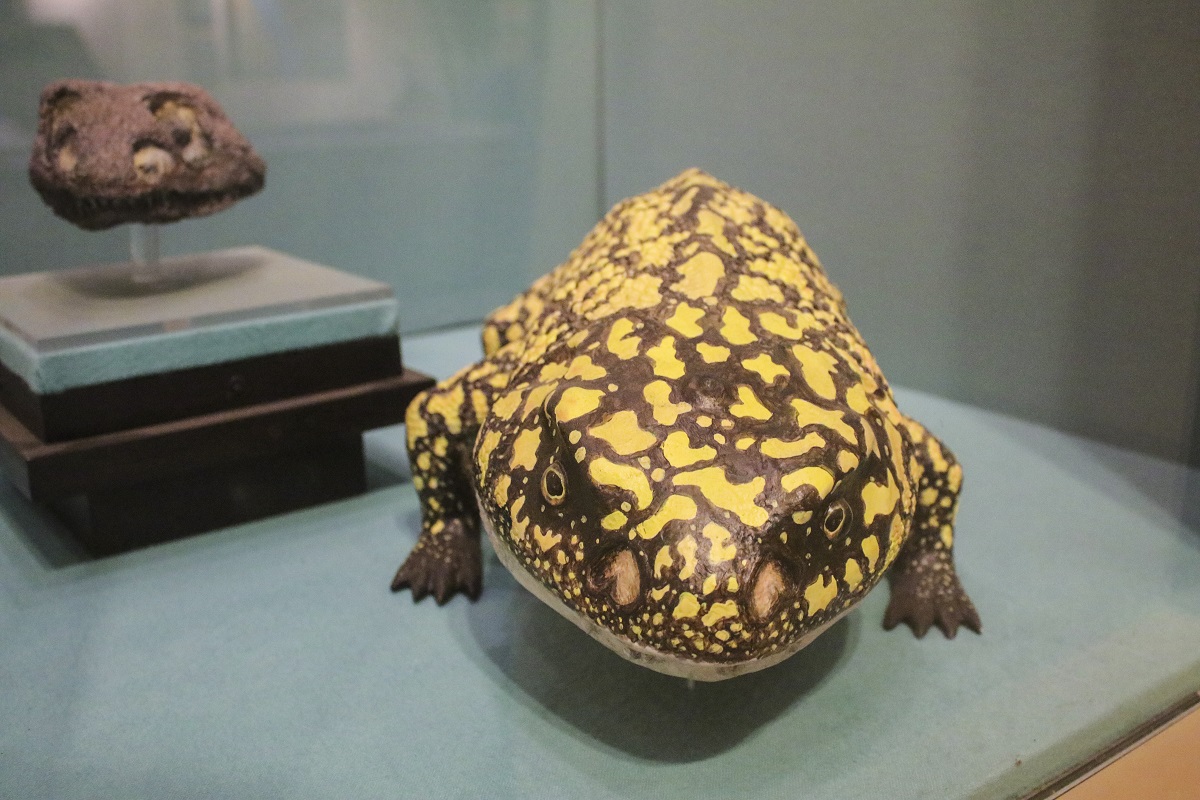
Fedexia striegeli fossil
Fedexia striegeli

Fedexia striegeli was a member of an extinct amphibian group called trematopids, which lived in the tropical Pittsburgh climate almost 305 million years ago.

The only known specimen of Fedexia is a skull discovered by University of Pittsburgh student Adam Striegel during a geology class field trip in 2004. In 2010, collections manager Amy Henrici, now-retired Vertebrate Paleontology curator Dave Berman, and other museum scientists described the new species.

This fossil provided scientists with important clues that helped them understand more about prehistoric climate change and amphibian evolution. It showed that amphibians began spending more time on land about 305 million years ago — 20 million years earlier than scientists had previously thought!

(photo by Hayley Pontia)

Filed Under: Blog Tagged With: amphibians, Benedum Hall of Geology, discovery, extinction, fossils, Pittsburgh

sidebar

About

  • Mission & Commitments
  • Directors Team
  • Museum History

Get Involved

  • Volunteer
  • Membership
  • Carnegie Discoverers
  • Donate
  • Employment
  • Events

Bring a Group

  • Groups of 10 or More
  • Birthday Parties at the Museum
  • Field Trips

Powdermill

  • Powdermill Nature Reserve
  • Powdermill Field Trips
  • Powdermill Staff
  • Research at Powdermill

More Information

  • Image Permission Requests
  • Science Stories
  • Accessibility
  • Shopping Cart
  • Contact
  • Visitor Policies
One of the Four Carnegie Museums | © Carnegie Institute | Privacy Policy | Terms of Use | Accessibility
Rad works here logo