
Pholidophorus macrocephalus is a bony fish that lived about 150 million years ago in the late Jurassic Period of the Mesozoic Era.
Carnegie Museum of Natural History
One of the Four Carnegie Museums of Pittsburgh
Pholidophorus macrocephalus is a bony fish that lived about 150 million years ago in the late Jurassic Period of the Mesozoic Era.
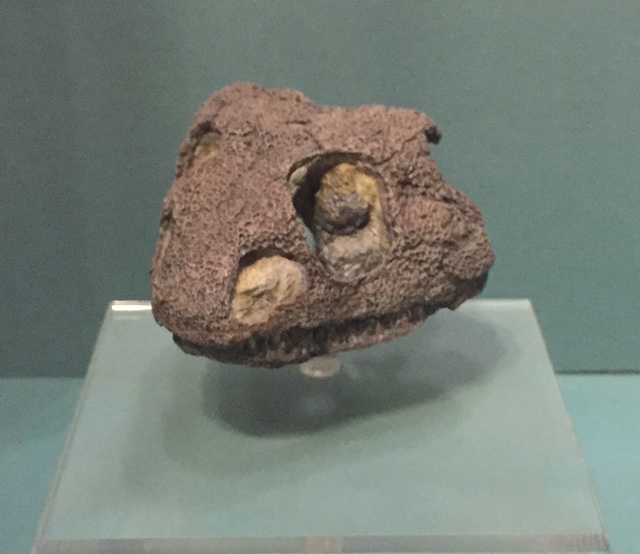
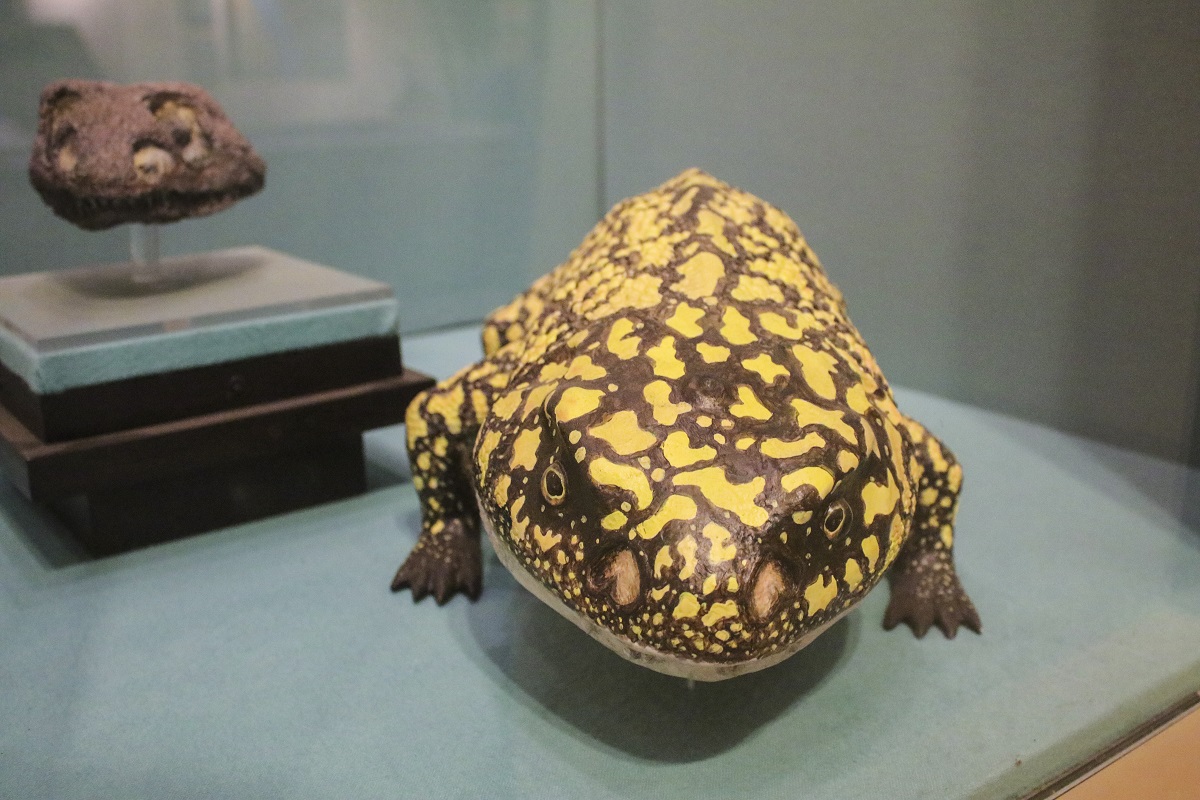
Fedexia striegeli was a member of an extinct amphibian group called trematopids, which lived in the tropical Pittsburgh climate almost 305 million years ago.
The only known specimen of Fedexia is a skull discovered by University of Pittsburgh student Adam Striegel during a geology class field trip in 2004. In 2010, collections manager Amy Henrici, now-retired Vertebrate Paleontology curator Dave Berman, and other museum scientists described the new species.
This fossil provided scientists with important clues that helped them understand more about prehistoric climate change and amphibian evolution. It showed that amphibians began spending more time on land about 305 million years ago — 20 million years earlier than scientists had previously thought!
(photo by Hayley Pontia)
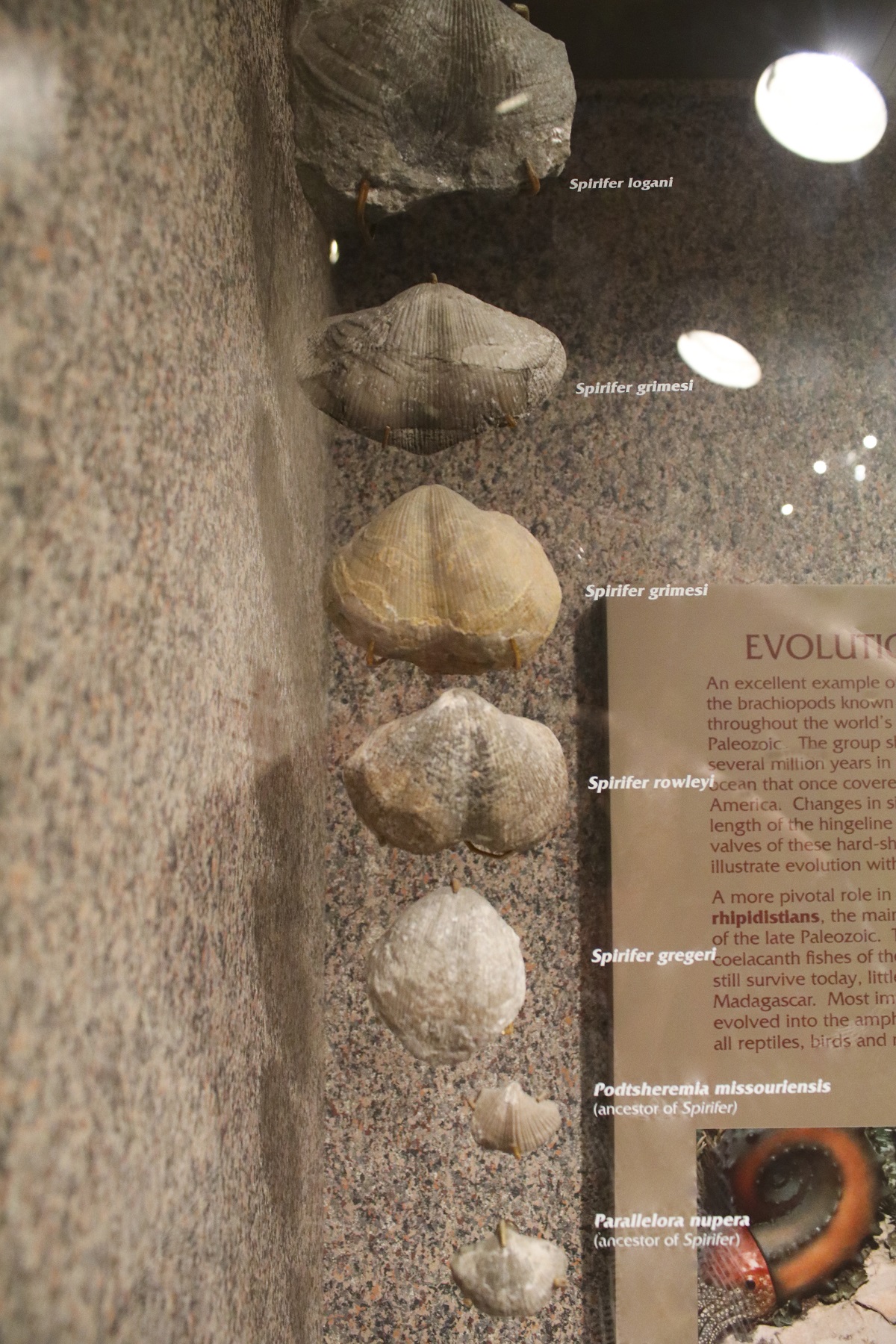
Fossilized shells on display in Benedum Hall of Geology at Carnegie Museum of Natural History in Pittsburgh.
(photo by Hayley Pontia)
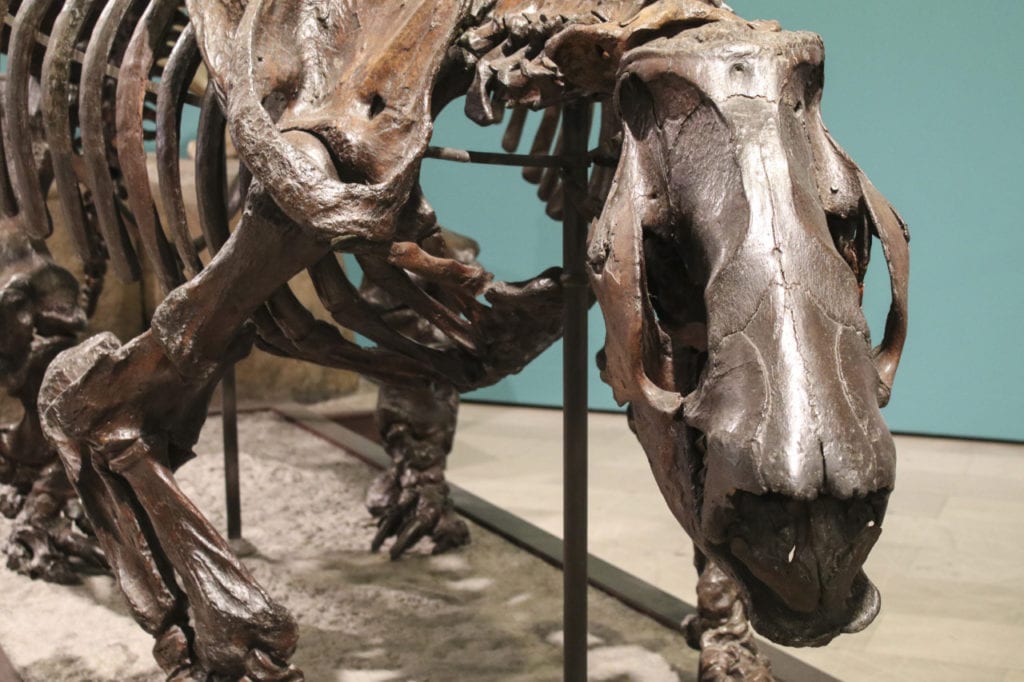 Paramylodon harlani (Harlan’s Ground Sloth) are pretty different from their relatives, the modern Central and South American tree sloths.
These large herbivores roamed North America during the Pleistocene. They had bone-studded hides and sharp claws to protect them from predators.
(Photo by Hayley Pontia)
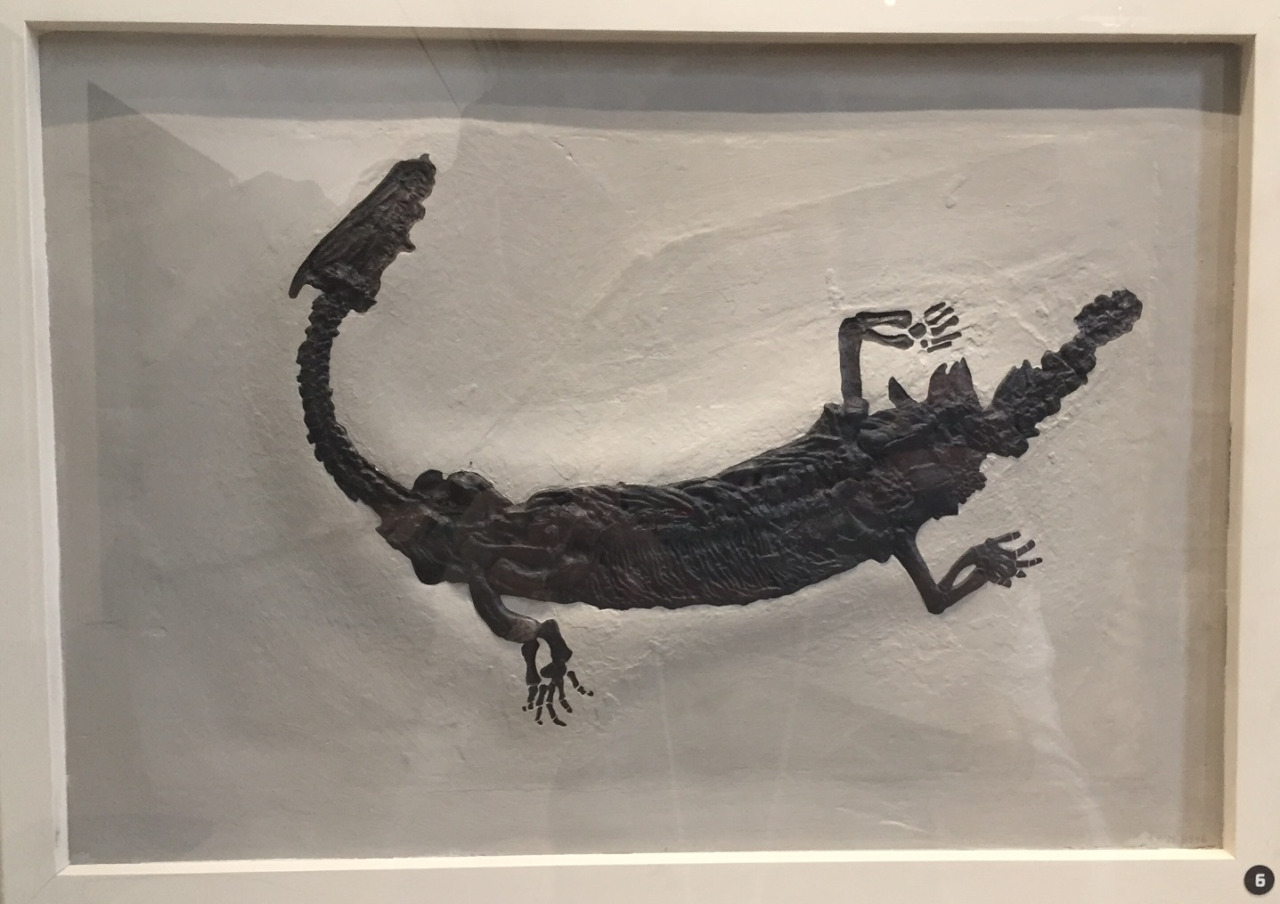
This Lariosaurus was a Middle Triassic nothosaur that could grow up to 10 feet long!
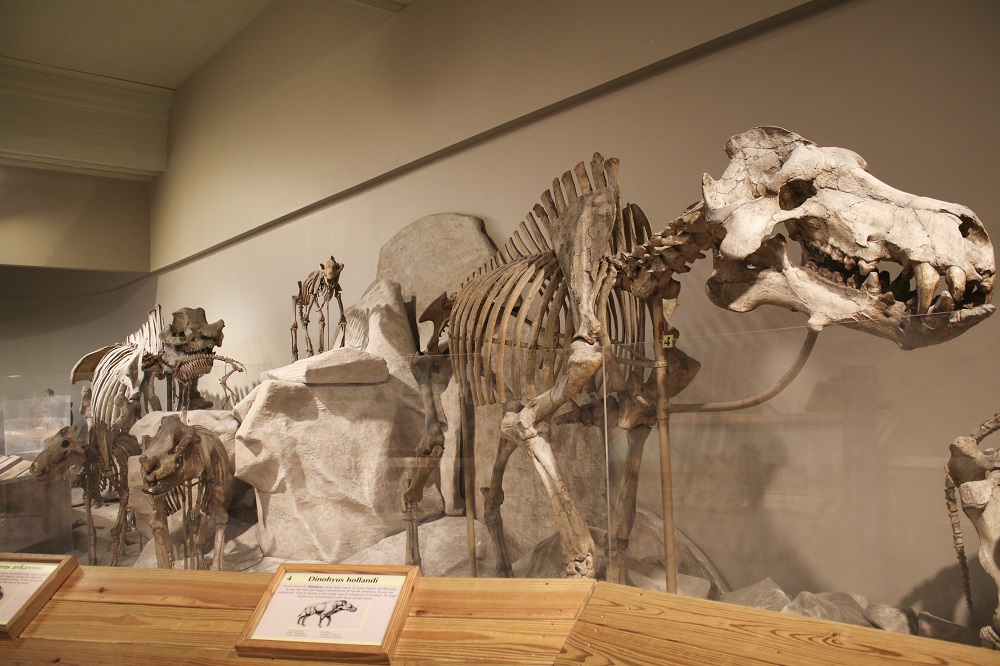
Dinohyus hollandi translated from Latin means “terrible pig.” The fossils of this frightening, 6-foot-tall omnivore were found in Nebraska and are on display at Carnegie Museum of Natural History in Pittsburgh.
(Photo by Hayley Pontia)
