• Skip to primary navigation
  • Skip to main content
  • Skip to primary sidebar

Carnegie Museum of Natural History

One of the Four Carnegie Museums of Pittsburgh

  • Visit
    • Buy Tickets
    • Visitor Information
    • Exhibitions
    • Events
    • Dining at the Museum
    • Celebrate at the Museum
    • Powdermill Nature Reserve
    • Event Venue Rental
  • Learn
    • Field Trips
    • Educator Information
    • Programs at the Museum
    • Bring the Museum to You
    • Guided Programs FAQ
    • Programs Online
    • Climate and Rural Systems Partnership
  • Research
    • Scientific Sections
    • Science Stories
    • Science Videos
    • Senior Science & Research Staff
    • Museum Library
    • Science Seminars
    • Scientific Publications
    • Specimen and Artifact Identification
  • About
    • Mission & Commitments
    • Directors Team
    • Museum History
  • Tickets
  • Give
  • Shop

HATW

December 17, 2020 by wpengine

Dutch Letters: A Sinterklaasavond Treat

Baking traditions are shared across the globe during the winter holiday season. Like many others, my family typically gets together every year to make batches of different cookies to hand out to our friends and loved ones. While this baking tradition is among the best experiences every year, my favorite baked holiday tradition is actually one that we have delivered. Deeply rooted in my family’s Dutch heritage, I look forward to our annual shipment of Dutch letters from the Jaarsma Bakery in Pella, Iowa.

Known in Dutch as banketstaaf, banketletter, boterletter, or letterbanket, Dutch letters are rolled, log-like pastries made with banket, a puff pastry with an almond paste filling. The pastry is formed into the initial of families’ surnames or the letter S. The S shape represents the first letter of the holiday Sinterklaasavond, or Saint Nicholas’ Eve, celebrated on December 5th in the Netherlands. Letters became associated with Sinterklaas in the 19th century when a sheet was used to wrap holiday presents. A bread dough letter was then placed on top of the sheet to identify the gift’s recipient.
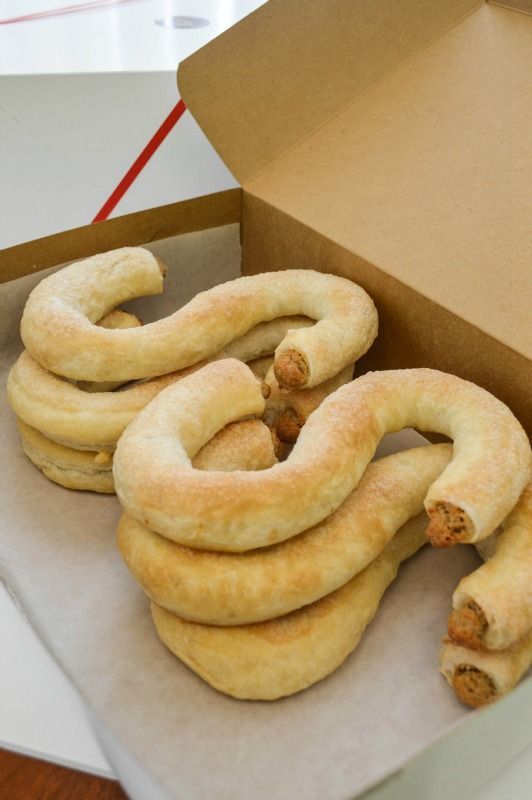
A typical box of Dutch letters. Note the distinct S shape.

Though common throughout the Netherlands on Sinterklassvond, it is rare to see these treats outside of Pella, Iowa in the United States. Pella was settled in 1847 by Dutch immigrants who sought to escape religious persecution in Holland, a region of the Netherlands. They brought with them many customs still around today including Delft Blue porcelain, tulips, windmills, wooden shoes, and daily coffee times known as koffieklets.
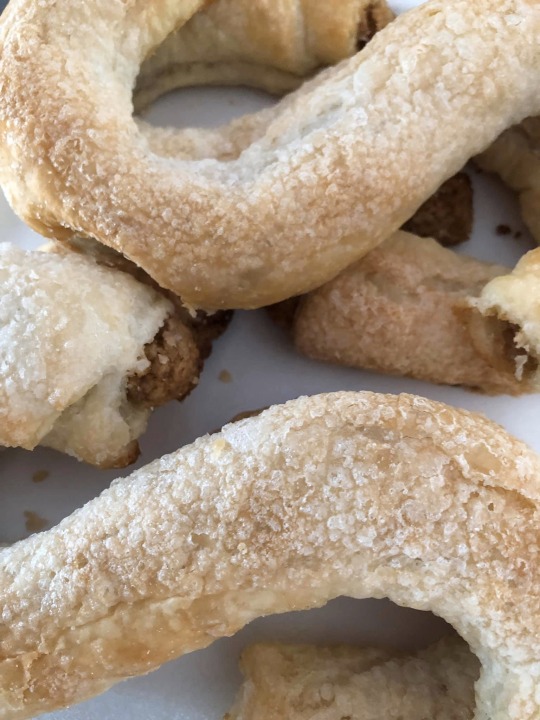
A close-up of the flaky dough used in some Dutch letter recipes.

One early immigrant to Pella, Harmon Jaarsma, brought his family recipes to the new city and founded the Jaarsma Bakery in 1898. These recipes included his recipe for the legendary Jaarsma Dutch letters, which he made in brick ovens. Along with their popularity during the winter holiday season, Dutch letters have also become an integral part of Pella’s Tulip Time Festival that occurs every May, but they’re one of my favorite family traditions I celebrate during the holiday season.

Jane Thaler is a Gallery Experience Presenter in CMNH’s Life Long Learning Department. Museum staff, volunteers, and interns are encouraged to blog about their unique experiences and knowledge gained from working at the museum.
Related Content

Holiday Coloring Pages

Make Blubber Gloves Activity

Cookie Excavation

Filed Under: Blog Tagged With: HATW, Jane Thaler, Museum from Home, Super Science

December 16, 2020 by Kathleen

Make Blubber Gloves Activity

Blubber is a thick layer of fatty tissue under the skin of all cetaceans (whales and porpoises), pinnipeds (seals and walruses), sirenians (manatees), and polar bears. Blubber is the primary fat storage for animals that feed and breed in different parts of the ocean or in the Arctic. It’s kind of like how we dress up in layers before going outside to play in the snow. Want to test how it really works? Follow these simple instructions to make your own blubber glove!

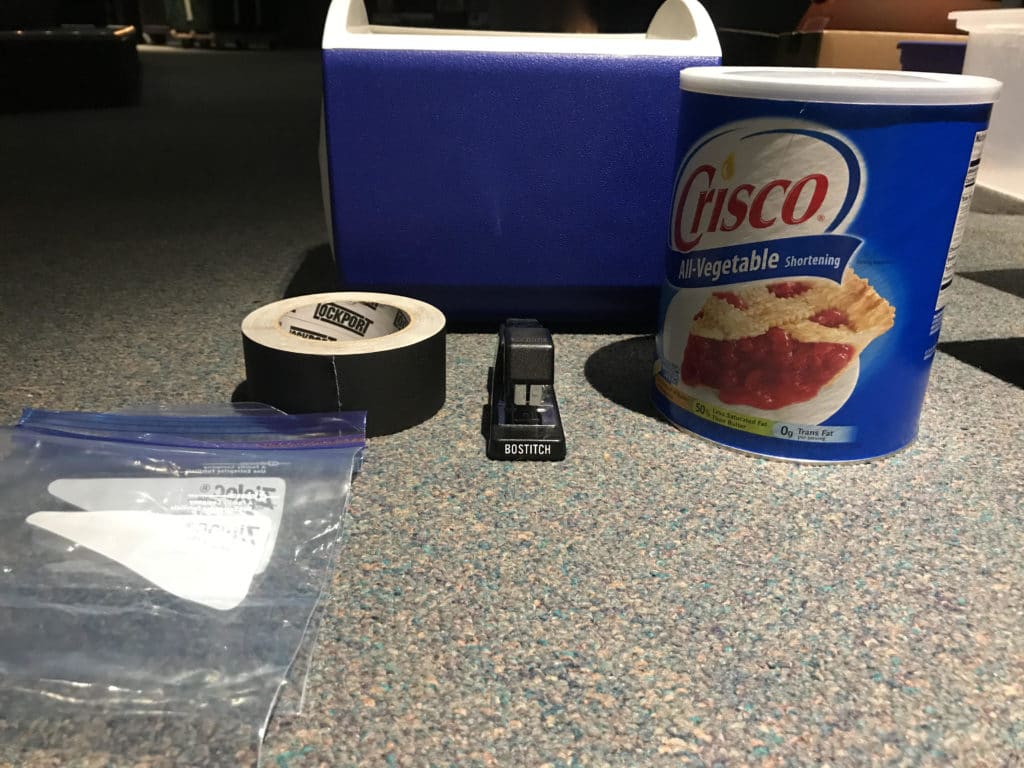
What You’ll Need

  • Crisco or shortening
  • Two ziplock bags large enough to fit your hands comfortably
  • Duct tape
  • Large Bowl of water
  • Ice
  • OPTIONAL: stopwatch, paper, thermometer and writing utensil to record your data
  • OPTIONAL: for extra security, you can use staples in between the layers of duct tape (this tutorial uses the staple method)
Bubber Glove Activity ingredients

Directions

  1. Fill one ziplock with a generous amount of shortening (do not seal the bag).
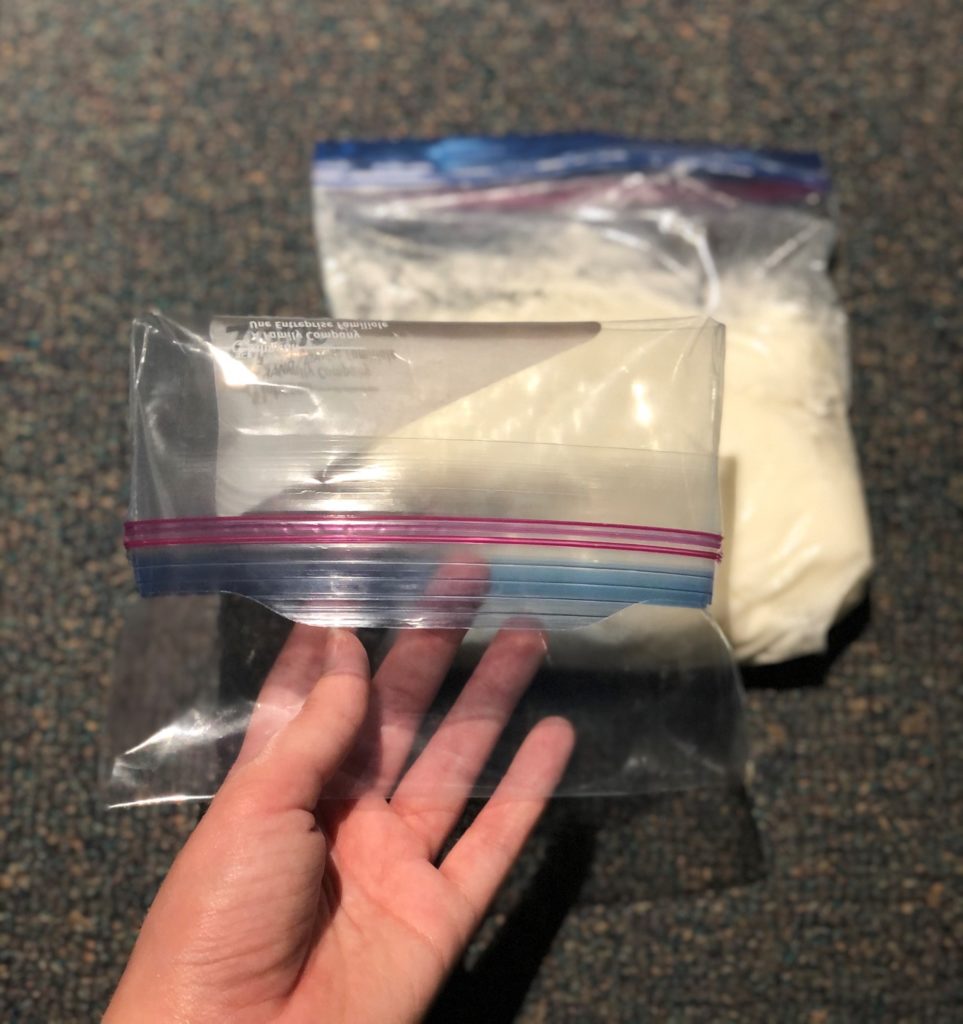
  2. Place your hand inside the second, empty ziplock bag, and push it into the shortening-filled one.
  3. Using your hands, spread the shortening around the ziplock bag until the inner bag is mostly covered (try not to spill any shortening outside the bag or near the edges!).
  4. Fold the top of the inner ziplock bag over the outer bag.
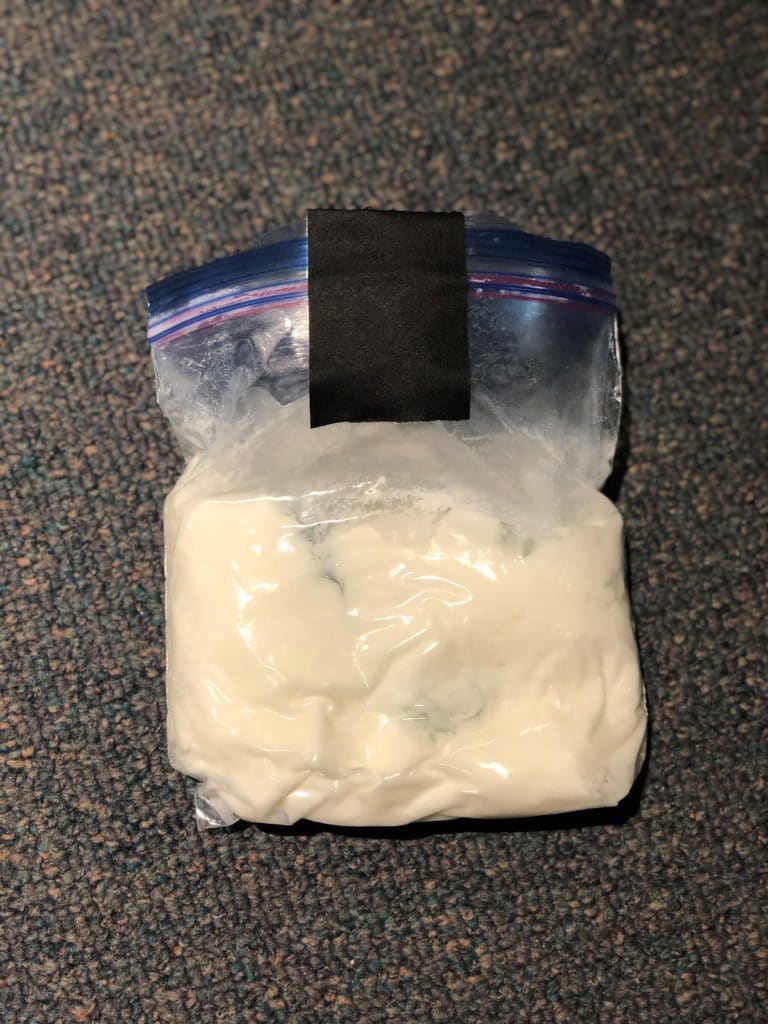
  5. Duct tape the fold to ensure the shortening will not overflow or leak out of the glove.
  6. OPTIONAL: for extra strength, staple the duct tape between the layers of duct tape. Use more duct tape to cover the staples to prevent injury.
  7. Now that your blubber glove is ready, dunk your hand with the glove into the bowl of ice water and see what happens!
  8. OPTIONAL: use a stopwatch to count how long it takes for your hand to feel any temperature change (don’t leave your hand in for too long!). Record your data.
    • Record how cold the ice water is with a thermometer
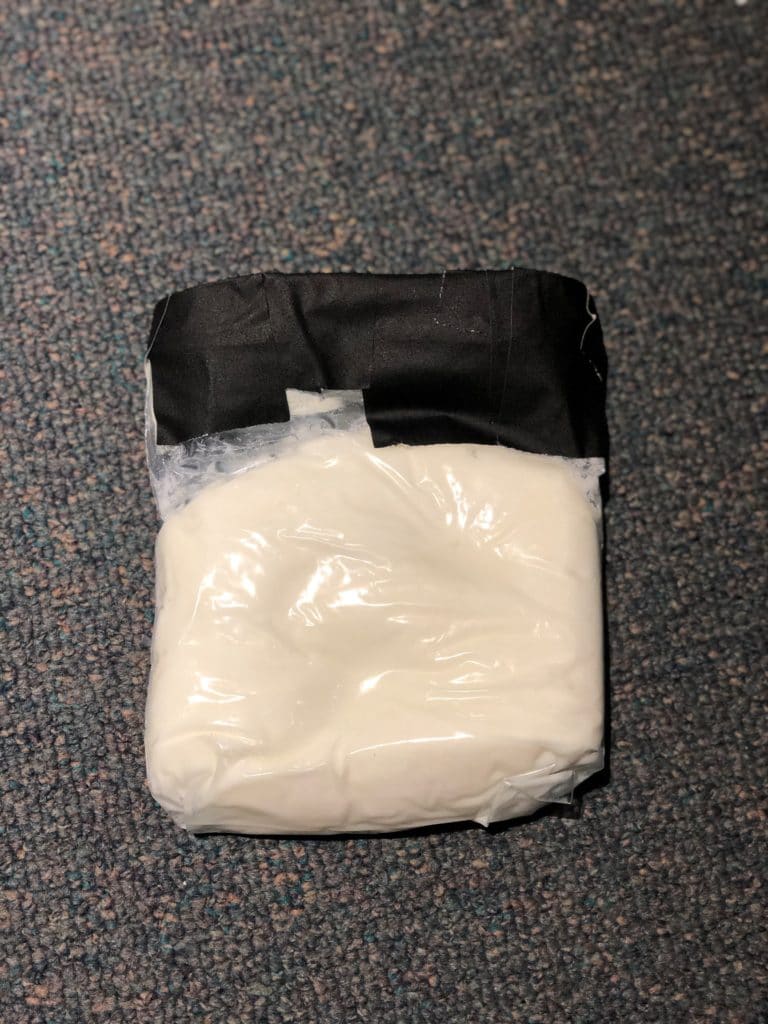
one ziplock bag filled with shortening, another empty
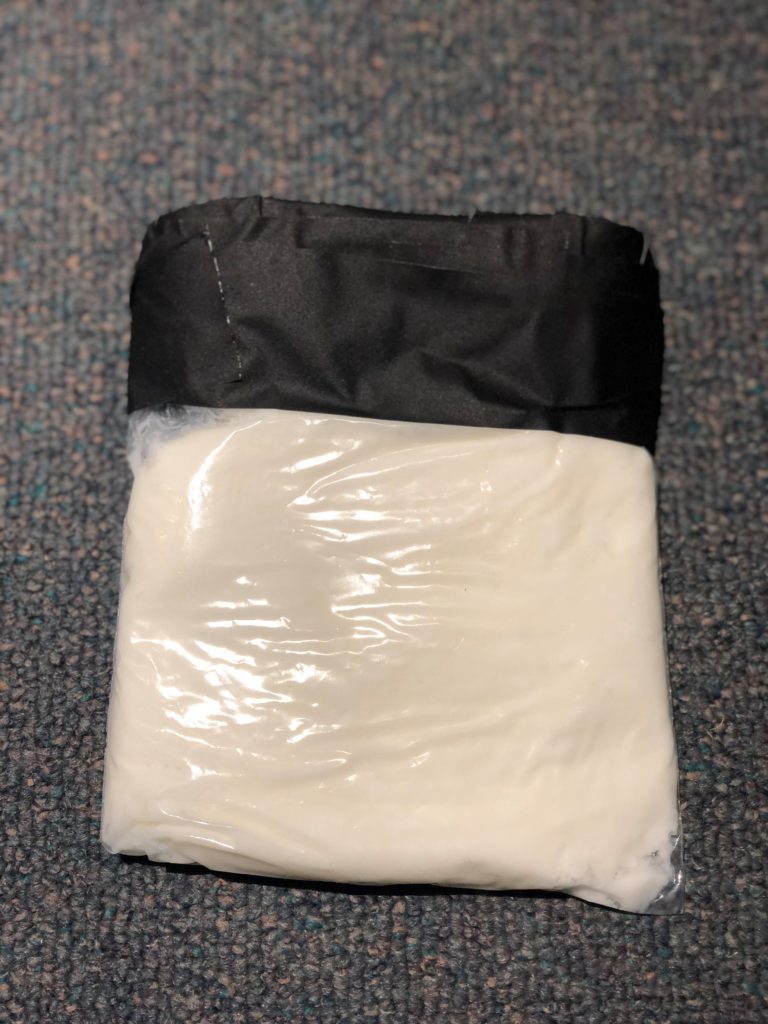
empty ziplock bag inside ziplock bag filled with shortening and taped shut
ziplock bags securely sealed together
ziplock bags sealed with staples
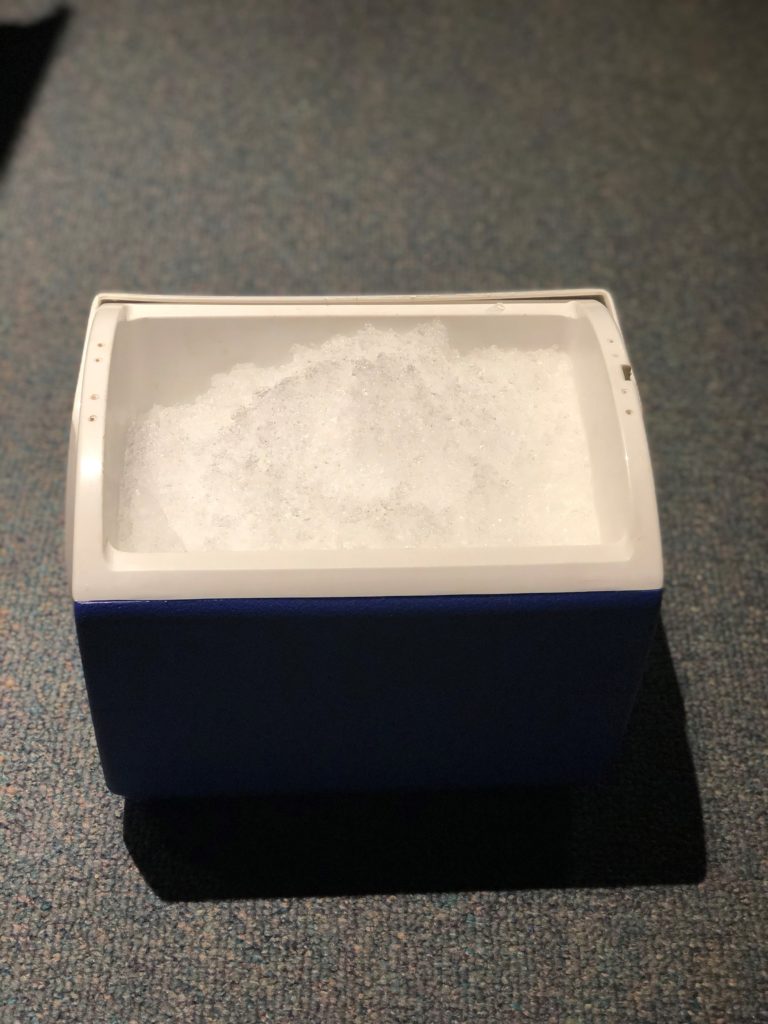
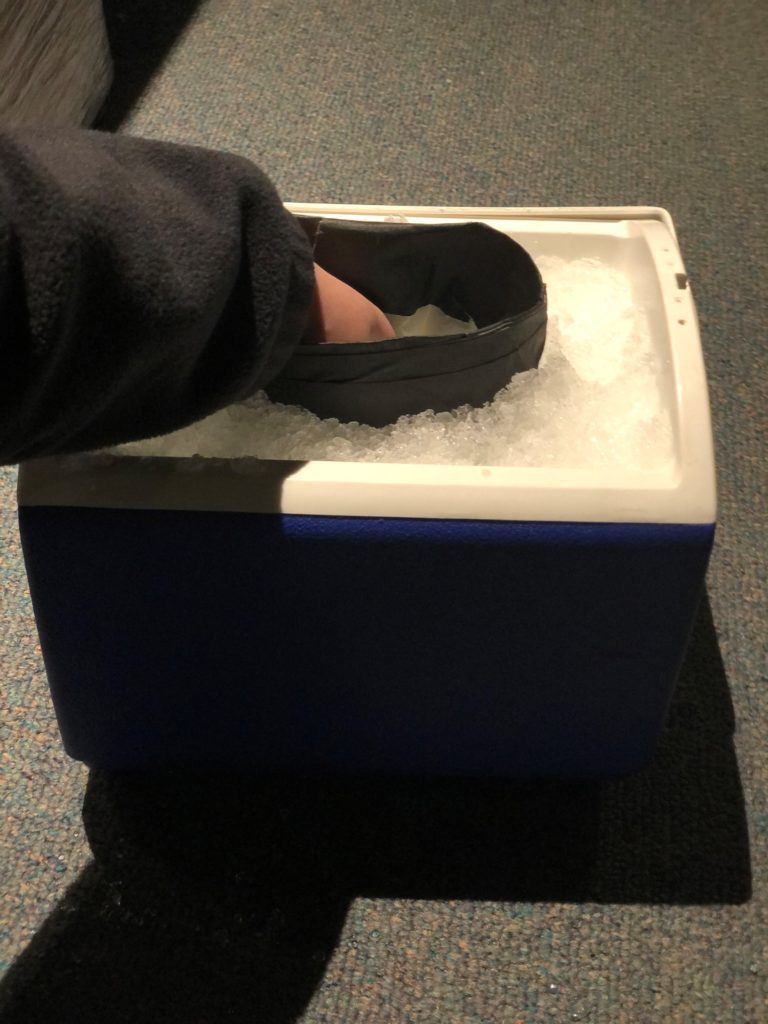
cooler filled with ice
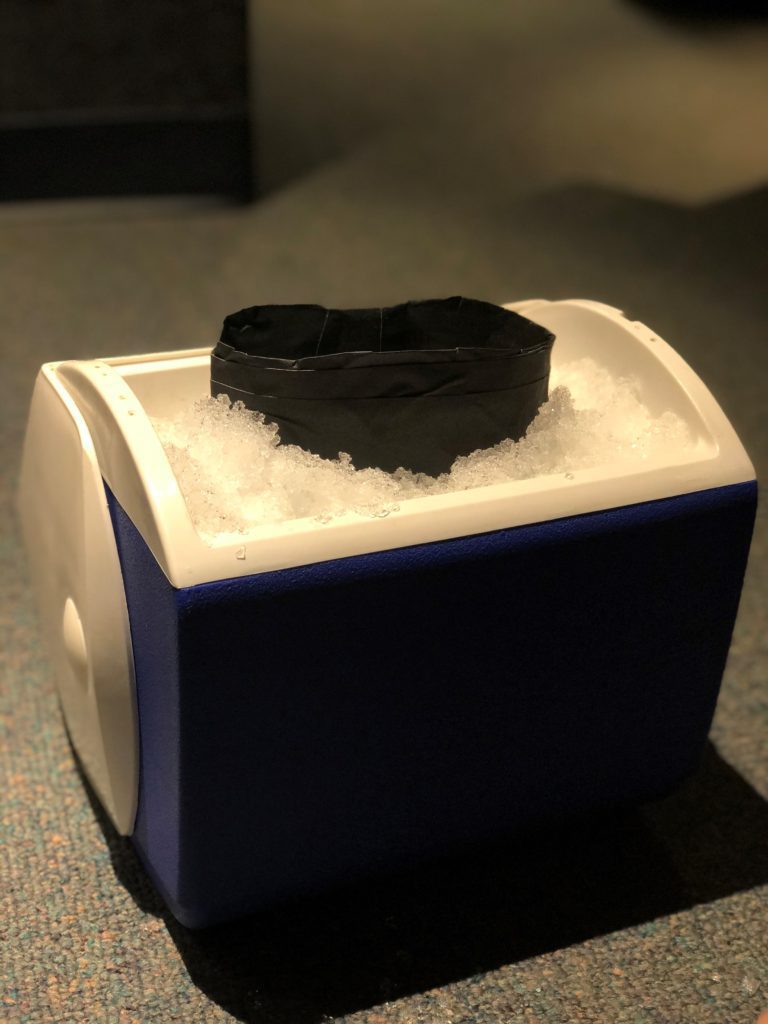
blubber glove inserted into ice-filled cooler
inserting hand into blubber glove

What’s Happening?

Shortening, a type of fat that’s solid at room temperature, stores energy. While the shortening doesn’t have nearly the same amount of energy-storing capabilities as blubber, it does work in a similar way. Blubber’s primary functions include:

  • Adding Buoyancy—this allows the animal to conserve energy while swimming and even float near the surface of the ocean to breathe during periods of rest.
  • Providing extra insulation—this helps the animal survive harsh weather conditions and sudden temperature drops. In colder weather/water, the blood vessels in blubber constrict, decreasing the amount of blood flow and conserving heat.
  • Storing energy—like the shortening, blubber stores energy, but is richer in proteins and a type of fat called lipids.

Many cultures rely on blubber, even today. Muktuk, thick slices of whale blubber and skin, is a traditional food consumed by some Innuit and First Peoples groups. Blubber is a vital food source in cold conditions, as it contains a high amount of vitamins D and C, which isn’t easy to come by in colder areas of the world. However, recent studies show blubber is susceptible to biomagnification—the process in which a foreign substance increases in level as it passes up the food chain. Toxins such as PCB, a chemical now known to cause cancer in humans, has been found in fish and animals that consume them. When these predators, often at the top of the food chain, consume fish with toxins in them, their blubber also becomes toxic. PCB is often hard to break down and doesn’t degrade over time.

For many animals, blubber is the key to their survival. The next time you go outside during a chilly winter day, make sure to wear layers to keep yourself warm, too!

Filed Under: Blog Tagged With: activities, HATW

December 16, 2020 by Kathleen

Holiday Coloring Pages!

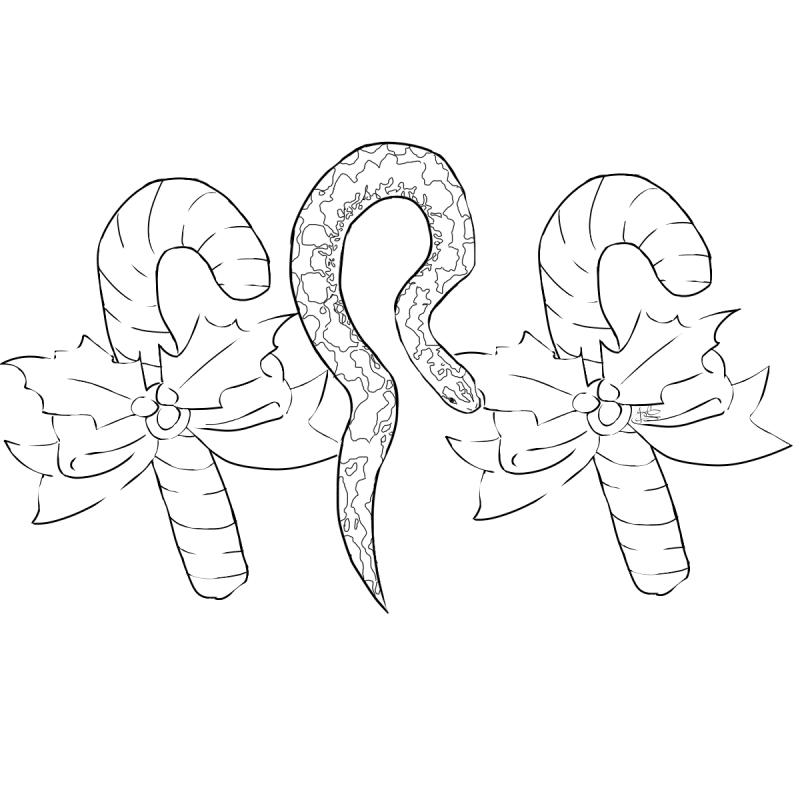
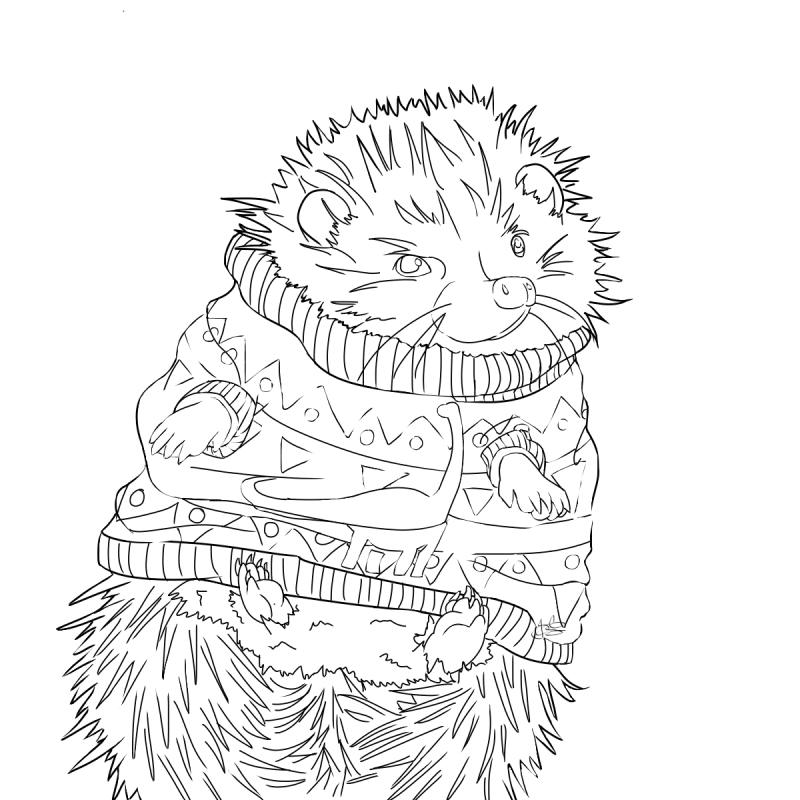
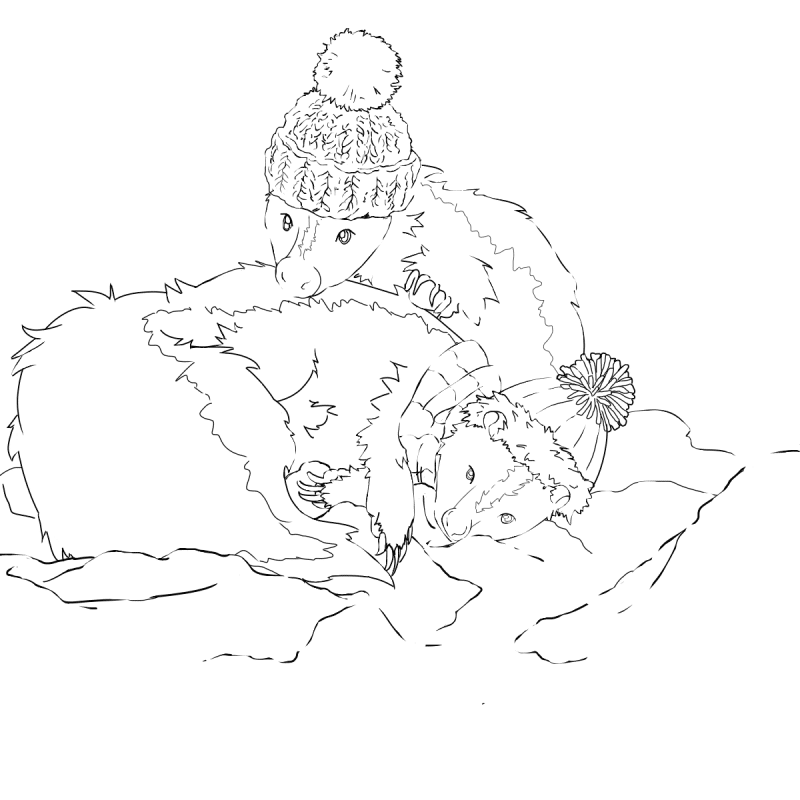
Have fun coloring images featuring animals from our living collection this week drawn by Gallery Presenter and Floor Captain, Jess Sperdute. You can meet some of the animals in the living collection during our Virtual Live Animal Encounters!

boa shaped like a candy cane
Download Candy Cane & Boa Coloring Image
Earl the Hedgehog in holiday sweater
Download Earl the Hedgehog in a Holiday Sweater Coloring Image
skunks with winter hats
Download Skunks with Winter Hats Coloring Image

Filed Under: Blog Tagged With: HATW

December 14, 2020 by Kathleen

Make Your Own Snow Activity

Want to build a snowman but don’t have any snow? This play snow is a great substitute—it’s cool to the touch, moldable, looks just like real snow, and only requires two ingredients!

What You’ll Need

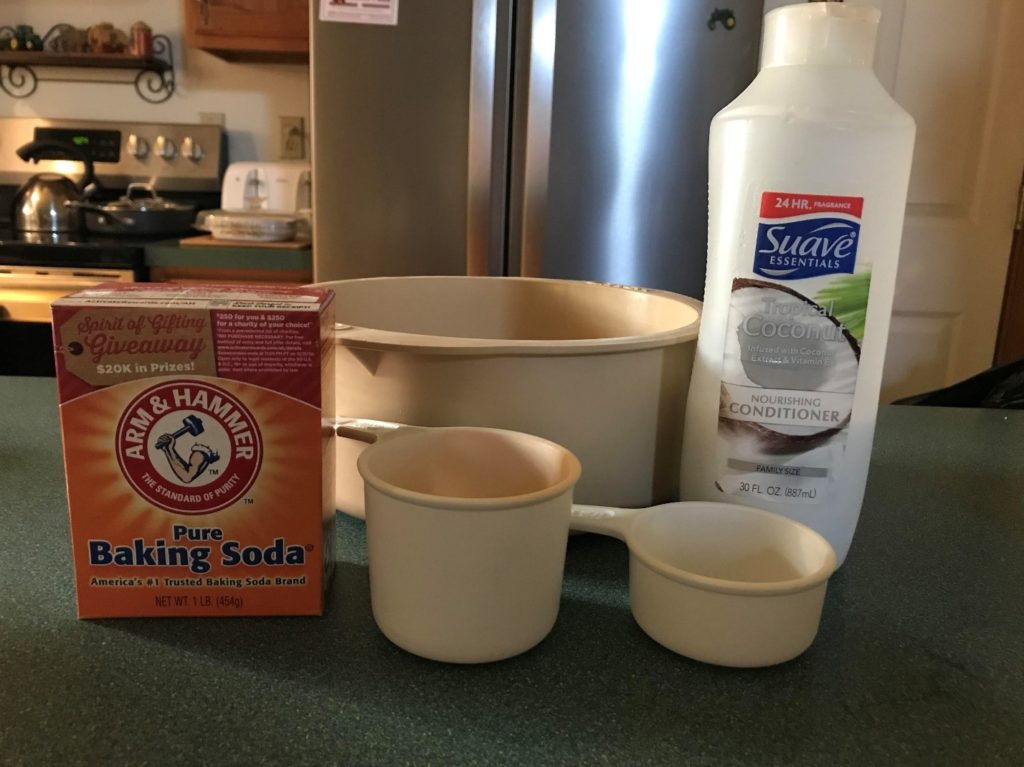
  • ½ cup hair conditioner (preferably white to mimic real snow)
  • 2 cups baking soda
  • Measuring cups
  • Mixing bowl
  • Container or placemat for play
  • OPTIONAL: Beads, plastic toys, etc. to bury in snow if desired
DIY Snow Ingredients

Directions

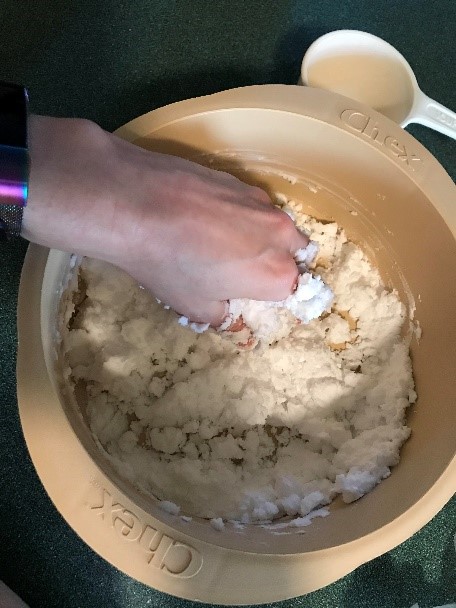
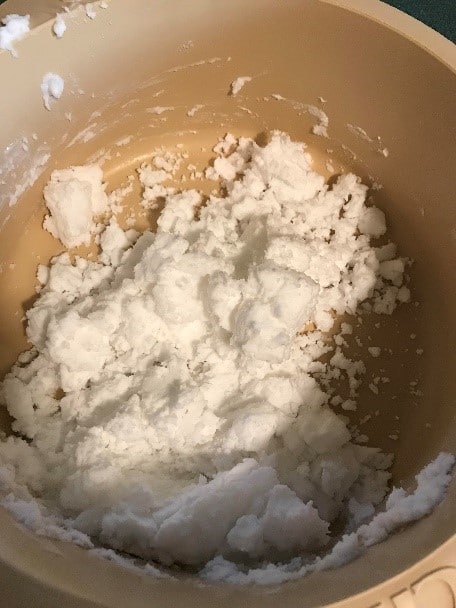
  1. Combine baking soda and hair conditioner in mixing bowl until the texture is crumbly (the “snow” should be moldable, like kinetic sand).
  2. OPTIONAL: add optional toys if desired
  3. Now take your snow over to your play area and start having fun! The best part about making this type of snow is that you can store it for later use—if it dries out slightly, just add a little more conditioner the next time you want to play!
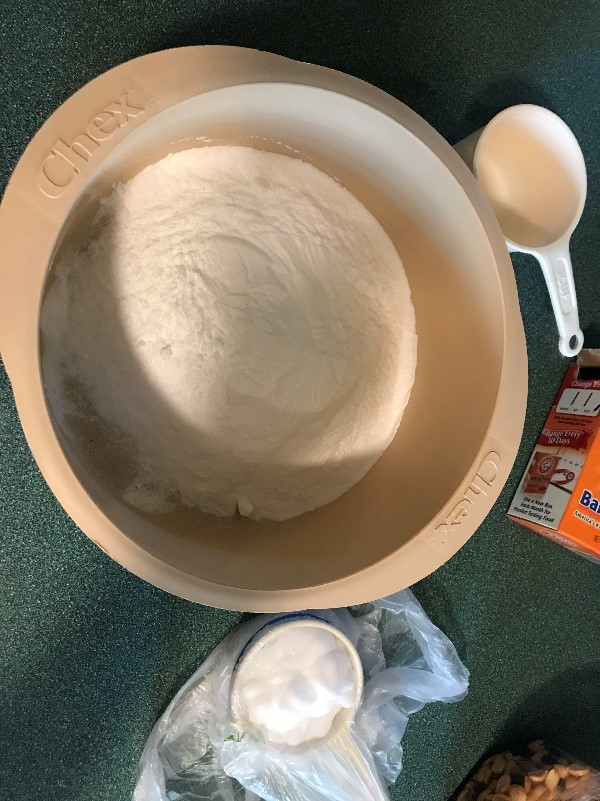
DIY Snow dry ingredients in a bowl
Hand mixing the wet and dry ingredients of the DIY snow
Completely mixed DIY snow!

Filed Under: Blog Tagged With: activities, HATW

December 14, 2020 by wpengine

Pork, Peppermint, and Prosperity

The Peppermint Pig

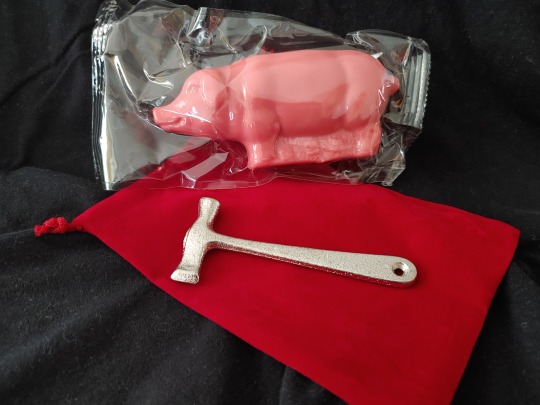
pink peppermint pig with red bag and small silver hammer

On Christmas Day, after we’ve had dinner and dessert and all sit around the table chatting, my family observes one of my favorite holiday traditions. This tradition involves a red velvet pouch, a tiny metal hammer, and a piece of bright pink, peppermint-flavored hard candy in the shape of… a pig!

The peppermint candy pig is placed in the velvet pouch and we pass it around the table, every person giving it a solid whack with the little hammer and sharing a fond story or memory from the past year. After the pig is broken into small enough pieces, we each eat a piece of the candy, and continue enjoying each other’s company. Some years, the whole family is together—gathered from far away—and the pig is broken quite quickly. Other years, when we can’t all be together, it may take the smaller group longer to break the pig; but that just gives each of us the chance to share more memories.

This tradition is not unique to my family, but I haven’t met anyone outside my family that also observes this custom! It originated during the Victorian Era (1837-1901) in Saratoga Springs, New York. Pigs were honored in Victorian holiday celebrations as symbols of health, prosperity, and happiness. Peppermint oil has a long history of use in medicine, as it helps calm an upset stomach, and has been a popular candy flavoring for a very long time – in fact, no one is entirely sure when peppermint candy was first developed!

Believe it or not, breaking the peppermint pig is not the only pig-themed custom my family observes!

Pork and Sauerkraut

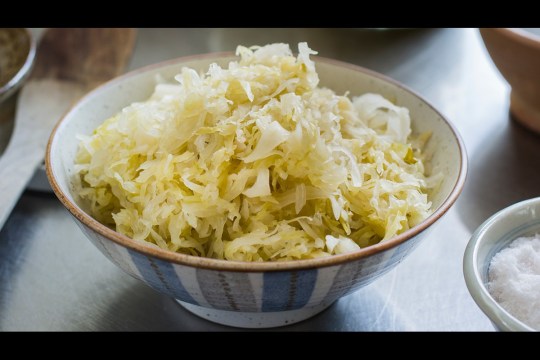
bowl of sauerkraut

My family is mostly German, though we are also Austrian and Slovakian. One German custom we observe during the holiday season is eating pork and sauerkraut, a dish made from fermented cabbage, for our New Year’s Day dinner. This is another favorite tradition of mine, and one of my favorite meals, though I didn’t like sauerkraut when I was a kid! Now I love pork and sauerkraut and look forward to the smell of it filling my house on New Year’s Day as it slowly cooks all day long.

Germans eat pork and sauerkraut for New Year’s because it’s meant to be lucky, and we want to start a new year off with some luck. This tradition came to the United States with German immigrants in the 17th and 18th centuries. Many of these immigrants settled in Pennsylvania and their descendants are now known as Pennsylvania Dutch (Dutch is derived from Deutsch which means German in the German language). My family is not Pennsylvania Dutch, though we do originate from the same part of the state.

Pigs are lucky animals because they root forward when looking for food, much like we want to look forward as the year begins. For this reason, we don’t eat any chicken or turkey on New Year’s Day; these birds scratch their feet behind them, and we don’t want to move backward, we want to move forward!

Sauerkraut is a lucky food for a few reasons. The long strands of cabbage can represent a long life and the green color of the cabbage (before it’s been fermented) represents money. Sauerkraut is also a great health food: it is a source of vitamins C and K, calcium, and magnesium, it’s low in calories, and it promotes good gut health! This might be another reason it’s considered lucky–people probably felt pretty good after eating it!

Guess what! There’s still one more pig-themed tradition I’d like to share!

Glücksschwein (the Good Luck Pig)

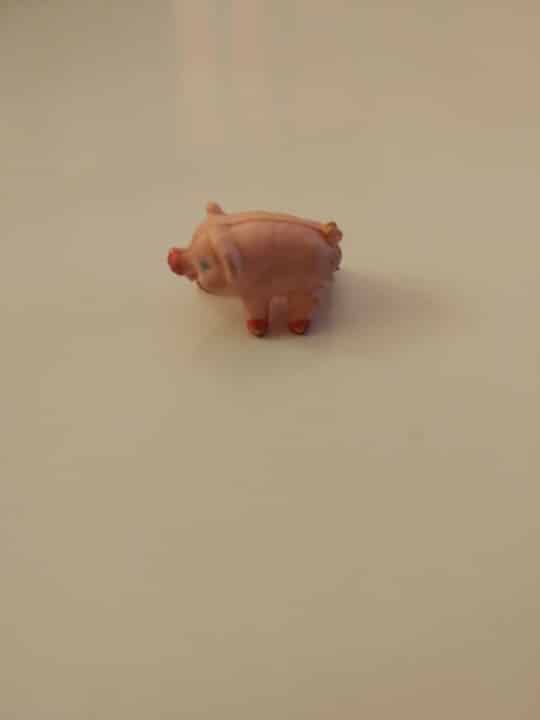
small rubber pig

I have a small rubber pig that I have had since I was very young. For a very long time, I stuck it to the wall by my bedroom door, but now I have it sitting safely in a box of memories. This pig is my good luck pig, or Glücksschwein in German. Pigs are kind of similar to a four-leaf clover in representing good luck!

I’ve mentioned a few ways that pigs are related to luck, but I haven’t shared one major reason why pigs are considered lucky. Pigs are related to farming and livestock, and therefore wealth and prosperity! In Germany, pigs made from marzipan, a sweet made of sugar or honey and almond meal, might be given out to eat for New Years.

We don’t eat marzipan pigs for New Years, but instead I have my little glücksbringer—good-luck bringer, or lucky charm—to bring me luck and prosperity!

Jo Tauber is the Gallery Experience Coordinator in CMNH’s Life Long Learning Department. Museum staff, volunteers, and interns are encouraged to blog about their unique experiences and knowledge gained from working at the museum.
Related Content

The Yule Goat

Meet the Living Collection: Russian Tortoise named Natasha

Jurassic Days: Quetzalcoatlus northropi

Filed Under: Blog Tagged With: Educator Resources, HATW, Museum from Home, Super Science Days

  • « Go to Previous Page
  • Page 1
  • Page 2

sidebar

About

  • Mission & Commitments
  • Directors Team
  • Museum History

Get Involved

  • Volunteer
  • Membership
  • Carnegie Discoverers
  • Donate
  • Employment
  • Events

Bring a Group

  • Groups of 10 or More
  • Birthday Parties at the Museum
  • Field Trips

Powdermill

  • Powdermill Nature Reserve
  • Powdermill Field Trips
  • Powdermill Staff
  • Research at Powdermill

More Information

  • Image Permission Requests
  • Science Stories
  • Accessibility
  • Shopping Cart
  • Contact
  • Visitor Policies
One of the Four Carnegie Museums | © Carnegie Institute | Privacy Policy | Terms of Use | Accessibility
Rad works here logo