• Skip to primary navigation
  • Skip to main content
  • Skip to primary sidebar

Carnegie Museum of Natural History

One of the Four Carnegie Museums of Pittsburgh

  • Visit
    • Buy Tickets
    • Visitor Information
    • Exhibitions
    • Events
    • Dining at the Museum
    • Celebrate at the Museum
    • Powdermill Nature Reserve
    • Event Venue Rental
  • Learn
    • Field Trips
    • Educator Information
    • Programs at the Museum
    • Bring the Museum to You
    • Guided Programs FAQ
    • Programs Online
    • Climate and Rural Systems Partnership
  • Research
    • Scientific Sections
    • Science Stories
    • Science Videos
    • Senior Science & Research Staff
    • Museum Library
    • Science Seminars
    • Scientific Publications
    • Specimen and Artifact Identification
  • About
    • Mission & Commitments
    • Directors Team
    • Museum History
  • Tickets
  • Give
  • Shop

Holotypes

August 12, 2020 by wpengine

Working with the Type Collection

The staff of the Section of Invertebrate Zoology are currently working on many projects.  One of those projects is gathering, organizing, and taking inventory of our type collection materials.

Image 1.  A drawer of Lepidoptera types from the Invertebrate Zoology collection at CMNH.

Type specimens are the specimens upon which the scientific name and description of a species are based.  In other words, when scientists describe a new species, they use particular specimens to characterize the unique features of that particular species. Once a new species description is published, the specimen(s) used in the process of formally naming and describing the species become the type specimens.
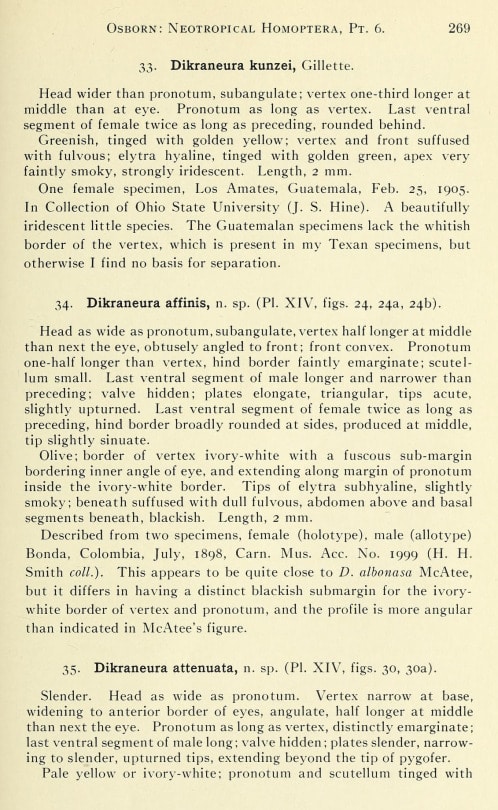
Image 2. The original description of Dikraneura affinis (a leafhopper) as published in the Annals of Carnegie Museum, Vol. 18.

As such, type specimens are very valuable to science. Museum type collections serve as a sort of ‘library’ of species for scientific researchers.  With millions of insect species found on the earth, identification of a specimen you have in hand can be a daunting task.  Researchers around the world can compare specimens in their own collections with these scientific types to apply species-level determinations.
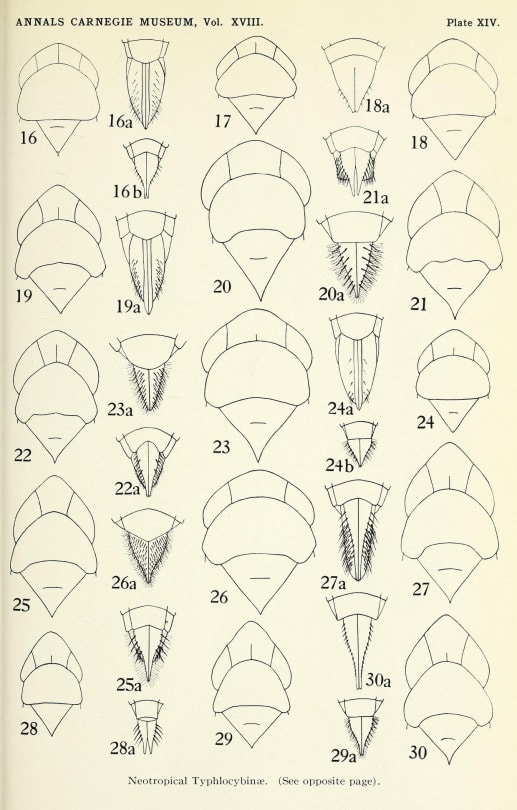
Image 3.  The plates included as part of the original species description.  Characteristics of Dikraneura affinis are illustrated in Figs. 24, 24a, and 24b.

It is estimated that there are approximately 40,000+ type specimens in the Invertebrate Zoology collection at CMNH. A more complete inventory and cataloguing of the type specimens in Invertebrate Zoology is currently required so that our type collections can be of greater use to the scientific community.
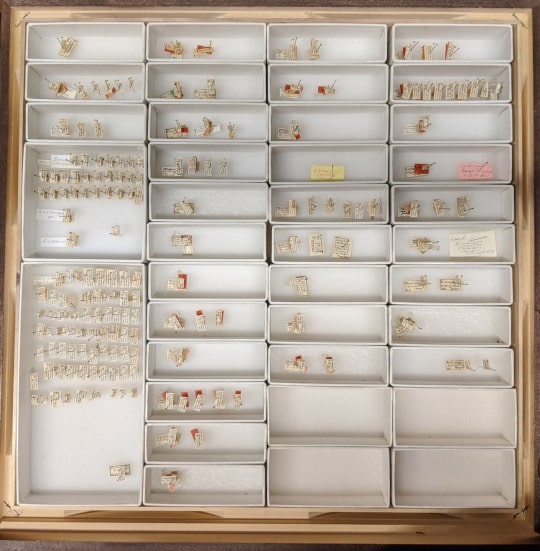
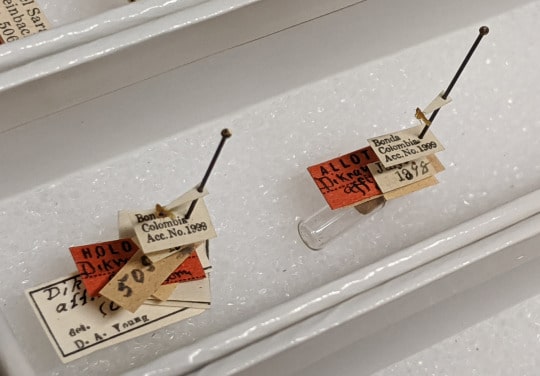
Image 4.  A drawer containing Hemipteran types, including Dikraneura affinis.  These particular insects are very tiny and are adhered to paper points for preservation and study.

Image 5.  Tray containing the two type specimens of Dikraneura affinis and their associated labels.

Prior to the availability of computers, George Wallace, a curator who worked at the museum on Hymenoptera from the 1930s to the 1970s, compiled and maintained a card catalog file of non-lepidopteran types in the Invertebrate Zoology collection.
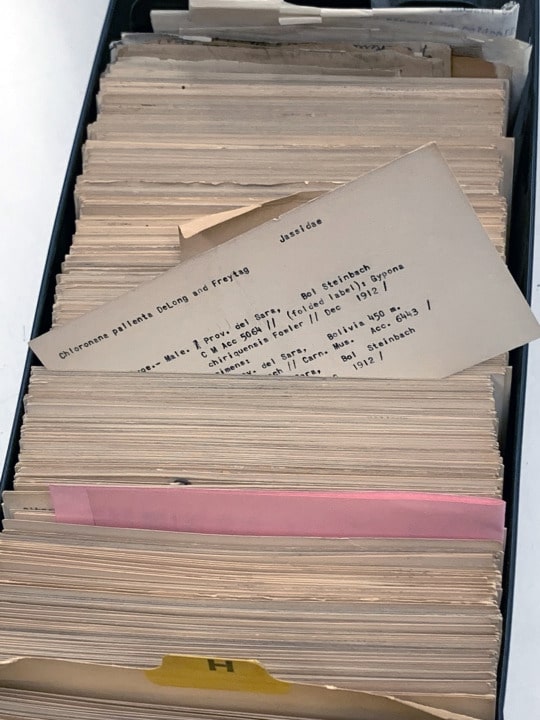
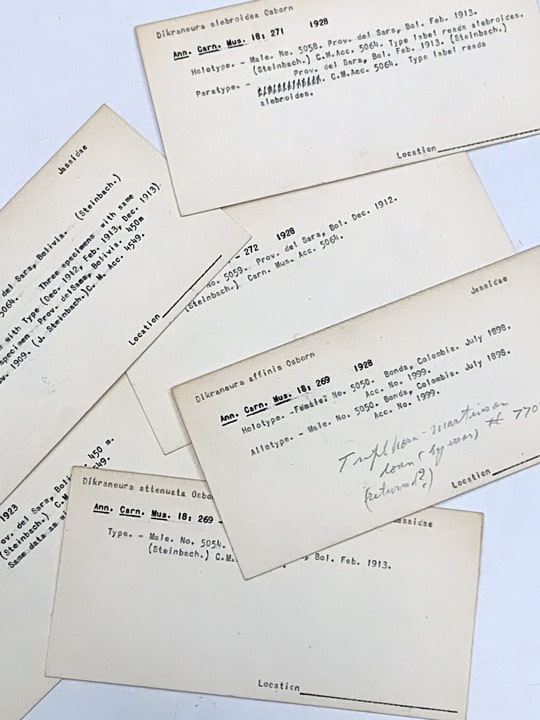
Image 6.  Image of ‘card catalog’ of types compiled and maintained by curator George Wallace.

Image 7.  A sampling of the cards and associated information captured by George Wallace.

Many of the cards contain information about the published species descriptions, the numbers and kinds of type specimens in our collection, and label data associated with the specimens, including geographical, accession number, date, and collector information.
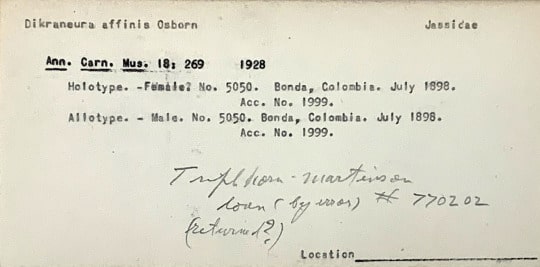
Image 8.  Type card showing information for Dikraneura affinis (a leafhopper).

To assist in the type collection organization effort, I have been tasked with digitizing over 1100 of these cards.  Digitizing the information renders it searchable and accessible to staff and allows for a more accurate inventory of our types.
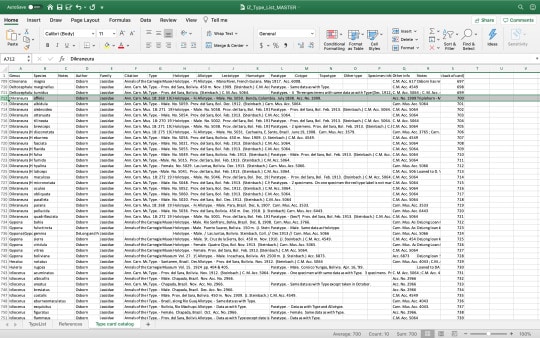
Image 9.  Screenshot of file containing digitized data from Wallace type cards.  Information for Dikraneura affinis is highlighted on the screen.

Currently, researchers must contact us directly with queries that relate to our type collection. In the future, we hope to photograph our type specimens and make all of their specimen data available via the internet so that researchers worldwide may have access to the invaluable type collection resource that resides in the Section of Invertebrate Zoology at CMNH.

Hillary Fetzner is a Laboratory Assistant in the Section of Invertebrate Zoology at Carnegie Museum of Natural History. Museum employees are encouraged to blog about their unique experiences and knowledge gained from working at the museum.

Related Content

Delving into Lepidoptera Life History Studies

Meet Ainsley Seago, New Assistant Curator of Invertebrate Zoology
Ask a Scientist: Why do moths love lamps? 

Filed Under: Blog Tagged With: Hillary Fetzner, Holotypes, Invertebrate Zoology, Science News, Section of Invertebrate Zoology

October 1, 2018 by wpengine

Tiger beetle lost, tiger beetle found

by John Wible

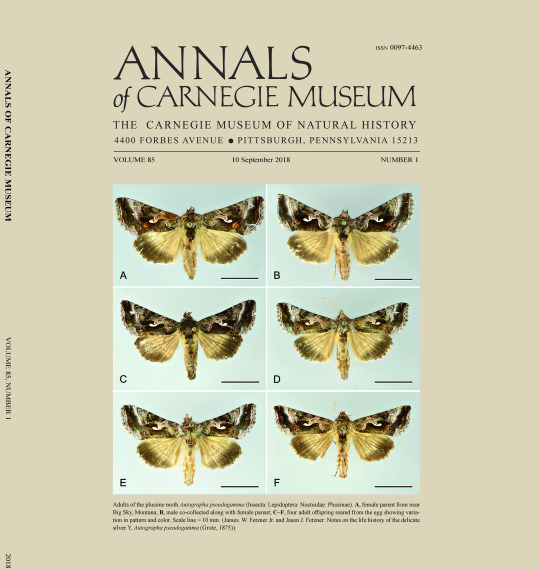
The newest issue of Annals of Carnegie Museum, our quarterly scientific journal highlighting museum research and collections, is hot off the presses. The cover is graced by photographs of a beautiful moth from Montana that was hand reared and studied by Curator James W. Fetzner Jr. and his nine-year-old son Jason. They report on this animal’s life history, previously unknown to science. Check out more about Jim and Jason’s study.

cover of Annals of the Carnegie Museum

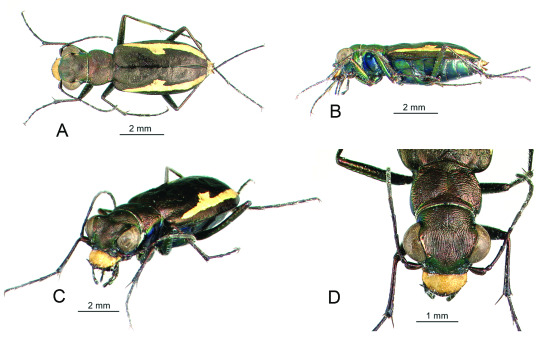
Another article by Research Associate Robert Acciavatti from the Section of Invertebrate Zoology and co-authors documents an amazing tale of scientific rediscovery regarding an extremely rare tiger beetle species from Durango, Mexico, named Cylindera nudata. The first and only known specimen of the species ended up in Germany where it was described in 1879. This beetle was one of the countless tragedies of World War II when it was lost from the Natural History Museum in Hamburg during the Allied bombing of that city. As the only known specimen, this one was designated as the holotype of the species, the specimen upon which the description and name of the species was based.

Holotypes are critically important because scientists compare other specimens to the holotype to discover if they belong to the same species or not. You can imagine that when the holotype is lost and no other specimens are known, making comparisons can only be done with whatever descriptions exist in the literature. And for this particular tiger beetle, there was only the original description in German and a line drawing that did not match the description!

Over the years, collecting expeditions to the locality of the holotype (or type locality) went searching for this beetle but came up empty or worse, being unable to reach the remote mountainous area of Mexico of the type locality. In a shipment of beetles collected from Mexico to Acciavatti, amazingly enough there was one specimen that matched the original description of Cylindera nudata. In this new article in the current Annals, that specimen is described, illustrated, and designated as the neotype of the species, which means it is the new type of the species as the old type no longer exists. Acciavatti has donated this specimen to Carnegie Museum of Natural History, and we will preserve it for future generations who will hopefully find more examples of this beautiful beetle and will need a neotype to compare to.

tiger beetle shown from four angles

John Wible, PhD, is the curator of the Section of Mammals at Carnegie Museum of Natural History and editor of Annals of Carnegie Museum. John’s research is focused on the tree of life of mammals, understanding the evolutionary relationships between living and extinct taxa, and how the mammalian fauna on Earth got to be the way it is today. He uses his expertise on the anatomy of living mammals to reconstruct the lifeways of extinct mammals. John lives with his wife and two sons in a house full of cats and rabbits in Ross Township. 

Filed Under: Blog Tagged With: Holotypes, James Fetzner, Mason Heberling

sidebar

About

  • Mission & Commitments
  • Directors Team
  • Museum History

Get Involved

  • Volunteer
  • Membership
  • Carnegie Discoverers
  • Donate
  • Employment
  • Events

Bring a Group

  • Groups of 10 or More
  • Birthday Parties at the Museum
  • Field Trips

Powdermill

  • Powdermill Nature Reserve
  • Powdermill Field Trips
  • Powdermill Staff
  • Research at Powdermill

More Information

  • Image Permission Requests
  • Science Stories
  • Accessibility
  • Shopping Cart
  • Contact
  • Visitor Policies
One of the Four Carnegie Museums | © Carnegie Institute | Privacy Policy | Terms of Use | Accessibility
Rad works here logo