• Skip to primary navigation
  • Skip to main content
  • Skip to primary sidebar

Carnegie Museum of Natural History

One of the Four Carnegie Museums of Pittsburgh

  • Visit
    • Buy Tickets
    • Visitor Information
    • Exhibitions
    • Events
    • Dining at the Museum
    • Celebrate at the Museum
    • Powdermill Nature Reserve
    • Event Venue Rental
  • Learn
    • Field Trips
    • Educator Information
    • Programs at the Museum
    • Bring the Museum to You
    • Guided Programs FAQ
    • Programs Online
    • Climate and Rural Systems Partnership
  • Research
    • Scientific Sections
    • Science Stories
    • Science Videos
    • Senior Science & Research Staff
    • Museum Library
    • Science Seminars
    • Scientific Publications
    • Specimen and Artifact Identification
  • About
    • Mission & Commitments
    • Directors Team
    • Museum History
  • Tickets
  • Give
  • Shop

Invertebrate Zoology

November 21, 2016 by wpengine

Beetle Discovery

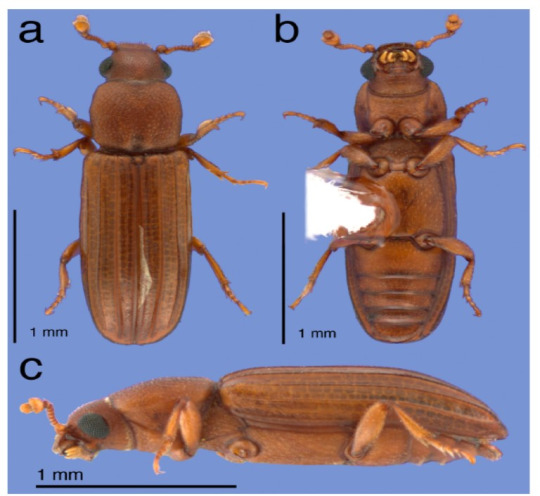
cocoon-forming beetle (Antibothrus morimotoi) from Japan

In the Section of Invertebrate Zoology, our scientists are doing important pest monitoring work in collaboration with the United States Department of Agriculture (USDA) by helping identify pest specimens.

Non-native bark beetles and other wood-boring pests represent a significant threat to US forests. To rapidly identify and eradicate new pest species, the USDA traps insects around the country and sends the specimens to our museum for identification.

While digging through the extra insects accidentally caught in these traps (the “by-catch”), Bob Androw, one of the scientific preparators at Carnegie Museum of Natural history, recently discovered that a cocoon-forming beetle (Antibothrus morimotoi) from Japan has likely become established in the greater metropolitan area of Columbus, Ohio.

To date, this beetle appears innocuous but its biology remains largely unknown. Bob and his colleagues published their discovery this August in the journal Zootaxa.
Filed Under: Blog Tagged With: beetles, Invertebrate Zoology, zoology

August 31, 2016 by wpengine

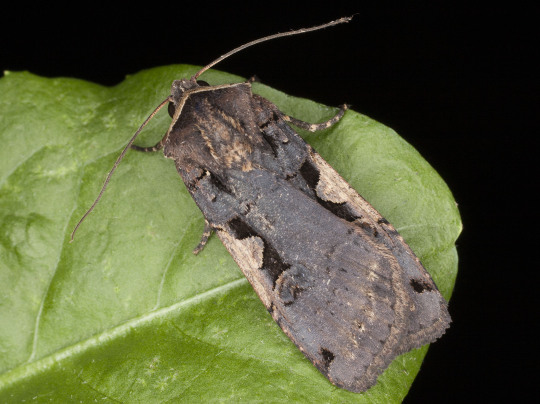
Greater Black-letter Dart Moth

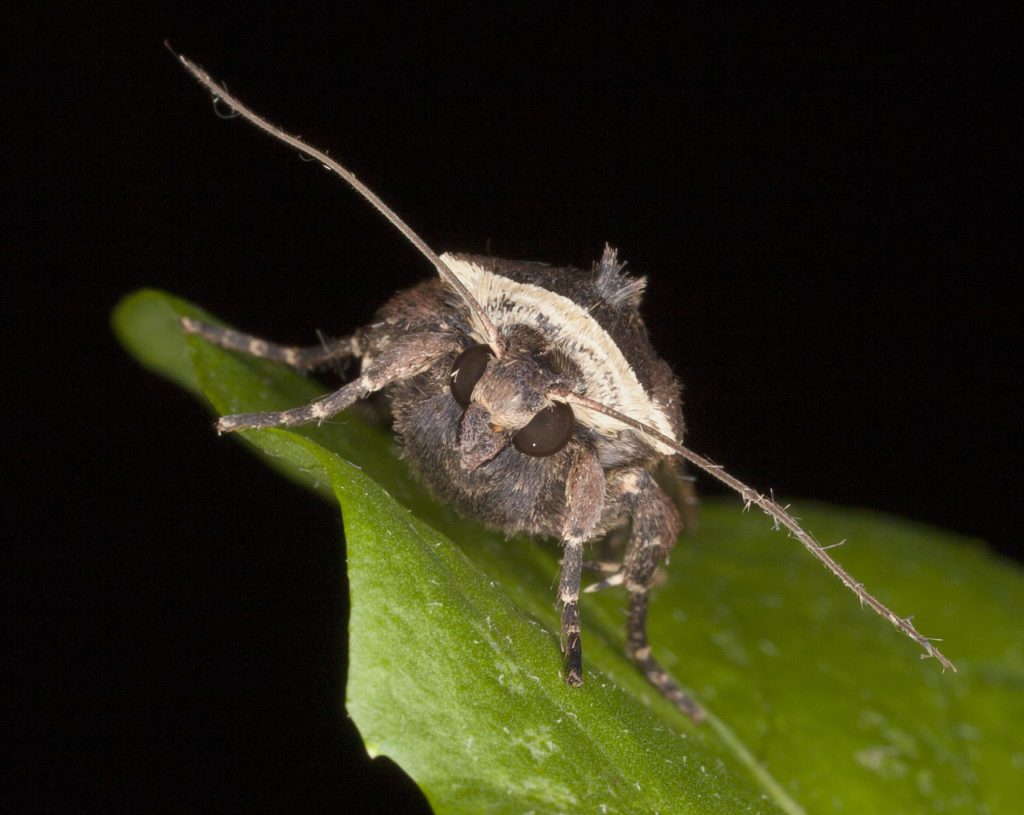
moth face on

by Vanessa Verdecia 

Our Section of Invertebrate Zoology had another species of moths eclose this month. These images show the last instar caterpillar, the pupa, and two images of the adult.  We reared these caterpillars that hatched from eggs laid by a female moth caught in Ohio, but this species also occurs here in Pennsylvania.

Common name: Greater Black-letter Dart Moth
Scientific name: Xestia dolosa, in the family Noctuidae

moth top down

Vanessa Verdecia is a collection assistant in the museum’s Invertebrate Zoology Section. Museum employees are encouraged to blog about their unique experiences and knowledge gained from working at the museum.

Filed Under: Blog Tagged With: Invertebrate Zoology, moths, Pittsburgh, zoology

August 19, 2016 by wpengine

One-Spotted Variant Instars

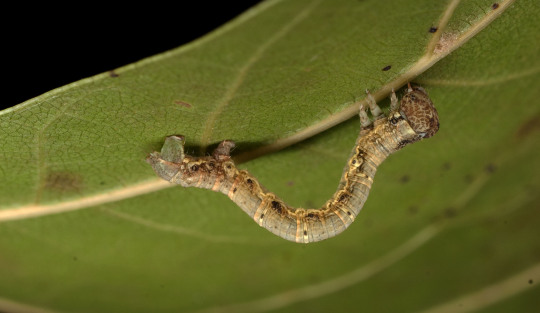
caterpillar
The one-spotted variant (Hypagyrtis unipunctata), a very common moth in the Geometridae subfamily Ennominae in its early stages of life.
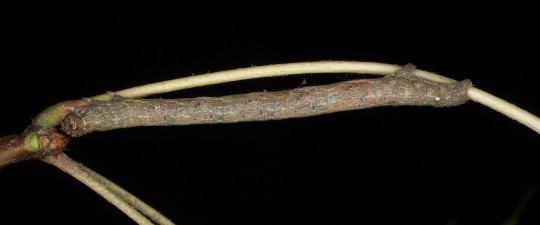
cocoon
The one-spotted variant (Hypagyrtis unipunctata), a very common moth in the Geometridae subfamily Ennominae in its cocoon.

by Vanessa Verdecia 

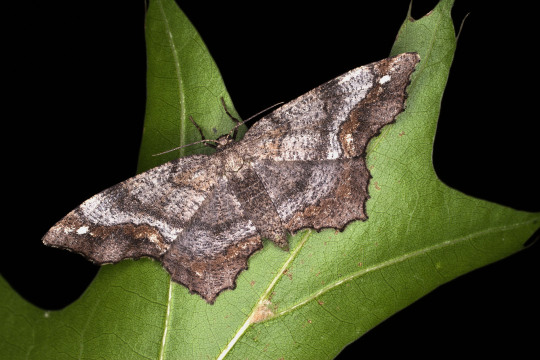
Carnegie Museum of Natural History’s Section of Invertebrate Zoology had a moth eclose earlier this month.  The little caterpillar came in on the oak leaves that staff were feeding to other caterpillar cultures. It was identified as a one-spotted variant (Hypagyrtis unipunctata), a very common moth in the Geometridae subfamily Ennominae.

The pictures show its progress from an early instar caterpillar to an adult moth.

moth
The one-spotted variant (Hypagyrtis unipunctata), a very common moth in the Geometridae subfamily Ennominae in its most developed stage of life.

Vanessa Verdecia is a collection assistant in the museum’s Invertebrate Zoology Section. Museum employees are encouraged to blog about their unique experiences and knowledge gained from working at the museum.

Filed Under: Blog Tagged With: Invertebrate Zoology, zoology

August 2, 2016 by wpengine

Polyphemus Moth Rearing

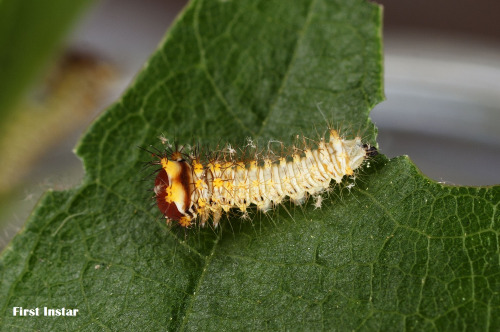
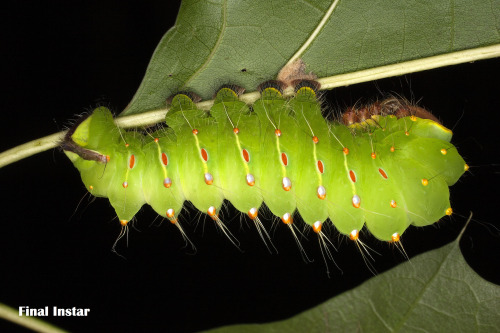
larval (caterpillar) stage of the Polyphemus moth

by Vanessa Verdecia

Recently, a member of the public dropped off some tiny caterpillars at Carnegie Museum of Natural History’s Section of Invertebrate Zoology for identification. Our staff identified them as Polyphemus moth caterpillars (Antheraea polyphemus) and have been rearing the caterpillars and taking pictures as they grow in order to document the different stages.

These are images of the larval (caterpillar) and pupal (pupa and cocoon) stages of the Polyphemus moth, which is in the family Saturniidae. These Polyphemus caterpillars go through five instars after they hatch from the egg. Instars are the stages between each molting of the caterpillar as it grows. Included in this set of images is a picture of the first instar, which is about 3mm long and a picture of the last instar which is significantly bigger—about 6 or 7cm, depending on how far it is stretched while eating.

larval (caterpillar) stage of the Polyphemus moth

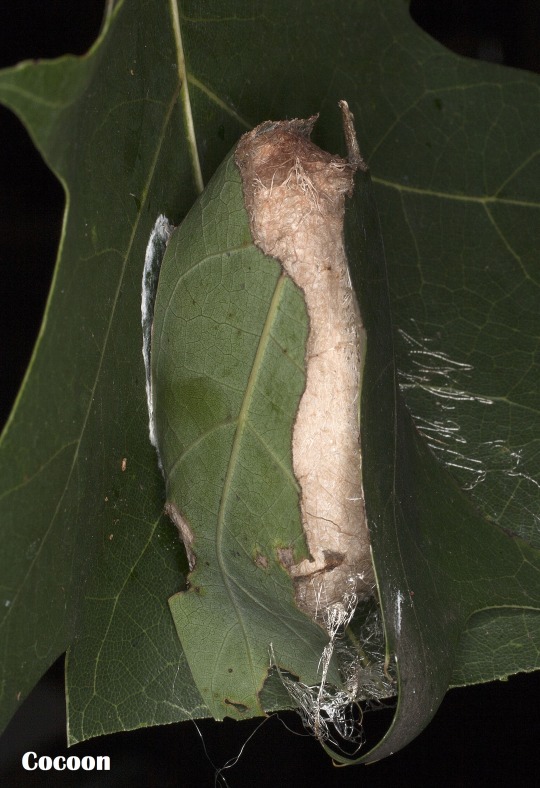
The third picture is of one of the cocoons made by these caterpillars.  Inside of each cocoon is a dark brown pupa which the adult moth will come out of. Some species like the Polyphemus moth spin a cocoon, but there are species that don’t. Their pupae are usually formed underground for protection during the winter.

The adult Polyphemus moths should eclose next year, around May or June—so they will spend the winter in the pupal stage.  This is a species that occurs here in Pittsburgh, and people could be seeing fully grown caterpillars around this time of the year.

This culture was reared on oak leaves, but they like many other kinds of host plants, including: apple, ash, birch, dogwood, elm, hazel, hickory, maple, rose, and willow.  It is visible in the image how the caterpillar spun its cocoon in the oak leaf. In its natural habitat, this cocoon would drop off the tree in the fall and over-winter in the leaf litter on the ground.

cocoon of the Polyphemus moth


Vanessa Verdecia is a collection assistant in the museum’s Invertebrate Zoology Section.

Museum employees are encouraged to blog about their unique experiences and knowledge gained from working at the museum.

Filed Under: Blog Tagged With: Invertebrate Zoology, Pittsburgh

  • « Go to Previous Page
  • Page 1
  • Interim pages omitted …
  • Page 8
  • Page 9
  • Page 10

sidebar

About

  • Mission & Commitments
  • Directors Team
  • Museum History

Get Involved

  • Volunteer
  • Membership
  • Carnegie Discoverers
  • Donate
  • Employment
  • Events

Bring a Group

  • Groups of 10 or More
  • Birthday Parties at the Museum
  • Field Trips

Powdermill

  • Powdermill Nature Reserve
  • Powdermill Field Trips
  • Powdermill Staff
  • Research at Powdermill

More Information

  • Image Permission Requests
  • Science Stories
  • Accessibility
  • Shopping Cart
  • Contact
  • Visitor Policies
One of the Four Carnegie Museums | © Carnegie Institute | Privacy Policy | Terms of Use | Accessibility
Rad works here logo