• Skip to primary navigation
  • Skip to main content
  • Skip to primary sidebar

Carnegie Museum of Natural History

One of the Four Carnegie Museums of Pittsburgh

  • Visit
    • Buy Tickets
    • Visitor Information
    • Exhibitions
    • Events
    • Dining at the Museum
    • Celebrate at the Museum
    • Powdermill Nature Reserve
    • Event Venue Rental
  • Learn
    • Field Trips
    • Educator Information
    • Programs at the Museum
    • Bring the Museum to You
    • Guided Programs FAQ
    • Programs Online
    • Climate and Rural Systems Partnership
  • Research
    • Scientific Sections
    • Science Stories
    • Science Videos
    • Senior Science & Research Staff
    • Museum Library
    • Science Seminars
    • Scientific Publications
    • Specimen and Artifact Identification
  • About
    • Mission & Commitments
    • Directors Team
    • Museum History
  • Tickets
  • Give
  • Shop

Invertebrate Zoology

July 10, 2017 by wpengine

A New Giant Discovered in Peru

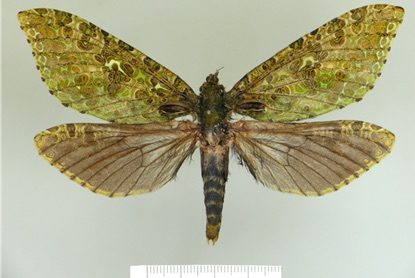
Peruvian Viridigigas ciseskii, a green and brown moth

by Molly Carter

It is big, green, and was recently seen by people for the first time ever. The newly discovered Peruvian Viridigigas ciseskii is a neotropical ghost moth found in the Andes Mountains and is the first of its kind to be officially categorized.

John Rawlins, curator of the Section of Invertebrate Zoology at Carnegie Museum of Natural History, and John Grehan, a research associate, helped describe the new species and published their findings in the Annals of the Carnegie.

This green giant is so distinct, its wider evolutionary position has not been determined and a new genus, Viridigigas, has been created as it is unlike anything entomologists have observed before. Two unique individuals, a male and female, have been described and are the only ones to be collected thus far.

A monster among ghost moths, the Viridigigas ciseskii has a 12 cm wingspan and a combination of features that are not seen in any other ghost moths of the Amazon or the world. Perhaps most striking, the moth’s wings are olive green and overlaid with swirls of irregular dark circular spots, enclosed in a series of fine lines. Other tropical ghost moths have predominantly brown wings, and not one has been documented with any type of circular pattern.

Beyond its coloring, this new species also has unusual characteristics not typically found in ghost moths. The male features a large oval scent gland at the base of his forewing and the moth’s hind legs have long scent scales. While other moths do have similar traits, they are uncommon and shared only with an obscure, small gray moth found in central Chile and a large moth whose habitat is on the islands of Fiji.

While it seems hard to believe that a moth this big remained hidden from human eyes for so long, many ghost moths go unnoticed. The caterpillars burrow in the ground or inside stems, and the non-feeding moths do not often come to light. Because these moths are often ghost-like and hard to come across, it is not yet known if the new species is rare or simply elusive.
Filed Under: Blog Tagged With: Invertebrate Zoology, John Rawlins

June 26, 2017 by wpengine

Poisons of the Carnegie: Wheel Bug

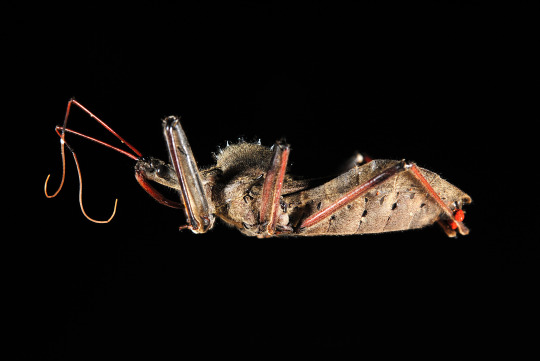
wheel bug (Arilus cristatus) profile view

by Vanessa Verdecia

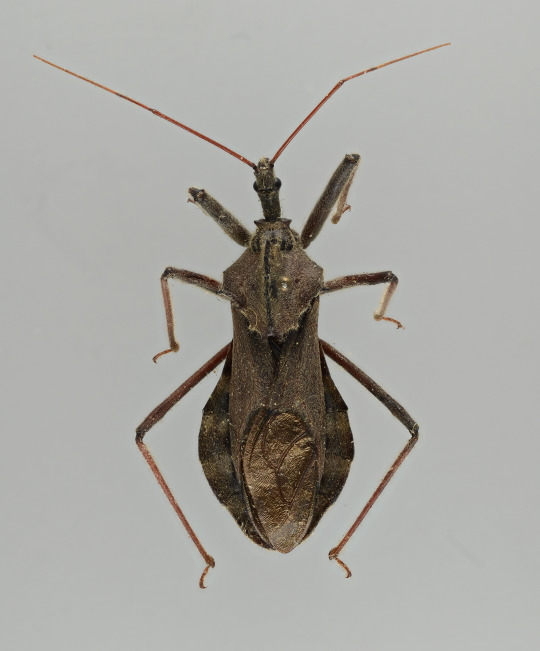
The wheel bug (Arilus cristatus) is common in the United States and can be found here in Pennsylvania during the summer. It is recognized by the crested “wheel” as seen in the lateral image of this Carnegie specimen, and the beak can be seen coming out of the front of the elongated head and angled back towards the body in the close-up image. Wheel bugs can be found during the day, and one should be careful not to handle them, as a bite from this species is very painful. It is reported as causing intense pain followed by numbness, but their toxins do not cause serious health problems.

Wheel bugs, however, are very important predators and should be left undisturbed. They play a valuable role as forest predators, feeding on other insects that would otherwise defoliate trees or cause other destruction.

The wheel bug is classified in the family Reduviidae, which is one of the predatory families in the order Hemiptera (the True Bugs).

wheel bug (Arilus cristatus)

This summer is all about poison at Carnegie Museum of Natural History. Staff will be sharing fascinating pieces of our collection that are toxic, poisonous, or venomous to celebrate our summer blockbuster exhibition The Power of Poison. For more information about this highly interactive, family-friendly exhibition, visit pop.carnegiemnh.org.

Filed Under: Blog Tagged With: Invertebrate Zoology, Vanessa Verdecia

May 11, 2017 by wpengine

Polyphemus Moths Emerge

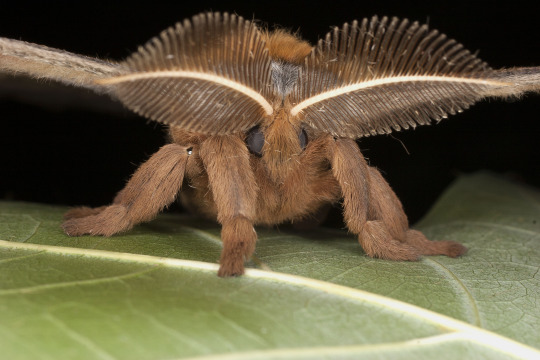
Polyphemus moth, a fuzzy insect with wings

by Vanessa Verdecia

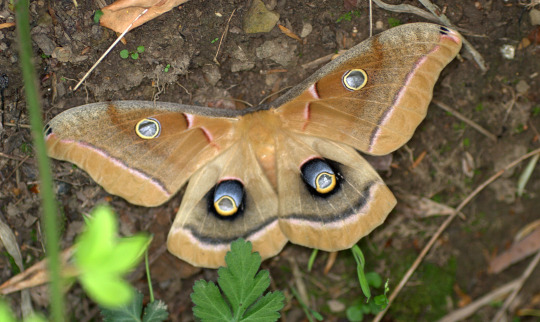
After months of overwintering, an adult Polyphemus moth from one of the cultures reared in the Section of Invertebrate Zoology emerged from its cocoon at the end of April. Check out the pictures of the adult moths as well as pictures of the first and last instars of the caterpillars and one of the cocoons from last year!

adult Polyphemus moth

Vanessa Verdecia is a collection assistant in the museum’s Section of Invertebrate Zoology. Museum employees are encouraged to blog about their unique experiences and knowledge gained from working at the museum.

Filed Under: Blog Tagged With: Invertebrate Zoology

April 25, 2017 by wpengine

Did you know?

Did you know that Carnegie Museum of Natural History has about 13 million specimens in the Section of Invertebrate Zoology? Get a peek at the hidden collection, and learn all about insects from curator John Rawlins with our new series Scientists Live.

Tune into our Facebook on May 3 for the next episode, featuring Erin Peters, an assistant curator recently back from an expedition to Egypt.

Filed Under: Blog Tagged With: butterflies, Invertebrate Zoology, John Rawlins, Scientists Live

February 13, 2017 by wpengine

Collected on this Day in 1991

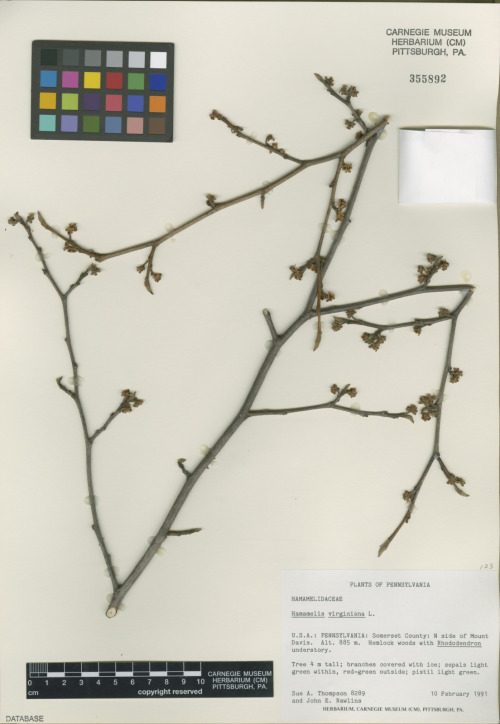
Witch hazel (Hamamelis virginiana) specimen
Collected on February 10, 1991, this specimen was found in Somerset County at Mount Davis (the highest point in Pennsylvania) by former Assistant Curator of Botany Sue Thompson and the current Curator of Invertebrate Zoology John Rawlins. Witch hazel (Hamamelis virginiana) is a shrub native to eastern North America, which flowers in late autumn after leaves have fallen. It is also known for its medicinal uses as an astringent.


Botanists at Carnegie Museum of Natural History share pieces of the herbarium’s historical hidden collection on the dates they were discovered or collected. Check back for more!

Filed Under: Blog Tagged With: Invertebrate Zoology, Mason Heberling

December 5, 2016 by wpengine

Specimens from invertebrate zoology

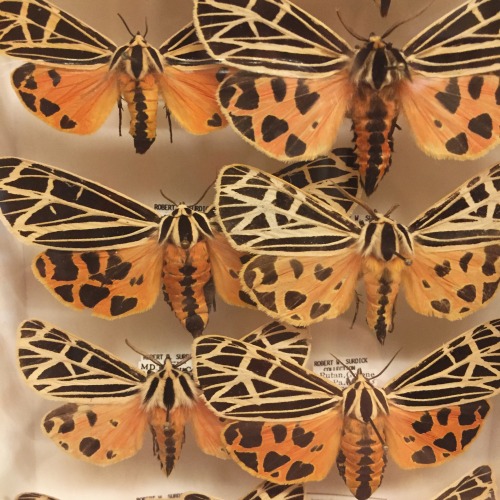
Butterfly specimens

Specimens from the invertebrate zoology collection at Carnegie Museum of Natural History

Filed Under: Blog Tagged With: butterflies, insects, Invertebrate Zoology, moths

  • « Go to Previous Page
  • Page 1
  • Interim pages omitted …
  • Page 7
  • Page 8
  • Page 9
  • Page 10
  • Go to Next Page »

sidebar

About

  • Mission & Commitments
  • Directors Team
  • Museum History

Get Involved

  • Volunteer
  • Membership
  • Carnegie Discoverers
  • Donate
  • Employment
  • Events

Bring a Group

  • Groups of 10 or More
  • Birthday Parties at the Museum
  • Field Trips

Powdermill

  • Powdermill Nature Reserve
  • Powdermill Field Trips
  • Powdermill Staff
  • Research at Powdermill

More Information

  • Image Permission Requests
  • Science Stories
  • Accessibility
  • Shopping Cart
  • Contact
  • Visitor Policies
One of the Four Carnegie Museums | © Carnegie Institute | Privacy Policy | Terms of Use | Accessibility
Rad works here logo