• Skip to primary navigation
  • Skip to main content
  • Skip to primary sidebar

Carnegie Museum of Natural History

One of the Four Carnegie Museums of Pittsburgh

  • Visit
    • Buy Tickets
    • Visitor Information
    • Exhibitions
    • Events
    • Dining at the Museum
    • Celebrate at the Museum
    • Powdermill Nature Reserve
    • Event Venue Rental
  • Learn
    • Field Trips
    • Educator Information
    • Programs at the Museum
    • Bring the Museum to You
    • Guided Programs FAQ
    • Programs Online
    • Climate and Rural Systems Partnership
  • Research
    • Scientific Sections
    • Science Stories
    • Science Videos
    • Senior Science & Research Staff
    • Museum Library
    • Science Seminars
    • Scientific Publications
    • Specimen and Artifact Identification
  • About
    • Mission & Commitments
    • Directors Team
    • Museum History
  • Tickets
  • Give
  • Shop

Joann Wilson

April 19, 2022 by Erin Southerland

Wonderment Returns

by Joann Wilson

“What if one of us discovers the missing boat?” The full-voiced question arose from a group of fourth-grade students eagerly pointing to an ancient Egyptian funerary boat, a school bus-sized wooden craft over 3,800-years-old. On this frosty January morning, twenty teachers and students from a consortium of four Mercer County schools delighted in their return for in-person tours to Carnegie Museum of Natural History. The COVID-19 pandemic led to a two-year absence, a gap that Megan Shreves, a gifted student teacher at St John Paul/Kennedy Catholic School, emphasized by gently tapping a notebook bearing the date of the group’s last visit, October 2, 2019.  

Katie Olive, a gifted student teacher from Sharon School District, explained that the cultural groups presented in several museum exhibitions, including the Tlingit, Hopi, Lakota, Iroquois, Inuit, and ancient Egyptian Peoples, are also presented in their curriculum. Olive added, “The museum is a fantastic environment to learn in a hands-on setting. We love our Interpreters, year after year, because they are experts in the field!” Her comment is a near textbook recognition of the collective aspirations shared by Museum interpreters. The National Association of Interpretation defines interpretation as “a purposeful approach to communication that facilitates meaningful, relevant, and inclusive experiences that deepen understanding, broaden perspectives, and inspire engagement.” 
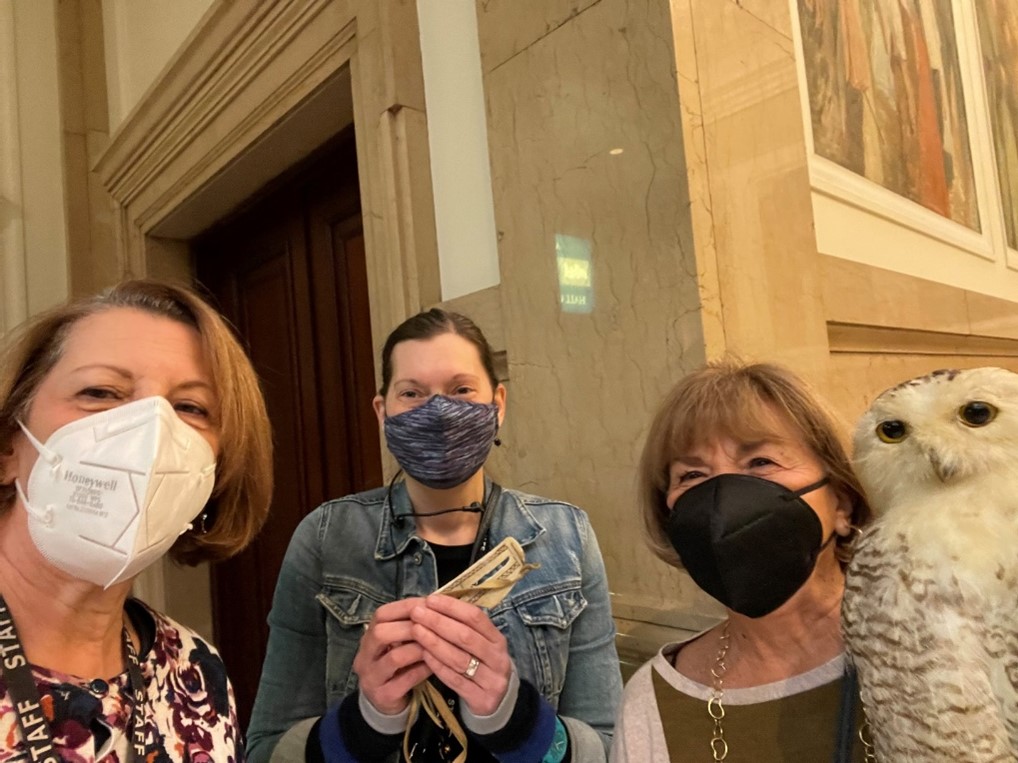
A selfie of three people in a museum.
CMNH Group Program’s Coordinator, Pat Howe, with Interpreter Joann Wilson, holding Inuit snow goggles, and Interpreter, Paula Doebler, holding long-time education collection favorite, the snowy owl. 

Pat Howe, Carnegie Museum of Natural History’s Group Program’s Coordinator, revealed that between the fall of 2021 and this visit in January 2022, the museum had welcomed back over 300 students for guided tours. Guided tours routinely include hands-on activities, observation, and inquiry.  On this day, tours also included a few moments to sketch objects inspiring fascination.
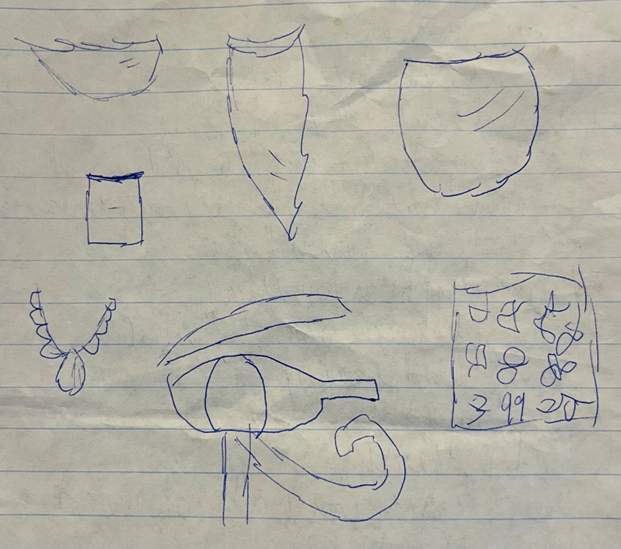
Pen sketches of ancient Egyptian artifacts by a fourth grade student.
Sharon School District student drawing from a January 2022 guided tour about daily life in ancient Egypt.

Which gets us back to that funerary boat. In 1894-1895, during excavation of the tomb of the ancient Egyptian pharaoh Senwosret III, French archeologist Jacques de Morgan discovered five, or perhaps even six, boats buried alongside the structure. However, today, the whereabouts of only four vessels are definitively known. Two boats reside at the Egyptian Museum in Cairo, one is under the stewardship of the Carnegie Museum of Natural History, and another is under the care of the Field Museum in Chicago. Perhaps one day, a student scholar will transport wonderment full circle, and unearth the story of the missing funerary boat or boats.

Thanks to Katie Olive, Sharon gifted teacher, Megan Shreves, St John/Kennedy Catholic gifted teacher, Lindsay Ramage, Hermitage gifted teacher, and June Allenbaugh, Farrell gifted teacher. Joann Wilson is an Interpreter in the Education Department at Carnegie Museum of Natural History. Museum employees blog about their unique experiences and knowledge gained from working at the museum.   

Related Content

Making Time Disappear

March Mammal Madness and Middle School Science Class

Learning From Misinterpretations

Carnegie Museum of Natural History Blog Citation Information

Blog author: Wilson, Joann
Publication date: April 14, 2022
Share this post!

  • Share on Twitter Share on Twitter
  • Share on Facebook Share on Facebook
  • Share on Pinterest Share on Pinterest
  • Share on LinkedIn Share on LinkedIn
  • Share on Reddit Share on Reddit
  • Share via Email Share via Email

Filed Under: Blog Tagged With: Education, Joann Wilson

October 29, 2021 by Erin Southerland

Meet the Mysterious Mr. Ernest Bayet

by Joann Wilson and Albert Kollar

Imagine accumulating tens of thousands of fossils? While the exact number of fossils in Bayet’s collection has yet to be determined, estimates range from 20,000 to over 100,000. In 1903, William Holland, Director of the Carnegie Museum, negotiated a blockbuster deal to bring Bayet’s entire collection to Pittsburgh. The deal dazzled the public and made front page news in the New York Times. For over two years, the Section of Invertebrate Paleontology has been uncovering the stories of the collectors and dealers behind Bayet’s magnificent collection. Notable dealers include Lucien Stilwell, Frederick Stearns, and Dr. Friedrich Krantz, to name a few. But what about Bayet himself? What is his story?

Thanks to ongoing translations of the Bayet archive by volunteer Lucien Schoenmakers, we are excited to begin a series introducing Ernest Bayet, the person behind the collection.  

How old was Bayet when he sold his fossil collection?

Bayet, who was Born in 1859, was just 44 years old in 1903 when he sold his collection to the Carnegie Museum.  

How long did Bayet collect fossils?

Archival documents, that in 1903 arrived in Pittsburgh from Brussels with the purchased materials, indicate Bayet acquired the bulk of his collection in under 20 years. Assuming a range of 20,000 -100,000 fossils, Bayet would have acquired fossils at the blistering pace of 1,000-5,000 specimens per year. When you consider the logistics of shipping, along with the perpetual letter writing required to transact deals in the late 19th century, his acquisition rate is an amazing feat. 

Signature on a piece of paper
Is this Ernest Bayet’s signature? Portion of a recently re-discovered fossil label.

Why did Bayet sell his collection?

In July of 1902, Bayet married countess, Maria van der Burch. The Bayet family had their first child in 1903. A second child followed in 1905. Was this a factor in Bayet’s decision to downsize his entire fossil collection? We are not yet sure of Bayet’s plans or motives. For over a century it was rumored that Bayet sold his fossils to pay for a new chateau, or home.  In a letter to Andrew Carnegie dated June 8, 1903, William Holland, then Director of the Carnegie Museum, reported this as a possible explanation for the fossil sale. Although we have yet to verify that a chateau was acquired within that period, such a purchase is a possibility.  

How long did Bayet live?

The Mysterious Mr. Ernest Bayet died in 1935 at the age of 76. What was his life like after the sale? To learn more about Bayet and how his fossils arrived in Pittsburgh, check out Annals of Carnegie Museum’s new publication, “Unraveling the 120 Year Mystery of Ernest Bayet and His Fossil Collection at Carnegie Museum”.

We are continually grateful to volunteer and Netherlands resident Lucien Schoenmakers for ongoing efforts to translate archival Bayet documents. Joann Wilson is an Interpreter in the Education Department at Carnegie Museum of Natural History. Albert Kollar is Collections Manager for the Section of Invertebrate Paleontology. Museum employees are encouraged to blog about their unique experiences and knowledge gained from working at the museum.   

Related Content

Bayet and Krantz: 16 Words

Bayet’s Bounty: The Invertebrates That Time Forgot

From Collector to Director

Carnegie Museum of Natural History Blog Citation Information

Blog author: Wilson, Joann; Kollar, Albert
Publication date: October 29, 2021

Share this post!

  • Share on Twitter Share on Twitter
  • Share on Facebook Share on Facebook
  • Share on Pinterest Share on Pinterest
  • Share on LinkedIn Share on LinkedIn
  • Share on Reddit Share on Reddit
  • Share via Email Share via Email

Filed Under: Blog Tagged With: Albert Kollar, invertebrate paleontology, Joann Wilson, Science News, SWK2

October 7, 2021 by Erin Southerland

Making Time Disappear

by Joann Wilson

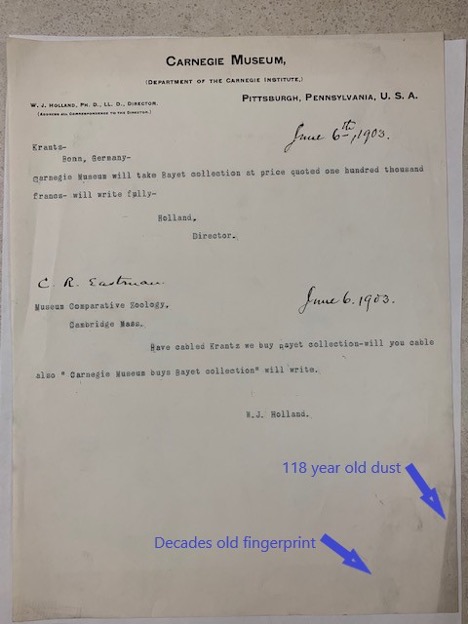
Archivists control time. During a recent visit to the Carnegie Museum of Natural History Library, Kelsea Collins, Carnegie Museum Library Cataloger, demonstrated the magic of archival restoration on a 118-year-old document.  Kelsea, along with Marie Corrado, Carnegie Museum of Natural History Library Manager, guided me to a windowless, climate-controlled section of the Natural History Library. In this room, rows of hand bound documents, and other archival materials, rest at a constant 65–68-degrees Fahrenheit.     

Cleaning Historic Documents

On a flat surface, ready for cleaning, lay an historic “wove” paper cable. “Wove” paper production was introduced in 1750 at a time when paper was made by hand. It is sometimes confused with another of material, known as “laid” paper. Both types are made from wood pulp. The type of mesh, used during manufacturing, generates the differing appearance. Wove paper has a more uniform look when held up to the light.  Laid paper has lines, grooves, and sometimes, watermarks. By the early 1800’s, machines were introduced to make paper in greater quantities. Kelsea indicated that our 118-year-old document was likely made by machine, not by hand.   

historic document with arrows pointing out dust and fingerprints on the bottom right corner
Before cleaning:  118-year-old document from the Carnegie Museum of Natural History Library.
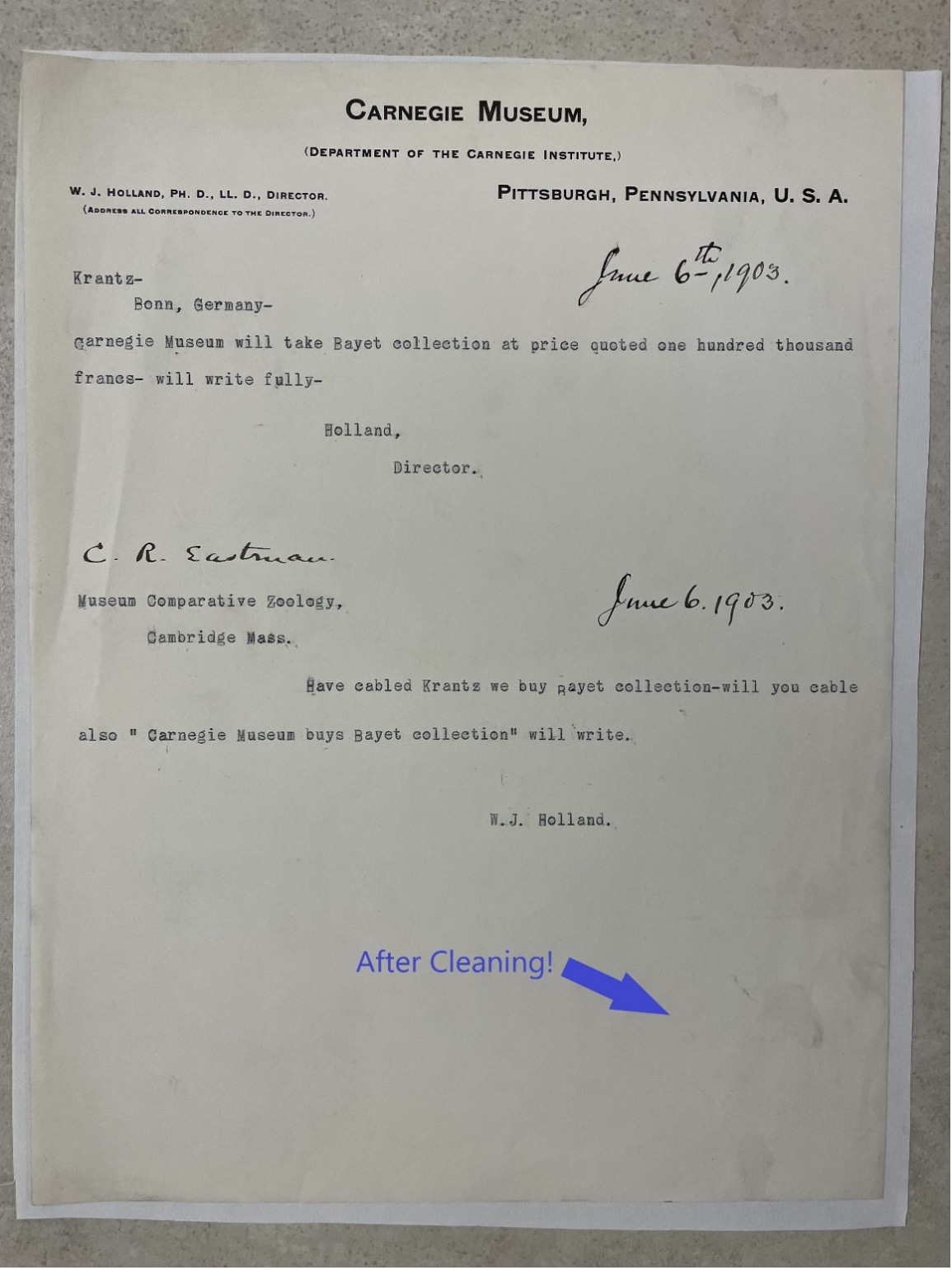
historic document with arrow pointing to where there was previously much more dust and fingerprints
Same document after cleaning.

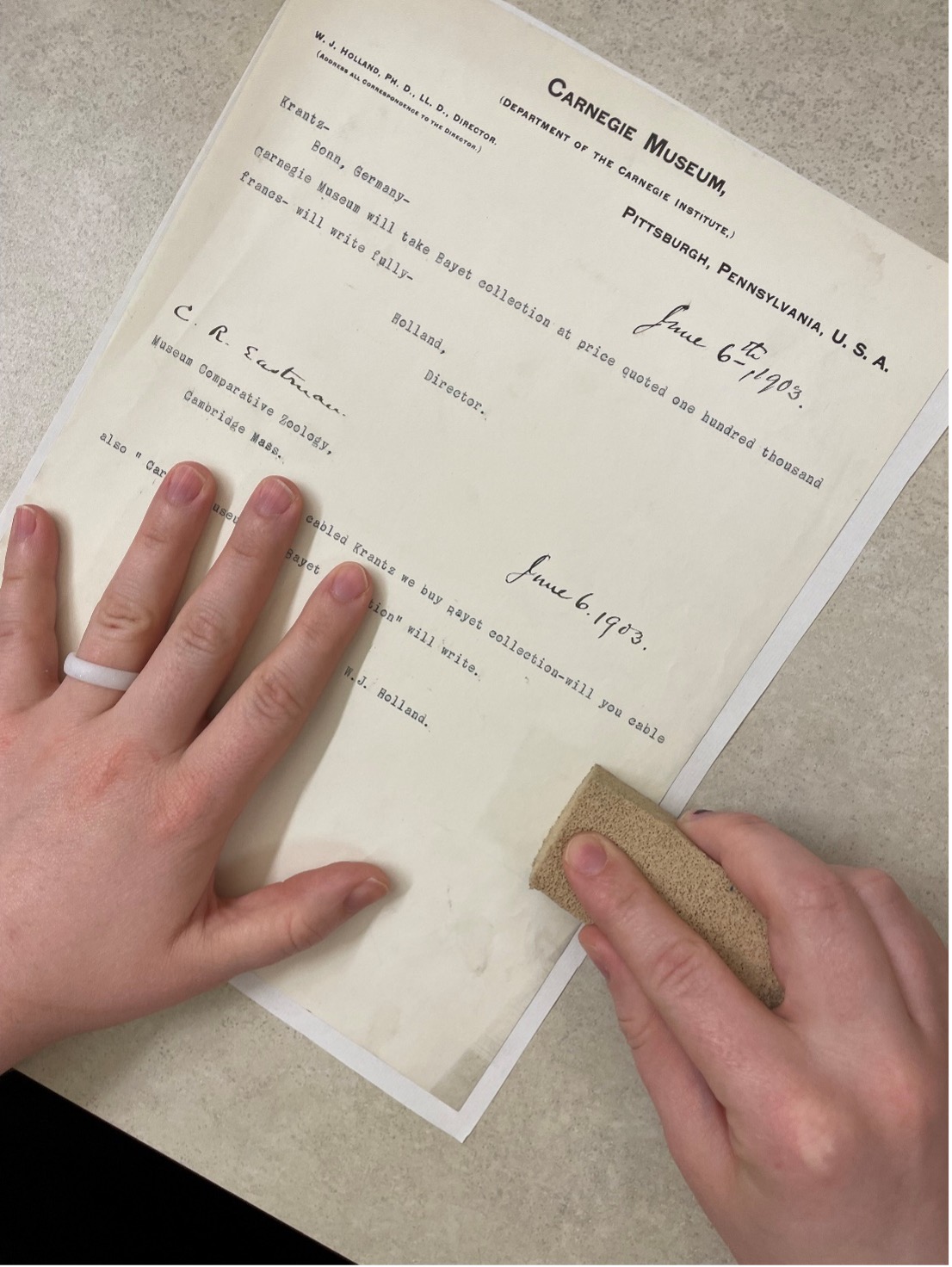
Having washed her hands, Kelsea was ready for restoration. Current practice from the Library of Congress recommends clean, dry hands, without gloves for the handling of rare and old documents. Nitrile and cotton gloves, used in previous decades, can easily rip fragile paper. In less than a minute, and with just a few gentle swipes of a dry, vulcanized rubber sponge, Kelsea removed discernible marks from the past. Long forgotten fingermarks faded and dust lines, possibly from coal, disappeared. Our document still has a trace of the century old fingerprints, but the dust lines are almost completely gone. Skilled archivists know when to stop.  

historic document being cleaned by hand with a vulcanized rubber sponge
Document cleaning with a vulcanized rubber sponge.  The Library of Congress recommends cleaning rare documents without gloves.

So, the next time you see an old document, take a moment to see if there are traces of fingerprints or other marks from the past. Then remember the archivists and librarians that deftly decide, whether or not, to make time disappear.   

Many thanks to Kelsea Collins, Carnegie Museum Library Cataloger and Marie Corrado, Carnegie Museum of Natural History Library Manager for taking the time to share this story. Joann Wilson is an Interpreter for the Education Department at Carnegie Museum of Natural History. Museum employees are encouraged to blog about their unique experiences and knowledge gained from working at the museum.

Related Content

Meet the Fossil Detectives in the Basement

A Deeper Look at Dioramas

Sharing Shipping Space with Amphibians and Reptiles

Carnegie Museum of Natural History Blog Citation Information

Blog author: Wilson, Joann
Publication date: October 7, 2021

Share this post!

  • Share on Twitter Share on Twitter
  • Share on Facebook Share on Facebook
  • Share on Pinterest Share on Pinterest
  • Share on LinkedIn Share on LinkedIn
  • Share on Reddit Share on Reddit
  • Share via Email Share via Email

Share this post!

  • Share on Twitter Share on Twitter
  • Share on Facebook Share on Facebook
  • Share on Pinterest Share on Pinterest
  • Share on LinkedIn Share on LinkedIn
  • Share on Reddit Share on Reddit
  • Share via Email Share via Email

Filed Under: Blog Tagged With: Joann Wilson, Science News

September 24, 2021 by wpengine

Bayet and Krantz: 16 Words (Part 1)

by Joann Wilson and Albert Kollar

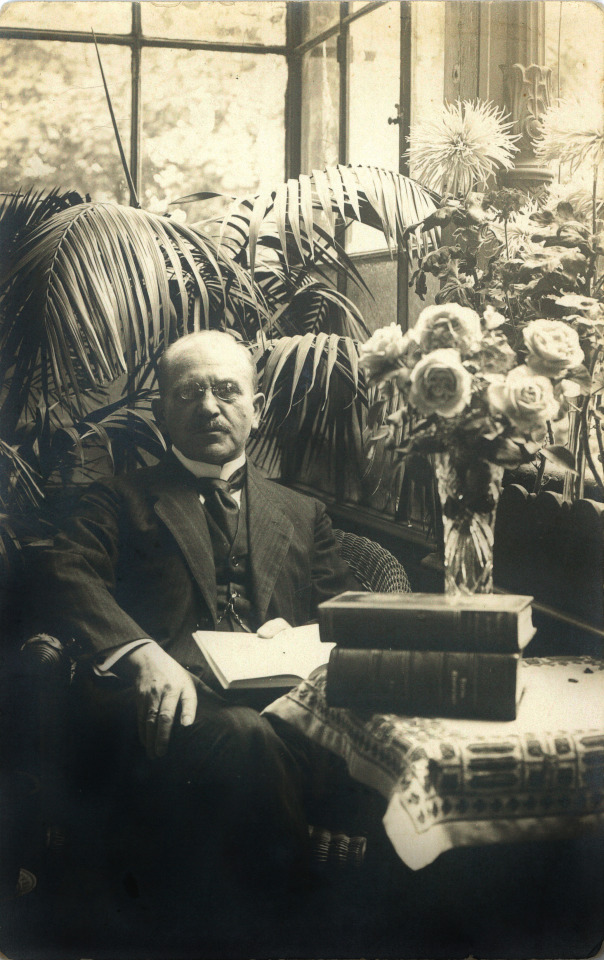
In June of 1903, William Holland, Director of the Carnegie Museum, seized a rare chance to acquire one of the finest private collections in all of Europe. The purchase was made with sixteen words. Within in Holland’s Archives at the Carnegie Museum of Natural History Library, on onion paper so fragile that it appears to float, is a carbon copy of the telegram that influenced the early history of the Paleontology Department. Mysteriously, only one name appears on this fateful cable, and it is not a name that you would expect. The name is “Krantz,” Dr. Friedrich Krantz of Bonn, Germany.

Black and white photo of a man in a suit holding a book surrounded by books and plants.
Dr. Friedrich Krantz sitting in the conservatory, or wintergarten, at his villa in Germany, (date unknown). Permission of Ursula Müller-Krantz, Executive Director, Dr. F. Krantz.

In 1859, Friedrich Krantz was born into a family that operated a geological supply business. In 1888, Krantz graduated with a PhD in geology from the University of Erlangen. That same year, he joined “Dr. A Krantz,” the company founded by his uncle, Adam August Krantz. By 1891, Friedrich Krantz took charge and changed the company name to “Dr. F. Krantz, Rheinisches Mineraliaen Contor.” The company continues operations to this day out of headquarters in Bonn.

Exactly when Ernest Bayet of Brussels and Friedrich Krantz met is uncertain. But thanks to the letters and fossil lists that arrived with the Bayet collection, we know that they corresponded at least three times. The difficult task of translating these documents into English is being handled by volunteer Lucien Schoenmakers, a resident of the Netherlands. Schoenmakers’ translation work here and with other records is contributing critical information to the Section of Invertebrate Paleontology’s multiyear project to fully document the invertebrate portion of the Bayet Collection.

From the archive, we know that Krantz visited Bayet at least once. On July 7th, 1897, Krantz wrote, “I intend to come to Brussels towards the end of next week and will be honored to visit you, I can use the numbered list to give you the exact individual prices for all the objects displayed by me.”

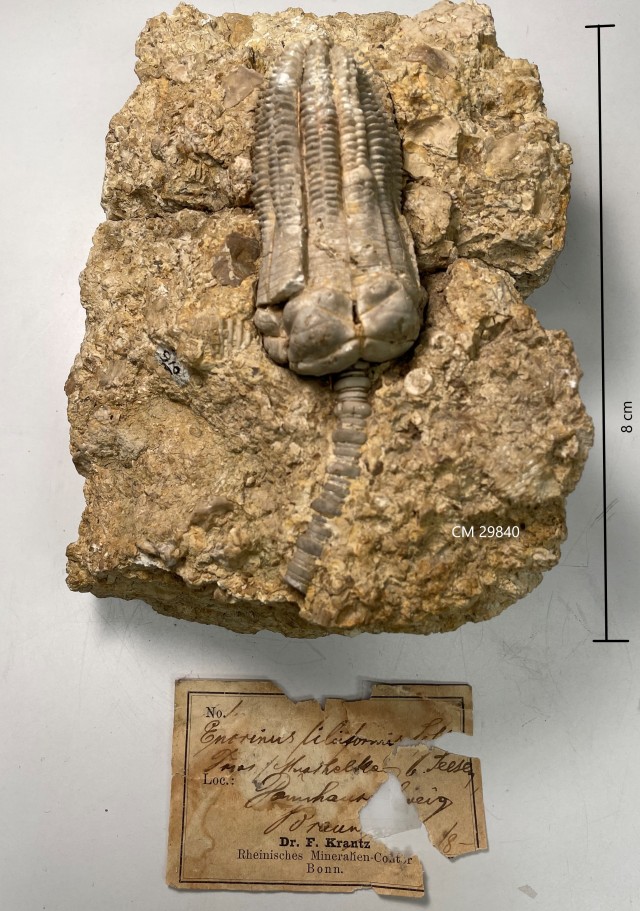
In fact, Bayet may have selected Krantz to act as his agent for the sale because he was so familiar with it. Krantz sold many museum quality specimens to Bayet; many with distinctive, elegant labels.

Fossil specimen with partial label underneath
Encrinus liliiformis Miller (CM 29840): a Triassic crinoid from Brunswick, Germany with Krantz label.

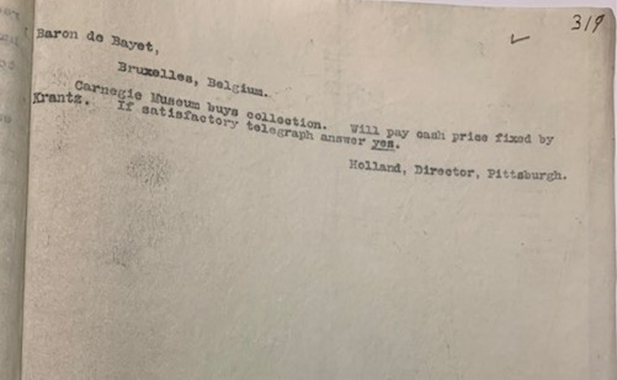
The sale of Baron Ernest Bayet’s fossil collection to the Carnegie Museum in 1903, made front page news in the New York Times, and other papers across the country. In a letter to Andrew Carnegie, thanking him for allocating $25,000 for the purchase, an enormous sum for that time, Holland wrote, “We are never likely to have another such chance, and you have done a most splendid thing in securing it [the Bayet Collection] for our Museum of Paleontology.” That most splendid thing transpired, over a century ago, with just sixteen words:

“Carnegie Museum buys collection. Will pay cash price fixed by Krantz. If satisfactory, telegraph answer yes.”

Photograph of a telegraph that reads: Baron de Bayet, Bruxelles, Belgium, Carnegie Museum buys collection.  Will pay cash price fixed by Krantz.  If satisfactory, telegraph answer yes.
Cable sent from Pittsburgh to Brussels on June 9th or 10th, 1903 offering to buy Baron Ernest Bayet’s fossil collection. “Krantz” refers to Friedrich Krantz of Bonn, Germany, a business man and fossil dealer who acted as Bayet’s negotiating agent.

Part 2 of this series highlights spectacular Krantz specimens within the Bayet collection.

Many thanks for the generous contributions of Ursula Müller-Krantz, Executive Director of Dr. F Krantz Rheinisches Mineraliaen Contor GmbH & Co., Marie Corrado, Carnegie Museum of Natural History Library Manager and Kelsea Collins, Carnegie Museum Library Cataloger. Continued gratitude to volunteer Lucien Schoenmakers’ ongoing effort to translate archival Bayet documents. Joann Wilson is an Interpreter in the Education Department at Carnegie Museum of Natural History and Albert Kollar is Collections Manager for the Section of Invertebrate Paleontology. Museum employees are encouraged to blog about their unique experiences and knowledge gained from working at the museum.

Related Content

Bringing Light to Dark Places

Hunting for Fossil Frogs in Wyoming

A Deeper Look at Dioramas

Carnegie Museum of Natural History Blog Citation Information

Blog author: Wilson, Joann; Kollar, Albert
Publication date: September 24, 2021

Share this post!

  • Share on Twitter Share on Twitter
  • Share on Facebook Share on Facebook
  • Share on Pinterest Share on Pinterest
  • Share on LinkedIn Share on LinkedIn
  • Share on Reddit Share on Reddit
  • Share via Email Share via Email

Share this post!

  • Share on Twitter Share on Twitter
  • Share on Facebook Share on Facebook
  • Share on Pinterest Share on Pinterest
  • Share on LinkedIn Share on LinkedIn
  • Share on Reddit Share on Reddit
  • Share via Email Share via Email

Filed Under: Blog Tagged With: Albert Kollar, invertebrate paleontology, Joann Wilson, Science News, SWK2

June 9, 2021 by wpengine

Student of the World; Part 2: Stearns and Bayet

by Joann Wilson and Albert Kollar

“His [Frederick Stearns] love for that which was beautiful and useful, led him to collect a vast amount of material covering so many fields of human effort…”

Detroit Free Press, January 15, 1907

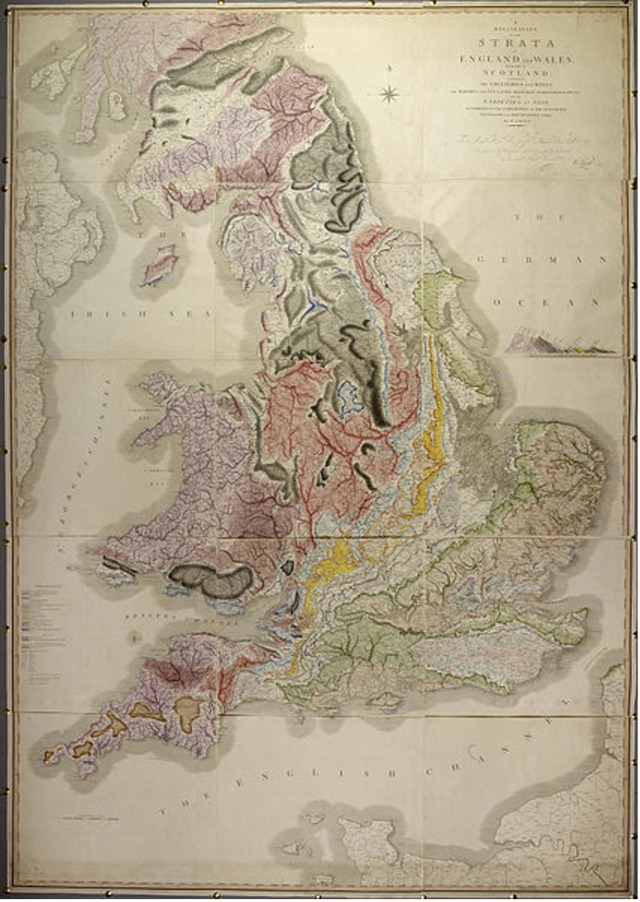
Fossils pass through many hands. Some hands hold discoveries, some buy and sell, others study and organize. Behind every fossil is a story and hopefully, for those in museum collections, a specimen label. With luck, the geology and paleontology of the label script is accurate. Beginning with the creation of the first color geological map by William Smith in 1815 and the subsequent organizing of the Geologic Time Scale in 1823, paleontologists worked to validate stratigraphy by collecting and describing new species from exposed strata in Europe and North America. It was not until the publication of Charles Darwin’s The Origin of Species in 1859 that paleontological work shifted to include studying evolution as documented by fossil evidence.

Today we understand that many hands aided fossil discovery, often in anonymity. Thanks to technology and through a focus shift to the individuals behind the specimens, we can now provide a fuller picture of the past that acknowledges the roles of collectors, dealers, indigenous cultures, women, quarry workers, and all who aided in the pursuit of fossils.

In the basement of Carnegie Museum of Natural History, behind a set of gray steel doors in the Section of Invertebrate Paleontology, is an astonishing assembly of archival documents from the Bayet Collection. Andrew Carnegie made front page news in 1903 by purchasing an estimated 130,000 fossils from Ernest Bayet of Brussels. Along with the fossils, the museum also received hundreds of documents written primarily in French, German, and Italian. Most of it has remained untranslated, until now.

Thanks to volunteer Lucien Schoenmakers of the Netherlands, details of fossil trades and purchases from over 100 years ago provide links to narratives that have yet to be told. Join us as we start the journey. Our series, which began with an examination of correspondence between fossil collector Frederick Stearns and his client, Bayet, continues here with a deeper profile of Stearns.

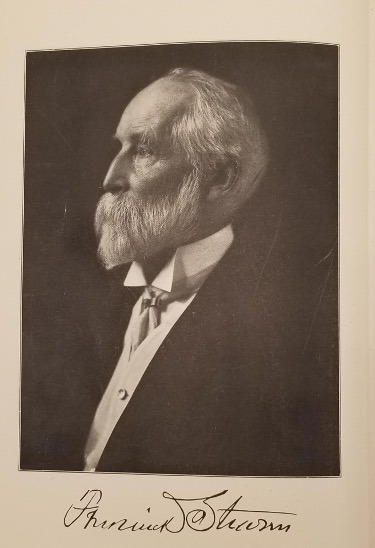
Sepia tone profile photo of a white man wearing a suit. Underneath the photo is his signature: Frederick Stearns.
Frederick Stearns, date unknown. Permission of the University of Michigan Stearns Collection.

Frederick Stearns of Detroit was a man not born into wealth, but with a passion for education, art, and science. His early life revolved around diligence, not fossils. Born in Lockport, New York in 1831, Stearns quit school at age 14 to find a job. Within a year, he found work as an apprentice to a pharmacist in Buffalo, New York. Of his early life, he later said, “one of my earliest memories is looking into the windows Dr. Merchant’s Gargling Oil Drug store and wondering at the mystery of the white squares of magnesia and the round balls of chalk.” Eventually, Stearns moved to another pharmacy, and became partner, but he was not convinced that Buffalo, New York was his ticket to success.

On a frosty New Year’s Day in 1855, Stearns, newly married and just 24 years of age, crossed the frozen Detroit River by foot to start anew. Of that period, he later said, “little money, fair credit, high hope.” He opened a retail pharmacy in Detroit. To reach customers, he made short trips to the surrounding area, leaving samples of his products. Over time, his business expanded to the manufacture of pharmaceuticals. In 1877, he made history by installing the first telegraph line in the city of Detroit. But despite the success, Stearns dreamed of the education lost to him when he left school at the age of 14. In 1887 at age 56, he turned the business over to his sons and he began to travel the world. Over the next twenty years, he collected many items, including fossils.

William Smith’s 1815 Color Geological Map.

Stearns pursuits led him to Africa, Europe, and Asia. In the late 1800’s, a voyage to Japan required weeks of travel as compared to a current 14-hour flight from New York to Tokyo. In the early 1890’s, Stearns travelled to Japan twice for the purpose of studying mollusks and other marine life. In a book published in 1895 titled, “Catalog of the Marine Mollusks of Japan,” Stearns credits Japanese fisherman Morita Seto for assisting in the collection of over “1000 forms of marine life.”

But Stearns interest did not stop with mollusks. He also collected fossils, art, and musical instruments. His collection of musical instruments at the Stearns Collection of Musical Instruments at the University of Michigan, in Ann Arbor Michigan, is considered one of the finest in the world.

For a short time, Stearns also collected fossils. Between 1888-1889, he wrote two letters to Ernest Bayet about a trade deal. Stearns first letter offers a clue as to how they met. Both men appear to have known fossil dealer Lucien Stilwell of Deadwood, South Dakota. The trade between Stearns and Bayet did not go smoothly, but it does have a happy ending.

Stearns was a student of the world until the very end. In 1907, just days before he was scheduled to sail for Egypt, he became ill and died. At his passing, the Detroit Free Press wrote, “A remarkable phase of Mr. Stearns’s activities as a collector was their diversity… and all of this for the simple love of learning things that he might tell them to others without price.”

Many thanks to the generous contributions of Carol Stepanchuk, Outreach and Academic Projects at the U-M Stearns Collection of Musical Instruments Lieberthal-Rogers Center for Chinese Studies and Joseph Gascho, Associate Professor at the University of Michigan School of Music and Director of the Stearns Collection of Musical Instruments. Many thanks to volunteer Lucien Schoenmakers’ ongoing effort to translate archival Bayet documents written in French and German.

Joann Wilson is an Interpreter in the Education Department at Carnegie Museum of Natural History and Albert Kollar is Collections Manager for the Section of Invertebrate Paleontology. Museum employees are encouraged to blog about their unique experiences and knowledge gained from working at the museum.

Related Content

Stearns and Bayet Part 1: The Dispute

Understanding Fossil Fuels Through Carnegie Museums Exhibits

From Collector to Director

Carnegie Museum of Natural History Blog Citation Information

Blog author: Wilson, Joann; Kollar, Albert
Publication date: June 9, 2021

Share this post!

  • Share on Twitter Share on Twitter
  • Share on Facebook Share on Facebook
  • Share on Pinterest Share on Pinterest
  • Share on LinkedIn Share on LinkedIn
  • Share on Reddit Share on Reddit
  • Share via Email Share via Email

Share this post!

  • Share on Twitter Share on Twitter
  • Share on Facebook Share on Facebook
  • Share on Pinterest Share on Pinterest
  • Share on LinkedIn Share on LinkedIn
  • Share on Reddit Share on Reddit
  • Share via Email Share via Email

Filed Under: Blog Tagged With: Albert Kollar, fossils, invertebrate paleontology, Joann Wilson, Science News

May 5, 2021 by wpengine

Understanding Fossil Fuels through Carnegie Museums’ Exhibits

by Albert D. Kollar, Collection Manager, with assistance from Suzanne Mills, Collection Assistant, and Joann Wilson, Volunteer Section of Invertebrate Paleontology

The exhibits of Carnegie Museum of Natural History and Carnegie Museum of Art are ideal for a multidisciplinary study of fossil fuels in Pennsylvania and beyond. Such a study must properly begin with some historical background about the landmark Oakland building that houses both museums, as well as some background information about fossil fuels.

When the Carnegie Library of Pittsburgh opened in 1895, the architects, Longfellow, Alden, and Harlow incorporated roof skylights for maximum daytime lighting in the Italian Renaissance designed building1. Nighttime activities were illuminated by interior gas lighting fixtures, possibly supplied by the Murrysville gas field, which began production in 1878.  With the opening of the Carnegie Institute Extension in 1907, the Bellefield Boiler Plant was built in Junction Hollow to supply in-house steam heat and electricity from bituminous coal1. From the 1970’s, coal and natural gas had been used to heat the boilers that supply heat to the Oakland Campus, Phipps, the University of Pittsburgh and the Oakland hospitals.  In 2009 coal was eliminated as a fuel source.  Electricity on the other hand, is supplied through Talen Energy from multiple sources (coal, gas, and renewal energy sources). For the future, Carnegie Museums of Pittsburgh plans to receive its electricity from renewable solar energy via Talen Energy2.

What are Fossil Fuels?

Coal, oil, and natural gas (methane), known collectively as fossil fuels, are sources of energy derived from the remains of ancient life forms that usually  are found preserved in coal rock, black shale, and sandstone.

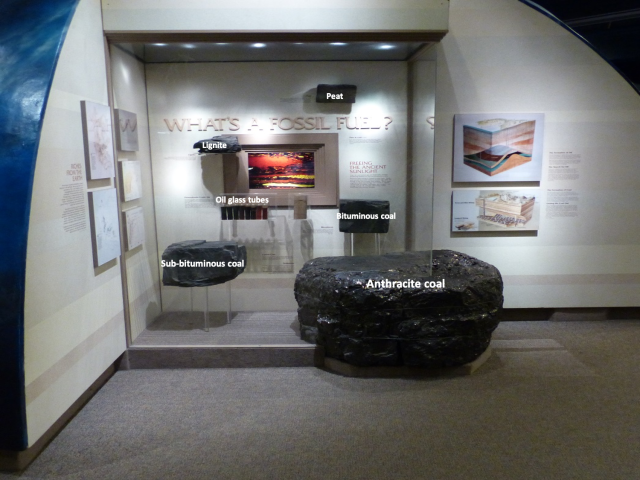
Exhibit called "What's a Fossil Fuel?" Fossil fuels on display are labeled clockwise from the top as follows: peat, bituminous coal, anthracite coal, sub-bituminous coal, oil glass tubes, lignite.
Figure 1.

Coal is a rock. The coalification process starts from a thick accumulation of plant material in reducing environments where the organic matter does not decay completely. This deposit of plant residue that thrives in freshwater swamps at high latitudes forms peat, an early stage or rank in the development of coal. With the burial of peat over geologic time and a low temperature form of metamorphism produces a progression of the maturity or “rank” of the organic deposits that form the coal ranks of lignite, sub-bituminous, bituminous, and anthracite)3 (Fig. 1). The Pennsylvanian Period was named for the rocks and coals of southwestern Pennsylvania that formed more than 300 million years ago.

Oil and natural gas, collectively known as hydrocarbons, were forming in the Devonian rocks of Pennsylvania between 360 and 390 million years ago. These hydrocarbon deposits or kerogens are made of millions of generations of marine plankton and animal remains that accumulated in a restricted anoxia ocean basin that extended from southern New York, through western Pennsylvania, northern West Virginia to eastern Kentucky4. The thick layers of sediment formed black shales or mud rocks such as the Marcellus Shale. Black shales are rich in oil and gas and are called source rocks. Sandstones such as the Oriskany Sandstone that is older than the Marcellus Shale is a reservoir rock. An amorphous mass of organic matter or kerogen undergo complex geochemical reshuffling of the hydrocarbon molecules first with burial then by thermal “cracking” as heat and pressure through the geologic process of metamorphism over millions of years transform kerogen into modern day fossil fuels4.

Fossil Fuels in Modern Society

As commodities converted to fuels for our modern world, these resources account for 80% of today’s energy consumption in the United States5. All three fossil fuels, in furnaces of vastly different design, have been used to directly heat homes, schools, workplaces, and other structures. In power plants, all three have been used for generating electricity for lighting, charging mobile phones, and powering computers, home appliances, and all manner of industrial machines. In the United States, , coal became the country’s primary energy source in the late 1880s, displacing the forest-destroying practice of burning wood. It ceded the top spot to petroleum in 1950 but enjoyed a late-20th-century renaissance as the primary fuel for power plants5. Coal now generates approximately 11% of our country’s supply down from 48% just 20 years ago. Natural gas is currently used to generate approximately 35% of US electricity supplanting the use of coal6. While petroleum is less than1%6.

Transportation accounts for approximately 37% of total energy consumption. Coal played a historic role in powering railroads, and both compressed natural gas and batteries (charged with electricity generated from various sources) are of growing importance, however, refined oil products currently power 91% of the transportation sector6.

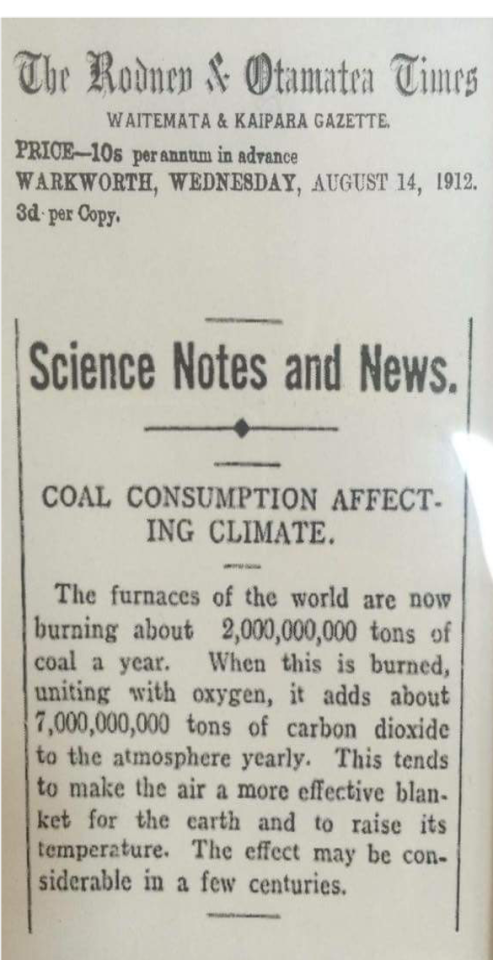
Newspaper clipping from The Rodnen & Otamatea Times dated Wednesday, August 14, 1912. The story shown is as follows: Science Notes and News. Coal Consumption Affecting Climate. The furnaces of the world are now burning about 2,000,000,000 tons of coal a year. When this is burned, uniting with oxygen, it adds about 7,000,000,000 tons of carbon dioxide to the atmosphere yearly. This tends to make the air a more effective blanket for the earth and to raise its temperature. The effect may be considerable in a few centuries.
Figure 2.

In the early 20th century, scientists warned about how the burning of coal could create global warming in future centuries by raising the level of carbon dioxide, a greenhouse or heat-holding, gas, in the atmosphere. (Fig. 2 ). It took less than a century for evidence to mount of climate change associated with the burning of fossil fuels, the clearing of forests associated with industrial scale livestock production, and from waste management and other routine processes of modern life. In recent decades headlines have routinely proclaimed the risks of a warming planet, including damage to terrestrial ecosystems, the oceans, and a rise in sea level7.

Fossil Fuels and Museum Geology Displays

When architects Frank E. Alden and Alfred B. Harlow designed the Carnegie Institute Extension (1907), they incorporated Andrew Carnegie’s vision to create an introduction hall to the museum named Physics, Geology and Mineralogy8. This hall (the forerunner to Benedum Hall of Geology) was intended to introduce Pittsburghers to the regional natural history subjects of geology, paleontology, and economic geology (fossil fuels)9.

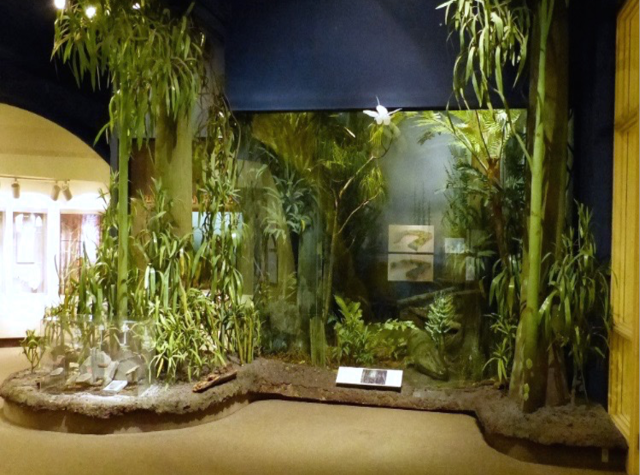
Exhibit in Benedum Hall of Geology with fake trees in the foreground and a swamp diorama in the background.
Figure 3.

In the 1940s, the 300-million-year-old Pennsylvanian age coal forest diorama was installed in a corner space of what is now part of the Benedum Hall of Geology (Fig. 3). Because coal converted to coke is a vital ingredient in steel production, this three-dimensional depiction of the conditions under which Pittsburgh’s economically important coal deposits formed was (and remains) an important public asset.

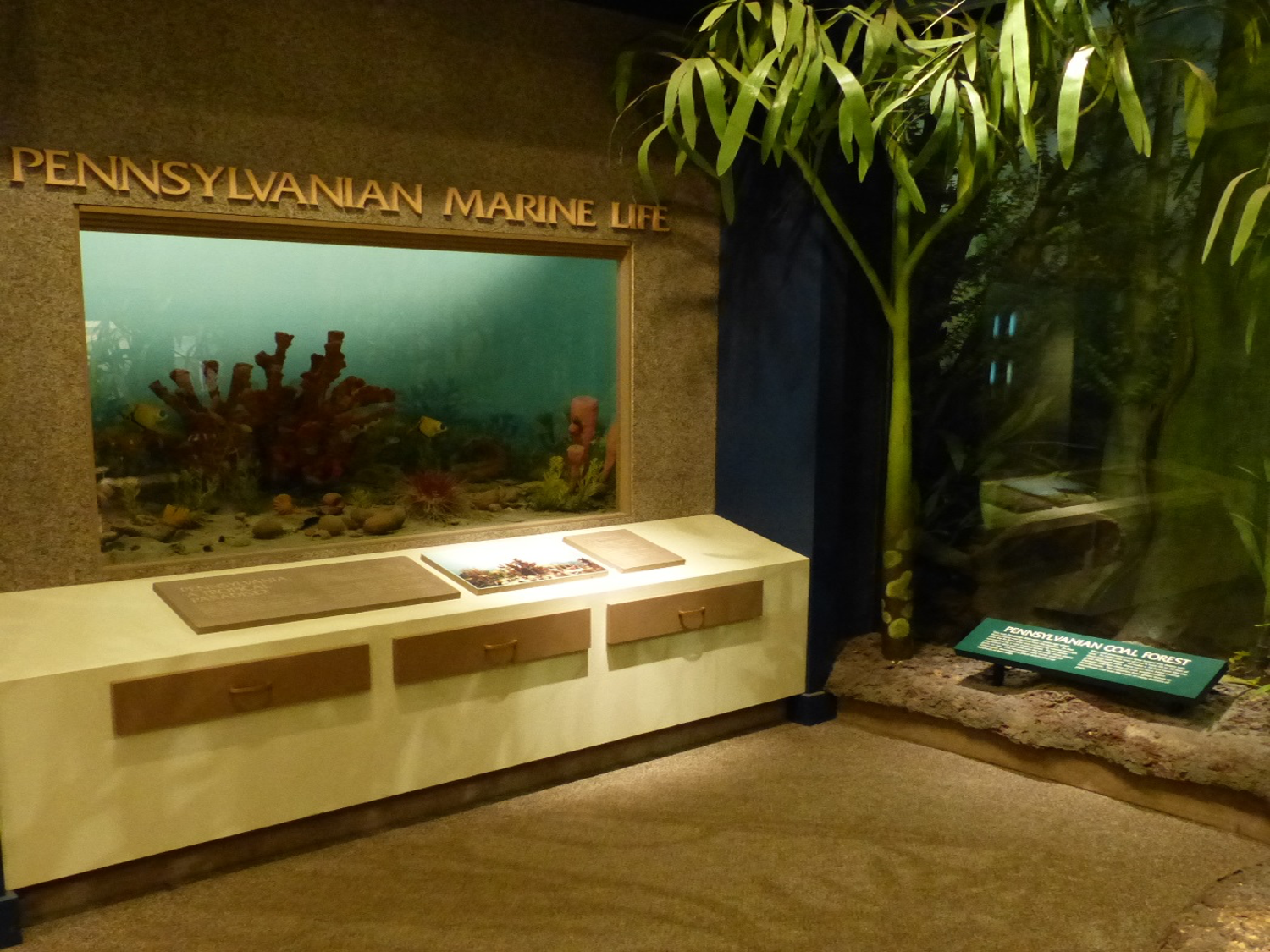
Exhibit labeled Pennsylvanian Marine Life. Below the sign is a diorama designed to look like an aquarium.
Figure 4.

In 1965, as part of an overall plan to bring more of the natural history museum’s fossil collection to the public, Paleozoic Hall opened with funding from the Richard King Mellon Foundation10. This exhibition featured nine dioramas that recreate the ancient environments through 290 million years of Earth history. Sadly, only one of the nine units remains on display, the diorama depicting the Pennsylvanian age marine seaway (Fig. 4 ), in the Benedum Hall of Geology.

Since the Benedum Hall of Geology opened to the public in 1988 the exhibition has featured an economic geology component with displays explaining differences between coal ranks Lignite coal to anthracite coal, and a variety of Pennsylvania’s crude oils and lubricants processed from the historic well Edwin Drake drilled in Titusville in 1859 (Fig. 1 )11.

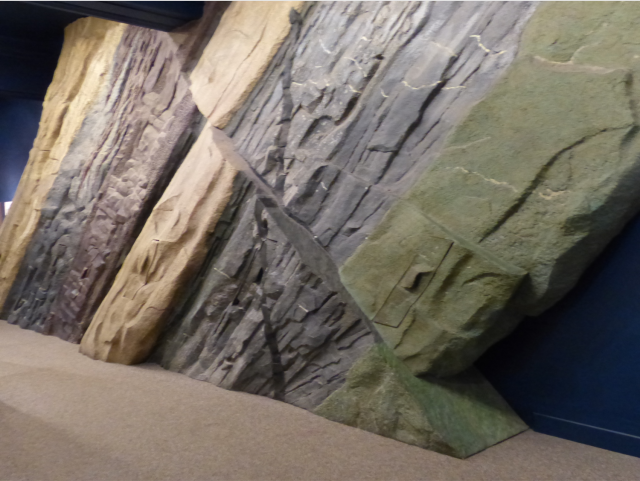
Benedum Hall of Geology strata wall. Shows different colors of rock stratigraphy from left to right: tan, blue-grey, maroon, beige, dark gray, olive green.
Figure 5.

Today, the Hall’s “strata wall,” a towering depiction of some of the rock layers found thousands of feet below western Pennsylvania, is in my opinion, an under-utilized display in terms of conveying information about fossil fuels. Although the wall is not currently documented with any geologic information, minor changes might allow visitors to use the lens of rock strata  to better understand historical events such as the Drake Well, and economically important geologic reservoirs such as the Marcellus Shale (the second largest gas deposit in the United States), the natural gas storage reservoir of the Oriskany Sandstone, and the gas and liquid condensate (ethane) extracted from the Utica Formation (Ordovician Age) for making plastic products at the Shell Cracker Plant in Beaver County, PA (Fig. 5 ).

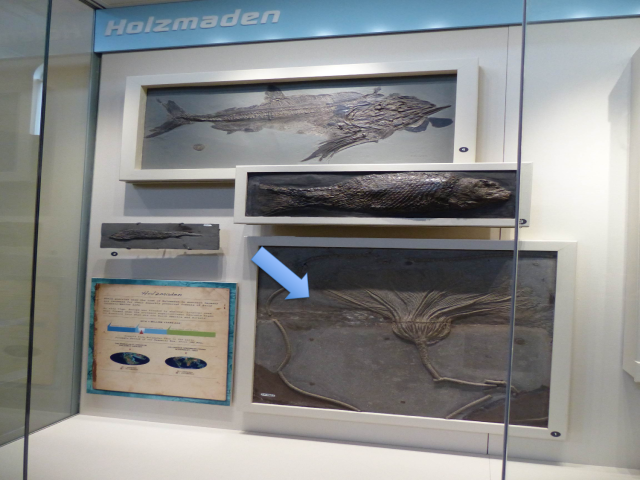
Exhibit case labeled Holzmaden. A blue arrow points to a crinoid fossil.
Figure 6.

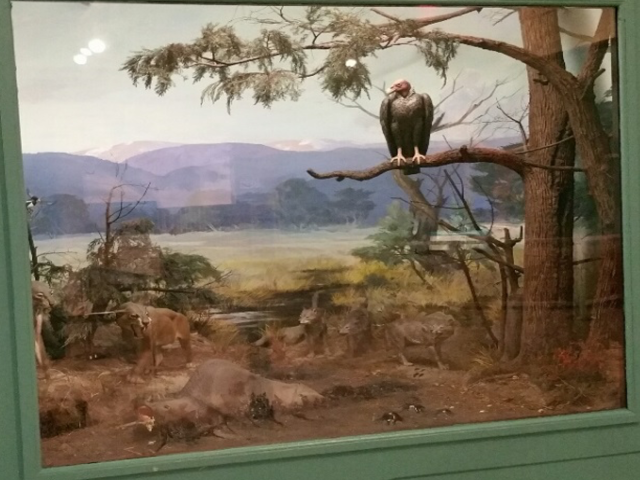
Elsewhere in the museum, visitors can learn more about the topic of fossil fuels at several other locations. At the Holzmaden fossil exhibit in Dinosaurs in Their Time, there is a large fossil crinoid preserved in a dark gray limestone of Jurassic age, that represents a  reservoir of crude oil in Germany (Fig. 6). At the mini diorama of the La Brea tar pits, oil seeps from natural fractures from an approximately six-million-year-old rock of Miocene age,  to the unconsolidated surface sediment in what is now part of the City of Los Angeles (Fig. 7).

La Brea tar pits diorama. A vulture sits on a tree above the tar pits.
Figure 7.

Looking for Fossil Fuel Evidence in Art

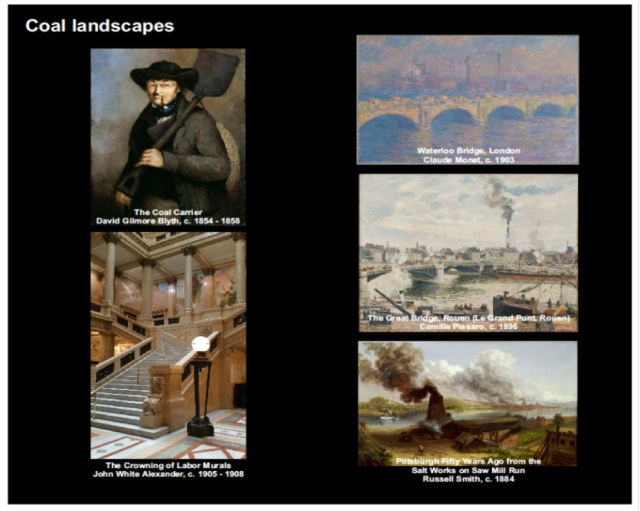
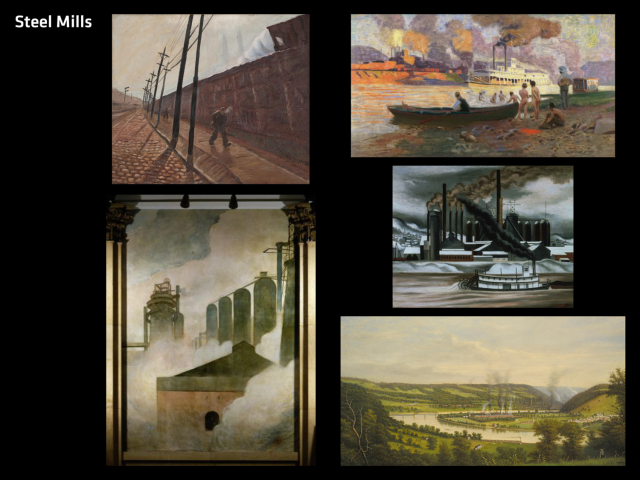
In 2018, I reviewed 58 landscape paintings and the John White Alexander wall murals on the first and second floors of the Grand Staircase within Carnegie Museum of Art (CMOA) galleries to look for artistic documentation of what I interpreted to be causes for climate change based on the science. I found many examples based on the use of coal as a fossil fuel for power and coking in steel mills and the natural formation of bio-methane as portrayed in ecosystem landscapes of  the industrial age of the middle 19th and early 20th century12.

Collage of coal landscapes. Clockwise from top right: Waterloo Bridge, London, Claude Monet c. 1903; The Great Bridge, Rouen (Le Grand Pont, Rouen), Camille Pissarro, c. 1896; Pittsburgh Fifty Years Ago from the Salt Works on Saw Mill Run, Russell Smith, c. 1884; The Crowning of Labor Murals, John White Alexander, c. 1905 - 1908; The Coal Carrier, David Gilmore Blyth, c. 1854 - 1858
Figure 8.

Collage of five illustrations of steel mills
Figure 9.

Searching for the CMOA landscapes paintings takes a little patience, but the visitor is rewarded by taking a new look at some of the art museum’s classic paintings (Fig. 8 and 9).

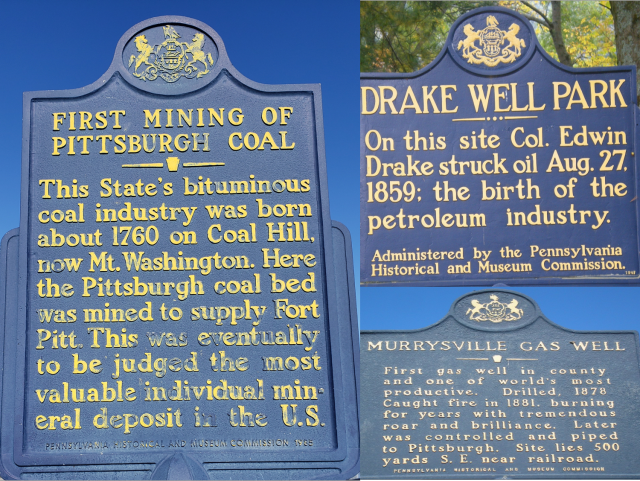
Three historic landmark signs. On left: First Mining of Pittsburgh Coal. This State's bituminous coal industry was born about 1760 on Coal Hill, now Mt. Washington. Here the Pittsburgh coal bed was mined to supply Fort Pitt. This was eventually to be judged the most valuable individual mineral deposit in the U.S. Sign on the top right: Drake Well Park. On this site Col. Edwin Drake struck oil Aug. 27, 1859; the birth of the petroleum industry. Sign on the bottom right: Murrysville Gas Well: First gas well in county and one of the world's most productive. Drilled, 1878. Caught fire in 1881, burning for years with tremendous roar and brilliance. Later was controlled and piped to Pittsburgh. Site lies 500 yards S.E. near railroad.
Figure 10.

Within day trip visiting distance of Carnegie Museums are historic plaques highlighting the discovery of coal on Mount Washington, natural gas in Murrysville, and oil in Titusville, Pennsylvania. (Fig. 10). At all three stops you’ll have a better understanding of the significance if you begin your investigation of fossil fuels at Carnegie Museums.

Albert D. Kollar is the Collection Manager for the Section of Invertebrate Paleontology. Suzanne Mills is the Collection Assistant and Joann Wilson is a volunteer Section of Invertebrate Paleontology. Museum employees are encouraged to blog about their unique experiences and knowledge gained from working at the museum.

References

  1. Kollar, A.D. 2020. CMP Travel Program and Section of Invertebrate Paleontology promotes the 125th Anniversary of the Carnegie Library of Pittsburgh with an outdoor walking tour. https://carnegiemnh.org/125th-anniversary-carnegie-library-of-pittsburgh-outdoor-walking-tour/
  2. Personal communications Anthony J. Young, Vice President (FP&O) Carnegie Museums of Pittsburgh.
  3. Brezinski, D. K. and C K. Brezinski. 2014. Geology of Pennsylvania’s Coal. PAlS Publication Number 18.
  4. Geology of the Marcellus Shale. 2011. Brezinski, D.K., D. A. Billman, J.A. Harper, and A.D. Kollar. PAlS Publication 11.
  5. https://www.bloomberg.com/news/articles/2021-05-03/coal-consumption-in-the-u-s-declines-as-natural-gas-solar-wind-energy-rise
  6. United States Energy Agency (EIA) 2019.
  7. Bill Gates. 2021. How to Avoid A Climate Disaster.
  8. Kollar et al. 2020. Carnegie Institute Extension Connemara Marble: Cross-Atlantic Connections Between Western Ireland and Gilded Age Architecture in Pittsburgh, Pennsylvania. ACM, 86, 207-253.
  9. Dawson, M. R. 1988. Benedum Hall of Geology. Carnegie Magazine, 12-18.
  10. Eller, E. R. 1965. Paleozoic Hall. Carnegie Magazine, 255-338.
  11. Harper and Dawson 1992. Benedum Hall-A Celebration of Geology. Pennsylvania Geology, 23, 12-15.
  12. Kollar et al. 2018. Geology of the Landscape Paintings at the Carnegie Museum of Art, a Reflection of the “Anthropocene” 1860-2017. Geological Society of America, Abstracts with Programs, v. 49, 243.

Related Content

The Story of Oil in Western Pennsylvania: What, How, and Why?

The Giant Eurypterid Trackway: A Great Fossil Discovery on Display

Cities Are Not Biological Deserts

Carnegie Museum of Natural History Blog Citation Information

Blog author: Kollar, Albert
Publication date: May 5, 2021

Share this post!

  • Share on Twitter Share on Twitter
  • Share on Facebook Share on Facebook
  • Share on Pinterest Share on Pinterest
  • Share on LinkedIn Share on LinkedIn
  • Share on Reddit Share on Reddit
  • Share via Email Share via Email

Filed Under: Blog Tagged With: Albert Kollar, Benedum Hall of Geology, invertebrate paleontology, Joann Wilson, Suzanne Mills, We Are Nature 2

  • Page 1
  • Page 2
  • Go to Next Page »

sidebar

About

  • Mission & Commitments
  • Directors Team
  • Museum History

Get Involved

  • Volunteer
  • Membership
  • Carnegie Discoverers
  • Donate
  • Employment
  • Events

Bring a Group

  • Groups of 10 or More
  • Birthday Parties at the Museum
  • Field Trips

Powdermill

  • Powdermill Nature Reserve
  • Powdermill Field Trips
  • Powdermill Staff
  • Research at Powdermill

More Information

  • Image Permission Requests
  • Science Stories
  • Accessibility
  • Shopping Cart
  • Contact
  • Visitor Policies
One of the Four Carnegie Museums | © Carnegie Institute | Privacy Policy | Terms of Use | Accessibility
Rad works here logo