• Skip to primary navigation
  • Skip to main content
  • Skip to primary sidebar

Carnegie Museum of Natural History

One of the Four Carnegie Museums of Pittsburgh

  • Visit
    • Buy Tickets
    • Visitor Information
    • Exhibitions
    • Events
    • Dining at the Museum
    • Celebrate at the Museum
    • Powdermill Nature Reserve
    • Event Venue Rental
  • Learn
    • Field Trips
    • Educator Information
    • Programs at the Museum
    • Bring the Museum to You
    • Guided Programs FAQ
    • Programs Online
    • Climate and Rural Systems Partnership
  • Research
    • Scientific Sections
    • Science Stories
    • Science Videos
    • Senior Science & Research Staff
    • Museum Library
    • Science Seminars
    • Scientific Publications
    • Specimen and Artifact Identification
  • About
    • Mission & Commitments
    • Directors Team
    • Museum History
  • Tickets
  • Give
  • Shop

John Rawlins

December 8, 2017 by wpengine

The Passenger Pigeon

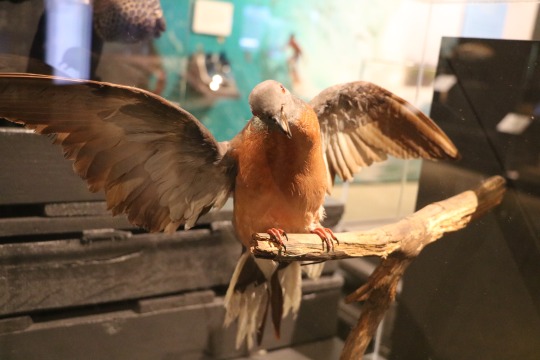
taxidermy of a Passenger Pigeon on a branch

Memories of an extinct species sometimes serve as a tragic reminders of ongoing human-driven damage to nature.

Carnegie Museum of Natural History’s exhibition We Are Nature: Living in the Anthropocene includes an exhibit about the passenger pigeon, which went extinct a century ago. The exhibition—which includes specimens from the museum’s hidden collection and interactive components—explores how humans are impacting the environment and animals in the Anthropocene—the proposed current geological era in which humans are making a profound impact on the geological strata

The passenger pigeons—the most abundant bird species in America in the early 19th century—were known for gathering in huge flocks. In fact, in 1810, Alexander Wilson—a Scottish-American naturalist and ornithology pioneer—described the flock of pigeons he witnessed along the Ohio River “marking a space on the face of the heavens resembling the windings of a vast and majestic river.” In 1813, renowned naturalist John James Audubon recorded a pigeon flight over the Ohio River that eclipsed the sun for three days.

In 1871, an estimated 136 million passenger pigeons covered an area of Wisconsin the size of 15 Pittsburghs geographically – their biggest nesting site. Sadly, a single gun dealer there sold more than a half million rounds of ammunition to about 100,000 hunters over the two-month nesting season, leaving some 1.2 million birds dead. The bird population was decimated. Close to three decades later, the last wild passenger pigeon in Ohio was shot. In 1914, the last of the species – a captive bird named Martha – died at the Cincinnati Zoo.

John Rawlins, head of the Carnegie Museum’s Section of Invertebrate Zoology, said in Carnegie Magazine in 2014 that natural history collections like ours play a critical role in researching the preservation of species.

“When emergencies happen in the environment, when an invasive species strikes, when there is a need to understand why a species is either reproducing too much or going extinct, it basically comes down to the need for information and context,” Rawlins said. “And often that need is relatively rapid.”


The Anthropocene is the current geological era in which humans are making a profound impact on the geological strata. While the term itself is still being debated by geologists, the museum is embracing it as a social and cultural tool for exploring the broad sum effect humans are having on the planet in the exhibition We Are Nature: Living in the Anthropocene—open now through summer 2018.
Filed Under: Blog Tagged With: Birds, John Rawlins, We Are Nature, We Are Nature: Living in the Anthropocene

September 11, 2017 by wpengine

Did you know?

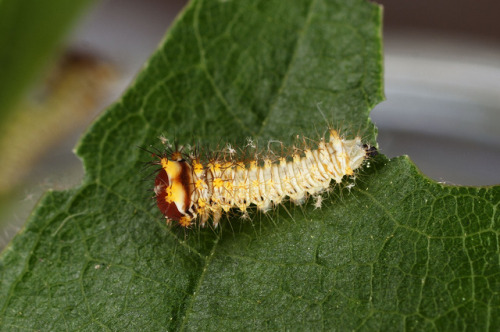
red and yellow caterpillar

Did you know that most of the insects on Earth have yet to be discovered?

Carnegie Museum of Natural History curator John Rawlins is particularly interested in Lepidoptera (butterflies and moths), and one of his favorite elements of working at the museum is taking part in watching the life history of moths develop as he and his staff rear them from egg cultures.

Recording each step of their metamorphosis is a way to associate an adult moth with its very different-looking caterpillar. There are many life histories unknown in the Lepidoptera, and learning the practice of rearing is important in terms of associating larval and pupal stages with corresponding adults and knowing which plants the caterpillars feed on.

Filed Under: Blog Tagged With: Invertebrate Zoology, John Rawlins

August 3, 2017 by wpengine

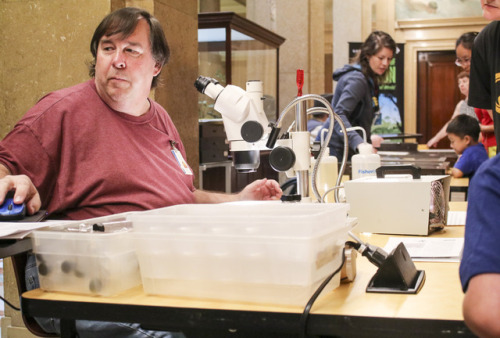
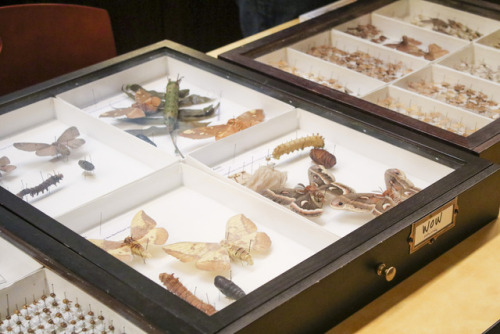
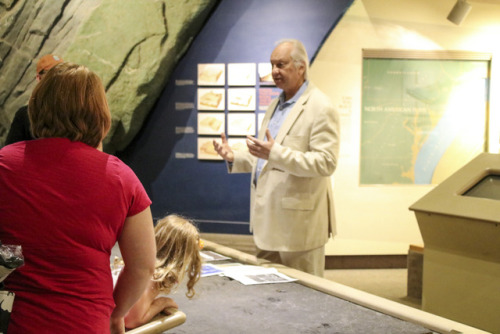
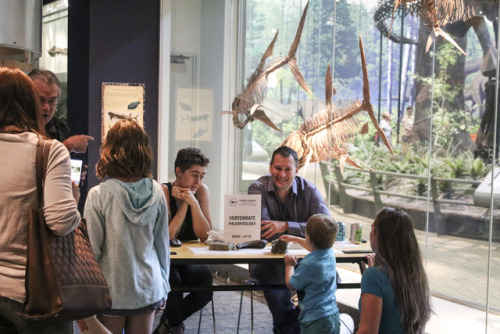
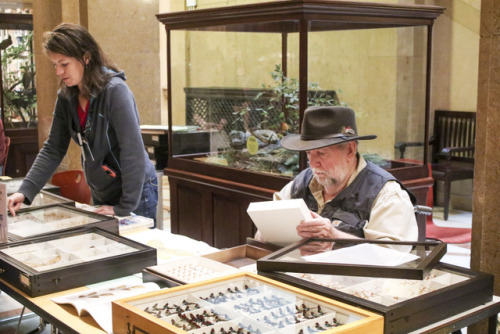
Researchers and scientists at work

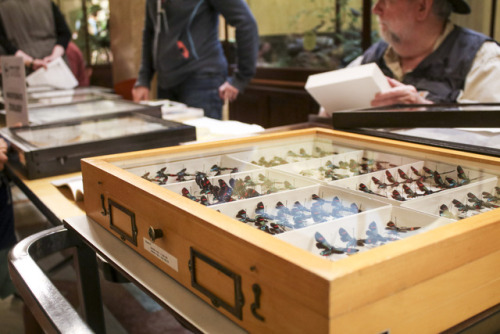
specimens from the section of Invertebrate Zoology

researchers at work

moth and caterpillar specimens

Albert talking to visitors in Benedum Hall of Geology

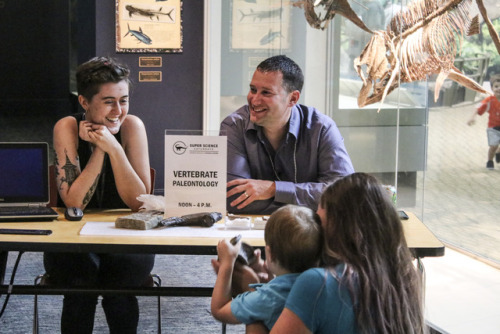
visitors meeting our dinosaur experts

researchers in the section of Invertebrate Zoology

researchers in the section of Vertebrate Palentology

Did you know researchers and scientists are at work in the museum every day?

Visitors got an inside look at the behind-the-scenes science of our museum by interacting with Carnegie scientists at a special Super Science Saturday—Scientist Takeover!

Entomologists, paleontologists, anthropologists, and other scientists spent Saturday, July 22 in the galleries showing off their cool collections, answering questions, and discussing their work with curious museum-goers. Visitors also enjoyed tours and hands-on activities like sifting through soil to find Pennsylvania land snails.

Super Science Saturdays is a program at Carnegie Museum of Natural History that invites visitors of all ages to explore a special theme through hands-on activities, experiments, demonstrations, discussions with museum experts, and more. Events are free with museum admission.

Don’t miss our next event, Whiskers and Woofs, on August 19.

Filed Under: Blog Tagged With: Albert Kollar, invertebrate paleontology, Invertebrate Zoology, John Rawlins, Matt Lamanna, mollusks, Super Science Saturday, Vertebrate Paleontology

July 10, 2017 by wpengine

A New Giant Discovered in Peru

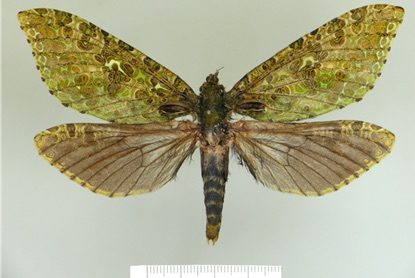
Peruvian Viridigigas ciseskii, a green and brown moth

by Molly Carter

It is big, green, and was recently seen by people for the first time ever. The newly discovered Peruvian Viridigigas ciseskii is a neotropical ghost moth found in the Andes Mountains and is the first of its kind to be officially categorized.

John Rawlins, curator of the Section of Invertebrate Zoology at Carnegie Museum of Natural History, and John Grehan, a research associate, helped describe the new species and published their findings in the Annals of the Carnegie.

This green giant is so distinct, its wider evolutionary position has not been determined and a new genus, Viridigigas, has been created as it is unlike anything entomologists have observed before. Two unique individuals, a male and female, have been described and are the only ones to be collected thus far.

A monster among ghost moths, the Viridigigas ciseskii has a 12 cm wingspan and a combination of features that are not seen in any other ghost moths of the Amazon or the world. Perhaps most striking, the moth’s wings are olive green and overlaid with swirls of irregular dark circular spots, enclosed in a series of fine lines. Other tropical ghost moths have predominantly brown wings, and not one has been documented with any type of circular pattern.

Beyond its coloring, this new species also has unusual characteristics not typically found in ghost moths. The male features a large oval scent gland at the base of his forewing and the moth’s hind legs have long scent scales. While other moths do have similar traits, they are uncommon and shared only with an obscure, small gray moth found in central Chile and a large moth whose habitat is on the islands of Fiji.

While it seems hard to believe that a moth this big remained hidden from human eyes for so long, many ghost moths go unnoticed. The caterpillars burrow in the ground or inside stems, and the non-feeding moths do not often come to light. Because these moths are often ghost-like and hard to come across, it is not yet known if the new species is rare or simply elusive.

Filed Under: Blog Tagged With: Invertebrate Zoology, John Rawlins

April 25, 2017 by wpengine

Did you know?

Did you know that Carnegie Museum of Natural History has about 13 million specimens in the Section of Invertebrate Zoology? Get a peek at the hidden collection, and learn all about insects from curator John Rawlins with our new series Scientists Live.

Tune into our Facebook on May 3 for the next episode, featuring Erin Peters, an assistant curator recently back from an expedition to Egypt.

Filed Under: Blog Tagged With: butterflies, Invertebrate Zoology, John Rawlins, Scientists Live

sidebar

About

  • Mission & Commitments
  • Directors Team
  • Museum History

Get Involved

  • Volunteer
  • Membership
  • Carnegie Discoverers
  • Donate
  • Employment
  • Events

Bring a Group

  • Groups of 10 or More
  • Birthday Parties at the Museum
  • Field Trips

Powdermill

  • Powdermill Nature Reserve
  • Powdermill Field Trips
  • Powdermill Staff
  • Research at Powdermill

More Information

  • Image Permission Requests
  • Science Stories
  • Accessibility
  • Shopping Cart
  • Contact
  • Visitor Policies
One of the Four Carnegie Museums | © Carnegie Institute | Privacy Policy | Terms of Use | Accessibility
Rad works here logo