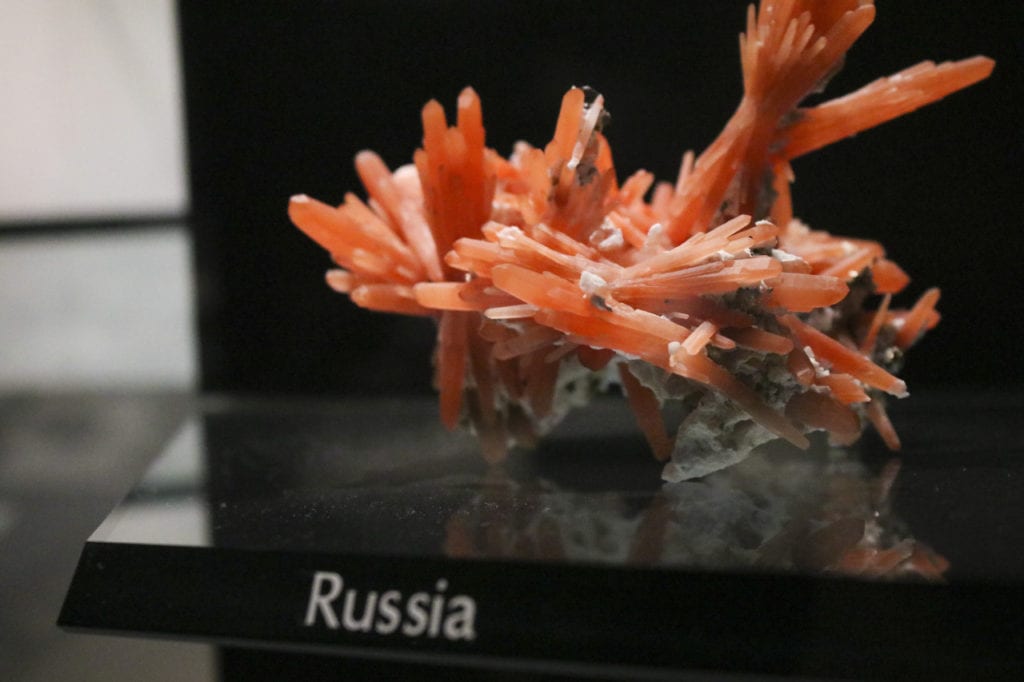
This quartz crystal was found in Russia and has its bright color due to small concentrations of chemical impurities or inclusions of other minerals.
(Photo by Hayley Pontia)
Carnegie Museum of Natural History
One of the Four Carnegie Museums of Pittsburgh
This quartz crystal was found in Russia and has its bright color due to small concentrations of chemical impurities or inclusions of other minerals.
(Photo by Hayley Pontia)
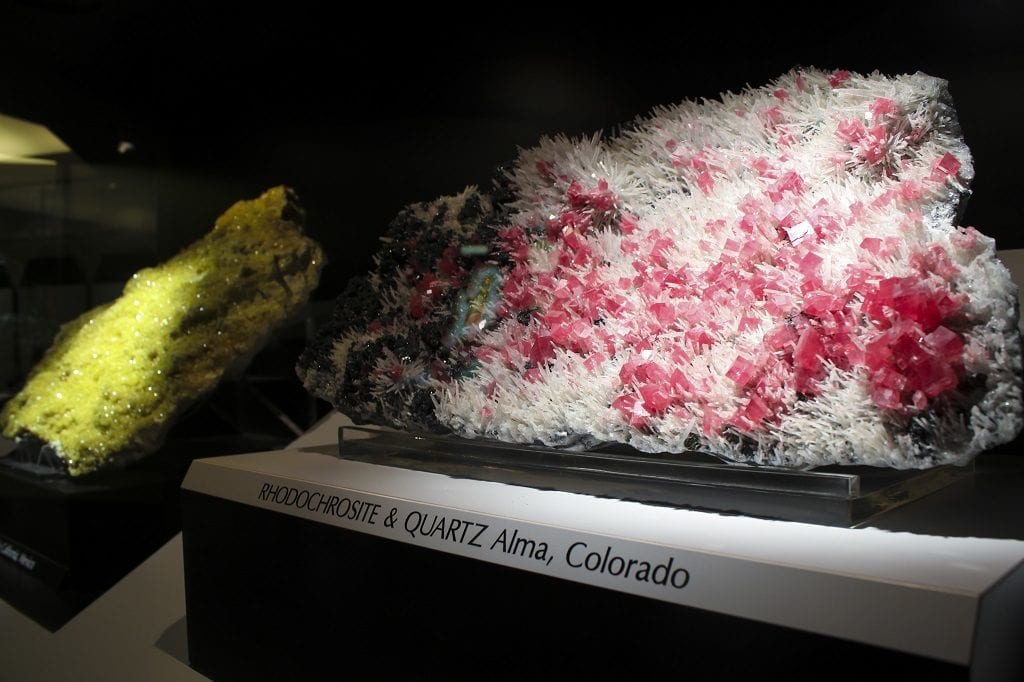
Rhodochrosite and quartz on display in Hillman Hall of Minerals and Gems (photo by Hayley Pontia)
By Marc Wilson
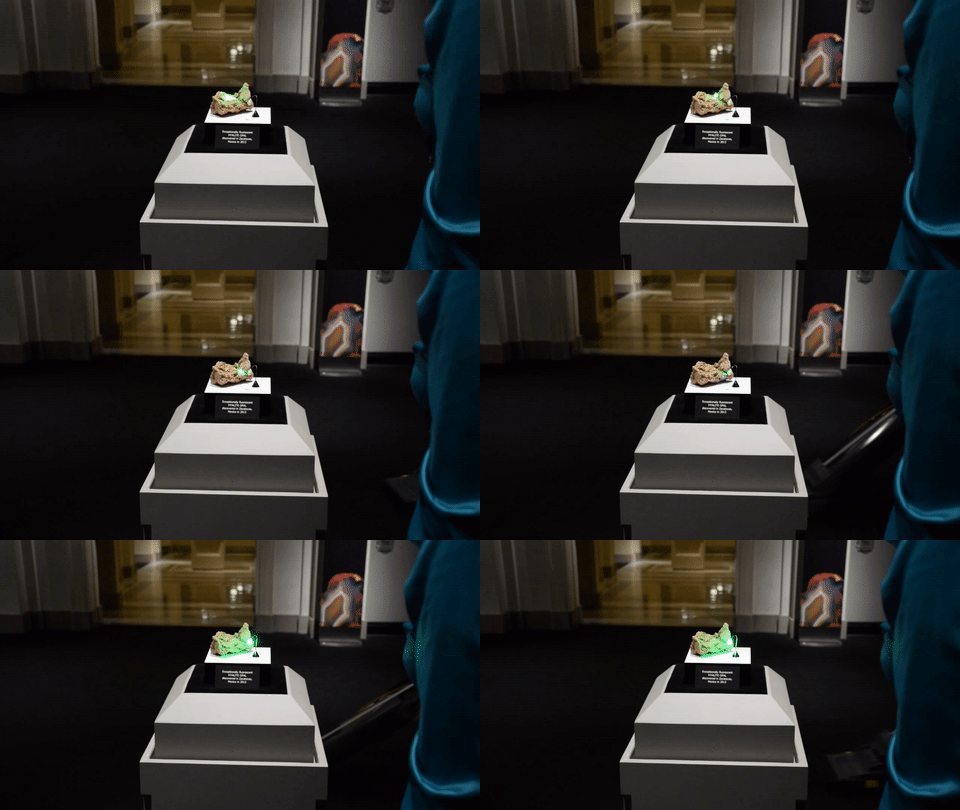
Pictured above, the mineral hyalite is a type of non-precious opal that is usually formed in hot springs environments, like
Yellowstone National Park.
Hyalite often contains traces of uranium as impurities. When there is just the right amount of uranium in the hyalite, it causes it to fluoresce brilliant yellow-green under ultraviolet radiation, more commonly called “black light.”
Most fluorescent hyalite reacts best to the shorter wavelengths of ultraviolet but this specimen has an intense reaction to long wave ultraviolet. This is good for us because short wave ultraviolet is completely filtered out by glass or plastic, but long wave can penetrate through both allowing us to cause it to fluoresce with a UV laser pointer.
This remarkably fluorescent hyalite opal was discovered in Zacatecas, Mexico in 2013. It came from a very small deposit that is now completely worked out. We are very fortunate to have such stunning examples
from this unusual occurrence.
Marc Wilson is the head of the Minerals Section at Carnegie Museum of Natural History. Museum employees are encouraged to blog about their unique experiences and knowledge gained from working at the museum.
Carnegie Museum of Natural History has far more mineral and
gem specimens that we could ever display, but than doesn’t mean they stay hidden.
Collections managers routinely swap out specimens in Hillman
Hall of Minerals and Gems. This week, we’re excited to share some behind the
scenes footage of two new specimens being put on display!
To display a new specimen, a collection managers removes the glass
from the cases and carefully swaps out the specimens, making sure to artfully position
the minerals for visitors to enjoy.
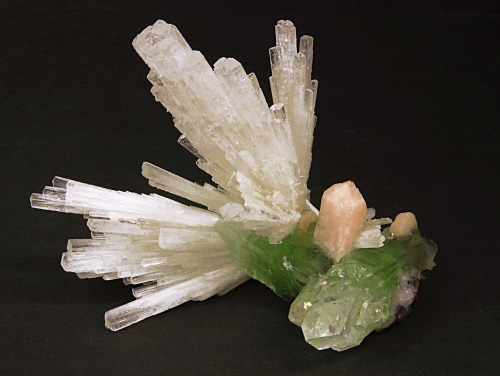
The first newly-displayed specimen features three different
mineral species. The base mineral is fluorapophyllite, with traces of vanadium
that give it a stunning green color. The white offshoots are scolecite, and the
peach colored mineral is stilbite.
Marc Wilson, head of the minerals section, said the specimen was
found in India,
when villagers in Jalgaon district of
Maharashtra State dug a well. Though
many specimens were collected from the site, Wilson said the specimen now at
Carnegie Museum of Natural History was the best.
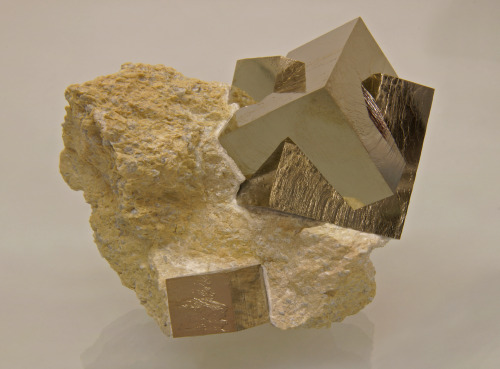
The second specimen
is pyrite, sometimes called “fool’s gold.” The cubical shape of the pyrite
occurs naturally, but the rock surrounding the mineral is mechanically removed.
This pyrite is from Navajun Spain, which is known for its
pyrite.
Both specimens are on display now in Hillman Hall
Photos by Debra Wilson
