• Skip to primary navigation
  • Skip to main content
  • Skip to primary sidebar

Carnegie Museum of Natural History

One of the Four Carnegie Museums of Pittsburgh

  • Visit
    • Buy Tickets
    • Visitor Information
    • Exhibitions
    • Events
    • Dining at the Museum
    • Celebrate at the Museum
    • Powdermill Nature Reserve
    • Event Venue Rental
  • Learn
    • Field Trips
    • Educator Information
    • Programs at the Museum
    • Bring the Museum to You
    • Guided Programs FAQ
    • Programs Online
    • Climate and Rural Systems Partnership
  • Research
    • Scientific Sections
    • Science Stories
    • Science Videos
    • Senior Science & Research Staff
    • Museum Library
    • Science Seminars
    • Scientific Publications
    • Specimen and Artifact Identification
  • About
    • Mission & Commitments
    • Directors Team
    • Museum History
  • Tickets
  • Give
  • Shop

Nature 360

January 10, 2019 by wpengine

The Crows are Back in Town

By Melissa Cagan and Rachael Carlberg
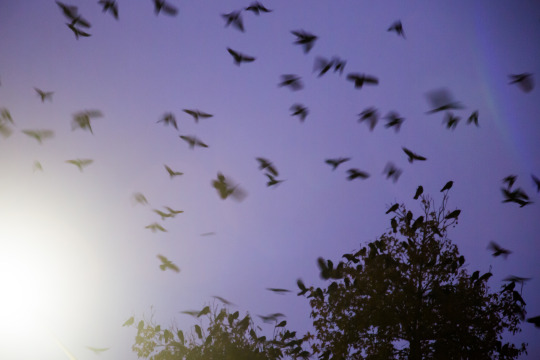
a murder of crows in the sky

If you looked out your window at sunset in the recent months, you would probably notice a strange phenomenon – hundreds, even thousands, of crows flying from all directions towards the same place.

Where are the crows going?

Well, when the weather starts getting cold, crows will fly into Pittsburgh from surrounding areas to join in one communal roost, a large group of birds that flock together to sleep through cold nights. You may wonder why these crows have chosen a city as their roost site, but there are actually many advantages to choosing an urban roost.  For one thing, cities are usually warmer than rural areas, are well-lit by night lights, and contain fewer predators.  In addition, Pittsburgh has an abundance of large trees that make safe spots for a big crow slumber party!
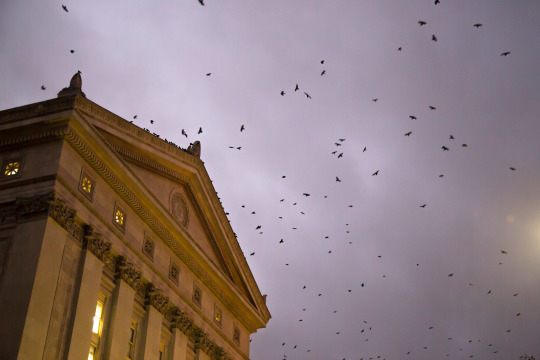
crows in the sky about a museum

Heads up…

Now – imagine that a hundred (or even a thousand!) birds moved into your neighbor’s place… what sorts of strange things might you start to notice?  Crows are not known for being quiet, so don’t be surprised if it gets super noisy when you’re trying to sleep.  Also, as you might imagine, a roost of crows poses some… sanitary issues as well.  If you live in the city near a roost look out for some lovely crow presents on your streets, sidewalks, or car.

Birds can be trash collectors?

Corvids, the family of birds that crows are a part of, are really smart birds.

In fact, a theme park in France has made use of corvids’ talents by hiring six rooks (a cousin of the crow) to act as garbage collectors throughout the park!

Related Content

Ask a Scientist: Ravens and crows, what’s the difference?
Stuffed Animal Safari: Binocular Activity

Jurassic Days: An Adventure Under the Sea

Filed Under: Blog Tagged With: bird hall, Hall of Birds, Nature 360, Pittsburgh

December 14, 2018 by wpengine

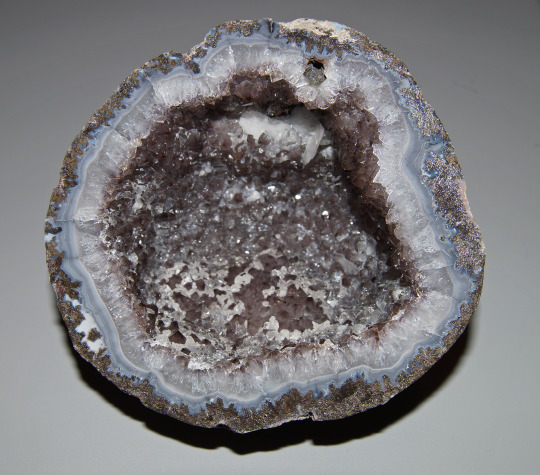
How Do Geodes Get Their Colors?

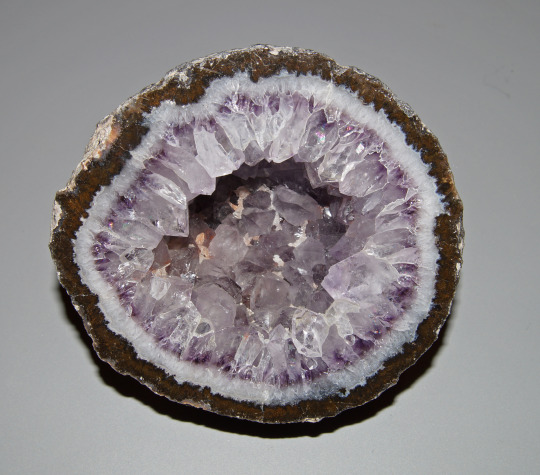
geode

Geodes are stones with a secret–at first glance, they seem like nothing more than the grey rocks you might see on walk around your neighborhood. Then–crack!–once they’re broken open, they reveal their inner beauty: a tiny cave filled with some of the world’s most spectacular, colorful crystals.

Born out of lava

Geodes are formed when there are pockets of air within rocks. This often happens after volcanic eruptions when lava cools around air bubbles. These pockets leave space for groundwater to seep in. But the water itself doesn’t produce geodes–it brings along minerals which stay in the rock even after the water evaporates. The minerals then start to build on each other to form crystals. It can take thousands or even millions of years for these crystals to form. The larger the crystals are, the older the geode is.

So what gives them their color?

geode

The same minerals that form crystals can give them their glorious colors. Additional elements can also make their way into the mix and provide their own unique shades. Iron will give crystals a red or purple color, titanium will create blue, nickel or chromium leads to green, and manganese produces pink crystals.

While geodes can be naturally colorful some are artificially dyed. These dyed stones often have a brighter, more intense color than what appears naturally. Why do people dye geodes? Colorful geodes tend to sell well and can be a cheap way to imitate rare stones.

Come to the museum and check out the geodes of various colors on display in Hillman Hall of Minerals and Gems.

Explore nature together.  Visit Nature 360 for more activities and information.

Filed Under: Blog Tagged With: Education, gems and minerals, Hillman Hall, Hillman Hall of Minerals and Gems, minerals, Nature 360

November 19, 2018 by wpengine

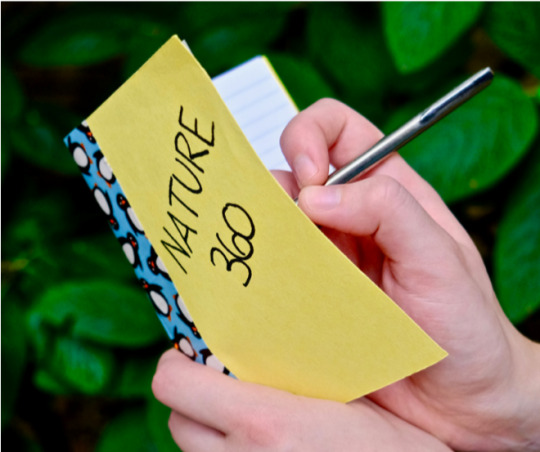
Make Your Own Nature Notebook!


A key tool that naturalists use is a notebook to record their observations. This can be anything from what birds they saw on a walk, to drawing an insect they aren’t familiar with, to noting topics that they want to investigate online later. There aren’t any rules for what a good nature notebook should be, so why not make one yourself, with materials you already have in your house!

What You’ll Need

  • 10 sheets of 8.5 in. x 11 in. lined notebook paper
  • Construction paper
  • Needle
  • Strong thread
  • Duct Tape
  • Scissors

Directions

  1. Fold your papers in half so the top edge meets the bottom edge (“hamburger” style), and cut them in half along this line. Fold and cut the construction paper in the same way. You should have two sets of lined paper and two pieces of construction paper.
  2. Cut off the left edge of the paper, including the binder holes.
  3. Fold the set of lined paper in half so that the lines go from left to right. Fold the construction paper the same direction. Trim construction paper so that it is the same size as the lined paper.
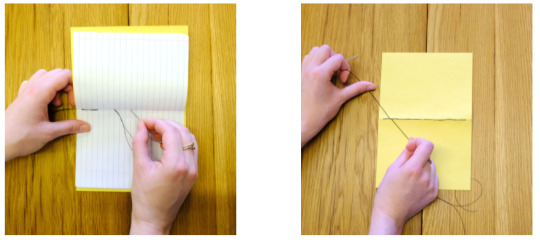
  4. Place the set of lined paper inside the construction paper cover. Use the needle to poke holes along the fold from the inside through to the outside cover (4-6 holes an inch apart will do).
  5. Cut about 4 ft. of thread and thread the needle. Push the threaded needle through one of the holes you already made, starting at the bottom.
  6. Sew back and forth through the rest of the holes you poked. When you reach the top, sew back down through the existing holes. When you reach the bottom, knot off your thread and cut off the excess string. Your knot doesn’t have to be perfect, it’ll be covered up next.
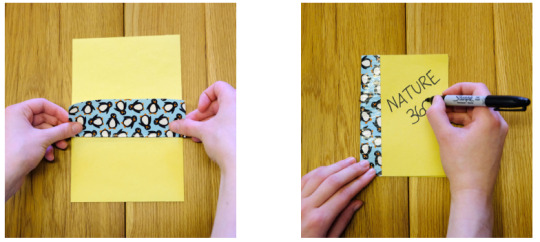
  7. Cut a piece of duct tape the height of the notebook and adhere it to the construction paper along the spine.
  8. Now for the fun part- decorate it! You can use markers stickers, stamps, or anything else you have. Make it your own!

Upcycle and Share!

Do you have old half-filled notebooks from school? Tear out the remaining paper and turn it into a nature notebook. These instructions make two small notebooks, so you can give one to your friend, sibling, or keep a backup when your first one fills up.

Submit the observations from your Nature Notebook to the museum!

Explore nature together. Visit Nature 360 for more activities and information.

Filed Under: Blog Tagged With: Nature 360

October 29, 2018 by wpengine

A Rainbow of Honeys

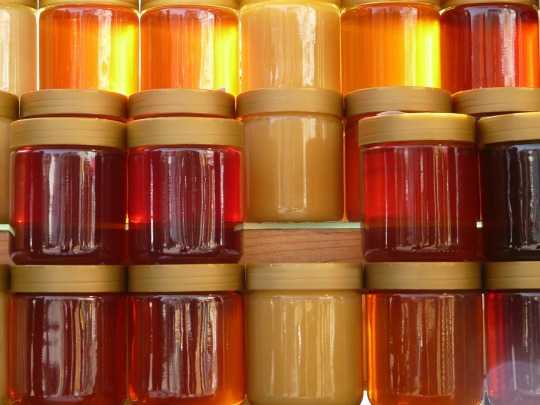
a rainbow of honeys in jars

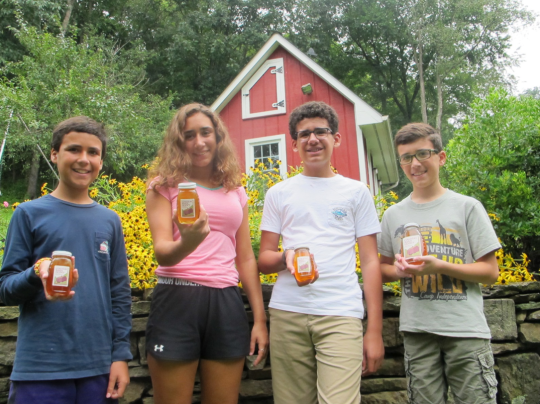
If you like to eat honey with breakfast, dessert, or tea, you can probably picture its bright color. You may think that all honey is the same but there are actually over 300 types of honey available in the United States with a wide range of colors.  To learn more about what makes up the color, we talked to Annabella (age 14), Joseph (age 13), Luca (age 11), and Nico (age 9) Zgurzynski, who help with their family’s honey business, Country Barn Farm, in Glenshaw, PA.

It’s all about the flowers.

The biggest influence on honey color is the type of flower the bee visits to collect nectar. Each plant’s nectar has different minerals and molecules that change the color of the honey it produces. For the Zygurzynski bees, flower trees including black locust, tulip poplar, and basswood make summer honey with a light golden color.  In the fall, dark brown honey comes from knotweed and goldenrod nectar. Big companies often blend different batches of honey together to get the amber color that people are used to.  At Country Barn Farm, the beekeepers are proud of the subtle color variations from each hive, and label their bottles to show it.

Your taste buds will notice, too.

With the difference in color also comes a difference in taste. Lighter honeys are most common in grocery stores, but if you only eat from the light end of the spectrum, you’re missing out. Darker honeys have a strong flavor, like molasses.  Nico, Joseph, and Annabella prefer the floral taste of clover honey.  Luca says fall honey is the best.

four kids holding jars of honey

Where is your honey from?

If you have honey at home, check the label to see where it was made. If the beekeepers can prove that 85% of the nectar came from a single flower source, that flower might be on the label too.  Can you find more than one kind of honey to sample? Close your eyes and see if you can taste the difference!

Did you know?

In 2012, a group of bees in France started producing honey in strange colors like blue and green. It turned out that instead of nectar, they were eating the waste from a Mars candy factory, the producer of M&M candies!


Explore nature together.  Visit Nature 360 for more activities and information.

Filed Under: Blog Tagged With: bees, Nature 360

October 18, 2018 by wpengine

Why Do Leaves Change Color in the Fall?

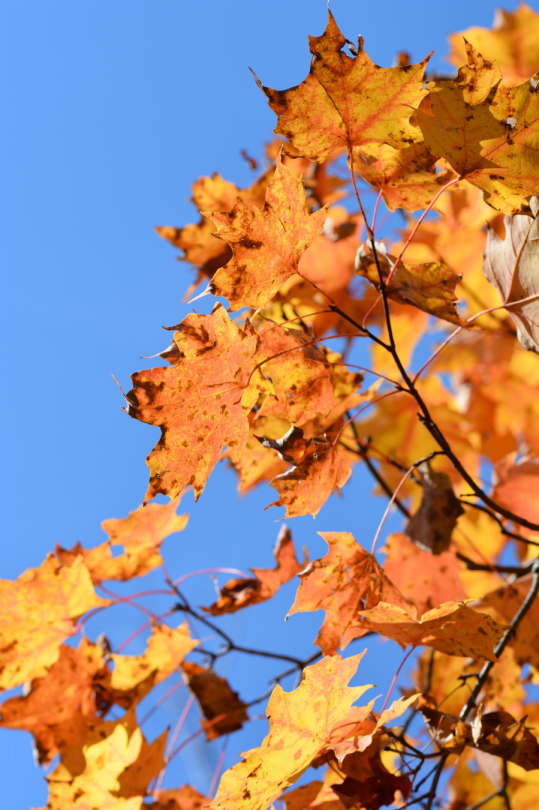
detail of fall leaves on a tree

One of the most anticipated events of fall is the changing colors of tree leaves. As the evenings get cooler, the trees display spectacular warm red, orange and yellow hues. The East Coast’s fall colors are SO spectacular, in fact, that many people take special trips here just to see them. But what is it about fall that makes the leaves change, and why do their colors become warmer as the days grow cold?

Are these colors really just a fall thing?

You might think that the orange and yellow colors, or pigments, are only present in leaves in fall but they’re actually there all year long–we just can’t see them because they are covered up by the strong green pigment that is also in the leaves. This green pigment comes from chlorophyll, a substance that makes energy for trees using sunlight, carbon dioxide, and water. When the amount of sunlight starts to decrease in fall, trees respond by making less chlorophyll. When this happens the green starts to disappear and the yellow and orange pigment, called carotenoid, shows through.

Red is a seasonal special

While yellow and orange are present in leaves all year round, there is another pigment that is only produced in the fall. Anthocyanin is a pigment responsible for giving leaves dark red and purple colors. This pigment is created during times in the fall when the days are warm or cool, but don’t dip below freezing. Because fall temperatures can vary from year to year, some years will have more deep red leaves than others.

Did you know?

Evergreen trees like pines, spruces, and firs stay green year-round because they have needles instead of leaves. These needles have a waxy coating that protects them from losing moisture and don’t require as much sunlight to produce the chlorophyll.

Get Outside and Find Fall Color!

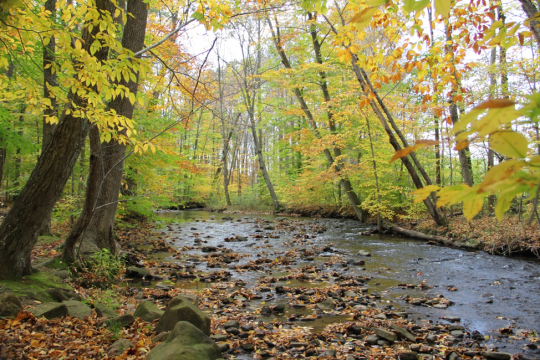
Peak color for fall foliage hits Southwestern Pennsylvania in mid-October.  Track historic trends of color change to plan your outdoor excursion!

stream and trees at powdermill nature reserve

Powdermill Nature Reserve is a great place to look for fall color!


Explore nature together.  Visit Nature 360 for more activities and information.

Filed Under: Blog Tagged With: Anthropocene, autumn, Nature 360

  • « Go to Previous Page
  • Page 1
  • Interim pages omitted …
  • Page 3
  • Page 4
  • Page 5

sidebar

About

  • Mission & Commitments
  • Directors Team
  • Museum History

Get Involved

  • Volunteer
  • Membership
  • Carnegie Discoverers
  • Donate
  • Employment
  • Events

Bring a Group

  • Groups of 10 or More
  • Birthday Parties at the Museum
  • Field Trips

Powdermill

  • Powdermill Nature Reserve
  • Powdermill Field Trips
  • Powdermill Staff
  • Research at Powdermill

More Information

  • Image Permission Requests
  • Science Stories
  • Accessibility
  • Shopping Cart
  • Contact
  • Visitor Policies
One of the Four Carnegie Museums | © Carnegie Institute | Privacy Policy | Terms of Use | Accessibility
Rad works here logo