• Skip to primary navigation
  • Skip to main content
  • Skip to primary sidebar

Carnegie Museum of Natural History

One of the Four Carnegie Museums of Pittsburgh

  • Visit
    • Buy Tickets
    • Visitor Information
    • Exhibitions
    • Events
    • Dining at the Museum
    • Celebrate at the Museum
    • Powdermill Nature Reserve
    • Event Venue Rental
  • Learn
    • Field Trips
    • Educator Information
    • Programs at the Museum
    • Bring the Museum to You
    • Guided Programs FAQ
    • Programs Online
    • Climate and Rural Systems Partnership
  • Research
    • Scientific Sections
    • Science Stories
    • Science Videos
    • Senior Science & Research Staff
    • Museum Library
    • Science Seminars
    • Scientific Publications
    • Specimen and Artifact Identification
  • About
    • Mission & Commitments
    • Directors Team
    • Museum History
  • Tickets
  • Give
  • Shop

paleontology

November 12, 2025 by Erin Southerland

Making Sense of Fossils from a Maryland Cave: A Carnegie Contribution

by Pat McShea
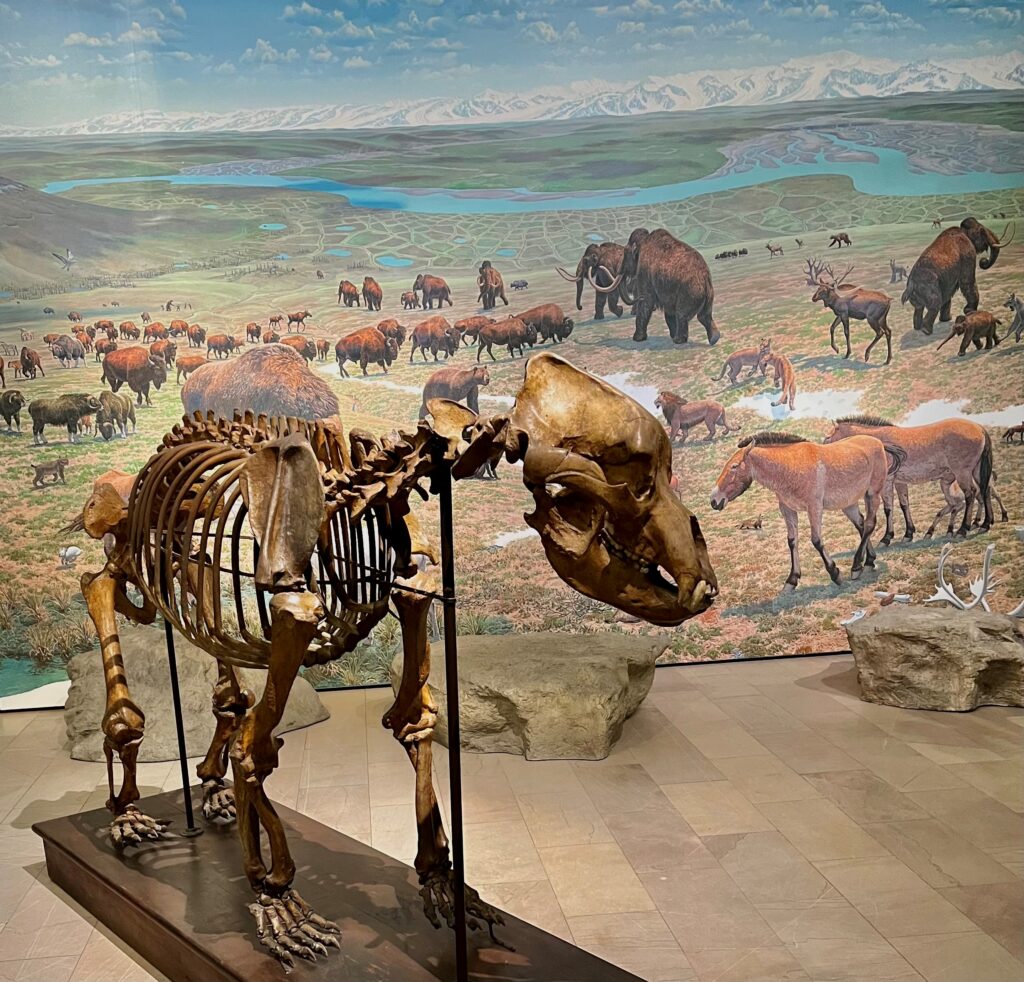
cave bear skeleton mount
In Cenozoic Hall the mounted skeleton of a Cave Bear from France lends perspective to a backing mural of large Ice Age mammals. Many of the museum’s Ice Age fossils were found closer to home, including some from a cave outside Cumberland, Maryland.

For paleontologists who specialize in interpreting fossil evidence from the Pleistocene, deposits in some Appalachian caves offer windows into the period of the past commonly referred to as the Ice Age. A recent Smithsonian Scholarly Press publication summarizing the discovery, collection, preparation, and interpretation of fossils from a cave in western Maryland strongly supports the window-into-the-past metaphor. The 305-page volume, a product of eleven co-authors, bears the long descriptive title, Middle Pleistocene Cumberland Bone Cave Local Fauna, Allegeny County, Maryland: A Systematic Revision and Paleoecological Interpretation of the Irvingtonian, Middle Appalachians, USA. Remarkably, this chronicle of fossil collecting expeditions mounted by five different organizations over more than a century is dedicated to John Edward Guilday, a Curator at Carnegie Museum of Natural History from 1951 until 1982, and the field crew of museum staff and volunteers who for decades assisted his research efforts.

The collective nature of knowledge presented in the publication makes the dedication particularly appropriate. The fauna list for the site’s vertebrate fossils alone includes 109 creatures ranging in size from mole to mastodon, and the deposition of these remains, over a period of several thousand years, happened more than 700,000 years ago. Deciphering information from such a rich fossil assemblage requires a detailed understanding of other fossil-rich caves, and Guilday’s deep knowledge of findings from sinkholes in Pennsylvania and caves in Tennessee, Kentucky, Virginia, and West Virginia, enabled him to recognize and interpret evidence for such past regional events as range extensions and contractions for various species and repeated changes in climate.
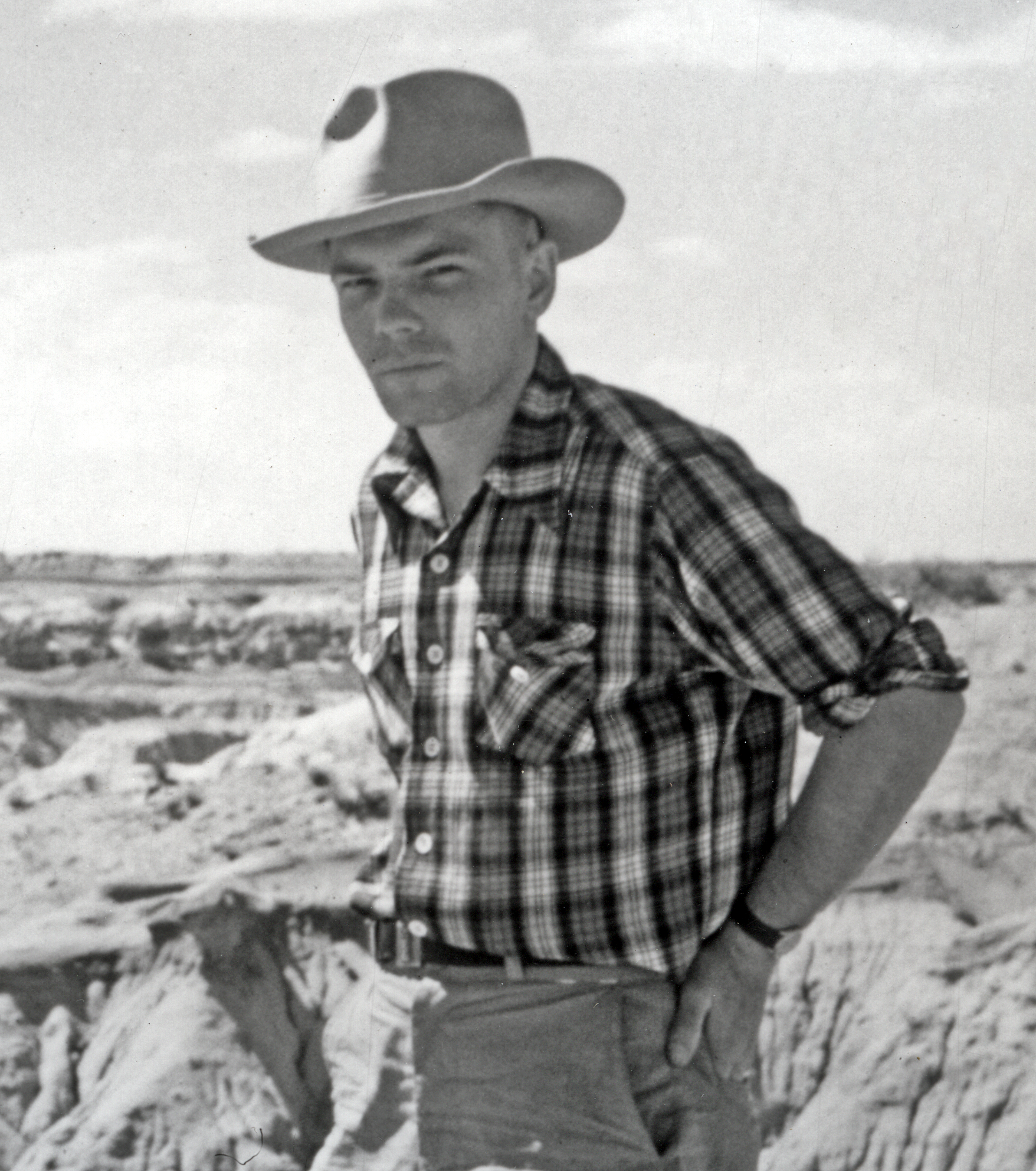
black and white photo of John Guilday
John Edward Guilday in an undated photograph by his wife Alice Guilday.

 The inclusion of the Carnegie Museum field crew in the dedication is particularly apt because Guilday never visited Cumberland Bone Cave or many other sites he studied. His life and career, which included serving in a battle-tested US Army infantry unit during World War II, were immeasurably altered in 1952 when at the age of twenty-seven he contracted polio. The virus tremendously reduced his strength, necessitating the periodic use of an iron lung in his home for the rest of his life. Guilday’s visits to the halls and offices of his established workplace were rare during the next three decades, but with the ceaseless assistance of his wife Alice, the creation of a functional paleo lab in the basement of the couple’s home, and the physical and intellectual contributions of a tireless field crew, he earned a reputation as one of the research strengths of Carnegie Museum of Natural History.

In making a thorough case for the importance of Cumberland Bone Cave to our understanding of past mid-Appalachian environments, the new publication also realistically presents much of the paleontological work at the site as a salvage operation. Little is known with certainty about how the cave, a multi-chambered cavity within a limestone ridge a few miles northwest of Cumberland, was discovered or explored. The story of its recognition as a fossil site is, however, well documented. Beginning in 1910, the Western Maryland Railroad cut a passage for a new line of tracks through the cave-bearing limestone ridge, destroying a significant portion of the subterranean feature. In 1912, when fossilized bone found among excavated rubble was presented to a paleontologist in Washington, D.C. at what is now the National Museum of Natural History, Smithsonian Institution, professional fossil collecting efforts were quickly organized. 

black and white photo of cave entrance
View of cave entrance on the south side of the railroad cut from the north side. Source: 1913 photograph by Raymond William Armbruster, Smithsonian Institution Archives.

A well-illustrated 15-page chapter chronologically profiles the subsequent paleontological investigations of still intact cave chambers, including the intermittent work by a Carnegie Museum of Natural History team between 1964 and 2006. The summary hints at the physical challenges of work in the cave’s tight quarters, notes the cooperation of the railroad company on several occasions when heavy equipment was required for excavation, and emphasizes the current importance of determining exactly where, within this railroad bisected site, particular crews collected fossils. This tally of organized human efforts, along with later chapters listings the fossils collected from the site, raises the very same question that puzzled dozens of investigating paleontologists: How did the remains of such a varied set of ancient creatures come to be deposited in Cumberland Bone Cave?

The author team presents three scenarios. 1) For creatures such as bats, bears, wolves, and peccaries, who used portions of the cave for dens or hibernation chambers, a natural death within their shelter could have eventually led to fossilization. 2) Vertical fissures connecting cave chambers to the ground surface above them functioned as pit traps, occasionally capturing creatures unlikely to otherwise visit the cave. 3) In actions ranging from roosting owls coughing-up pellets of vole bones to wolves bringing larger prey to waiting pups, predators who relied upon the cave for shelter repeatedly brought prey remains into the system.  A fourth scenario, involving bones washed into the cave, was rejected because recovered fossils lack evidence of water wear and sand and gravel are absent in cave matrix. 

The publication’s clarity in explaining ancient deposition and other complex puzzles related to Cumberland Bone Cave will hopefully serve an audience outside Pleistocene Paleontology. The physical labor, disciplined thought, and wide sharing of information outlined in the narrative and referenced in a 23-page biography, make the work a landmark example for any teacher or student interested in the methods of science. Fortunately, the publication is widely available. Copies can be electronically downloaded for free from Smithsonian Institution Scholarly Press.
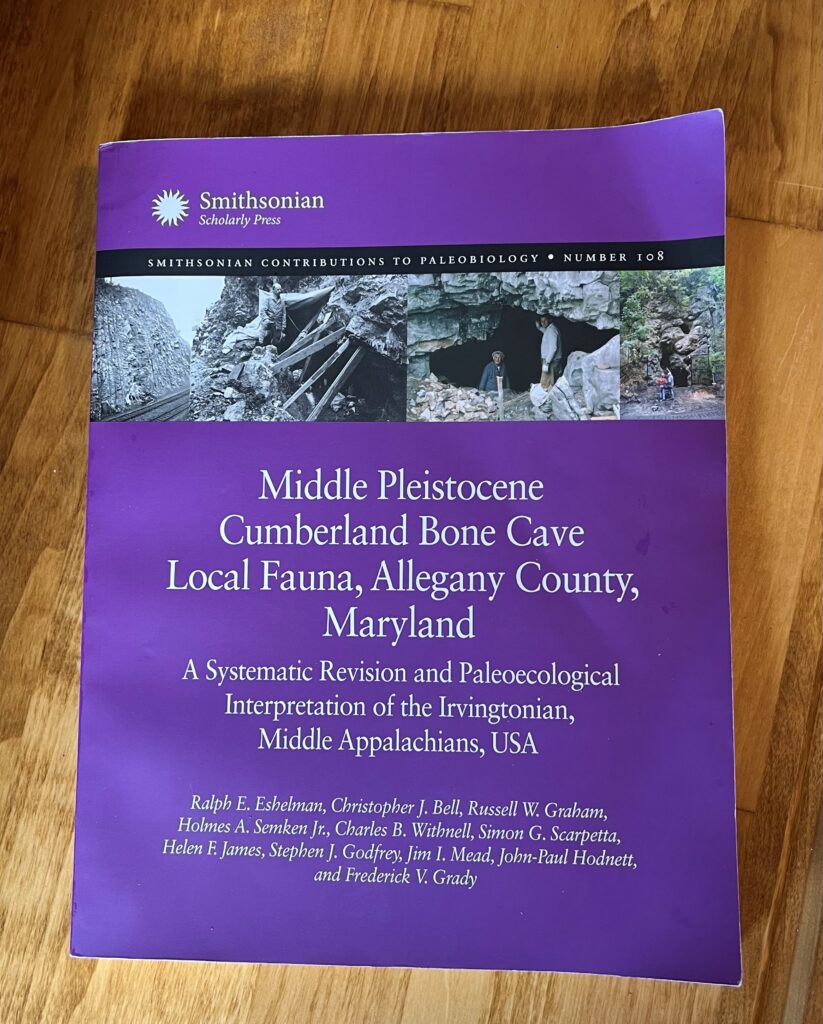
cover of a book about Cumberland Bone Cave

Cumberland Bone Cave is no longer an active research site, but the fenced entrance of its main entrance draws the attention of bicyclists passing near the four-mile mark of the 150-mile Great Allegheny Passage trail. 

Pat McShea is Educator Emeritus at Carnegie Museum of Natural History.

Related Content

Hunting for Fossil Frogs in Wyoming

Type Specimens: What are they and why are they important?

Uprooted: Inside the Museum’s New Exhibition on Invasive Plants

Published November 12, 2025

Filed Under: Blog Tagged With: fossils, paleontology, Pat McShea, Science News

May 22, 2024 by Noelle Swart

Symposium – Discovering Dippy: The Dinosaur That Changed the World

Enjoy a day of talks about our beloved mascot by scientists, historians, and museum professionals.

Become an expert on the past, present, and future of research and discovery of Pittsburgh’s favorite dinosaur – the one and only Dippy! Talks by leading scientists, historians, and museum professionals will get you acquainted with a whole new side of Carnegie Museum of Natural History’s beloved mascot.

Speakers include, Tom Rea, the author of Bone Wars: The Excavation and Celebrity of Andrew Carnegie’s Dinosaur, Dr. John Whitlock, one of the world’s experts on Diplodocus carnegii and its relatives, Dr. Aja Carter, a postdoctoral fellow at Carnegie Mellon University who uses robots to investigate the biology of extinct animals, Phil Fraley, the renowned artist and museum professional who led the remounting of Dippy, T. rex, and more for our Dinosaurs in Their Time exhibition, and our very own dinosaur researchers Dr. Sarah Davis and Dr. Matt Lamanna.

Come for one lecture or stay for the day! All dino-enthusiasts, aspiring scientists, natural history lovers, and friends of the museum are welcome to help us celebrate Dippy’s discovery 125 years ago.

Friday, July 12, 10:00 a.m.-5:00 p.m.

Register Now


Schedule:

10-10:30 a.m. – Check-in

10:30-10:40 a.m. – Welcome remarks

10:40-11:30 a.m. – “Boneheads and Brilliant Men: The Discovery and Celebrity
of Andrew Carnegie’s Dinosaur” – Tom Rea, Author/journalist (retired)

11:30 a.m.-12:20 p.m. – “Resurrecting a Titan: What We Know About the Life of Dippy,
and How We Know It” John Whitlock, Associate Professor, Mount Aloysius College

12:20-1:10 p.m. – Lunch break

1:10-2:00 p.m. – “Motion from Stone: The Dawn of Paleobionics” –  Aja Carter, Postdoctoral fellow, Carnegie Mellon University

2:00-2:50 p.m. –  “Reimagining the Carnegie Dinosaurs” –  Phil Fraley, Founder/owner/CEO (retired), Phil Fraley Productions

2:50-3:10 p.m. – Coffee break

3:10-4:00 p.m. – “How Colorful Was Dippy? Deciphering the Appearance of Extinct Dinosaurs” – Sarah Davis, Collection Manager of Vertebrate Paleontology, Carnegie Museum of Natural History

4:00-4:50 p.m. – Where the Wild Things Are: The Strange Southern Hemisphere Cousins of Diplodocus carnegii” – Matt Lamanna, Mary R. Dawson Curator of Vertebrate Paleontology, Carnegie Museum of Natural History

4:50-5:00 p.m. – Closing remarks


Tagged With: dinosaurs, Dippy 125, paleontology

May 22, 2024 by Noelle Swart

Dippy’s Birthday Party for Members

*Sold out* Carnegie Museums of Pittsburgh members are invited to a birthday celebration for everyone’s favorite dinosaur, Diplodocus carnegii (Dippy). Discovered 125 years ago during an expedition funded by Andrew Carnegie, Dippy ignited popular imagination worldwide and inspired the global dinosaur craze that still thrives today.

You are invited to enjoy birthday treats, face painting, and other family-friendly activities in honor of a Pittsburgh icon with an international impact. Dinosaur-themed clothing and costumes are encouraged for members of all ages!

Dippy’s Birthday Party for Members

Friday, July 12, 2024, 6 p.m. to 9 p.m.


Tagged With: dinosaurs, Dippy 125, members, paleontology

May 6, 2024 by Noelle Swart

Super Science Saturday: Dippy’s Jurassic World

Free with admission! Join us for chats with dinosaur experts, crafts, tours, and Dippy-themed fun.

Join us for a Jurassic celebration as we celebrate the 125th anniversary of the discovery of Dippy, Pittsburgh’s oldest icon! Try your hand at excavation in Bone Hunters’ Quarry and learn how scientists safely bring specimens back from the field. Hear about the most recent dino discoveries and ask museum staff your most pressing questions about the flora and fauna that inhabited one of the most fascinating—and popular—geological periods in our Earth’s history.

Sponsors

Super Science Saturdays are sponsored by PA Cyber, Tender Care Learning Centers, a proud partner of Carnegie Museums of Pittsburgh, and Discover Westmoreland.

PA Cyber Charter School, Super Science Activity sponsor
Tendercare Learning Center, Super Science Activity sponsor
Discover Westmoreland County, Super Science Activity sponsor

Tagged With: Dippy 125, paleontology, Super Science, Super Science Saturday

May 6, 2024 by Noelle Swart

After Dark: Dippy’s Rockstar Bash

This 21+ night of science, music, and fun is going to rock the “house that Dippy built”!

From our beloved Dippy to dazzling gems and magnificent architecture – Carnegie Museum of Natural History is full of rockstars! Celebrate the 125th anniversary of Dippy’s discovery at a 21+ bash in the “house that Dippy built.”

Get ready to rock out to ilyAIMY, f*** yeah, dinosaurs!, and Howling Mob at Dippy’s Rockstar Bash After Dark (21+)! Plus, see Diplodocus fossils in PaleoLab that aren’t normally on display, go on a scavenger hunt to find some of the museum’s rockstar specimens, and make your own carrier snail pin with Curator of Mollusks Tim Pearce. Don’t miss senior dinosaur Curator Matt Lamanna’s talk “Discovering Dippy: The Dinosaur That Changed the World.”

Dippy’s Rockstar Bash After Dark

Friday, July 26, 6 p.m. to 10 p.m.
21+
(current ID will be required at the door)

Tickets on sale now!


Sponsored by

Discover Westmoreland County, Super Science Activity sponsor


Tagged With: 21+, adults, after dark, Dippy 125, paleontology

April 12, 2024 by Kathleen

Carnegie Connectors Young Professionals: The Stories We Keep

You’re invited!

Join us for a Carnegie Connector’s exclusive event at Carnegie Museum of Natural History! Engage with museum objects like never before, pose questions to conservators, and learn the tricks and tools of the conservation trade at The Stories We Keep: Conserving Objects from Ancient Egypt.

Every object in the museum’s care has stories, from its creation and original use to the diligent conservation work undertaken to preserve it for future generations. This exhibition features more than 80 items from ancient Egypt—including the 4,000-year-old Dahshur boat, one of four in existence in the world—and the work necessary to safeguard them.

Network with members, interact with a conservator, and enjoy complimentary drinks and light bites at this exclusive event. Business casual or party attire suggested.

You must be 21 years of age or older to attend this event. Valid ID is required for entry.
Exclusive event for young professionals, 21-40.

Tagged With: archaeology, paleontology

  • Page 1
  • Page 2
  • Page 3
  • Interim pages omitted …
  • Page 7
  • Go to Next Page »

sidebar

About

  • Mission & Commitments
  • Directors Team
  • Museum History

Get Involved

  • Volunteer
  • Membership
  • Carnegie Discoverers
  • Donate
  • Employment
  • Events

Bring a Group

  • Groups of 10 or More
  • Birthday Parties at the Museum
  • Field Trips

Powdermill

  • Powdermill Nature Reserve
  • Powdermill Field Trips
  • Powdermill Staff
  • Research at Powdermill

More Information

  • Image Permission Requests
  • Science Stories
  • Accessibility
  • Shopping Cart
  • Contact
  • Visitor Policies
One of the Four Carnegie Museums | © Carnegie Institute | Privacy Policy | Terms of Use | Accessibility
Rad works here logo