• Skip to primary navigation
  • Skip to main content
  • Skip to primary sidebar

Carnegie Museum of Natural History

One of the Four Carnegie Museums of Pittsburgh

  • Visit
    • Buy Tickets
    • Visitor Information
    • Exhibitions
    • Events
    • Dining at the Museum
    • Celebrate at the Museum
    • Powdermill Nature Reserve
    • Event Venue Rental
  • Learn
    • Field Trips
    • Educator Information
    • Programs at the Museum
    • Bring the Museum to You
    • Guided Programs FAQ
    • Programs Online
    • Climate and Rural Systems Partnership
  • Research
    • Scientific Sections
    • Science Stories
    • Science Videos
    • Senior Science & Research Staff
    • Museum Library
    • Science Seminars
    • Scientific Publications
    • Specimen and Artifact Identification
  • About
    • Mission & Commitments
    • Directors Team
    • Museum History
  • Tickets
  • Give
  • Shop

Blogs about Pittsburgh

Carnegie Museum of Natural History is in Pittsburgh, Pennsylvania. Many of the museum's collection specimens are from the local area, including our Botany, Invertebrate Paleontology, and Herpetology specimens. Our collections and our community often influence our work, whether that includes researching climate change, air pollution improvements from the closing of steel mills in the city, or invasive species.

September 4, 2018 by wpengine

Smoke Scenery

by Pat McShea

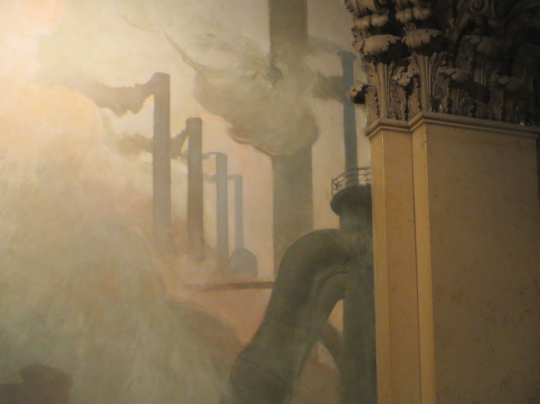
Detail from The Apotheosis of Pittsburgh mural by John White Alexander

A museum educator from Norway offered a novel way to interpret We Are Nature: Living in the Anthropocene. “This should be part of the story.” explained Bergsveinn Thorssonas he gestured at century-old steel industry scenes depicted in second-floor portions of the multi-level grand staircase mural painted by John White Alexander.

Thorsson, a PhD student who is studying how museums present current environmental issues, was fascinated by the smoky scenes and their marble pillar frames. “Owning our industrial history is important to understanding our current situation.” he added before conceding that he didn’t have advice for accomplishing such a task.
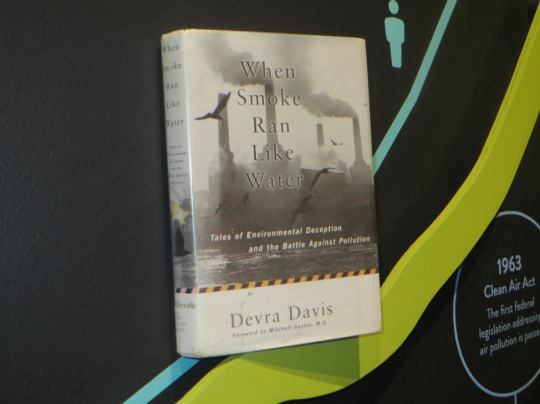
A copy of When Smoke Ran Like Waterpositioned at the 1948 mark on the population and atmospheric carbon level graph in We Are Nature
A copy of When Smoke Ran Like Water positioned at the 1948 mark on the population and atmospheric carbon level graph in We Are Nature

Since 2002, an excellent book-form model of industrial acknowledgement has existed in When Smoke Ran Like Water, by Donora, Pennsylvania native Devra Davis. The book, which Davis summarizes as an argument for “a fundamentally new way of thinking about health and the environment,” begins with a recounting of the most significant air pollution disaster in the United States – the build-up in Donora, some 25 miles southeast of Pittsburgh, during a five-day period in late October 1948, of a toxic fog of steel and zinc industry emissions that resulted in 20 deaths and 600 hospitalizations.

In Davis’s account, family histories, with all their hopes, accomplishments, and compromises, are central to the tragedy. A quote from her mother captures a common attitude toward the smoky scenery: “Look, today they might call it pollution. Back then it was just a living.”

Patrick McShea works in the Education and Visitor Experience department of Carnegie Museum of Natural History. Museum employees are encouraged to blog about their unique experiences and knowledge gained from working at the museum.
Filed Under: Blog Tagged With: Anthropocene, Pittsburgh, pollution, We Are Nature, We Are Nature 2, We Are Nature: Living in the Anthropocene

August 21, 2018 by wpengine

Saddle Cleaning

by Ruth Fauman-Fichman

In the Section of Collection Care and Conservation at the Carnegie Museum of Natural History there are thousands of artifacts that silently scream for treatment. They wait patiently for their turn to be noticed. Some have been waiting for close to a hundred years, having gathered dirt and soot from their years ago acquisition by the museum. If it weren’t for Conservator Gretchen Anderson’s dogged dedication, many would still be waiting. They all harbor secrets, some easier to figure out than others. Many came to the museum long ago with limited information about themselves, tucked into dark corners.

At the “Annex” (the informal name for the O’Neill Research Center) one afternoon I found myself sitting in front of a sawhorse covered over with degrading plastic.  I had seen and moved around four of these sawhorses over the last year, always hearing from Ms. Anderson: “we can’t deal with these yet, but soon!” Now, as a result of a successful grant proposal to the National Endowment for the Humanities to upgrade the storage capabilities of the Anthropology holdings, I would finally be able to inspect and conduct a light cleaning of the contents underneath.

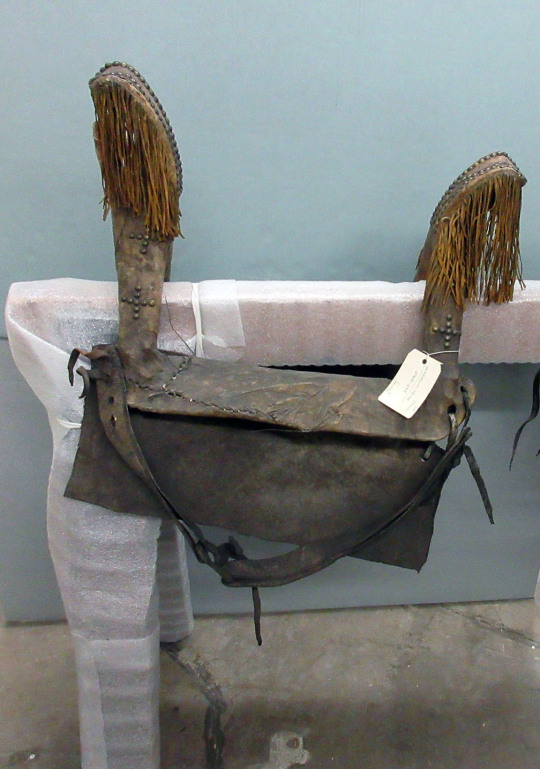
Woman’s saddle, before treatment.  
Woman’s saddle, before treatment.

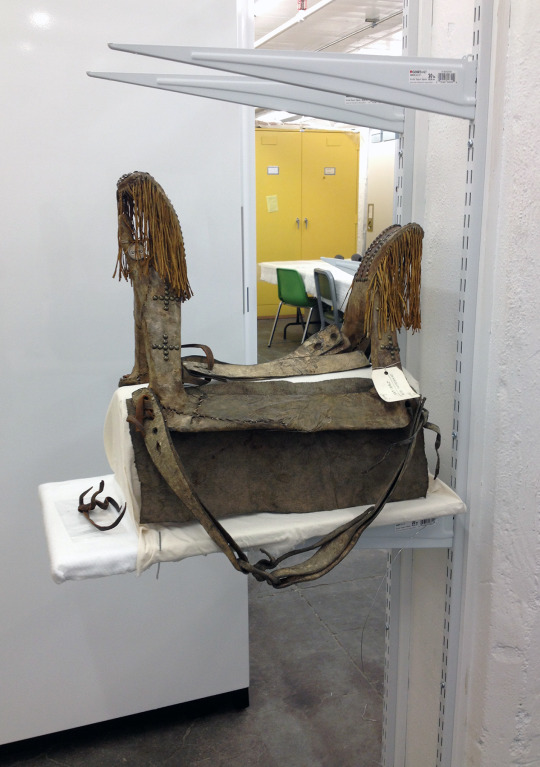
With its non-archival plastic cover now discarded, the sawhorse hid a soot-black North American Indian woman’s saddle. What an ugly disappointment, I initially thought. What was it made of? Animal, vegetable, mineral? The only way to know was to carefully begin, using soft brushes. Almost immediately a surprise surfaced. This saddle was not just some indistinct blob! It was made of a combination of wood, antler, leather, brass ornaments and COLOR!

Brushing the top of the front tasseled pommel suddenly revealed intentional red ochre staining around the decoratively placed brass studs embedded in a cross pattern. Further careful cleaning changed the grey suede tassels to a luminous mustard-color. The same was revealed on the back pommel. Suddenly this non-descript saddle had personality and power! No longer disappointing, the rest of the six hours I spent cleaning this piece made me feel connected to the person who might have used it.

I carefully cleaned the rest of the piece over several sessions with soot sponges.  The seat and pommels were made of wood and antler, covered in leather sewn together with sinew. I noticed the tanned leather thongs used to tie each piece of the saddle together and attach to leather cinches placed around the belly of the small pony or horse.  The thongs were degrading practically to a powder with even limited handling from what Anderson and Collections Manager Deborah Harding called “red rot.” The woman who sat on this pony or horse shielded her thighs from being rubbed raw by rectangular pieces of leather attached to the saddle body with leather thongs. The “leathered” side of the rectangular piece rested against the pony and the suede side against the rider. Careful cleaning on the suede side revealed red stains. Red ochre? Horse blood? Something else?

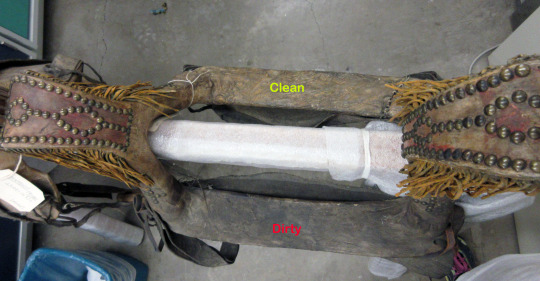
Half-cleaned saddle
Half of the saddle has been cleaned.  Note the color difference between the dirty side and cleaned side.  The majority of this is soot from years of exposure to Pittsburgh air pollution.


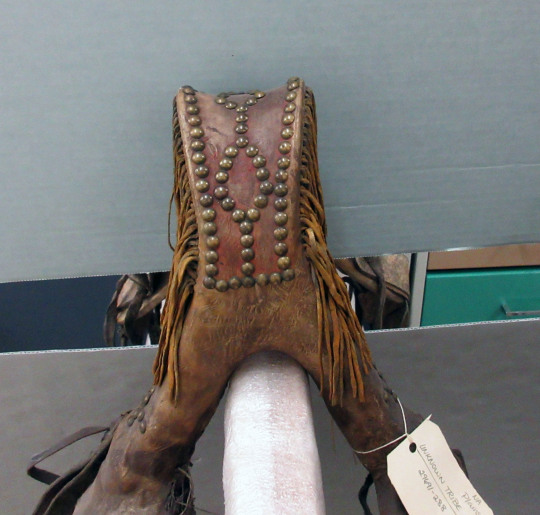
saddle horn after cleaning
Close-up of the saddle horn after cleaning.  The red ochre color was completely obliterated by soot.


While there is little information in the accession record to tell us anything about the original owner of this saddle, from cleaning it carefully I was able to determine that this saddle was well used. It was a privilege to handle it and let it speak to me for a little while. In its cleaner state, it now rests on a horse-like bed of archival materials that will not further degrade its fragile materials and I will be making a cover for it and its three other saddle companions in the near future.

saddle in storage
The saddle on its new storage mount.

Ruth Fauman-Fichman is a volunteer at the Carnegie Museum of Natural History.

Filed Under: Blog Tagged With: anthropology, conservation, Pittsburgh

August 16, 2018 by wpengine

Mapping Pittsburgh’s Plastic Waste

By James Whitacre

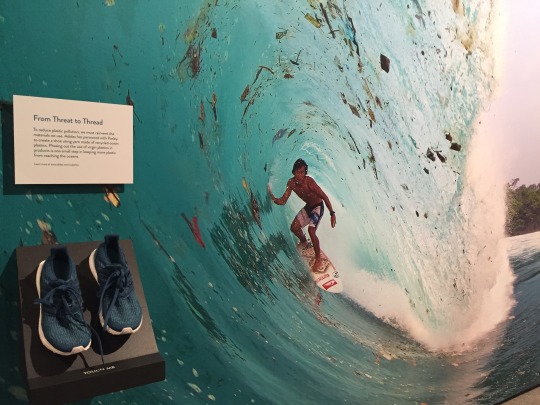
If you have visited the museum recently, you have probably seen the We Are Nature: Living in the Anthropocene exhibition (if not, you have less than a month to check it out!!). When I walked through the exhibition the first time, I was struck by the image of the surfer gliding across a wave with plastic and other debris floating all around him. It is a bleak image of how the beauty and ecology of our oceans, rivers, and lakes is being tarnished and even destroyed by the accumulation of so much plastic waste.

surfer in wave with plastic

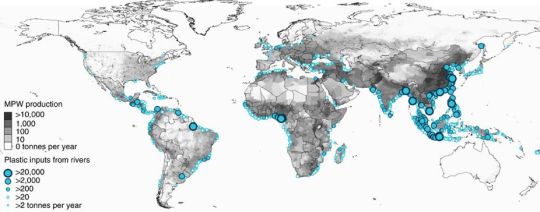
Recently, I also came across an interesting 2017 article, ‘River plastic emissions to the world’s oceans,‘ in which the authors have developed a global model using spatial and temporal data on waste management, population density, and hydrology to measure the amount of plastic in rivers that makes its way into oceans. They found that the top 20 polluting rivers account for 67% of the global total of plastic waste, which is between 1.15 and 2.41 million tonnes of plastic a year. While most of the top 20 rivers are in Asia, and none are in the U.S., their findings have great implications for how plastic waste should be managed and mitigated at global and local scales.

Diagram of mass of river plastic flowing into oceans in tonnes per year.
Mass of river plastic flowing into oceans in tonnes per year. This work is licensed under a Creative Commons Attribution 4.0 International License. Source: https://www.nature.com/articles/ncomms15611/figures/1


This article got me thinking…How can we, as humans living in the Anthropocene, do something to decrease and even eliminate the accumulation of plastic in our waterways? Many people are thinking about this, but what about our beloved three rivers of Pittsburgh? How much do we as a community contribute to the global plastic waste epidemic? Well, to start answering these questions, we need data to know where the plastic waste is…

How often have you walked through your neighborhood, a local or state park, or even been driving around, and noticed plastic waste (and likely other trash)? With this in mind, we’d like to invite you into an experiment…to help us map Pittsburgh’s plastic waste. The GIS Lab, located at Powdermill Nature Reserve, has developed a simple mapping survey to help track plastic waste in our area. To participate, all you have to do is fill out the form using your GPS-enabled smartphone or mobile device when you encounter plastic waste:

Plastic Waste Survey


What will we do with this data?

Well, right now this is just an experiment…But we are thinking of some cool ways to map and analyze this data. We will definitely share a map that shows the data, so stay tuned. We would also like to help our community understand what happens to the plastic if left in the environment. So, here are some example research questions we hope to shed some light on in the near future:

  • If you find some plastic near your house, what stream will it end up in, and what is the shortest path to the ocean from there?
  • How much rain or wind would it take to move that plastic to a stream or river?
  • Where is the nearest recycling center that I can take a few bags or a large heap of plastic (and other) waste?

Data can be very powerful, and sometimes more powerful than we can imagine on our own. So if you have any other ideas for how we could use this data, please email the GIS Lab!

What is Survey123?

The GIS Lab used Survey123 to build this survey, which is part of the ArcGIS platform. Survey123 for ArcGIS is a simple and intuitive form-centric data gathering solution that makes creating, sharing, and analyzing surveys easy using GIS software. Download the free Survey123 app to use the form we created.

James Whitacre is the GIS Research Scientist for Carnegie Museum of Natural History, where he primarily manages the GIS Lab at Powdermill Nature Reserve, the museum’s environmental research center. Museum employees are encouraged to blog about their unique experiences and knowledge gained from working at the museum.
Filed Under: Blog Tagged With: Anthropocene, GIS lab, Pittsburgh, Powdermill Nature Reserve, We Are Nature: Living in the Anthropocene

May 23, 2018 by wpengine

Pittsburgh Environmentalist Group Meetup Makes Eco-Friendly Activities Fun

Rethinking your impact on the environment, or carbon footprint, could be as simple as eating less barbecue or not choosing a green cleanser over your favorite fragrant household cleaner. Bonnie Siefers of the Pittsburgh Environmentalist Group Meetup started a group to help make the process of becoming more environmentally friendly fun and social.

“I feel like a lot of people are anxious to find groups of people that are like-minded in this space,” Siefers said. “I used to live in the suburbs of Pittsburgh and when I moved into the city, I found more like-minded people here because they are younger and more mindful. They are growing up and talking about climate change.”

Bonnie Siefers

Pittsburgh Environmentalist Group Meetup was founded in July 2013 and quickly gained 30 members in a few days. Today, it has 738 members and a number of meetups under its belt on topics such as eco-stewardship training, the future of recycling, and veganism.

“People are glad to have community and that was the number one thing I found. You don’t join a Meetup like this if you are not a stakeholder in this process, and people feel isolated,” Siefers said.

Members of the Meetup are encouraged to go back to their communities as “The Green Team” and lead conversations and corrective actions to lessen their neighborhood’s carbon footprint. Siefers said this is the type of outreach that can build personal fulfillment for those wanting to do their part for the environment.

“One of our members was very vocal to get people to change their energy option to renewable energy and encouraged their neighbors to go to Penn Power and select 100% renewable energy. It’s a personal choice,” she said.

She added: “I want to be a change activist. I want to inspire those that I meet to think about things deeply and differently. Lots of people are interested in sustainability in Pittsburgh and it has been the most livable city many, many years in a row, I think there is a trend to build in a sustainable manner and keep the green space alive that we have.”

Siefers is encouraged by the increasing number of universities offering degree programs in sustainability and the impact the next generation of students can have on the environment.

“It’s certainly a growing field. Almost every business or organization you can think of has a sustainability department and its main focus is to save the organization money,” she said. Her own sustainability work has afforded her opportunities to help large organizations rethink their footprint.

“I did a sustainability action plan for the Pittsburgh YMCA that included an audit of their larger buildings. It was already sustainable, and I gave them ways to save even more money,” Siefers said. “They wanted an ROI in three years and I made that possible. Just changing your light bulbs can save you a lot of money.”

So, what are five practical ways people can reduce their footprint? Here is what Siefers recommended:

●     Carpool to destinations with co-workers or with friends.

●     Offset carbon use when traveling by purchasing carbon offsets on plane tickets.

●     Purchase organic food and fabric to help minimize the amount of pollutants entering aquifers.

●     Be mindful about your energy and chemicals at home by turning off lights when leaving a room, using surge protectors on appliances, placing electronics in sleep mode when not in use, and selecting non-toxic cleaning products.

●     Tell somebody. Create a community to discuss and exchange information on how to personally change your home and neighborhood for the sake of the environment.

Siefers’ work is an excellent example of how you can apply the concepts and ideas about the human impact on the environment to your daily life. At the Carnegie Museum of Natural History,  we hope that our exhibition We Are Nature: Living in the Anthropocene inspires more people to take action and join groups like Pittsburgh Environmentalist Group Meetup.

Learn more about beneficial sustainability practices and ideas at Bonnie Siefers website eco Couture.

________________________________________________________________

In the spirit of recognizing all we are already doing in Pittsburgh, we have started a new blog series to compliment We Are Nature: Living in the Anthropocene, the exhibition about the complex relationship between humans and nature currently on display at Carnegie Museum of Natural History. We are featuring Pittsburghers who are committed to improving the environment in which we live. Each blog features a new individual and shares some of the ways in which they are helping issues of sustainability, conservation, restoration, climate change, or helping Pittsburgh to be an even more beautiful place to live.

Melonee Gaines is a freelance journalist and writer based in Memphis, TN and has written for MLK50.com and The Crisis Magazine. She is the lead maven and founder of the digital media and public relations firm MPact Media Group. She enjoys foodie adventures, beach excursions, and herb gardening.

Filed Under: Blog Tagged With: Anthropocene, Pittsburgh, We Are Nature, We Are Nature: Living in the Anthropocene

May 15, 2018 by wpengine

Special Programming for ICOM International Museum Day

Join us for ICOM International Museum Day on Friday, May 18th!

We’re celebrating the day with researchers in the galleries and two exciting livestream events.

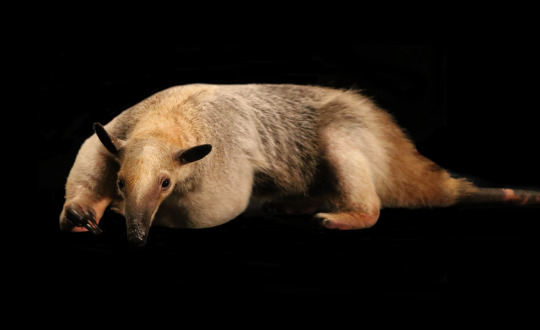
Antonio, lesser tamandua (anteater)

Live Animal Encounter: Debuting Antonio the Anteater

Visit the museum in the afternoon for the public debut of the newest member of our Living Collection! Antonio, a lesser tamandua (also known as an anteater), is a fascinating animal that wins the hearts of those who meet him. Living Collection Manager, Mallory Vopal, will introduce Antonio in Earth Theater at 1:30 p.m. Cost is $2 per person. Or join them live online on our Facebook page.

Architecture and Geology in the Grand Staircase

Researchers from both Carnegie Museum of Natural History and Carnegie Museum of Art will have a lively discussion on the architecture of our museum in Oakland. Join geologist Albert Kollar and manager of architecture Alyssum Skjeie at 12:30 p.m. in the Grand Staircase area or online on the Carnegie Museum of Art Facebook page.

Meet the Researchers

Visit the museum during regular hours (10 a.m.-5 p.m.) to chat with museum researchers. This is your chance to ask questions and learn the stories behind the exhibitions. They’ll be in the galleries throughout the day. Here’s where to find the experts:

12:15-12:45 p.m.

Albert Kollar, Collection Manager for Invertebrate Paleontology, in the Grand Staircase

1:00-2:00 p.m.

Andrew McAfee, Scientific Illustrator, in Dinosaurs in Their Time

Bonnie Isaac, Collection Manager of Botany, in Hall of Botany

1:00-3:00 p.m.

Catherine Giles, Curatorial Assistant, in Third Floor Exhibition Foyer

Debra Wilson, Collection Manager of Minerals and Gems, in Wertz Gallery: Gems & Jewelry in Hillman Hall of Minerals and Gems

1:30-2:30 p.m.

Robert Androw, Scientific Preparator, in Grand Staircase

1:30-3:00 p.m.

John Rawlins, Curator of Invertebrate Zoology, in Third Floor Exhibition Foyer

Jim Fetzner, Assistant Curator of Invertebrate Zoology, in Third Floor Exhibition Foyer

2:00-3:00 p.m.

Nicole Heller, Curator of the Anthropocene, in We Are Nature

Matt Lamanna, Assistant Curator of Vertebrate Paleontology, in Dinosaurs in Their Time

John Wible, Curator of Mammals, in Hall of African Wildlife and Hall of North American Wildlife

Steve Rogers, Collection Manager of Amphibians and Reptiles/Birds, in Bird Hall

Timothy Pearce, Assistant Curator of Mollusks, outside Earth Theater

3:00-4:00 p.m.

Amy Covell, Curatorial Assistant, Alcoa Foundation Hall of American Indians

Mason Heberling, Research Fellow in Botany, in We Are Nature

Gretchen Anderson, Conservator, Collection Care and Conservation, in Hall of North American Wildlife Temporary Visible Conservation Lab

3:30-4:30 p.m.

Robert Androw, Scientific Preparator, in Grand Staircase

3:00-5:00 p.m.

Robert Davidson, Collection Manager of Invertebrate Zoology, in Third Floor Exhibition Foyer

4:00-5:00 p.m.

Suzanne McLaren, Chair of Collections, Mammals, in Hall of African Wildlife and Hall of North American Wildlife

Erin Peters, Assistant Curator of Science and Research, in Walton Hall of Ancient Egypt

For more information about our researchers, visit our ICOM International Museum Day page.

Filed Under: Blog Tagged With: Pittsburgh

May 14, 2018 by wpengine

Carnegie Museum of Natural History Wins Best Museum in Readers’ Poll

We are honored that Carnegie Museum of Natural History won the Best Museum in Pittsburgh Magazine’s Best of the Burgh Readers Poll this year!

We’re proud to be one of the top natural history museums in the country, and grateful that our local community recognizes everything we are doing to keep our museum vibrant and relevant.

We often reach out to our visitors for feedback including when they helped us develop our new Dippy-inspired branding. Being voted Best Museum in Pittsburgh for 2018 is the kind of feedback we feel honored to receive.

Thank you, Pittsburgh Magazine readers!

Filed Under: Blog Tagged With: Pittsburgh

  • « Go to Previous Page
  • Page 1
  • Page 2
  • Page 3
  • Page 4
  • Page 5
  • Interim pages omitted …
  • Page 18
  • Go to Next Page »

sidebar

About

  • Mission & Commitments
  • Directors Team
  • Museum History

Get Involved

  • Volunteer
  • Membership
  • Carnegie Discoverers
  • Donate
  • Employment
  • Events

Bring a Group

  • Groups of 10 or More
  • Birthday Parties at the Museum
  • Field Trips

Powdermill

  • Powdermill Nature Reserve
  • Powdermill Field Trips
  • Powdermill Staff
  • Research at Powdermill

More Information

  • Image Permission Requests
  • Science Stories
  • Accessibility
  • Shopping Cart
  • Contact
  • Visitor Policies
One of the Four Carnegie Museums | © Carnegie Institute | Privacy Policy | Terms of Use | Accessibility
Rad works here logo