• Skip to primary navigation
  • Skip to main content
  • Skip to primary sidebar

Carnegie Museum of Natural History

One of the Four Carnegie Museums of Pittsburgh

  • Visit
    • Buy Tickets
    • Visitor Information
    • Exhibitions
    • Events
    • Dining at the Museum
    • Celebrate at the Museum
    • Powdermill Nature Reserve
    • Event Venue Rental
    • Gift Cards
  • Learn
    • Field Trips
    • Educator Information
    • Programs at the Museum
    • Bring the Museum to You
    • Guided Programs FAQ
    • Programs Online
    • Climate and Rural Systems Partnership
  • Research
    • Scientific Sections
    • Science Stories
    • Science Videos
    • Senior Science & Research Staff
    • Museum Library
    • Science Seminars
    • Scientific Publications
    • Specimen and Artifact Identification
  • About
    • Mission & Commitments
    • Directors Team
    • Museum History
  • Tickets
  • Give
  • Shop

Blogs about Pittsburgh

Carnegie Museum of Natural History is in Pittsburgh, Pennsylvania. Many of the museum's collection specimens are from the local area, including our Botany, Invertebrate Paleontology, and Herpetology specimens. Our collections and our community often influence our work, whether that includes researching climate change, air pollution improvements from the closing of steel mills in the city, or invasive species.

July 26, 2017 by wpengine

Exploring Intergalactic Natural History

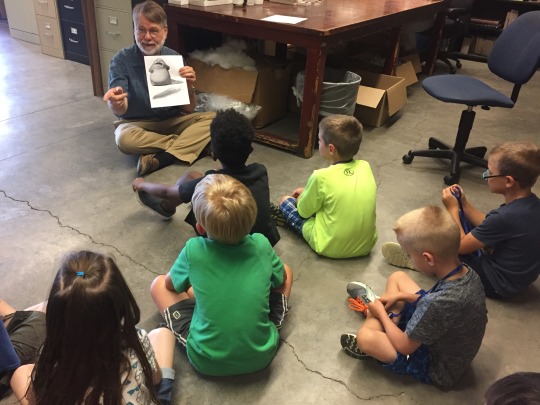
Researcher Tim Pearce sitting on the floor talking to a group of campers

What can the science of natural history teach us about the Star Wars universe? In a new week-long summer day camp at Carnegie Museum of Natural History, kids ages 6 and 7 had a chance to find out first hand. By comparing Mesozoic ferns to plants in the forest of Endor and conducting condensation experiments to prepare for survival in the desert of Tatooine, campers activated their imaginations and honed their observation skills.

Museum scientists also joined in on the fun. Dr. Tim Pearce, assistant curator and head of the Section of Mollusks, helped campers investigate a critical question—is Jabba the Hut a slug? After learning about slug features with Dr. Pearce, one camper gave a scientific rationale for the answer— “No. Jabba does not have eye stalks, but slugs do!”

Due to popular demand, a second session of Star Warriors has been added July 31–August 4. Register online by July 27 to join in on the fun.

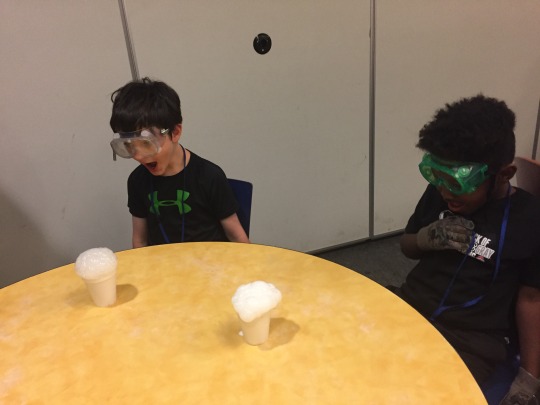
On Hoth Day, Star Warriors experimented with water and ice, making ice cream with solid carbon dioxide (dry ice) and building model igloos. “The ice cream was bubbling like crazy,” campers observed.
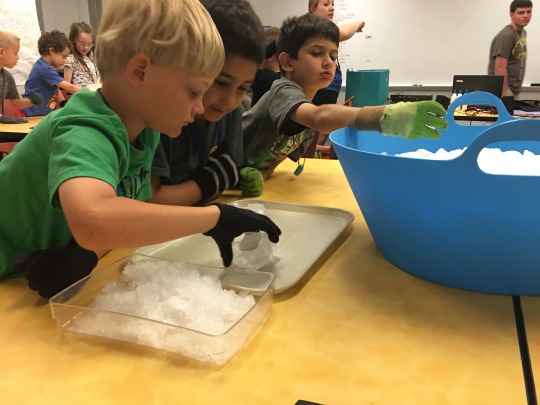
campers making ice cream
campers making excited faces at their bubbling ice cream

Campers wrapped up the week by making their own costumes and solving a Star Wars quest in the museum galleries. Visit camps.artandnaturalhistory.org to sign up for the next session!
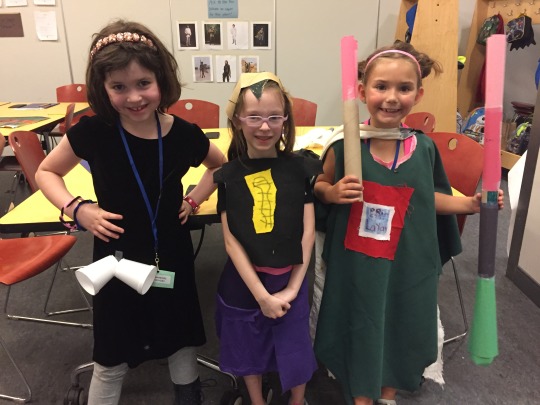
three campers dressed up in costumes that they made

Filed Under: Blog Tagged With: Pittsburgh, Summer camps, Tim Pearce

July 14, 2017 by wpengine

Dippy Dino Rocks

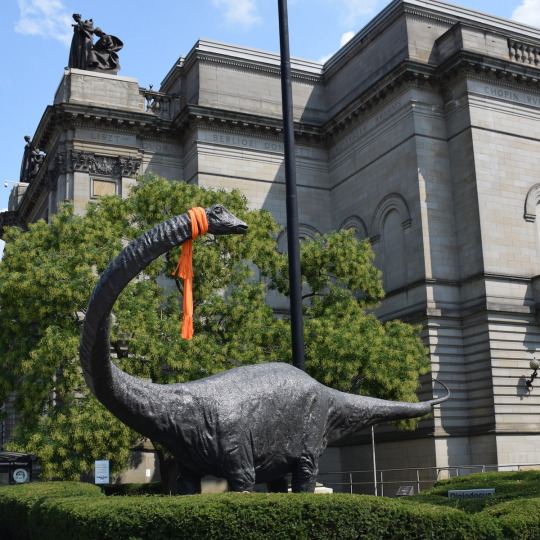
Dippy dinosaur statue with orange scarf

Dippy, our museum’s most famous dinosaur, has inspired young paleontologists for years, and his statue on Forbes Avenue inspires selfies outside of the museum every day! Most recently, Pittsburgh’s favorite dinosaur was the inspiration for a new flavor of ice cream —Dippy Dino Rocks!

You can sample Dippy Dino Rocks, on July 22 at Super Science Saturday courtesy of Klavon’s Ice Cream Parlor, where the new ice cream will be sold!

Filed Under: Blog Tagged With: Pittsburgh

December 13, 2016 by wpengine

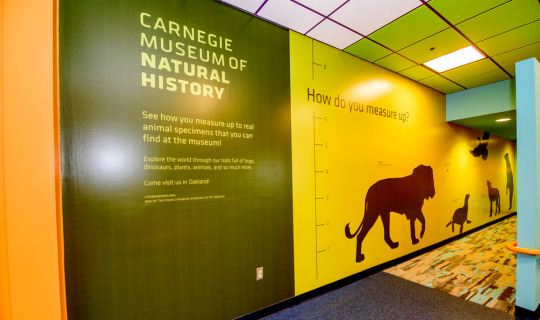
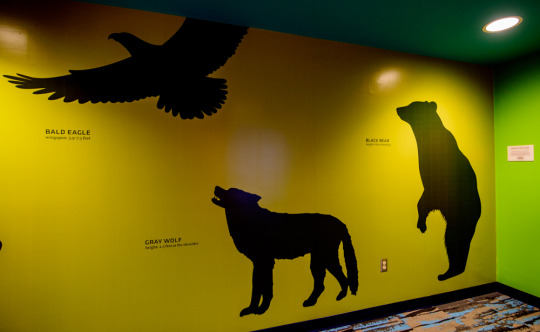
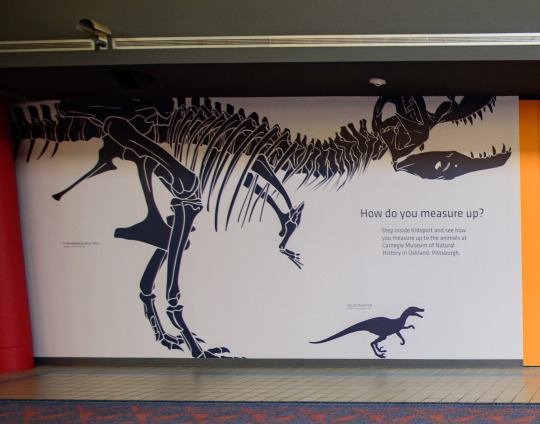
Measuring Up at Kidsport

Wall art with animal silhouettes

Wall art with eagle, wolf, and bear silhouettes
Wall art with T-rex silhouette

How do you size up to a bald eagle, a lion, or even a velociraptor?

You can find out next time you fly through Pittsburgh International Airport at the new Kidsport!

Carnegie Museum of Natural History, as well as several other cultural institutions in Pittsburgh, teamed up with the airport to help create the newly renovated Kidsport – a colorful, 2,100 square foot play and learning space with interactive exhibits for families to visit when they’re traveling.

Carnegie Museum of Natural History’s contribution was a series of wall art that lets kids compare themselves to different animals as short as a seal and as huge as a T-Rex!

The installations were made possible by funding from the Richard King Mellon Foundation.

(Photos courtesy of Pittsburgh International Airport)

Filed Under: Blog Tagged With: Pittsburgh, t-rex

December 5, 2016 by wpengine

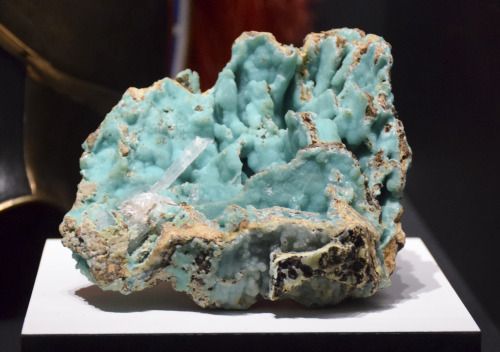
Smithsonite and gypsum

Smithsonite and gypsum minerals

Smithsonite and gypsum in Hillman Hall of Minerals and Gems.
(photo by Hayley Pontia)

Filed Under: Blog Tagged With: geology, Hillman Hall, minerals, Pittsburgh

November 29, 2016 by wpengine

Carnegie geologist in France

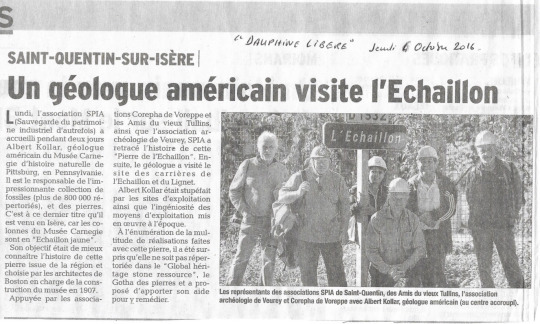
french newspaper

Last month, Carnegie Museum of Natural History Geologist Albert Kollar was traveling in France on a research trip, where a local newspaper wrote about his work. Read the translation below.

In the picture, Kollar is photographed with representatives of the SPIA associations of Saint-Quentin, the Friends of the old Tullins, the Archaeological Association of Veurey and Corepha de Vorepp.  Kollar is in the middle, crouching.

An American geologist visits the Echaillon
Saint-Quentin-sur-Isère

On Monday, the association SPIA (protection of the past
industrial patrimony) welcomed for two days Albert Kollar, an American
geologist from the Carnegie Museum of Natural History in Pittsburgh, Pennsylvania.
He is the person responsible of the impressive fossil collection (more than
800.000 registered) and the stones. It is in this regard that he came in Isère,
because the columns of the Carnegie Museum are made of “yellow Echaillon”.

His objective was to know better the story of this stone
stemming from the region and chosen by the architects of Boston in charge of
the construction of the Museum in 1907.

Supported by the associations “Corepha de Voreppe” and “The
Friends of the old Tullins”, and by the Archaeological Association of Veurey,
SPIA reconstituted the story of this “stone of Echaillon”. Then, the American
geologist visited the stone quarries of the Echaillon and the Lignet.

Albert Kollar was amazed by the production sites and by the
ingenuity of the techniques used by the past.

Despite the multitude of constructions made with this stone,
he was surprised that it was never recorded in the “Global heritage stone resource”,
the Gotha of stones and proposed to provide assistance to remedy it.

Filed Under: Blog Tagged With: Albert Kollar, geology, invertebrate paleontology, Pittsburgh

November 4, 2016 by wpengine

Unidentified Gold Nugget

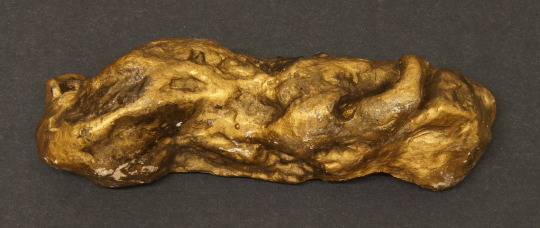
gold nugget
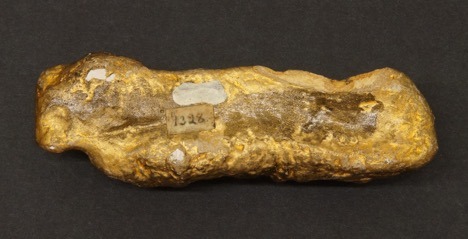
back of gold nugget

by Debra Wilson

The identity of this gold nugget has been lost to time. This is a plaster cast of a gold nugget which is housed in the Mineral Section of the Carnegie Museum of Natural History.  It is believed to be one of six casts of famous gold nuggets acquired by the museum from Ward’s Natural Science Establishment in 1897.  This specimen (CM33100) measures 12.8 x 3.9 x 2.9 cm (Photos by Deb Wilson). 

The only identification for this nugget is the number “1328” affixed to the back of the specimen.  Ward’s was known for producing and selling plaster casts of famous gold nuggets; they even exhibited a number of them at the Chicago World’s Fair in 1893.

The original documentation from the acquisition of the six gold nugget models cannot be found in the museum’s archives, except for a reference on page 56 of the Annual Report of the Carnegie Museum for the Year Ending March 31, 1899, which states “Casts of six gold nuggets and of 12 meteorites purchased October 20, 1897, from Wards Natural Science Establishment.  Accession 419, 1-18.”  

What is known about the other five gilded plaster casts is:

· “Ural” or “Great Triangle” nugget. Found at Taschku-Targunk, Ural Mountains, Russia, in 1842. Weight of original 100 lbs. Wards #1214, CM16711.

· “Welcome” nugget. Found at Bakery Hill, Victoria, Australia on June 11, 1858. Weight of original 2,166 ounces.  Wards #1471, CM16710.

·“Oregon Canyon” nugget, Found near El Dorado City, California, USA, prior to 1866, Weight of original unknown.  Wards #1473, CM33103.

·“Spondulix” nugget.  Found at Eureka Gulch, Victoria, Australia in November, 1872; Weight of original 155 oz. Wards #1458, CM33101.

·“Homebush” nugget.  Found at Homebush, Victoria Australia on March 24, 1880. Weight of original 80 oz., Wards #1467, CM33102.

If you have any information that may help identify which “famous” gold nugget this is a replica of, contact Debra Wilson, Section of Minerals, wilsond@carnegiemnh.org .  

(Initial research done by museum volunteer David R. Alison)

Debra Wilson is collections assistant in the Section of Minerals at Carnegie Museum of Natural History. Museum employees are encouraged to blog about their unique experiences of working at the museum.

Carnegie Museum of Natural History Blog Citation Information

Blog author: Debra Wilson
Publication date: November 4, 2016

Share this post!

  • Share on Twitter Share on Twitter
  • Share on Facebook Share on Facebook
  • Share on Pinterest Share on Pinterest
  • Share on LinkedIn Share on LinkedIn
  • Share on Reddit Share on Reddit
  • Share via Email Share via Email

Filed Under: Blog Tagged With: gold, Marc Wilson, minerals, Pittsburgh

  • « Go to Previous Page
  • Page 1
  • Interim pages omitted …
  • Page 3
  • Page 4
  • Page 5
  • Page 6
  • Page 7
  • Interim pages omitted …
  • Page 18
  • Go to Next Page »

sidebar

About

  • Mission & Commitments
  • Directors Team
  • Museum History

Get Involved

  • Volunteer
  • Membership
  • Carnegie Discoverers
  • Donate
  • Employment
  • Events

Bring a Group

  • Groups of 10 or More
  • Birthday Parties at the Museum
  • Field Trips

Powdermill

  • Powdermill Nature Reserve
  • Powdermill Field Trips
  • Powdermill Staff
  • Research at Powdermill

More Information

  • Image Permission Requests
  • Science Stories
  • Accessibility
  • Shopping Cart
  • Contact
  • Visitor Policies
Stay in the loop! Sign up for our newsletter(s).
One of the Four Carnegie Museums | © Carnegie Institute | Privacy Policy | Terms of Use | Accessibility
Rad works here logo