• Skip to primary navigation
  • Skip to main content
  • Skip to primary sidebar

Carnegie Museum of Natural History

One of the Four Carnegie Museums of Pittsburgh

  • Visit
    • Buy Tickets
    • Visitor Information
    • Exhibitions
    • Events
    • Dining at the Museum
    • Celebrate at the Museum
    • Powdermill Nature Reserve
    • Event Venue Rental
  • Learn
    • Field Trips
    • Educator Information
    • Programs at the Museum
    • Bring the Museum to You
    • Guided Programs FAQ
    • Programs Online
    • Climate and Rural Systems Partnership
  • Research
    • Scientific Sections
    • Science Stories
    • Science Videos
    • Senior Science & Research Staff
    • Museum Library
    • Science Seminars
    • Scientific Publications
    • Specimen and Artifact Identification
  • About
    • Mission & Commitments
    • Directors Team
    • Museum History
  • Tickets
  • Give
  • Shop

restoration

August 10, 2018 by wpengine

Mastodon Restoration

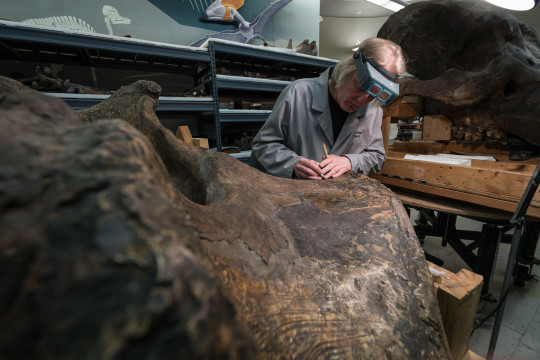
Dan Pickering working on mastodon restoration

What does a Scientific Preparator do? Part of Dan Pickering’s really cool job is carefully restoring museum specimens. In this photo he’s working on our mastodon specimen, one of Andrew Carnegie’s first acquisitions for the museum.

After having 120 years of “stuff” put on it to “preserve” it while it was on display, it needed significant restoration work.

All of this “stuff” was applied to the mastodon specimen over time:

·     Shellac

·     Varnish

·     Paint

Plus, cracks, cavities, and broken and missing areas were kept up with:

·     Plaster

·     Putty

·     Bondo

·     Glue

·     Epoxy

·     Wood

·     Chicken wire

·     Metal pins

On top of all that, soot built up on the mastodon when the museum was free and the doors were kept wide open.

Everything from shellac to soot must be removed or corrected to modern standards to restore this historically valuable specimen.

However, not all of these materials can be removed because most fossils are found as partial skeletons. When work is complete, you shouldn’t be able to see which parts are real bones and which parts were added – the skeleton should look cohesive. But if you look closely (from within five feet or so), different tones, colors, and textures will reveal real bones vs. elements added during restoration.

You can watch Dan and other Scientific Preparators at work on the mastodon in PaleoLab.
Filed Under: Blog Tagged With: Andrew Carnegie, Dan Pickering, museums, Paleolab, restoration

January 5, 2017 by wpengine

Timber Wolf Diorama Restored

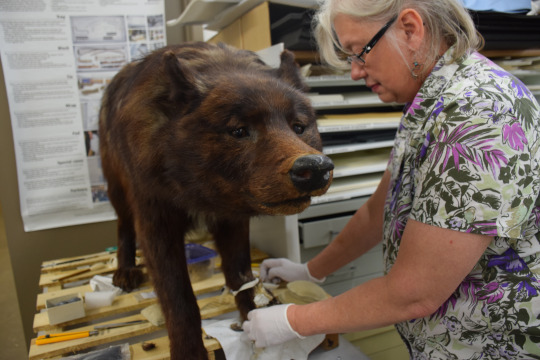
timber wolf diorama being restored

Have you seen the new wolf diorama in our redesigned gift shop?

Like many of the other fixtures in the shop, the diorama was pulled out of storage and reused. But the journey from storage to store wasn’t as simple as just dusting off the case. Museum conservators spent hours
cleaning, repairing, and researching this piece before it was put on display last month.

Conservator Gretchen Anderson spent several days examining, photographing, and researching the diorama. The Carnegie archives revealed that the timber wolf was collected near Denali National Park in Alaska. The taxidermy mount was created in 1928 by well-known taxidermist Remi Santens. The background paintings in the diorama weren’t created until the late 1950s or early 1960s.

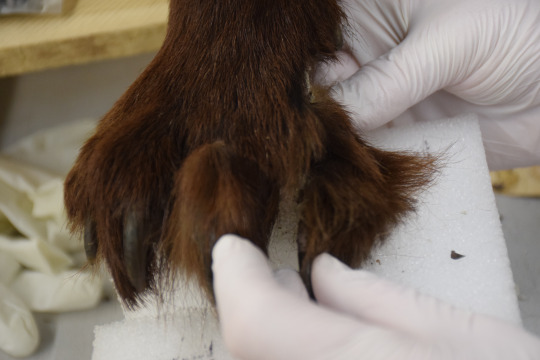
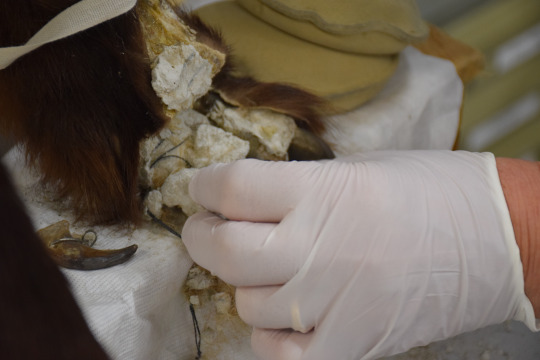
To prepare the diorama, Gretchen had to carefully clean the background paintings, and groom the wolf’s fur. The wolf’s paws were damaged when they were moved and disconnected from the mount. Gretchen slowly repaired the paw by re-adhering the wolf’s hide to the plaster with a papier-mâché technique that used special, non-acidic paper.

Next time you’re at the museum, check out the new gift shop and take a closer look at the timber wolf and his beautifully restored paws!

timber wolf paw
timber wolf paw being restored

Filed Under: Blog Tagged With: Gretchen Anderson, restoration

June 27, 2016 by wpengine

Remembering Restoration

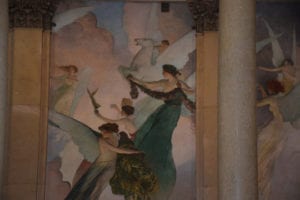
Grand Staircase muralHave you ever noticed two dark squares in the mural on Carnegie Museum of Natural History’s grand staircase?

When you’re taking in the grandeur of three stories of paintings that make up The Crowning of Labor mural the squares are easy to miss.

In the small squares, the paintings colors are darker and less vibrant because they’re covered in a thick layer of soot – a relic from Pittsburgh’s smoggy past.

Pittsburgh was famous for its bad air quality, a result of steel mills that made the city prosperous for decades.  Their effects were known to blacken school children’s white uniforms, the façade of buildings, and even art. The entire mural was dark and obscured by soot until it was restored in 1995, by a team of Carnegie art conservators.

The conservators left a small piece of unrestored painting on the second and third floors, as a reminder of Pittsburgh’s past and of the work it took to preserve this amazing piece of art.

Filed Under: Blog Tagged With: art, Collection Care and Conservation, Pittsburgh, restoration

sidebar

About

  • Mission & Commitments
  • Directors Team
  • Museum History

Get Involved

  • Volunteer
  • Membership
  • Carnegie Discoverers
  • Donate
  • Employment
  • Events

Bring a Group

  • Groups of 10 or More
  • Birthday Parties at the Museum
  • Field Trips

Powdermill

  • Powdermill Nature Reserve
  • Powdermill Field Trips
  • Powdermill Staff
  • Research at Powdermill

More Information

  • Image Permission Requests
  • Science Stories
  • Accessibility
  • Shopping Cart
  • Contact
  • Visitor Policies
One of the Four Carnegie Museums | © Carnegie Institute | Privacy Policy | Terms of Use | Accessibility
Rad works here logo