• Skip to primary navigation
  • Skip to main content
  • Skip to primary sidebar

Carnegie Museum of Natural History

One of the Four Carnegie Museums of Pittsburgh

  • Visit
    • Buy Tickets
    • Visitor Information
    • Exhibitions
    • Events
    • Dining at the Museum
    • Celebrate at the Museum
    • Powdermill Nature Reserve
    • Event Venue Rental
  • Learn
    • Field Trips
    • Educator Information
    • Programs at the Museum
    • Bring the Museum to You
    • Guided Programs FAQ
    • Programs Online
    • Climate and Rural Systems Partnership
  • Research
    • Scientific Sections
    • Science Stories
    • Science Videos
    • Senior Science & Research Staff
    • Museum Library
    • Science Seminars
    • Scientific Publications
    • Specimen and Artifact Identification
  • About
    • Mission & Commitments
    • Directors Team
    • Museum History
  • Tickets
  • Give
  • Shop

Gretchen Anderson

December 10, 2020 by wpengine

Ice and Snow: The effects of temperature

Winter is coming! The temperature is dropping. The first snow fall in the Laurel Highlands was gorgeous. The snow was hanging on the trees and piling up around the cabin we were staying in. Driving home to Pittsburgh in the storm was not so fun, reminding me of scenes from Game of Thrones and my childhood. By the next morning the beauty of the snow was already receding as the temperatures climbed in Pittsburgh.
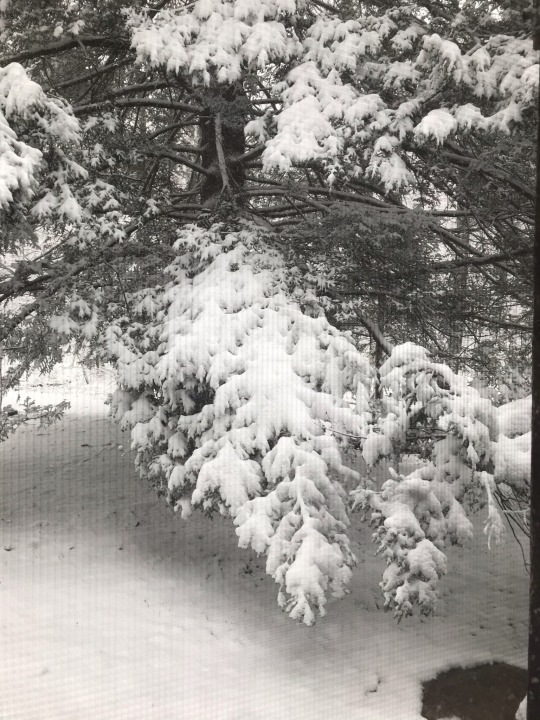
Snow laden pine tree at Powdermill Nature Reserve. December 1, 2020.

Full disclosure, I love winter – but then I am from Minnesota where one either embraces the cold and snow or hibernates for the long cold days. We celebrate winter in Minnesota. The St. Paul Winter Carnival began in 1887, when some east coast journalists claimed that the state was as inhabitable as Siberia. The annual festival developed its own legend with events like ice skating, a night parade, a full-sized ice palace, and an ice sculpting contest. It can be magical. The carnival is in January – often the coldest time of the year, with sub-zero temperatures and bitter cold winds. However, occasionally there is a thaw.

The ice sculpting contest is in held in Rice Park, across from the Courthouse and St. Paul Public Library (yes, it is one of the Carnegie Libraries). Dozens of intricate sculptures are carved each year. When I lived in the city, I used to walk across the park daily on my way to work from my bus stop. It was fascinating to watch the sculptures take form. Artists would use hot water to build blocks of ice into the basic form, then use chain saws, chisels and more hot water to carve and sculpt. My favorites were the fanciful forms that were crystal clear. Standard practices changed during the heat wave of 2008. Temperatures rose to the mid 30’s during the day and refreeze each night. With each passing day the sculptures deformed and lost definition. That year the judging did not take place.
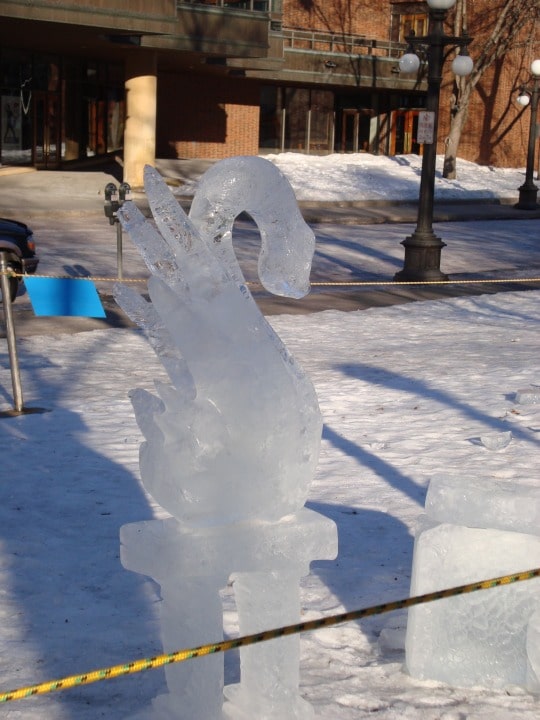
Within a few days this elegant swan went from a crystal-clear sculpture to the distorted image you see here. What a little warmth will do! The extreme and fluctuating temperatures that we experience during the winter months pose a challenge. Have you ever wondered why potholes develop or why slabs of the sidewalk tilt? What we think of as the ground freezing is mostly the water in the ground freezing. As this happens the water expands (think ice cubes). As the temperature warms up, above 32 degrees Fahrenheit, the ground subsides. Of course, it does not do this in a uniform manner – some areas freeze faster and thaw faster than others. Rocks and soil shift. The hard surface of the road or sidewalk is dislodged. The concrete slab tilts or the pothole develops. Of course, heavy traffic from cars and trucks just aggravates the situation. The more often the temperature fluctuates between freezing and thawing – the worse the problem is and the more damage to your car as you hit that pothole.

As the Objects Conservator at the Carnegie Museum of Natural History, I do not have to worry too much about these kinds of extreme temperature fluctuations. Most of the collections under my care are quite happy at the same temperatures that we humans find comfortable. Most materials are stable enough to survive moderate fluctuations, which can be maintained using heating and air-conditioning.

Gretchen Anderson is a conservator and the head of the Section of Conservation at Carnegie Museum of Natural History. Museum employees are encouraged to blog about their unique experiences and knowledge gained from working at the museum.
Related Content

Staying Connected to Nature in the Winter Months

Collected in 1840: Holly

A Perfect Mineral for the Christmas Season

Filed Under: Blog Tagged With: Gretchen Anderson, Museum from Home, Science News

November 20, 2018 by wpengine

Risk Assessment, or how to keep your collection intact

By Gretchen Anderson, Conservator, and  Suzanne B. McLaren, Chair of Collections

What are the risks to a museum’s collection?  

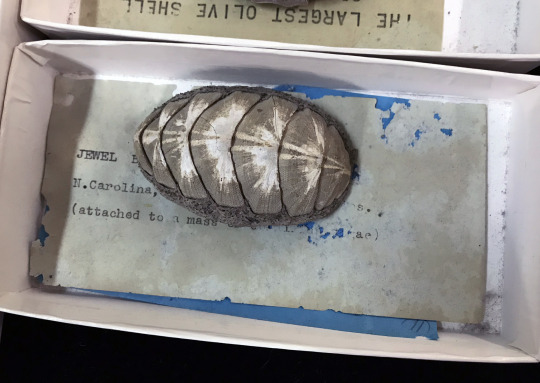
specimen in a box with partially eaten label

Figure 1: The risks of damage are varied. This photograph illustrates the potential risk of loss of data. The label has been partially eaten by silverfish, damaging not only the paper but ingesting the all-important data about this specific specimen.  

The museum is currently engaged in a two-year Risk Assessment process funded by a grant from the Institute of Museum and Library Services (IMLS). We are reviewing a spectrum of potential risks to our collections. This includes everything from fire and water damage to earthquake and pest damage that could affect the Museum’s more than twenty million specimens and objects, both behind the scenes and on exhibit.

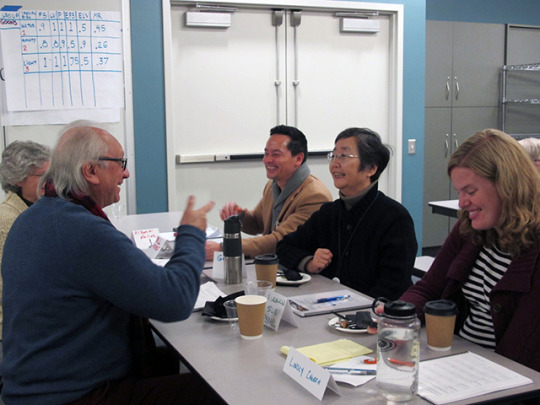
Forty staff members from across the museum attended a weeklong workshop led by our consultant, Rob Waller of Protect Heritage, who has been refining a model of how to quantify risks for more than twenty-five years. This was meant to get us all on the same page when we begin to focus on our individual collections.  The workshop offered everyone a chance to see and talk about their individual collections. For most of us, we call this fun. This gave each of us an appreciation for risks to distinct types of collection material. The risk for stone and metal will be quite different than the risk for organic material like birds and plants.

researchers around a table

Figure 2: Curators, collection managers, curatorial assistants, educators, exhibits staff, engineers, maintenance and security staff attended the workshop.

researchers looking at computer

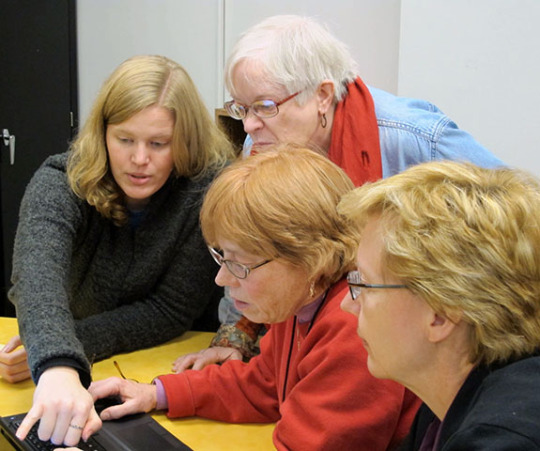
Figure 3: The workshop had several days of small group interaction. Here Vertebrate Paleontology Collection Technician Linsly Church, Anthropology Collection Manager Deborah Harding, Collection Associate Marion Burgwin and Minerals Collection Manager Debra Wilson discuss definitions of risk.

We hired Collection Associate Marion Burgwin to work with various staff members on gathering quantitative information on risk from each collection. Collections are divided into twenty-nine units, based on scientific discipline, preservation type and primary use. For example, the Bird collection has four units: study skins & skeletons, nests & eggs, taxidermy, and fluid collections. It is detailed and tedious work – but Marion also gets to see all the cool collections.

researchers looking at specimens

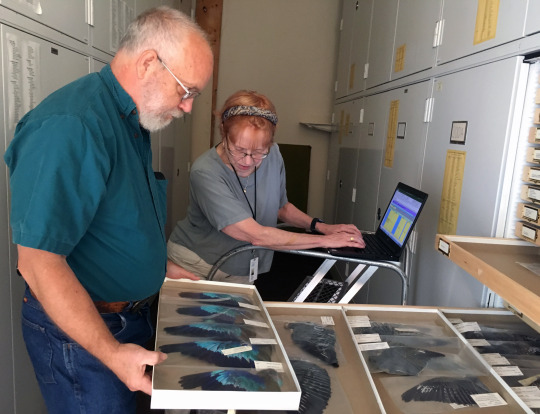
Figure 4: Birds Collection Manager Steve Rogers and Collection Associate Marion Burgwin viewing a collection of bird wings. Burgwin is entering the data directly into the Preservation Heritage Data Base.

Nearly one year into the project, Conservator Gretchen Anderson and Chair of Collections Suzanne McLaren had the good fortune to present the project and network with colleagues at the annual conference of the Society for the Preservation of Natural History Collections in New Zealand.  Sharing information like this is an important aspect of the support we receive from agencies like IMLS.

two researchers and their poster

Figure 5: McLaren and Anderson with the Risk Assessment poster at the 2018 SPNHC annual conference, Dunedin New Zealand.  

yellow-eyed penguin

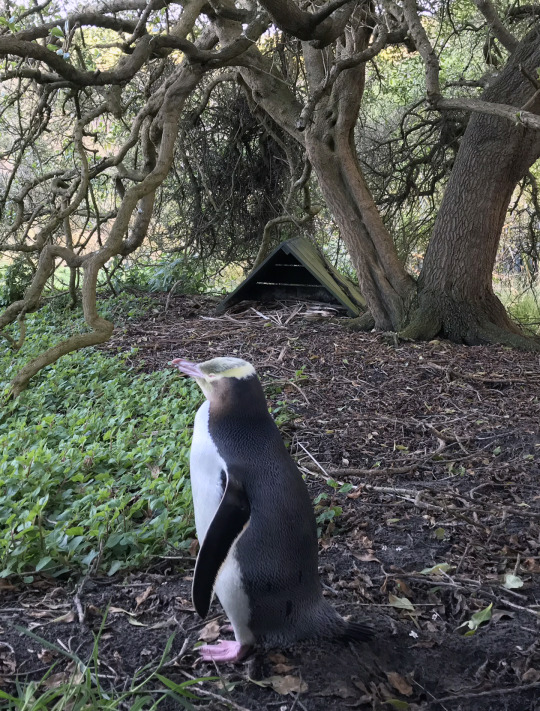
Figure 6: A New Zealand native  – a highly endangered yellow-eyed penguin.


Gretchen Anderson is a conservator and the head of the Section of Conservation and Suzanne McLaren is the collection manager for the Section of Mammals at Carnegie Museum of Natural History. Museum employees are encouraged to blog about their unique experiences and knowledge gained from working at the museum.
Filed Under: Blog Tagged With: Collection Care and Conservation, Gretchen Anderson, mammals, Suzanne McLaren

April 12, 2017 by wpengine

Scientists Live: Conservator Gretchen Anderson

Did you ever wonder who takes care of all the amazing specimens and objects at Carnegie Museum of Natural History?

Learn about museum conservation with conservator Gretchen Anderson on Scientists Live.

Filed Under: Blog Tagged With: Collection Care and Conservation, Gretchen Anderson, Scientists Live

January 5, 2017 by wpengine

Timber Wolf Diorama Restored

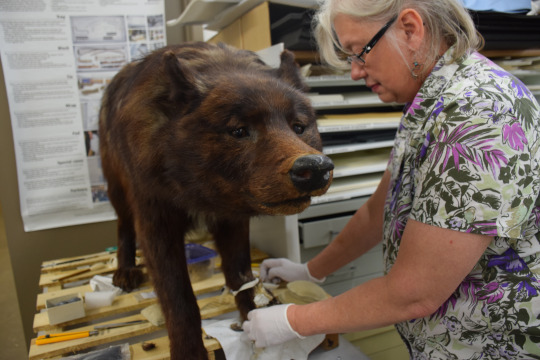
timber wolf diorama being restored

Have you seen the new wolf diorama in our redesigned gift shop?

Like many of the other fixtures in the shop, the diorama was pulled out of storage and reused. But the journey from storage to store wasn’t as simple as just dusting off the case. Museum conservators spent hours
cleaning, repairing, and researching this piece before it was put on display last month.

Conservator Gretchen Anderson spent several days examining, photographing, and researching the diorama. The Carnegie archives revealed that the timber wolf was collected near Denali National Park in Alaska. The taxidermy mount was created in 1928 by well-known taxidermist Remi Santens. The background paintings in the diorama weren’t created until the late 1950s or early 1960s.

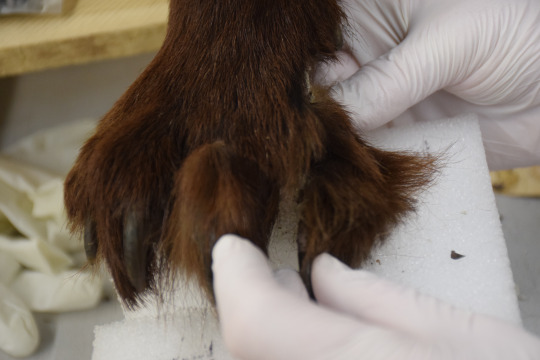
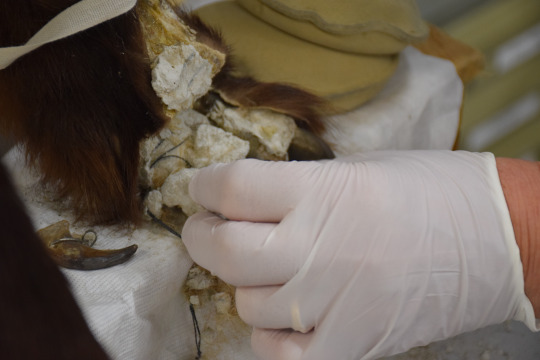
To prepare the diorama, Gretchen had to carefully clean the background paintings, and groom the wolf’s fur. The wolf’s paws were damaged when they were moved and disconnected from the mount. Gretchen slowly repaired the paw by re-adhering the wolf’s hide to the plaster with a papier-mâché technique that used special, non-acidic paper.

Next time you’re at the museum, check out the new gift shop and take a closer look at the timber wolf and his beautifully restored paws!

timber wolf paw
timber wolf paw being restored

Filed Under: Blog Tagged With: Gretchen Anderson, restoration

October 3, 2016 by wpengine

5 Surprising Conservation Facts

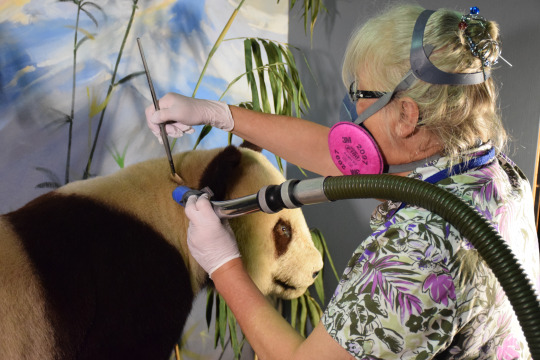
cleaning a panda diorama

by Kathleen Bodenlos

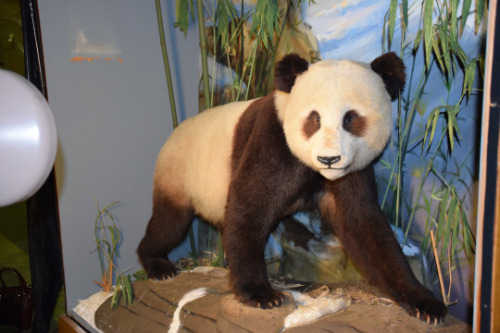
Gretchen Anderson is a conservator at Carnegie Museum of Natural History. She is restoring a panda diorama that will be prominently placed in our newly renovated gift shop. (Stay tuned for more on the gift shop in the next few weeks).

Here are 5 surprising things about conservation of a diorama.
1. Less is more: Use as few chemicals as possible

  • Soot sponges, water, and vacuums are the top
    choices in lieu of harsh chemicals. Water is one of the most powerful solvents!
  • Gretchen begins with a fan brush and a HEPA (high-efficiency particulate air filter) vacuum to remove as much dust and arsenic traces as possible.
  • She is wearing a protective face mask and gloves to protect herself from any arsenic that might be stirred up.
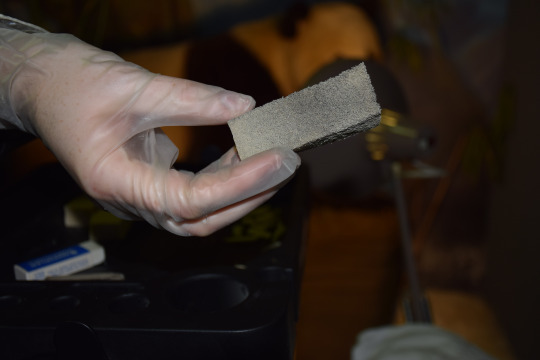
  • Soot sponges are a rubber sponge designed to absorb soot and are used dry. Another handy tool is a makeup sponge. A make-up sponge is used when just a little tiny bit of water is needed to move the dirt.
  • Particulate dust (dust, dirt and soot) is extremely damaging to museum collections. It is best to remove it.
sponge covered in dust

2. Some conservationists also do a little restoration on paint

  •  When in doubt go lighter to match a color
  • Think impressionism and mottle with several colors if possible. A good example is the natural colors on a rock.
restored panda diorama

3. Move ‘em up and head ’em out—RAWHIDE!

  • For many older dioramas, the skin of the animal is literally a raw hide. They are often treated with arsenic to keep the hide from becoming infested with insects and being eaten/damaged
  • Mercury, and other pesticides were also used to prevent insect attack on some museum collections.
  • A sealed exhibit case helps to keep the diorama safe from damage. Dust and insects are kept out. If there are any pesticides inside the case these are kept in – protecting the public.
  • Plant material
    ·  Not all of it is fake. Some of the actual plant materials are painted to make them look alive
    ·  Even a non-expert can discern what is fake and what is real upon close examination
  •  Save money—use less
    ·  When washing clothes the soap is to keep dirt from settling back on clothes
    ·  Agitation and water are the real cleaner
    ·  Use 1/3 less soap and your clothes will be clean
    and you will ensure that all the soap is removed which will help protect your
    skin

Kathleen Bodenlos is the Director of Marketing at Carnegie Museum of Natural History. Museum employees are encouraged to write about their unique experiences.

Filed Under: Blog Tagged With: behind the scenes, Collection Care and Conservation, conservation, diorama, gift shop, Gretchen Anderson, museums, Pittsburgh

sidebar

About

  • Mission & Commitments
  • Directors Team
  • Museum History

Get Involved

  • Volunteer
  • Membership
  • Carnegie Discoverers
  • Donate
  • Employment
  • Events

Bring a Group

  • Groups of 10 or More
  • Birthday Parties at the Museum
  • Field Trips

Powdermill

  • Powdermill Nature Reserve
  • Powdermill Field Trips
  • Powdermill Staff
  • Research at Powdermill

More Information

  • Image Permission Requests
  • Science Stories
  • Accessibility
  • Shopping Cart
  • Contact
  • Visitor Policies
One of the Four Carnegie Museums | © Carnegie Institute | Privacy Policy | Terms of Use | Accessibility
Rad works here logo