• Skip to primary navigation
  • Skip to main content
  • Skip to primary sidebar

Carnegie Museum of Natural History

One of the Four Carnegie Museums of Pittsburgh

  • Visit
    • Buy Tickets
    • Visitor Information
    • Exhibitions
    • Events
    • Dining at the Museum
    • Celebrate at the Museum
    • Powdermill Nature Reserve
    • Event Venue Rental
    • Gift Cards
  • Learn
    • Field Trips
    • Educator Information
    • Programs at the Museum
    • Bring the Museum to You
    • Guided Programs FAQ
    • Programs Online
    • Climate and Rural Systems Partnership
  • Research
    • Scientific Sections
    • Science Stories
    • Science Videos
    • Senior Science & Research Staff
    • Museum Library
    • Science Seminars
    • Scientific Publications
    • Specimen and Artifact Identification
  • About
    • Mission & Commitments
    • Directors Team
    • Museum History
  • Tickets
  • Give
  • Shop

Blogs from our Scientific Researchers

Carnegie Museum of Natural History is home to active research and vast scientific collections. Our scientific researchers regularly contribute to the blog at the museum.

April 8, 2020 by wpengine

The Largest Snail I Have Ever Seen

An inquiry came in (with the subject line: urgent snail question) asking, “How big is the biggest snail you’ve ever seen?” Thinking that others might be interested, here is my answer.

The largest snail? There could be many ways of answering that question. Size could refer to length, diameter, volume, or mass. The longest mollusk I have seen is the giant squid on display at the Smithsonian, but that is a cephalopod, not a snail, and it doesn’t have a shell. The largest shell I have seen is a fossil ammonite that was more than 2 meters in diameter, but that is also a cephalopod, not a snail, and maybe fossils are not acceptable for this answer.

The largest modern shell I have seen is that of a giant clam, but that is a bivalve, not a snail. The largest bona fide snail I have seen could be the snail in the Dr. Dolittle movie that carried Dr. Dolittle under the sea, but movies don’t always depict reality (sorry), so maybe that one doesn’t count. Another large snail I read about is a fossil sea snail from the Eocene Epoch (34-56 million years ago) called Campanile giganteum, which grew up to 1 meter long (Houbrick, 1984). But I haven’t actually seen one, which is really what you asked, and maybe you don’t want to include fossils.

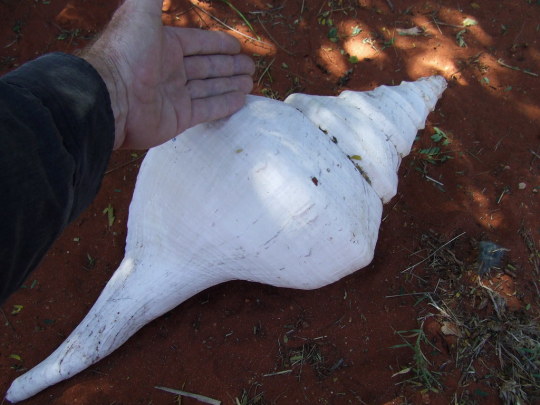
Real answers start here. I would have to say the largest modern snail shell I have seen is that of the Australian sea snail Syrinx aruanus (which gets up to 91 cm long). The two largest shells of that species I have seen are at the Delaware Museum and the Philadelphia Academy, both of which were shorter than 91 cm; I didn’t measure them, but my memory suggests they were probably 65 to 75 cm long, which is pretty big for a snail! Given that slugs are also snails (gastropods), there are reports of slug-like sea hares (family Aplysiidae) whose bodies can get nearly a meter long, but the longest one I ever saw was around 25 cm long, so the Syrinx still wins for what I have seen. Another way to answer your question about largest is not longest but instead greatest volume. For that, the sea snail Melo melo might have the greatest volume (although it’s possible a large Syrinx might also win at volume, I’m not sure).
image

Syrinx auruanus by Bill & Mark Bell is licensed under CC BY-NC-SA 2.0 .

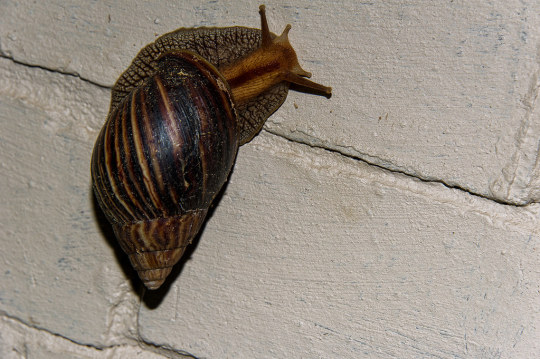
Then again, given that my specialty is land snails, you might be asking about the largest land snail I have seen. That would be the giant African snails in the family Achatinidae. I have seen plenty of living Achatina fulica, with shells up to about 12 cm, but I have seen shells of larger species, such as Achatina achatina and Archachatina marginata. Note that we do have some large snails native to South America in the family Strophocheilidae (including a very large extinct one), but the giant African snails are larger.
image

Giant african land snail by Steve Slater (used to be Wildlife Encounters) is licensed under CC BY 2.0 . Shell estimated to be 10-15cm (4-6 inches) long.

Or maybe today is opposite day and you are really asking about the smallest snail I have seen. Although I do know about a minute sea snail, Ammonicera minortalia, at 0.4 mm diameter reported to be the smallest snail in the United States (Bieler & Mikkelsen 1998), I have never seen one. If you mean land snails, I recall that Wenz (1938-1944) reported some land snails in the family Diplommatinidae to be 0.5 mm, although I have not seen any Diplommatinidae that small, and I wonder if Wenz was reporting shell diameter rather than maximum dimension (most Diplommatinidae are taller than wide). (On the subject of narrow snails, I have seen the minute Carychium nannodes, which is only 0.4 mm diameter, but it is about 1.4 mm tall.) I do know some tiny snails from east Asia got a lot of press a few years ago for being able to fit into the eye of a needle (Páll-Gergely et al. 2015), and at 0.8 mm in greatest dimension, they are certainly minute, but again, I have never seen one.

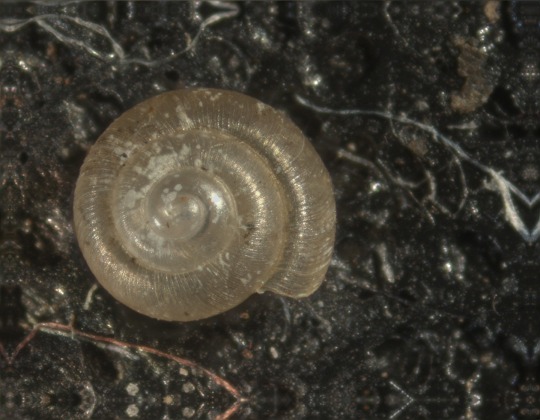
The smallest adult land snails I have seen are either Punctum minutissimum or Guppya sterkii, both on the order of 1 mm diameter. Of course, their babies are even smaller, and I have seen babies of both those species, especially of P. minutissimum. Amazingly, Punctum minutissimum appears to be one of the most abundant land snails in northeastern North America, but it is rarely noticed due to its minute size.
image

Punctum minutissimum. Shell 1 mm (1/25 inch) diameter. 

To recap (and more directly answer your question), the largest snail shell I have seen is Syrinx aruanus, the largest land snail shell I have seen is one of the giant African land snails, the largest living land snail I have seen is Achatina fulica, and the smallest land snail I have seen is babies of Punctum minutissimum.

Timothy A. Pearce, PhD, is the head of the mollusks section at Carnegie Museum of Natural History. Museum employees are encouraged to blog about their unique experiences and knowledge gained from working at the museum.

References

Bieler, R. & Mikkelsen, P.M. 1998. Ammonicera in Florida: notes on the smallest living gastropod in the United States and comments on other species of Omalogyridae (Heterobranchia). The Nautilus 111(1): 1-12.

Houbrick, R.S. 1984. The giant creeper, Campanile symbolicum Iredale, an Australian relic marine snail. In: Eldredge N. & Stanley S.M. (eds.), Living Fossils. Casebooks in Earth Sciences. Springer-Verlag, New York.

Páll-Gergely, B., Hunyadi, A., Jochum, A. & Asami, T. 2015. Seven new hypselostomatid species from China, including some of the world’s smallest land snails (Gastropoda, Pulmonata, Orthurethra). ZooKeys 523: 31–62. doi: 10.3897/zookeys.523.6114.

Wenz, W. 1938-1944, Gastropoda, Teil 1, Allgemeiner Teil und Prosobranchia. In: Schindewolf, Handbuch der Palaozoologie, v. 6. Borntraeger, Berlin. vii + 1639 p.
Filed Under: Blog Tagged With: mollusks, Museum from Home, Science News, Tim Pearce

March 31, 2020 by wpengine

Mesozoic Monthly: Nemicolopterus

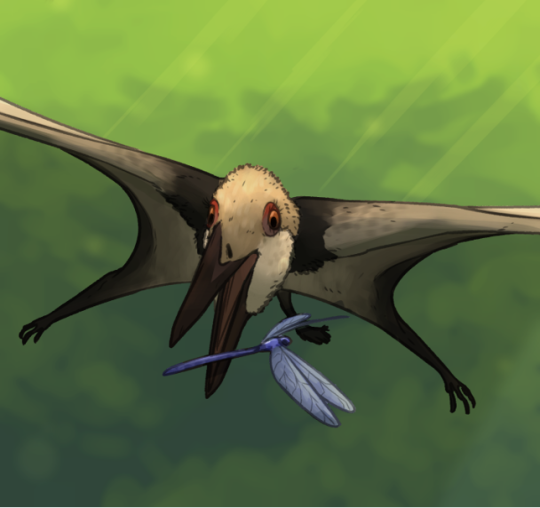
Welcome back to Mesozoic Monthly! Spring has sprung, and you know what that means: baby animals are coming! It only makes sense that the star of this month’s post should be as small and cute as chicks or puppies. With a wingspan of less than 10 inches (25 centimeters), Nemicolopterus crypticus is one of the tiniest known pterosaurs – about the size of an American Robin!

Life reconstruction of the adorable little pterosaur (flying reptile) Nemicolopterus crypticus by paleoartist Connor Ashbridge, used with permission. You can find Connor’s other work on Instagram @pantydraco.

Nemicolopterus is a pterosaur, a kind of prehistoric animal that is commonly called a “pterodactyl” or “flying dinosaur.” However, pterosaurs are not dinosaurs! Dinosaurs are all animals within a specific group of reptiles known as the Dinosauria. Pterosaurs comprise a separate group of reptiles that were specialized for flight, called the Pterosauria. These flying reptiles are extraordinary; they not only represent the earliest-known flying vertebrates (animals with backbones), but they also achieved flight in a different manner than did modern flying vertebrates (birds and bats)! Over half the length of a pterosaur’s wing was made up by a single super-long finger (specifically, the fourth finger, aka the ‘ring finger’ of a human) that anchored a broad skin membrane. It might seem like it’d be impossible to fly on just one finger, but many pterosaurs managed to grow to gargantuan sizes. Cousins of Nemicolopterus known as azhdarchids (one of which, Quetzalcoatlus, soars above T. rex in Carnegie Museum of Natural History’s Dinosaurs in Their Time exhibition) could reach estimated wingspans of 39 feet (12 meters). That’s as big as a small airplane!

Tiny, fuzzy, and adorable, Nemicolopterus would have looked a lot like a baby bird if you could take a trip back to the Cretaceous and see this pterosaur in the wild. In fact, the only specimen we have of Nemicolopterus may have been a baby! It’s often difficult to tell just based on its fossilized skeleton whether a prehistoric animal was fully mature or still in the process of growing and changing when it died. One way of telling if a fossil reflects an adult is whether certain bones have completely fused together (the technical term is coossified). You may know that humans have more separate bones as babies than we do as adults; this is because, as a person grows, certain bones like the ones that make up your skull fuse together along lines called sutures. Many baby bones also tend to be soft and flexible because they start out as cartilage, which is replaced by solid bone over time through a process called ossification. Several important bones in the Nemicolopterus fossil are ossified, so we can be sure that it was not a hatchling. However, since paleontologists agree that this specimen was still young when it died, and also that baby pterosaurs were precocial (i.e., able to effectively move about and find food on their own shortly after hatching), there’s still a significant chance that the Nemicolopterus fossil represents a young life stage of another, larger pterosaur.

There’s a good candidate for which pterosaur might be the adult form of Nemicolopterus, if indeed the only known fossil is just a baby of another species: Sinopterus is a tapejarid pterosaur that lived at the same time and place as the little fellow. Tapejarids are unique because they were likely arboreal and had beaks that appear useful for eating plants or fruit. Nemicolopterus crypticus was named the “hidden flying forest dweller” as an homage to the forested wetlands in which it lived roughly 120 million years ago, in what is now Liaoning Province in northeastern China. It spent its time in the trees, attempting to avoid predatory dinosaurs such as the famously bird-like dromaeosaurid Microraptor or the distant T. rex relative Sinotyrannus.

Lindsay Kastroll is a volunteer and paleontology student working in the Section of Vertebrate Paleontology at Carnegie Museum of Natural History. Museum staff, volunteers, and interns are encouraged to blog about their unique experiences and knowledge gained from working at the museum.

Filed Under: Blog Tagged With: Museum from Home, Science News, Vertebrate Paleontology

March 27, 2020 by wpengine

Lantern Slides

As someone who was born in 1998, I grew up in a world full of LED screens. With the click of a button, screens come to life and display anything and everything. The black mirror suddenly stops reflecting your anticipating face and a myriad of icons and a colorful image burn themselves into your retinas. I couldn’t imagine another way of consuming images. I’ve perused old photo albums with glossy, physical photos as a fun trip down memory lane with my parents, but digital images displayed on our computer desktop or our television screen was my first remembered experience of imagery. Holding a camera, clicking a button, and having the image still and lit up on the camera screen. How else could it be?

I’ve worked in the Carnegie Museum of Natural History for 3 years now in the Herpetology department, and it never ceases to amaze me. I’ve been fascinated by the beautiful specimens from all corners of the world, some of which can’t be found in nature anymore. Our Alcohol House is home to many preserved frogs, salamanders, snakes, and turtles that I have worked closely with and appreciated for their features and patterns. Seeing these creatures that I would have to travel across the world to see in real life is a treat every time I go to the museum.

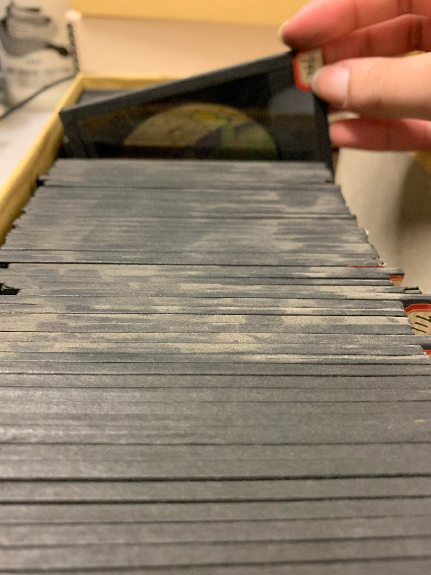
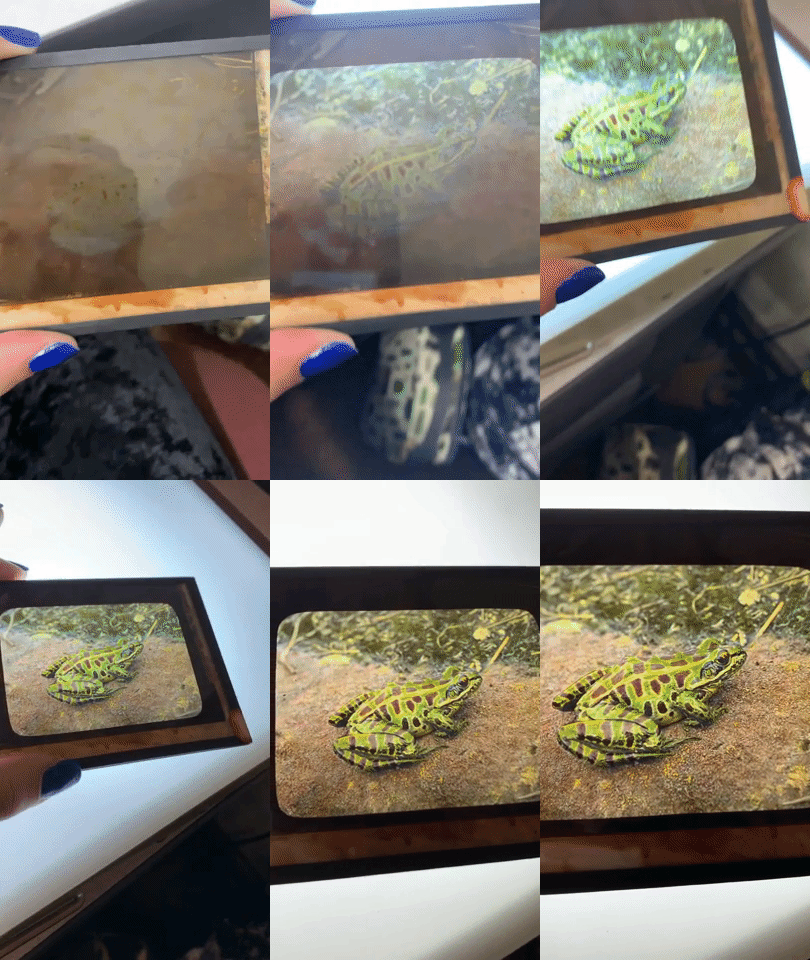
I recently moved from working on our physical preserved specimens to start a project of cataloging lantern slides that were used for presentations in the 1920s. We pulled out the boxes labeled Lantern Slides with numbers from 1- 1000. I opened it up, imagining vintage, unedited photographs with bright colors on glass. And instead it was filled with hundreds of dusty, sooty (Pittsburgh’s classic problem) rectangle slides stacked up in an unassuming row. I gingerly picked one up to see if I could see the image, and I could see a dull outline of a frog, nothing special, and less colorful and detailed than the preserved frogs I had seen from all corners of the world in the Alcohol House or the beautiful National Geographic photos I have seen online. Just a piece of dark glass with an outline of a frog. This…was going to be boring.

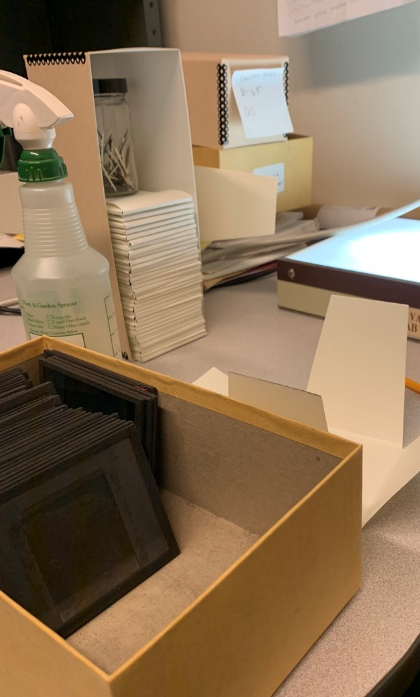
I sat down for my first day of going through the slides and set up my station for cleaning and recording the information on the slides. I saw that a new gadget had been added to my repertoire of conservation tools, a light box. I plugged it in and pressed the button–nothing. Sighing, I did the archaic press-and-hold, and the light slowly flickered on, creating a large rectangle of plain, white light. Buttons were meant to immediately turn something on and show me images, and this silly box not only required a press-and-hold but just showed me light! Dejectedly, I picked up the first lantern slide, number one, and looked at the dark image with the outline of a frog. I wiped off the black soot, and began to record the information, slide 1, photograph, frog… I wrapped it up to make sure that the glass and image wouldn’t get damaged and placed it into a new box. 999 more to go.

I went to pick up the next slide, when my eyes fell on the light box, which was currently acting as a glorified lamp. Should I make this task even more grueling by adding the extra step of placing the boring image on the boring light or should I just work through all of them as fast as possible and go back to handling our amazing specimens? I decided to take the extra step of placing the slide on the light box.

And suddenly, the image came to life.

The vague green with some dark splotches that was dull on the slide became the vibrant color I had imagined, and the details of the frog’s pattern were crisp and clear. The image had an almost 3D, life-like quality that the screen does not have the depth to convey. I was shocked that these dust covered glass rectangles were holding such secrets within them, and that all it took was placing them on a light box to unveil their beauty. Without immediate gratification, I had made up my mind that these images weren’t beautiful, when all I had to do was take a few extra steps to discover images unlike those that I had seen on screens. I proceeded to take the image off and watch it revert back to dull and lifeless, and place it back on to the light box and watch it come to life, and marvel at how these little glass slides went from boring to fascinating in a second.

Lantern slides felt like they were of the past, a time where image projecting and quality must have been worse—right? By working with these old, dusty slides, I was able to see images of reptiles and amphibians the likes of which I hadn’t seen before. I now relish every opportunity I have to go into the museum and look at salamanders, snakes, alligators, and a whole host of other creatures (and researchers) on the light box. The Carnegie Museum of Natural History is rich with resources from the past and working with the Herpetology Department has given me the opportunity to get an inside look into how the museum might have operated far before even my grandparents were born. Getting involved in helping out at the museum is a wonderful way to get involved in outreach, science communication, and is an overall enriching experience!

Swapna Subramanian is an Anthropology and Ecology & Evolution double major at the University of Pittsburgh, and a volunteer in the Section of Herpetology at the Carnegie Museum of Natural History. Museum employees are encouraged to blog about their unique experiences and knowledge gained from working at the museum.

Filed Under: Blog Tagged With: amphibians and reptiles, herpetology, Science News

March 18, 2020 by wpengine

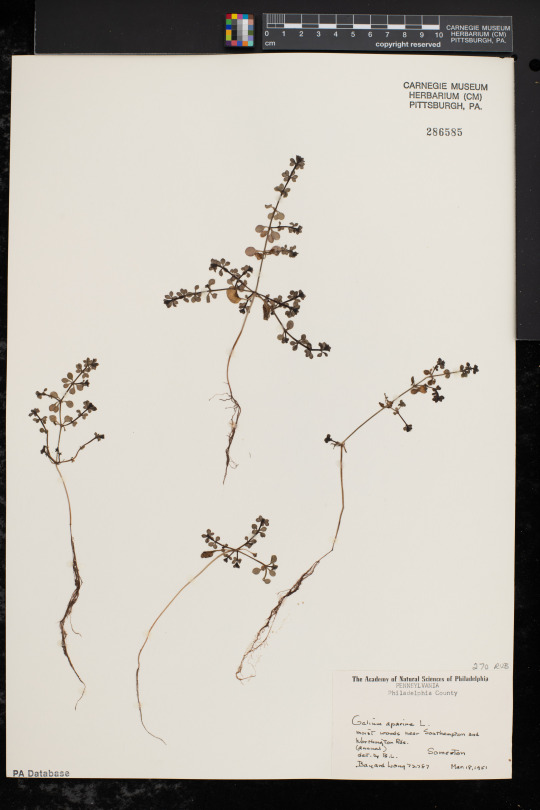
Collected on this Day in 1951: Bedstraw

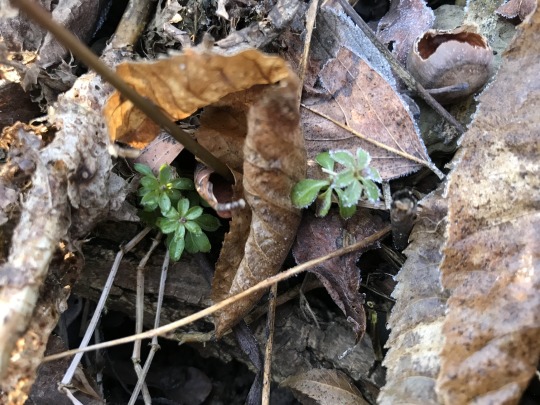
This bedstraw specimen was collected on March 18, 1951 by Bayard Long in Philadelphia county, Pennsylvania.

Bayard Long (1885-1969) was a Philadelphia-area botanist and an active member of the Philadelphia Botanical Club (founded in 1891 and still exists today).  He was a prolific collector and served as Curator of the Club’s Local Herbarium for 56 years (housed at the Academy of Natural Sciences).

Fogg writes of his collections in 1970 in the journal Rhodora: “It is doubtful that anyone ever possessed a higher standard for the quality of an herbarium specimen than Bayard Long.  Every leaf had to be laid out flat, every inflorescence properly displayed, every flower part clearly shown. Extra flowers and loose fruits and seeds were placed in pockets affixed to the sheet. Root systems (collected in their entirety whenever possible) were scrupulously clean, habitats were accurately described, and localities were identified to the nearest tenth of a mile and closest compass point. All of this seems the more remarkable when it is realized that Long collected close to 80,000 numbers, not including collections made as a member of Fernald’s expeditions.”

Bedstraws (species in the genus Galium, in the coffee family Rubiaceae) are common and memorable in our woods. They have many historical and traditional uses. In particular, they were used to stuff mattresses, hence the funny name. Also called cleavers or catchweed, the stems are sticky (due to fine hook hairs) and can be fun to stick on your clothes. They have likely stuck to you or your pet. This specimen is Galium aparine. An annual plant, seeds germinate in spring and produce tiny white flowers. They are emerging now, poking through the leaf litter.

Find this specimen and more here.

There are >64,000 specimens collected by Bayard Long currently digitized and online.

Check back for more! Botanists at the Carnegie Museum of Natural History share digital specimens from the herbarium on dates they were collected. They are in the midst of a three-year project to digitize nearly 190,000 plant specimens collected in the region, making images and other data publicly available online. This effort is part of the Mid-Atlantic Megalopolis Project (mamdigitization.org), a network of thirteen herbaria spanning the densely populated urban corridor from Washington, D.C. to New York City to achieve a greater understanding of our urban areas, including the unique industrial and environmental history of the greater Pittsburgh region. This project is made possible by the National Science Foundation under grant no. 1801022.

Mason Heberling is Assistant Curator of Botany at the Carnegie Museum of Natural History. Museum employees are encouraged to blog about their unique experiences and knowledge gained from working at the museum.

Filed Under: Blog Tagged With: Botany, collected on this day, Mason Heberling, Museum from Home, Science News

March 13, 2020 by wpengine

An Introduction to BirdSafe Pittsburgh

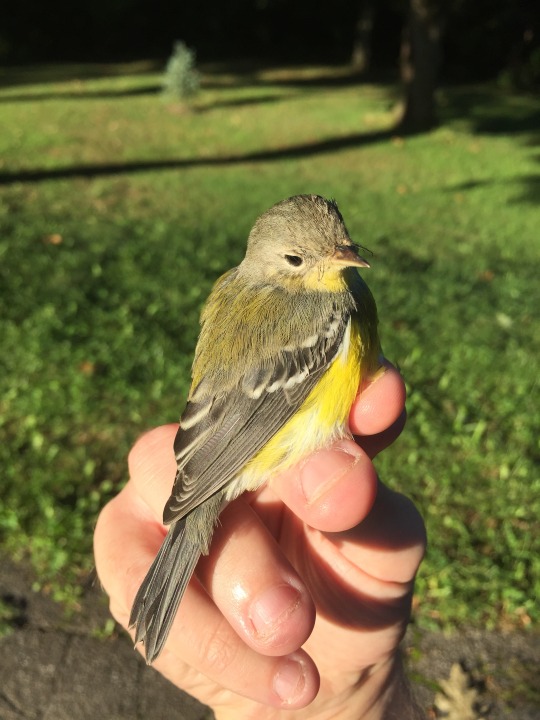
It is estimated that 599 million birds die every year in North America after colliding with buildings. BirdSafe Pittsburgh was created in 2014 to research why birds collide with windows and how best to resolve this immense problem. Since then, every Spring and Fall the Downtown area of Pittsburgh, and some surrounding areas, have been monitored for migrating birds that have collided with windows.

Fall first year female magnolia warbler. It was caught after colliding with a window downtown and later released in Schenley Park.

The unfortunate birds found dead are brought back to the museum where they become part of our collection. The birds found alive after a collision are taken to a local rehabilitation center and are eventually released if they survive their injuries. These efforts help us understand what about a building makes it dangerous to a bird and using this information we can mitigate deadly areas with the help of building owners and managers.

Every person’s effort makes a difference, volunteering to walk a predetermined route downtown or monitoring your own home helps us continue to learn and spread the word of this problem. For more information about the project and how you can get involved visit our website: birdsafepgh.org, our facebook page: facebook.com/birdsafepgh/, or contact Jonathan Rice at ricej@carnegiemnh.org.

Jon Rice Urban Bird Conservation Coordinator is at Carnegie Museum of Natural History’s Powdermill Nature Reserve. Museum employees are encouraged to blog about their unique experiences and knowledge gained from working at the museum.

Filed Under: Blog Tagged With: Birds, birdsafe pittsburgh, Science News

March 11, 2020 by wpengine

Tarantula relative found at Powdermill

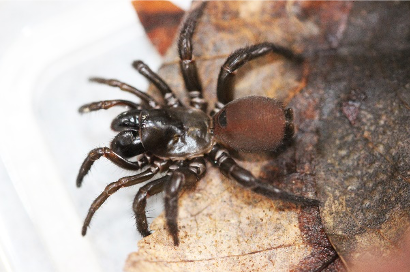
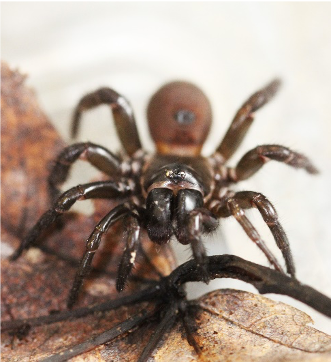
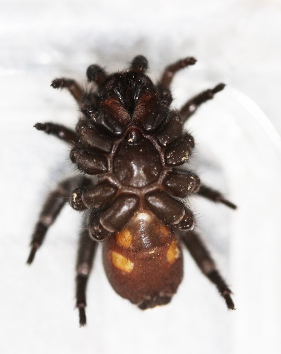
On March 6th, CMNH herpetologist Dr. Danny Hughes came across a very cool spider at Powdermill while digging holes for a salamander survey, and graciously captured it for us. We were excited to find out that it was a folding-door spider in the family Antrodiaetidae and genus Antrodiaetus!  It is related to tarantulas and belongs to the same group of primitive spiders called mygalomorphs. They are uncommonly encountered, partly because they spend most of their lives in underground, silk-lined burrows. The entrance to the burrow is camouflaged with debris so that when unsuspecting prey walk by, the spider can just reach up and out of the opening, grab its meal, and retreat (see this YouTube video for an example: https://www.youtube.com/watch?v=k5owIY63g3E).

While the large fangs of these spiders may seem intimidating, they are not aggressive and are not of medical concern to humans because their venom is not very potent. In the ventral image, note the two pairs of yellow patches on the underside of the abdomen. These are respiratory structures known as book lungs. Nearly all spiders have a pair of book lungs, but only the primitive groups have two pairs.

Most folks are familiar with tarantulas which are found more in warmer climates, but these lesser-known mygalomorphs can be found right here in western PA. In fact, Powdermill is home to another family of mygalomorphs, the purseweb spiders (in the family Atypidae) which look similar, but they build silken tubes that run up along the base of a tree or rock above ground. We will be keeping our eyes peeled for this other cool family of spiders so we can photograph and show them off in another post. Stay tuned!

Andrea Kautz is a Research Entomologist at Carnegie Museum of Natural History’s Powdermill Nature Reserve. Museum employees are encouraged to blog about their unique experiences and knowledge gained from working at the museum.

Filed Under: Blog Tagged With: Invertebrate Zoology, Powdermill, Science News

  • « Go to Previous Page
  • Page 1
  • Interim pages omitted …
  • Page 39
  • Page 40
  • Page 41
  • Page 42
  • Page 43
  • Go to Next Page »

sidebar

About

  • Mission & Commitments
  • Directors Team
  • Museum History

Get Involved

  • Volunteer
  • Membership
  • Carnegie Discoverers
  • Donate
  • Employment
  • Events

Bring a Group

  • Groups of 10 or More
  • Birthday Parties at the Museum
  • Field Trips

Powdermill

  • Powdermill Nature Reserve
  • Powdermill Field Trips
  • Powdermill Staff
  • Research at Powdermill

More Information

  • Image Permission Requests
  • Science Stories
  • Accessibility
  • Shopping Cart
  • Contact
  • Visitor Policies
Stay in the loop! Sign up for our newsletter(s).
One of the Four Carnegie Museums | © Carnegie Institute | Privacy Policy | Terms of Use | Accessibility
Rad works here logo