• Skip to primary navigation
  • Skip to main content
  • Skip to primary sidebar

Carnegie Museum of Natural History

One of the Four Carnegie Museums of Pittsburgh

  • Visit
    • Buy Tickets
    • Visitor Information
    • Exhibitions
    • Events
    • Dining at the Museum
    • Celebrate at the Museum
    • Powdermill Nature Reserve
    • Event Venue Rental
  • Learn
    • Field Trips
    • Educator Information
    • Programs at the Museum
    • Bring the Museum to You
    • Guided Programs FAQ
    • Programs Online
    • Climate and Rural Systems Partnership
  • Research
    • Scientific Sections
    • Science Stories
    • Science Videos
    • Senior Science & Research Staff
    • Museum Library
    • Science Seminars
    • Scientific Publications
    • Specimen and Artifact Identification
  • About
    • Mission & Commitments
    • Directors Team
    • Museum History
  • Tickets
  • Give
  • Shop

Blogs from our Scientific Researchers

Carnegie Museum of Natural History is home to active research and vast scientific collections. Our scientific researchers regularly contribute to the blog at the museum.

March 9, 2020 by wpengine

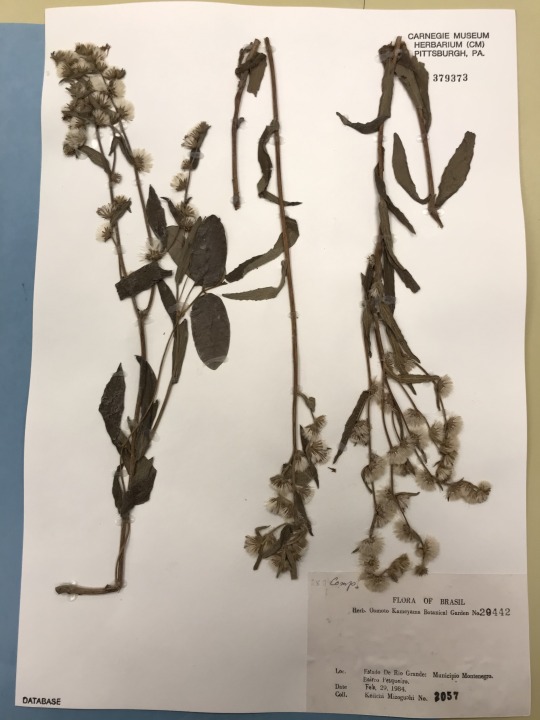
Collected on this Leap Day in 1984

Unnamed, but not forgotten!

Today, we celebrate the 9th birthday of this specimen collected 36 years ago.

This specimen was collected on leap day, February 29, 1984 in Brazil by Keiichi Mizoguchi.

Fun fact: In the Carnegie Museum herbarium, there are 85 specimens collected on leap day, collected between 1872 until 1990.  That’s a lot of leap years!

Aside from it being collected on leap day, the specimen label might seem even more unique.  Where most herbarium specimen labels have the species name, this one is blank.  A big blank spot. The collector did not identify this specimen, nor has anyone else in the past 36 years (yet).  This is an “indetermined” or unidentified specimen.  It is filed in the sunflower family (Asteraceae) based on its flowers, but it is otherwise not identified.
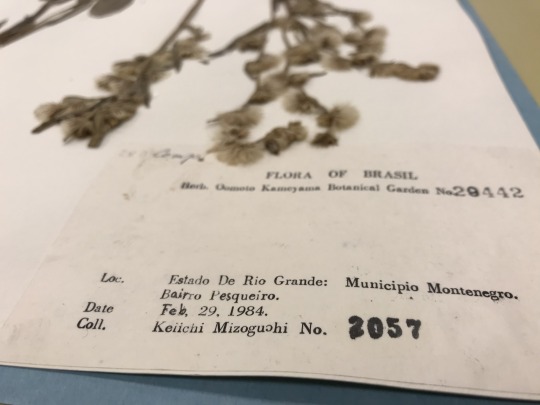
We can’t forget about these unidentified specimens.  Especially those collected on leap day!

Specimens in the herbarium are arranged by plant family, then genus, then geography (where it was collected), and in nearly every genus, at the bottom of all these folders is a black colored folder labelled “undetermined” (also called “indet.”) that includes those specimens that have not yet been identified to species.  Of the over 525,000 specimens in the Carnegie Museum herbarium, about 2% (= 10,588 specimens), are not (yet) identified to species.
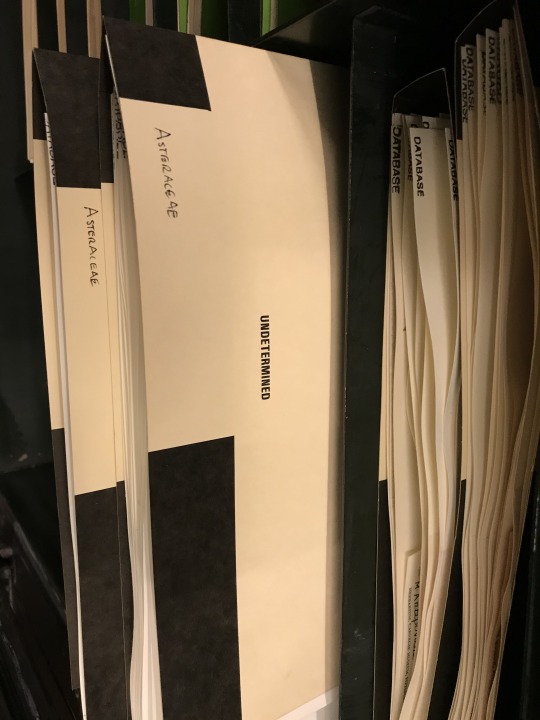
This specimen is most likely a member of a species already known to science, but an expert has not yet identified this particular specimen. However, many undetermined specimens may be undescribed (that is, new to science).  The name and description of new species (alpha taxonomy) is a major purpose of herbaria. A study in 2010 estimated that of the estimated 70,0000 species yet to be described, over HALF are lying in herbaria right now! They also found that only 16% of new species descriptions were done within 5 years of specimen collection, and 25% of new species descriptions involved specimens that were more than 50 years old!

Study abstract here: http://www.pnas.org/content/107/51/22169.abstract

Taxonomy (branch of science on classification of organisms) is always changing.  Species names are changed, what was once thought to be one plant species or family is split into many, and what was thought to be several species is lumped into one. And with further information or upon review by experts in particular plant groups, specimens are determined to be a different species than what the original collector called it. Annotation labels are added to specimens all the time – these labels revise the species listed on the original label. A typical annotation label includes the revised species name and details, the name of the person making the annotation, and the date.

Some specimens can have many annotations, which nicely demonstrates the community culture of science as a process with constant revision as we learn more about the world around us.

Find this specimen here. Check back, maybe it’ll have a species name on it by next leap year!

Check back for more! Botanists at the Carnegie Museum of Natural History share digital specimens from the herbarium on dates they were collected. They are in the midst of a three-year project to digitize nearly 190,000 plant specimens collected in the region, making images and other data publicly available online. This effort is part of the Mid-Atlantic Megalopolis Project (mamdigitization.org), a network of thirteen herbaria spanning the densely populated urban corridor from Washington, D.C. to New York City to achieve a greater understanding of our urban areas, including the unique industrial and environmental history of the greater Pittsburgh region. This project is made possible by the National Science Foundation under grant no. 1801022.

Mason Heberling is Assistant Curator of Botany at the Carnegie Museum of Natural History. Museum employees are encouraged to blog about their unique experiences and knowledge gained from working at the museum.
Filed Under: Blog Tagged With: Botany, collected on this day, Mason Heberling, Science News

March 9, 2020 by wpengine

The Connemara Marble: A Cross-Atlantic Connection Between Ireland and Pittsburgh

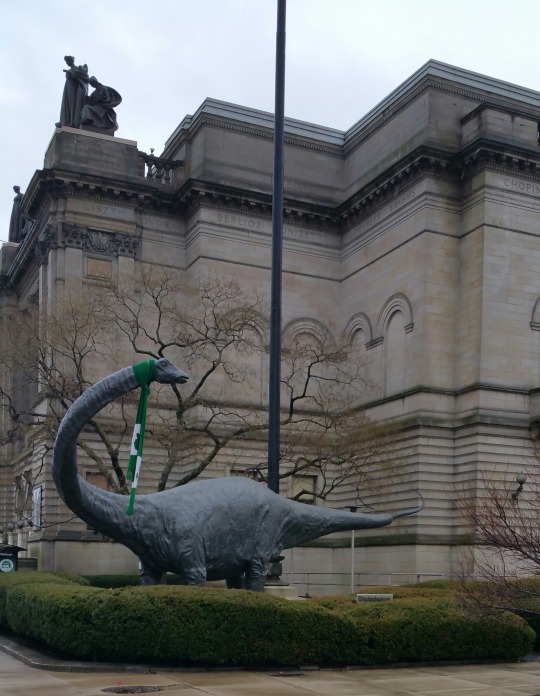
Irish Dippy the dinosaur statue

Fig. 1: Irish Dippy

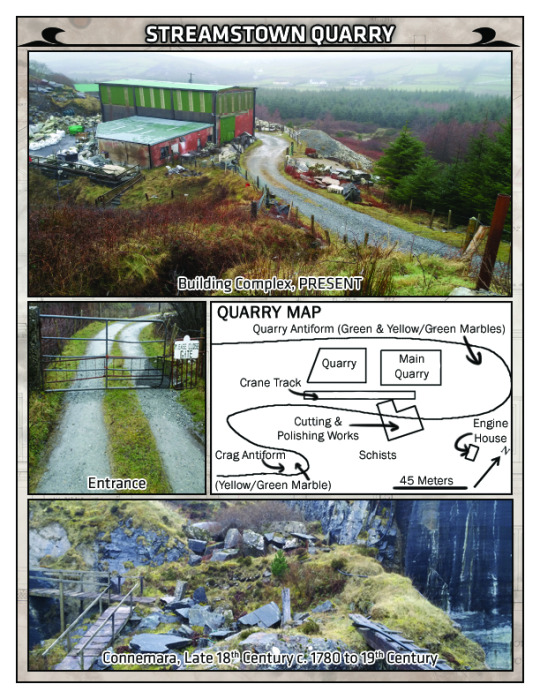
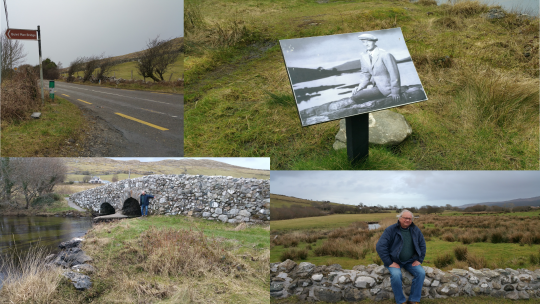
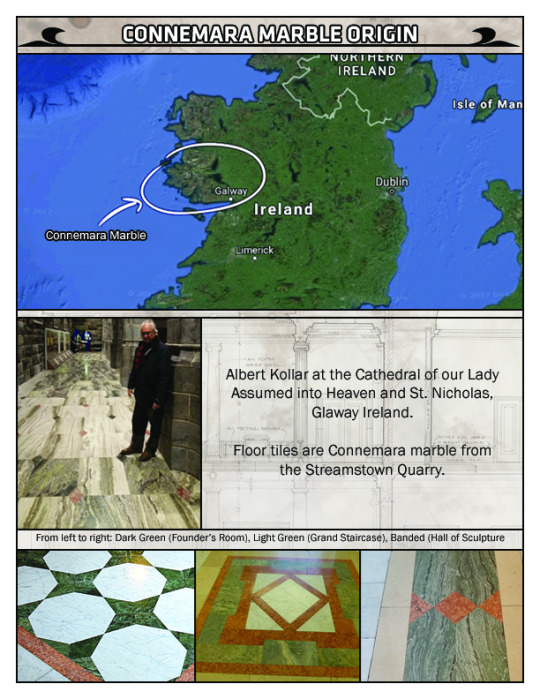
Each March in celebration of St. Patrick’s Day, the full-size dinosaur replica of Dippy (Diplodocus carnegii) that stands guard outside the Carnegie Complex along Forbes Avenue in Oakland, is draped in an iconic Irish scarf (Fig. 1). Inside the classic halls of the Carnegie Complex is a green marble from County Galway, western Ireland. It is called Connemara Marble and is ubiquitous in the museum’s architectural floor designs. Before visiting Ireland for the first time in 2015, my only reference to the green Isle was watching a classic John Wayne and Maureen O’Hara movie, titled, The Quiet Man circa 1952. Much of the movie was filmed amongst the Connemara landscapes and many of the films iconic locations survive to this very day, such as the famous Quiet Man Bridge (Fig. 2).  Moreover, researchers from the Carnegie Museum, National University of Ireland Galway, Connemara Marble Industries Ltd., Moycullen and Mount Holyoke College in Massachusetts, are investigating the significance of this Irish green marble in the architectural design of the Carnegie Institute Extension built by Alden & Harlow in 1907 (Fig. 3), Kollar et al., 2017; Feely et al., 2019, and Kollar et al., in review.

Fig. 2: Quiet Man bridge

Fig. 3: Connemara Map

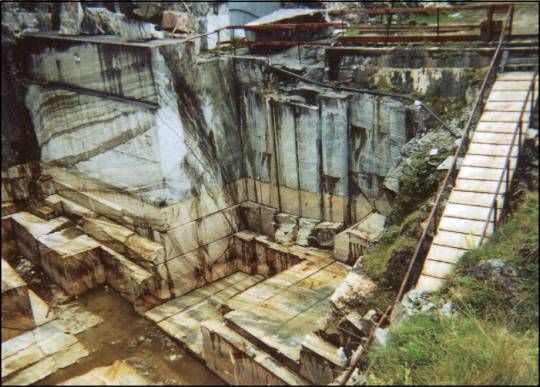
The Streamstown Quarry in Western Ireland

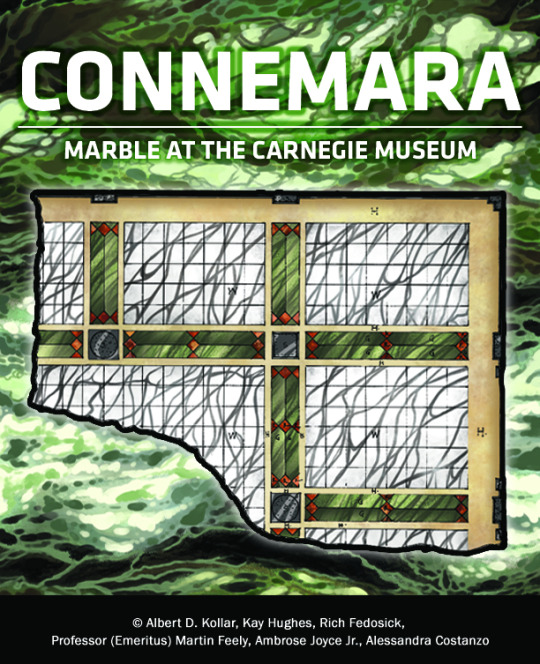
A cross-Atlantic research connection between Ireland and Pittsburgh was initiated in the winter of 2015, when I visited Martin Feely at the National University of Ireland, Galway, an expert on the geology of the Connemara Marble, and Ambrose Joyce, owner of the Streamstown quarry. The objective was to determine the provenance and geology of the Carnegie’s Connemara Marble quarry and to compare the varieties of colored marbles used in the Carnegie’s floor tiles against other buildings with Connemara Marble from the Streamstown quarry (Fig. 4).  The Connemara Marble can be found in the twelve public spaces, corridors, and private rooms, including the Hall of Sculptures, Grand Staircase, Green Room, President’s Office, and entrance corridors to the Carnegie Library of Pittsburgh. A unique use of Connemara Marble is as inlays in the design of the Thistle, the Scottish National flower in the Music Hall Foyer walls.

Fig. 4: Connemara Marble at the Carnegie Museum 

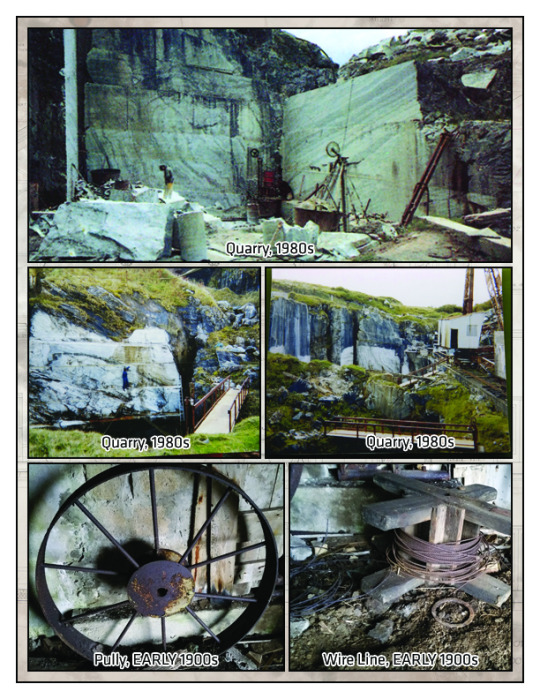
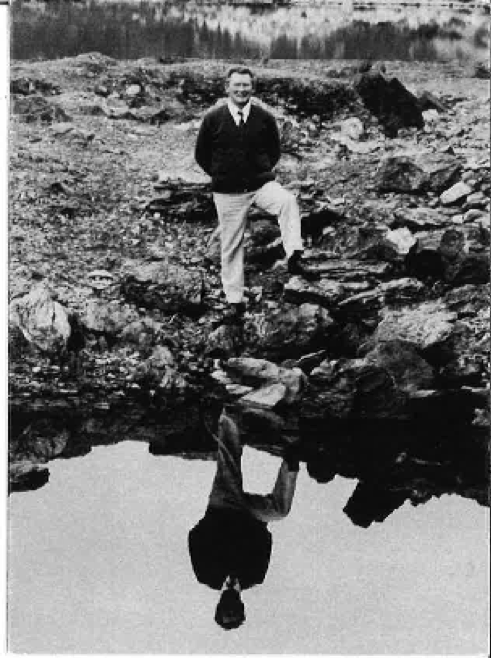
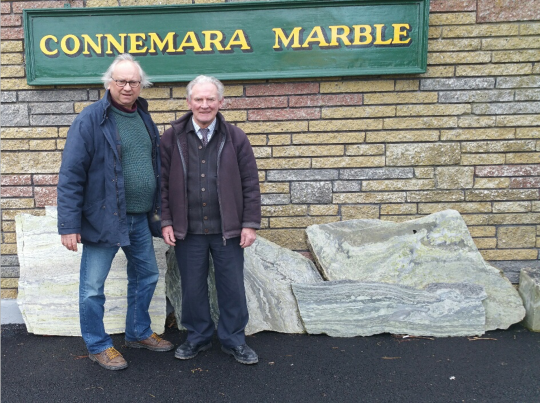
The best way to get to the Streamstown Quarry is by car. The 50-mile drive, along the N59 from Galway to Clifden takes about an hour and 15 minutes through quaint villages and along scenic winding roadways. Understandably, it rained that day as it commonly does in County Galway, circa 45 inches per year. In comparison, Pittsburgh receives about 36 inches of rain per year. Like Pittsburgh, Galway has lush green landscapes because of the annual rainfall.  Visible from the road are mountainous outcrops and lakes e.g. the Twelve Bens quartzite mountains formed over millions of years ago. Their present topography resulted from ice-sculpting during the last glacial maximum. The peat bogs in the low-lying regions formed 5,000 years ago. The history of the Streamstown quarry (Fig. 5) was always best recounted by the patriarch of the family Ambrose Joyce Sr., who sadly passed away in 2015 (Fig. 6 a, b). The entrance to the quarry is hidden from the main road and access is through a gate and then along a minor road shared by other land owners – access to the quarry is strictly by permission only, from Ambrose Joyce. The quarry and its buildings are surrounded by stockpiles of large marble blocks (Fig. 7). I walked around the quarry with Ambrose Joyce Jr. to see the old equipment and hear about the marble quarrying operations dating back to its late 19th century active period (Fig. 8). Then we viewed the modern quarry (Fig. 9) as Martin Feely explained the geology of the 650 Ma. pre-Cambrian limestone that would become green marble during the Ordovician Period some 470 million years ago.

Fig. 5: Streamstown Quarry

Fig. 6 a: Ambrose Joyce, Sr. 

Fig. 6 b: Ambrose Joyce, Sr. and Albert Kollar

Fig. 7: Streamstown Quarry setting

Fig. 8: Streamstown Quarry history

Fig. 9: Albert Kollar, Martin Feely, Ambrose Joyce Jr.

We returned to Galway via the Connemara Marble Industries Ltd., Moycullen, County Galway to meet with the Joyce family (Fig. 10). At the Connemara Marble Industries Ltd., Moycullen marble souvenirs and jewelry are produced for the tourist trade using the marble extracted from Streamstown quarry (Fig. 11, 12, 13).  Today, the ongoing global demand for Connemara Marble, for use in interior decoration projects, is supplied by the Italian company Antonlini. They source the marble from another Connemara marble quarry located several miles to the east of the Streamstown quarry.

Fig. 11: Christmas ornaments

Fig. 12: Coaster and Cube Shamrock

Fig. 13: Kennedy, Joyce, and rosary shamrock

Global Heritage Stone Resource

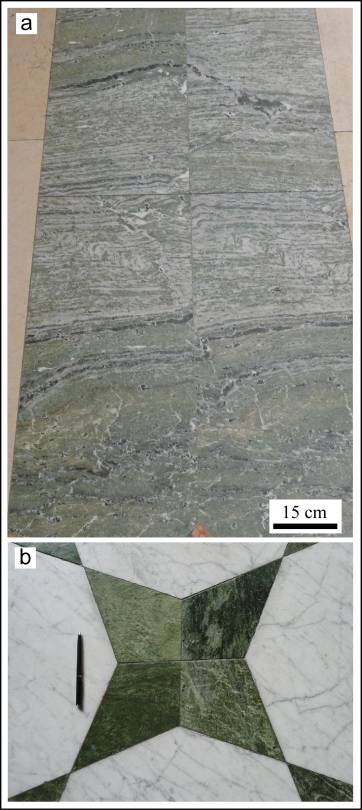
In 2019, the Connemara Marble was proposed as a Global Heritage Stone Resource with a citation to the Connemara Marble used in the Carnegie Museum (Wyle Jackson et al. 2020)  This Irish Heritage Stone was a much sought-after green marble for use in architecture, buildings and sculptures in Ireland, England, and the United States from the mid-19th century to the early 20th century including the Carnegie’s Hall of Sculpture (Fig. 14 a) and the Founder’s Room (Fig. 14 b) floor designs.

Figs. 14 a and b: Floor tiles

Have a Happy St. Patrick’s Day.

Albert D. Kollar is the Collection Manager in the Section of Invertebrate Paleontology at Carnegie Museum of Natural History. Museum employees are encouraged to blog about their unique experiences and knowledge gained from working at the museum.
Filed Under: Blog Tagged With: Albert Kollar, invertebrate paleontology, Science News

February 10, 2020 by wpengine

MESOZOIC MONTHLY: LEDUMAHADI

January brings with it a new year and a new installment of Mesozoic Monthly! At the start of a new decade, perhaps the perfect prehistoric creature to honor this month is the dinosaur Ledumahadi mafube, the “giant thunderclap at dawn.”

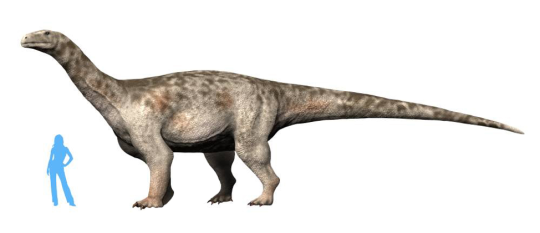
Ledumahadi was an early sauropodomorph, a group of herbivorous dinosaurs that ultimately produced the famous sauropods. Sauropods such as Brachiosaurus or Diplodocus are popular dinosaurs because of their often monstrous sizes, long necks, and lengthy, sometimes whip-like tails. One of the traits that paleontologists believe helped sauropods get so big was their pillar-like legs. Their legs were straight, like stilts, and heavily constructed so that they could support the weight of the animal. Modern elephants also have columnar legs, similar to those of sauropods, because this style of limb is so efficient for big animals. Non-sauropod sauropodomorphs tended to be smaller than their sauropod cousins, and could walk on either two legs or four. Quadrupedal early sauropodomorphs such as Ledumahadi did not have the columnar legs of sauropods, but instead walked with their forelimbs partially bent.

Life reconstruction of Ledumahadi by Nobu Tamura with a human silhouette for scale. This was a big beast! Note how, unlike its sauropod kin, this early sauropodomorph walked with its forelimbs flexed at the elbow. Read the 2018 scientific paper that described it (for free) here.

The largest known dinosaur of its kind, Ledumahadi weighed over 13 tons (12 metric tons), and reconstructions estimate that it grew over 30 feet (9 meters) long! This size is noteworthy, because it shows that it was possible for sauropodomorphs to reach gigantic sizes without columnar legs. This demonstrates that terrestrial animals can get big due to a variety of adaptations. In this case, the tremendous size of both sauropods and Ledumahadi is an example of convergent evolution, a process in which unrelated animals can evolve similar features. One classic example of convergent evolution is wings. Birds, bats, and pterosaurs are unrelated, yet all evolved similar structures that increase surface area for flying. But they all did it in different ways: birds have feathers anchored to the forearm and a fused hand, bats have skin stretched across five fingers, and pterosaurs had skin stretched along one long finger. Although we may not definitively know how Ledumahadi achieved its status as a “great thunderclap,” we do know that it did so along a different evolutionary pathway than its sauropod relatives.

The name Ledumahadi mafube means “great thunderclap at dawn,” referring to the massive size of the animal and its early place in the rock record. Unlike many dinosaur names, it is not derived from Latin or Greek; instead, it is from Southern Sotho, one of the languages spoken in South Africa, where the creature’s fossils were discovered.

Not many well-known animals lived in the Early Jurassic of southern Africa alongside Ledumahadi; the most famous dinosaurs are other sauropodomorphs such as Massospondylus, the small bipedal herbivores Heterodontosaurus and Lesothosaurus, and the small carnivore Coelophysis (formerly called Syntarsus) rhodesiensis. They all lived in an arid floodplain that was crisscrossed by meandering streams. Every so often, after a long period of stability, these water channels would flood, depositing new soil and nutrients and rejuvenating the ecosystem. A great deal of plant growth occurs after floodplains drain, reflecting a cycle of renewal that is familiar to us during each and every new year.

Lindsay Kastroll is a volunteer and paleontology student working in the Section of Vertebrate Paleontology at Carnegie Museum of Natural History. Museum staff, volunteers, and interns are encouraged to blog about their unique experiences and knowledge gained from working at the museum.
Filed Under: Blog Tagged With: Lindsay Kastroll, Science News, Vertebrate Paleontology

February 10, 2020 by wpengine

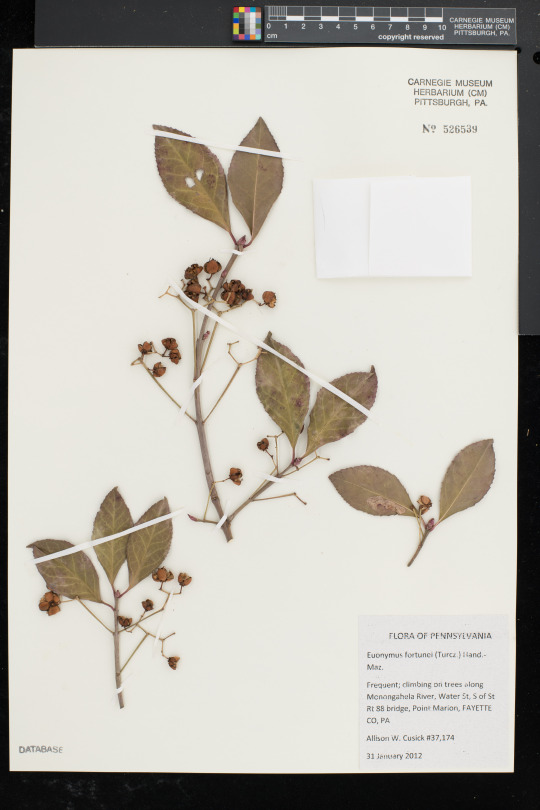
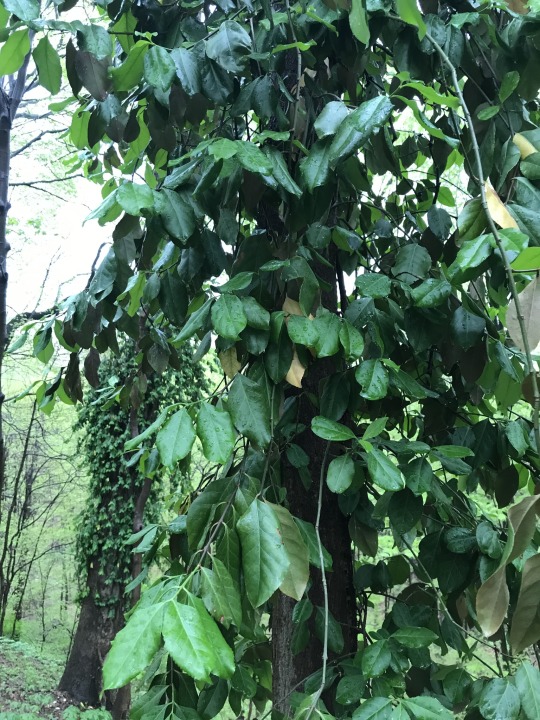
Collected on this Day in 2012: Wintercreeper

This specimen of wintercreeper (Euonymus fortunei) was collected on January 31, 2012 along the Monongahela River in Fayette County, PA by Alison Cusick.  Alison Cusick is a current Research Associate in the Section of Botany at the museum.  He can be frequently found in the Carnegie Museum herbarium.  He has a unique wealth of knowledge on plants, herbaria, botanical history, and more.  He authored three books and more than 50 scientific papers on the flora of eastern North America. Before retiring, he was the Chief Botanist for the Ohio Department of Natural Resources.  He continues to collect today, and many thousands of his specimens can found at herbaria across the country.  

Note the label on this specimen reads “Cusick, A.W.   37174”  The number following a collectors name is known as the…you guessed it… collector number (surprise!).  The collector number is the number assigned to a specimen by the collector.  It is common for several specimens to have the same collector number, if they are from the same individual or species in the same location on the same day (“duplicate specimens”).  Unfortunately, there are no universal rules on how collector numbers are used or assigned.  Collector numbers primary use is so the collector and/or others using the specimen can go back to the collector’s field notebook for additional information on the specimen.  Collector numbers are different from specimen numbers (which are assigned by the herbarium, such that every specimen has a unique ID for reference).  Most collectors number their specimens chronologically in order they were collected (but not always), but some collector numbers consist of dashes and/or letters, too.  

Anyway, what I’m getting at is that this specimen (Cusick 37174) suggests Alison has collected AT LEAST over 37,000 specimens.  The number is actually higher than that, with duplicates and an additional 8 years of collecting.  Not that numbers are everything, but Alison’s contribution to the herbarium record is clearly impressive and impactful.

Ok, now back to the plant!  Winter creeper (Euonymus fortunei), native to Asia, is commonly planted in Pennsylvania and many other places, and unfortunately has also spread to become invasive.  It is still commonly planted.  It is a woody vine that climbs trees, but also is a thick ground cover.  It has leaves that persist through the winter, with attractive fruits.  Despite those advantages, it can impact native species and habitats as an invasive species, and therefore, should not be planted.

Find this specimen and more here: http://midatlanticherbaria.org/portal/collections/individual/index.php?occid=12134036&clid=0

Check back for more! Botanists at the Carnegie Museum of Natural History share digital specimens from the herbarium on dates they were collected. They are in the midst of a three-year project to digitize nearly 190,000 plant specimens collected in the region, making images and other data publicly available online. This effort is part of the Mid-Atlantic Megalopolis Project (mamdigitization.org), a network of thirteen herbaria spanning the densely populated urban corridor from Washington, D.C. to New York City to achieve a greater understanding of our urban areas, including the unique industrial and environmental history of the greater Pittsburgh region. This project is made possible by the National Science Foundation under grant no. 1801022.

Mason Heberling is Assistant Curator of Botany at the Carnegie Museum of Natural History. Museum employees are encouraged to blog about their unique experiences and knowledge gained from working at the museum.
Filed Under: Blog Tagged With: Botany, collected on this day, Mason Heberling, Science News, Uprooted, wintertide

February 10, 2020 by wpengine

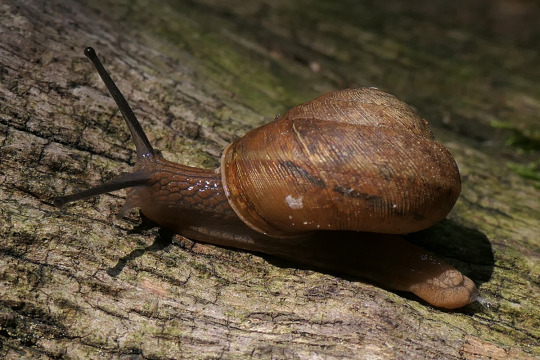
Land Snail Webbhelix multilineata Rediscovered Living in Pennsylvania After 72 Years

Imagine the excitement of finding an organism that was presumed extinct. Until 2019, the handsome land snail Webbhelix multilineata had not been documented anywhere in Pennsylvania since 18 May 1947 so it was presumed locally extinct (it does still survive elsewhere in the Mid-West). Finding a living individual of that species in Pennsylvania this year is cause for excitement.

Webbhelix multilineata has never been an abundant snail in Pennsylvania. Of 10 museum records of that species in PA, all but one is in western Pennsylvania from 1898 to 1947. The one record from eastern Pennsylvania, in Berks County, was collected about 1938.

Fig. 1. Webbhelix multilineata juvenile found in York County in 2019 (photo: Kerry Givens).

Photographs of an immature Webbhelix multilineata in Hellam Hills Natural Area in York County, Pennsylvania were sent to me on 2 Jun 2019 (Fig. 1). I recognized the species by the reddish spiral lines on the shell and by the relatively large, reddish body tubercles. This sighting is the first record in 72 years of Webbhelix multilineata anywhere in Pennsylvania, and it represents a new county record as well.

Curiously, this snail was seen in the relatively dry habitat of a mature deciduous forest, at least 150 m from the nearest stream. Five scientific publications indicate its habitat to be low, moist areas including floodplains, marshes, and swamps. I wonder why the York County snail is from such a different habitat.

Because this snail is now known to be living in Pennsylvania, it can no longer be considered locally extinct, so conservation organizations such as the Natural Heritage Program will monitor it. Although there is no evidence that the snail population recovered (as opposed to just being overlooked), I like to think that conservation efforts have played a role in improving conditions for this snail.

I am grateful to Kerry Givens for noticing and photographing the snail, and for alerting me to its existence.

Timothy A. Pearce, PhD, is the head of the mollusks section at Carnegie Museum of Natural History. Museum employees are encouraged to blog about their unique experiences and knowledge gained from working at the museum.
Filed Under: Blog Tagged With: mollusks, Science News, Tim Pearce

February 10, 2020 by wpengine

A Journey to France to Uncover the Mysteries of the Carnegie’s Grand Staircase

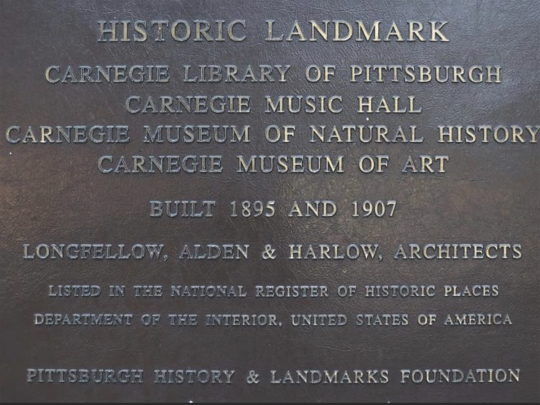
The Carnegie Institute has been in existence for 125 years and is one of the greatest architectural buildings ever designed in Pittsburgh. In 1985, Carnegie Institute President Robert Wilburn invited Dr. Cynthia R. Field, the Smithsonian’s Architecture Historian, to assess the artistic value of the museum. He asked, “what do you think is the most valuable specimen or painting in the museum?” She said, “The Building Itself is the Greatest Object of the entire Museum Collection” (Fig. 1).

image

Fig. 1: Carnegie plaque

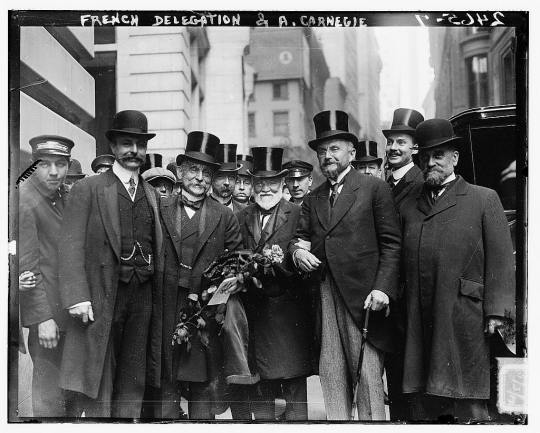
The internationally-famous architect, I.M. Pei, who designed the Louvre’s glass pyramid that sits in the Louvre’s central courtyard in Paris, France, opined, “Architecture is the very mirror of life. You only have to cast your eyes on buildings to feel the presence of the past, the spirit of a place; they are the reflection of society.” In 2018, Architecture Digest ranked the Carnegie’s Grand Staircase the 8th best museum staircase in the world. The Grand Staircase was built by the Pittsburgh architectural firm of Alden and Harlow at the apex of America’s Gilded-Age building boom. During my research, I discovered that the architects employed multicolored classic marbles and fossil limestones in the interior design from Algeria, Croatia, Greece, France, Ireland, Italy, and the United States. The commission to build the Grand Staircase in 1907 incorporated two classical French fossil limestones in the columns and pillars, floor tiles, steps, walls, balconies, and water fountains. This monumental Beaux-Arts style staircase is modeled after the L‘Opéra Garnier ‛a Paris, Grand Staircase in France, c. 1875, and was visited by a French Delegation with Andrew Carnegie (Fig. 2). The architecture described as Beaux-Arts was taught at the École des Beaux-Arts in Paris, from the mid-19th century until 1900. It drew upon the principles of French neoclassicism and used modern building materials, i.e., iron and glass. And as such, it became a preferred architectural style in the United States from 1895 until 1910 in cities such as, Boston, Chicago, New York City, Pittsburgh, and Washington D.C.

image

Fig. 2: French delegation and Andrew Carnegie

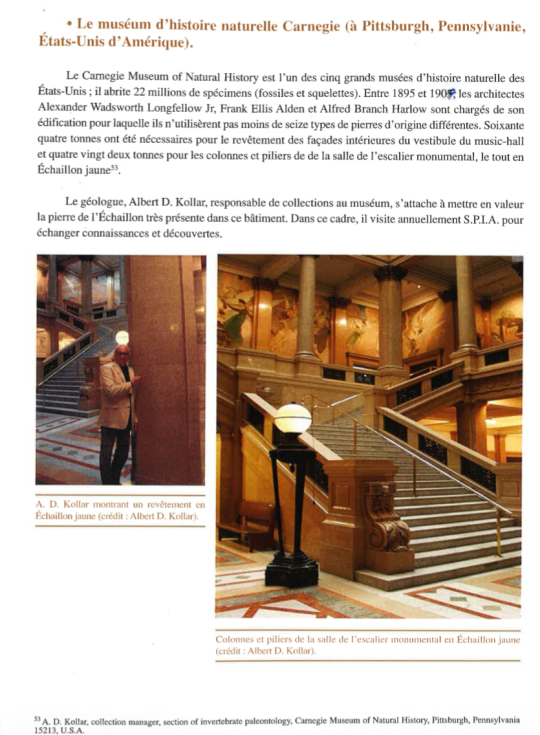
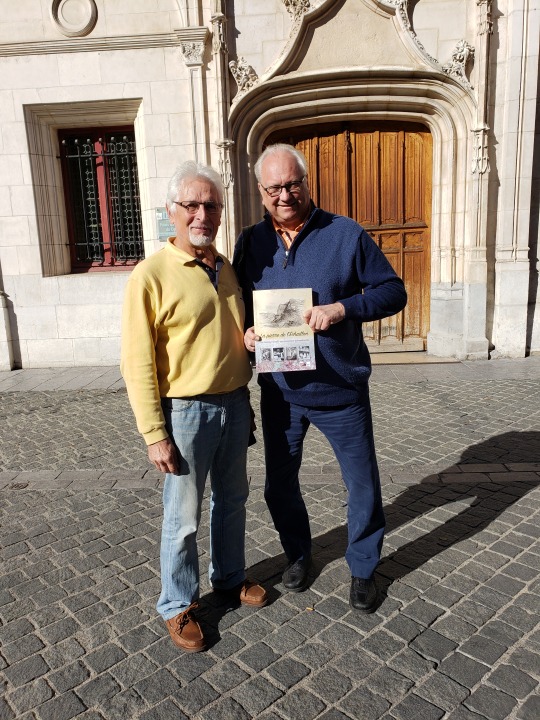
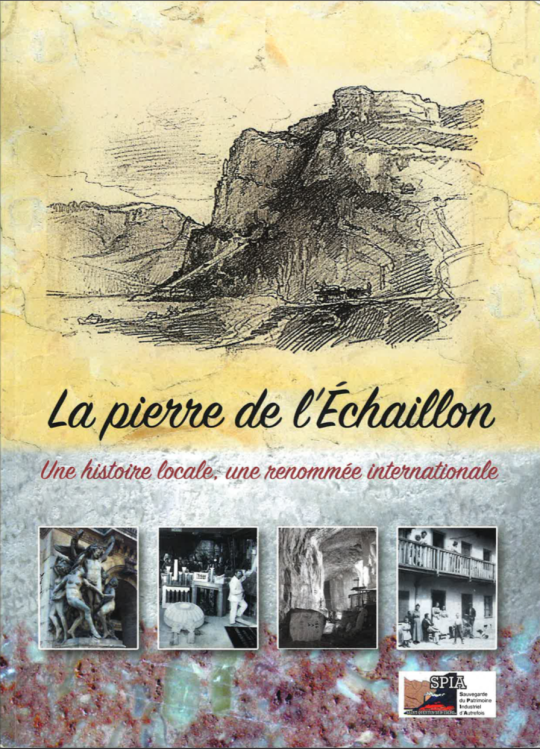
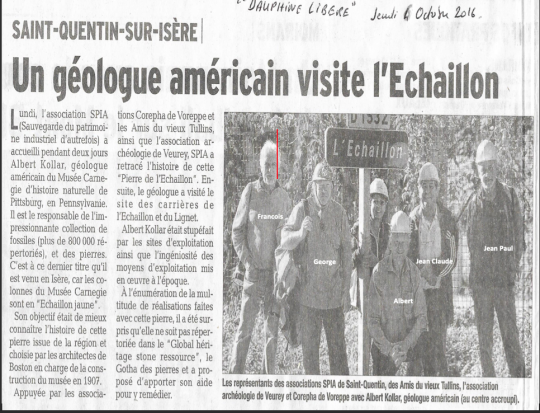
In 2019, The Carnegie’s Grand Staircase and Music Hall Foyer were recognized in the book La pierre de l’Échaillon Une histoire locale, une renommée international for the use of Échaillon jaune (yellow) ornamental stone in the museum’s columns, pillars, and walls (Fig. 3). This book was published by S.P.I.A. (Sauvegarde du Partrimoine Industriel d’Autrefois, a historical society founded by Jean Paul Rey, president) (Fig. 4).  In the book, they describe how a small French village of l’Échaillon, pronounced Esh-ee-own, received recognition for its white marble (a limestone) used by famous French architects in 64 classic buildings and sculptures from 1875 to the early 20th century (Fig. 5).  I first met Jean Paul in October of 2016, when I was invited to give a presentation at an S.P.I.A. meeting on my research on the Carnegie’s l’Échaillon.  The meeting was held in an old schoolhouse in the village of Saint-Quentin-sur-Isère, Département de Isère, in southeast France.

image

Fig. 3: The Grand Staircase

image

Fig. 4: Jean Paul Rey and Albert D. Kollar

image

Fig. 5: Book cover

The French Limestones in the Carnegie’s Architecture

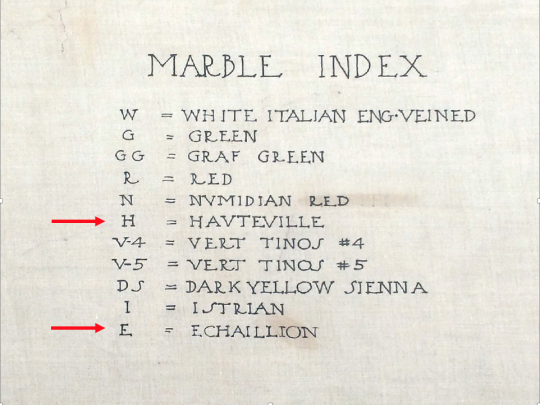
The Carnegie building stones research project progressed significantly, once we obtained the digital images of the architect’s blueprints from the Carnegie Museum of Art’s Architecture Department. With the assistance of my co-authors, Rich Fedosick and Kay Hughes of the Section of Invertebrate Paleontology, we examined the blueprints to understand the architects Marble Index terminology (Fig. 6). Eventually, we were able to interpret and recognize the location of the two French limestones based on the Marble Index letters, E for Échaillon and H for Hauteville. From a nonscientific perspective, the architects considered the Carnegie’s interior stones to be marbles. However, the geological definition of a marble is when a rock defined as a limestone or dolomite is subjected to high heat and pressure from geologic forces forms a metamorphic rock.  The six stones listed in the Marble Index as marbles, are limestones, a sedimentary rock enriched with fossil seashells. The characteristic rudist fossils and yellow color that distinguish the Échaillon stone are found in the 18 pillars and the 22 columns that rise 3.8 meters or 12.5 feet about the Grand Staircase, and in the walls of the Music Hall Foyer (Fig. 7).

image

Fig. 6: Marble index E and H letters

image

Fig. 7: Échaillon fossils

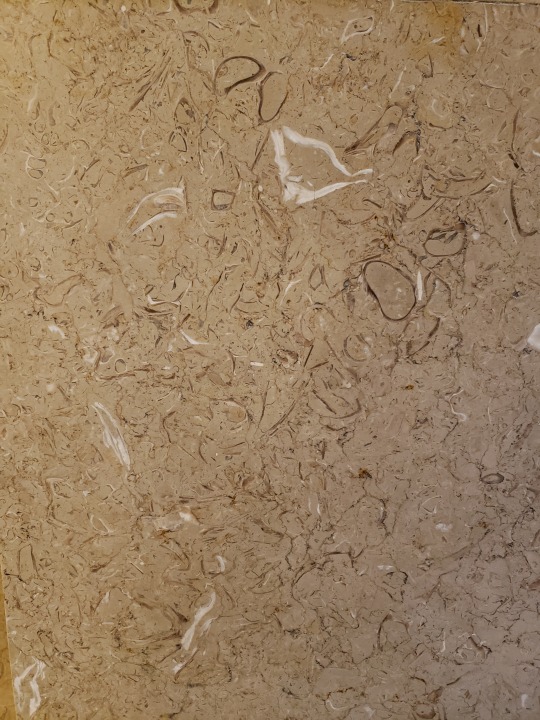
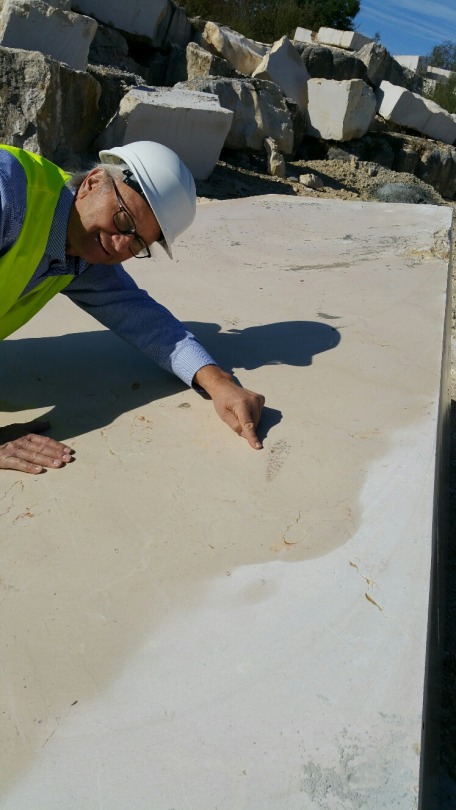
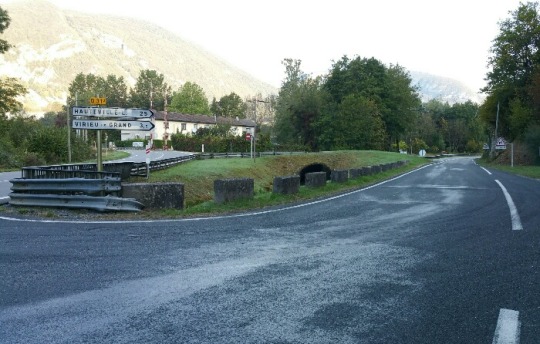
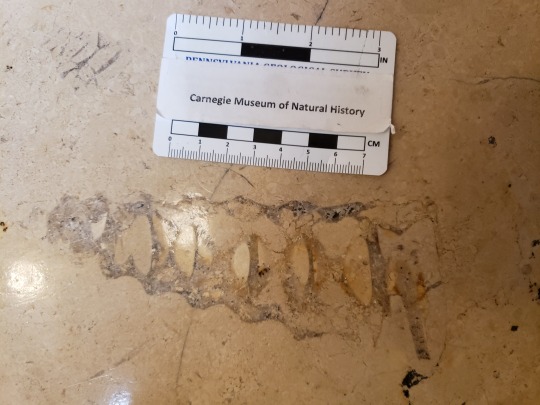
The other French limestone used in the Carnegie is Hauteville. This limestone was quarried from the Plateau d’Hauteville in the Ain Department, in eastern France. I visited this quarry in 2016 to investigate the geology of the quarry operation, to uncover evidence of the common fossil snail Nerinea in the quarry rock (Fig. 8), and to learn more about the cultural history of the region (Fig. 9).  The Hauteville limestone was used in the Grand Staircase walls, balcony features, water fountains, vestibule steps, and as floor tiles. Other locations include, the Hall of Sculpture and Hall of Architecture floors, the walls along the grand hallway, the Music Hall vestibule floor, the Founder’s Room vestibule floor, the floor and steps in the Smoking Room (now offices), the Forbes Avenue vestibule entrances to the music hall, carriage drive, and museum and fine arts. Moreover, the Hauteville floor tiles are distributed throughout the Carnegie Library of Pittsburgh main entrance corridors. The Hauteville stone is beige in color and contains many visible fossils, none more distinctive than the robust Nerinea, a 12.7 cm/5-inch-long snail that serves as the index fossil for the limestone identification (Fig. 10).

image

Fig. 8: Hauteville Quarry fossil snail

image

Fig. 9: Hauteville directional signs

image

Fig. 10: Nerinea snail in Carnegie floor

Introduction to the l’Échaillon Carrières

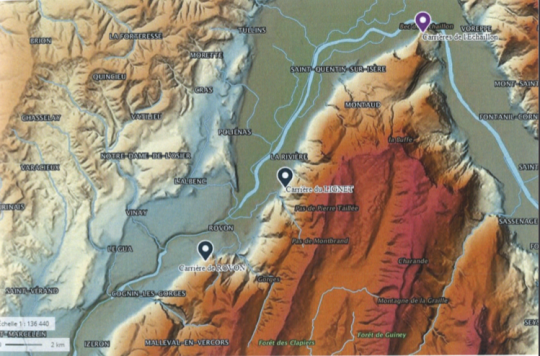
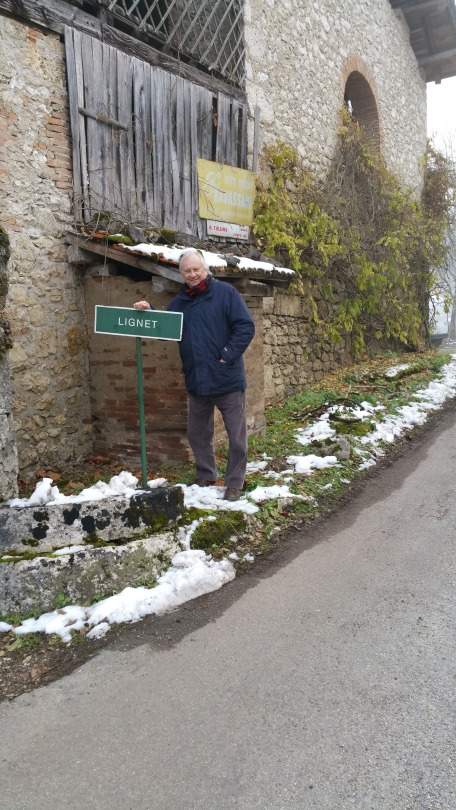
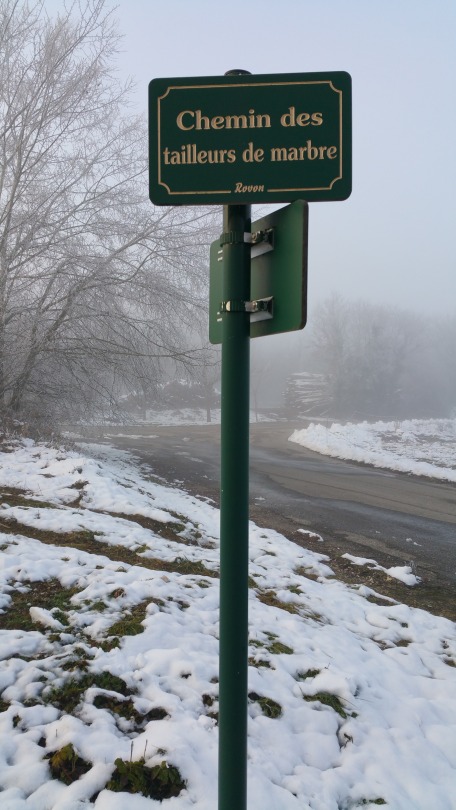
There are three carrières or quarries in the Vercors cliffs located in the Isère River Valley that were excavated for White Echaillon or “Echaillon blanc,” Yellow Echaillon or “Echaillon jaune,” and Pink Echaillon or “Echaillon rose” during the 19th and early 20th century (Fig. 11).  These unique color combinations became popular for various interior and exterior architecture features in 194 buildings in western Europe, North Africa, and the United States. In 2016, Jean Paul Rey and members of S.P.I.A. led me on a field trip to the abandoned classic l’Échaillon white quarries (Fig. 12). We explored what is thought to be a 2,000-year-old Roman quarry and walked through a maze of underground caverns and narrow tunnels that contained abandoned mining equipment.  The other two Echaillon carrières are located several kilometers south in the small villages of Lignet, where the Pink Echaillon was quarried (Fig. 13) and Rovon, where the Yellow Echaillon was excavated (Fig. 14).

image

Fig. 11: Echaillon quarries locations, S.P.I.A.

image

Fig. 12: Visit to Echaillon

image

Fig. 13: Lignet Quarry Marker

image

Fig. 14: Rovon quarry

Cularo, Grenoble, and the white l’Echaillon stone

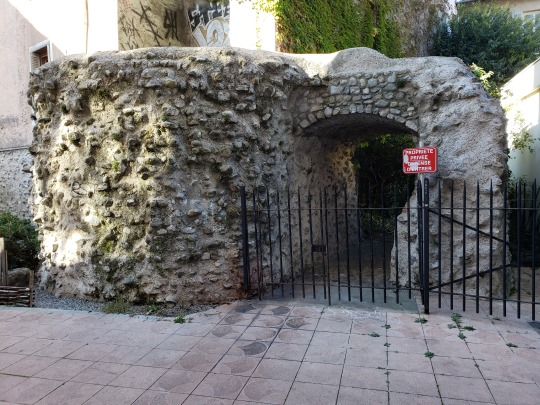
A fortuitous discovery was made by S.P.I.A. for their book while searching for evidence of the white l’Echaillon in the Gallo-Romans era 4th century Cularo or Grenoble, France today. In the Saint Laurent crypt that is preserved many meters below the modern-day street level tramway, a white capitol on top of a white limestone column was identified as l’Echaillon. This white capitol stone is presumably from the Roman quarry adjacent to the white l’Echaillon underground caverns. When Emperor Gratian ruled the Roman Empire from 367 to 383 A.D., he renamed Cularo after himself. Cularo thus became Gratianopolis, which through a later phonetic shift became Graignovol and then Grenoble. Although hard to find among the narrow streets and passageways of Grenoble, is a section of a Roman wall that once encircled Cularo, a portion of which is protected by a fence. This historic wall can be seen at Passage Sainte-Claire on the corner of Rue Lafayette, in the central city of Grenoble (Fig. 15). I suspect some of the white cobbles embedded in the wall may have their origin from the white l’Echaillon Roman quarry. Undoubtedly, more research will be necessary to make an affirmative conclusion.

image

Fig. 15: Roman wall

“Geology of the l’Échaillon Carrières”

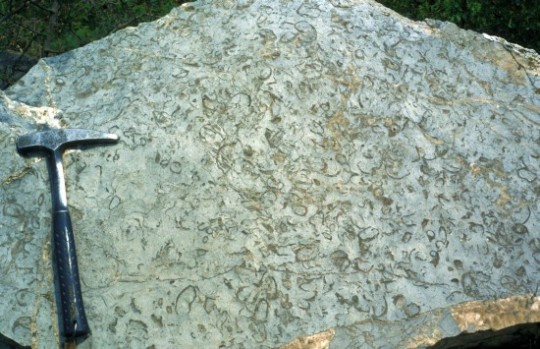
The drawing of a new geologic map on the l’Echaillon carrières by Professor Thierry Dumont of the Université Grenoble-Alpes, confirms stratigraphically, the ages of the three limestone quarries. Among the three, the white Echaillon limestone is late Jurassic in age, whereas the pink Lignet and yellow Rovon limestones are early Cretaceous in age. The formal geologic name for the rose and yellow limestones is the Urgonian Formation. Fossils are abundant in the three limestones. Dr. Claudie Durand of Le musèum d’Histoire naturelle de Grenoble (Fig. 16) curated a diverse collection of 163 species of invertebrate fossils from l’Echaillon first published in 1919. Geologically, the three limestones were deposited in the tropical Tethys Seaway a circum-equatorial ocean of the Mesozoic Era. The strata form the Vercors carbonate platform, a buildup of late Mesozoic rudist (bivalve mollusk) reefs spanning 25 million years of evolution from (late Jurassic 140 million years ago to early Cretaceous 165 million years ago) (Fig. 17).  

image

Fig. 16: Dr. Claudie Durand

image

Fig. 17: Rudist (bivalve) reef fossils

The Rovon carrière provenance and fossils

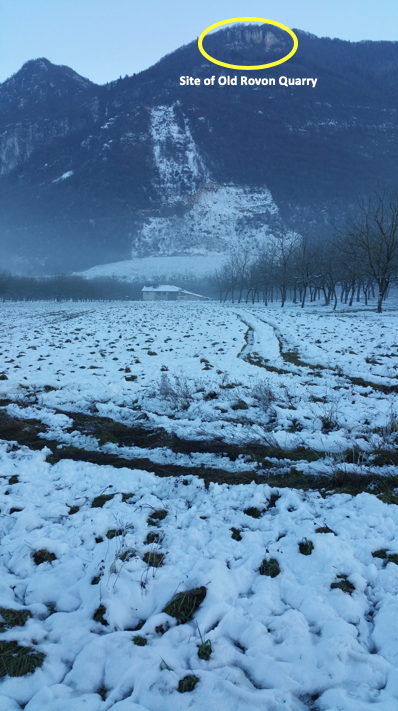
The primary goal of this research is to define the geology and authenticate the specific provenance of all marbles, fossil limestones, sandstones, and the singular igneous granite rock used in the Carnegie building. The search for the provenance of the Carnegie’s yellow Echaillon was initiated in December of 2017 by Jean Paul Rey, when we were introduced to the Forman of the modern-day Rovon quarry. After a long discussion about our objectives, he granted permission to visit the old quarry. As darkness fell, we met with a local farmer who directed us to the quarry location in the Vercors cliffs that rise some 538 meters above his snow-covered field (Fig. 18).  

image

Fig. 18: Verors cliffs and old Rovon quarry

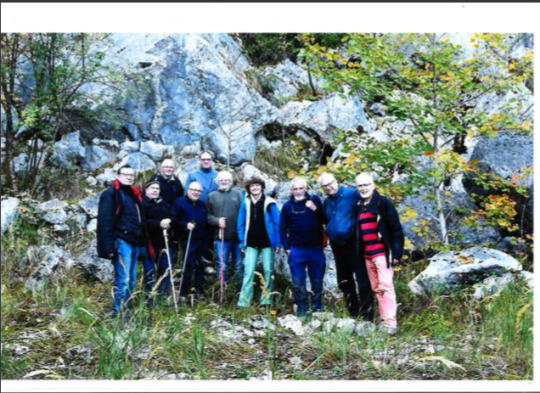
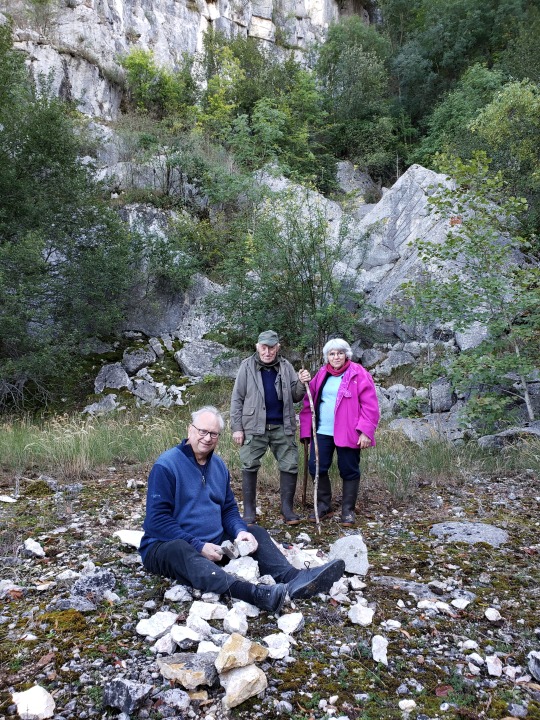
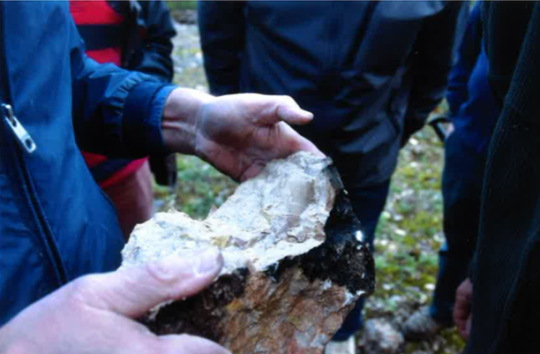
In October of 2018, the S.P.I.A. team pre-arranged to have several 4-wheel trucks transport ten people including Professor Fabienne Giraud-Guillot of the Université Grenoble-Alpes to the Rovon quarry. We ascended the long steep road that ended some 500 m from the main quarry. Surprisingly, the quarry was filled with massive limestone boulders that were cut by mechanical wire saws from the cliff rock (Fig. 19). Such large boulders make it virtually impossible to break with small hammers. For actual fossil collecting purposes, it is better to search for smaller size rocks to break apart (Fig. 20). This past October, transport to the Rovon quarry riding in a 55-year-old Russian built farm tractor was a treat (Fig. 21). And the fossil collecting was a success with 21 complete specimens collected for the museum of the diagnostic Caprina rudist bivalve clam (Fig. 22). The shape of these fossils closely resembles the fossils preserved in the Echaillon limestone in the Grand Staircase and Music Hall Foyer. Additional geologic data is being reviewed by colleagues from the Geology Department at the University of Zagreb in Croatia and the University of Ireland at Galway.  

image

Fig. 19: S.P.I.A. team

image

Fig. 20: Collecting fossils

image

Fig. 21: Russian tractor

image

Fig. 22: Caprina rudist clam

“Carnegie’s Grand Staircase in the 21st Century”

A study published this month by the BMJ, formerly The British Medical Journal, suggested that “when people of all ages participate in the arts and visit museums once a month or even every few months, they are likely to be more engaged in the world and may actually live longer.” Years ago, the Oscar winner actor Russell Crowe was in Pittsburgh, and he was asked what he did on his days off. In reply, he said, “I ride my bicycle to look at buildings and the architecture of the city.” I. M. Pei states, “Architecture brings people together.” I agree.

Maybe it’s time to reconsider how the Carnegie’s Grand Staircase is promoted to the public at large. For instance, the current arrangement of the free-standing dioramas situated on the first floor, awkwardly impede the flow of patrons walking among the pillars, columns, and the taking of photographs of the Grand Staircase.  Moreover, the placement of these dioramas detracts from the visual enjoyment of the famous John White Alexander multicolor murals. An artistic feature of the murals is their connection to the stone colors to enhance the first and second floors architectural features. The best vantage points to see this fabulous spectrum of color is from the third-floor balcony looking down to the first and second floors.

The Carnegie Museum of Art (Museum of Fine Arts) will be celebrating its 125th Anniversary in the fall of 2020. The Grand Staircase was designed as the showcase entrance to the Museum of Fine Arts for Pittsburghers of the early 20th Century. One hundred and twenty-five years later, perhaps, this world-class space can once again establish a new generation of museum patrons and become the destination as a place to be for its cultural and intellectual heritage.  And don’t forget, this staircase can be an Instagram-worthy site for a family portrait to encourage our younger audiences to visit too.

Albert D. Kollar is the Collection Manager in the Section of Invertebrate Paleontology at Carnegie Museum of Natural History. Museum employees are encouraged to blog about their unique experiences and knowledge gained from working at the museum.
Filed Under: Blog Tagged With: Albert Kollar, Invertebrate Zoology, Science News

  • « Go to Previous Page
  • Page 1
  • Interim pages omitted …
  • Page 40
  • Page 41
  • Page 42
  • Page 43
  • Go to Next Page »

sidebar

About

  • Mission & Commitments
  • Directors Team
  • Museum History

Get Involved

  • Volunteer
  • Membership
  • Carnegie Discoverers
  • Donate
  • Employment
  • Events

Bring a Group

  • Groups of 10 or More
  • Birthday Parties at the Museum
  • Field Trips

Powdermill

  • Powdermill Nature Reserve
  • Powdermill Field Trips
  • Powdermill Staff
  • Research at Powdermill

More Information

  • Image Permission Requests
  • Science Stories
  • Accessibility
  • Shopping Cart
  • Contact
  • Visitor Policies
One of the Four Carnegie Museums | © Carnegie Institute | Privacy Policy | Terms of Use | Accessibility
Rad works here logo