• Skip to primary navigation
  • Skip to main content
  • Skip to primary sidebar

Carnegie Museum of Natural History

One of the Four Carnegie Museums of Pittsburgh

  • Visit
    • Buy Tickets
    • Visitor Information
    • Exhibitions
    • Events
    • Dining at the Museum
    • Celebrate at the Museum
    • Powdermill Nature Reserve
    • Event Venue Rental
  • Learn
    • Field Trips
    • Educator Information
    • Programs at the Museum
    • Bring the Museum to You
    • Guided Programs FAQ
    • Programs Online
    • Climate and Rural Systems Partnership
  • Research
    • Scientific Sections
    • Science Stories
    • Science Videos
    • Senior Science & Research Staff
    • Museum Library
    • Science Seminars
    • Scientific Publications
    • Specimen and Artifact Identification
  • About
    • Mission & Commitments
    • Directors Team
    • Museum History
  • Tickets
  • Give
  • Shop

Section of Mollusks

February 19, 2019 by wpengine

Octopus mystery: how do they see color?

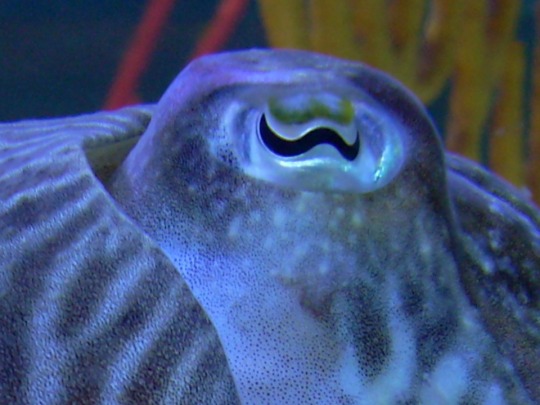
eye of a cuttlefish
Eye of a cuttlefish. Note the W shaped pupil. (Image from Wikimedia Commons)

The eyes of cephalopods like octopus, squid, and cuttlefish possess only one kind of photoreceptor, implying that they are colorblind, being able to see only in greyscale. But wait! They are famous masters of camouflage, being able to blend with their surroundings, and they signal each other in intricate color patterns. These feats suggest that they are not colorblind.

Two main hypotheses to explain this mystery are (1) they also see with their skin (Wardill et al. 2015) or (2) they make use of chromatic aberration (Stubbs & Stubbs 2016).

Cephalopods certainly do possess photosensitive molecules called opsins in their skin, so potential exists for cephalopods to detect light with their skin. However, the photosensitive molecules in the skin are like those in the eyes, so it’s not clear how that would help them see color any better than the eyes do.

Chromatic aberration is the differential bending of light of different wavelengths (colors). That’s how a prism splits white light, and why when your eyes get dilated by the eye doctor, besides things becoming blurry, you also see rainbows around things. Light of different wavelengths passing through a lens has different focal points. For most organisms and for human-made optical devices, chromatic aberration is a problem to be minimized.

The chromatic aberration hypothesis proposes that instead of avoiding chromatic aberration, cephalopods enhance it using their peculiar off-axis pupil shapes. This enhancement allows them to detect color by monitoring image blurring as focus changes. Computer models show that this method of image detection is possible.

Such use of chromatic aberration could explain why cephalopods have such bizarre pupil shapes. The pupil in some octopuses is an elongate slit, and in cuttlefish, it is the shape of a W.

These two hypotheses yield different predictions under certain circumstances, such as colors on a flat field (for which focus would not change). Now we await results of experiments testing between these two possibilities. Then we will have an answer for how cephalopods can see color, despite having the appearance of being color blind. We might need to re-evaluate other creatures that have been labeled colorblind.

Timothy A. Pearce is Curator of Collections, Section of Mollusks at Carnegie Museum of Natural History. Museum employees are encouraged to blog about their unique experiences and knowledge gained from working at the museum.

Literature cited

Kingston, A.C.N., Wardill, T.J., Hanlon, R.T. & Cronin, T.W. 2015. An unexpected diversity of photoreceptor classes in the longfin squid, Doryteuthis pealeii. PLoS ONE 10(9): e0135381. doi.org/10.1371/journal.pone.0135381

Stubbs, A.L. & Stubbs, C.W. 2016. Spectral discrimination in color blind animals via chromatic aberration and pupil shape. Proceedings of the National Academy of Science U.S.A.113: 8206–8211. doi: 10.1073/pnas.1524578113
Filed Under: Blog Tagged With: Cephalopods, mollusks, Section of Mollusks, Tim Pearce

January 28, 2019 by wpengine

Snail Extinction – Bad Situation Getting Worse

By Timothy Pearce

Move Aside Rosy Wolf Snail, the New Guinea Flatworm Wreaks Greater Devastation

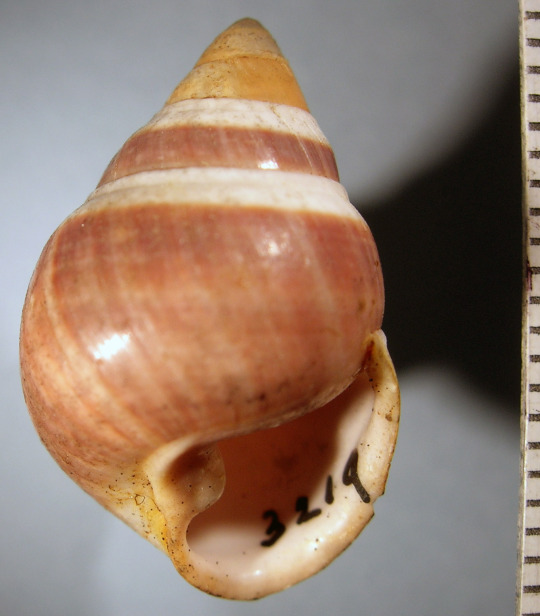
Another species of land snail went extinct on January 1, 2019. George, the last member of his species, Achatinella apexfulva, died in a captive breeding facility at the University of Hawaii. The loss of this snail, and this species, is sad from many perspectives, I’ll mention two: first, George’s species is the first land snail ever described from Hawaii; second, this loss contributes to the largely overlooked extinction crisis of land snails around the world.

Achatinella apexfulva shell
Achatinella apexfulva from the Carnegie Museum of Natural History collection.

George was named after Lonesome George, the last Galapagos tortoise of the subspecies Geochelone nigra abingdoni, who died in 2012. Like most land snails, George the snail was hermaphroditic (having both male and female parts), so either male, female, or androgynous names would have been appropriate.

News outlets including New York Times, National Geographic, and National Public Radio, as well as various blogs (e.g., https://www.shellmuseum.org/curators-corner) have well-covered the story of George’s passing, so look there for more details that I won’t repeat. Those outlets mentioned threats leading to the demise of tree snails, including the introduced rosy wolf snail, a snail-eating snail credited with causing snail extinctions on some Pacific Islands. However, none of those news outlets mentioned the New Guinea flatworm, which is already showing itself to be a much greater threat to snail-kind than the rosy wolf snail.

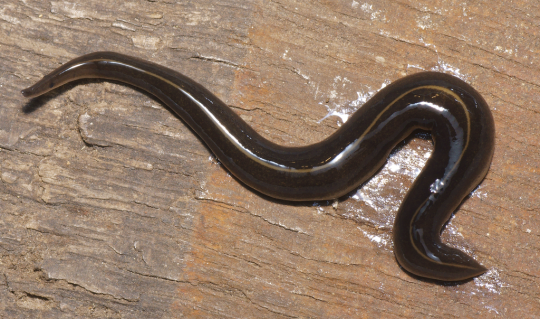
New Guinea flatworm
The New Guinea flatworm (Platydemus manokwari) eats land snails so efficiently that it is causing snail extinctions. Photo from Wikimedia Commons.

The New Guinea flatworm (Platydemus manokwari), which eats mostly snails, has been categorized as one of the 100 worst invasive species. Originally found in New Guinea, human activity has introduced it to many tropical and temperate regions of the world where it has had significant negative impacts on the rare endemic land snail fauna of some Pacific islands. Evidence indicates that predation by the New Guinea flatworm is the greatest cause of the extinction or drastically reduced numbers of several native snails. Up to 65 mm (2.5 inches) long, it can follow snail mucus trails to catch prey, sometimes even into trees, so its presence in Hawaii seriously threatens the remaining Hawaiian tree snails.

In 2015, the New Guinea flatworm was found in Florida, from which it poses a threat to land snails on the mainland of the USA. A colleague told me that in some of the Everglade hammocks where the flatworm has reached, all you can find now are dead, empty shells of the colorful tree snails that were gobbled by the flatworm. The flatworm does not survive in colder climates, so for the time being, the northern United States might be spared from this scourge. The flatworm survives best at 18 to 28 C (64-82F) and nearly ¼ of them survived in an experiment down to 10°C (50F) for 2 weeks.

Timothy A. Pearce is Curator of Collections, Section of Mollusks at Carnegie Museum of Natural History. Museum employees are encouraged to blog about their unique experiences and knowledge gained from working at the museum.

Filed Under: Blog Tagged With: land snails, mollusks, Section of Mollusks, snails, Tim Pearce

  • « Go to Previous Page
  • Page 1
  • Page 2
  • Page 3

sidebar

About

  • Mission & Commitments
  • Directors Team
  • Museum History

Get Involved

  • Volunteer
  • Membership
  • Carnegie Discoverers
  • Donate
  • Employment
  • Events

Bring a Group

  • Groups of 10 or More
  • Birthday Parties at the Museum
  • Field Trips

Powdermill

  • Powdermill Nature Reserve
  • Powdermill Field Trips
  • Powdermill Staff
  • Research at Powdermill

More Information

  • Image Permission Requests
  • Science Stories
  • Accessibility
  • Shopping Cart
  • Contact
  • Visitor Policies
One of the Four Carnegie Museums | © Carnegie Institute | Privacy Policy | Terms of Use | Accessibility
Rad works here logo
