• Skip to primary navigation
  • Skip to main content
  • Skip to primary sidebar

Carnegie Museum of Natural History

One of the Four Carnegie Museums of Pittsburgh

  • Visit
    • Buy Tickets
    • Visitor Information
    • Exhibitions
    • Events
    • Dining at the Museum
    • Celebrate at the Museum
    • Powdermill Nature Reserve
    • Event Venue Rental
  • Learn
    • Field Trips
    • Educator Information
    • Programs at the Museum
    • Bring the Museum to You
    • Guided Programs FAQ
    • Programs Online
    • Climate and Rural Systems Partnership
  • Research
    • Scientific Sections
    • Science Stories
    • Science Videos
    • Senior Science & Research Staff
    • Museum Library
    • Science Seminars
    • Scientific Publications
    • Specimen and Artifact Identification
  • About
    • Mission & Commitments
    • Directors Team
    • Museum History
  • Tickets
  • Give
  • Shop

Super Science Days

December 18, 2020 by wpengine

Waddling in a Winter Wonderland: How Penguins, Humans, and other Animals Traverse Ice and Snow

Winter in Pennsylvania has it pros and cons. The not-so-wonderful aspects of the season, such as shoveling sidewalks and trudging through knee-deep snow drifts, can be considered character builders at best.  But then there’s the fun stuff, like ice skating and sledding.  These can more than make up for the negative things, especially if you’re a kid. As a child, I remember doing these winter activities (plus making snowmen and snow angels, too).  A lot of the activities that we see as leisure fun have actually been around for thousands of years.  Through invention and adaptation, both humans and animals have learned how to deal with their wintry landscapes and safely travel from one icy area to another.
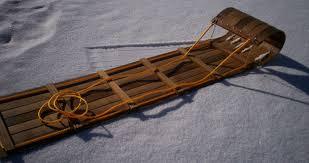
photo of a toboggan

Today, people associate ice skating with sports and recreation.  But, for a long time in human history, skates were essential for winter travel.  They date back at least 3,000 years to around the end of the Bronze Age, when the people of Eastern Europe and Russia created skates out of animals’ shin bones (most likely cow and horse).  These bone skates lied flat to the ice so the wearer could glide in all directions.  However, control and speed were somewhat lacking.

But a dramatic change happened in the 13th century when the metal blade was introduced.  Two hundred years later, better control and faster speed were achieved when sturdier bindings were added.  Rapid travel was now possible during the cold winter months.  In the 15th century Netherlands, for example, the canals that were built to power water mills and irrigate farmland in the summer would transform into frozen highways for thousands of travelers in the winter.

Today, we no longer need to depend on nature because temperature-controlled ice rinks are at our disposal all year round.  But, whether the ice is natural or man-made, scientists are still not 100% sure how ice skating is possible.  There are multiple theories.  One is that the extreme pressure of the skate blade on the ice creates a high viscosity bead of melt water that the skate glides on.  Another theory says that the uppermost layer of ice is made up of an extremely thin (10-20 nanometers) layer of freely moving water molecules.  The skate blade glides across this quasi-liquid layer.  It’s very similar to the support provided by the surface tension of the top layer of liquid water.  Whatever the reason that makes skating possible, people just know that they really like it.  Skating is an extremely popular activity, especially as it relates to sports.

Athletes can prefer different temperatures and textures of ice.  “Slow ice” is warmer, softer, and rougher, and figure skaters prefer it for pushing off and landing complicated jumps.  In contrast, hockey players prefer “fast ice.”  It’s colder, harder, and smoother, which makes skating faster, passing easier, and puck behavior more predictable.

And if you could equate a hockey player to any creature in the animal world, it would be a penguin.  These experts of ice travel prefer “fast ice.”  This is because they use tobogganing as a primary way to get around.  The toboggan, a thin, flat, flexible piece of wood, has been used for centuries by humans as a transporter of supplies as well as for leisure fun.  But, in the case of penguins, they themselves are the toboggan!  Walking for penguins is slow-going.  They can only waddle along at about 1.5 mph.  With tobogganing, penguins can move faster with no risk of falling.  On horizontal ice, they slide around on their bellies, using their flippers and feet for propulsion, steering, and braking.  But when they find a nice downslope…stand back!  Like tiny tuxedoed torpedoes, penguins can slide down an icy hill at surprising speeds.
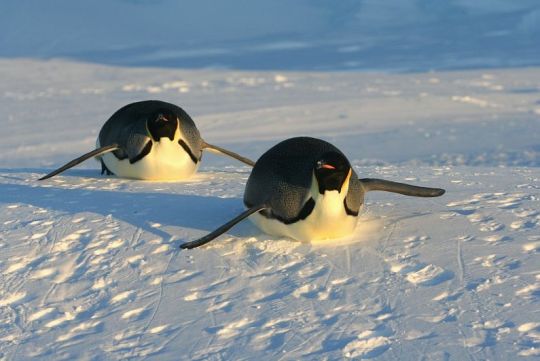
two penguins sliding on snow

While penguins love to take advantage of ice’s gliding properties, polar bears have developed adaptations that keep slipping and sliding to a minimum.  The sole of a polar bear’s foot has thick, black pads that are covered with small, soft dermal bumps (also called papillae) that create friction between their foot and the ice.  Long hairs growing between the pads and toes, plus curved claws, also provide traction.  They are the only bears that walk in a plantigrade, heel-to-toe, manner. Their gait is almost human-like, with the one slight difference that their toes point inward to avoid slipping.  Their forepaws are also similar in structure to a human hand, so much so that it would be difficult for the average person to tell the difference between the bones of a polar bear paw and the bones of a human hand.  This round, flattened paw shape acts like a snowshoe that spreads out their weight as they move over the snow.

Polar bears aren’t the only animals adapted to walking on top of snow.

Thousands of years ago, large regions of the world were snowbound for much of the year, including North America. This meant animals needed to adapt to their environments; some of these animals are still around today, like the snowshoe hare, whose wide, furry, large-toed feet—larger than any other rabbit species— allowed them to move easily over deep snow.
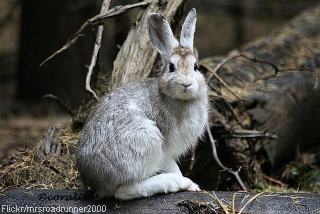
photo of a snowshoe hare

Like the hare, the ptarmigan, a partridge-like grouse, also lives in North America and has its own set of built-in snowshoes.  As winter approaches, its feet become more feathery and they grow longer claws.  These seasonal changes increase the weight-bearing surface of their feet by four times and reduce sinking in the snow by half.
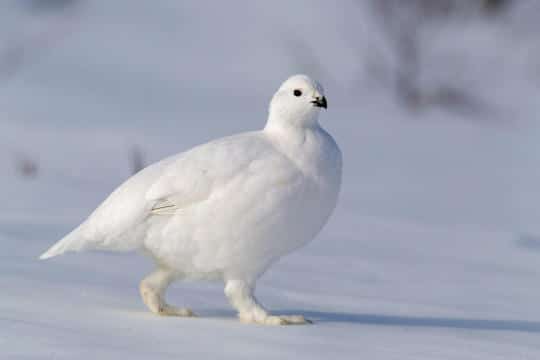
photo of a ptarmigan on snow

Caribou (also known as reindeer in Russia and Scandinavia) go through a similar transformation with the coming of winter.  Their sharp-edged hooves grow longer, their foot pads get tougher, and extra fur grows between and around their toes.  These changes transform their already wide, flat feet into the ideal snowshoe for a frosty trek.  For animals such as these, developing coping strategies for cold weather transport are essential to surviving and thriving in a frozen landscape.
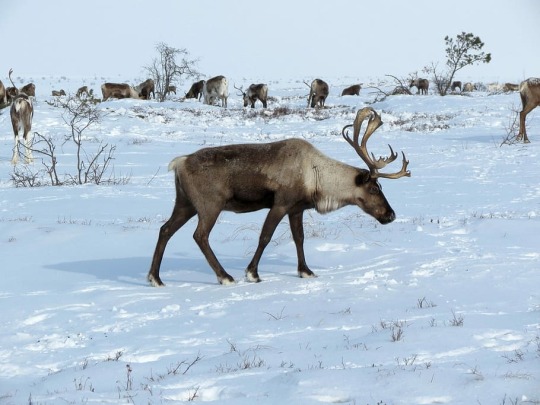
caribou in snow

So this winter, if you just happen to be strolling along admiring the Narnia-esque view around you, and you fail to notice that patch of ice at your feet, you may end up flat on your back, staring up at the sky, wondering “Why me?” but don’t despair.  Instead, take comfort in the fact that even penguins, the masters of the ice, slip and take spectacular spills from time to time. At least you’re in good company!

Shelby Wyzykowski is a Gallery Experience Presenter in CMNH’s Life Long Learning Department. Museum staff, volunteers, and interns are encouraged to blog about their unique experiences and knowledge gained from working at the museum.
Related Content

Snowstorm in a Jar Activity

Make Blubber Gloves Activity

Cookie Excavation Activity

Filed Under: Blog Tagged With: HATW, Museum from Home, Super Science Days

December 14, 2020 by wpengine

Pork, Peppermint, and Prosperity

The Peppermint Pig

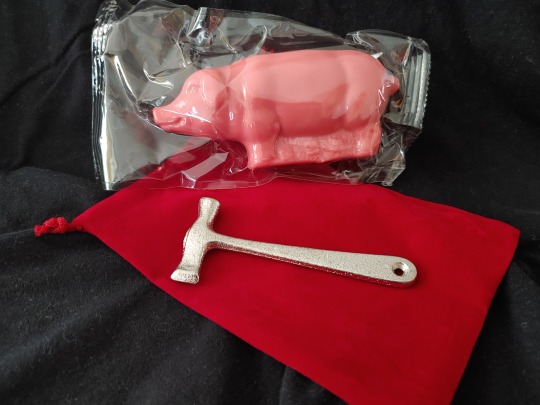
pink peppermint pig with red bag and small silver hammer

On Christmas Day, after we’ve had dinner and dessert and all sit around the table chatting, my family observes one of my favorite holiday traditions. This tradition involves a red velvet pouch, a tiny metal hammer, and a piece of bright pink, peppermint-flavored hard candy in the shape of… a pig!

The peppermint candy pig is placed in the velvet pouch and we pass it around the table, every person giving it a solid whack with the little hammer and sharing a fond story or memory from the past year. After the pig is broken into small enough pieces, we each eat a piece of the candy, and continue enjoying each other’s company. Some years, the whole family is together—gathered from far away—and the pig is broken quite quickly. Other years, when we can’t all be together, it may take the smaller group longer to break the pig; but that just gives each of us the chance to share more memories.

This tradition is not unique to my family, but I haven’t met anyone outside my family that also observes this custom! It originated during the Victorian Era (1837-1901) in Saratoga Springs, New York. Pigs were honored in Victorian holiday celebrations as symbols of health, prosperity, and happiness. Peppermint oil has a long history of use in medicine, as it helps calm an upset stomach, and has been a popular candy flavoring for a very long time – in fact, no one is entirely sure when peppermint candy was first developed!

Believe it or not, breaking the peppermint pig is not the only pig-themed custom my family observes!

Pork and Sauerkraut

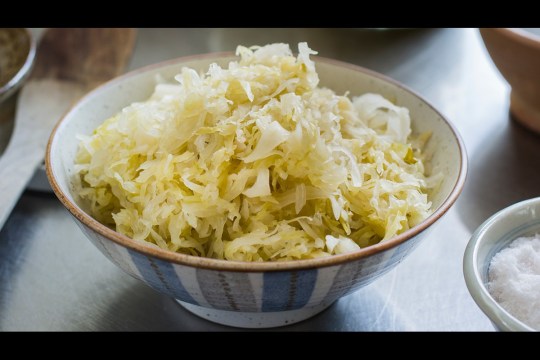
bowl of sauerkraut

My family is mostly German, though we are also Austrian and Slovakian. One German custom we observe during the holiday season is eating pork and sauerkraut, a dish made from fermented cabbage, for our New Year’s Day dinner. This is another favorite tradition of mine, and one of my favorite meals, though I didn’t like sauerkraut when I was a kid! Now I love pork and sauerkraut and look forward to the smell of it filling my house on New Year’s Day as it slowly cooks all day long.

Germans eat pork and sauerkraut for New Year’s because it’s meant to be lucky, and we want to start a new year off with some luck. This tradition came to the United States with German immigrants in the 17th and 18th centuries. Many of these immigrants settled in Pennsylvania and their descendants are now known as Pennsylvania Dutch (Dutch is derived from Deutsch which means German in the German language). My family is not Pennsylvania Dutch, though we do originate from the same part of the state.

Pigs are lucky animals because they root forward when looking for food, much like we want to look forward as the year begins. For this reason, we don’t eat any chicken or turkey on New Year’s Day; these birds scratch their feet behind them, and we don’t want to move backward, we want to move forward!

Sauerkraut is a lucky food for a few reasons. The long strands of cabbage can represent a long life and the green color of the cabbage (before it’s been fermented) represents money. Sauerkraut is also a great health food: it is a source of vitamins C and K, calcium, and magnesium, it’s low in calories, and it promotes good gut health! This might be another reason it’s considered lucky–people probably felt pretty good after eating it!

Guess what! There’s still one more pig-themed tradition I’d like to share!

Glücksschwein (the Good Luck Pig)

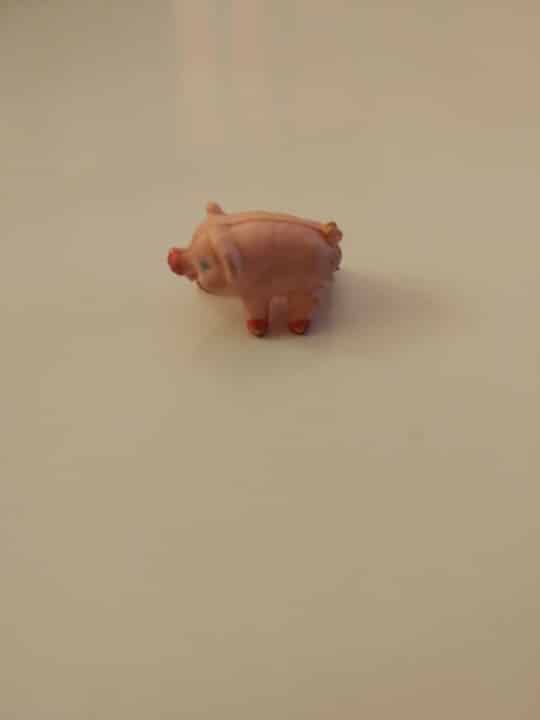
small rubber pig

I have a small rubber pig that I have had since I was very young. For a very long time, I stuck it to the wall by my bedroom door, but now I have it sitting safely in a box of memories. This pig is my good luck pig, or Glücksschwein in German. Pigs are kind of similar to a four-leaf clover in representing good luck!

I’ve mentioned a few ways that pigs are related to luck, but I haven’t shared one major reason why pigs are considered lucky. Pigs are related to farming and livestock, and therefore wealth and prosperity! In Germany, pigs made from marzipan, a sweet made of sugar or honey and almond meal, might be given out to eat for New Years.

We don’t eat marzipan pigs for New Years, but instead I have my little glücksbringer—good-luck bringer, or lucky charm—to bring me luck and prosperity!

Jo Tauber is the Gallery Experience Coordinator in CMNH’s Life Long Learning Department. Museum staff, volunteers, and interns are encouraged to blog about their unique experiences and knowledge gained from working at the museum.
Related Content

The Yule Goat

Meet the Living Collection: Russian Tortoise named Natasha

Jurassic Days: Quetzalcoatlus northropi

Filed Under: Blog Tagged With: Educator Resources, HATW, Museum from Home, Super Science Days

October 16, 2020 by wpengine

Superstitions and Black Cats

The number 13, four-leaf clovers, walking under an open ladder, stepping on a crack in the sidewalk, and opening an umbrella inside are just a few of the superstitions that I learned about as a child—either from my own family or from friends. As an adult, it might be easy to laugh off superstitions or look at data to “disprove” them, but there is no denying that superstitions are present in cultures across the globe. And they have a real impact on the way people experience the world.

A study published in the International Journal of Psychology and Behavioral Sciences describes the possible origin of superstitions as a way of creating the perception of “having control over outer conditions” (1). This means that superstitions are used to create understanding and exert control over aspects of our lives that we may have little to no control over, like the weather. Additionally, in an interview with the British Psychological Society psychologist Stuart Vyse explains there is evidence that performance in skills-based activities may be improved when “luck-enhancing” superstitions are employed (2). His statement suggests that superstitious behavior has a psychological benefit or reduction in anxiety for the individual.

Now that we have a small understanding of the origin and impact of superstitions, I’d like to look specifically at one object of superstition that often appears around this time of year: black cats.

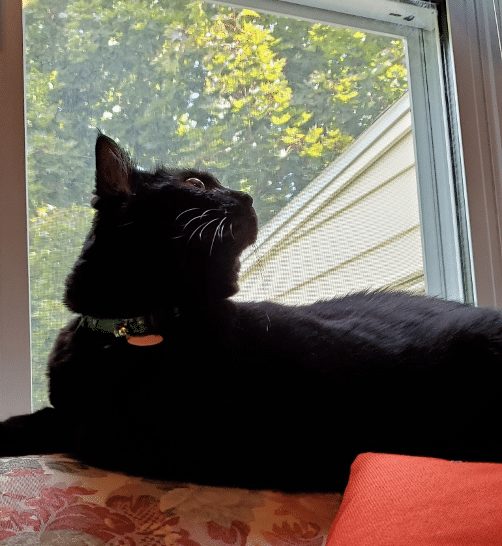
Figure 1: Black cat in front of a window. Credit: @daykittymeow on Instagram, used with permission.

Before taking the time to learn more about the superstitious history of black cats, I thought that they were only considered a sign of bad luck, but I quickly discovered that this is not the case! Black cats appear in the folklore of many more cultures as both good and bad omens. In some European folklore, black cats are considered common companions of witches and bringers of misfortune if they happened to cross your path. In contrast, Welsh folklore depicts black cats would bring luck to a home and could even be a reliable weather predictor (3).

Did you know of these superstitions about black cats? Are there any other superstitions or other lucky rituals that you practice?

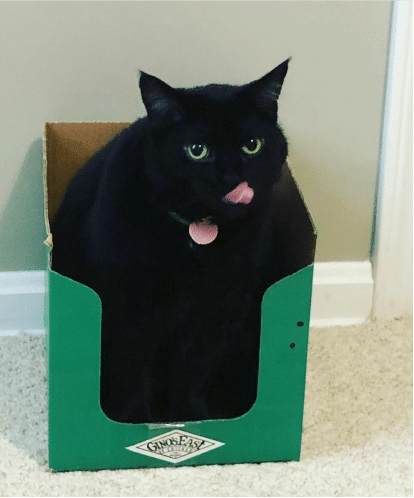
Figure 2: Black cat sitting in a green box. Credit: @daykittymeow on Instagram, used with permission.

If this post inspired you to adopt a black cat of your own, don’t forget to check out our Cat Adoption Guide!

Riley A. Riley is a Gallery Experience Presenter in CMNH’s Life Long Learning Department. Museum staff, volunteers, and interns are encouraged to blog about their unique experiences and knowledge gained from working at the museum.
Sources:

1.     Mandal, F. (2018). Superstitions: A Culturally Transmitted Human Behavior. http://article.sapub.org/10.5923.j.ijpbs.20180804.02.html

2.     Fradera, A. (2016, November). The everyday magic of superstition. https://thepsychologist.bps.org.uk/volume-29/november-2016/everyday-magic-superstition

3.      Owen, E. (2006). WELSH FOLK-LORE: A collection of the folk-tales and legends of north wales. Project Gutenberg. http://www.gutenberg.org/ebooks/20096

Related Content

The Jack-o’-Lantern’s Origins

How-to Make Hatch-able Dinosaur Eggs! 

Scientist Takeover: Measuring Leaves

Filed Under: Blog Tagged With: booseum, Educator Resources, Educators, Riley A. Riley, Super Science Days

October 14, 2020 by wpengine

The Jack-O-Lantern’s Origins

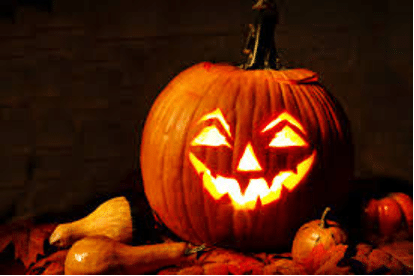
It’s dark out. The wind blows through the branches, bringing a chill that isn’t necessarily due to the temperature. Suddenly you find yourself hyper aware of every sound around you, and you start as you realize you see a pair of eyes glowing at you…until you realize it’s a jack-o-lantern. Happy Halloween, indeed.

You may be wonder how jack-o-lanterns became so popular, or why we carve them out of pumpkins. To know the origins of jack-o-lanterns, we have to go all the way back across the Atlantic to the fens, or marshes, of rural Ireland. In the early 1600’s, the legend of a shadowy figure began to arise known as Stingy Jack (Jack the Smith, Drunk Jack, Flakey Jack, and other names are also in the folklore and can be used interchangeably).

The most popular version of the tale involves Jack first tricking the Devil into changing his form, then trapping him in his transfigured state. Jack then offered the Devil out of the deal in exchange for not taking his soul for a long time. Some longer versions of the story have the Devil being tricked 3 or 4 different times.

Eventually though, time caught up with Jack and he was unable to trick the Devil again. Stingy Jack was sentenced to roam the Earth for all eternity with nothing but an ember given to him by the Devil to light his way.

There is also other folklore from this time surrounding what’s known as ignis fatuus, or false fire. False fire is an actual occurrence— scientifically, ignis fatuss, is known as marsh gas and occurs during the spontaneous ignition of methane created by decaying plant matter in marshes or swampy areas. These two legends began to intertwine—when many people in the moors of the British Isles saw the naturally occurring marsh gas, they attributed to Stingy Jack.

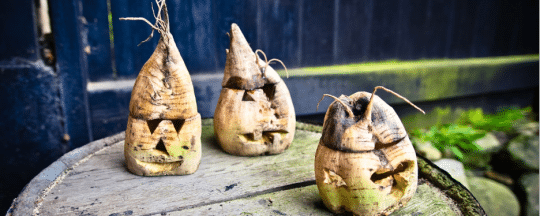
turnips carved into jack-o'-lanterns

Many people in those areas also continued the Gaelic celebration of Samhain, with its rituals of going from house to house in search of food and drink (these are the origins Trick or Treating). As it was naturally dark in pre-industrial revolution Ireland, many would carve turnips, potatoes or other root vegetables and add coals or candles to create makeshift lanterns to help guide those celebrating. Occasionally these would be carved with faces, a tradition that continues to this day in Britain and Ireland.

The waves of immigrants created by the Great Potato Famine of the 1840’s. As with most immigrants also had a role in traditional jack-o-lanterns. They arrived in America to celebrate Halloween and were able to find a very particular new world crop that was much larger and easier to carve than their root vegetables of home; the winter squash, the most famous of which is a pumpkin. (There are also several French recipes for a pumpkin soup that suggest carving pumpkins for decoration as early as the 1760’s).

Pumpkins themselves were introduced by the Indigenous Peoples to Europeans as early as the 1600’s, when tales of Jack first began to be told. Several cultures mixed together in celebration of Halloween, creating the iconic pumpkin faces we still know today.

jack-o'-lantern

Andrew Huntley is a Gallery Experience Presenter in CMNH’s Lifelong Learning Department. Museum staff, volunteers, and interns are encouraged to blog about their unique experiences and knowledge gained from working at the museum.
Related Content

Jack-o’-Lantern Chromatography

Booseum: Vampires!

Is This What They Call Overkill? Toxin and Venom in the Herp World

Filed Under: Blog Tagged With: booseum, halloween, Super Science Days

October 13, 2020 by wpengine

Booseum: Vampires!

Vampires, creatures of folklore that feed on the lifeforce of the living, have long fascinated us. Many cultures have their own version of how vampires behave and are repelled by many different things. Modern vampires in movies, TV shows, and books have some similar main characteristics—let’s explore some interesting or common beliefs about vampires and where they may have come from.

Garlic

It’s a common belief that garlic repels vampires, but did you know that some of that belief is grounded in fact? Garlic, specifically the chemical compound allicin inside garlic, is a powerful antibiotic. Some European beliefs around vampires stated they were created by a disease of the blood, so a powerful antibiotic would “kill” a vampire.

An actual disorder of the blood, porphyria, may also be an origin for this belief: porphyria can cause those who suffer from it to look pale and even make their teeth look bigger because their gums shrink. Garlic makes these symptoms worse, so people with porphyria would often avoid it—making others around them believe they were vampires.

Mirrors

Vampires avoiding mirrors is a more recent belief— the first known reference to this is from Bram Stoker’s Dracula, which was published in 1897. But why wouldn’t a vampire show a reflection?

There are a few reasons that this belief may exist. Mirrors were traditionally backed with silver (and some still are today). Silver was commonly believed to repel evil spirits, possibly because it has antimicrobial properties; so, much like garlic, the healing properties may be what was supposed to scare off a vampire.

Another reason that suspected vampires may have avoided mirrors is because of the changes to their appearance from diseases commonly confused with vampirism, porphyria and rabies. People afflicted with these diseases may have avoided looking in a mirror for that reason, causing others to assume that “vampires” avoid mirrors.

Counting

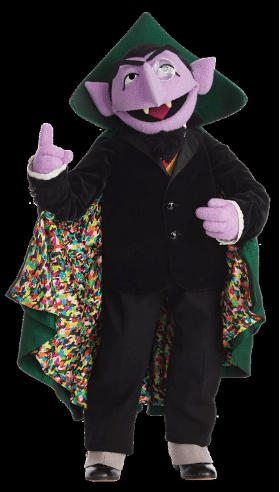
Why does Count von Count, a vampire, teach us how to count on Sesame Street? It comes from a European belief that vampires are compelled to count spilled seeds or grains. Some Slavic coastal towns also believed that vampires would count the holes in a fishing net. It was common practice to scatter seeds outside the entrances to a home (or drape fishing nets over them). Some Chinese myths say that a vampire must count every grain if they come across a bag of rice. A vampire would stop to count, delaying them until sun-up, and we all know that vampires don’t do well in sunlight.

A common seed used was mustard seed, which was also known as eye of newt!

Count von Count from Sesame Street

Now that we’ve learned a little about fictional vampires, let’s explore some real-world vampires!

Vampire Ground Finch

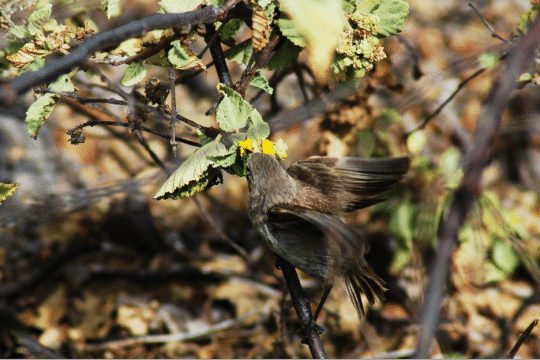
The Galapagos Islands are home to many unique and unusual species, so the vampire ground finch fits in well. This species of sharp-beaked finch lives on Darwin and Wolf Islands, and like most other finches it feeds primarily on seeds. However, seeds can sometimes be a limited resource, so vampire ground finches supplement their diet by eating small amounts of nutrient-rich blood from Nazca or blue-footed boobies.

It is believed that this behavior developed because the finches were first eating ticks from the bodies of other birds, which steadily transitioned into them eating small amounts of blood. Believe it or not, the other birds don’t seem to mind the vampire ground finches doing this, and don’t try to stop them!

vampire ground finch on a branch

Vampire Bats

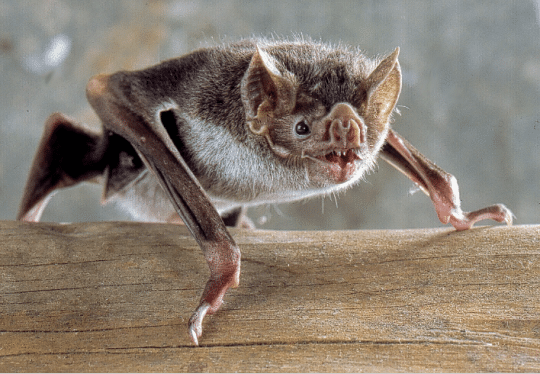
There are three species of bats that survive by exclusively feeding on the blood of other animals- the common vampire bat, the hairy-legged vampire bat, and the white-winged vampire bat. All three species are found in Central and South America.

Like other bats, they hunt at night and rely on echolocation to find their prey, which is typically sleeping livestock, like cows. Vampire bats use their sharp teeth to make a little cut and then lap up the blood. It doesn’t hurt the animal they’re feeding from, in fact most animals don’t even notice it happening and stay asleep! These bats occasionally try to feed off humans, but it is very rare.

vampire bat

Mosquitos & Ticks

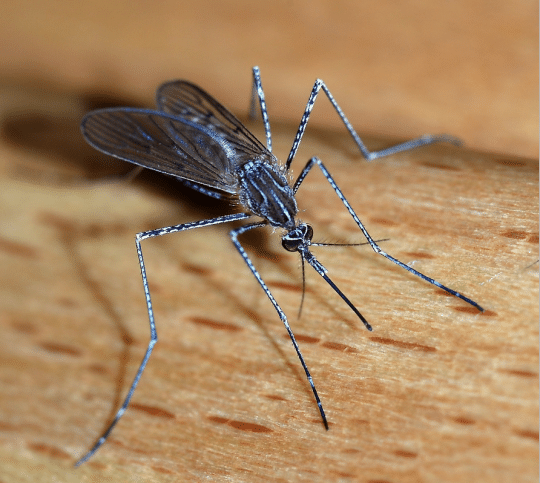
We’ve all felt the aftermath of an itchy mosquito bite! Mosquitos feed on blood from humans and other animals, but it’s only female mosquitos that eat blood. Female mosquitos need the protein from blood to produce eggs, and male mosquitos don’t so they feed on plant nectar.

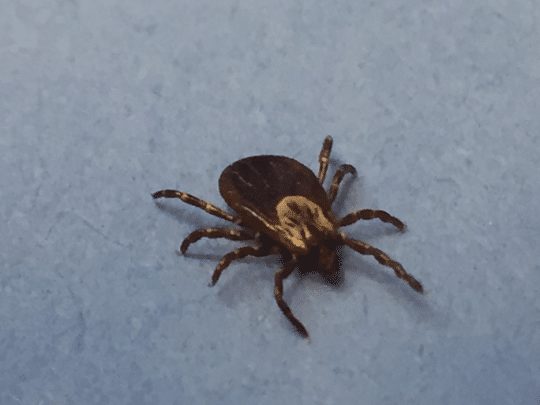
Ticks drink the blood of both warm and cold-blooded animals, latching on and feeding slowly over several days. They can fast for a long time between meals, but do need to feed on blood as they progress through the stages of their life cycle.

Neither mosquitos nor ticks (or any other blood eating insects) eat enough blood to be dangerous to humans. The biggest danger is that these insects can carry diseases, so make sure to properly care for and clean any insect bites, and see a doctor if necessary!

close up of a tick
close up of a mosquito

Jo Tauber is the Gallery Experience Coordinator for CMNH’s Life Long Learning Department, as well as the official Registrar for the Living Collection. Museum staff, volunteers, and interns are encouraged to blog about their unique experiences and knowledge gained from working at the museum.
Related Content

Booseum: Spooky Coloring Pages

Jurassic Days: Cookie Excavation

Scientist Takeover Activity: DIY Field Kit

Filed Under: Blog Tagged With: booseum, Educator Resources, Educators, halloween, Jo Tauber, Super Science Days

October 13, 2020 by wpengine

Is this what they call overkill? Toxin and venom in the herp world

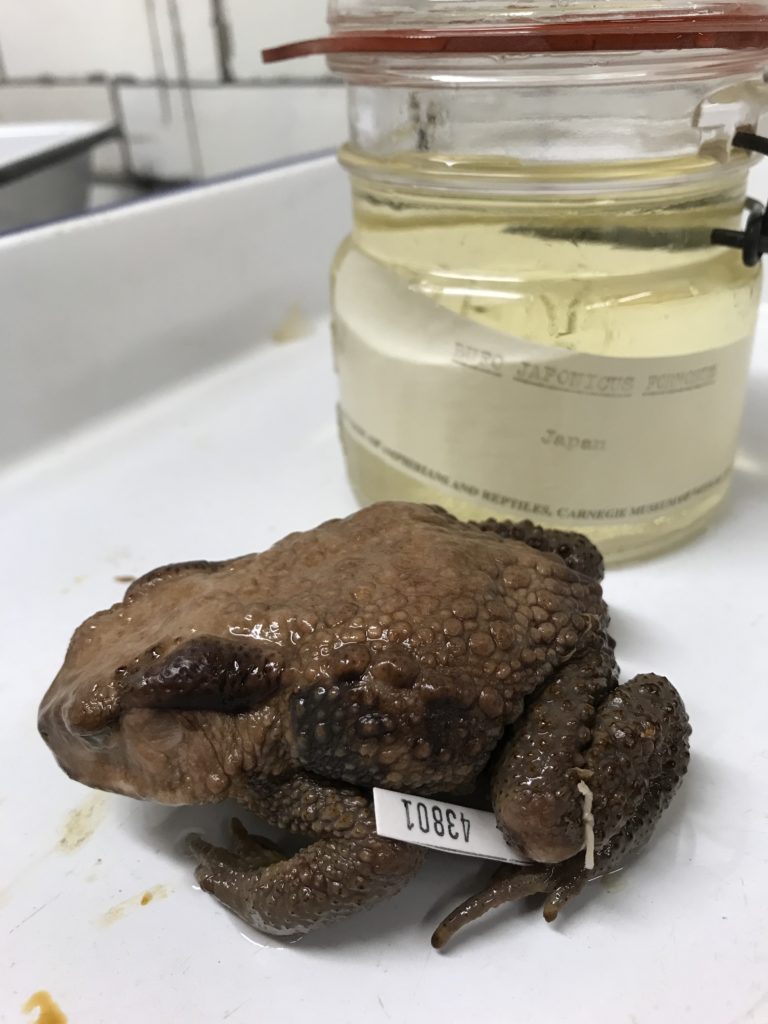
preserved frog specimen
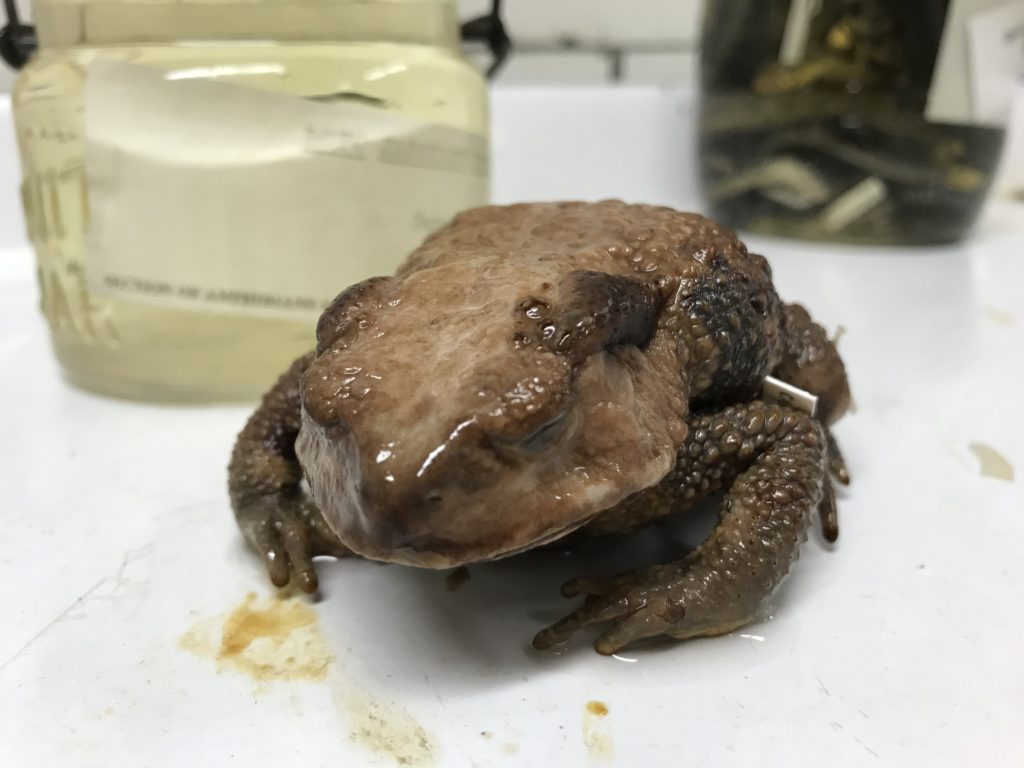
Figure 1. Bufo japonicus. The large glands behind the eyes are called parotid glands, and are a source of toxins in toads. Additionally, all of the bumps you see all over the body are glands that produce skin toxins. Image credit: Stevie Kennedy-Gold.

I recently participated in a Zoom event for Museum members focused on toxins and venom in the natural world. Mason Heberling, Assistant Curator of Botany, and Ainsley Seago, Associate Curator of Invertebrate Zoology, spoke about how the organisms they study produce toxins, and how these chemicals impact their environments and other organisms around them. As an ecologist focused on impacts of climate and land use change, I don’t consider myself an expert on toxins and venoms in amphibians and reptiles, but researching my portion of the joint presentation reminded me once again why herps are the best.

First, a refresher: toxins are poisons, and they have to be consumed or encountered (touched) by an organism to do harm. For example, many frogs produce toxins in their skin, but you would have to either consume that frog or touch its skin for the toxin to do you any harm. Most frogs don’t produce toxins strong enough to hurt humans, though a few notable exceptions exist. Some species of poison dart frogs have skin toxins strong enough that if you touched them and then touched your eyes, nose, or mouth, or if you had a cut on your hand, you could indeed become very ill and perhaps die. Venom, on the other hand, is a toxin that one organism can inject into another. Typically, we think of snakes when we think of injectable toxins. Many snake species have venom glands that produce toxins, and they can forcibly inject that toxin into their prey. The action, which can occur in a flash, involves the use of fangs to puncture the skin, and muscles surrounding the venom gland to force the toxin out along the fang and into the other organism.

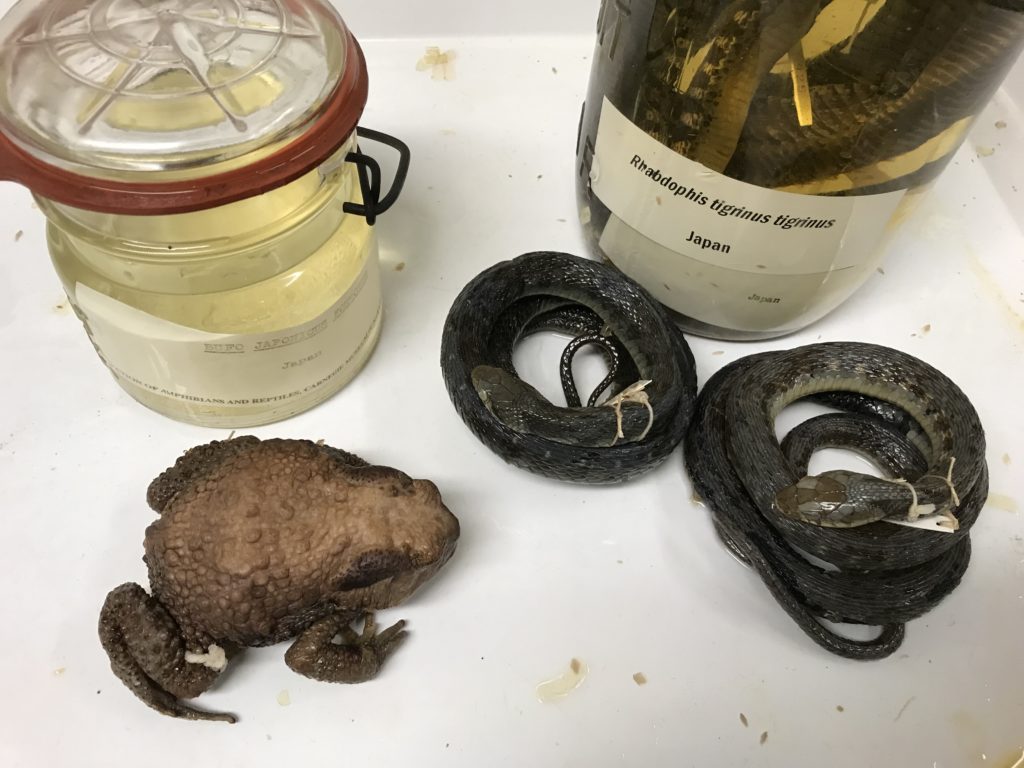
preserved frog specimen, two preserved snake specimens, and two specimen jars
Figure 2. Bufo japonicus and Rhabdophis tigrinus. Rhabdophis are one of the only snakes that are both venomous and toxic. They sequester toxins from the toads they eat into a gland called the nuchal crest. Image credit: Stevie Kennedy-Gold.

Most people tend to think of amphibians as toxic and snakes as venomous. This is true, but it turns out that snakes aren’t the only venomous reptiles, and amazingly two frogs are known to be venomous. Gila monsters (Helodermatidae) and water monitors (Varanidae) produce venom, but their venom glands are in their lower jaws (unlike snakes whose venom glands are in their upper jaws), and they lack the muscles to forcibly inject that toxin the way snakes do. Instead, the act of chewing on their prey causes their jaw motion to work the venom toward their grooved teeth, which then enables the venom to be injected through the bite wound. Using a very different delivery system, two frogs in the family Hylidae (tree frogs from the Americas) have very spiny skulls. Their skin produces toxins, and by “head-butting” another organism, they can effectively inject that toxin into another organism. This unusual delivery system technically makes them both toxic (the toxin can be transferred to you if you touch their skin) and venomous (they can inject that toxin into you).

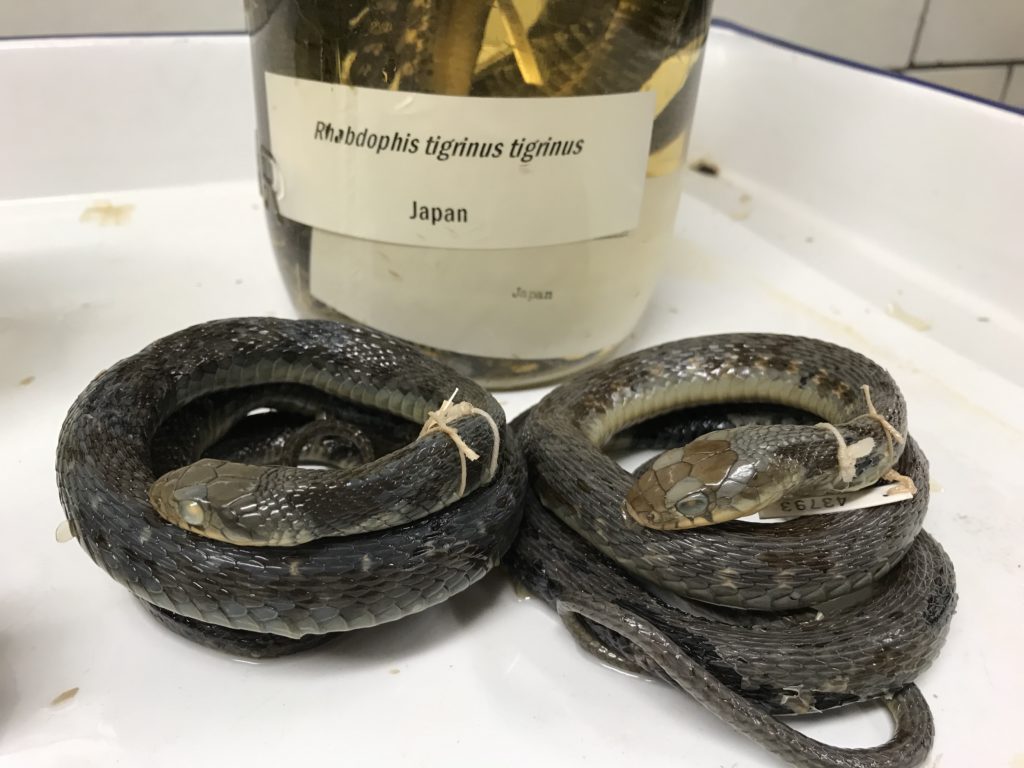
two preserved snake specimens and one specimen jar
Figure 3. Rhabdophis tigrinus. If you look closely at the back of the neck just behind the head on the snake on the left, you can see a slightly raised bit of skin, which is the nuchal crest used to store toxins sequestered from toads. Image credit: Stevie Kennedy-Gold.

One of the most surprising things I learned is that there are snakes that are both toxic and venomous, and these are snakes I see frequently in the field. The genus Rhabdophis is common across South and Southeast Asia, and have long been known to be venomous. What I didn’t know is that in addition to making their own venom, they sequester toxins from their prey, and store it in a gland on the back of their neck called a nuchal crest. Rhabdophis feed on toads, which are toxic, and the snakes are able to sequester that toxin, rather than being adversely affected by it. Interestingly, scientists have shown that Rhabdophis tigrinus are toxic only where their range overlaps with Bufo japonicus, a highly toxic toad—so on some islands of Japan the snakes are toxic, while on other islands they are not.

preserved toad specimen
Figure 4. Bufo japonicus with its many toxin glands! Image credit: Stevie Kennedy-Gold.

There are numerous other interesting adaptations involving toxin and venom in the herp world—tweet me (@JenASheridan) if you want to learn more!

Jennifer Sheridan is Assistant Curator in the Section of Amphibians and Reptiles at Carnegie Museum of Natural History. Museum employees are encouraged to blog about their unique experiences and knowledge gained from working at the museum.
Related Content

Early Bats: Ancient Origins of a Halloween Icon

Invasion of the Leaf Galls! 

Jumping Spiders with Sebastian 

Filed Under: Blog Tagged With: booseum, halloween, Jennifer Sheridan, Science News, Super Science Days

  • « Go to Previous Page
  • Page 1
  • Page 2
  • Page 3
  • Page 4
  • Page 5
  • Interim pages omitted …
  • Page 9
  • Go to Next Page »

sidebar

About

  • Mission & Commitments
  • Directors Team
  • Museum History

Get Involved

  • Volunteer
  • Membership
  • Carnegie Discoverers
  • Donate
  • Employment
  • Events

Bring a Group

  • Groups of 10 or More
  • Birthday Parties at the Museum
  • Field Trips

Powdermill

  • Powdermill Nature Reserve
  • Powdermill Field Trips
  • Powdermill Staff
  • Research at Powdermill

More Information

  • Image Permission Requests
  • Science Stories
  • Accessibility
  • Shopping Cart
  • Contact
  • Visitor Policies
One of the Four Carnegie Museums | © Carnegie Institute | Privacy Policy | Terms of Use | Accessibility
Rad works here logo