• Skip to primary navigation
  • Skip to main content
  • Skip to primary sidebar

Carnegie Museum of Natural History

One of the Four Carnegie Museums of Pittsburgh

  • Visit
    • Buy Tickets
    • Visitor Information
    • Exhibitions
    • Events
    • Dining at the Museum
    • Celebrate at the Museum
    • Powdermill Nature Reserve
    • Event Venue Rental
    • Gift Cards
  • Learn
    • Field Trips
    • Educator Information
    • Programs at the Museum
    • Bring the Museum to You
    • Guided Programs FAQ
    • Programs Online
    • Climate and Rural Systems Partnership
  • Research
    • Scientific Sections
    • Science Stories
    • Science Videos
    • Senior Science & Research Staff
    • Museum Library
    • Science Seminars
    • Scientific Publications
    • Specimen and Artifact Identification
  • About
    • Mission & Commitments
    • Directors Team
    • Museum History
  • Tickets
  • Give
  • Shop

Super Science Days

August 3, 2020 by wpengine

Cats: The Archeological Site!

There’s an internet meme making the rounds that says if dogs are “man’s best friend” then cats are basically weird roommates. However, if you happened to live in ancient Egypt, you’d consider cats to be tad more special—a veritable link to the divine, in fact. Cats were of great importance in matters both earthbound and spiritual in Egypt, beginning even before the First Dynasty over 5,000 years ago. Aloof but lovable, cats played the role of pet, hunter, and deity in ancient Egypt and to this day they haven’t forgotten. Believe me, cats know.

Let’s start with the practical role that cats played in Egypt. Has yours ever left you a present of a dead mouse or bird? Odds are that it has—whether you liked it or not. Ancient Egyptians valued cats for this very skill. Cats hunted the rodents that threatened to devour Egyptian grain and spread deadly diseases. Cats also hunted animals dangerous to humans like snakes and scorpions. Tomb paintings also depict cats helping their royal owners hunt elusive marsh birds for sport. Egyptians loved cats for their companionship as well—not just as hard-working professionals—and played a major role in domesticating them. Ancient Egyptian art captures cats wearing collars and lurking under chairs not so differently from the cats that keep us company today.

When cats stretched themselves out in the sun for a catnap, ancient Egyptians associated them with the sun god Ra and his daughter Bastet. Bastet was the goddess of the home, fertility, joy, and the protection of children; and she is often depicted in statuary as a woman with the head of an alert, attentive cat. Even earlier depictions of Bastet, however, show a fierce and wild lioness. Some scholars believe this shift in imagery is connected to the domestication of cats—from the Near Eastern wildcat (Felis silvestris lybica) to the modern-day housecat (Felis catus). These traits of the goddess Bastet—vigilance, protectiveness, companionship—were reflected in the characteristics of Felis catus. Ra, in his cat form, also shared these characteristics. When accompanying a deceased Egyptian to the afterlife, Ra was prepared to defend them from Apep, the serpent god of chaos and disorder.
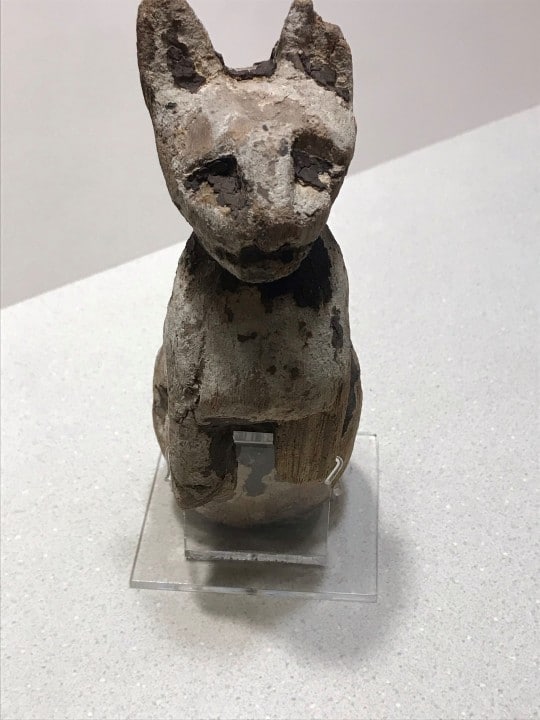
cat statuette

By the Ptolemaic period of Egyptian history (305-30 BCE), Bastet was hugely popular. Her temples drew thousands of pilgrims every year. These pilgrims would buy statuettes of the goddess or actual cat mummies to leave at the temple. This was a way for the pilgrims to commemorate their visit and to venerate Bastet. When the number of these statues and cat mummies grew too large, the priests of the temple would dig special trenches and bury them to make room for more. About two thousand years later in the nineteenth century, archeologists would begin to unearth these trenches and discover more cat mummies and Bastet statuary than they knew what to do with. Unfortunately, some English excavators even sent the cat mummies they discovered back to Britain…to be ground into fertilizer!
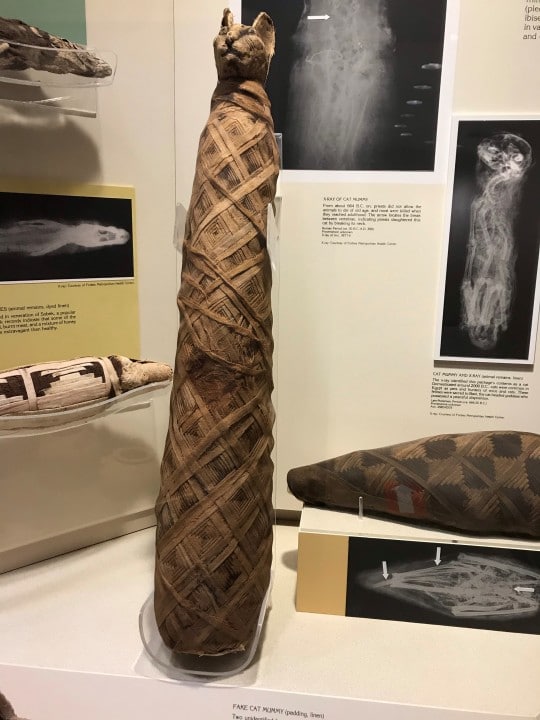
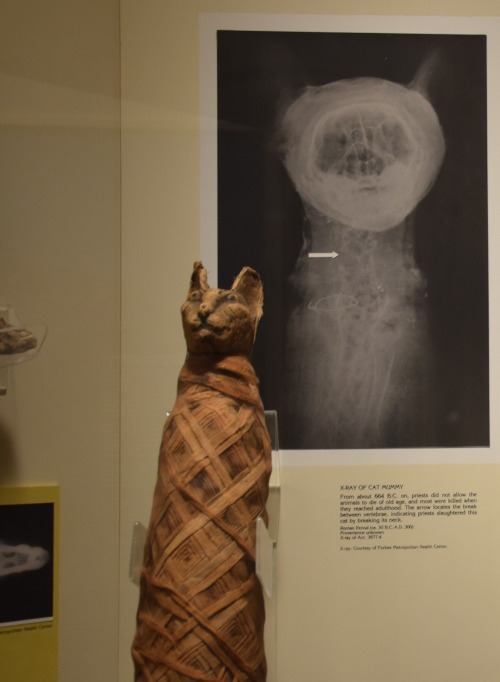
cat mummy in museum display

Millions of cats were mummified in ancient Egypt either to be buried alongside their owner or to be sold to pilgrims devoted to Bastet. Cat mummification in the name of Bastet became an industry because many temples—depending on the whim of pharaonic decree—had to sustain themselves financially on their own. Sometimes a temple might sell a pilgrim a “fake” cat mummy! And it’s one of these curiosities that the Carnegie Museum of Natural History has on display in Walton Hall of Ancient Egypt. While it looks like a standard-issue cat mummy (Roman period, c. 30 BCE), an x-ray led to the discovery that the remains belong to another undetermined animal.
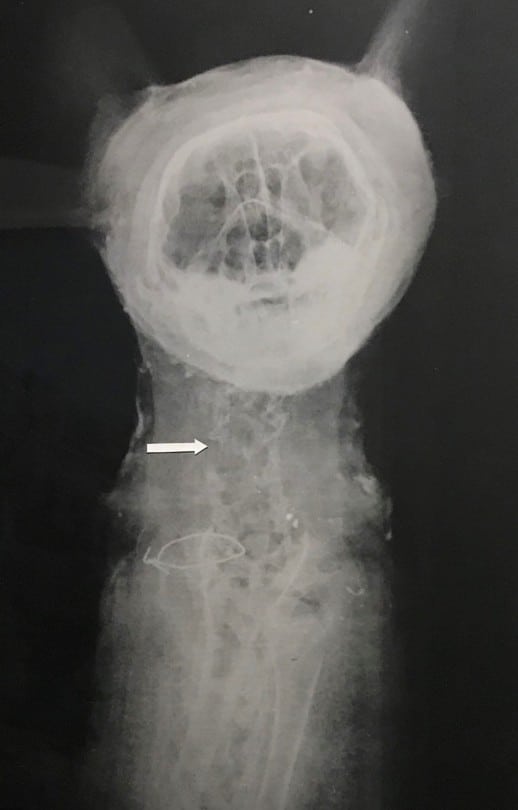
x-ray of cat mummy

Cats played a central role in the daily life and religious practices of ancient Egyptians. They kept their humans safe from snakes and scorpions and Egypt’s grain supply safe from rats and mice. Cats even came to represent in animal form some of Egypt’s most important gods. So, the next time your cat ignores you and wanders off, know that one of its ancestors quite possibly did the same thing to a pharaoh.

Nicholas Sauer is a Gallery Experiences Presenter and Natural History Interpreter at the Carnegie Museum of Natural History. Museum staff, volunteers, and interns are encouraged to blog about their unique experiences and knowledge gained from working at the museum.

Works Cited

“Bastet.” The Louvre Museum. 2009. <https://www.louvre.fr/en/oeuvre-notices/bastet>.

Castellano, Nuria. “The Sacred and Secret Rituals in the Egyptian Book of the Dead.” National Geographic, 8 February 2018. <https://www.nationalgeographic.com/history/magazine/2016/01-02/egypt-book-of-the-dead/>.

Grimm, David. “Ancient Egyptians May Have Given Cats the Personality to Conquer the World.” Science Magazine, 19 June 2017. <https://www.sciencemag.org/news/2017/06/ancient-egyptians-may-have-given-cats-personality-conquer-world>.

Little, Becky. “Kitten Mummies.” History.com, 18 November 2018. <https://www.history.com/news/ancient-egypt-cat-mummy-discovery-scarab>.

Macdonald, James. “Why Ancient Egyptians Loved Cats So Much.” JSTOR Daily, 27 November 2018. <https://daily.jstor.org/why-ancient-egyptians-loved-cats-so-much/>.

“Paintings from the Tomb-chapel of Nebamun.” Khan Academy. 2020. <https://www.khanacademy.org/humanities/ancient-art-civilizations/egypt-art/new-kingdom/a/paintings-from-the-tomb-chapel-of-nebamun>.

Related Content

Meowfest: Museum Scavenger Hunt

Meowfest: Why do Cat Eyes Glow in the Dark?

Stuffed Animal Safari: Jaguars

Filed Under: Blog Tagged With: cats, Museum from Home, Super Science Days, Super Science Meowfest, Walton Hall of Ancient Egypt

August 3, 2020 by Kathleen

Meowfest: Museum Scavenger Hunt
cat

If you visit the museum in the near future, prowl around for these favorite feline finds!

[gravityform id=”63″ title=”false” description=”false”]

cat mummy

Filed Under: Blog Tagged With: Super Science Days, Super Science Meowfest

August 3, 2020 by Kathleen

Meowfest: Why Do Cat Eyes Glow in the Dark?

Have you ever walked around a dark corner only to be surprised by glowing eyes staring back at you? The glowing eyes of a cat at night can sometimes be shocking and even a little scary if unexpected. Ancient Egyptians believed cats captured the glow of the setting sun in their eyes and kept it safe until morning. Ancient Greeks believed there was a light source inside the eyes that was like a gleaming fire. We now know that cat’s eyes appear to glow because they, along with the eyes of many other nocturnal animals, reflect light.

All eyes reflect light, but some eyes have a special reflective structure called a tapetum lucidum that create the appearance of glowing at night. The tapetum lucidum (Latin for “shining layer”) is essentially a tiny mirror in the back of many types of nocturnal animals’ eyeballs. It basically helps these animals see super-well at night. It is also what causes the glowing eye phenomenon known as “eyeshine.”

How Does It Work?

When light enters a cat’s eye, it can take a few routes. Some of the light directly hits the retina, a layer at the back of the eyeball containing cells that are sensitive to light. These photoreceptor cells trigger nerve impulses that pass via the optic nerve to the brain, where a visual image is formed.

Some of the light passes through or around the retina and hits the tapetum lucidum. The tapetum lucidum reflects visible light back through the retina, increasing the light available to the photoreceptors. This allows cats to see better in the dark than humans.

In the last route, some of the light that bounces off the tapetum lucidum, misses the retina, and bounces back out of the cat’s eyes. This reflected light, or eyeshine, is what we see when a cat’s eyes appear to be glowing.

Do Humans Have a Tapetum Lucidum?

Though our eyes have much in common with cats’ eyes, humans do not have this tapetum lucidum layer. If you shine a flashlight in a person’s eyes at night, you don’t see any sort of reflection.

The flash on a camera is bright enough, however, to cause a reflection off of the retina itself. This is the infamous “red-eye” in photographs. What you see is the red color from the blood vessels nourishing the eye.

Activity

In this two-part activity, you will be able to see how the tapetum lucidum works and then simulate how this reflective layer helps cats see well at night.

Materials Needed

  • Flashlight
  • Mirror (or a shiny/reflective surface)
  • Thick paper or cardboard
  • Pencil (or an object you can poke a hole with) REMEMBER TO ASK A GROWN-UP FOR HELP!

Directions

  1. Make about a hole in your paper or cardboard using a pencil or pen. It does not have to be perfect! If using a thinner paper, try folding it a few times before making the hole (the harder it is to see light through, the better!).
  2. Hold the cardboard about 6 inches away from a blank wall and shine the flashlight through the hole toward the wall.
  3. Without looking directly into the light, glance at the side of the cardboard facing the wall. Take note of what you see.
  4. Repeat steps 2 and 3 while using your mirror instead of a wall. Again, avoid looking directly into the light or its reflection in the mirror! Note the difference in light on the side of the cardboard facing the mirror.

Imagine that the cardboard is a retina and the mirror is a reflective layer like the tapetum lucidum. What happened to the “retina” when the mirror was used instead of the wall?

This experiment shows how the amount of light from a singular light source is doubled when a reflective layer is present. Thus, it shows us how having a reflective layer—like a tapetum lucidum—increases the amount of light information available.

Materials Needed

  • Flashlight
  • Clear Glass container (jar or cup work well!)
  • Water

Directions

1. Place your glass container about 6 inches away from a wall.

2. Shine your flashlight through the glass toward the wall and observe how the light appears on the wall.

3. Fill the container with water and place in the same spot as before.

4. Shine your flashlight through the glass toward the wall and observe how the light now appears on the wall.

Imagine that the wall is the retina and the water is a reflective layer like the tapetum lucidum. How does the reflective layer change the presence of light on the retina?

While this experiment is technically showing how light refraction works in water, it can also show us how having a reflective layer—like a tapetum lucidum—increases the amount of light available to cats’ eyes. Also, that the extra reflective light is not as clear as the original light input.

Filed Under: Blog Tagged With: activities, Crafts, Super Science Days, Super Science Meowfest

June 20, 2020 by Kathleen

Stuffed Animal Safari: Build Your Own Safari Tent

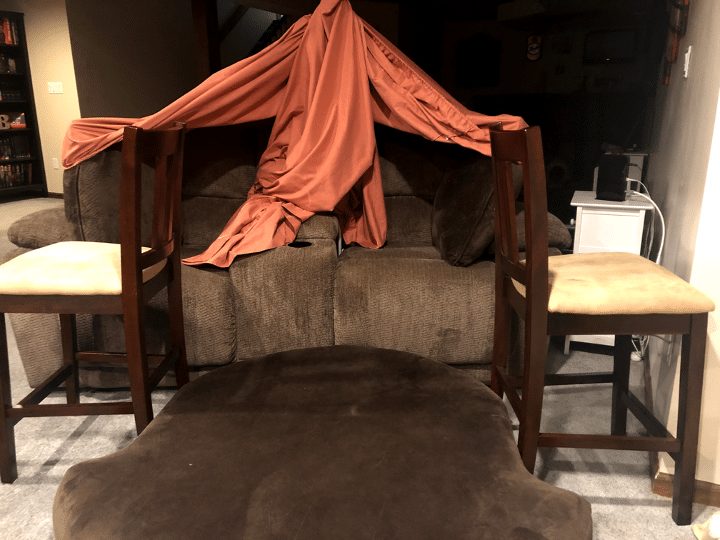
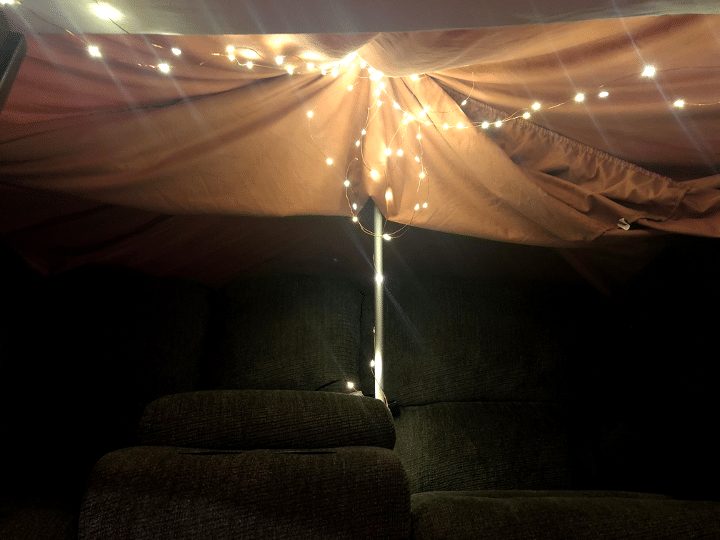
couch with blanked on it
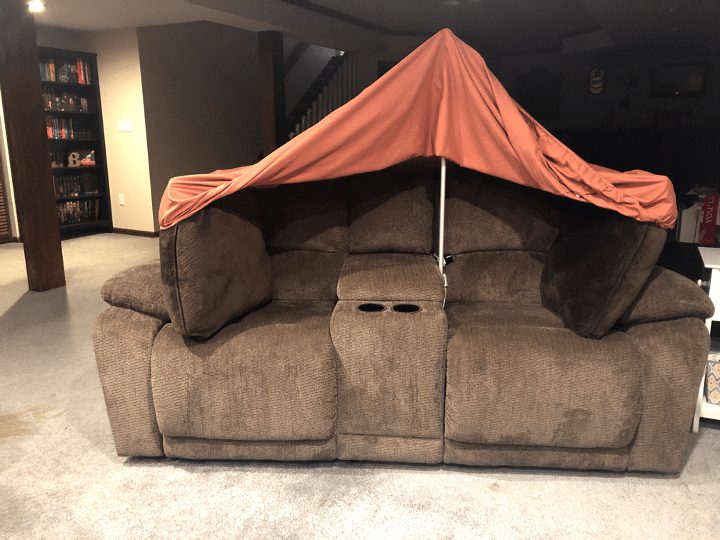
blanket supported by pole in center of couch
ties added to drape blanket on couch
string lights in blanket fort on couch
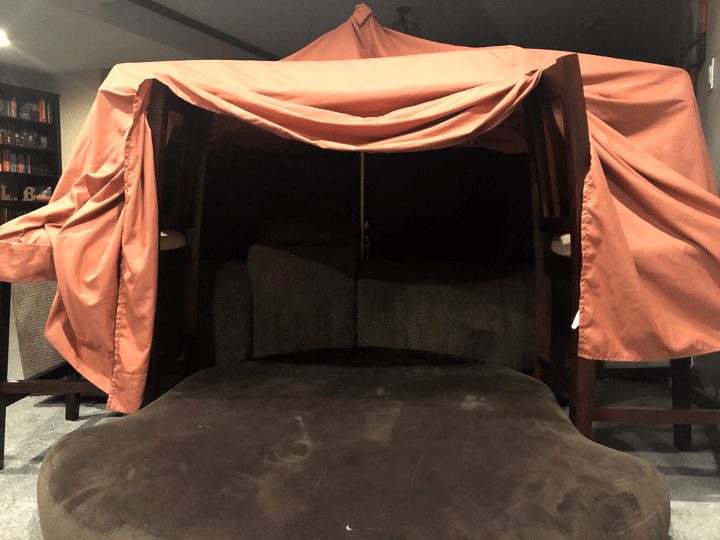
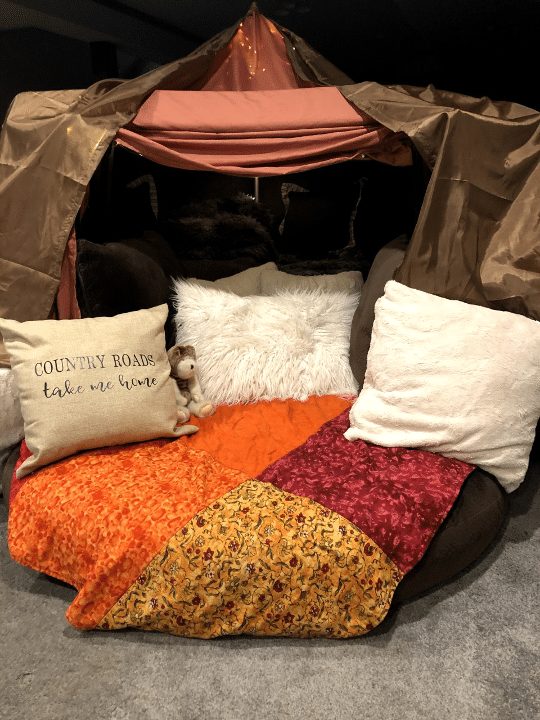
finished safari tent

Sometimes animal research expeditions or safaris that scientists participate in can last a long time. Camps are often set up in the savannah so researchers can be as close to wildlife as possible without disturbing animals’ natural behaviors. Here’s how you can build your own safari fort for you and your favorite stuffed buddy!

Materials Needed:

  • Blankets
  • Pillows or soft cushions
  • A couch or an area that has space to fit inside
  • Chairs or a small table for structure and support
  • Something to secure blankets (string works)
  • Lights

Directions

  1. Gather your supplies in the area you’d like to build your safari tent. If using a couch and chairs, try to set up your structure with your couch in the center, and the chairs in front of the couch on either side, facing outward. (Check our photo for reference!)
  2. If you’re using a pole to support the top of your tent, try to stick the pole down between the center of the cushions as safely (to you–and your couch!) as your can, like in our photo.
  3. Place your blankets on top of the furniture you’re using to make your safari tent. This will be the “roof” and should sit lightly on top. Make sure your blanket is long enough to cover the entire tent structure and leave an opening at the front for easy entry.
  4. Your safari tent can be as big or as small as you’d like. If you have multiple blankets, you can also try to make a door flap at the entrance to your safari tent. Researchers sometimes have these door flaps to hide themselves from animals so they don’t scare or interfere with them. Make sure your blankets are supported on top of your safari tent—if they’re loose or in danger of falling, try to make the safari tent smaller or use something like clothespins or books to weigh them down and secure them. If you’re having trouble, ask a grownup for help! *Do not enter your safari tent until you know for sure it won’t fall down*
  5. If you have lights, ask a grownup to help you set them up. Any type of light works well in a safari tent, and is important for nighttime study. If you don’t have string lights like the ones pictured, you can also use flashlights.
  6. Finally, decorate the inside of your safari tent by bringing in cushions, pillows, or extra blankets. Be sure to bring all of your stuffed animal friends and some snacks inside while checking out the rest of the Stuffed Animal Safari activities!

Filed Under: Blog Tagged With: Stuffed Animal Safari, Super Science Days

June 19, 2020 by Kathleen

Stuffed Animal Safari – Library Storytime

We’re joining Erin, a children’s librarian at Carnegie Library of Pittsburgh, who’s reading One Day in the Eucalyptus, Eucalyptus Tree by Daniel Bernstrom, Wild About Us by Karen Beaumont, and Old Mikamka Had a Farm by Rachel Isadora

Filed Under: Visitor Info Tagged With: Stuffed Animal Safari, Super Science Days

June 19, 2020 by Kathleen

Stuffed Animal Safari: Giraffe

Can you answer these giraffe questions?

Grab your best stuffed animal friend and a notebook to use for this week’s activities–your safari field journal–and let’s get started! If you need help answering some questions, an adult can help you look for answers online.

  1. Where do giraffes mainly live?
  2. What does this habitat look like? Draw it in your safari field journal!
  3. Could your stuffed animal friend live in this kind of habitat? Why or why not?
  4. What is one special adaptation giraffes have to help them survive in their habitat?
  5. What do giraffes eat? Are they carnivores, herbivores, or omnivores?
  6. Are giraffes endangered, vulnerable, or something else? What does this mean for future populations?

Learn More About Giraffes, Including Giraffes in the Museum Collection!

As the tallest terrestrial animal on Earth, giraffes (Giraffa) can get to fruits and leaves that other animals can’t reach.  But giraffes’ long limbs aren’t their only extraordinary features!

Giraffes are at home in the forests and savannahs of Africa.  These habitats are also where giraffes can find plenty of food high up in trees.  While tree leaves are the main part of their diet, they might also eat fruit, grass, and smaller shrubs.  Between 14 to 20 feet tall, adult giraffes can eat up to 75 pounds of leaves a day!  In order to easily pull all of those leaves out of trees, giraffes have an 18-inch-long purple tongue covered in thick hairs to protect against thorny twigs.

Baby giraffes start their life at six feet tall—which is as tall as an adult giraffe’s neck.  Within hours, the newborn giraffe can almost keep up with a running herd at 35 miles per hour.  Giraffes need to run fast from predators like lions and hyenas, but they can also defend themselves with a deadly kick powered by their long legs.

Not all giraffes are the same; there are at least eight different types or subspecies of giraffe found in Africa.  The pattern of blocky spots is one way to tell them apart—some giraffes’ spots have jagged edges and others are light or dark in color.

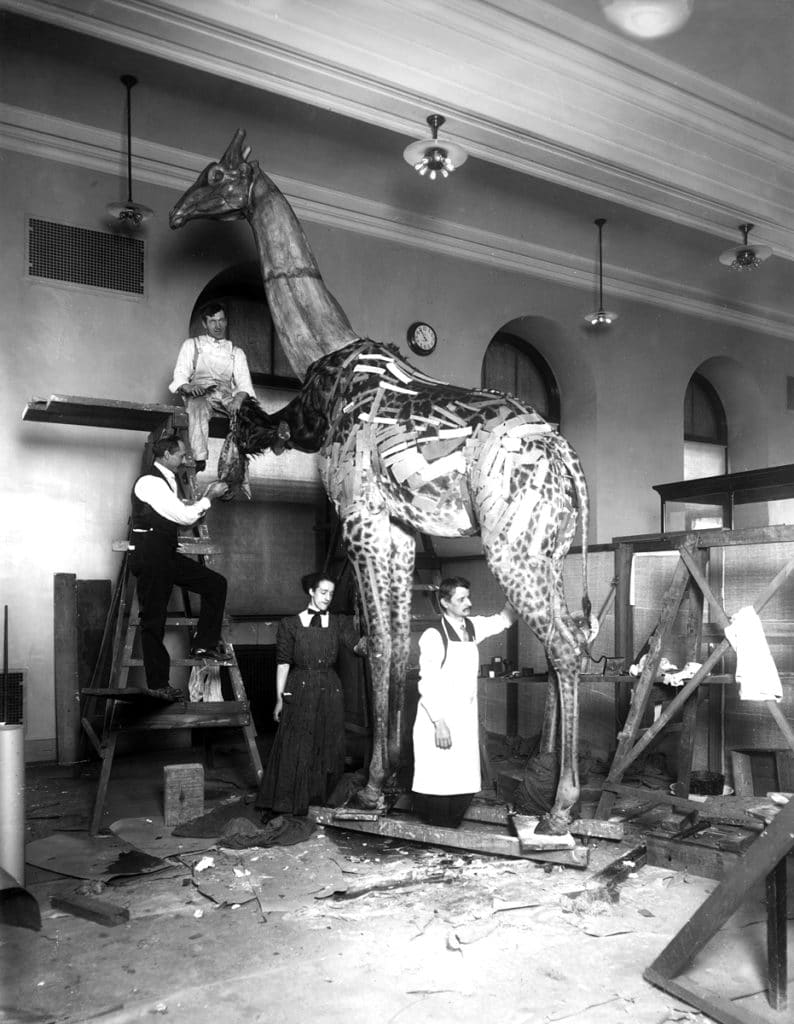
There are two different giraffes on display at the museum.  In the water hole exhibit is a Reticulated giraffe with large blocky spots that almost touch.  The other giraffe on display is a Masai giraffe with jagged spots. The Masai giraffe was collected by Pittsburgh-born Childs Frick on an expedition to Africa in 1912.  The completed giraffe display was the first of its kind in North America.

Giraffe taxidermy being constructed in early 1900s
Masai giraffe from Child’s Frick expedition being constructed as a taxidermy display for the museum.

Giraffes are listed as “Vulnerable” for conservation concerns and some types of giraffe are endangered.  This means that giraffes face serious risks in their native habitat and the number of wild giraffes is decreasing.  Major threats to giraffes include agricultural competition and illegal hunting.  Farmers and ranchers often exclude wild animals like giraffes from their land in order to prevent damage to crops or livestock.  Poaching, or illegal hunting, also directly impacts giraffe populations and can harm conservation efforts. The Giraffe Conservation Foundation is a great resource to learn more about and help wild giraffe populations!


Filed Under: Blog Tagged With: Stuffed Animal Safari, Super Science Days

  • « Go to Previous Page
  • Page 1
  • Interim pages omitted …
  • Page 5
  • Page 6
  • Page 7
  • Page 8
  • Page 9
  • Go to Next Page »

sidebar

About

  • Mission & Commitments
  • Directors Team
  • Museum History

Get Involved

  • Volunteer
  • Membership
  • Carnegie Discoverers
  • Donate
  • Employment
  • Events

Bring a Group

  • Groups of 10 or More
  • Birthday Parties at the Museum
  • Field Trips

Powdermill

  • Powdermill Nature Reserve
  • Powdermill Field Trips
  • Powdermill Staff
  • Research at Powdermill

More Information

  • Image Permission Requests
  • Science Stories
  • Accessibility
  • Shopping Cart
  • Contact
  • Visitor Policies
Stay in the loop! Sign up for our newsletter(s).
One of the Four Carnegie Museums | © Carnegie Institute | Privacy Policy | Terms of Use | Accessibility
Rad works here logo