• Skip to primary navigation
  • Skip to main content
  • Skip to primary sidebar

Carnegie Museum of Natural History

One of the Four Carnegie Museums of Pittsburgh

  • Visit
    • Buy Tickets
    • Visitor Information
    • Exhibitions
    • Events
    • Dining at the Museum
    • Celebrate at the Museum
    • Powdermill Nature Reserve
    • Event Venue Rental
  • Learn
    • Field Trips
    • Educator Information
    • Programs at the Museum
    • Bring the Museum to You
    • Guided Programs FAQ
    • Programs Online
    • Climate and Rural Systems Partnership
  • Research
    • Scientific Sections
    • Science Stories
    • Science Videos
    • Senior Science & Research Staff
    • Museum Library
    • Science Seminars
    • Scientific Publications
    • Specimen and Artifact Identification
  • About
    • Mission & Commitments
    • Directors Team
    • Museum History
  • Tickets
  • Give
  • Shop

taxidermy

February 20, 2019 by wpengine

Doubly Dead: Taxidermy Challenges in Museum Dioramas

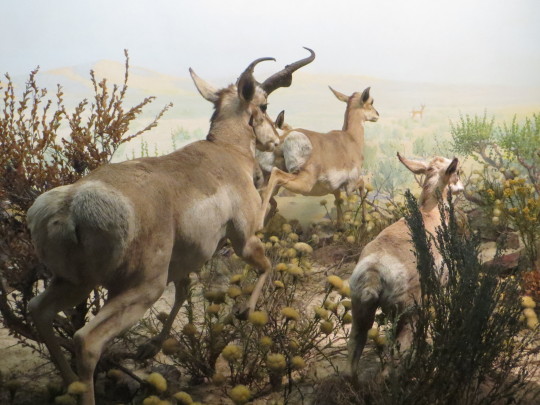
pronghorn antelope diorama

A visit to the wildlife dioramas at Carnegie Museum of Natural History is an opportunity to repeatedly admire the illusions created by teams of skilled taxidermists. None of the featured creatures are alive, but many of them appear to have just paused. Some, such as the pronghorn antelope, pictured above, even seem to be frozen in motion.

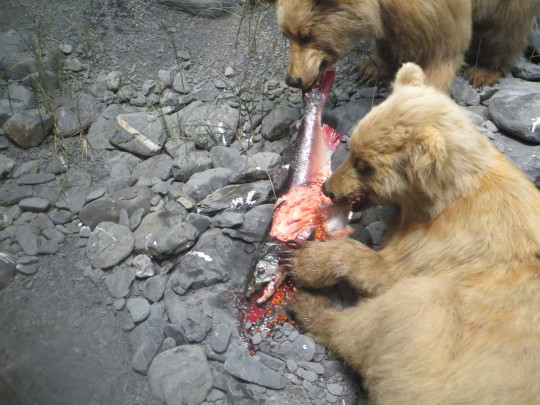
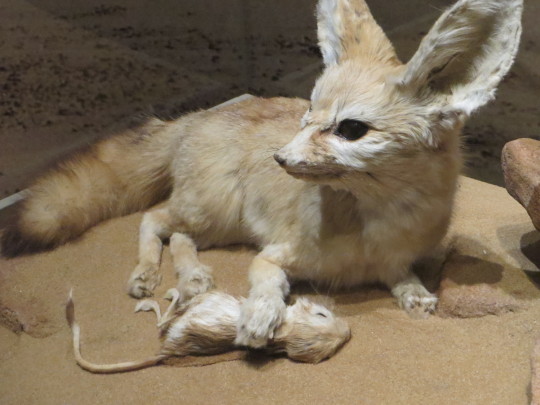
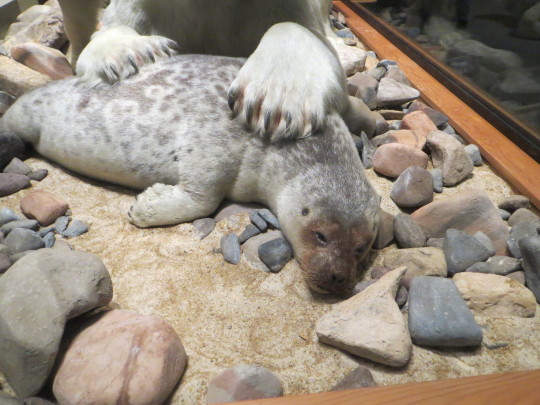
In several three-dimensional scenes, where the animal subjects are predators or scavengers, the taxidermists involved in creating the exhibit faced another challenge – presenting the preserved remains of a dead animal as a dead animal. The task, as the somewhat gory details in the pictures below attest, is undoubtedly more difficult than it sounds.
brown bear eating salmon taxidermy diorama

A dead salmon is front and center in the Alaskan Brown Bear diorama, and the pink flesh the cubs are consuming doesn’t look much different than what’s available at supermarket fish counters.
fennec fox and jerboa taxidermy

In the Hall of African Wildlife there’s no blood visible on the Lesser Egyptian Jerboa under fennec’s paw. The curled position of the prey’s feet and back legs indicate the struggle with the big-eared fox is over.
seal taxidermy under paw of polar bear taxidermy

In creating life-like mounts, taxidermists use glass eyes of the proper shape, size, and color.  The glass eyes appear to have lost their luster for the seal that serves as a prey detail in a Polar Bear diorama.
bull elk with large birds in diorama

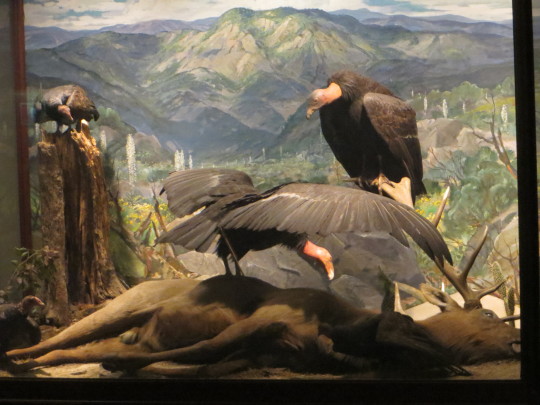
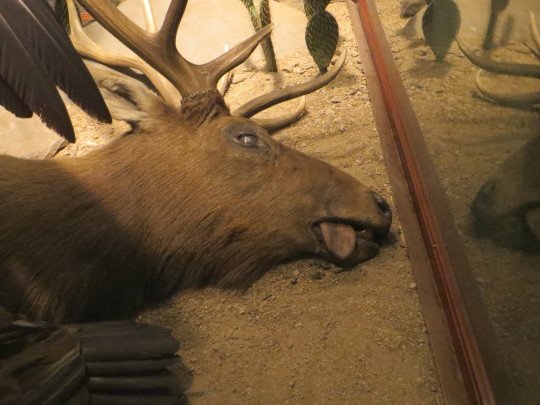
In one of the oldest dioramas within the Hall of North American Wildlife, the centerpiece presence of a dead bull elk indicates the role of both California Condors and Turkey Vultures as scavengers.
detail of bull elk taxidermy

Taxidermy details that indicate the elk’s browsing days are over include dull eyes and a lolling tongue. The tricks of taxidermists are important when they help to explain the role of predators and scavengers, the bedrock biological principle of life from death.

Patrick McShea works in the Education and Visitor Experience department of Carnegie Museum of Natural History. Museum employees are encouraged to blog about their unique experiences and knowledge gained from working at the museum.
Filed Under: Blog Tagged With: diorama, Hall of African Wildlife, Hall of North American Wildlife, mammals, Pat McShea, Patrick McShea, taxidermy

December 3, 2018 by wpengine

Tribute to Otto Epping

By Suzanne McLaren and Stephen Rogers

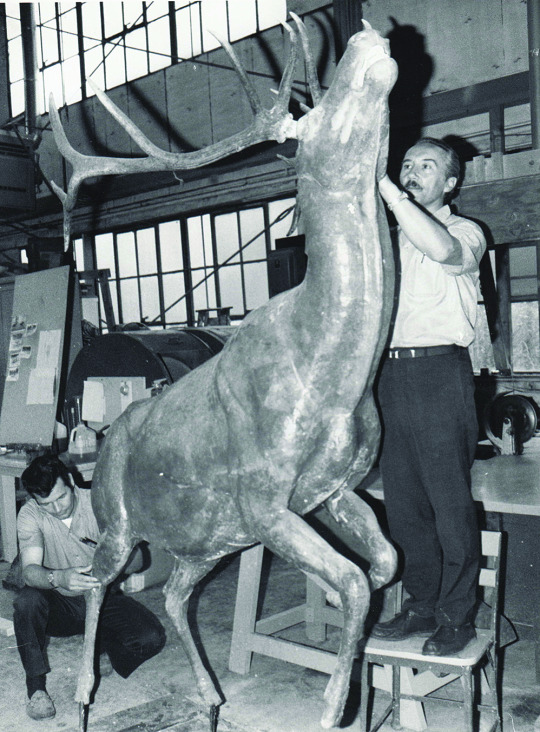
We recently received word about the passing of former Carnegie Museum of Natural History Taxidermist Otto Epping at the age of 90 in Winchester, Virginia.  In 1964, Otto Epping came to work in the Museum’s Exhibit department as a preparator and within a year his title had become ‘taxidermist.’

Otto Epping working on mammal taxidermy

Over the next 17 years, he completed many projects and with his passing, Otto leaves behind a legacy of well-crafted taxidermy that has now been enjoyed by several generations of visitors to Carnegie Museum of Natural History.

Not long after he arrived at the museum, a series of small dioramas were created, featuring some of Epping’s taxidermy, his wife Christine’s work on the plants in the foreground, and background paintings by Ottmar von Fuehrer or C. E. Smith.  Among these dioramas is a snow leopard currently on view in the Museum Store.  Individual mounts by Epping were used in the taxidermy areas of the “M is for Museum” exhibit as well as other displays that augment traveling, temporary shows that come to the Museum.

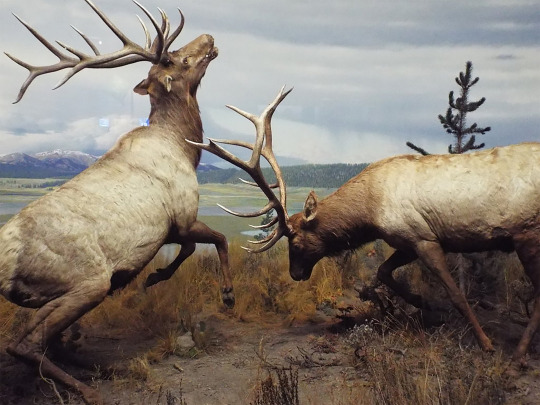
Some of Otto Epping’s craftsmanship can also be found in permanent displays on the second floor.   His first large project was the elk diorama, which occupies the entire east end of the Hall of North American Wildlife.

elk diorama

This exhibit draws the visitor in with two male elk sparring for mates in the foreground and the Hayden Valley of Yellowstone National Park behind them.  If you have ever been to Yellowstone, you might recognize this exact location as a place where you can stop for an expansive view of the Valley.

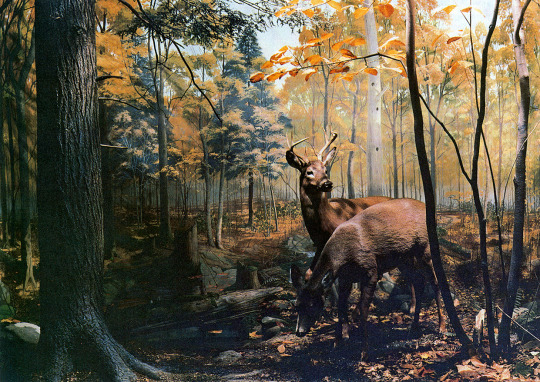
Epping collaborated with fellow taxidermist Ed McGuire on a display that depicts a male and female white-tailed deer on an October morning at the Museum’s Powdermill Nature Reserve.

deer diorama

In this diorama, the male is alert to the presence of another male somewhere just out of view.  Well-done taxidermy captures an aspect of behavior that a viewer would expect to see in nature.  Take a close look the next time you are in the Hall of North American Wildlife.  Does this exhibit capture a vision that you have seen in Penn’s Woods?

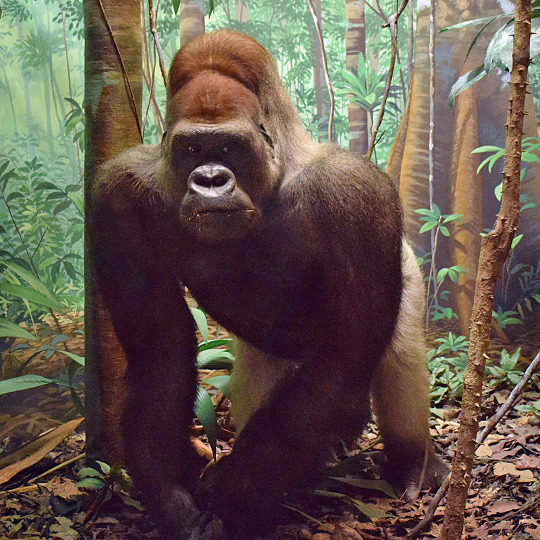
Perhaps the most well-known of Epping’s taxidermy mounts is the adult male Lowland Gorilla found in the tropical forest section of the Hall of African Wildlife.

gorilla diorama

This silver-back had been a popular attraction at the Pittsburgh Zoo for nearly 15 years.  When he died in 1981, “George” was offered to the Museum and we quickly agreed to make him part of our planned changes in African Hall.  Epping collaborated with Danny Oplinger, using a method developed by renowned Field Museum taxidermist Leon Walters, to realistically portray the bare flesh and sparsely dispersed hairs on the face and feet of this primate. The final result is a world class rendering of a species that has always been a challenge for taxidermists.

Suzanne McLaren is the collection manager for the Section of Mammals and Stephen Rogers is the collection manager for the Section of Amphibians & Reptiles Carnegie Museum of Natural History. Museum employees are encouraged to blog about their unique experiences and knowledge gained from working at the museum.
Filed Under: Blog Tagged With: African Wildlife, mammals, taxidermy

July 24, 2016 by wpengine

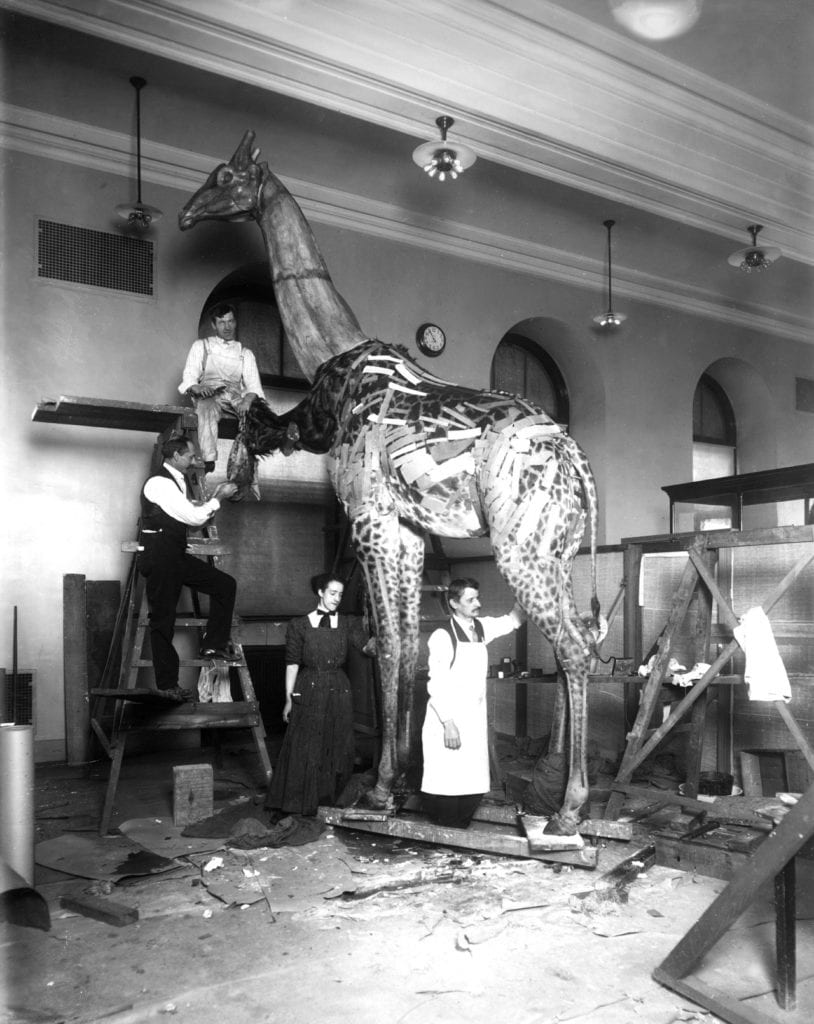
Carnegie Museum of Natural History taxidermists

scientists working to reassemble a taxidermy giraffe

Carnegie Museum of Natural History taxidermists creating the giraffe in the Hall of African Wildlife.

Filed Under: Blog Tagged With: diorama, Hall of African Wildlife, taxidermy

July 6, 2016 by wpengine

Historic Reference in Taxidermy?

right-foot-leading bird taxidermy mount

by Patrick McShea

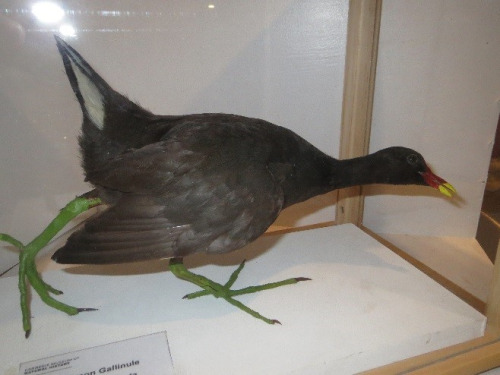
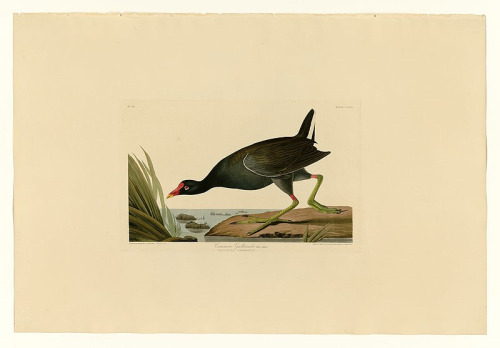
Taxidermists working to position animal remains in life-like postures rely on photographs to supplement firsthand observations. In the case of the common gallinule pictured above, reference materials might well have included John James Audubon’s 1835 portrait of the chicken-sized marsh bird. There’s only so many ways for the species to be posed, of course, and current records for the 14-inch-long mount do not list the taxidermist who prepared it.

In the absence of certainty you may decide for yourself. The right-foot-leading taxidermy mount is available for close inspection in Discovery Basecamp, Carnegie Museum of Natural History’s new permanent gallery. Audubon’s left-foot-leading bird (image below), along with many of his other works, can be studied in great detail at a University of Pittsburgh digital library website featuring a complete set of images from the artist’s monumental work, The Birds of America.

right-foot-leading bird drawing
Photo courtesy: The Birds of America, Vols. I – IV, Special Collections, University Library System, University of Pittsburgh.

Patrick McShea works in the Education and Visitor Experience department of Carnegie Museum of Natural History. Museum employees are encouraged to blog about their unique experiences and knowledge gained from working at the museum.
Filed Under: Blog Tagged With: Patrick McShea, taxidermy

June 24, 2016 by wpengine

The Taxidermists’ Table

taxidermist's table with bird specimens and old publications

By Steve Rogers

The National Taxidermists Association met at Seven Springs in early June 2016 and Carnegie Museum of Natural History Collection Manager Stephen Rogers was invited to give a seminar on the early history of taxidermy in the United States.

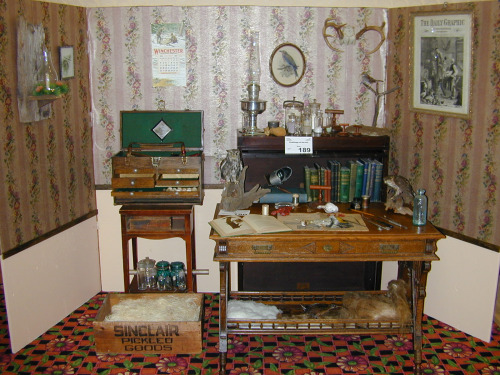
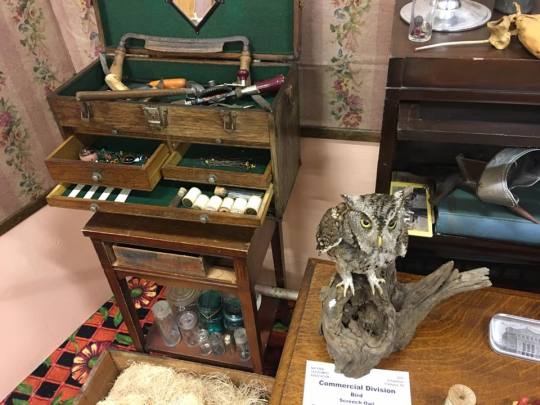
On a whim he decided to create a piece for the competition held at this meeting. Since he is an historical taxidermy buff and collects old publications, tools, as well as antique furniture, he created a taxidermists’ work table as it may have been circa 1898.

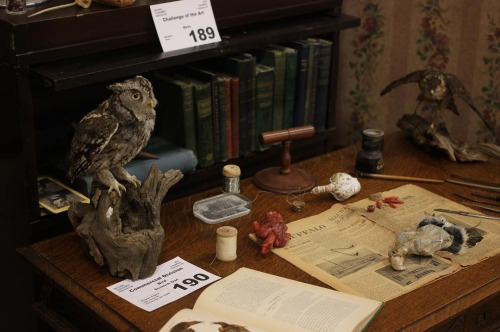
The table held a skinned out flicker made to look fresh (coated with glycerin), a faux carcass and bits of flesh made of wax, a hand-wrapped artificial body which would have been put inside the skin, a book on the Birds of Pennsylvania opened to a hand-colored plate on flickers, and then eyes and tools that might be used in the process.

recreated taxidermists’ work table as it may have looked in 1898

Behind the table was a re-created room with antique looking wallpaper with various decorations on the wall, deer antlers, an 1898 poster of a Winchester calendar, and a framed 1873 newspaper with a woodcut depicting a taxidermist and an ornithologist.

Assorted other birds, a tool chest with period tools, and supplies to mount birds (excelsior, tow, cotton, glass eyes of different sorts, etc.) were also present. A library of 15 taxidermist and naturalist books published between 1874 and 1898 were in a lawyer’s glass-front bookshelf alongside a Stereoviewer with a handful of stereophotographs depicting taxidermy.

Glass jars containing what appeared to various noxious chemicals were set on top of the bookshelf. A number of people asked about the green chemical in one jar. Was it arsenic? – No, just some powdered lime Jell-O.

taxidermied owl on a table

The public as well as the taxidermists who attended the convention were able to vote for pieces in the competition. The exhibit won ‘People Choice – Original Art’. But more importantly, it gave people and appreciation for history and reference for those that came before.

Steve Rogers is a collections manager at Carnegie Museum of Natural History. Museum employees are encouraged to blog about their unique experiences and knowledge gained from working at the museum. 
Carnegie Museum of Natural History Blog Citation Information

Blog author: Steve Rogers
Publication date: June 24, 2016

Share this post!

  • Share on Twitter Share on Twitter
  • Share on Facebook Share on Facebook
  • Share on Pinterest Share on Pinterest
  • Share on LinkedIn Share on LinkedIn
  • Share on Reddit Share on Reddit
  • Share via Email Share via Email

Filed Under: Blog Tagged With: museums, Pittsburgh, Stephen Rogers, taxidermy

May 27, 2016 by wpengine

100-year-old Postcard: The Original Social Media

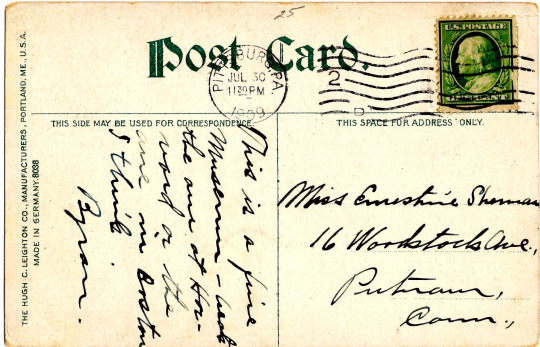
Postcard with handwritten address and message in fancy script
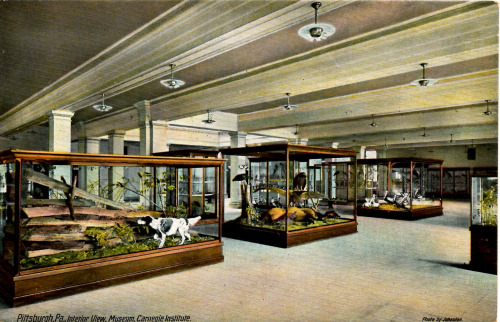
Historic Hall CMNH

How did word get around about Carnegie Museum of Natural History before Facebook, Twitter, and Snapchat?
Postcards of course!

Steve Rogers, our collection manager of Section of Birds and Section of Amphibians and Reptiles, purchased a classic Carnegie Museum postcard that’s more than 100 years old on eBay years ago, and recently scanned and shared it in preparation for a talk he’ll give at the National Taxidermists Association meeting in Seven Springs next month.

The front of the postcard shows dioramas that include an old Count Noble exhibit that was sent to Kentucky about 15 years ago, the condor case with the elk, and the pelican case which was dismantled around 2000.

The back of the card reads…

This is a fine Museum – beats the one at Harvard or the one in Boston I think, Brian”

It is postmarked 1909, not long after we expanded the museum from the original Carnegie Institute.

Maybe our Tumblr and Facebook posts will be rediscovered 100 years from now. Either way, we’re always excited to share cool pieces of Carnegie history!

Filed Under: Blog Tagged With: bird hall, diorama, Pittsburgh, Stephen Rogers, taxidermy

  • Page 1
  • Page 2
  • Go to Next Page »

sidebar

About

  • Mission & Commitments
  • Directors Team
  • Museum History

Get Involved

  • Volunteer
  • Membership
  • Carnegie Discoverers
  • Donate
  • Employment
  • Events

Bring a Group

  • Groups of 10 or More
  • Birthday Parties at the Museum
  • Field Trips

Powdermill

  • Powdermill Nature Reserve
  • Powdermill Field Trips
  • Powdermill Staff
  • Research at Powdermill

More Information

  • Image Permission Requests
  • Science Stories
  • Accessibility
  • Shopping Cart
  • Contact
  • Visitor Policies
One of the Four Carnegie Museums | © Carnegie Institute | Privacy Policy | Terms of Use | Accessibility
Rad works here logo