• Skip to primary navigation
  • Skip to main content
  • Skip to primary sidebar

Carnegie Museum of Natural History

One of the Four Carnegie Museums of Pittsburgh

  • Visit
    • Buy Tickets
    • Visitor Information
    • Exhibitions
    • Events
    • Dining at the Museum
    • Celebrate at the Museum
    • Powdermill Nature Reserve
    • Event Venue Rental
  • Learn
    • Field Trips
    • Educator Information
    • Programs at the Museum
    • Bring the Museum to You
    • Guided Programs FAQ
    • Programs Online
    • Climate and Rural Systems Partnership
  • Research
    • Scientific Sections
    • Science Stories
    • Science Videos
    • Senior Science & Research Staff
    • Museum Library
    • Science Seminars
    • Scientific Publications
    • Specimen and Artifact Identification
  • About
    • Mission & Commitments
    • Directors Team
    • Museum History
  • Tickets
  • Give
  • Shop

We Are Nature 2

March 9, 2020 by wpengine

I love this interspecies friendship!

I confess I am not big on social media, but occasionally I see something that I can’t stop watching. This short clip caught on a wildlife camera in San Jose, California shows a coyote leading a badger though a culvert under a highway. And I am not alone in appreciation as this post has gone viral with millions of views! Simply put, this duo is absurdly cute. I can’t stop watching. While it is well established scientifically that coyotes and badgers hunt together, this video conveys so much more. The way the coyote leaps playfully, tail wagging, beckoning his short-legged little friend to follow conveys friendship. It conveys two buddies out for an adventure. 

View this post on Instagram

🐾 Our wildlife cameras spotted this coyote and badger traveling together through a culvert (tunnel) under a highway in the South Bay. We believe this is the first observation of its kind documenting these two together. Studies have shown that a badger and coyote hunting together can be beneficial for both species, as they pursue favorite prey such as ground squirrels. Maybe that’s where they’re headed? See what else our wildlife cameras have spotted with the link in our profile or at openspacetrust.org/blog/wildlife. Video: @peninsulaopenspacetrust / @pathways_for_wildlife . . . #Coyote #Badger #Wildlife #BayAreaWildlife #WildlifeCameras #WidlifeMovement #CuteAnimals #Animals #CoyoteAndBadger

A post shared by POST – Open Space For All (@peninsulaopenspacetrust) on Feb 4, 2020 at 10:25am PST

There are so many examples of non-human animals, individuals of the same species and of different species, interacting in complex ways that reveal their unique personalities, friendships, kindness, and dare I say, love. Traits or expressions we tend to confer only to humans for fear of anthropomorphizing, a big no-no in science. (For example, see this national geographic blog about this coyote-badger video). And yet I would argue that the most apt description of these behaviors is to describe them with the same words we would use to describe them in humans. Our brains are similar. These arguments are well developed by ecologist Carl Safina, in his best-selling book Beyond Words, and summarized here in this powerful TEDX talk.

A recent study about African grey parrots also captured the surprise of scientists. African grey parrots were very helpful in sharing tokens to other parrots so that parrot could exchange the token for food. The helping parrots did this without any direct reward for themselves. This type of helping behavior, most simply described as generosity or kindness, is surprising to scientists and many expressed doubt that it is real. Why? Other creatures are our close kin. We share the same nervous systems. It makes sense that we also share feelings and thoughts, emotional and social lives too. I think this is obvious to anyone who has a pet. For this badger and coyote pair, why shouldn’t we all, scientists alike, call it a friendship? Which raises another question: if we start calling these behaviors friendship, without fear of anthropomorphizing, might this help us to better empathize with our fellow animal kin and take better care of them and the Earth?  

I wonder.

Nicole Heller is Curator of the Anthropocene for Carnegie Museum of Natural History. Museum employees are encouraged to blog about their unique experiences working at the museum.

This video was captured by Peninsula Open Space Trust (POST), a land trust nonprofit where Heller worked as the Director of Conservation Science prior to joining the museum. POST is doing terrific conservation work to make the busy San Francisco Bay Area safe for wildlife to move around, find habitat, and successfully reproduce in the face of daily human traffic and long-term urban growth and climate change.
Filed Under: Blog Tagged With: Anthropocene, Nicole Heller, Science News, We Are Nature 2

September 10, 2018 by wpengine

This Land is Your Land, This Land is Mine Land

by Max Winn and Andrea Kautz

Since the passing of Act 54 in 1994, Pennsylvania requires a review of all subsidence impacts related to underground coal mining every five years. Subsidence occurs when land at the surface collapses down into a cavity created by removing a layer of coal. This can affect structures, roads, water wells/springs, streams, ponds, and wetlands. It can also induce landslides.

Powdermill scientists are currently part of the oversight team for the 2013-2018 review, and are using GIS technology to calculate and assess the impacts that mines have specifically on streams and wetlands.  Most subsidence impacts occur over “long wall” mines, where enormous panels of coal are removed. “Room and pillar” mines leave pillars of coal to support the roof of the mine, which generally prevents subsidence, but impacts may still occur.

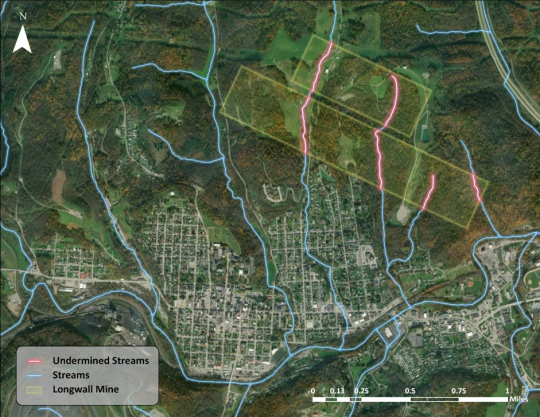
Take a look at this aerial imagery of a portion of a longwall mine, that shows just how much area the panels cover and the streams that are undermined. The larger panel is over a mile long! Using GIS, we can calculate how much of the undermined streams are impacted by either flow loss or pooling. Flow loss is experienced when the earth fractures and the water is lost below the surface.  Pooling occurs when water collects in a depression caused by subsidence and can no longer flow downstream.

map of streams and mines

When stream impacts occur in Pennsylvania, the coal companies are required to mitigate the damage to return the stream to its previous state. Because you can generally predict where subsidence impacts are going to occur before mining, pre-mining surveys are done to determine the health of the streams initially. The survey determines normal flow rates throughout the year, and also describes the community of aquatic macroinvertebrates that live in the stream. Based on what types of insects and other invertebrates are found during the survey, the stream is given a score based on how healthy it is. These data are used to compare to post-mining surveys that occur after attempts to mitigate have been completed. If the scores are comparable, the stream is considered repaired, but if not, the company is required to take further mitigative action.

Experts from the Carnegie Museum of Natural History and Powdermill Nature Reserve are working with regulatory agencies and mining companies to ensure that our natural environment is passed on to the next generation in a healthy condition.

Max Winn is a GIS Technician and Andrea Kautz is a Research Entomologist at Carnegie Museum of Natural History’s Powdermill Nature Reserve. Museum employees are encouraged to blog about their unique experiences and knowledge gained from working at the museum.

Filed Under: Blog Tagged With: coal, pennsylvania, Powdermill Nature Reserve, We Are Nature 2

September 4, 2018 by wpengine

Smoke Scenery

by Pat McShea

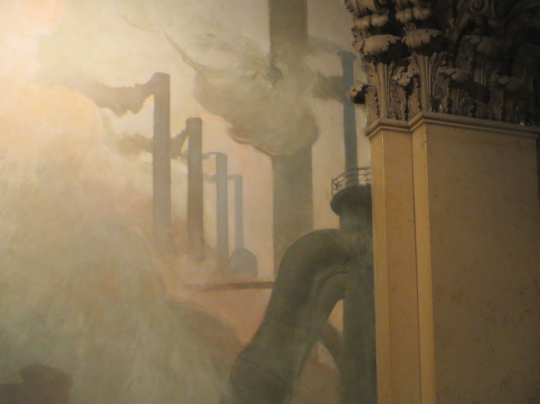
Detail from The Apotheosis of Pittsburgh mural by John White Alexander

A museum educator from Norway offered a novel way to interpret We Are Nature: Living in the Anthropocene. “This should be part of the story.” explained Bergsveinn Thorssonas he gestured at century-old steel industry scenes depicted in second-floor portions of the multi-level grand staircase mural painted by John White Alexander.

Thorsson, a PhD student who is studying how museums present current environmental issues, was fascinated by the smoky scenes and their marble pillar frames. “Owning our industrial history is important to understanding our current situation.” he added before conceding that he didn’t have advice for accomplishing such a task.

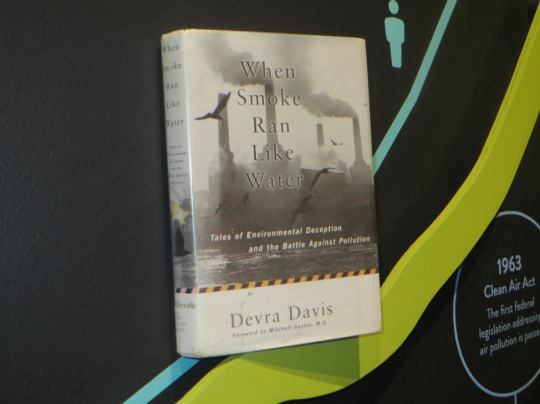
A copy of When Smoke Ran Like Waterpositioned at the 1948 mark on the population and atmospheric carbon level graph in We Are Nature
A copy of When Smoke Ran Like Water positioned at the 1948 mark on the population and atmospheric carbon level graph in We Are Nature

Since 2002, an excellent book-form model of industrial acknowledgement has existed in When Smoke Ran Like Water, by Donora, Pennsylvania native Devra Davis. The book, which Davis summarizes as an argument for “a fundamentally new way of thinking about health and the environment,” begins with a recounting of the most significant air pollution disaster in the United States – the build-up in Donora, some 25 miles southeast of Pittsburgh, during a five-day period in late October 1948, of a toxic fog of steel and zinc industry emissions that resulted in 20 deaths and 600 hospitalizations.

In Davis’s account, family histories, with all their hopes, accomplishments, and compromises, are central to the tragedy. A quote from her mother captures a common attitude toward the smoky scenery: “Look, today they might call it pollution. Back then it was just a living.”

Patrick McShea works in the Education and Visitor Experience department of Carnegie Museum of Natural History. Museum employees are encouraged to blog about their unique experiences and knowledge gained from working at the museum.

Filed Under: Blog Tagged With: Anthropocene, Pittsburgh, pollution, We Are Nature, We Are Nature 2, We Are Nature: Living in the Anthropocene

May 23, 2018 by wpengine

Poison Ivy Potency?

By Rachael Carlberg

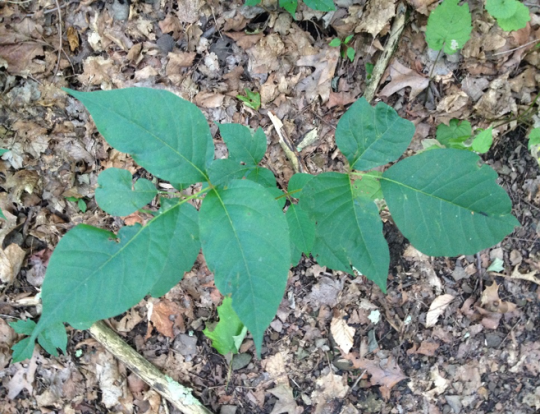
Poison ivy

When prompted with the phrase “climate change,” people often think of increasing temperatures, melting ice, and flooding shores. While global temperatures are on the rise, the story of humanity’s impact on the environment is much more complex.  As carbon dioxide levels in the atmosphere rise, and temperatures increase, we face unanticipated changes to the world around us.

Poison ivy, for example, grows larger in our changing climate. Higher levels of carbon dioxide in the atmosphere cause increases in photosynthesis, allowing plants like poison ivy to grow more and produce larger leaves. In carbon-rich conditions the vine also creates more toxic forms of urushiol, the oil that causes an allergic reaction in people.

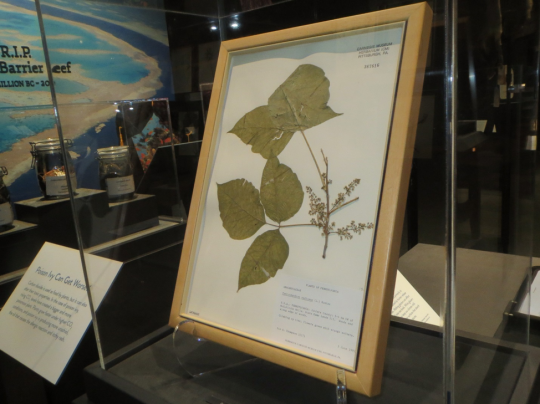
Preserved poison ivy

Preserved poison ivy displayed in We Are Nature.

You might be thinking, if higher levels of carbon dioxide mean higher levels of photosynthesis, won’t all plants benefit?  The problem is that increased levels of carbon dioxide don’t impact all plants in the same way.  Vines like poison ivy can reap the rewards of increased photosynthesis with more leaf area because, unlike upright plants, they don’t need to devote as many resources to structural support like trunks and thick branches.

As an intern in the Education department of Carnegie Museum of Natural History, Rachael Carlberg wrote blog posts related to ideas presented in We Are Nature. Museum employees are encouraged to blog about their unique experiences of working at the museum.    

Filed Under: Blog Tagged With: Anthropocene, Botany, We Are Nature, We Are Nature 2, We Are Nature: Living in the Anthropocene

  • « Go to Previous Page
  • Page 1
  • Interim pages omitted …
  • Page 4
  • Page 5
  • Page 6

sidebar

About

  • Mission & Commitments
  • Directors Team
  • Museum History

Get Involved

  • Volunteer
  • Membership
  • Carnegie Discoverers
  • Donate
  • Employment
  • Events

Bring a Group

  • Groups of 10 or More
  • Birthday Parties at the Museum
  • Field Trips

Powdermill

  • Powdermill Nature Reserve
  • Powdermill Field Trips
  • Powdermill Staff
  • Research at Powdermill

More Information

  • Image Permission Requests
  • Science Stories
  • Accessibility
  • Shopping Cart
  • Contact
  • Visitor Policies
One of the Four Carnegie Museums | © Carnegie Institute | Privacy Policy | Terms of Use | Accessibility
Rad works here logo