• Skip to primary navigation
  • Skip to main content
  • Skip to primary sidebar

Carnegie Museum of Natural History

One of the Four Carnegie Museums of Pittsburgh

  • Visit
    • Buy Tickets
    • Visitor Information
    • Exhibitions
    • Events
    • Dining at the Museum
    • Celebrate at the Museum
    • Powdermill Nature Reserve
    • Event Venue Rental
  • Learn
    • Field Trips
    • Educator Information
    • Programs at the Museum
    • Bring the Museum to You
    • Guided Programs FAQ
    • Programs Online
    • Climate and Rural Systems Partnership
  • Research
    • Scientific Sections
    • Science Stories
    • Science Videos
    • Senior Science & Research Staff
    • Museum Library
    • Science Seminars
    • Scientific Publications
    • Specimen and Artifact Identification
  • About
    • Mission & Commitments
    • Directors Team
    • Museum History
  • Tickets
  • Give
  • Shop

Winter

March 20, 2019 by wpengine

Frosty Frogs and Tunneling Toads

by Melissa Cagan and Hannah Smith

In the fall, many animals begin to prepare for winter. Squirrels collect food, groundhogs eat extra food to store as fat, birds migrate to warmer regions…but what do frogs do?  Although frogs and toads don’t seem to make any special preparations for the approaching cold, they survive extraordinarily cold temperatures every winter.  How do they manage this?
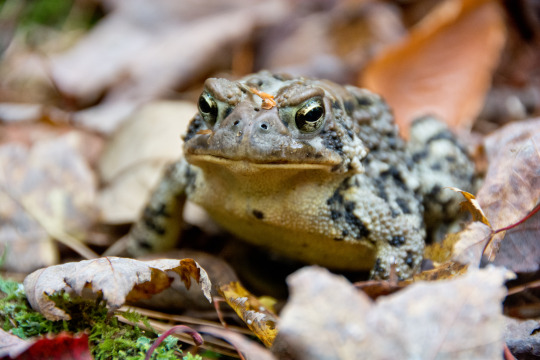
An American toad hops through fallen leaves.

A Long Winter “Nap”

Like other amphibians, frogs and toads are cold-blooded.  This means their body temperatures change to match the temperatures of their environment.  When winter comes around, frogs and toads go into a state of hibernation.  They find a place to “sleep” through winter and slow their metabolism, heart rate, and breathing rate to conserve energy.  Frogs and toads rely on two different hibernation strategies depending on whether they spend more time on land or underwater.
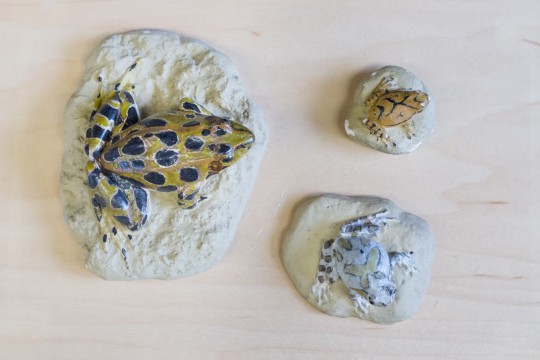
Above are models of three different sized frogs. The largest model is a leopard frog, the medium model is a grey tree frog, and the smallest model is a spring peeper.

Beneath the Icy Ground

Aquatic species, such as the green frog and the bullfrog, rest on pond or river bottoms.  So long as the water doesn’t completely freeze, frogs or underwater toads will be able to survive the winter…by breathing through their skin! If these animals buried themselves in mud, they would not be able to absorb enough oxygen.  Species that spend more time on land however, such as the American toad or the spring peeper, find drier places to sleep the winter away. Since the ground surface can freeze when temperatures drop dramatically, land frogs and toads need to find places that protect them from snow or frost.  This may require a frog or toad to dig deeply enough into the ground that they reach below the frost line – around 50 cm. or more than 20 in. deep!

Frogging Awesome!

Frogs and toads are much tougher animals than you might imagine.  Next time you see a frog or a toad, give them a tip of your hat – they are exceptionally hardy (resilient) creatures!
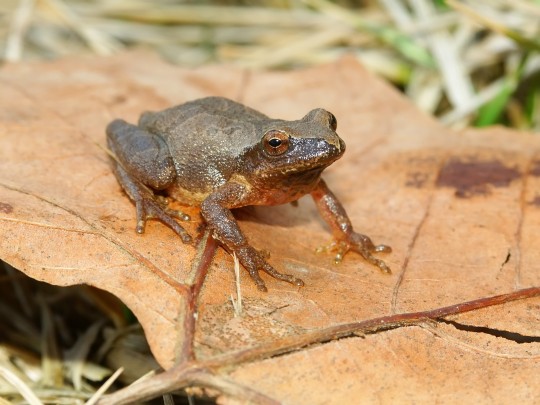
frog on a fallen leaf

Frozen Frogs

A few, unique species of frogs have found a different way of dealing with cold temperatures.  These frogs, like the wood frog and some tree frogs, actually freeze part of their body! These special creatures are able to freeze around 40% of their body’s water content.  In this state, the frogs don’t breathe, have no heartbeat, and stop all blood flow.  Once spring comes, the frog thaws its body and comes back to life!

Can You Find the Frogs?

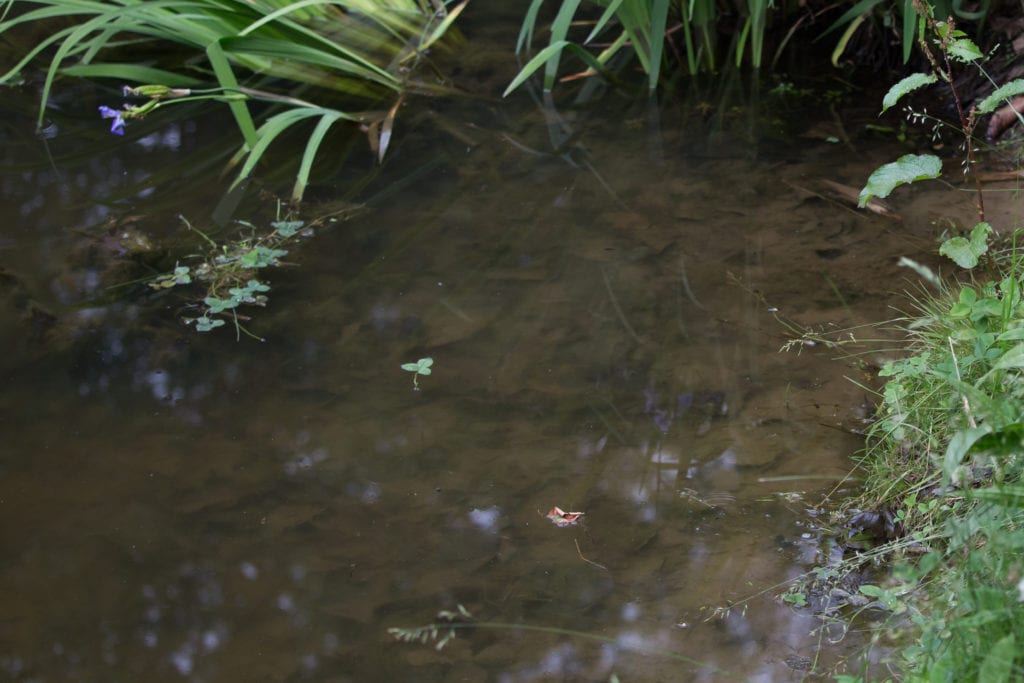
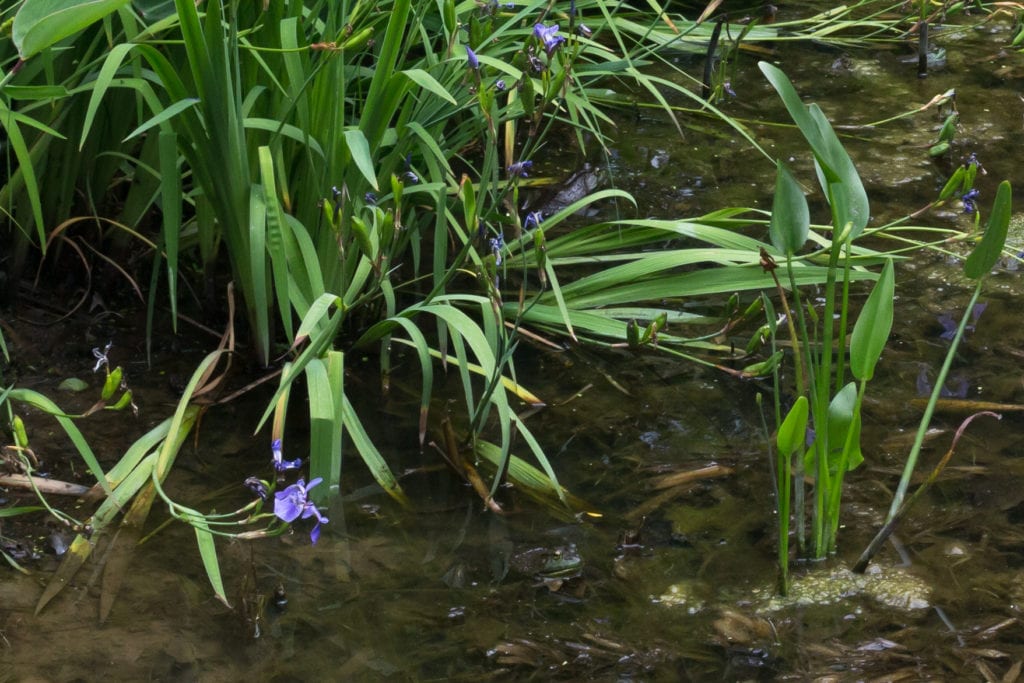
Frogs are great at hiding amongst their environment. They often hide in reeds, plants, and on the banks of ponds or other bodies of water.  There are frogs hiding in each of these photos…how many can you find?
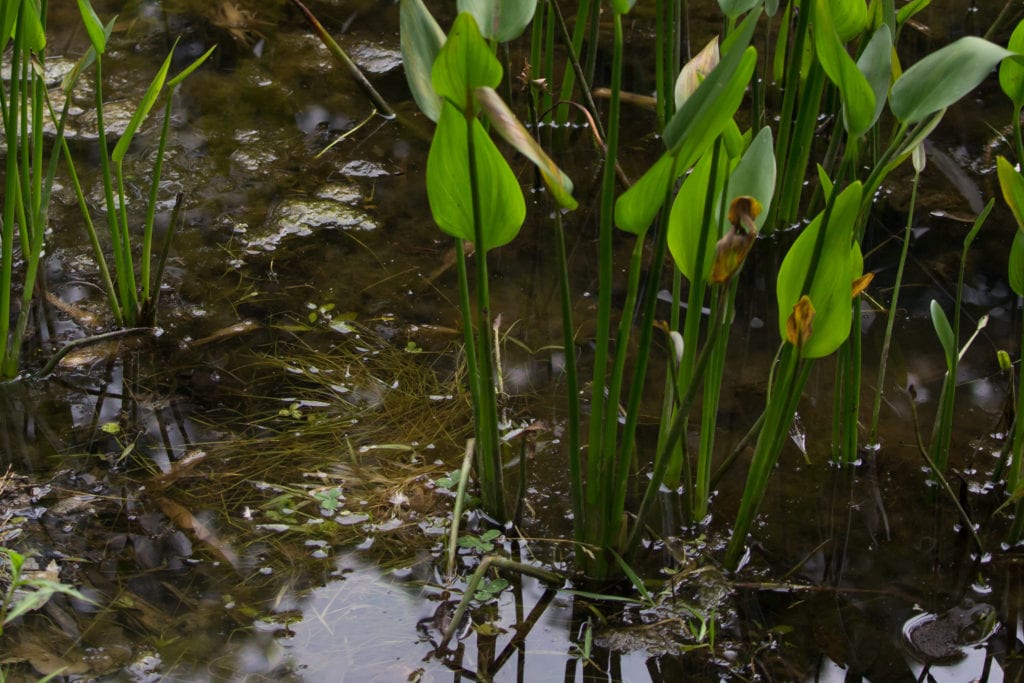
marshy area with frogs
wetlands with frog hiding
wetland marsh with frogs

Related Content

Ask a Scientist: What is a pitfall trap?

Spiders as Interior Designers

Trick or Tweet! Clever Creature Disguises

Carnegie Museum of Natural History Blog Citation Information

Blog author: Cagan, Melissa; Smith, Hannah
Publication date: March 20, 2019
Share this post!

  • Share on Twitter Share on Twitter
  • Share on Facebook Share on Facebook
  • Share on Pinterest Share on Pinterest
  • Share on LinkedIn Share on LinkedIn
  • Share on Reddit Share on Reddit
  • Share via Email Share via Email

Filed Under: Blog Tagged With: amphibians and reptiles, frogs, Nature 360, Winter

January 22, 2019 by wpengine

Woodlands in White

By John Wenzel

As we enter 2019, I start my ninth year here, and Powdermill Nature Reserve grows cold and quiet. The summer woodland is easy to appreciate, full of sounds of birds in the day, and frogs and insects at night, but for me the forest is most elegant in winter.

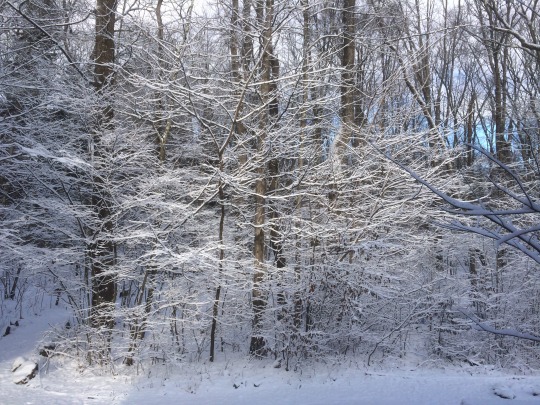
Powdermill woods covered in snow

I moved to Powdermill in January, and at first I lived alone at the reserve. My first season was one of snow and solitude, of beauty and discovery.  The woods are never as striking as when every dark twig is lined in white, creating a world of infinite fragile lace. The naked branches let the explorer see much farther than when the woods are heavy with leaves.  We see deep into the forest, and through it entirely across a hilltop or when we are above the wooded valley.  Animal tracks in the snow allow us to feel the presence of the unseen wildlife more than we do in summer. Wet seeps from mountain springs melt away spots of snow and provide the occasional soothing view of bright green moss, which is very welcome and more readily admired in the starkness of winter.

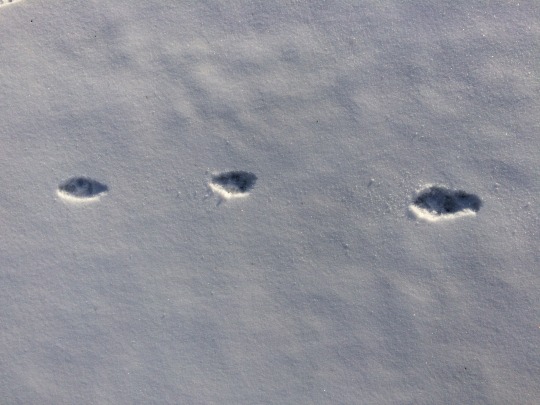
coyote tracks in snow
Coyote tracks at Powdermill Nature Reserve.

Noise of the outside world is nearly absent when a blanket of snow covers the landscape.  This makes the bubbling flow of Powdermill Run all more distinct, and more focal in the outdoor experience. In daylight, we see the million crystal reflections beneath a bright blue sky. At night, far from town, we marvel at the inestimable number of brilliant stars in the onyx above.  Perhaps because visitors to the Nature Center are few in winter, I feel that the reserve is more “mine” than at other times. My Powdermill is the quiet, winter Powdermill, dressed in white and hushed by the cold.

John Wenzel is the Director at Powdermill Nature Reserve, Carnegie Museum of Natural History’s environmental research center. Museum employees are encouraged to blog about their unique experiences and knowledge gained from working at the museum.

Filed Under: Blog Tagged With: John Wenzel, nature, Powdermill, Powdermill Nature Reserve, Winter

January 22, 2019 by wpengine

Fruit and Nut Trees Need Chill Time in the Winter

By Bonnie Isaac

It’s cold outside! There is snow on the ground. How could this possibly be good for plants?

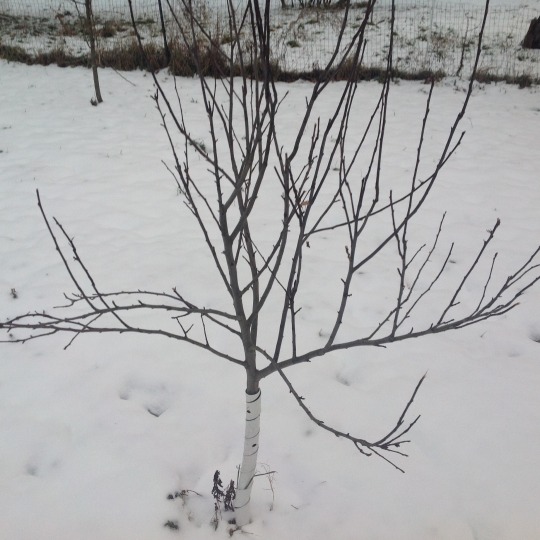
dwarf apple tree in the snow
A dwarf apple tree gettin’ its chill on! Photo credit: Joe Isaac

Many of our fruit and nut trees require a cold period to produce fruit. Without cold this winter, we won’t have fruit this fall.  If our fruit trees don’t get enough cold, then the flower buds may not open in the spring.  If the flower buds don’t open, they can’t get pollinated. If pollination doesn’t occur, then fruit doesn’t set. It’s an important cycle that is necessary for our food supply, especially if you like fruits and nuts. Apples, pears, plums, peaches, cherries, almonds, and walnuts all require varying amounts of chill time to set fruit.

Chill hours are the minimum amount of cold a tree needs before it will break dormancy. These trees then need a warm period to follow the chill. If it gets warm too soon or the chill requirement is met early, plants may break dormancy too soon, adding risk of a freeze or frost damage. The amount of fruit a tree sets will be affected if there is a late frost or an early warm spell. There is a delicate balance in nature which determines whether we get fruit or not. So, let’s not grumble about the cold outside. Enjoy it! I, for one, really like fruits and nuts.  I’ll be nestling all snug in my bed with visions of plums dancing in my head because I know the cold is necessary if I want to enjoy fruit this summer and fall.

Bonnie Isaac is the Collection Manager in the Section of Botany. Museum employees are encouraged to blog about their unique experiences and knowledge gained from working at the museum.

Filed Under: Blog Tagged With: Bonnie Isaac, Botany, botany hall, plants, Winter, wintertide

December 27, 2018 by wpengine

Deck the Trees with Moth Cocoons

By Vanessa Verdecia

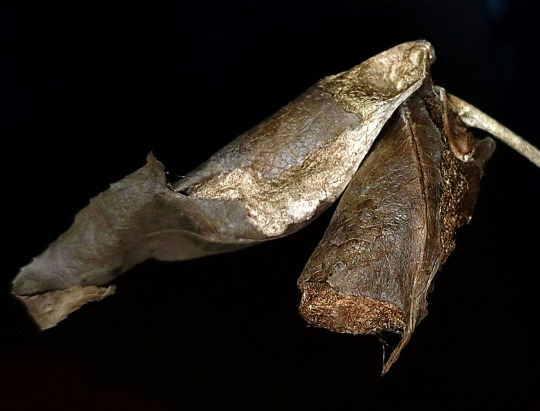
cocoons

Many people wonder: “what happens to bugs during the winter months?”  In the case of Callosamia promethea, known as the Promethea Moth, the caterpillars will have spun a cocoon in a leaf and will spend the winter as a pupa in a cocoon that is well attached by silk and hanging from a tree.  This is the third stage of metamorphosis before the adult moth ecloses (=emerges) the following summer and is seen flying during June-July in Pennsylvania.  You may look for these cocoons in the winter as they are usually found on low-hanging branches of many types of forest trees.

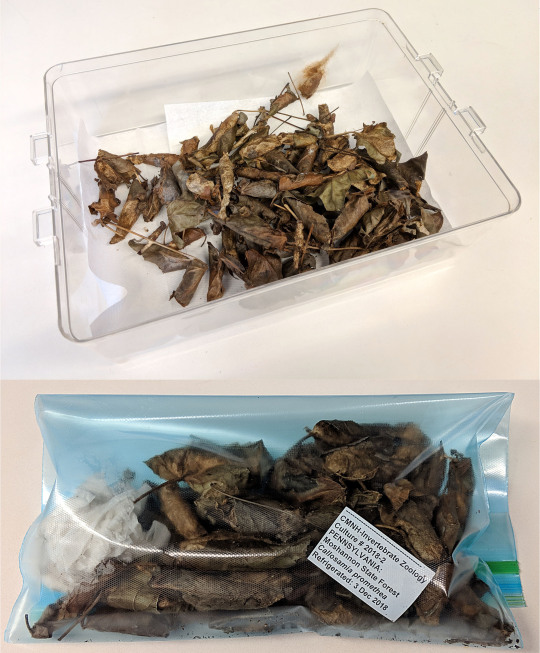
This year in Invertebrate Zoology we reared Promethea caterpillars and we are now ready to mimic winter conditions in the lab. The live cocoons have been carefully stored in a sealed plastic bag with a damp paper towel to maintain humidity.  This bag has been stored in the refrigerator to mimic the cold temperature that the cocoons would have experienced outside.  Insects are sensitive to temperature cues that will dictate when the moth is ready to eclose.  Experiencing diapause—a period of suspended development—will trigger the moths to eclose the following year.  The cocoons will remain in the refrigerator until next spring, and hopefully they will survive and we’ll have some beautiful moths eclose.  Insects are also dependent on light cues and are sensitive to day length, which is more difficult to mimic in a lab setting.  I am hopeful these will survive, as this technique has worked in the past.

many cocoons

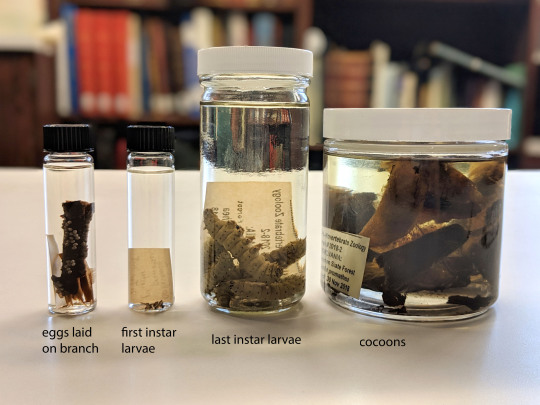
This process will conclude the full cycle of an isofemale rearing in which all of the stages of metamorphosis were observed and documented.  We have the wild-caught male and female adult parents.  At each stage of development, specimens were chosen to be preserved in order to document the egg, larval, and pupal stages.  These specimens serve as a reference for associating the developmental stages of a single species, as documented in a reared culture from a single parent.

egg, larvae, and cocoon specimens

Go ahead and look around because this is the perfect time of the year to see Promethea moth cocoons decking the trees of the forest this holiday season!

Vanessa Verdecia is a collection assistant in the museum’s Invertebrate Zoology Section. Museum employees are encouraged to blog about their unique experiences and knowledge gained from working at the museum.

Filed Under: Blog Tagged With: caterpillars, Lepidoptera, moths, Vanessa Verdecia, Winter

December 10, 2018 by wpengine

Snow White Bird Search

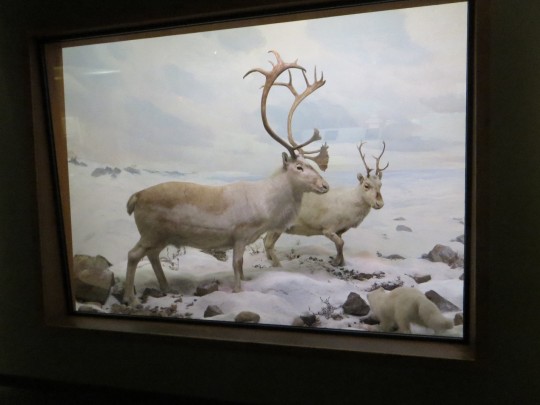
winter mammal diorama

by Patrick McShea

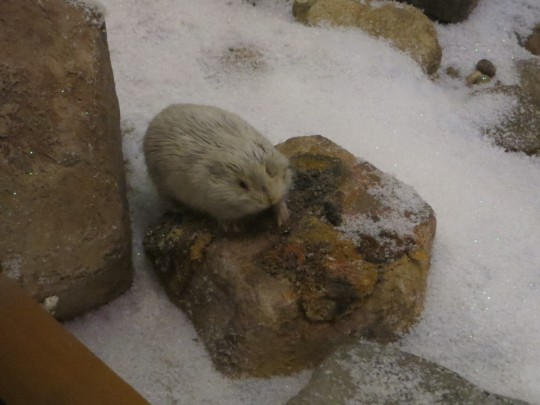
Visitors who read the descriptive label at the snowiest diorama in the Hall of North American Wildlife are presented with a visual challenge. Under the title, Arctic animals don their winter whites, the interpretive text lists four species within the exhibit displaying  protective coloration: Caribou, Arctic Fox, Collared Lemming, and Willow Ptarmigan.

The first two species are impossible to miss. If you center yourself in front of the three-dimensional scene, an Arctic fox crouches a few feet from your right knee, and a caribou pair so dominate the view that the concealment value of their pale coats is not fully apparent until you notice faint images of a larger herd painted into the backdrop horizon.

arctic fox

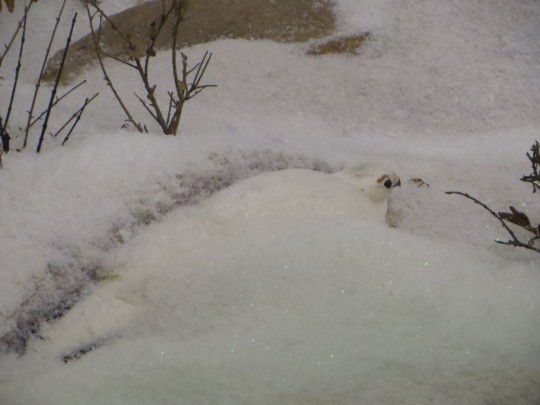
A quick search of the foreground perimeter is all that’s necessary to locate a collared lemming (above) but finding the willow ptarmigan requires determined effort. This member of the bird family that also includes pheasants, grouse and turkeys, undergoes a near complete annual color change. Willow ptarmigan trade their largely brown summer plumage for snow white winter feathers.

bird in the snow

The birds also utilize the insulating properties of snow, sometimes roosting as much as a foot below the surface. The resting place for the willow ptarmigan in the diorama isn’t that deep, but even with the aid of the above picture it can take some searching to locate.

Patrick McShea works in the Education and Visitor Experience department of Carnegie Museum of Natural History. Museum employees are encouraged to blog about their unique experiences and knowledge gained from working at the museum.

Filed Under: Blog Tagged With: diorama, Patrick McShea, Winter

November 14, 2018 by wpengine

Snowflakes and Snow Fleas

by John Wenzel

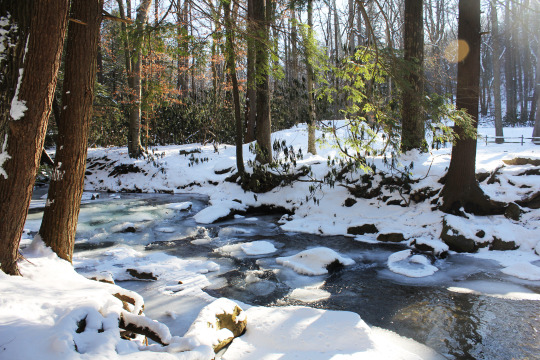
river and trees in the snow

When Shakespeare wrote “Now is the winter of our discontent,” he certainly was not referring to entomologists.  Botanists, mammalogists, ornithologists, and herpetologists spend most of the winter in the office waiting for spring. But many entomologists remain busy because insects that live under water go into high gear and treat the winter as their growing season. Hatching from eggs in spring or summer, these aquatic “macroinvertebrates” get their Thanksgiving dinner as the leaves fall into the stream. The insects are grazing and hunting underwater, growing to adulthood, preparing to fly away next spring when the air is warm again.

I was lucky to grow up with a 10 acre woodlot on one side of our house and a 12 acre pond on the other. As a kid, I loved to be out in my row boat or exploring the woods, hunting wildlife, catch and release. My parents encouraged my interests in nature, providing books and equipment that allowed me to increase my knowledge and experience as I grew.

I raised caterpillars through metamorphosis, marked turtles that I would find again years later, and nursed orphaned baby animals. Initially, I had no special preferences other than those that seem to come naturally to all humans. Mammals capture our affection, we all wish we could fly like birds, predators are particularly interesting, as is anything colorful or rare. By the time I was in college, I decided to study insects as a career for many reasons, and chief among them was a very pragmatic element for a striving academic: if you know about insects, you can find fascinating species in your backyard, wherever you live, anywhere in the world.

Since college, I have learned a great deal about many other groups, but when winter is approaching, I enjoy very much being an entomologist.  Even on the coldest day in January, I can go out to a stream and find abundant insects doing their thing, below the ice in the cold water. Some specifically emerge in winter when there are no predators around. At Powdermill Nature Reserve, we have plenty of wonderful winter insects, and it is great fun to hunt for these gems.

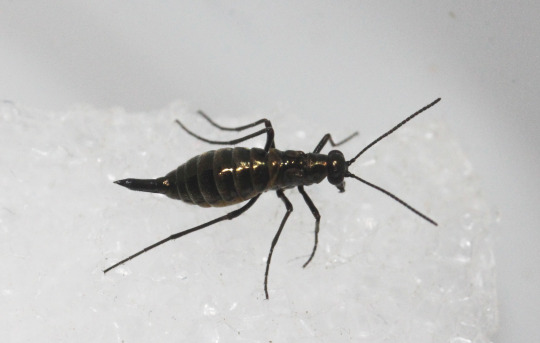
scorpionfly

Here you see a female Boreus scorpionfly who came up from a patch of moss to walk across the snow looking for a male in late December. Also called a snow flea, Boreus is so rare that few entomologists ever see them alive. There is a deep reward in learning to appreciate small things, and I have never regretted becoming an entomologist, especially as winter approaches.

Want to know more about winter bugs? Read about the first Powdermill Christmas Bug Count.

John Wenzel is the Director at Powdermill Nature Reserve, Carnegie Museum of Natural History’s environmental research center. Museum employees are encouraged to blog about their unique experiences and knowledge gained from working at the museum.

Filed Under: Blog Tagged With: entomology, insects, John Wenzel, Powdermill Nature Reserve, Winter

sidebar

About

  • Mission & Commitments
  • Directors Team
  • Museum History

Get Involved

  • Volunteer
  • Membership
  • Carnegie Discoverers
  • Donate
  • Employment
  • Events

Bring a Group

  • Groups of 10 or More
  • Birthday Parties at the Museum
  • Field Trips

Powdermill

  • Powdermill Nature Reserve
  • Powdermill Field Trips
  • Powdermill Staff
  • Research at Powdermill

More Information

  • Image Permission Requests
  • Science Stories
  • Accessibility
  • Shopping Cart
  • Contact
  • Visitor Policies
One of the Four Carnegie Museums | © Carnegie Institute | Privacy Policy | Terms of Use | Accessibility
Rad works here logo