• Skip to primary navigation
  • Skip to main content
  • Skip to primary sidebar

Carnegie Museum of Natural History

One of the Four Carnegie Museums of Pittsburgh

  • Visit
    • Buy Tickets
    • Visitor Information
    • Exhibitions
    • Events
    • Dining at the Museum
    • Celebrate at the Museum
    • Powdermill Nature Reserve
    • Event Venue Rental
  • Learn
    • Field Trips
    • Educator Information
    • Programs at the Museum
    • Bring the Museum to You
    • Guided Programs FAQ
    • Programs Online
    • Climate and Rural Systems Partnership
  • Research
    • Scientific Sections
    • Science Stories
    • Science Videos
    • Senior Science & Research Staff
    • Museum Library
    • Science Seminars
    • Scientific Publications
    • Specimen and Artifact Identification
  • About
    • Mission & Commitments
    • Directors Team
    • Museum History
  • Tickets
  • Give
  • Shop

wintertide

March 11, 2021 by wpengine

Winter Wanderers On a Water Tower

On a late January afternoon, as I used binoculars to count roosting vultures on a water tower in a northern Pittsburgh suburb, the question of a friend and colleague echoed in my head. “What personal experience helped convince you that our climate is changing?”

Taiji Nelson, Senior Program Manager for the museum’s Climate and Rural Systems Partnership (CRSP), asked that question months earlier to begin a workshop session for educators about effectively engaging audiences in climate change discussions. He then spent 15 minutes fielding firsthand accounts from participants about extreme weather events, the spread of tree diseases, and the sudden appearance of previously unknown garden pests. When my vulture count reached double figures I silently vowed, “Next time Taiji’s going to hear about these birds.”

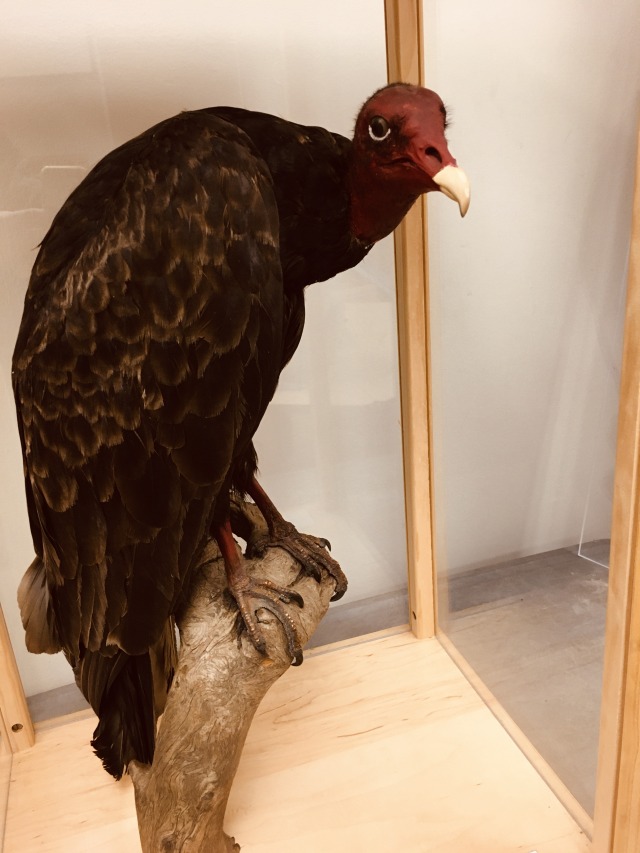
The birds, 17 Turkey Vultures and two Black Vultures, were the highlight of the three hours my wife Amy and I spent hiking and birdwatching. Black Vultures were a species we’d never before seen in western Pennsylvania. We’d frequently observed Turkey Vultures in the spring, summer, and fall, but our winter sightings of the species had been spotty. During the previous four winters we spotted a few Turkey Vultures who appeared to be spending the season in the Pittsburgh area instead of migrating further south. Before then, our year’s first sightings of these large soaring birds always occurred under mid-March skies.
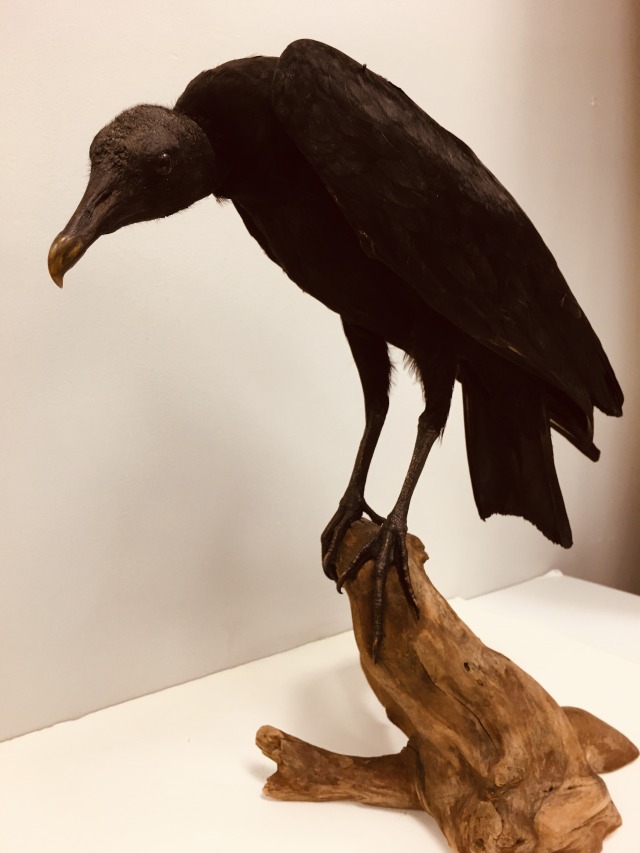
Black Vulture taxidermy mount.
Turkey Vulture taxidermy mount.

Both species are scavengers who play vital roles in cleaning-up the carcasses of other animals in fields, forests, and along roadsides. Their slow, but steady northward range extension across eastern North America during the past four decades can be attributed to an increase in available food in the form of road-killed wildlife, the diminishing residues of DDT in regional food webs, and even a greater public acceptance of their presence. Warmer temperatures associated with global climate change have also played a role in the movement.

In a now 10-year-old essay on the All About Birds website of the Cornell Lab of Ornithology, author Jack Connor argues that a long term view of vulture movements suggests climate change contributed to a gradual, but for those paying attention, a certainly noticeable northward expansion.

“At each step the first vagrant birds were seen in spring and summer over a period of a year or two, a handful of nests were found a few years later, and soon, only 20 or 30 years after the first rarities appeared, the species had taken up permanent residency in an area where once it could not be found.”

One of the Black Vultures on the tower was not a completely anonymous wanderer. A rectangular red tag about twice the size of a playing card was affixed to its wing, and with the aid of a spotting scope, the figures H 73 could be clearly seen. Some internet searching by Amy, and the email response to her formal sighting report, established a previous, if only temporary, residency for the bird in the area around Martinsburg, West Virginia. The eastern panhandle town is home to the 167th Airlift Wing of the West Virginia Air National Guard, a unit that since 2018 has been working with the US Department of Agriculture in a study of Black Vulture movements aimed at reducing aviation hazards.

For more information about the Climate and Rural Systems Partnership, check out Carnegie Magazine.

Patrick McShea works in the Education and Visitor Experience department of Carnegie Museum of Natural History. 

Related Content

Backyard Black Bird Mystery

Teacher Profile: Emmanuelle Wambach

Ask a Scientist: Ravens and crows, what’s the difference? 

Carnegie Museum of Natural History Blog Citation Information

Blog author: McShea, Patrick
Publication date: March 11, 2021

Share this post!

  • Share on Twitter Share on Twitter
  • Share on Facebook Share on Facebook
  • Share on Pinterest Share on Pinterest
  • Share on LinkedIn Share on LinkedIn
  • Share on Reddit Share on Reddit
  • Share via Email Share via Email

Filed Under: Blog Tagged With: Birds, Pat McShea, wintertide

February 10, 2020 by wpengine

Collected on this Day in 2012: Wintercreeper

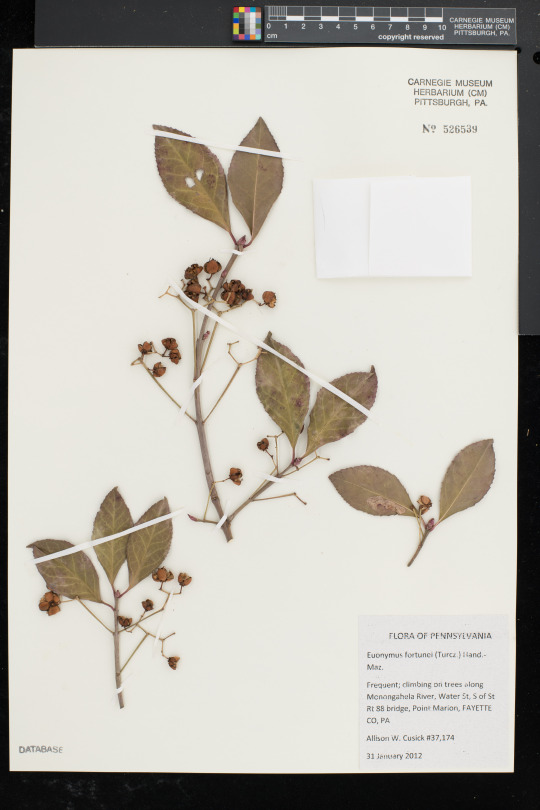
This specimen of wintercreeper (Euonymus fortunei) was collected on January 31, 2012 along the Monongahela River in Fayette County, PA by Alison Cusick.  Alison Cusick is a current Research Associate in the Section of Botany at the museum.  He can be frequently found in the Carnegie Museum herbarium.  He has a unique wealth of knowledge on plants, herbaria, botanical history, and more.  He authored three books and more than 50 scientific papers on the flora of eastern North America. Before retiring, he was the Chief Botanist for the Ohio Department of Natural Resources.  He continues to collect today, and many thousands of his specimens can found at herbaria across the country.  

Note the label on this specimen reads “Cusick, A.W.   37174”  The number following a collectors name is known as the…you guessed it… collector number (surprise!).  The collector number is the number assigned to a specimen by the collector.  It is common for several specimens to have the same collector number, if they are from the same individual or species in the same location on the same day (“duplicate specimens”).  Unfortunately, there are no universal rules on how collector numbers are used or assigned.  Collector numbers primary use is so the collector and/or others using the specimen can go back to the collector’s field notebook for additional information on the specimen.  Collector numbers are different from specimen numbers (which are assigned by the herbarium, such that every specimen has a unique ID for reference).  Most collectors number their specimens chronologically in order they were collected (but not always), but some collector numbers consist of dashes and/or letters, too.  

Anyway, what I’m getting at is that this specimen (Cusick 37174) suggests Alison has collected AT LEAST over 37,000 specimens.  The number is actually higher than that, with duplicates and an additional 8 years of collecting.  Not that numbers are everything, but Alison’s contribution to the herbarium record is clearly impressive and impactful.

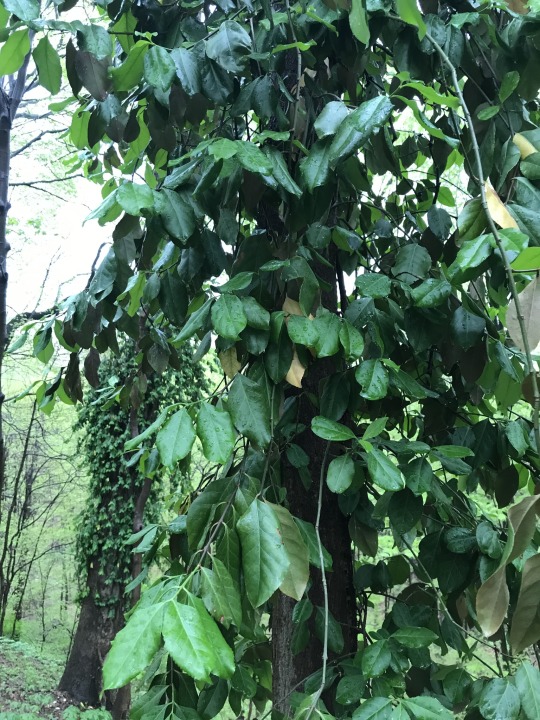
Ok, now back to the plant!  Winter creeper (Euonymus fortunei), native to Asia, is commonly planted in Pennsylvania and many other places, and unfortunately has also spread to become invasive.  It is still commonly planted.  It is a woody vine that climbs trees, but also is a thick ground cover.  It has leaves that persist through the winter, with attractive fruits.  Despite those advantages, it can impact native species and habitats as an invasive species, and therefore, should not be planted.

Find this specimen and more here: http://midatlanticherbaria.org/portal/collections/individual/index.php?occid=12134036&clid=0

Check back for more! Botanists at the Carnegie Museum of Natural History share digital specimens from the herbarium on dates they were collected. They are in the midst of a three-year project to digitize nearly 190,000 plant specimens collected in the region, making images and other data publicly available online. This effort is part of the Mid-Atlantic Megalopolis Project (mamdigitization.org), a network of thirteen herbaria spanning the densely populated urban corridor from Washington, D.C. to New York City to achieve a greater understanding of our urban areas, including the unique industrial and environmental history of the greater Pittsburgh region. This project is made possible by the National Science Foundation under grant no. 1801022.

Mason Heberling is Assistant Curator of Botany at the Carnegie Museum of Natural History. Museum employees are encouraged to blog about their unique experiences and knowledge gained from working at the museum.

Filed Under: Blog Tagged With: Botany, collected on this day, Mason Heberling, Science News, Uprooted, wintertide

July 3, 2019 by wpengine

What Do Bugs Do During the Winter?

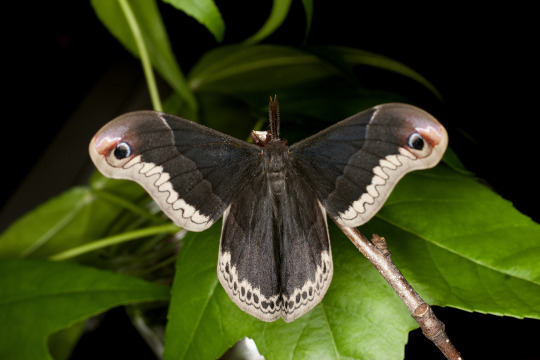
moth on plant at night

Ever wonder what happens to insects during the winter?  Depending on the species they will overwinter during one of the stages of their development.  In the case of the Promethea moths that were reared in Invertebrate Zoology last year, the caterpillar culture formed cocoons in the summer of 2018.  In their natural setting those cocoons protect the pupae as they experience diapause during the cold winter months.  Diapause is a state of dormancy that allows the specimens to survive harsh environmental conditions.

The pupae need to experience diapause before responding to the normal queues that trigger the adult moths to emerge from their cocoons. Insects depend on light and temperature queues which dictate when to enter the stages in their life cycle. In the lab setting, winter conditions were simulated by placing the cocoons in the refrigerator from November through March.

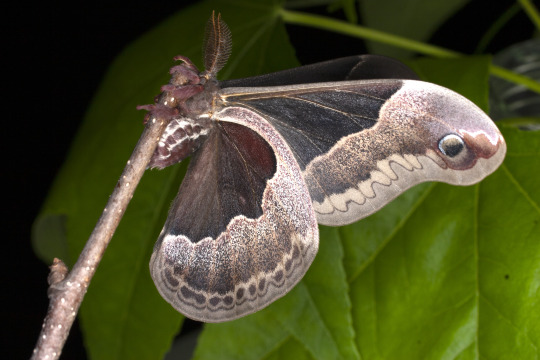
moth on plant at night

Luckily, the overwintering technique was successful and we had adult moths emerge in late May.  Look for these moths in your backyard as they emerge from their cocoons this summer. Watch for caterpillars that look like these, which will hatch from eggs laid by the adult moths flying this summer. These caterpillars will grow and form cocoons which will enter diapause this winter and continue the cycle.

Vanessa Verdecia is a collection assistant in the museum’s Invertebrate Zoology Section. Museum employees are encouraged to blog about their unique experiences and knowledge gained from working at the museum.

Filed Under: Blog Tagged With: Invertebrate Zoology, Vanessa Verdecia, wintertide

January 22, 2019 by wpengine

Fruit and Nut Trees Need Chill Time in the Winter

By Bonnie Isaac

It’s cold outside! There is snow on the ground. How could this possibly be good for plants?

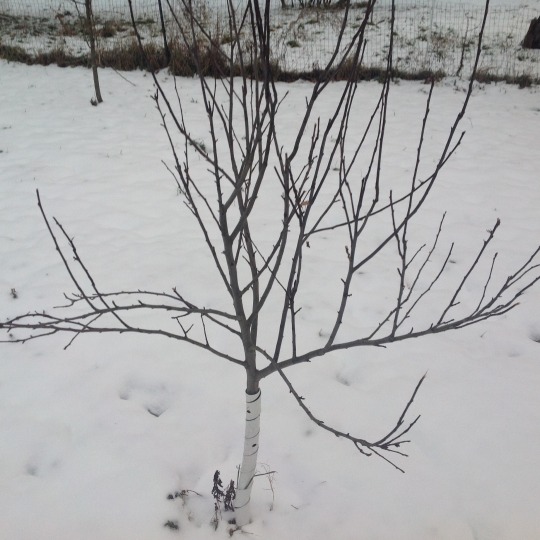
dwarf apple tree in the snow
A dwarf apple tree gettin’ its chill on! Photo credit: Joe Isaac

Many of our fruit and nut trees require a cold period to produce fruit. Without cold this winter, we won’t have fruit this fall.  If our fruit trees don’t get enough cold, then the flower buds may not open in the spring.  If the flower buds don’t open, they can’t get pollinated. If pollination doesn’t occur, then fruit doesn’t set. It’s an important cycle that is necessary for our food supply, especially if you like fruits and nuts. Apples, pears, plums, peaches, cherries, almonds, and walnuts all require varying amounts of chill time to set fruit.

Chill hours are the minimum amount of cold a tree needs before it will break dormancy. These trees then need a warm period to follow the chill. If it gets warm too soon or the chill requirement is met early, plants may break dormancy too soon, adding risk of a freeze or frost damage. The amount of fruit a tree sets will be affected if there is a late frost or an early warm spell. There is a delicate balance in nature which determines whether we get fruit or not. So, let’s not grumble about the cold outside. Enjoy it! I, for one, really like fruits and nuts.  I’ll be nestling all snug in my bed with visions of plums dancing in my head because I know the cold is necessary if I want to enjoy fruit this summer and fall.

Bonnie Isaac is the Collection Manager in the Section of Botany. Museum employees are encouraged to blog about their unique experiences and knowledge gained from working at the museum.

Filed Under: Blog Tagged With: Bonnie Isaac, Botany, botany hall, plants, Winter, wintertide

sidebar

About

  • Mission & Commitments
  • Directors Team
  • Museum History

Get Involved

  • Volunteer
  • Membership
  • Carnegie Discoverers
  • Donate
  • Employment
  • Events

Bring a Group

  • Groups of 10 or More
  • Birthday Parties at the Museum
  • Field Trips

Powdermill

  • Powdermill Nature Reserve
  • Powdermill Field Trips
  • Powdermill Staff
  • Research at Powdermill

More Information

  • Image Permission Requests
  • Science Stories
  • Accessibility
  • Shopping Cart
  • Contact
  • Visitor Policies
One of the Four Carnegie Museums | © Carnegie Institute | Privacy Policy | Terms of Use | Accessibility
Rad works here logo