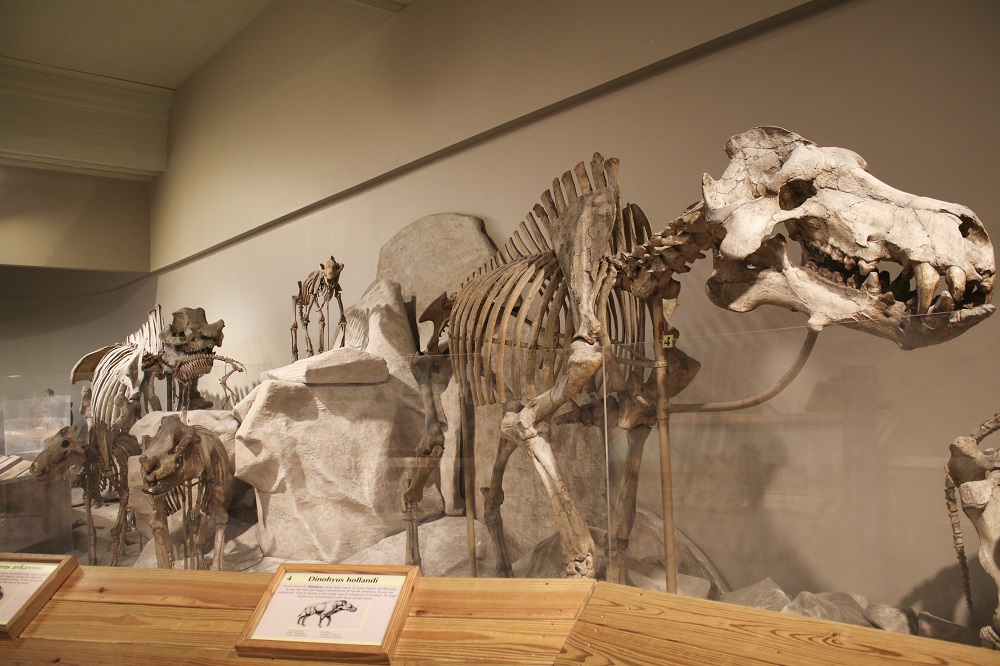
Dinohyus hollandi translated from Latin means “terrible pig.” The fossils of this frightening, 6-foot-tall omnivore were found in Nebraska and are on display at Carnegie Museum of Natural History in Pittsburgh.
(Photo by Hayley Pontia)
Carnegie Museum of Natural History
One of the Four Carnegie Museums of Pittsburgh
Dinohyus hollandi translated from Latin means “terrible pig.” The fossils of this frightening, 6-foot-tall omnivore were found in Nebraska and are on display at Carnegie Museum of Natural History in Pittsburgh.
(Photo by Hayley Pontia)
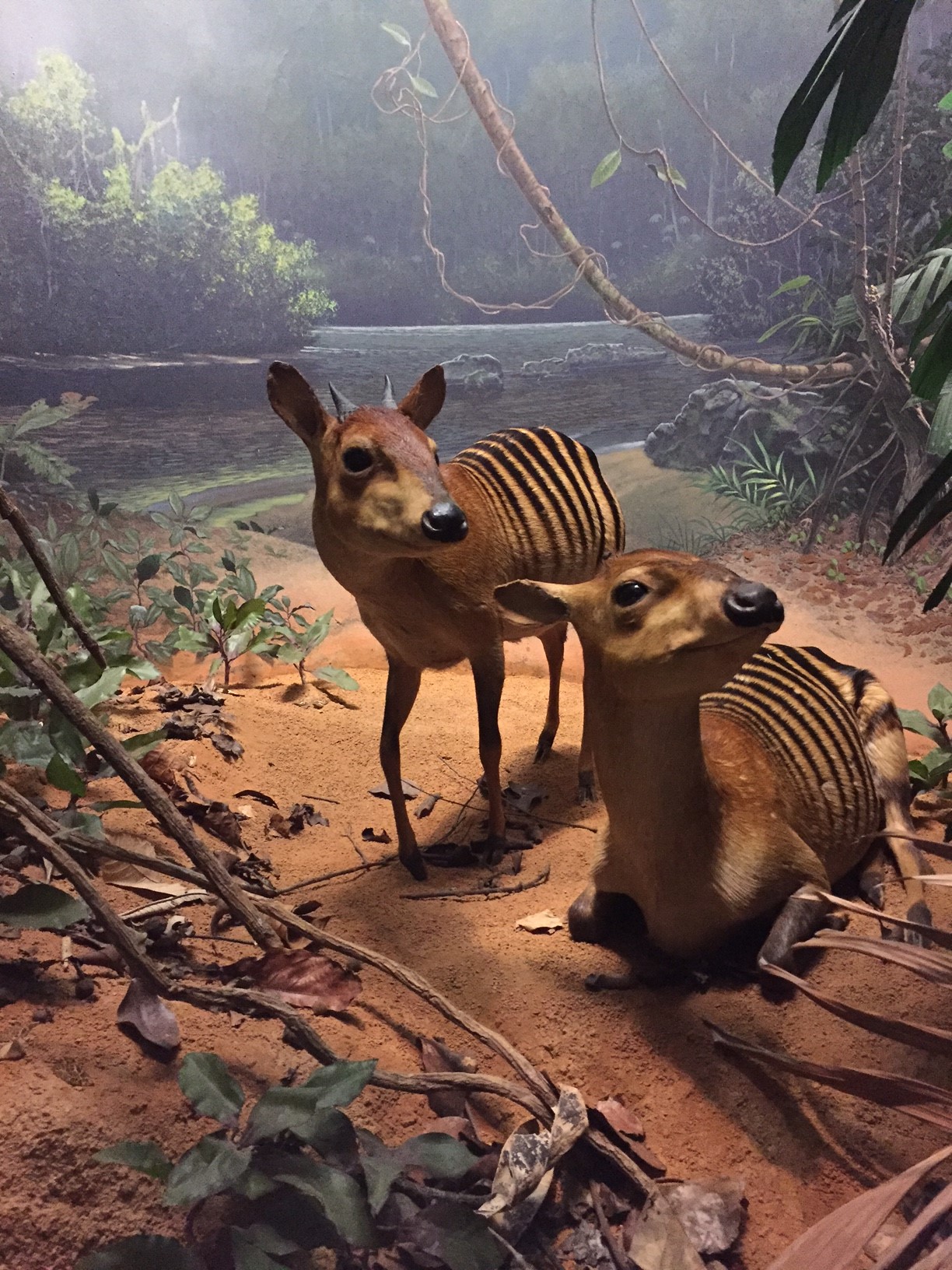
The Carnegie Museum of Natural History’s Zebra Duikers are shown in their natural habitat, the coastal rain forests of Africa in the Hall of African Wildlife.
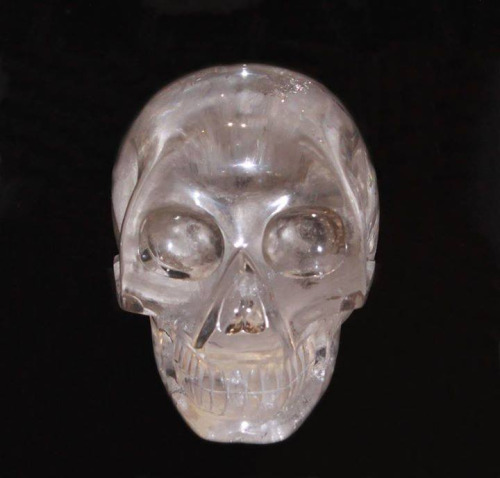
Meet Fred – the devilishly handsome life-sized crystal skull who has taken up residence in Carnegie Museum of Natural History’s mineral collection.
Fred’s spooky style has earned him somewhat of a local “cult following” said Marc Wilson, head of the minerals section, who named the 13.5-pound quartz carving.
If you’re wondering how we acquired a crystal skull, the answer probably isn’t as exciting as you might expect. Unlike Indiana Jones, our curators did not have to swing from vines, raid a tomb, or crack a whip to get Fred into our museum’s halls.
Wilson said that there are legends of crystal skulls that were carved by ancient civilizations, like in “Indiana Jones and the Kingdom of the Crystal Skull,” but no such skulls have ever been discovered.
Fred was donated to the museum in 2004 by a Brazilian carving company. Wilson said carving marks indicate that he was made using modern carving tools and techniques.
While Fred may not be the most valuable item in the gems and mineral collection, he’s certainly one of the most novel.
“He makes for a great joke on Halloween when we stick him out in the hall,” Wilson said.
By Patrick McShea
Best-selling books aren’t usually discussed during our daily 15-minute customer service personnel briefings.
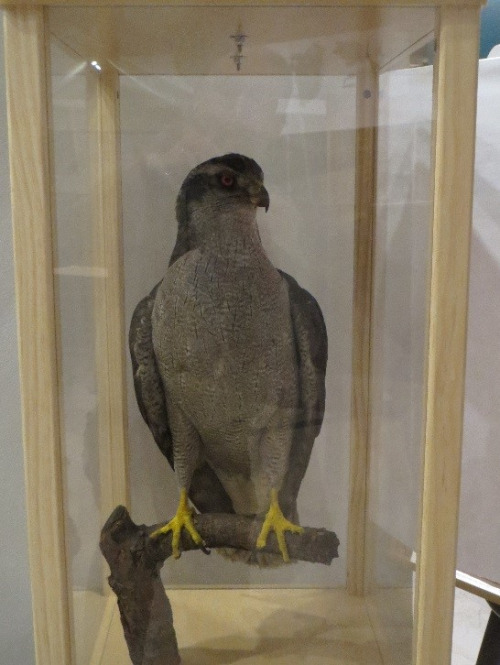
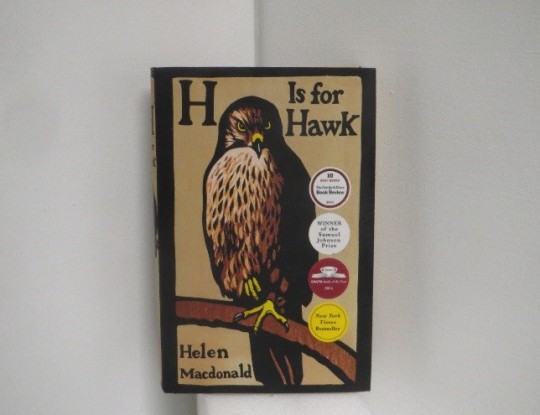
During a recent briefing focused on the museum’s extensive loan program, an old taxidermy mount in a new portable display case steered discussion to H Is for Hawk, the award winning 2014 non-fiction work by Helen Macdonald.
“That’s a Goshawk?” exclaimed one staff member, pointing to the life-like preserved remains of a big gray and white raptor perched in a 28 inch high plexi-glass sided box. “The bird is huge!” She went on to explain that as part of a book club, she had been reading, if not always enjoying, H is for Hawk, which features a young Goshawk as pivotal character.
As someone then halfway through the book I was able to affirm the narrative’s difficult passages and take advantage of the fleeting teachable moment. H Is for Hawk can be a tough read because it addresses grief and depression and the historically frequent misinterpretation of the lessons people should take from highly adapted predators. I pointed out that the stuffed bird that was in front of us presented several physical adaptations for the efficient capture and killing of prey.
Whether you’ve read the book or not, you can gain a fuller appreciation for the physical attributes of birds of prey by closely examining the taxidermy mounts of hawks and owls currently on display at Carnegie Museum of Natural History’s interactive exhibition Discovery Basecamp, which is on the first floor of the museum.
Additional information about the CMNH loan program can be found at: http://www.carnegiemnh.org/programs/loan/
As part of the Pittsburgh Arts and Lectures series, Helen Macdonald will speak at Carnegie Music Hall on January 30, 2017: http://pittsburghlectures.org/2015-16-literary-evenings/
Patrick McShea works in the Education and Visitor Experience department of Carnegie Museum of Natural History. Museum employees are encouraged to blog about their unique experiences and knowledge gained from working at the museum.
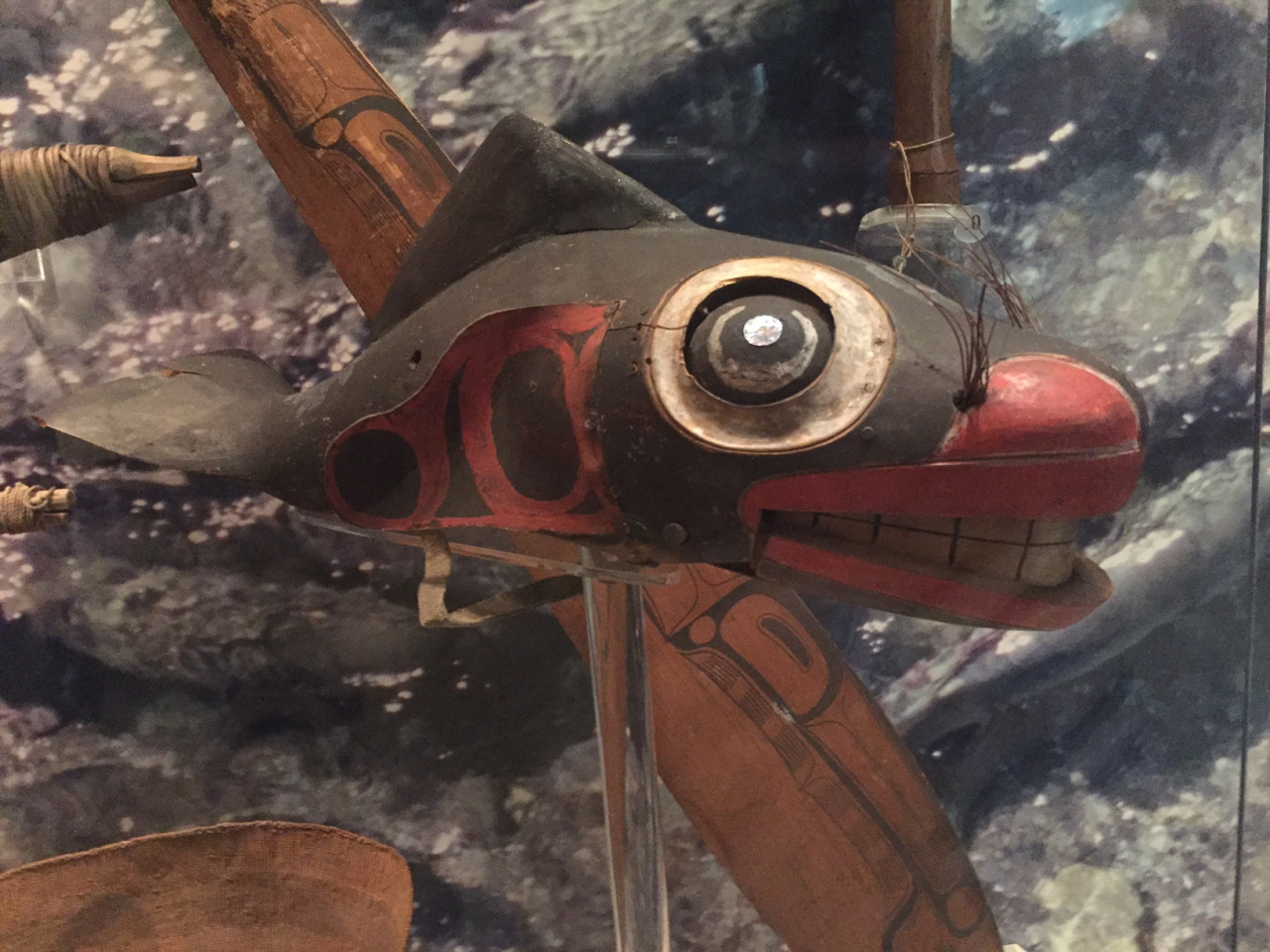
This carving of an orca whale is actually a headdress made by the Tlingit, the indigenous people of the Pacific North West.
Made of wood, tanned hide, sea lion whiskers, shells, iron, and mineral paint, the headdress’ eyes and lower jaw can move during a theatrical performance where a dancer would have worn it.
The headress was collected in 1904 and is currently in Carnegie Museum of Natural History’s Alcoa Foundation Hall of American India