• Skip to primary navigation
  • Skip to main content
  • Skip to primary sidebar

Carnegie Museum of Natural History

One of the Four Carnegie Museums of Pittsburgh

  • Visit
    • Buy Tickets
    • Visitor Information
    • Exhibitions
    • Events
    • Dining at the Museum
    • Celebrate at the Museum
    • Powdermill Nature Reserve
    • Event Venue Rental
    • Gift Cards
  • Learn
    • Field Trips
    • Educator Information
    • Programs at the Museum
    • Bring the Museum to You
    • Guided Programs FAQ
    • Programs Online
    • Climate and Rural Systems Partnership
  • Research
    • Scientific Sections
    • Science Stories
    • Science Videos
    • Senior Science & Research Staff
    • Museum Library
    • Science Seminars
    • Scientific Publications
    • Specimen and Artifact Identification
  • About
    • Mission & Commitments
    • Directors Team
    • Museum History
  • Tickets
  • Give
  • Shop

wpengine

April 28, 2016 by wpengine

The Camel’s Petite North American Ancestor

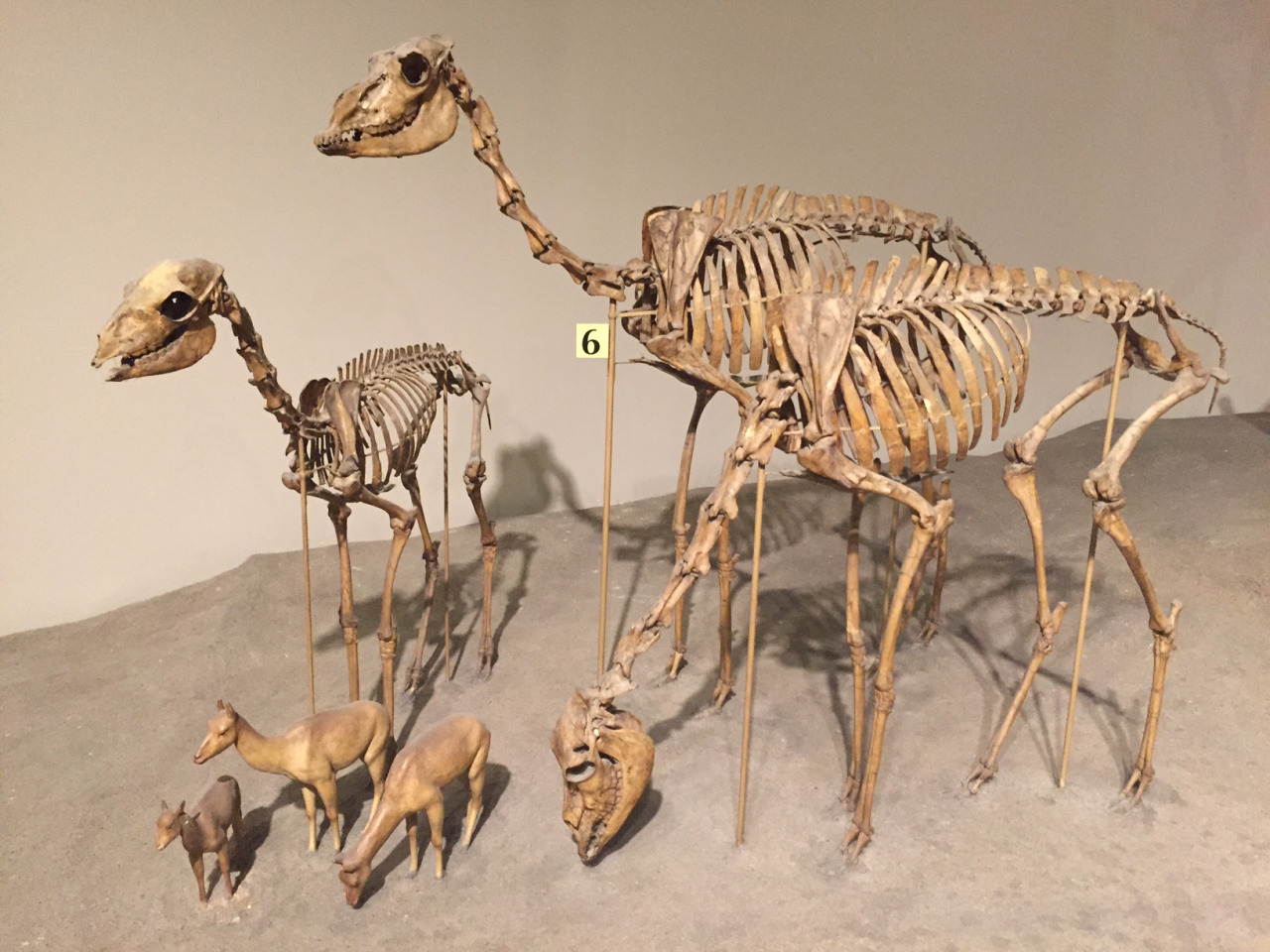
Stenomylus hitchcocki skelletons
Did you know that camels originated in North America?

Though camels today are most commonly seen padding across sand dunes in the expansive Sahara, their ancestors were small and gazelle-like forest dwellers called Stenomylus hitchcocki. They traveled in herds and grazed in the high plains during the Miocene Epoch, which was 5 to 23 million years ago.

Seen above are Stenomylus hitchcocki on display at Carnegie Museum of Natural History.
Filed Under: Blog

April 27, 2016 by wpengine

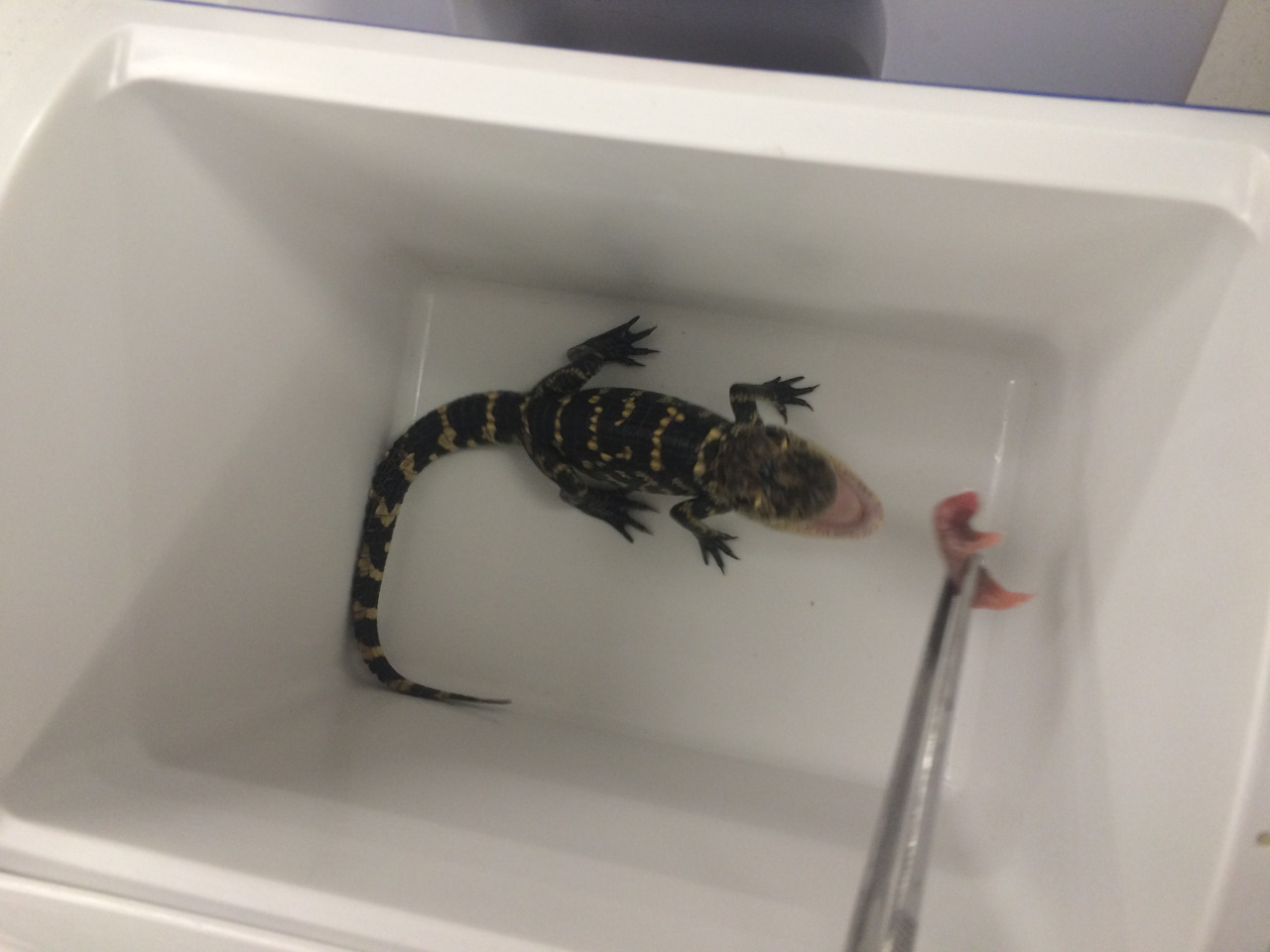
Feeding Albert the Alligator

baby alligator being fed
Albert the American alligator is one of the reptiles housed in our Living Collection here at the museum. These animals are frequently used as ambassadors in our educational programming for visitors, but many people don’t get to see the day-to-day care put into maintaining our friendly crew of critters.

The alligators eat a diet consisting of specially formulated crunchy sticks and also “pinky” (baby) mice. To feed Albert, we first take the gators out of their tank and separate them into containers to ensure they are receiving the same amount of food at feeding time.  We thaw out a frozen pinky mouse, and then dust it with powdered reptile vitamins. The last step is clearly Albert’s favorite – down the hatch it goes!

Mallory Vopal is Gallery Experience Manager at Carnegie Museum of Natural History and also manages the Living Collection.  Her animal husbandry background includes reptiles, birds, amphibians, mammals, and invertebrates.

Filed Under: Blog

April 27, 2016 by wpengine

New Discovery Lets Researchers Get Inside a Dinosaur’s Head

Sarmientosaurus musacchioi fossil
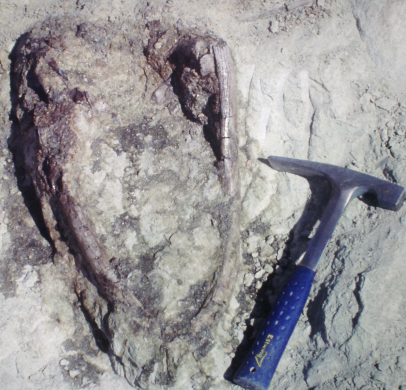
The skull of Sarmientosaurus musacchioi at the discovery site in Argentina. (photo by Rubén Martínez)

In some areas of the world, the fossils of sauropod dinosaurs are so common that paleontologists literally trip over the bones of these huge, long-necked, long-tailed plant-eaters that many people think of when they hear the word “dinosaur.”

While some kinds of sauropod bones are common, others such as skulls are more elusive – which makes a new discovery that was coauthored by a Carnegie Museum of Natural History paleontologist very exciting.

A skull discovered in a rural area of southern Chubut Province, Argentina, will give a face and name to a ten-ton sauropod that plodded around the southern hemisphere about 95 million years ago – Sarmientosaurus musacchioi.

Assistant Curator of Vertebrate Paleontology Matt Lamanna worked on a team that named the new species of dinosaur, which he said will yield a wealth of insights into the biology and behavior of titanosaurs, a group of sauropods that includes the most massive land animals that have ever existed. The fossil was originally discovered by the team leader Rubén Martínez of the Universidad Nacional de la Patagonia San Juan Bosco in Chubut.

The skull  Martínez and his team discovered is arguably the most complete and well-preserved titanosaur skull ever found. It provides scientists with their first good look at the head of an
anatomically primitive titanosaur.

Scientists from Ohio University Heritage College of Osteopathic Medicine were able to reconstruct a model of what the dinosaur’s brain would have looked like. Despite the colossal size of the animal, its brain was probably only the size of an orange!

Lamanna said that Sarmientosaurus is one of the most exciting discoveries he’s worked on in his career and will provide researchers with information on the origins and evolutionary relationships of titanosaurs.

Matt and paleontologist with sarmientosaurus skull

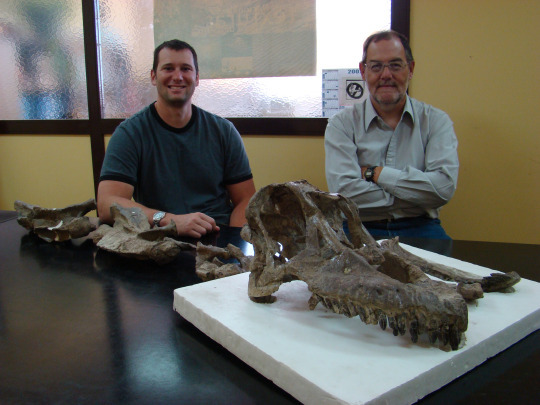
Above: Research team members Dr. Rubén Martínez (Universidad Nacional de la Patagonia San Juan Bosco, Comodoro Rivadavia, Argentina, right), and Dr. Matt Lamanna (Carnegie Museum of Natural History, Pittsburgh, USA, left) with the skull and neck skeleton of the new titanosaurian dinosaur species Sarmientosaurus musacchioi.

Further information and resources:

http://dx.plos.org/10.1371/journal.pone.0151661
Still images, animations, and interactive 3D digital model for download (with captions and credits): https://www.dropbox.com/sh/in3tupno91h0haw/AACJmvc05hB7fk5tkeNcwgCBa?dl=0
YouTube animation of the Sarmientosaurus skull and brain endocast: https://www.youtube.com/watch?v=Zb8e5ffEC74
Interactive Sketchfab animation of the Sarmientosaurus skull: https://skfb.ly/MKOP
Interactive Sketchfab animation of the transparent Sarmientosaurus skull showing the brain endocast inside: https://skfb.ly/MKLO
Interactive Sketchfab animation of the Sarmientosaurus brain endocast: https://skfb.ly/MKKH

Filed Under: Blog Tagged With: dinosaurs, discovery, Matt Lamanna, paleontology

April 26, 2016 by wpengine

Superb Lyrebird

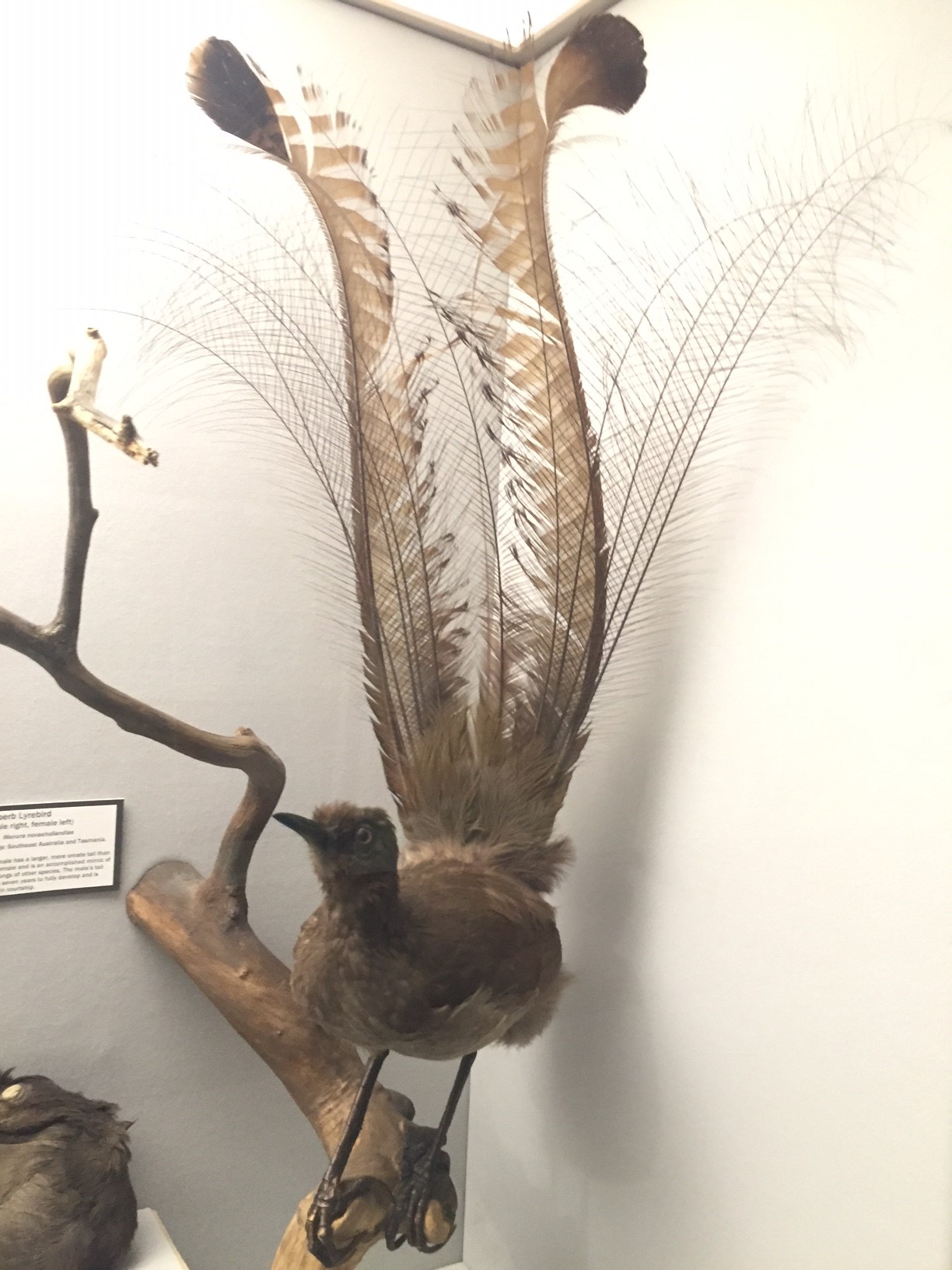
Superb LyrebirdIf you thought you were having a great hair day, check out the  in Carnegie Museum of Natural History’s Bird Hall.
Males Superb Lyrebird attract females with their ornate tails, which can take up to seven years to fully develop.

Filed Under: Blog Tagged With: bird hall, Birds

April 25, 2016 by wpengine

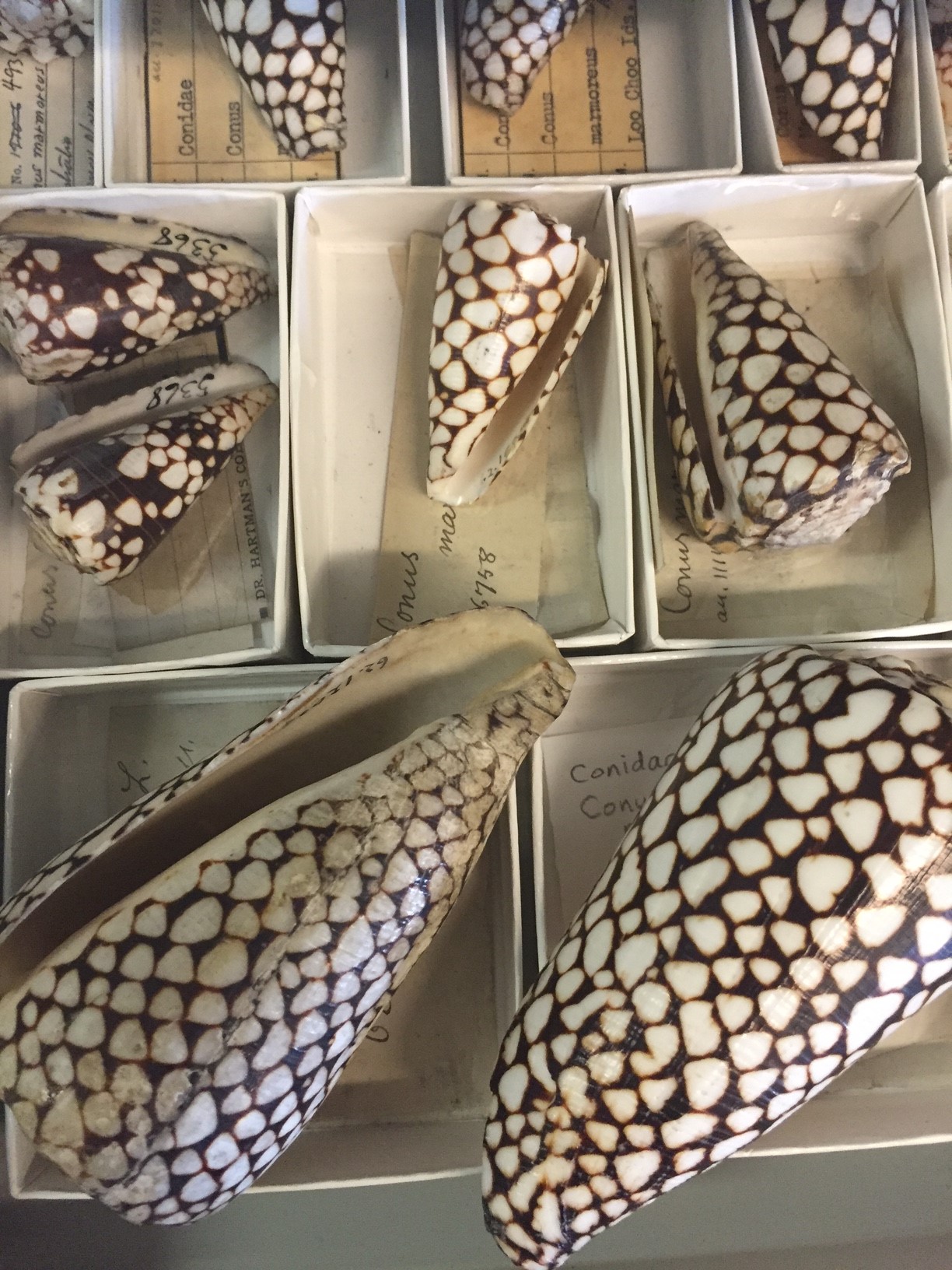
Cone Snails – Another Thing to Fear

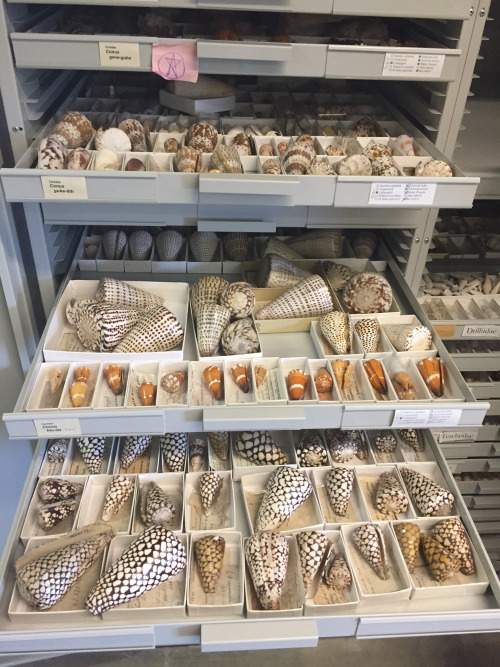
catalogued Cone Snails
In case sharks, rip tides, and tidal waves weren’t enough to keep you running away from the shoreline, lurking in shallow tropical waters and hidden in beautiful shells are one of the most venomous predators in the ocean –cone snails.

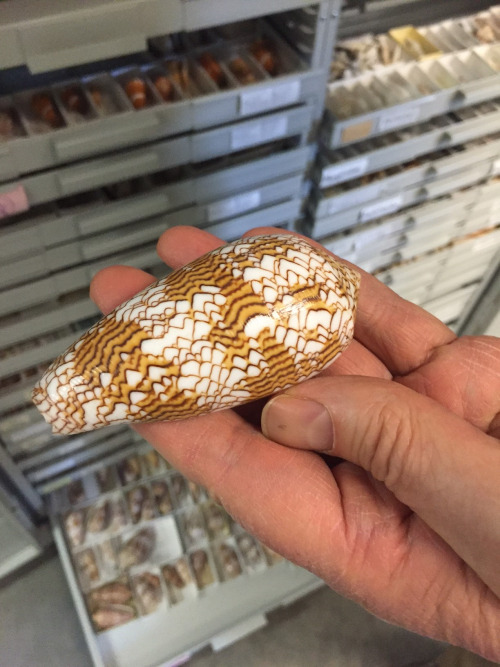
Here at Carnegie Museum of Natural History, our curator has several thousand cone snail shells in the behind-the-scenes collections. There are about 700 types of cone snails, members of the Conidae family, that range from the size of smaller than a penny to the size of 8 inches (20 cm.). Despite their wide variety, there is one thing all cone snails have in common – venom.

a collection of various cone snails

Cone snails are a fearsome example of carnivorous snails that hunt fish and worms use a tooth that is harpoon-like in shape that injects a
venom, so complex that some species can kill a human with one small prick. The venom varies from species to species, and most contain as many 50 different peptides which are short chains of amino acids.

The complexity of the venom makes creating an antidote difficult, but it also has piqued the interest of researchers who have been able to harness its potency for good.

“It’s better living through snails,” said Carnegie Museum of Natural History’s Assistant Curator of Mollusks Tim Pearce.

The venom of Conus magnus was used to develop a drug that may be 100 to 1,000 times more effective than morphine, without the risk of addiction and users do not build up a tolerance. Pearce said nearly all patients who have used this drug have had one strange side effect – they hear music.

The good news is only two species (Conus textile and Conus geographus) are known to have actually killed humans, and the number of known cone snail fatalities is less than 100.

So swim along safely, but maybe think twice before pulling a beautiful shell from tropical waters especially if it is alive.

Click here to watch a cone snail hunt. 

A specimen of Conus Magnus

Filed Under: Blog Tagged With: ocean, snails, Tim Pearce

April 24, 2016 by wpengine

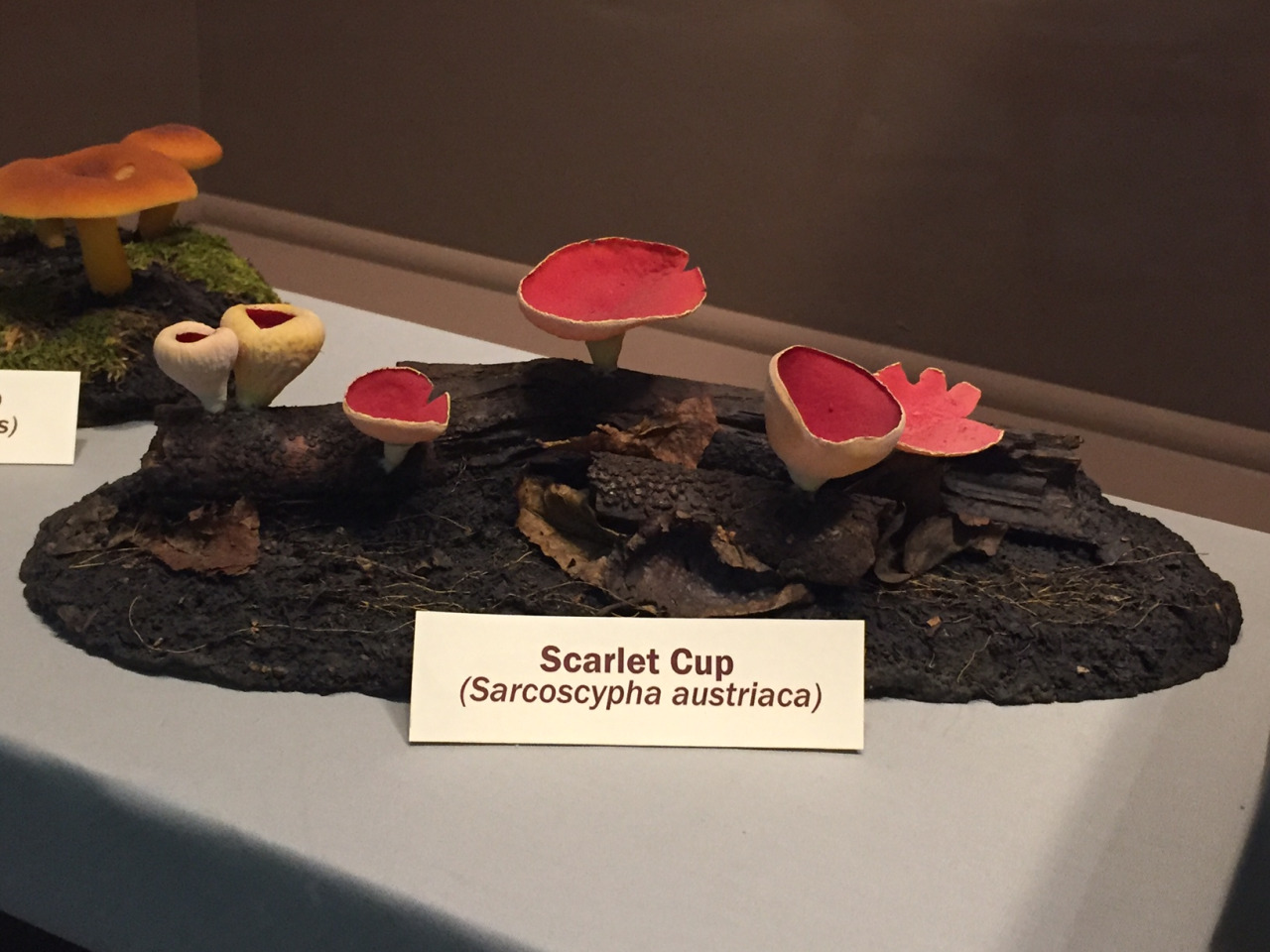
Scarlet Cup fungus

Scarlet Cup fungus in display case

Scarlet Cup fungus in Carnegie Museum of Natural History’s Hall of Botany.

Filed Under: Blog Tagged With: Botany, botany hall, fungi, museums

  • « Go to Previous Page
  • Page 1
  • Interim pages omitted …
  • Page 195
  • Page 196
  • Page 197
  • Page 198
  • Page 199
  • Interim pages omitted …
  • Page 206
  • Go to Next Page »

sidebar

About

  • Mission & Commitments
  • Directors Team
  • Museum History

Get Involved

  • Volunteer
  • Membership
  • Carnegie Discoverers
  • Donate
  • Employment
  • Events

Bring a Group

  • Groups of 10 or More
  • Birthday Parties at the Museum
  • Field Trips

Powdermill

  • Powdermill Nature Reserve
  • Powdermill Field Trips
  • Powdermill Staff
  • Research at Powdermill

More Information

  • Image Permission Requests
  • Science Stories
  • Accessibility
  • Shopping Cart
  • Contact
  • Visitor Policies
Stay in the loop! Sign up for our newsletter(s).
One of the Four Carnegie Museums | © Carnegie Institute | Privacy Policy | Terms of Use | Accessibility
Rad works here logo