• Skip to primary navigation
  • Skip to main content
  • Skip to primary sidebar

Carnegie Museum of Natural History

One of the Four Carnegie Museums of Pittsburgh

  • Visit
    • Buy Tickets
    • Visitor Information
    • Exhibitions
    • Events
    • Dining at the Museum
    • Celebrate at the Museum
    • Powdermill Nature Reserve
    • Event Venue Rental
    • Gift Cards
  • Learn
    • Field Trips
    • Educator Information
    • Programs at the Museum
    • Bring the Museum to You
    • Guided Programs FAQ
    • Programs Online
    • Climate and Rural Systems Partnership
  • Research
    • Scientific Sections
    • Science Stories
    • Science Videos
    • Senior Science & Research Staff
    • Museum Library
    • Science Seminars
    • Scientific Publications
    • Specimen and Artifact Identification
  • About
    • Mission & Commitments
    • Directors Team
    • Museum History
  • Tickets
  • Give
  • Shop

January 11, 2023 by

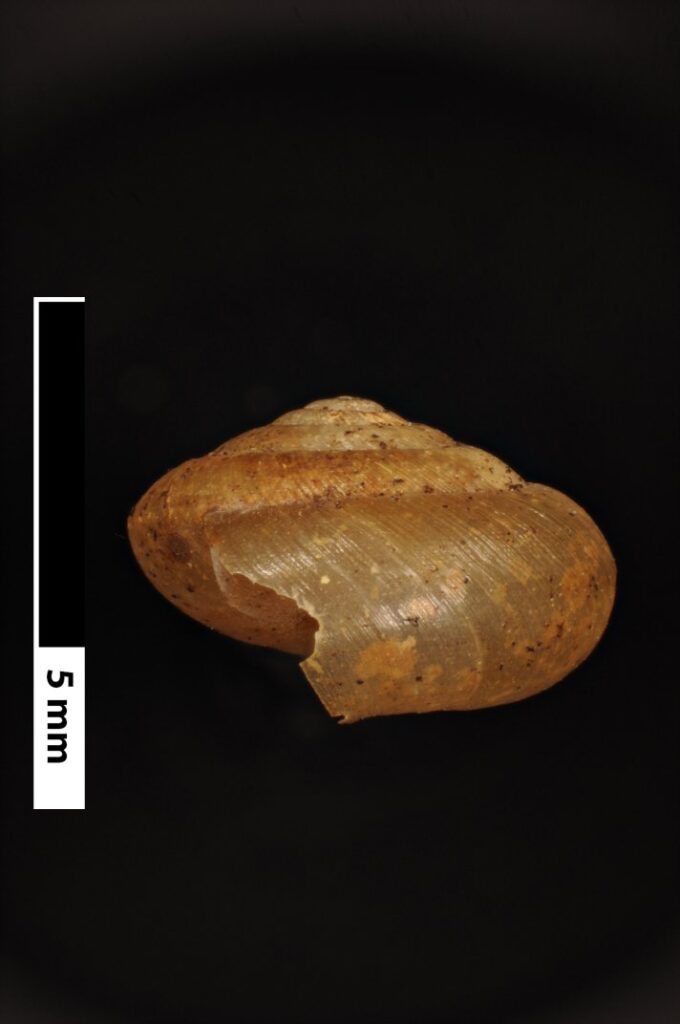
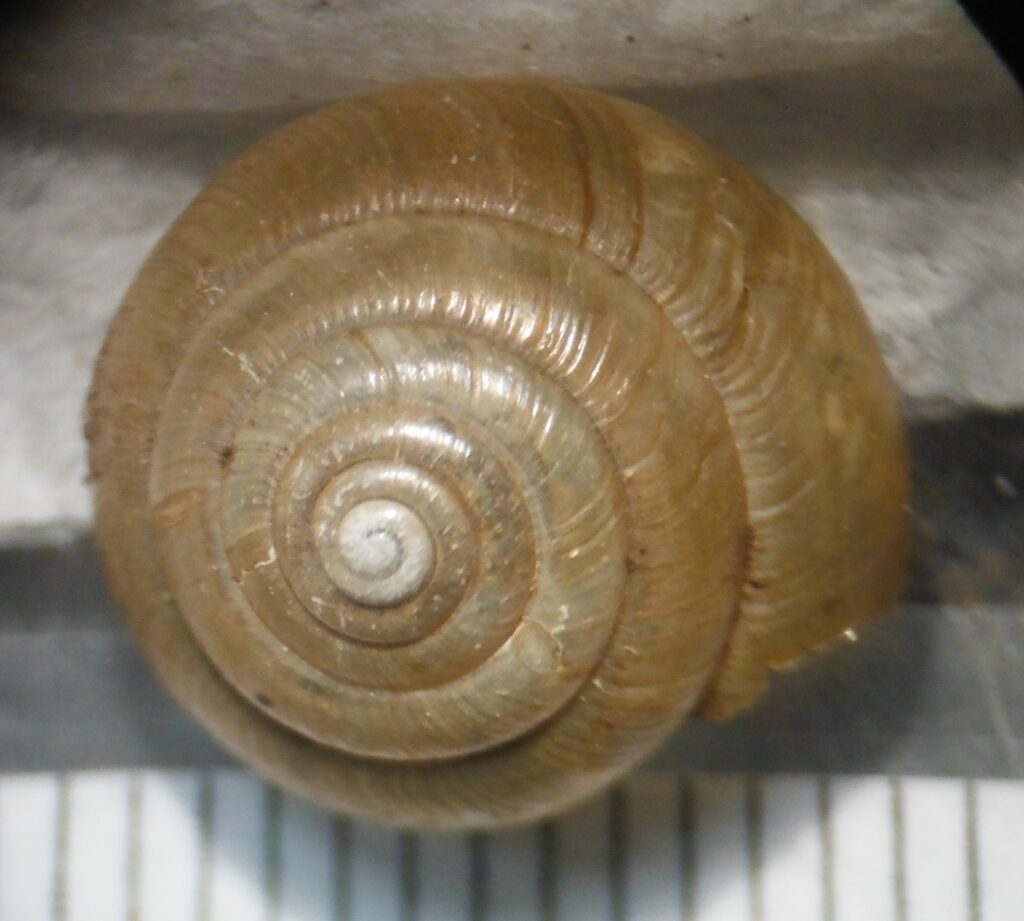
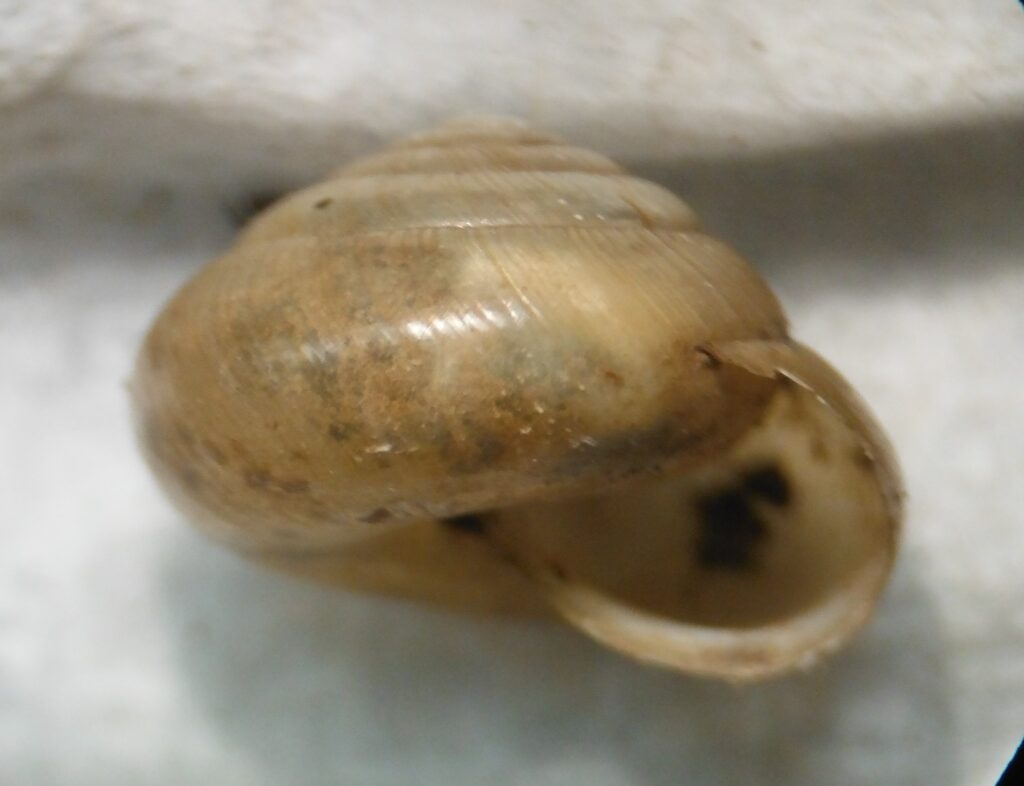
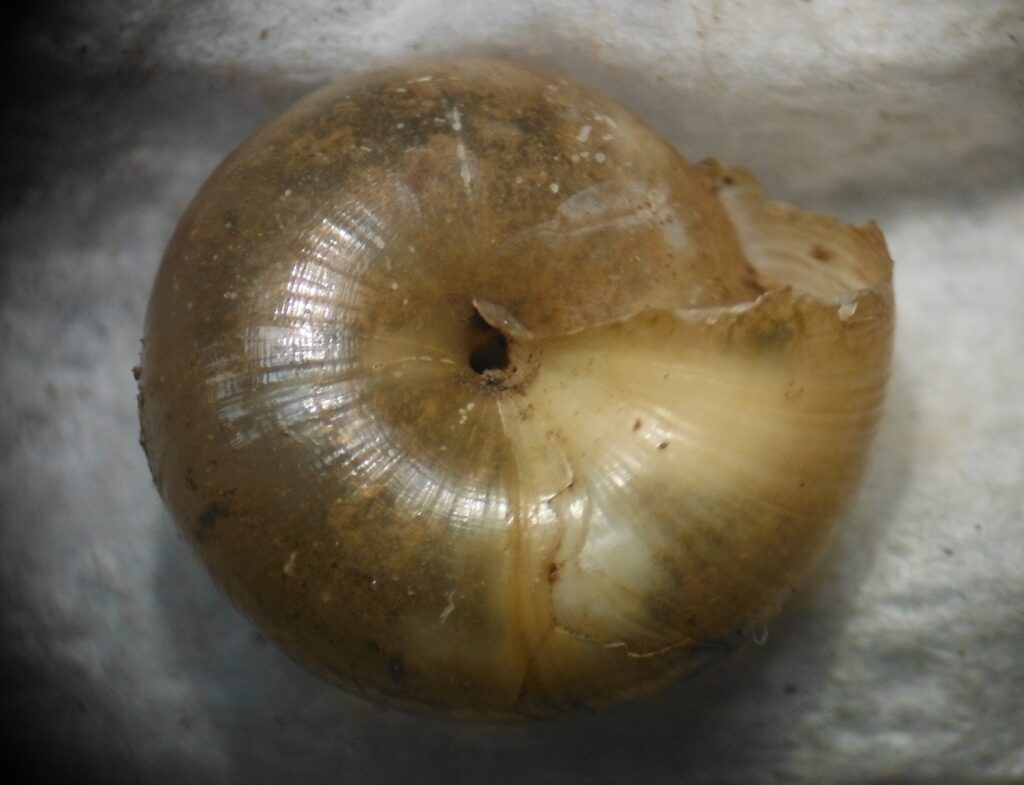
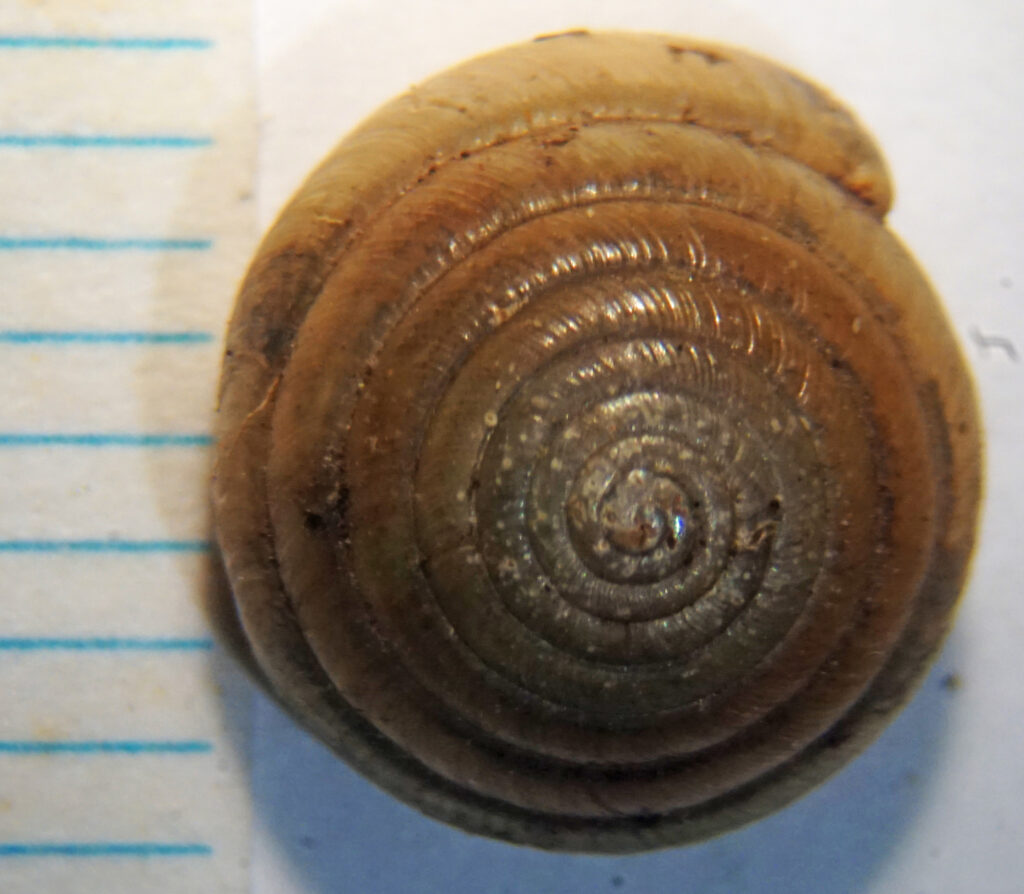
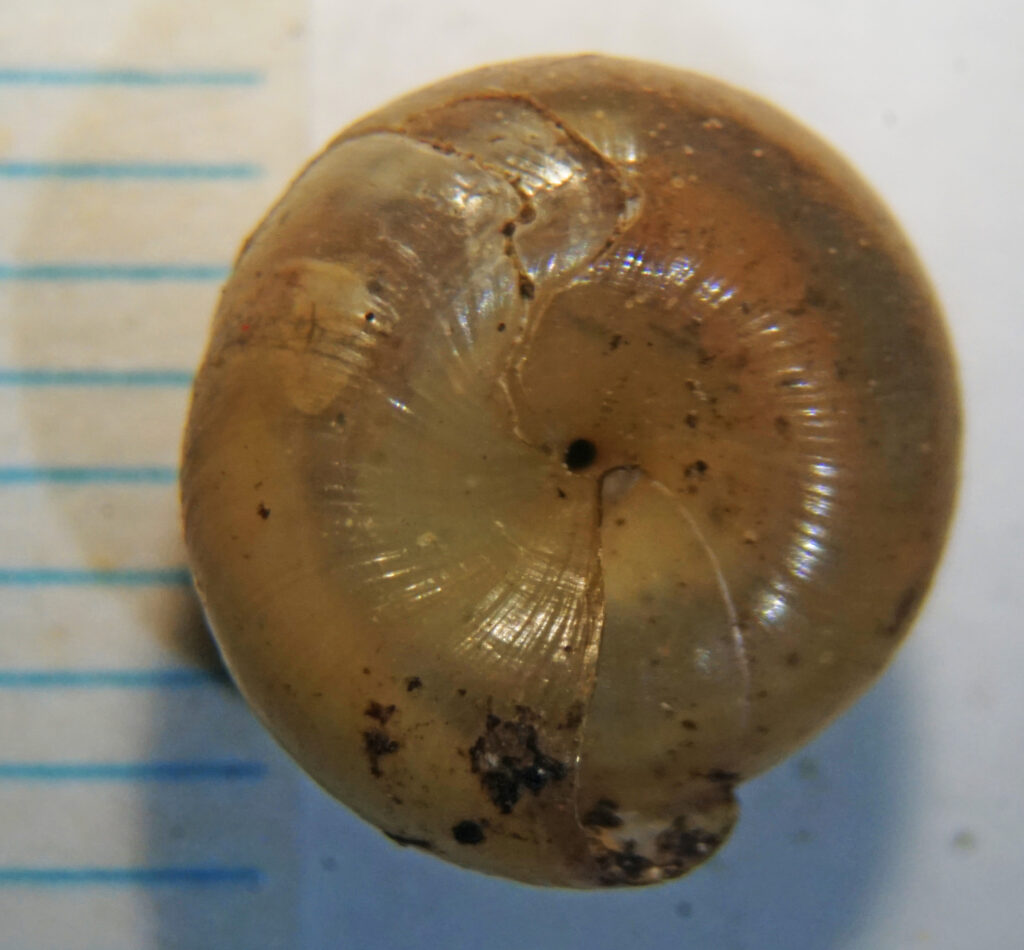
Ventridens lasmodon

Image Usage Information

  • Dan Dourson
  • CC BY-NC 4.0 DEED

Family: Gastrodontidae

Common name:  Hollow Dome

Discovery: Phillips, 1841

Identification

Width: 7.5-7.8 mm
Height: 3.7-3.8 mm
Whorls: 7.5+

The glossy shell of Ventridens lasmodon has the widest umbilicus of any Ventridens. It has a relatively low shell, tightly coiled, with a thin lip containing a basal callus and a recessed palatal lamella. The oldest specimens have reduced or absent lamellae and callus. The animal is pale-colored.

Ecology

This species can be found in leaf litter on wooded hillsides and valleys, especially in richer areas (Hubricht, 1985; Dourson, 2010).

Taxonomy

A synonym for V. lasmodon is Zonitoides (Ventridens) lasmodon.

Distribution

Ventridens lasmodon is found in the Appalachian Mountains from southern West Virginia to northern Alabama (Hubricht, 1985). In Virginia it is reported from scattered western counties.

Conservation

NatureServe Global Rank: G4
NatureServe State Rank: S3
Virginia’s wildlife action plan: Tier IV

January 11, 2023 by

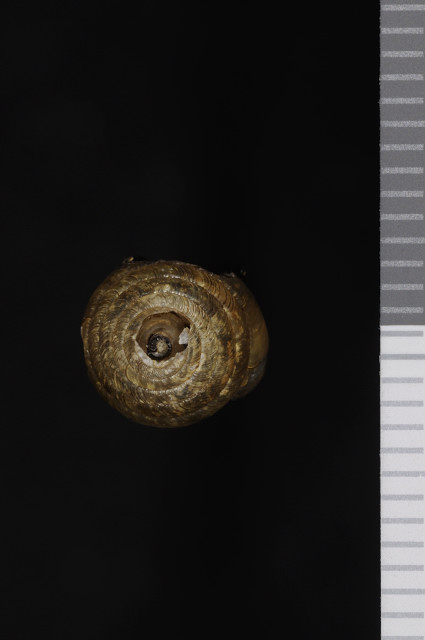
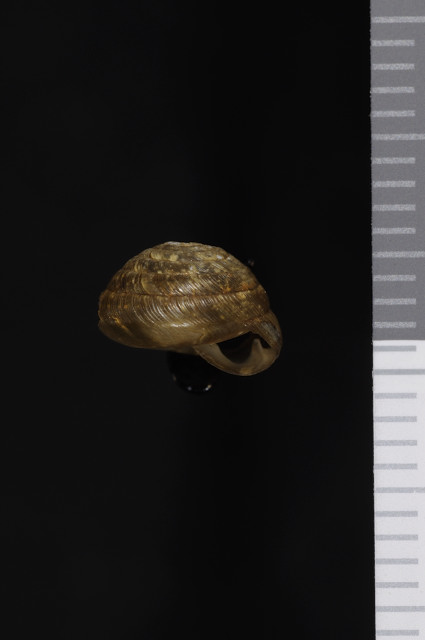
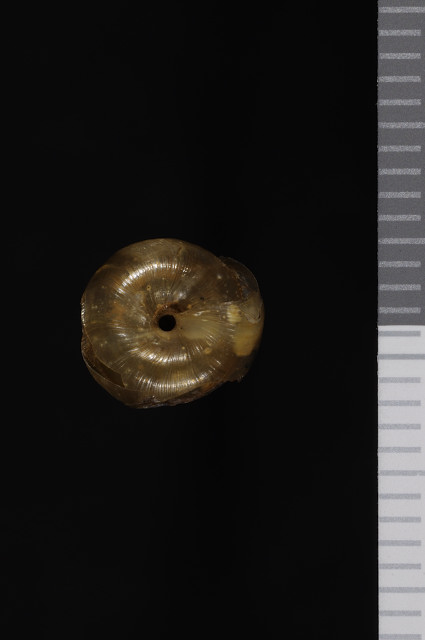
Ventridens intertextus

Image Usage Information

  • The Academy of Natural Sciences of Philadelphia
  • CC BY-NC 4.0 DEED
  • For additional information about this specimen: Gary Rosenberg (rosenberg.ansp@drexel.edu)

Family: Gastrodontidae

Common name: Pyramid Dome

Discovery: A. Binney, 1841

Identification

Width: 12.0 – 18.5 mm
Height: 7.3 – 13.3 mm
Whorls: 6+

The apex of this species’ shell is relatively high and spire acute. The final whorl may be slightly angular, often with a light-colored band at the periphery. The shell texture of Ventridens intertextus consists of very fine oblique and spiral striae intersecting each other. The aperture is rounded with a thin lip with a callus lining within, and is a bit reflected close to where it meets the previous whorl. The umbilicus is tiny. This species can be differentiated from V. ligera by looking at the base, which has spiral striae and lacks the gloss present on V. ligera.

Ecology

This species is found in woods with acid soils, in the leaf litter. In Kentucky it is found in hardwood forest ravines, hillsides, and acidic ridgetops (Dourson, 2010). However, in Tennessee, V. intertextus has been reported in young forests where dolomite is predominant (Coney et al, 1982).

Taxonomy

Synonyms for V. intertextus are Gastrodonta intertexta, Helix intertexta, Zonites intertextus, and Zonitoides (Ventricallus) intertextus.

Distribution

Ventridens intertextus is found across much of the East, from southern Ontario, New York and Michigan, south to east Texas and northern Florida. It has been reported from south central and western Virginia.

Conservation

NatureServe Global Rank: G5
NatureServe State Rank: S3

January 11, 2023 by

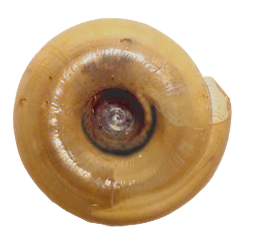
Ventridens gularis

Image Usage Information

  • The Academy of Natural Sciences of Philadelphia
  • CC BY-NC 4.0 DEED
  • For additional information about this specimen: Gary Rosenberg (rosenberg.ansp@drexel.edu)

Family: Gastrodontidae

Common name: Throaty Dome

Discovery: Say, 1822

Identification

Width: 7.8 – 9.0 mm
Height: 5.0 – 6.3 mm
Whorls: 6.5 – 8.0

The shell of Ventridens gularis is similar to many others of its kind, a medium-sized rounded dome with a thin lip, but it has a tiny umbilicus – sometimes closed – and two teeth in the aperture. The shell’s surface is glossy, horn-colored and mostly smooth, with few growth wrinkles. The aperture is not particularly large, and the lip has a callus lining. The two basal laminae are recessed in the aperture.

Ecology

This species is found in a range of habitats, including ravines and wooded hillsides with leaf litter, as well as roadsides and floodplains.  In Tennessee it has been found especially in areas of shale and acid soils with moderate moisture content, but is not limited to those habitats (Coney et al, 1982). In Kentucky it is reported from both limestone and sandstone areas (Dourson, 2010).

Taxonomy

Synonyms for V. gularis are Gastrodonta gularis, Helix bicostata, H. gularis, Ventridens suppressus magnidens, Zonites cuspidatus, Zonites gularis, and Zonitoides (Ventridens) gularis.

Distribution

Ventridens gularis ranges inland from Ohio and Pennsylvania south to northern Mississippi, Alabama and Georgia. In Virginia it is mostly spread through the central part of the state, edging into the northwest.

Conservation

NatureServe Global Rank: G5
NatureServe Sate Rank: S3S4

January 11, 2023 by

Ventridens demissus

Image Usage Information

  • Barb Graham
  • CC BY-NC 4.0 DEED
  • Additional information about this specimen

Family: Gastrodontidae

Common name: Perforate Dome

Discovery: A. Binney, 1843

Identification

Width: 7.5 – 10.4 mm
Height: 4.8 – 6.8 mm
Whorls: 6+

The apex of this animal’s shell is relatively low, with an obtuse spire. The umbilicus is very small, the area around it only slightly depressed, and the base is generally flat and smooth. The surface of the shell is a yellowish, horn-color and mostly quite smooth, though there are some fine, widely-spaced striae on the outer whorls. The aperture is not especially wide, and the lip is thin. Young shells may have an outer basal lamina (Pilsbry, 1946-48; Dourson, 2010). The shell is generally smaller and lower than V. ligera.

Ecology

Ventridens demissus is found in a range of habitats including ravines, wooded hillsides with leaf litter, and floodplains.  It is even found in urban areas (Dourson, 2010).

Taxonomy

Synonyms for V. demissus are Gastrodonta demissa, Helix demissa, Zonites demissus, and Zonitoides (Ventricallus) demissus.

Distribution

Ventridens demissus is spread from southwestern Pennsylvania south to east Texas and west to northern Florida. It is found in Gulf Coast but generally not in Atlantic Coast or Piedmont counties. In Virginia, it is mostly in the west.     

Conservation

NatureServe Global Rank: G5
NatureServe State Rank: S4

January 11, 2023 by

Ventridens decussatus

placeholder

Family: Gastrodontidae

Common name: Crossed Dome

Discovery: Walker and Pilsbry, 1902

Identification

Width: 7.8-8.2 mm
Width: 5-6 mm
Whorls: 8

The shell of this animal is a tall dome shape, like some other Ventridens, but the final whorl is angular, making its profile unique. The top of the shell has many close, strong radial striations, while the base is smoother with some traces of spiral striae. The surface of the shell is somewhat dull rather than glossy. The edge of the aperture is thin and is armed with two teeth – one close to the columella and a high, short basal lamella. It can be differentiated from V. collisella by the angled periphery and the somewhat wider umbilicus. The animal is dark above.

Ecology

This species is found at high elevations, usually above 3,000 feet. It lives in leaf litter, particularly oak leaves.

Taxonomy

Synonyms for V. decussatus are Gastrodonta gularis decussate, Ventridens gularis decussate, V. g. decussatus, and Zonitoides (Ventridens) decussatus.

Distribution

Ventridens decussatus is reported from the highlands of Alabama, South Carolina, Tennessee, and North Carolina. Its presence is in Virginia is based upon a single collection in Scott County (S. Roble, pers. comm.).

Conservation

NatureServe Global Rank: G3
NatureServe State Rank: S1
Virginia’s wildlife action plan: Tier III

January 11, 2023 by

Ventridens collisella

Image Usage Information

  • Benjamin Schwartz
  • CC BY-NC 4.0 DEED
  • Additional information about this specimen

Family:  Gastrodontidae

Common name: Sculptured Dome

Discovery: Pilsbry, 1896

Identification

Width: 8.4 – 9.6 mm
Height: 6.0 – 8.1 mm
Whorls: 7.5

The thickness of Ventridens collisella’s shell and its sharp irregular striations above help set it apart from similar Ventridens, along with the tiny size of the half-covered umbilicus. Its apex is dome-shaped and elevated, and the base is rather flat. The shell is smoother on the base, but still faintly wrinkled and spirally striate. The lip of the aperture is thin, but wider where it meets the columella. There are usually two lamellae, one close to the columellar insertion the other basal and a bit recessed. These are sometimes absent (Pilsbry, 1946). The animal is light-colored.

Ecology

This species is a calciphile. It is found in leaf litter on hillsides and in steep valleys (Hubricht, 1985). In Tennessee it is associated with very steep slopes, leaf litter, neutral soils, and with late-successional forests (Coney et al, 1982). Hubricht (1985) reports that it occurs primarily at lower elevations, usually below 1,000 feet, while Coney et al (1982) found it correlated with “high” elevation in Tennessee (940-1,120’).

Taxonomy

Synonyms for V. collisella are Gastrodonta collisella and Zonitoides (Ventridens) collisella.

Distribution

Ventridens collisella is a southern mountain species. Its range begins in the upper corners of Georgia and Alabama where the two states meet, and extends up through Kentucky into Virginia and West Virginia. It is not found in central or eastern parts Virginia.

Conservation

NatureServe Global Rank: G4
NatureServe State Rank: S4

  • « Go to Previous Page
  • Page 1
  • Interim pages omitted …
  • Page 24
  • Page 25
  • Page 26
  • Page 27
  • Page 28
  • Interim pages omitted …
  • Page 53
  • Go to Next Page »

sidebar

About

  • Mission & Commitments
  • Directors Team
  • Museum History

Get Involved

  • Volunteer
  • Membership
  • Carnegie Discoverers
  • Donate
  • Employment
  • Events

Bring a Group

  • Groups of 10 or More
  • Birthday Parties at the Museum
  • Field Trips

Powdermill

  • Powdermill Nature Reserve
  • Powdermill Field Trips
  • Powdermill Staff
  • Research at Powdermill

More Information

  • Image Permission Requests
  • Science Stories
  • Accessibility
  • Shopping Cart
  • Contact
  • Visitor Policies
Stay in the loop! Sign up for our newsletter(s).
One of the Four Carnegie Museums | © Carnegie Institute | Privacy Policy | Terms of Use | Accessibility
Rad works here logo