• Skip to primary navigation
  • Skip to main content
  • Skip to primary sidebar

Carnegie Museum of Natural History

One of the Four Carnegie Museums of Pittsburgh

  • Visit
    • Buy Tickets
    • Visitor Information
    • Exhibitions
    • Events
    • Dining at the Museum
    • Celebrate at the Museum
    • Powdermill Nature Reserve
    • Event Venue Rental
    • Gift Cards
  • Learn
    • Field Trips
    • Educator Information
    • Programs at the Museum
    • Bring the Museum to You
    • Guided Programs FAQ
    • Programs Online
    • Climate and Rural Systems Partnership
  • Research
    • Scientific Sections
    • Science Stories
    • Science Videos
    • Senior Science & Research Staff
    • Museum Library
    • Science Seminars
    • Scientific Publications
    • Specimen and Artifact Identification
  • About
    • Mission & Commitments
    • Directors Team
    • Museum History
  • Tickets
  • Give
  • Shop

January 10, 2023 by

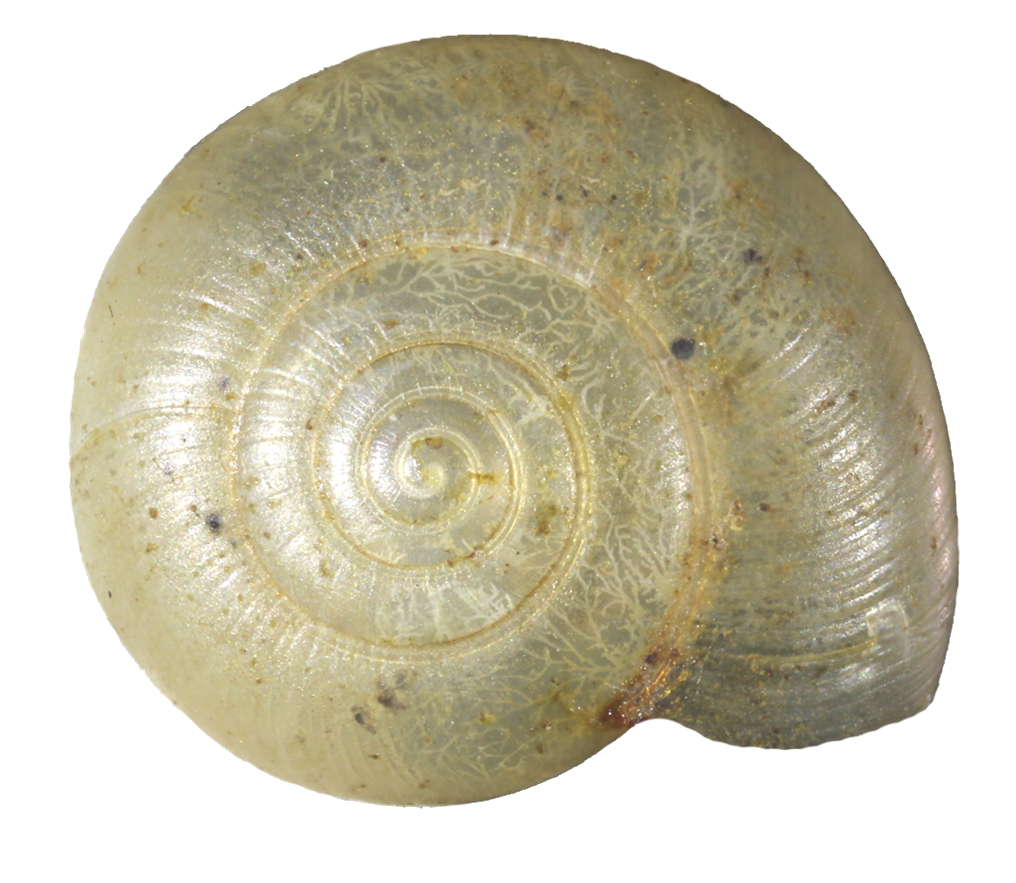
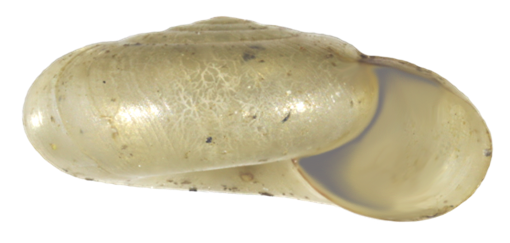
Glyphyalinia virginica

Image Usage Information

  • Dan Dourson
  • CC BY-NC 4.0 DEED

Family: Gastrodontidae

Common name: Depressed Glyph

Discovery: Morrison, 1937

Identification

Width: 4.1-4.5 mm
Height: 1.8-1.9 mm
Whorls: 5.0-5.2

Glyphyalinia virginica has an average-sized shell for its genus, with a nearly flat spire. Its wide umbilicus is large – nearly a quarter of the shell width. The whorls of the shell increase slowly and regularly in size, their basal surface is flattened. Growth lines are prominent on the apical surface but the shell base is nearly smooth. Shell color is somewhat translucent light brown, often tinged with pink. The genital anatomy of this species is not known.

Ecology

This species is found in deep moist leaf litter on otherwise dry rocky and relatively open mountainsides. It appears to have specific habitat requirements and while abundant in the correct microhabitats it is absent from nearby areas away from outcroppings, seeps or pockets of leaf litter.

Taxonomy

This species has also been called Retinella virginica.

Distribution

Glyphyalinia virginica appears to be endemic to the Blue Ridge and neighboring mountains from west-central Virginia to the Harpers Ferry area of West Virginia. It is spottily distributed in appropriate microhabitats. Shenandoah National Park is at the heart of this animal’s range.

Conservation

NatureServe Global Rank: G3, Vulnerable.
NatureServe State Rank: Virginia, S2S3, Imperiled
Virginia’s wildlife action plan: Tier III
January 10, 2023 by

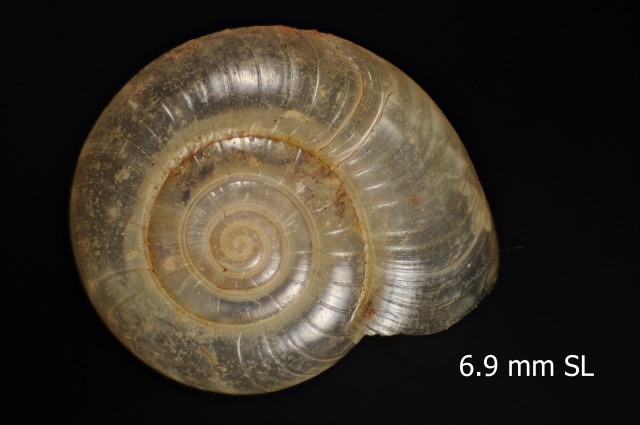
Glyphyalinia solida

Image Usage Information

  • David Lang
  • CC BY-NC 4.0 DEED
  • Additional information about this specimen

Family: Gastrodontidae

Common name: Solid Glyph

Discovery: H.B. Baker, 1930

Identification

Width: 7.5 mm
Height: 4.0 mm
Whorls: 5.3

Glyphyalinia solida is a moderate to large glyph, with a depressed shell that has rapidly expanding whorls. The expanding edge of the inner lip forms a tongue-shaped projection that fills the umbilicus. The shell is translucent pale-brown to almost chestnut and sculptured with widely and uniformly spaced impressed lines that parallel the nearly imperceptible growth lines. This sculpture is strong apically and continues to the umbilicus. Spiral engraved lines can often be seen under high magnification.

This animal’s dorsal surface is blue-grey, fading towards the sole of the foot. Both the epiphallus and penial retractor muscle join the penis sub-apically, and the apical chamber of the penis contains papillae.

Ecology

Glyphyalinia solida is found in moist leaf litter in forested ravines and hillsides as well as in swamps. Although often found upon limestone geology, this species is tolerant of a wide range of soil pH and can occur on acidic, neutral, and basic soils (Nekola, 2010).

Taxonomy

A synonym for this species is Retinella cryptomphala solida.

Distribution

This species is widely distributed from Maryland to Florida and west to Oklahoma, with a single unverified record in Michigan. In Virginia the species is reported from scattered locations across the state.

Conservation

NatureServe Global Rank: G5, Secure.

January 10, 2023 by

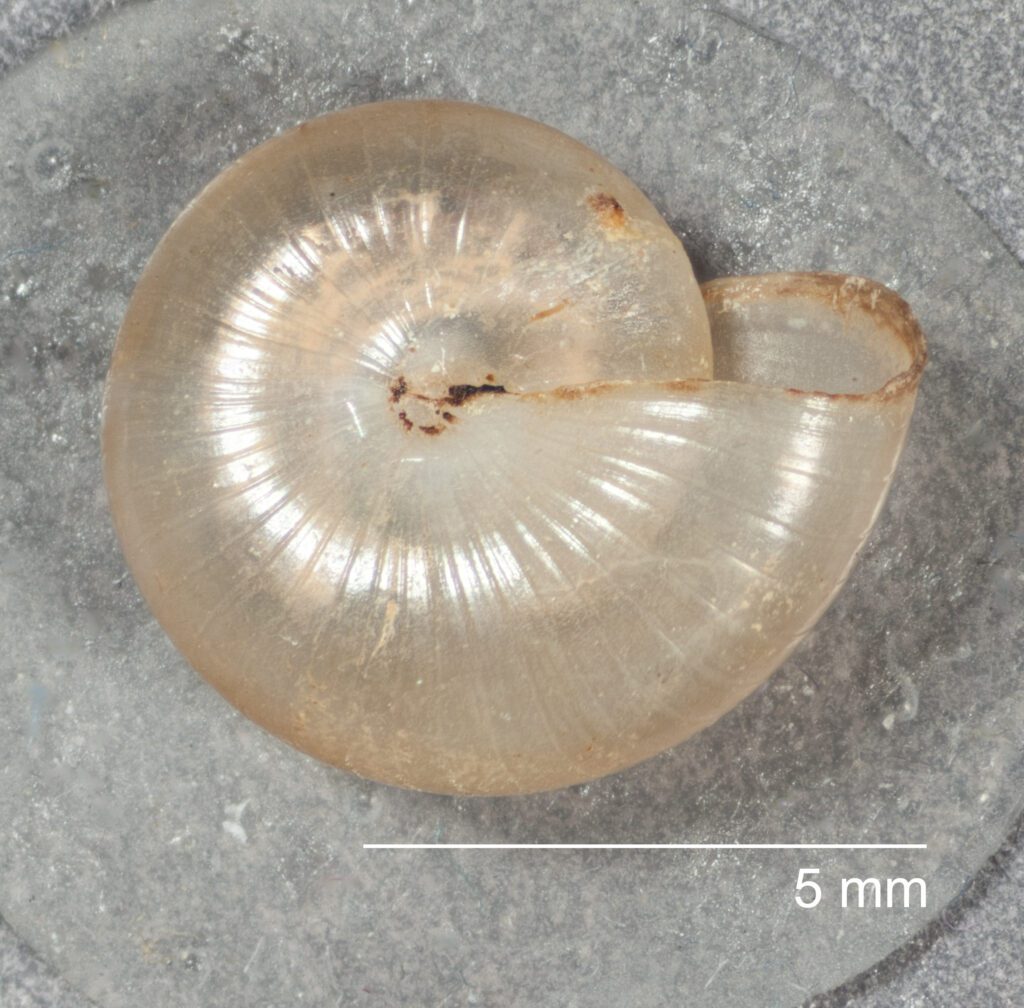
Glyphyalinia sculptilis

Image Usage Information

  • The Academy of Natural Sciences of Philadelphia
  • CC BY-NC 4.0 DEED
  • For additional information about this specimen: Gary Rosenberg (rosenberg.ansp@drexel.edu)

Family: Gastrodontidae

Common name: Suborb Glyph

Discovery: Bland, 1858

Identification

Width: 12.7 mm
Height: 6.5 mm
Whorls: 7

Glyphyalinia sculptilis is a very large glyph. It has a depressed and tightly coiled shell with a slightly elevated spire. The inner edge of the aperture curves over and nearly fills the small umbilicus, leaving only a small perforation. The shell is sculptured with closely and regularly spaced narrow indentations that run parallel to the nearly invisible growth lines. The shell is brown to light brown apically and fades to light whitish-brown on the base.

The dorsal surface of this animal is bluish-black. For its reproductive anatomy, the penial retractor muscle and epiphallus join the penis sub-apically, and the apical chamber of the penis contains dense papillae that are not thorn shaped.

Ecology

This animal is found in deep, moist leaf litter in upland woods, often in cove forests. Individuals from ridge tops and drier forests are often smaller.

Taxonomy

This animal has also been called Helix sculptilis, Zonites sculptilis, Vitrea sculptilis, and Retinella sculptilis.

Distribution

Glyphyalinia sculptilis is widespread, occurring from eastern Kentucky and southwestern Virginia to eastern Louisiana.  In Virginia it is known from Washington County, but it may also occur in other counties in the extreme southwestern corner of the state.

Conservation

NatureServe Global Rank: G4, Apparently Secure.
NatureServe State Rank: Virginia, S1, Critically Imperiled. Not Ranked in Pennsylvania, Maryland, or West Virginia.
Virginia’s wildlife action plan: Tier IV

January 10, 2023 by

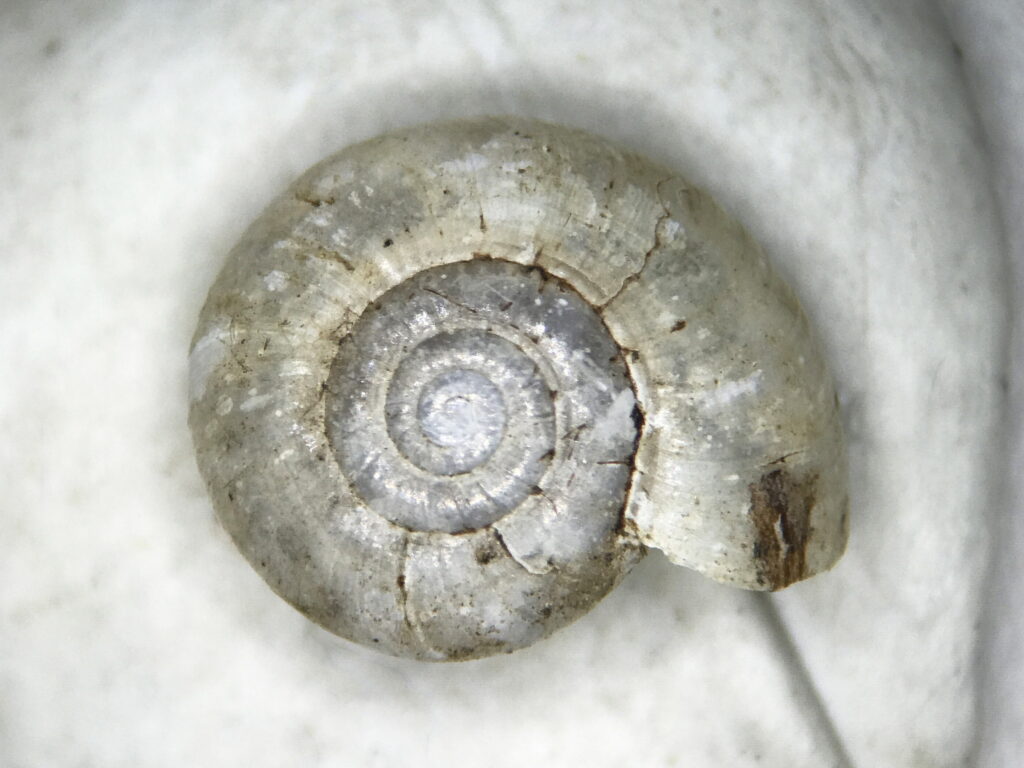
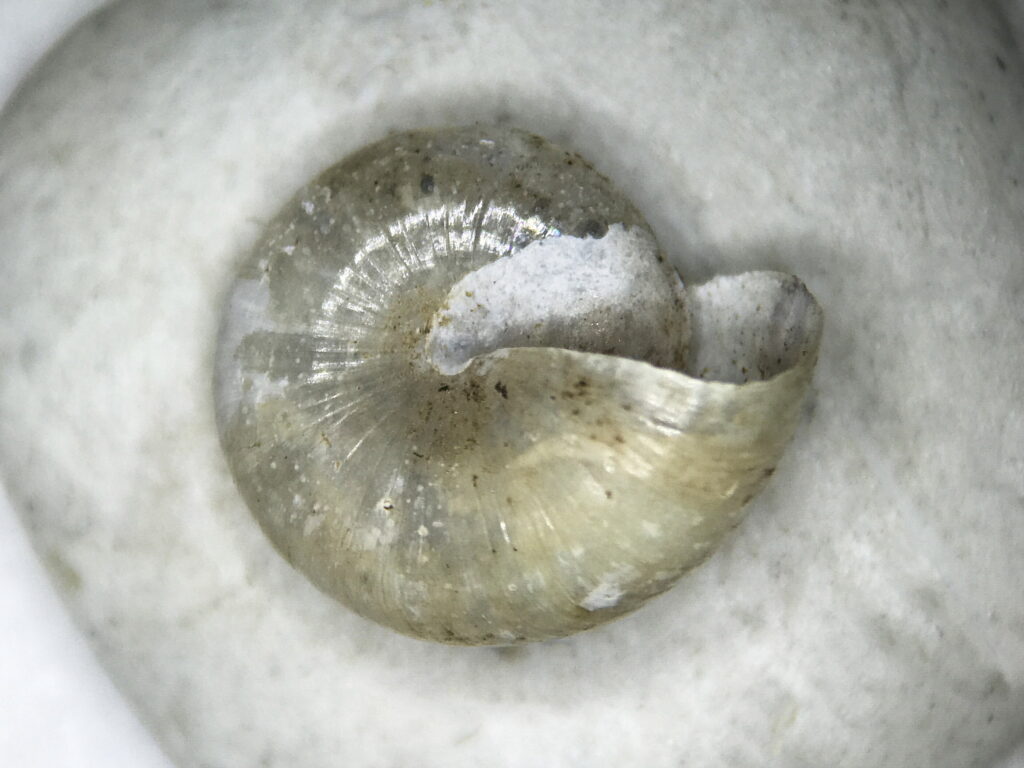
Glyphyalinia rimula

  • Field Museum of Natural History
  • CC BY-NC 3.0 DEED
  • Field Museum Copyright Information
  • For additional information about this specimen, please contact: Rüdiger Bieler, Curator (rbieler@fieldmuseum.org)

Family: Gastrodontidae

Common name: Tongued Glyph

Discovery: Hubricht, 1968

Identification

Width: ~7.7 mm
Height: ~4 mm
Whorls: ~5

The fragile shell of Glyphyalinia rimula is a depressed heliciform with a glossy, coppery color and 5 loosely coiled whorls. A tongue-like callus at the columella partially covers the rimate umbilicus. Widely-spaced transverse striae are well-developed, with weakly defined spiral striae.   

Ecology

This species is found in leaf litter of mixed hardwood forests on hillsides, in ravines, sometimes in caves, and even in kudzu tangles. In Tennessee, it is found in cedar woods and along river bluffs.

Taxonomy

Described by Hubricht in 1968, this species has no other known synonyms.

Distribution

Glyphyalinia rimula is currently known in the Northeastern United States from one county in southwestern West Virginia, where it may be extirpated. It is documented in two other states, Kentucky and Tennessee.

Conservation

NatureServe Rank: G3, Vulnerable.
NatureServe State Rank: West Virginia, NR, not ranked.

January 10, 2023 by

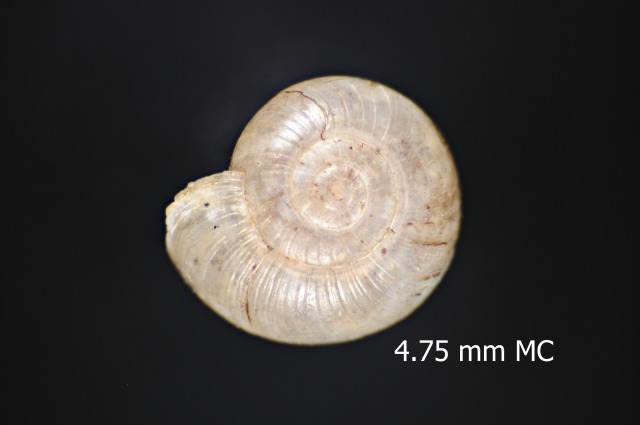
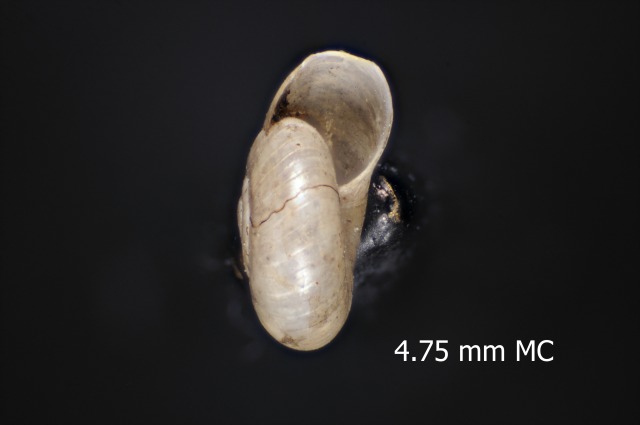
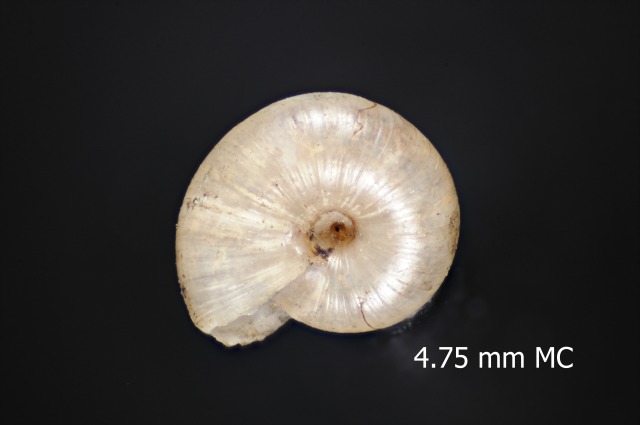
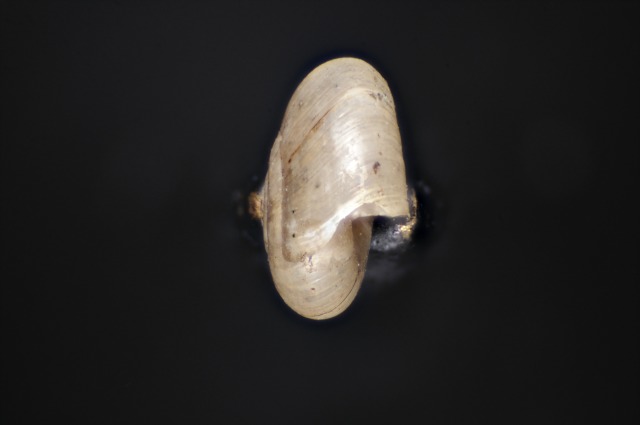
Glyphyalinia rhoadsi

Image Usage Information

  • The Academy of Natural Sciences of Philadelphia
  • CC BY-NC 4.0 DEED
  • For additional information about this specimen: Gary Rosenberg (rosenberg.ansp@drexel.edu)

Family: Gastrodontidae

Common name: Sculpted Glyph

Discovery: Pilsbry, 1899

Identification

Width: ~4.7 mm
Height: ~2.5 mm
Whorls: ~4

Glyphyalinia rhoadsi is average-sized for its genus. Its shell is depressed with a nearly flat apex and whorls that increase relatively rapidly in size. The final whorl does not increase more rapidly than previous whorls. The umbilicus is about one sixth to one seventh the shell width. The shiny and translucent shell is sculptured with closely spaced narrow indentations that run parallel to the indistinct growth lines. These grooves extend from the apical surface to the umbilicus and are regularly spaced except on the last quarter whorl where they are crowded and less regularly spaced. In addition there is sometimes microscopic sculpture of very weak incised spiral lines. The shell is uniformly translucent light-brown.

The body of this glyph is pale. In its reproductive anatomy, the apex of the penis has circular pilasters as in species of Nesovitrea.

Ecology

This animal is found in leaf litter in upland forests and is tolerant of acidic as well as neutral to basic soils (Nekola, 2010).

Taxonomy

Synonyms for this species are Retinella rhoadsi and Vitrea rhoadsi.

Distribution

Glyphyalinia rhoadsi ranges from Quebec to northern Georgia and west to Wisconsin. In Virginia the species is widespread in the Ridge and Valley with scattered populations on the Piedmont.

Conservation

NatureServe Global Rank: G5, Secure.

January 10, 2023 by

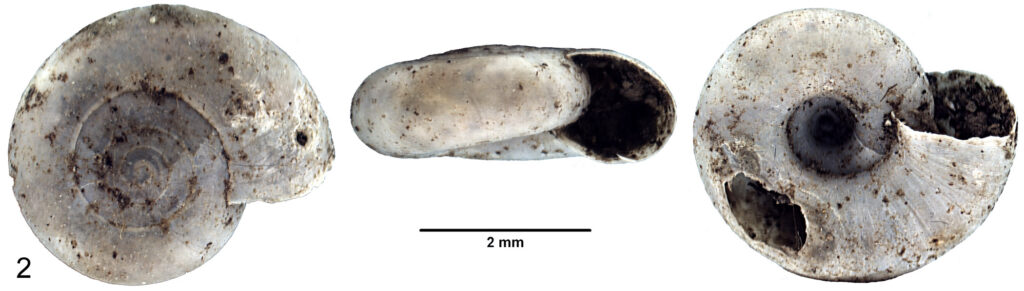
Glyphyalinia raderi

Image Usage Information

  • Tim Pearce
  • CC BY-NC 4.0 DEED
  • Additional information about this specimen

Family: Gastrodontidae

Common name: Maryland Glyph

Discovery: Dall, 1898

Identification

Width: 3.9-4.0 mm
Height: 1.7-1.8
Whorls: 4.5

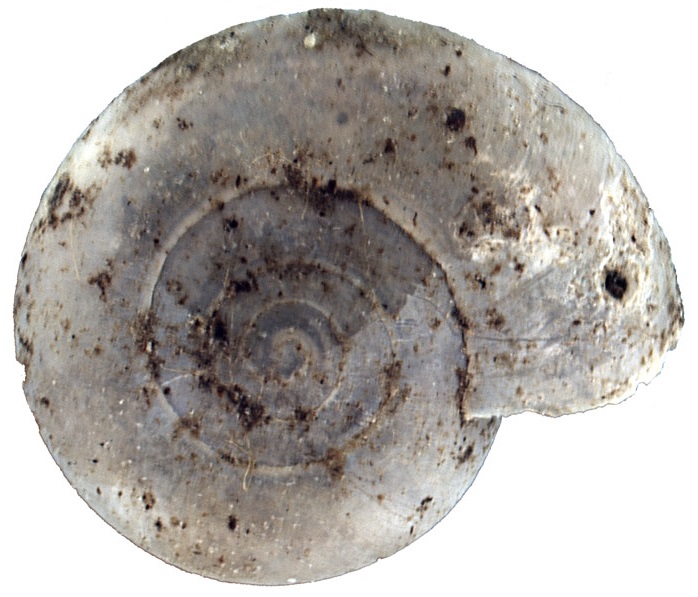
Glyphyalinia raderi has a moderately small sized shell, for the genus, with a nearly flat spire and a very wide umbilicus that is nearly a third of the shell width. The whorls of the shell increase slowly and regularly until the final whorl which expands slightly more rapidly. Whorls are sculptured with somewhat irregular growth lines on the apical surface which weaken on the basal surface which is evenly rounded. The shell color is waxy light brown in somewhat fresh dead specimens but may appear different in life. The genital anatomy of this species is not known.

Ecology

This rare species is known from fewer than 20 occurrences and although recently-dead shells are reported, it has apparently never been seen alive. It is found among limestone rocks or talus, especially in leaf litter with high calcium content (Pearce, 2008), and it appears to be a calciphile. The species may burrow (Hubricht, 1985) explaining the lack of observations and difficulty finding living animals. 

Taxonomy

This species is has also been called Retinella raderi and Vitrea raderi. It is named for Mr. Rader of Cumberland, Maryland, who was interested in mollusks (in Pilsbry, 1946).

Distribution

Glyphyalinia raderi is found in southern Pennsylvania, West Virginia, eastern Kentucky, western Maryland and Virginia. In Virginia the species is found in the Ridge and Valley region from the Shenandoah Valley west. Because the species is small and appears to burrow it is extremely difficult to monitor or even to locate, making conservation assessments very difficult. The species is believed to be extirpated from one of its former sites in Maryland.

Conservation

NatureServe Global Rank: G2, Imperiled.
NatureServe State Rank: Maryland, SH, Historic; Pennslylvania, S1S2, Critically Imperiled; Virginia, S1S2, Critically Imperiled; West Virginia, S2, Imperiled.
Virginia’s wildlife action plan: Tier II

  • « Go to Previous Page
  • Page 1
  • Interim pages omitted …
  • Page 34
  • Page 35
  • Page 36
  • Page 37
  • Page 38
  • Interim pages omitted …
  • Page 53
  • Go to Next Page »

sidebar

About

  • Mission & Commitments
  • Directors Team
  • Museum History

Get Involved

  • Volunteer
  • Membership
  • Carnegie Discoverers
  • Donate
  • Employment
  • Events

Bring a Group

  • Groups of 10 or More
  • Birthday Parties at the Museum
  • Field Trips

Powdermill

  • Powdermill Nature Reserve
  • Powdermill Field Trips
  • Powdermill Staff
  • Research at Powdermill

More Information

  • Image Permission Requests
  • Science Stories
  • Accessibility
  • Shopping Cart
  • Contact
  • Visitor Policies
Stay in the loop! Sign up for our newsletter(s).
One of the Four Carnegie Museums | © Carnegie Institute | Privacy Policy | Terms of Use | Accessibility
Rad works here logo