• Skip to primary navigation
  • Skip to main content
  • Skip to primary sidebar

Carnegie Museum of Natural History

One of the Four Carnegie Museums of Pittsburgh

  • Visit
    • Buy Tickets
    • Visitor Information
    • Exhibitions
    • Events
    • Dining at the Museum
    • Celebrate at the Museum
    • Powdermill Nature Reserve
    • Event Venue Rental
  • Learn
    • Field Trips
    • Educator Information
    • Programs at the Museum
    • Bring the Museum to You
    • Guided Programs FAQ
    • Programs Online
    • Climate and Rural Systems Partnership
  • Research
    • Scientific Sections
    • Science Stories
    • Science Videos
    • Senior Science & Research Staff
    • Museum Library
    • Science Seminars
    • Scientific Publications
    • Specimen and Artifact Identification
  • About
    • Mission & Commitments
    • Directors Team
    • Museum History
  • Tickets
  • Give
  • Shop

January 10, 2023 by

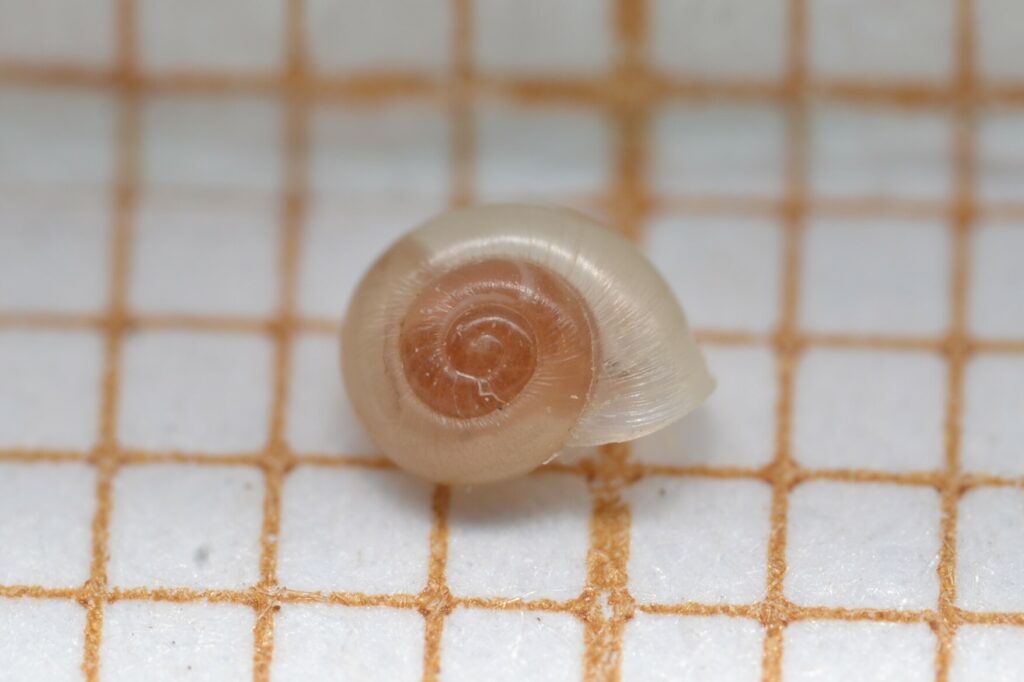
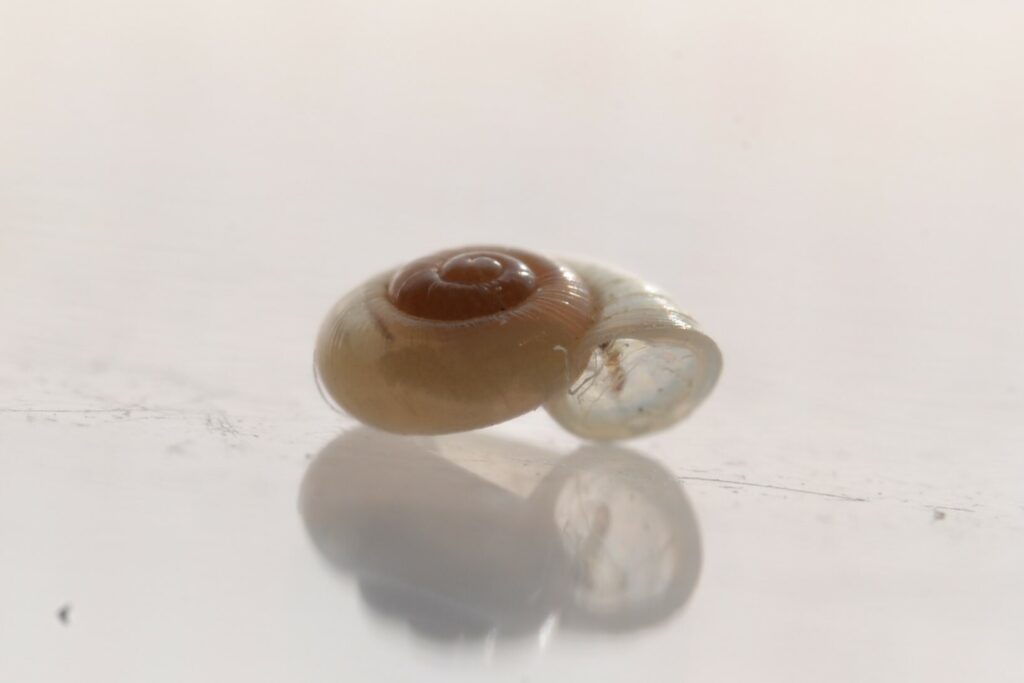
Vallonia parvula

Image Usage Information

  • Ben Hutchins
  • CC BY-NC 4.0 DEED
  • Additional information about this specimen

Family: Valloniidae

Common name: Trumpet Vallonia

Discovery: Sterki, 1893

Identification

Width: 2 mm
Height: 0.9 mm
Whorls: 3+

The shell of this species has a wide umbilicus and a low apex.  The shell is thin, but the circular aperture has a thick, reflected peristome.  The shell is mostly colorless, with thin radial ridges.  It is similar to V. costata, but smaller, flatter, and with a wider umbilicus.

Ecology

Vallonia parvula is found in grasses and in leaf litter (Hubricht, 1985). Some authors suggest Vallonia species are mostly introduced in eastern North America (e.g. Nekola, 2008).

Taxonomy

Synonyms for V. parvula are: V. americana and V. costata var. minor.

Distribution

This species is widely but sparsely reported in eighteen states, from Texas and Florida north through the central states to Ontario and northeast to New York (Hubricht, 1985).  In Virginia, it has been found only in Highland county.    

Conservation

NatureServe Global Rank: G4
NatureServe State Rank: S1
Virginia’s wildlife action plan: Tier IV

January 10, 2023 by

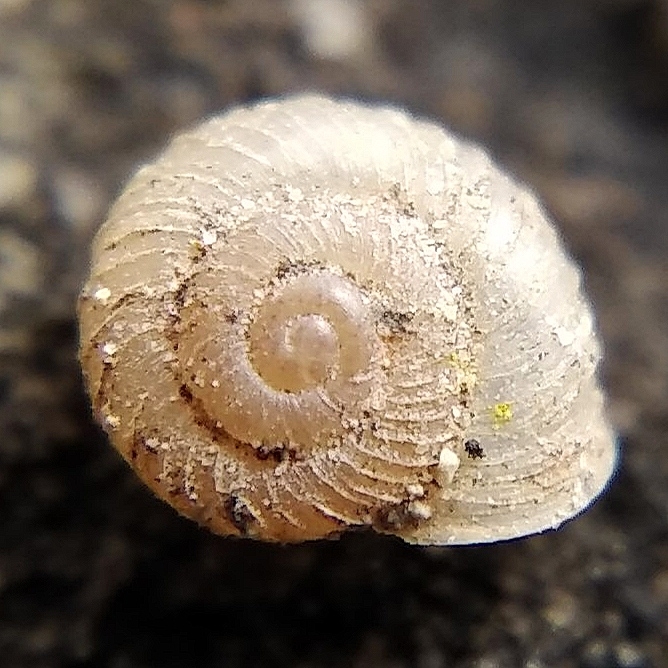
Vallonia excentrica

Image Usage Information

  • Nataël Adam
  • CC BY-NC 4.0 DEED
  • Additional information about this specimen

Family: Valloniidae

Common name: Iroquois Vallonia

Discovery: Sterki, 1893

Identification

Width: 2.3 mm
Height: 1.1 mm
Whorls: 3

This tiny animal’s shell is smooth or very finely striate, the umbilicus is open, and the apex is low. The edge of the round aperture is reflected toward the inside.

Ecology

Vallonia excentrica is found often in grassy places such as meadows or along roadsides and lawns, frequently accompanied by V. pulchella. This species is holarctic, found around the world at high latitudes (Kerney & Cameron, 1979; Hubricht, 1985), though other authors suggest its presence in anthropogenic habitats makes it a likely introduction in eastern North America (Nylander, 1936; Nekola, 2008).

Taxonomy

A synonym for V. excentrica is V. pulchella var. excentricoides.

Distribution

The range of this species in eastern North America runs from the Northeast to the central Great Lakes and Mid-Atlantic states, including coastal areas. It has been found scattered throughout various parts of Virginia. Pilsbry (1946-48) reports presumably introduced specimens from California, Oregon, and Mexico.

Conservation

NatureServe Global Rank: G5
NatureServe State Rank: S4

January 10, 2023 by

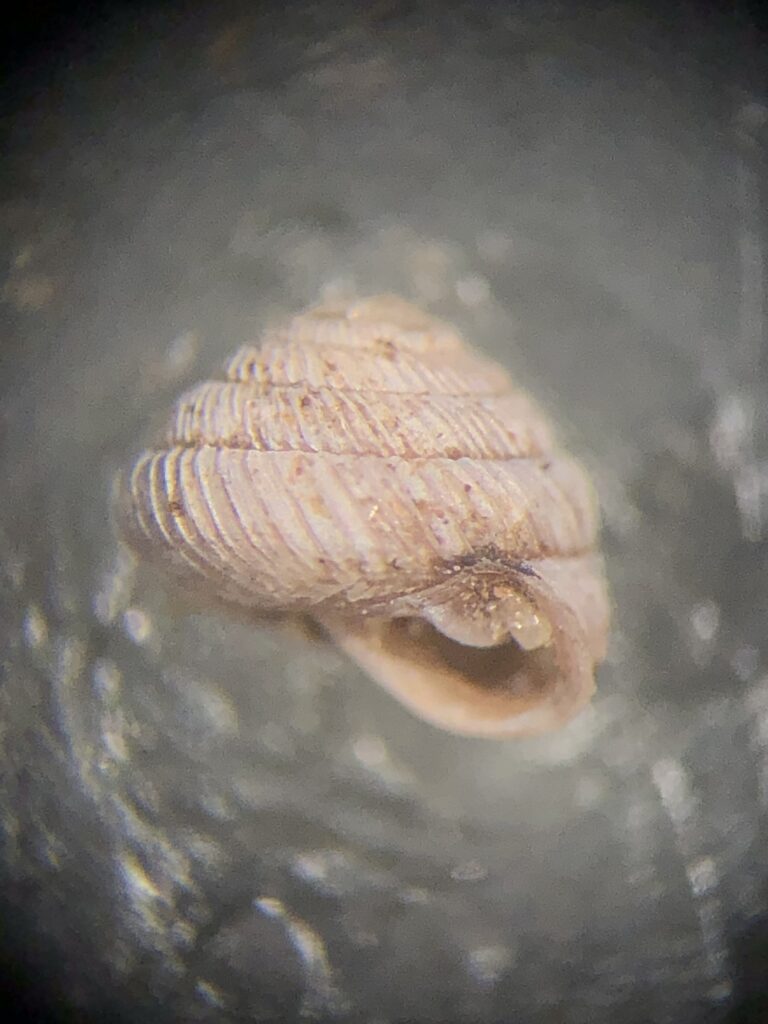
Vallonia costata

Image Usage Information

  • Guilherme Ramos
  • CC BY-NC 4.0 DEED
  • Additional information about this specimen

Family: Valloniidae

Common name: Costate Vallonia

Discovery: Müller, 1774

Identification

Width: 2.5 mm
Height: 1 mm
Whorls: 3+

A heavy reflected lip and radial ridges characterize the shell of this animal. It is larger than V. parvula and has a slightly smaller umbilicus, though it is still quite open. The apex of the shell is low. The aperture is nearly circular with a wide lip, except at the point near the upper termination.

Ecology

Vallonia costata is a denizen of forest gaps and dry, open, rich habitats (Kerney & Cameron, 1979). In Maine this species appears in anthropogenic habitats, probably introduced (Nylander, 1936; Nekola, 2008), and Nekola suggests it is a European exotic, while Kerney & Cameron call it “holarctic.”

Taxonomy

A synonym for V. costata is Helix costata. Prior to work by Sterki in the 1890’s, early collections of V. costata were considered to be a variety of Vallonia pulchella (in Pilsbry, 1946-48).

Distribution

In eastern North America this species is generally distributed through the Midwest, Great Lakes, Mid-Atlantic and western New England, and eastern Canada (Hubricht, 1985). It has been found in various places throughout Virginia, but not as often along the southern edge of the state.

Conservation

NatureServe Global Rank: G5
NatureServe State Rank: S4

January 10, 2023 by

Planogyra asteriscus

Family: Valloniidae

Common name: Eastern Flat-whorl

Discovery: E.S. Morse, 1857

Identification

Width: 1.8-1.9 mm
Height: 0.9-1.0 mm
Whorls: ~3.5

The depressed heliciform shell of Planogyra asteriscus is noticeable for the tall, widely-spaced, radial laminae that adorn its exterior. These “ribs’ are more pronounced than in its close relatives, the Vallonia species – that is, unless worn down in older specimens or sometimes entirely undeveloped (e.g. Hubricht, 1948). Its shell has a wide umbilicus and a simple, rather round aperture. The animal is nearly transparent.

Ecology

Planogyra asteriscus is found in a variety of wetlands and less frequently, upon rocks features and upland woods (Pilsbry, 1948; Hubricht, 1985; Nekola, 2008). In eastern Maine it is the most abundant species encountered, especially in Northern White Cedar wetlands (Nekola, 2008).

Taxonomy

This species was described from western Maine by famed naturalist E.S. Morse when he was 16 years old (e.g. Martin, 1995). Helix asteriscus, Patula asteriscus, and Pyramidula asteriscus are synonyms (Pilsbry, 1948).

Distribution

Planogyra asteriscusis found in Northeastern and upper Midwestern North America, from New York, Ohio, and Illinois northward.

Conservation

NatureServe Rank: G4, Apparently Secure.
This species is widespread within its core range, though infrequent at the southern edge.

January 10, 2023 by

Strobilops texasianus

Image Usage Information

  • Howard Horne
  • CC BY-NC 4.0 DEED
  • Additional information about this specimen

Family: Strobilopsidae

Common name: Southern Pinecone

Discovery: Pilsbry and Ferriss, 1906

Identification

Width: 2.4 mm
Height: 2 mm
Whorls: 5.5

The apex of this species’ shell is rounded, and the umbilicus is open but narrow. The reflected aperture forms a thick, slightly off-center half-circle, and a lamella extends along the top inside. The shell is brown. The radial ridges extend uninterrupted onto the bottom.

Ecology

Strobilops texasianus is found on old logs and in leaf litter. In Tennessee, Coney et al (1982) found this animal to be associated with leaf litter, with an affinity for steeper slopes and damper habitats than S. aeneus.

Taxonomy

Synonyms for S. texasianus are Strobilops aenea spiralis, S. labyrinthica texasiana, S. l. form parietalis, S. lonsdalei, S. parietalis, S. texasiana, and S. t. floridana.

Distribution

This animal is mostly found in the Southeast, From the Atlantic Coast, where it is frequent, west to Texas. In Virginia it is found in the eastern counties, particularly along the shore.

Conservation

NatureServe Global Rank: G5
NatureServe State Rank: S3

January 10, 2023 by

Strobilops labyrinthicus

Image Usage Information

  • David Lang
  • CC BY-NC 4.0 DEED
  • Additional information about this specimen

Family: Strobilopsidae

Common name: Maze Pinecone

Discovery: Say, 1817

Identification

Width: 2.3 mm
Height: 1.8 mm
Whorls: 6

The apex of this species’ shell is rounded and the base flattened, making it less angular than S. aeneus. The finer rib pattern of this animal’s shell becomes quite faint on the underside, and it is very narrowly umbilicate. The half-circle peristome of the aperture is surrounded by a thick reflected lip, and there is a lamella on the top part inside. The upper parts of the animal are dark gray.

Ecology

Strobilops labryrinthicus is found upon old logs, at the base of trees, and in leaf litter. In northern Maine this animal is very much a habitat generalist, found at a wide variety of forest sites   (Nekola, 2008).

Taxonomy

Synonyms for S. labyrinthicus are: Helix labyrinthica, Strobila laborinthica, Strobila labyrinthica var. virgo, and Strobilops labyrinthica.

Distribution

This range of this snail extends over most of the eastern half of the US and southern Canada, west to Manitoba and south to Arkansas, Georgia and Alabama (Hubricht, 1985). It is absent from the Southeast Coast and Florida. Interestingly, there are some significant intervals within its range where it is uncommon or absent, such as the Adirondack Mountains of New York (e.g. Beier et al, 2012). In Virginia it is most concentrated in the central part of the state, but has been found in the western part of the state as well.

Conservation

NatureServe Global Rank: G5
NatureServe State Rank: S4

  • « Go to Previous Page
  • Page 1
  • Interim pages omitted …
  • Page 46
  • Page 47
  • Page 48
  • Page 49
  • Page 50
  • Interim pages omitted …
  • Page 53
  • Go to Next Page »

sidebar

About

  • Mission & Commitments
  • Directors Team
  • Museum History

Get Involved

  • Volunteer
  • Membership
  • Carnegie Discoverers
  • Donate
  • Employment
  • Events

Bring a Group

  • Groups of 10 or More
  • Birthday Parties at the Museum
  • Field Trips

Powdermill

  • Powdermill Nature Reserve
  • Powdermill Field Trips
  • Powdermill Staff
  • Research at Powdermill

More Information

  • Image Permission Requests
  • Science Stories
  • Accessibility
  • Shopping Cart
  • Contact
  • Visitor Policies
One of the Four Carnegie Museums | © Carnegie Institute | Privacy Policy | Terms of Use | Accessibility
Rad works here logo