• Skip to primary navigation
  • Skip to main content
  • Skip to primary sidebar

Carnegie Museum of Natural History

One of the Four Carnegie Museums of Pittsburgh

  • Visit
    • Buy Tickets
    • Visitor Information
    • Exhibitions
    • Events
    • Dining at the Museum
    • Celebrate at the Museum
    • Powdermill Nature Reserve
    • Event Venue Rental
  • Learn
    • Field Trips
    • Educator Information
    • Programs at the Museum
    • Bring the Museum to You
    • Guided Programs FAQ
    • Programs Online
    • Climate and Rural Systems Partnership
  • Research
    • Scientific Sections
    • Science Stories
    • Science Videos
    • Senior Science & Research Staff
    • Museum Library
    • Science Seminars
    • Scientific Publications
    • Specimen and Artifact Identification
  • About
    • Mission & Commitments
    • Directors Team
    • Museum History
  • Tickets
  • Give
  • Shop

December 14, 2023 by

Land Snails Ecology – Deer Overbrowsing

  • Land Snails Home
  • Land Snails by State
  • Land Snails Ecology
  • Land Snails Resources
  • Climate Change
  • Deer Brainworm
  • Deer Overbrowsing
  • Diet & Behavior
  • Forest Calcium
  • Introduced Species
  • Life History
  • Pollution Monitoring
  • Predators & Defenses

White-tailed deer overbrowsing

Land snails are likely to be impacted by white-tailed deer (Odocoileus virginianus) overbrowsing, but empirical evidence is lacking.

Typical evidence of white-tailed deer overbrowsing is widespread in Pennsylvania. The Pennsylvania Department of Conservation and Natural Resources discusses the reduction of forest tree regeneration and other deer overbrowsing impacts upon vegetation and wildlife in their report on the state’s forests (2005). Lack of advance regeneration of many tree species is widespread. Other overbrowsing indications include the “browse line” of reduced foliage on the lower parts of trees and shrubs, reduced herbaceous vegetation, and understories dominated by hay-scented fern, striped maple, and other plants unpalatable to deer. In addition, other vegetation impacts from air pollution and non-native invasive plants such as Japanese stiltgrass (Microstegium vimineum) impede forest recovery from deer overbrowsing. Adding complexity to this topic are deer parasites that have land snails as a secondary host, an issue addressed in another “Ecology” subsection on this website.

White-tailed deer overbrowsing impacts upon ground-nesting birds have been documented (e.g. deCalesta, 1994), although the extent to which overbrowsing limits other wildlife including invertebrates is mostly unknown. White-tailed deer are Cervids, the even-toed herbivores, and browsing impacts upon land snails from the Cervids moose (Alces alces) and caribou (Rangifer tarandus) have been reported in Scandinavia (Suominen, 1999;Suominen et al., 1999). In a New Zealand study of several invertebrate taxa, introduced goats and deer impacted larger-bodied invertebrates (Wardle et al., 2001). Although the extent of the impact to land snails due to white-tailed deer overbrowsing in eastern North America is unknown, we can presume at least some effect because of the obvious reduction of land snail food and cover. Research into this effect could be useful to land managers and conservationists.

In light of the potential for overbrowsing effects, wildlife management practices that serve to increase deer near special land snail habitats or rare land snail locations should be of particular concern. Practices at issue would include vegetation management, specifically road building, timber harvest, and creation and maintenance of wildlife openings. Research into creating adequate habitat buffer zones and limiting white-tailed deer numbers to allow understory recovery are needed. New research could provide a contribution to the discussion about improving white-tailed deer management policy.
December 14, 2023 by

Land Snails Ecology – Deer Brainworm

  • Land Snails Home
  • Land Snails by State
  • Land Snails Ecology
  • Land Snails Resources
  • Climate Change
  • Deer Brainworm
  • Deer Overbrowsing
  • Diet & Behavior
  • Forest Calcium
  • Introduced Species
  • Life History
  • Pollution Monitoring
  • Predators & Defenses

Land snails are an intermediate host for a North American deer parasite often called brainworm, the meningeal worm Parelaphostrongylus tenuis that infects white-tailed deer (Odocoileus virginianus). This nematode, though a common, non-lethal parasite of white-tailed deer, can be deadly to moose (Alces alces), caribou (Rangifer tarandus), and elk (Cervus canadensis).

Brainworm begin their life as eggs, deposited in the spinal column or brain of a white-tailed deer (reviewed by Anderson and Prestwood, 1981). Here the eggs hatch and the tiny larvae are carried by the host’s blood stream to the lungs. In the lungs they emerge from the blood system into the alveoli (where air exchange takes place). From here they travel into the trachea, then the esophagus, and are swallowed. They pass through the digestive tract and are finally expelled with the feces.

Brainworm larvae in deer feces and nearby soil are encountered by snails and slugs, which are apparently attracted to the excrement (e.g. Bird and Garvon, 2005). The brainworm larvae enter the gastropod secondary host through the foot, and develop into a life stage that can infect deer. The brainworm apparently enters a deer when the mollusk is accidentally eaten during summertime grazing. They penetrate the wall of the host’s digestive tract and migrate to the central nervous system. The parasite appears to be more dangerous to moose because it infects a greater proportion of the nervous system and reaches higher densities than in deer.

Brainworm occurs in a wide variety of North American land snails, including species found in Pennsylvania such as Anguispira alternata, Deroceras leave, D. reticulatum, Discus catskillensis, D. whitneyi, Euchemotrema fraternum, Philomycus carolinianus, Neohelix albolabris, Pallifera dorsalis, Striatura exigua, Triodopsis tridentata, Ventridens intertextus, and Zonitoides arboreus (e.g. Parker, 1966; Gleich et al., 1977; Maze and Johnstone, 1984; Upshall et al., 1985).

Nematode parasites of all kinds were found in 4%-19% of snails and slugs collected in central Maine, although P. tenuis was found only in Pallifera sp. slugs (Gleich et al, 1977). Pallifera was also the most heavily parasitized of the 11 gastropod genera collected.

A later caribou reintroduction project in the Baxter Park region from 1986 to 1990 was unsuccessful, with approximately one-quarter of the caribou dying from brainworm infection and the others succumbing to black bear predation, accidents and unknown causes.

In Pennsylvania, researchers looked at brainworm prevalence in land snails at Elk State Forest, used by the state’s elk population as well as white-tailed deer (Maze and Johnstone, 1984). They found brainworm in 16% of the shelled snails but in only one slug of hundreds collected. Infection of snails by brainworm was greatest at an old mine site with high amounts of soil calcium and dense ground cover.

December 11, 2023 by

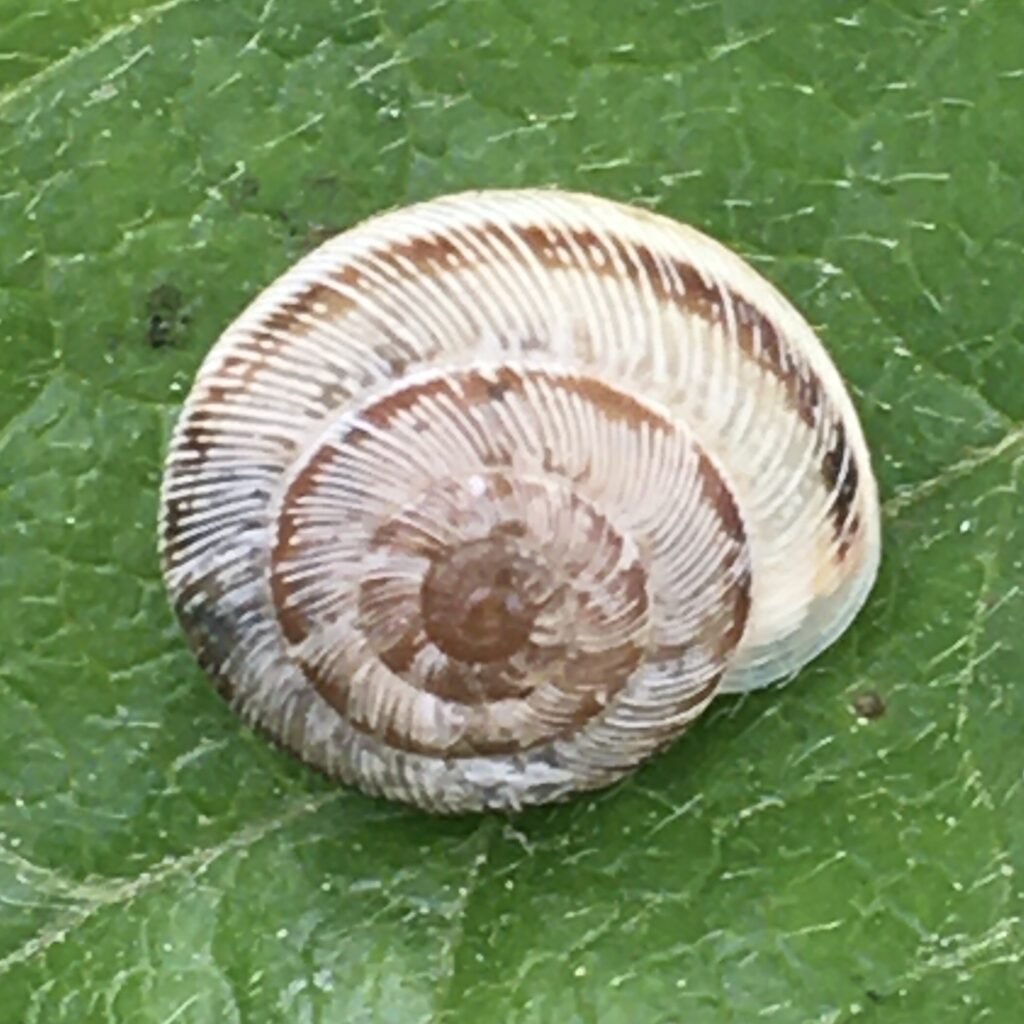
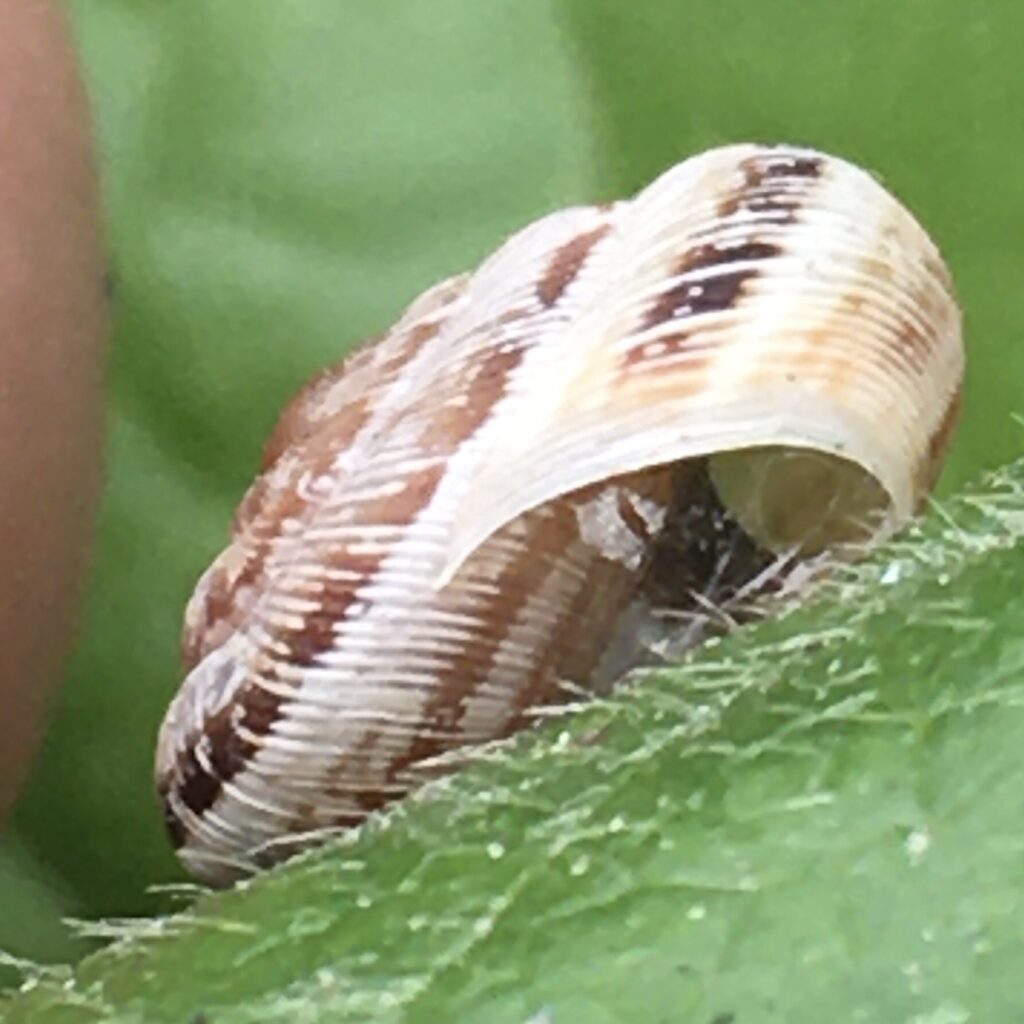
Xeroplexa intersecta

Image Usage Information

  • bitsnbirds
  • CC BY-NC 4.0 DEED
  • Additional information about this specimen

Family: Hygromiidae

Common name: Wrinkled Helicellid

Discovery: Poiret, 1801

Identification

Width: 7-13 mm
Height: 5-8 mm
Whorls: 5-6.5

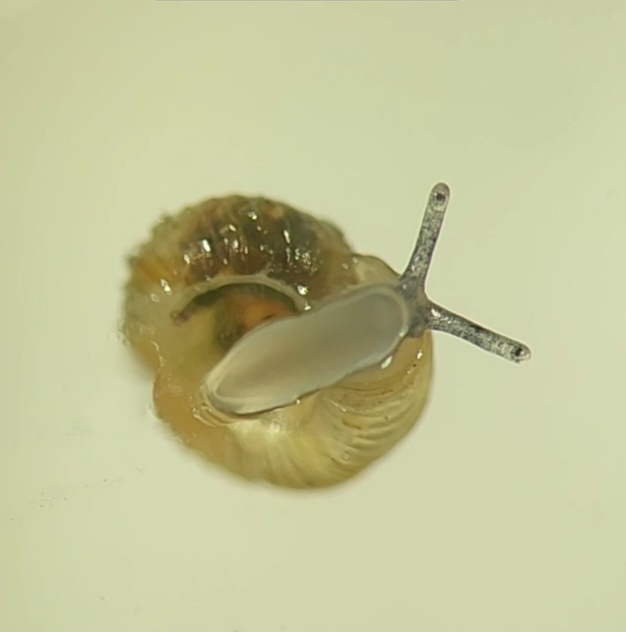
The shell of Xeroplexa intersecta is a depressed heliciform shape with an apex that is a low, pointed dome. The umbilicus is deep and wide. Inside the aperture is a continuous callus, except upon the body whorl. The shell has irregular radial growth wrinkles, sporadically pronounced. Coloration is brown, reddish, or blackish broken stripes upon a tan or light brown background. Some shells are unbanded. The animal is gray above but paler or yellowish below.

Ecology

Xeroplexa intersecta is introduced from western Europe. Its habitat is dry and open landscapes (Kerney & Cameron, 1979), and agricultural lands. It is a pest of fruit and fruit trees (White-McLean).

Taxonomy

A synonym for X. intersecta is Helicella caperata.       

Distribution

This snail is introduced globally, including South America, Australia, and the West and East Coasts of North America. In Virginia specimens have been found on the southern coast.

Conservation

NatureServe Global Rank: G5, Secure

December 11, 2023 by

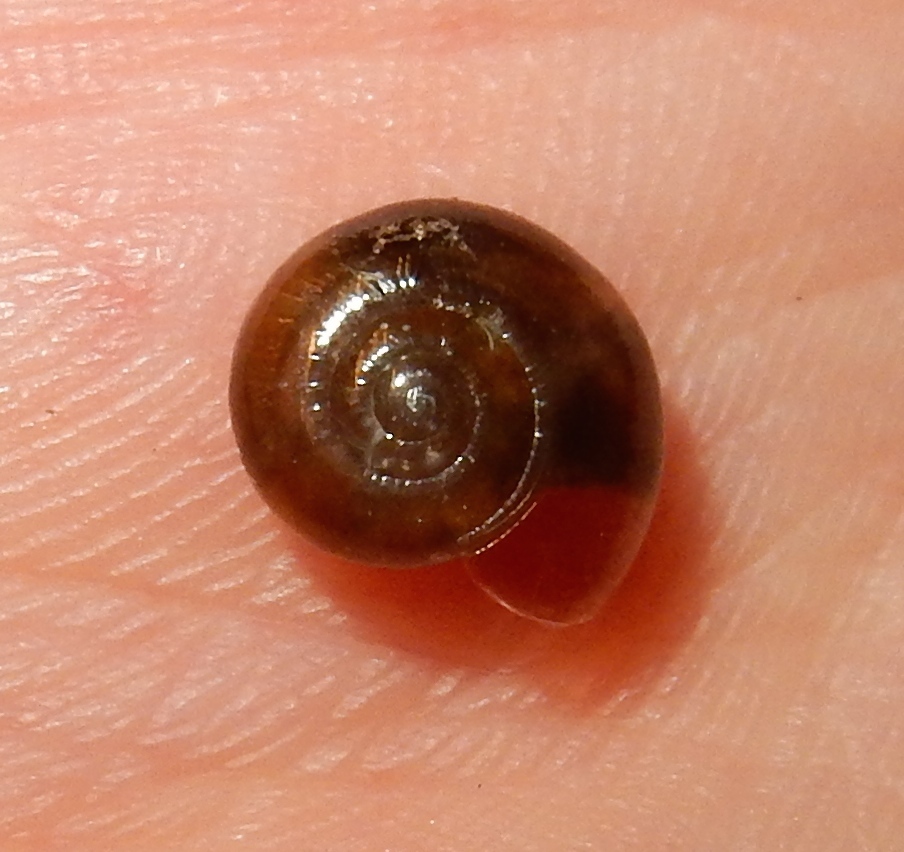
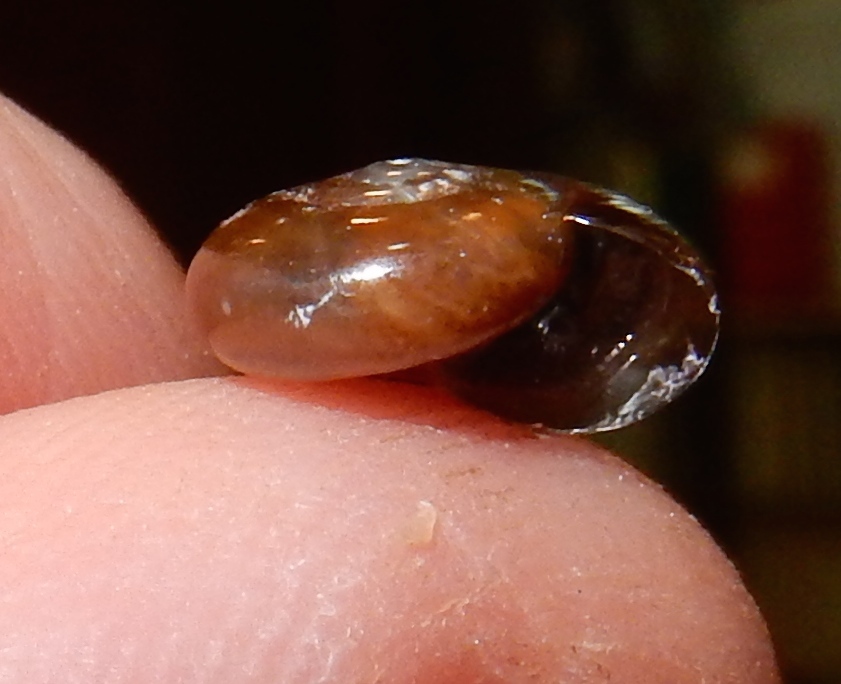
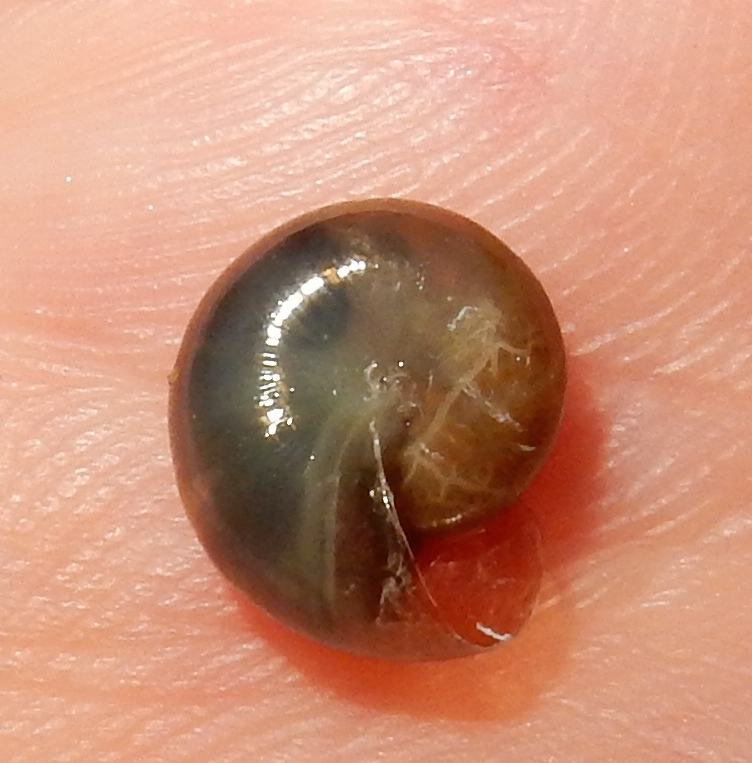
Pseudohyalinia exigua

Image Usage Information

  • Carole Beauchesne
  • CC BY-NC 4.0 DEED
  • Additional information about this specimen

Family: Gastrodontidae

Common name: Ribbed Striate

Discovery: Stimpson, 1850

Identification

Width: 2-3 mm
Height: 1.25 mm
Whorls: 3+

The shell of Pseudohyalinia exigua is uniquely sculptured, with fine spiral lirae creating a crosshatch pattern interrupted by taller transverse ridges. No other tiny shell bears this one-of-a-kind microsculpture. The umbilicus is open and wider than the aperture, which is rounded and simple.

Ecology

Pseudohyalinia exigua is a common snail of mesic forest habitats in the Northeast. It was the second most common snail at a dozen upland study sites in the Adirondack Mountains (Beier et al, 2012), and it occurred at all but the wettest and richest sites in northern Maine (Nekola, 2008). In the central Appalachian Mountains, where it lives in damp leaf litter and swampy woods (Hubricht, 1985; LeGrand et al, 2006), it becomes somewhat less frequent (e.g. Hotopp, 2002).

Taxonomy

Synonyms for Pseudohyalinia exiguanclude: Helix annulata, H. exigua, Pseudohyalina exigua, Striatura exigua, and Zonites exiguus.

Distribution

This animal’s range includes much of the Midwestern and eastern states and Canadian Provinces. In Virginia it is found in the western part of the state.

Conservation

NatureServe Global Rank: G5
NatureServe State Rank: S2
Virginia’s wildlife action plan: Tier IV

December 11, 2023 by

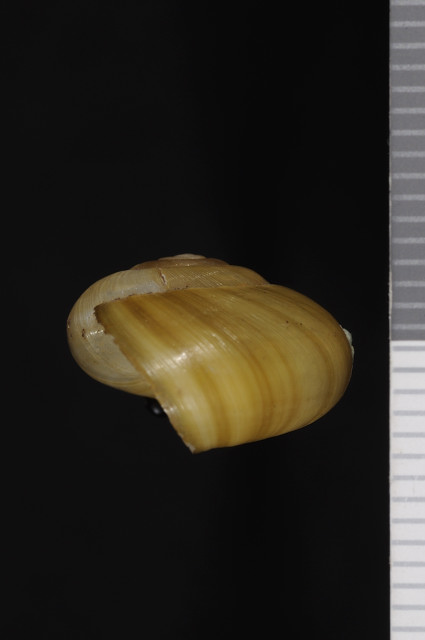
Mesomphix vulgatus

Image Usage Information

  • The Academy of Natural Sciences of Philadelphia
  • CC BY-NC 4.0 DEED
  • For additional information about this specimen: Gary Rosenberg (rosenberg.ansp@drexel.edu)

Family: Gastrodontidae

Common name: Common Button

Discovery: H.B. Baker, 1933

Identification

Width: 20-28 mm
Height: 12.5-17.5 mm
Whorls: 4.5-5.5

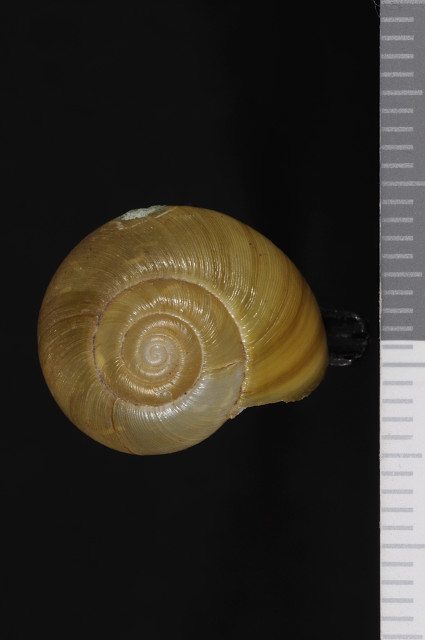
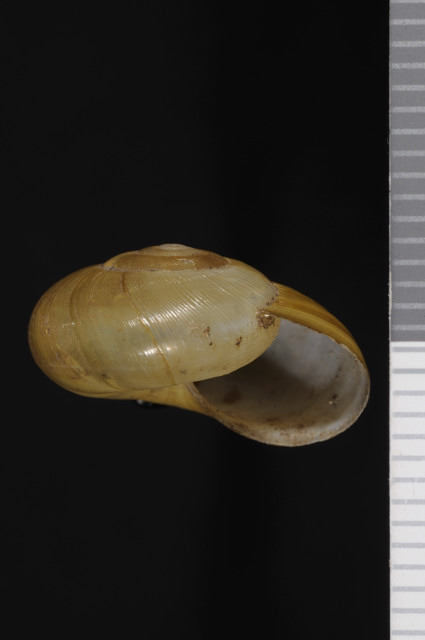
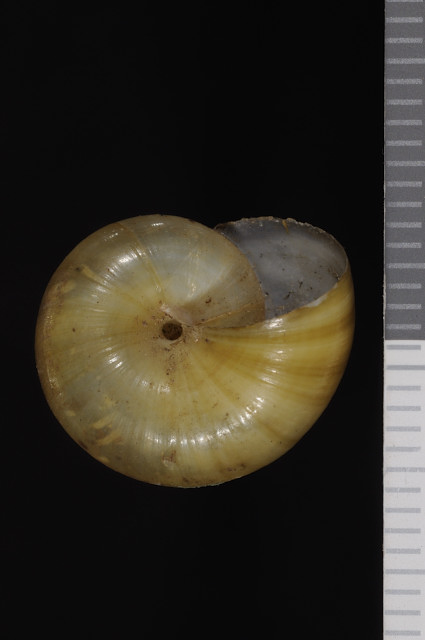
Mesomphix vulgatus has a shell with a sharp lip, low apex, and a small umbilicus. The microsculpture consists of closely spaced distinct radial striae, which extend below the periphery but become smooth on the glossy base. Spiral rows of microscopic papillae appear on the upper surface of the final whorl but are weak or absent on the base. The shell color is olive to cinnamon brown.

Ecology

This species can be found in dry upland hardwood forests in leaf litter and under logs on hillsides and in ravines.

Taxonomy

Synonyms for M. vulgatus are Helix lucubrata, Mesomphix laevigatus,and Mesomphix laevigata vulgatus.

Distribution

Mesomphix vulgatus occurs from southern Indiana south to the Gulf coast with smaller numbers of records as far west as Texas and eastern Oklahoma, and as far east to the Atlantic coast, with occurrences in Pennsylvania and Maryland.

Conservation

NatureServe Global Rank: G4, Apparently Secure

December 11, 2023 by

Mesomphix andrewsae

Image Usage Information

  • Jonathan (JC) Carpenter
  • CC BY-NC 4.0 DEED
  • Additional information about this specimen

Family: Gastrodontidae

Common name:  Mountain Button

Discovery: Pilsbry, 1895

Identification

Width: 16-21 mm
Height: 8.5-10 mm
Whorls: 4.5-5

The shell of Mesomphix andrewsae is large and glossy with a thin and fragile lip and a disproportionately wide aperture (nearly the area of the rest of the shell in aperture view). The shell microsculpture lacks spiral rows of papillae (or with only weak traces of papillae). Its color is chestnut to olive above and buff below. Suture moderately impressed, last whorl about 2.5 times width of penultimate whorl. The umbilicus is narrow, about 1/20 of the shell diameter. Interior base of aperture may have a white callus near the lip edge. Similar to Mesomphix inornatus but that has a wider spire, slightly wider umbilicus, and has spiral rows of microscopic papillae.

Ecology

This species occurs in mixed hardwood forests in leaf litter or under logs on mountainsides.

Taxonomy

Synonyms for M. andrewsae include Omphalina andrewsae, Omphalina andrewsae montivaga.

Distribution

M. andrewsae is most abundant in the Smoky Mountains on the border between Tennessee and North Carolina, and it extends north into West Virginia, so it might be expected in south westernmost Virginia.

Conservation

NatureServe Global Rank: G3G4, Vulnerable to Apparently Secure

NatureServe State Rank: North Carolina: S3S4, Tennessee: S3S4

  • « Go to Previous Page
  • Page 1
  • Interim pages omitted …
  • Page 3
  • Page 4
  • Page 5
  • Page 6
  • Page 7
  • Interim pages omitted …
  • Page 53
  • Go to Next Page »

sidebar

About

  • Mission & Commitments
  • Directors Team
  • Museum History

Get Involved

  • Volunteer
  • Membership
  • Carnegie Discoverers
  • Donate
  • Employment
  • Events

Bring a Group

  • Groups of 10 or More
  • Birthday Parties at the Museum
  • Field Trips

Powdermill

  • Powdermill Nature Reserve
  • Powdermill Field Trips
  • Powdermill Staff
  • Research at Powdermill

More Information

  • Image Permission Requests
  • Science Stories
  • Accessibility
  • Shopping Cart
  • Contact
  • Visitor Policies
One of the Four Carnegie Museums | © Carnegie Institute | Privacy Policy | Terms of Use | Accessibility
Rad works here logo