• Skip to primary navigation
  • Skip to main content
  • Skip to primary sidebar

Carnegie Museum of Natural History

One of the Four Carnegie Museums of Pittsburgh

  • Visit
    • Buy Tickets
    • Visitor Information
    • Exhibitions
    • Events
    • Dining at the Museum
    • Celebrate at the Museum
    • Powdermill Nature Reserve
    • Event Venue Rental
    • Gift Cards
  • Learn
    • Field Trips
    • Educator Information
    • Programs at the Museum
    • Bring the Museum to You
    • Guided Programs FAQ
    • Programs Online
    • Climate and Rural Systems Partnership
  • Research
    • Scientific Sections
    • Science Stories
    • Science Videos
    • Senior Science & Research Staff
    • Museum Library
    • Science Seminars
    • Scientific Publications
    • Specimen and Artifact Identification
  • About
    • Mission & Commitments
    • Directors Team
    • Museum History
  • Tickets
  • Give
  • Shop

November 27, 2023 by

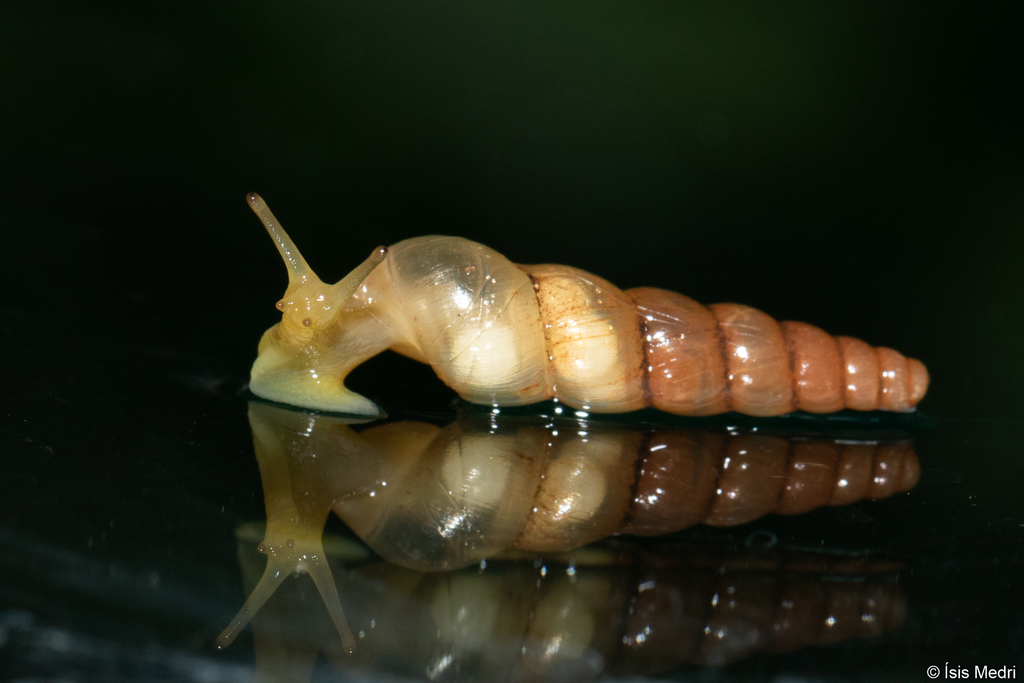
Subulina octona

Profile view of miniature awlsnail, similar elongated oblong shape to graceful awlsnail, head and mouth suctioned to floor

Image Usage Information

  • Ísis Meri Medri
  • CC BY-NC 4.0 DEED
  • Additional information about this specimen

Family: Achatinidae

Common name: Miniature Awlsnail

Discovery: Bruguiere, 1792

Identification

Width: 4.3 mm
Height: 14-17 mm
Whorls: 9-11

Subulina octona has a small, elongate, tapering shell with straight sides and a blunt apex. The whorls have deep sutures with radial striations. Lip is sharp and simple. Base of columella is slightly but distinctly truncate. Shell is translucent white; the body is a yellow to cream color.

Ecology

In northeastern North America Subulina octona may be found in greenhouses (Pilsbry, 1946) or in disturbed areas in large cities. It lays hard-shelled eggs.

Distribution

Introduced from tropical America. It occurs in large cities as far north as the Boston area (NatureServe, 2023).

Conservation

NatureServe Global Rank: G5
NatureServe State Rank: SNA

Author: Tim Pearce
Publication date: 11/2023

November 17, 2023 by

Protected:

This content is password-protected. To view it, please enter the password below.

October 18, 2023 by

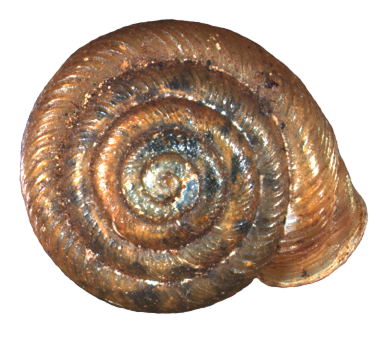
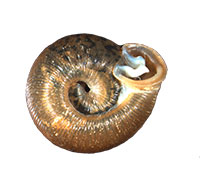
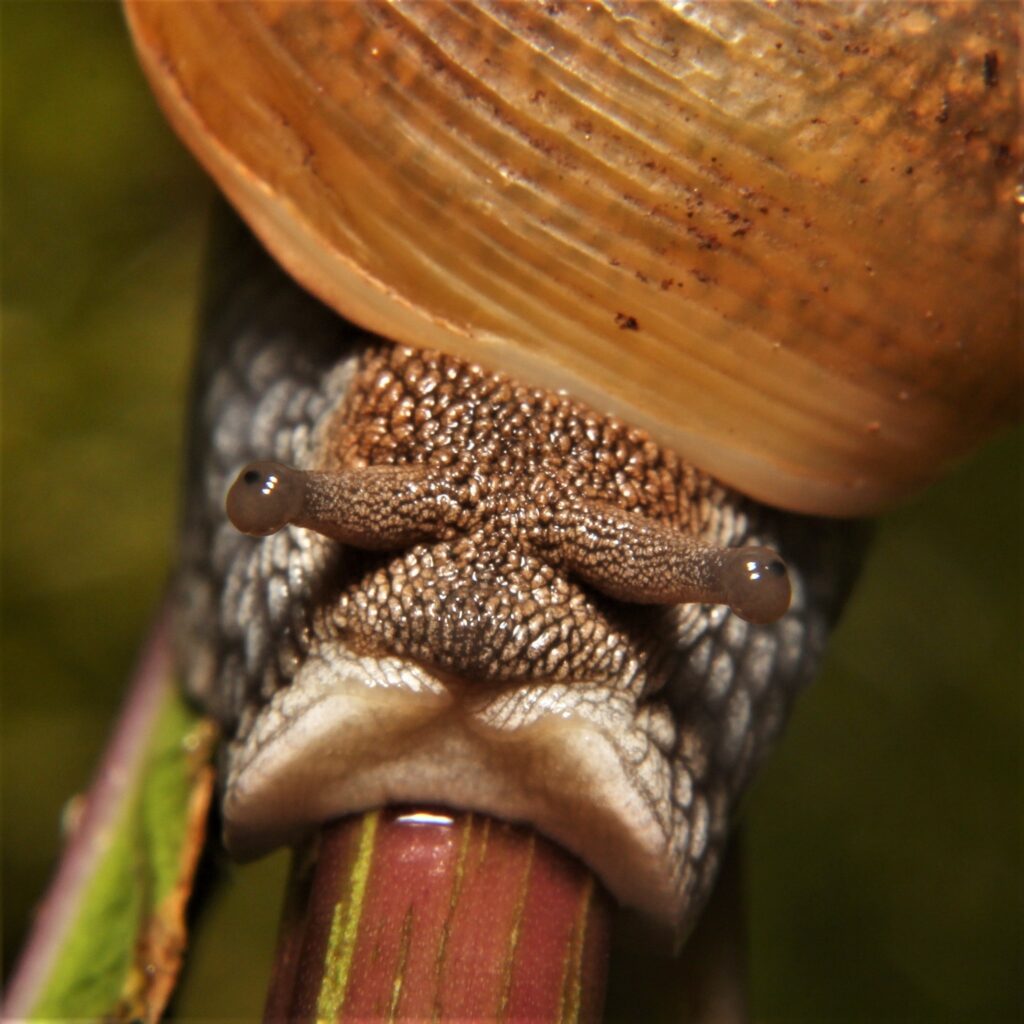
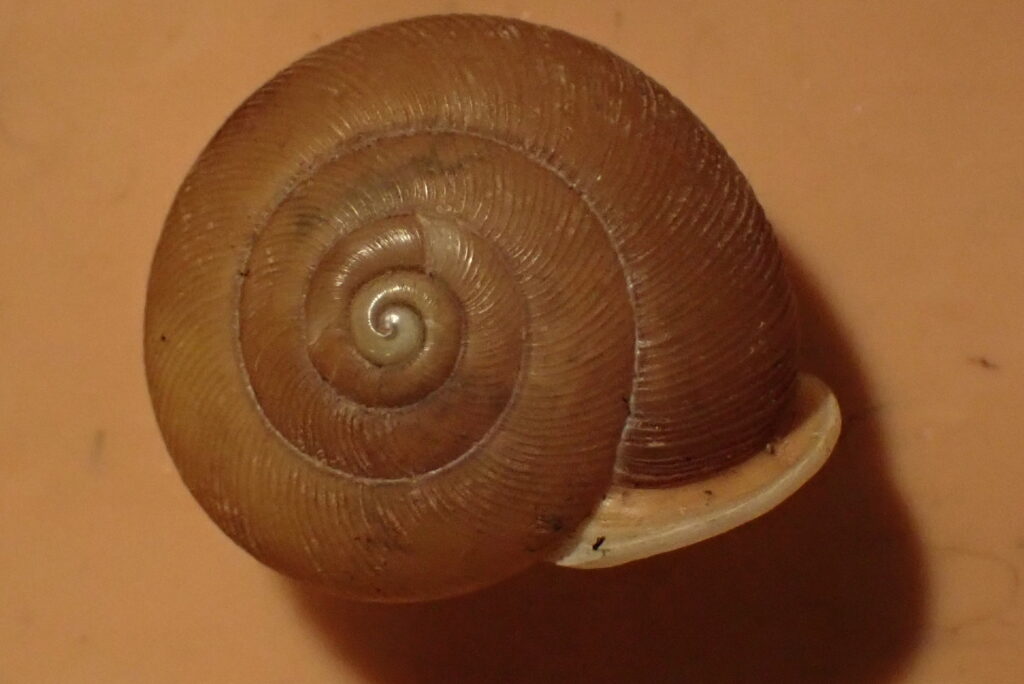
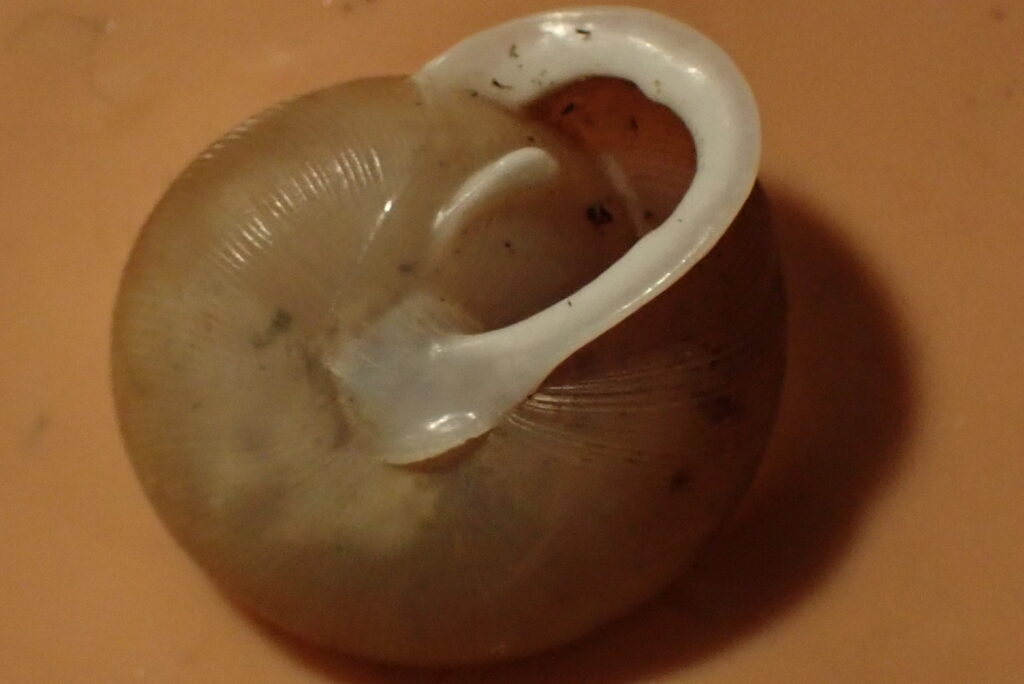
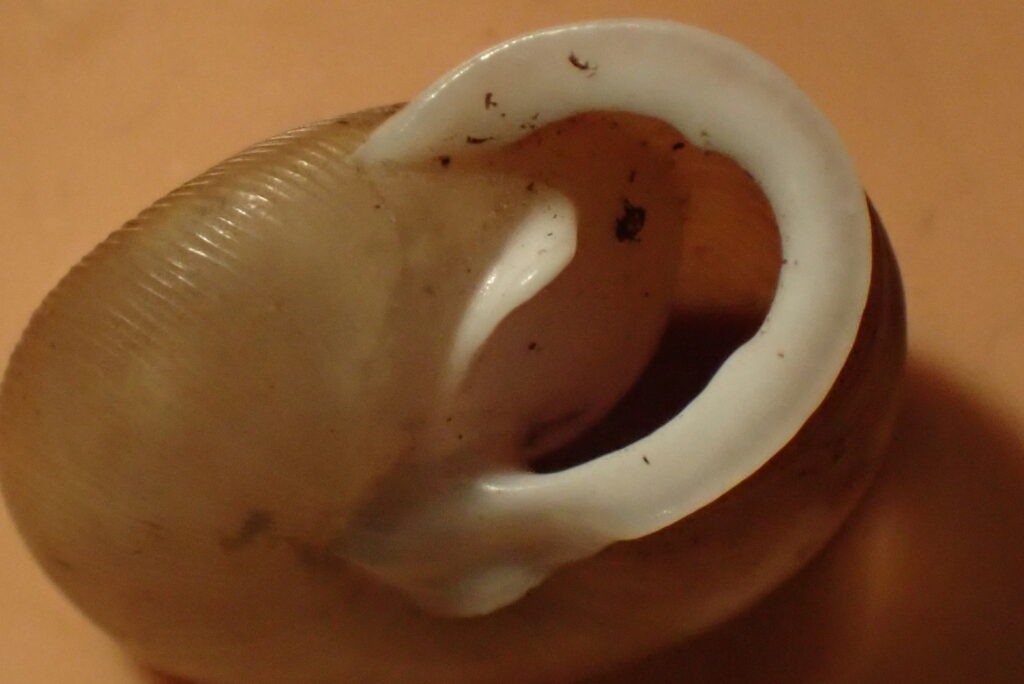
Daedalochila plicata

Image Usage Information

  • Dan Dourson
  • CC BY-NC 4.0 DEED

Family: Polygyridae

Common name: Cumberland Liptooth

Discovery: Say, 1821

Identification

Width: 5.5-5.7 mm
Height: 2.8-3.1 mm
Whorls: 5+

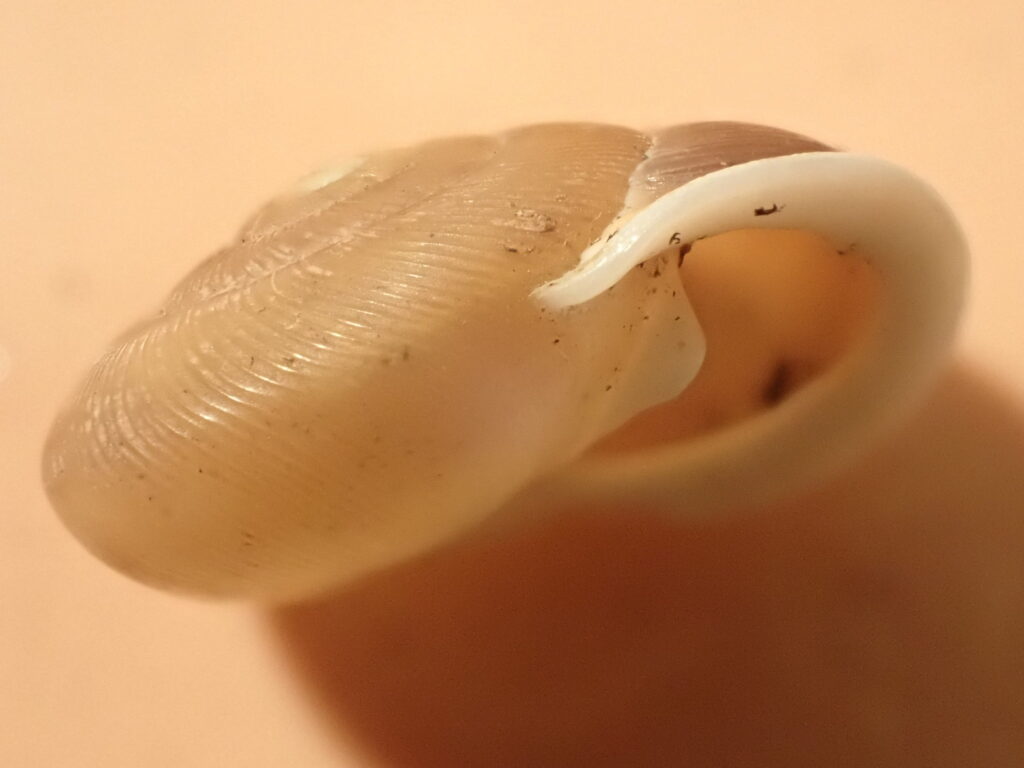
This animal’s shell is striking for its heavily-guarded aperture. The shell is a flattened heliciform shape, with a wide lip that is deflected toward the base (Pilsbry, 1940). The lip is contiguous with a strong parietal tooth, nearly filling the aperture. There are two irregularly-shaped teeth set within the outer lip. The umbilicus in early stages is perforate, but expands widely in the final whorl. The shell is sculptured with rib-striae and a few “hairs” behind the lip and in the umbilicus.

Ecology

This land snail is a calcium-lover found in leaf litter on dry wooded slopes and cedar glades (Hubricht, 1985). In Tennessee this species diverged from parts of Hubricht’s habitat characterization – it was significantly associated with leaf litter habitat, very steep slopes, and oak-poplar stands (Coney et al, 1982). Its numbers increased with increasing soil moisture, slope and soil pH, and there was an affinity for rich, old forest.

Taxonomy

Synonyms for Daedalochila plicata include Millerelix plicata and Polygyra plicata.

Distribution

Daedalochila plicata is an east-side snail of the southern Appalachians, found from Alabama and Georgia north to southern Ohio (Hubricht, 1985). In Virginia it is reported only from Lee County in the far southwest.

Conservation

NatureServe Global Rank: G4
NatureServe State Rank: S1S3
Virginia’s wildlife action plan: Tier III

October 2, 2023 by

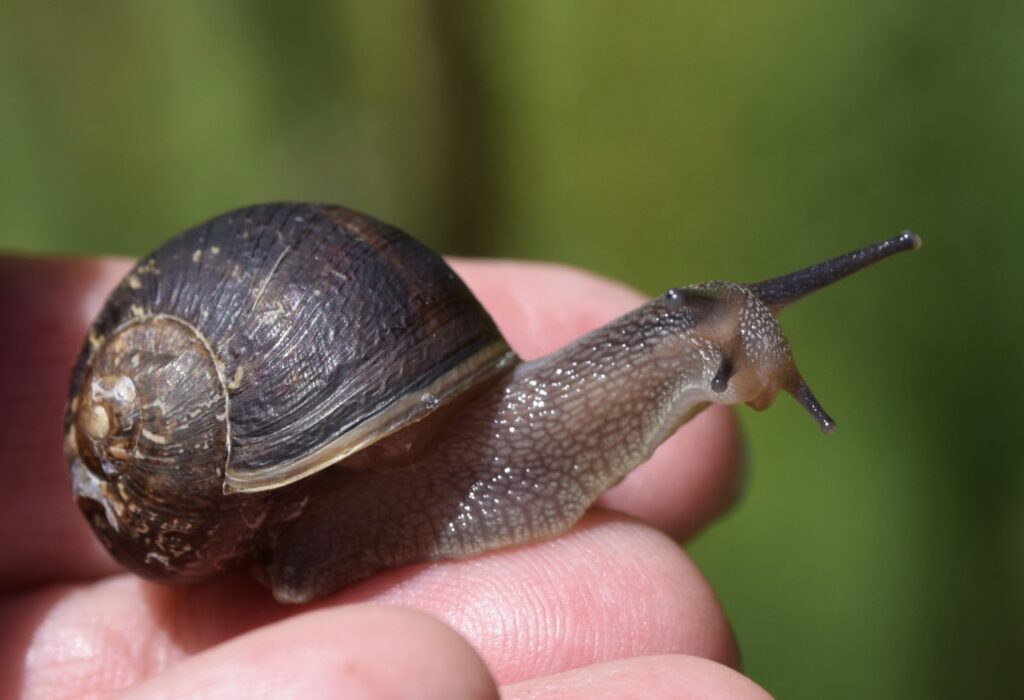
Cornu Aspersum

Image Usage Information

  • Chris Evers
  • CC BY-NC 4.0 DEED
  • Additional information about this specimen

Image Usage Information

  • qpezzolesi
  • CC BY-NC 4.0 DEED
  • Additional information about this specimen

Image Usage Information

  • NHMLA Community Science Program
  • CC BY-NC 4.0 DEED
  • Additional information about this specimen

Family: Helicidae

Common name: Brown Gardensnail

Discovery: Müller, 1774

Identification

Width: 25-35 mm
Height: 25-40 mm
Whorls: 4.5+

The shell of Cornu aspersum is globe-shaped with a reflected lip and a closed umbilicus. The shell is light brown or yellowish with a variable number of dark brown spiral bands that are often interrupted with lighter radial streaks or spots. The lip is whitish. The animal is a medium-brown or gray.

Ecology

Cornu asperum is a European and Mediterranean native found in almost any habitat, from parks and gardens to woodlands, scrub, grasslands, or dunes (Kerney & Cameron, 1979). Although it isa globally popular edible snail, it is also a pest of vegetables, grains, flowers, and fruit trees (in White-McLean, 2011). In North America it lives on rich soils in gardens and farmland (Pilsbry, 1939).

Taxonomy

Synonyms for Cornu aspersum include Helix aspersa, and Pomatia aspersa. In recent years, some workers have classified it in the genera Cantareus or Cryptomphalus.

Distribution

This animal is found on every continent except Antarctica. In North America, Pilsbry (1939) reported it only from locations in California, Louisiana and South Carolina, but NatureServe (2013) now reports C. aspersum from 16 states and two provinces. In Virginia specimens are reported from both ends of the state – Accomack, Chesapeake, and Wise Counties.

Cornu aspersum is an agricultural pest in several states, especially California.

Conservation

NatureServe Global Rank:G5, Secure.

January 13, 2023 by

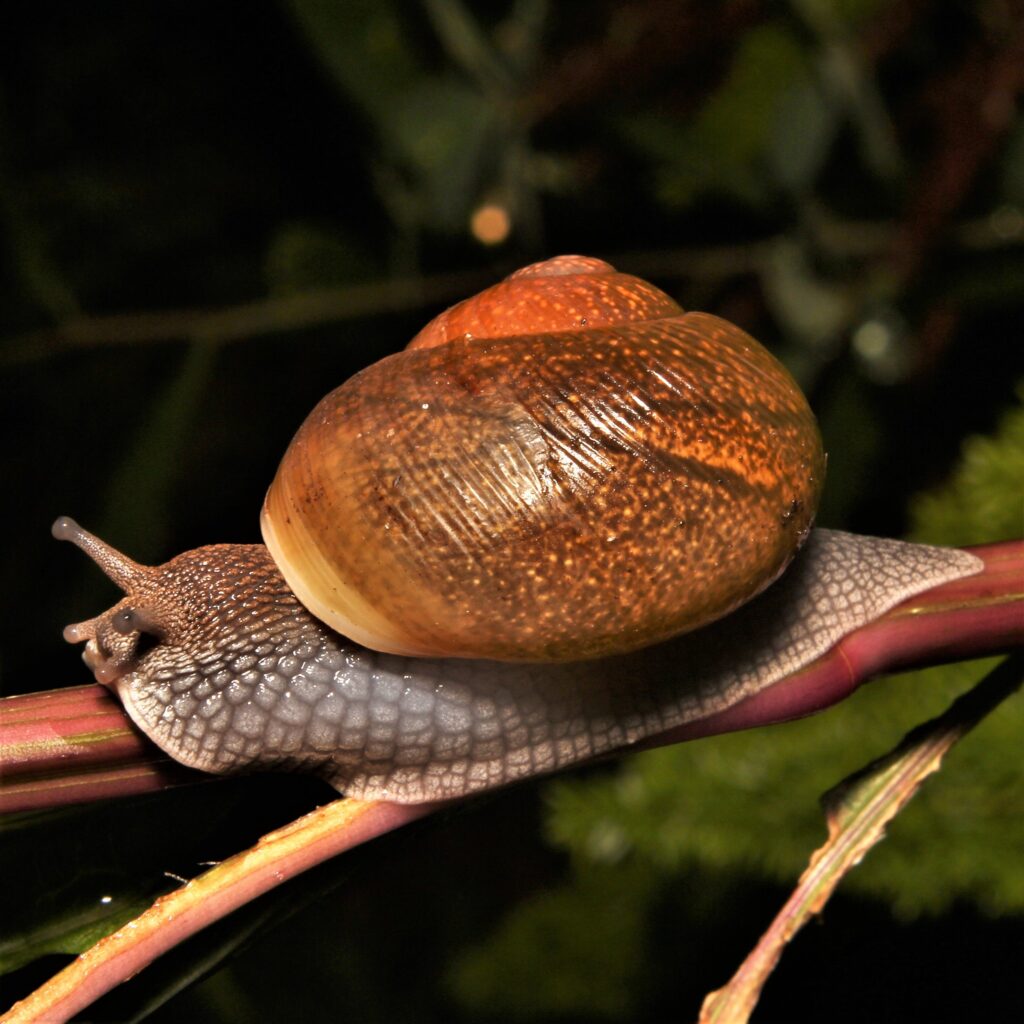
Zachrysia provisoria

Image Usage Information

  • Bill Lucas
  • CC BY-NC 4.0 DEED
  • Additional information about this specimen

Family: Zachrysiidae

Common name: Garden Zachrysia, Cuban Zachrysia

Discovery: Pfeiffer, 1858

Non-native

Identification

Width: ~25-32 mm
Height: ~20 mm
Whorls: 4-5

Zachrysia provisoria has a rounded shell, brownish to rust in color, with very convex whorls. It has a slightly-reflected lip, a closed umbilicus, and is sculptured with regular, radial riblets. The live animal is light gray below, darker and browner above. This species is very similar to Z. trinitaria (Pfeiffer, 1858), which is larger (up to 45 mm), and internally has a shorter flagellum on its penis (White-McLean, 2011).

Ecology

Zachrysia provisoria has importance as a potential pest species in the U.S., ranking 15th of 46 species in a preliminary threat assessment (Cowie et al., 2009). It is major plant pest in Florida (e.g. Auffenberg and Stange, 1993).

In laboratory experiments, young Z. provisoria grew best while consuming Romaine lettuce (Capinera, 2014). Although the young snails ate many of the 24 different plants they were offered, they only grew successfully upon seven species. Though they sometimes damage ornamental gardens or flowerbeds, this species may rely more upon wild vegetation for its success (Capinera).

This land snail, along with some other native and introduced snail species in the Southeast, is an intermediate host of the rat lungworm Angiostrongylus cantonensis, which can cause meningitis in people (Stockdale Walden et al., 2015; Stockdale Walden et al., 2017).

Taxonomy

Synonyms are Helix provisoria, H. appendiculata, and H. auracoma (White-McLean, 2011).

Distribution

Zachrysia provisoria is native to Cuba, and introduced to several Caribbean islands and Florida. In the Northeast Region it has been found in the Pittsburgh Zoo’s (PA) rainforest exhibit, probably spread via tropical nursery plants from Florida (Tim Pearce, pers. comm., 2017).

Conservation

NatureServe Rank: G5, Secure.
While this snail may not be able to tolerate the Northeast region’s temperate climate outdoors, it could be spread by plant nurseries or the pet trade. Its potential to transmit rat lungworm to people or domestic animals should also be a concern.

January 13, 2023 by

Xolotrema fosteri

Image Usage Information

  • ozarkpoppy
  • CC BY-NC 4.0 DEED
  • Additional information about this specimen

Family: Polygyridae

Common name: Bladetooth Wedge

Discovery: F.C. Baker, 1921

North American native, non-native in Northeast Region

Identification

Width: ~14-18 mm
Height: ~8-10 mm
Whorls: ~5

This shell of Xolotrema fosteri is subglobose, flattened from top to bottom, and has a widely reflected, toothed lip. There is a subtle palatal denticle, a strong basal lamella, and a pronounced “blade”-like parietal denticle. The umbilicus is closed. The shell is sculptured with riblets, approximately 3/mm in the final whorl (Pilsbry, 1940). The live animal is gray.

This shell differs from Patera appressa in lacking papillae on the base. Xolotrema denotata has a larger palatal denticle and a fuzzy coating of bristles on fresh shells.

Ecology

Xolotrema fosteri is found in both natural and anthropogenic habitats. It occurs in leaf litter, among logs and rocks, on “waste ground” and roadsides (Hubricht, 1985). It occurs on slopes, in ravines, and on floodplains.

Taxonomy

Synonyms are Helix appressa and Triodopsis appressa, in part, and Polygyra appressa fosteri (Pilsbry, 1940).

Distribution

Xolotrema fosteri is native to the Mississippi Valley, Central and Southeastern US. It was deliberately introduced into a Burlington, New Jersey garden in the 1860’s and by 1909 was abundant in that area (Pilsbry, 1940). There are museum records from New York to Maryland.  

Conservation

NatureServe Rank: G5, Secure.

  • « Go to Previous Page
  • Page 1
  • Interim pages omitted …
  • Page 5
  • Page 6
  • Page 7
  • Page 8
  • Page 9
  • Interim pages omitted …
  • Page 53
  • Go to Next Page »

sidebar

About

  • Mission & Commitments
  • Directors Team
  • Museum History

Get Involved

  • Volunteer
  • Membership
  • Carnegie Discoverers
  • Donate
  • Employment
  • Events

Bring a Group

  • Groups of 10 or More
  • Birthday Parties at the Museum
  • Field Trips

Powdermill

  • Powdermill Nature Reserve
  • Powdermill Field Trips
  • Powdermill Staff
  • Research at Powdermill

More Information

  • Image Permission Requests
  • Science Stories
  • Accessibility
  • Shopping Cart
  • Contact
  • Visitor Policies
One of the Four Carnegie Museums | © Carnegie Institute | Privacy Policy | Terms of Use | Accessibility
Rad works here logo