• Skip to primary navigation
  • Skip to main content
  • Skip to primary sidebar

Carnegie Museum of Natural History

One of the Four Carnegie Museums of Pittsburgh

  • Visit
    • Buy Tickets
    • Visitor Information
    • Exhibitions
    • Events
    • Dining at the Museum
    • Celebrate at the Museum
    • Powdermill Nature Reserve
    • Event Venue Rental
    • Gift Cards
  • Learn
    • Field Trips
    • Educator Information
    • Programs at the Museum
    • Bring the Museum to You
    • Guided Programs FAQ
    • Programs Online
    • Climate and Rural Systems Partnership
  • Research
    • Scientific Sections
    • Science Stories
    • Science Videos
    • Senior Science & Research Staff
    • Museum Library
    • Science Seminars
    • Scientific Publications
    • Specimen and Artifact Identification
  • About
    • Mission & Commitments
    • Directors Team
    • Museum History
  • Tickets
  • Give
  • Shop

December 11, 2023 by

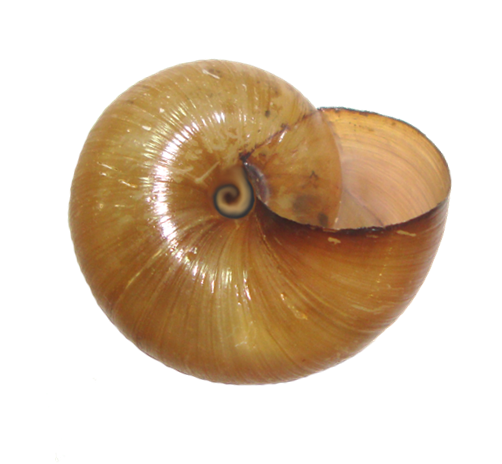
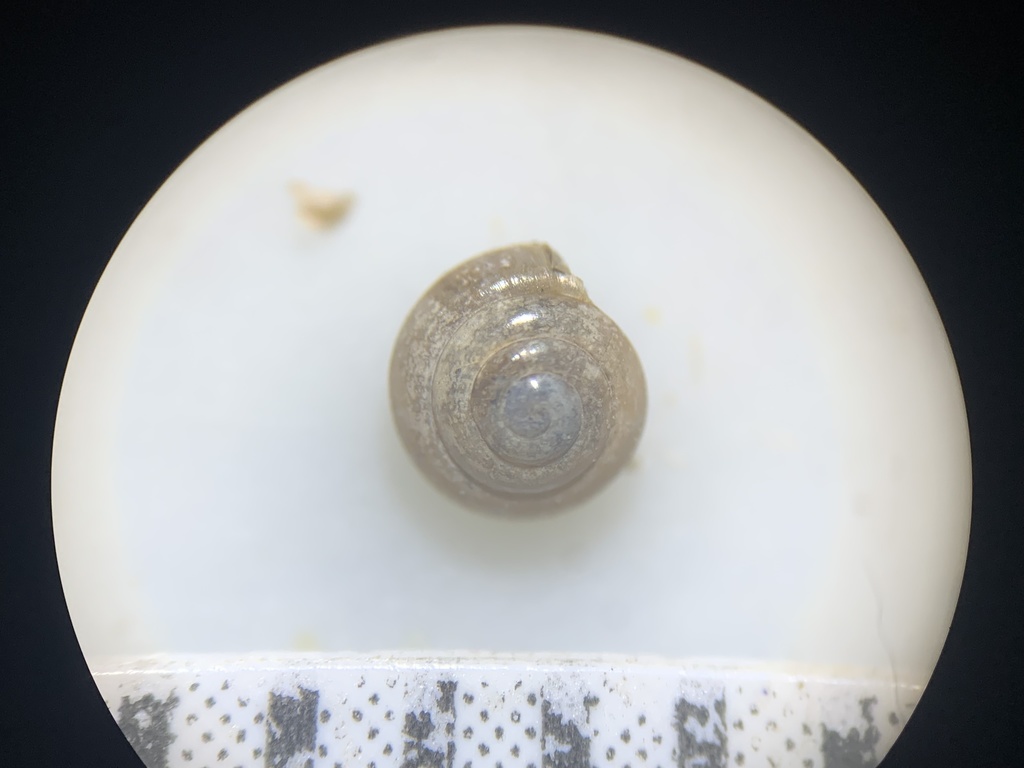
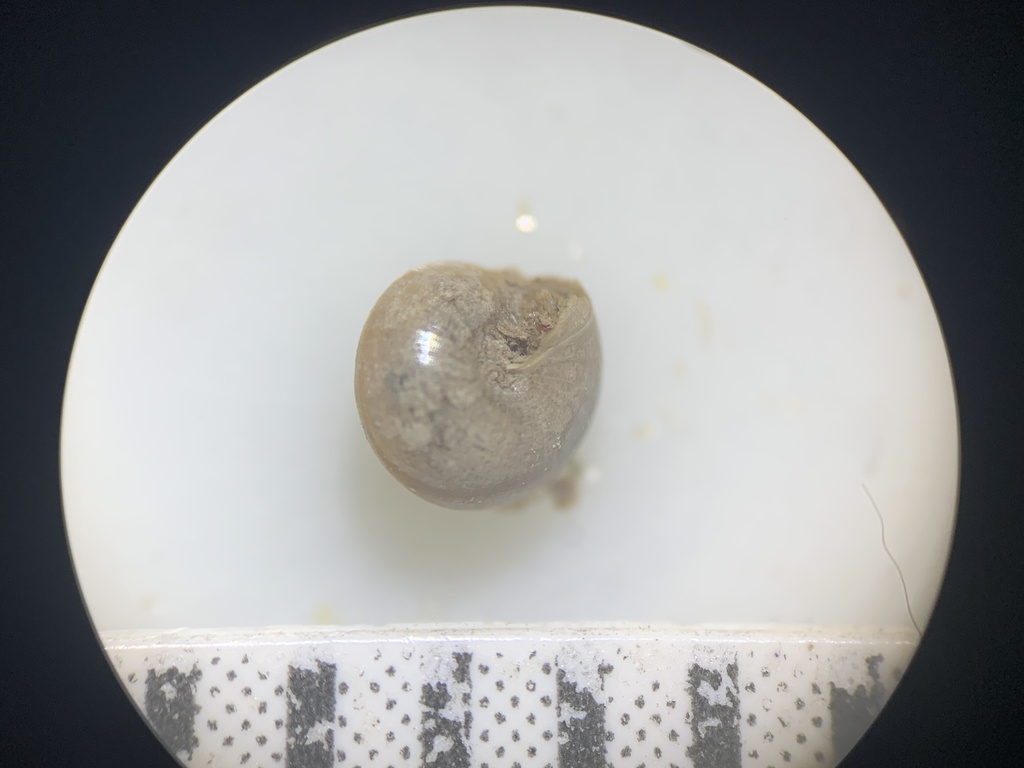
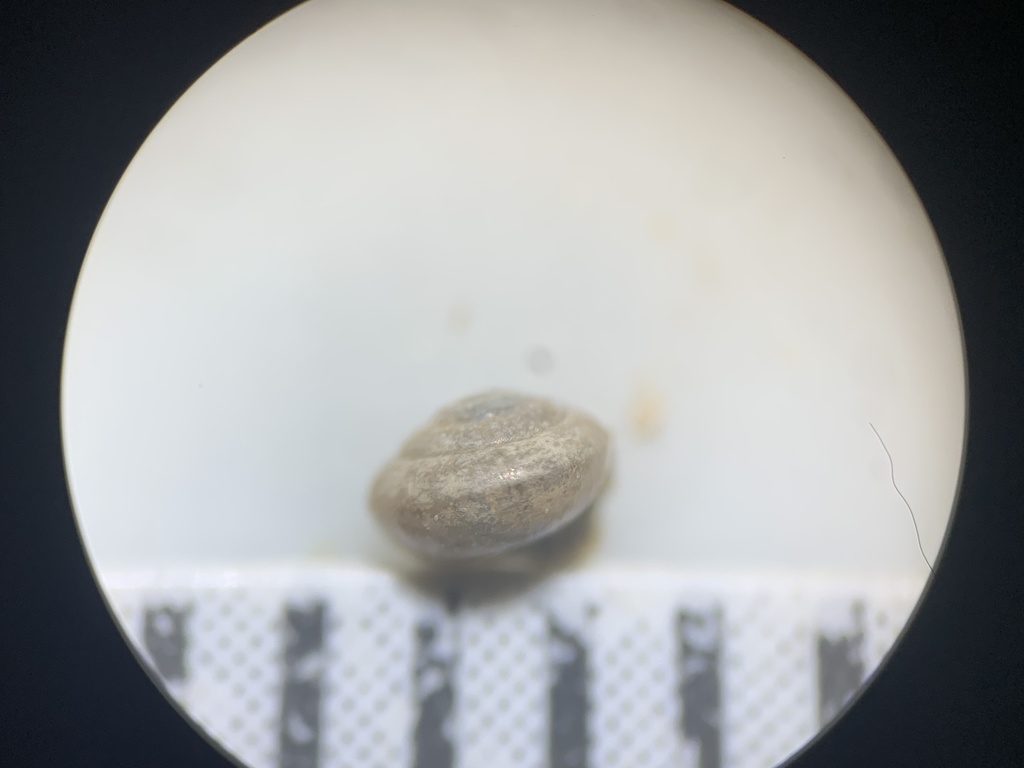
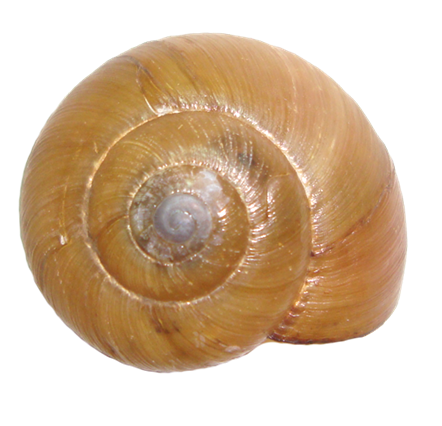
Glyphyalinia cryptomphala

Image Usage Information

  • The Academy of Natural Sciences of Philadelphia
  • CC BY-NC 4.0 DEED
  • For additional information about this specimen: Gary Rosenberg (rosenberg.ansp@drexel.edu)

Family: Gastrodontidae

Common name: Thin Glyph

Discovery: G.H. Clapp, 1915

Identification

Width: 5.1-6.0 mm
Height: 2.1 mm
Whorls: 5-5.5

Glyphyalinia cryptomphala is a small to average sized glyph with a depressed shell that has rapidly expanding whorls. The umbilicus is completely sealed at all stages of growth (Dourson 2015). The light horn to white, glossy, translucent shell is sculptured with relatively closely spaced indented radiating lines, roughly 23-34 lines on the last whorl (Pilsbry 1946). This sculpture is strong apically and continues to the umbilicus. Spiral engraved lines (use magnification) are a constant feature (Dourson 2015).

G. cryptomphala is similar to G. solida in that both have a completely closed umbilicus, however, G. solida can be separated because it is larger (1-3 mm larger) and heavier with stronger sculpture; the radiating indented lines being more closely spaced, roughly 40 lines on the last whorl. G. cryptomphala can be separated from other similar Glyphyalinia species because they all have a obviously or minutely open umbilicus: G. caroliniensis has a less flattened spire; the umbilicus of G. indentata is minutely open and the radiating indented lines are more widely spaced; the umbilicus of G. luticola is minutely open, the shell is coppery, and it has roughly 20 radiating indented lines on the last whorl (Dourson 2015); the umbilici of G. picea, G. praecox, G. rimula, and G. sculptilis are minutely open.

Ecology

Glyphyalinia cryptomphala  is found in mixed hardwood forests under moist leaf litter along river bluffs and in ravines (Dourson 2015).

Taxonomy

Because Glyphyalinia cryptomphala  might have been misidentified as similar species, our current understanding of the range and habitat requirements are probably far too general. Accurate conservation rank assessments must await taxonomic study and clarification of the complex.

Synonyms: This animal has also been called Retinella cryptomphala.

Distribution

Glyphyalinia cryptomphala  is mostly known farther southwest in the Appalachian Mountains, but some records show it in West Virginia, Virginia, Maryland, and Washington, DC.

Conservation

NatureServe Global Rank: G5, Secure.

NatureServe State Rank: S4, Apparently Secure.
December 4, 2023 by

Mesomphix luisant

Image Usage Information

  • Dan Dourson
  • CC BY-NC 4.0 DEED

Family: Gastrodontidae

Common name: Glossy Button

Discovery: Dourson, 2015

Identification

Width: 22-26 mm
Height: 14-19 mm
Whorls: 5

Spiral rows of papillae are a consistent feature of this newly described species’ shell, especially on the final whorl. The shell is heliciform, colored light brown often with darker streaks. The top of the shell is dull-glossy while the base is more polished. Engraved spiral striae are the strongest near the suture lines. Transverse striae are moderately developed – more pronounced than in M. cupreus but less than in M. vulgatus.

Ecology

This species appears to be restricted to rich hillsides below and amid limestone bluffs along the Greenbrier River, Greenbrier County, West Virginia and possibly along Huff Creek., Logan County, West Virginia. Mesomphix luisant is endemic to West Virginia. 

Taxonomy

Mesomphix luisant is smaller and more globose than M. capnodes, with a slightly larger umbilicus and a glossier shell, especially at the base. It differs from M. cupreus in its well-developed spiral papillae on the final whorl and smaller umbilicus. Its name is derived from the French word meaning glossy, shining or gleaming. 

Distribution

Currently, only known from Greenbrier County and possibly Logan County, West Virginia.  Future surveys may reveal additional county records. 

Conservation

NatureServe Global Rank: Not yet ranked; G1 recommended.
NatureServe State Rank: West Virginia, S1.
This newly-described species may be imperiled due to its apparent rarity.

December 4, 2023 by

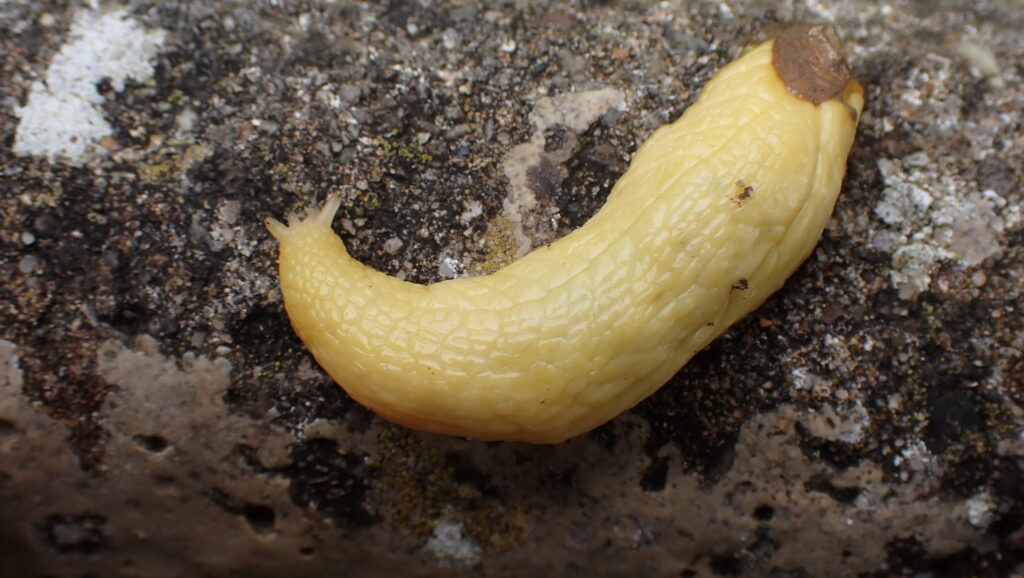
Testacella haliotidea

Image Usage Information

  • Julien Tchilinguirian
  • CC BY-NC 4.0 DEED
  • Additional information about this specimen

Family: Testacellidae

Common name: Shelled slug, Earshell slug

Discovery: Draparnaud, 1801

Identification

Length: 80-120 mm

Testacella haliotidea is cream-colored or yellow above, whitish on its foot. It has a small shell upon the dorsal posterior surface of the tail, and this shell barely covers the junction of two pronounced lateral grooves.

Ecology

Found in gardens, parks, fields, and vineyards (Kerney and Cameron, 1979), T. haliotidea is a predator of earthworms and other snails. Laboratory work showed that T. haliotidea may take from 40 minutes to three days to eat a worm (Stokes and Hirst, 1958). The slug’s eggs are laid under the soil in clutches of up to 40 and turn from white to brown soon after laying. Some eggs in the laboratory took nearly two years to hatch. Some of the slugs aestivated sporadically in a coating of mucus and soil (Stokes and Hirst, 1958).

Taxonomy

Testacella europaea is a synonym.

Distribution

Western Europe and the western Mediterranean (Kerney and Cameron, 1979)

Conservation

NatureServe Global Rank: G5, Apparently secure.

December 4, 2023 by

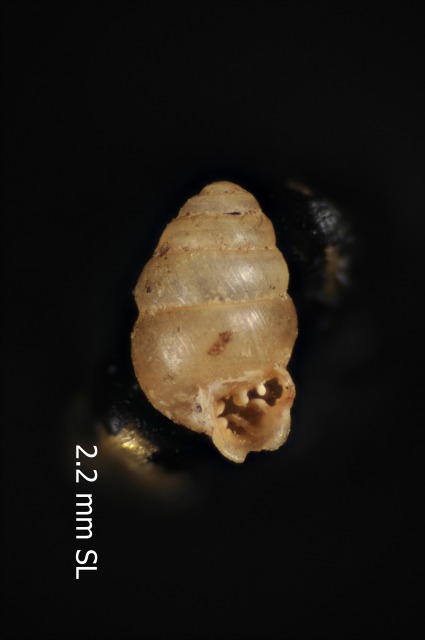
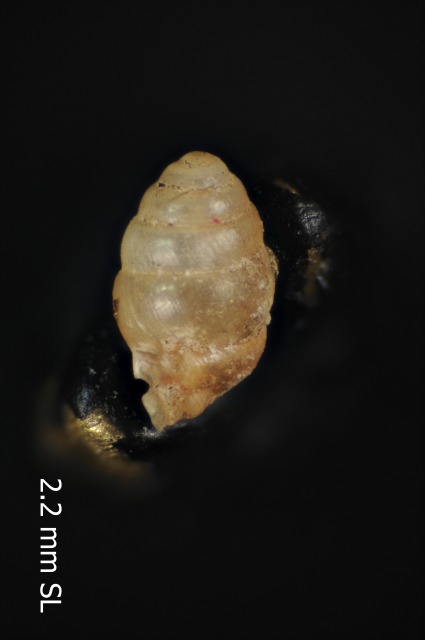
Vertigo ovata

Family: Vertiginidae

Common name: none

Described by: Say, 1822

Identification

Height: ~2.3 mm
Width: ~1.4 mm
Whorls: 4-5

This species has a large shell with smooth surface, and at least six apertural lamellae. With these characteristics it most resembles Vertigo teskeyae and Vertigo oralis. It differs from V. teskeyae by possessing a less obese shell with a deeper suture and a columellar wall of the aperture that curves back towards the central shell axis. It differs from V. oralis by its shiny shell luster and common presence of an infraparietal lamella.

Ecology

Populations are primarily found in graminoid litter and on cattail leaves in swamps, sedge meadows, wet and mesic prairie, low calcareous meadows, river banks, lakeshores, roadside ditches, and wooded wetlands. It is also occasionally found on bedrock outcrops, upland forest, and upland grassland habitats. It can climb vegetation to approximately one meter (three feet) off the ground (Nekola & Coles, 2010).

Taxonomy

A synonym for this animal’s name is Pupa ovata.

Distribution

Vertigo ovata ranges across all of North America from northern Quebec and the Alaskan interior to California, southern Arizona, the Gulf Coast, and south Florida. It also extends south into the West Indies (Pilsbry, 1948). In Virginia this species has been reported from most of the state.

Conservation

NatureServe Global Rank: G5
NatureServe State Rank: S4
Virginia’s wildlife action plan: Tier IV

November 28, 2023 by

Euconulus fresti

Image Usage Information

  • Corey Lange
  • CC BY-NC 4.0 DEED
  • Additional information about this specimen

Family: Euconulidae

Common name: Toothed Hive

Discovery: Sterki, 1893

Identification

Width: 2-3 mm
Height: 2-3 mm
Whorls: 6+

Like others of its genus, the shell of Euconulus dentatus is a small beehive shape, and thin, with tightly coiled whorls. The final whorl of E. dentatus contains 1-3 radially-aligned lamellae that can be viewed through the base of the shell. When multiple lamellae are present, they are spaced at wide intervals, about every 1/3 of a whorl (Pilsbry, 1946).

Recent genetics work suggests that shell characters may no longer be useful in distinguishing between species in the group of nominal species E. chersinus, E. dentatus, and E. trochulus (J.C. Nekola, pers. comm.).

Ecology

Euconulus dentatus lives primarily in dry leaf litter, and is occasionally found around logs. It is one of the more difficult snails to collect because of the timing of its life cycle; individuals reach maturity in winter and die in spring (Hubricht 1985). In Tennessee, it is associated with steep slopes and limestone substrata at elevations of 940 to 1,120 feet (Coney et al, 1982).

Taxonomy

Taxonomy of the genus Euconulus is in a state of flux. Recent genetics research shows that Euconulus chersinus is part of a group of nominal species that also includes E. dentatus and E. trochulus (J.C. Nekola, pers. comm.). Previous shell morphology guidelines may no longer be useful to distinguish between the members of this group.

This species has also been known as Euconulus chersinus dentatus.

Distribution

Euconulus dentatus is widespread throughout the southeastern United States. It is reported from the Appalachian Mountains of Pennsylvania in the north to Louisiana in the south (Hubricht, 1985). In Virginia it is found in scattered counties but is absent in the southeast.

Because beehive snails are difficult to identify, and there is now uncertainty about the taxonomy of this nominal species, the usefulness of historic reports is unclear.

Conservation

NatureServe Global Rank: G5

November 27, 2023 by

Melampus floridanus

Image Usage Information

  • Michael Stanton
  • CC BY-NC 4.0 DEED
  • Additional information about this specimen

Family: Ellobiidae

Common name: Florida Melampus

Discovery: L. Pfeiffer, 1856

Identification

Height: 5-7 mm
Whorls: 7-8

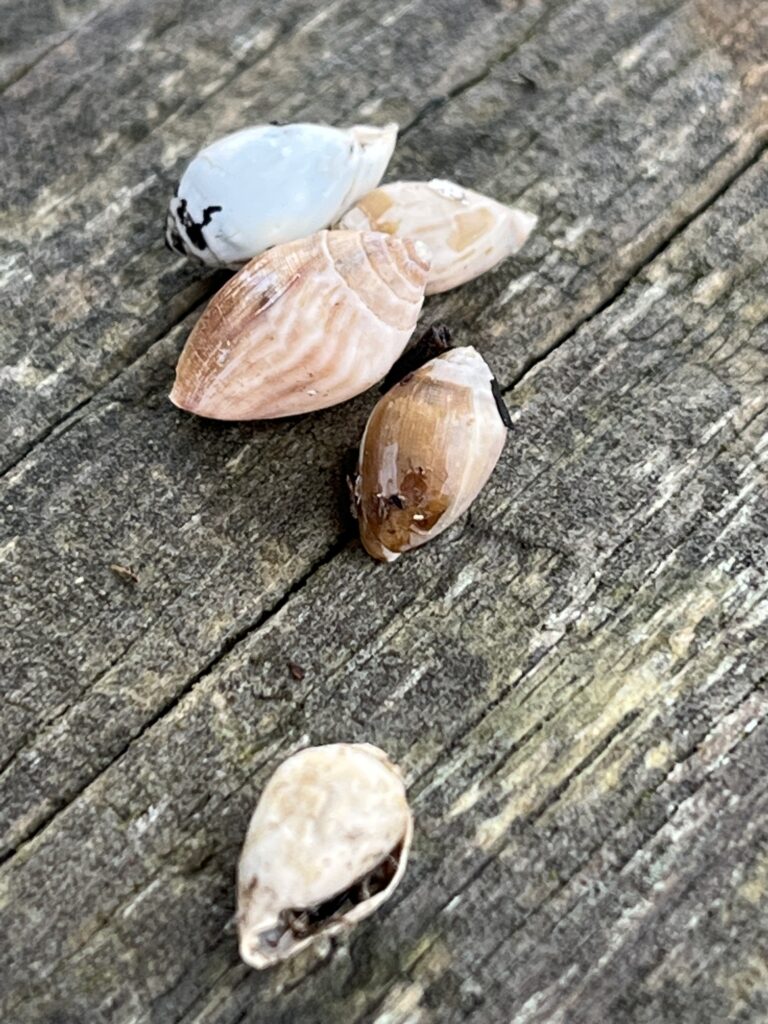
The shell of Melampus floridanus is ovate-conical in shape (Abbott, 1974). The spire is low and the shell is widest at about the upper third. A narrow aperture runs for about 2/3 of the shell height, with 2 lamellae on the inner columella, and about 10-12 raised lirae within the outer lip. The shell color is mahogany brown with one white spiral band below the suture and about the periphery. The similar Melampus bidentatus is larger with fewer whorls and only 1-4 spiral lirae inside the outer lip.

Ecology

This snail lives in high salt marsh and mud flats and is considered semi-terrestrial. It can survive very low salinity water. It is an air-breather, or pulmonate, that can survive for extended periods upon vegetation above or beyond the water. Individual snails live up to 2 years.

Taxonomy

Synonyms of Melampus floridanus include Detracia floridana; Tralia floridana; Auricula rugeli.

Distribution

Melampus floridanus exhibits a somewhat disjunct distribution, with most found in Florida and the northeastern Gulf of Mexico, and another sizable population in New Jersey and the Chesapeake Bay area, with sparse records between those two areas. It is unclear whether this species was introduced from Florida to the Chesapeake Bay area, or whether it naturally occurs all along the east coast, and the sparse records of Georgia, the Carolinas, and Virginia, simply represent sparse collecting.

Conservation

NatureServe not ranked

  • « Go to Previous Page
  • Page 1
  • Interim pages omitted …
  • Page 4
  • Page 5
  • Page 6
  • Page 7
  • Page 8
  • Interim pages omitted …
  • Page 53
  • Go to Next Page »

sidebar

About

  • Mission & Commitments
  • Directors Team
  • Museum History

Get Involved

  • Volunteer
  • Membership
  • Carnegie Discoverers
  • Donate
  • Employment
  • Events

Bring a Group

  • Groups of 10 or More
  • Birthday Parties at the Museum
  • Field Trips

Powdermill

  • Powdermill Nature Reserve
  • Powdermill Field Trips
  • Powdermill Staff
  • Research at Powdermill

More Information

  • Image Permission Requests
  • Science Stories
  • Accessibility
  • Shopping Cart
  • Contact
  • Visitor Policies
One of the Four Carnegie Museums | © Carnegie Institute | Privacy Policy | Terms of Use | Accessibility
Rad works here logo