• Skip to primary navigation
  • Skip to main content
  • Skip to primary sidebar

Carnegie Museum of Natural History

One of the Four Carnegie Museums of Pittsburgh

  • Visit
    • Buy Tickets
    • Visitor Information
    • Exhibitions
    • Events
    • Dining at the Museum
    • Celebrate at the Museum
    • Powdermill Nature Reserve
    • Event Venue Rental
  • Learn
    • Field Trips
    • Educator Information
    • Programs at the Museum
    • Bring the Museum to You
    • Guided Programs FAQ
    • Programs Online
    • Climate and Rural Systems Partnership
  • Research
    • Scientific Sections
    • Science Stories
    • Science Videos
    • Senior Science & Research Staff
    • Museum Library
    • Science Seminars
    • Scientific Publications
    • Specimen and Artifact Identification
  • About
    • Mission & Commitments
    • Directors Team
    • Museum History
  • Tickets
  • Give
  • Shop

Amy Henrici

May 14, 2020 by wpengine

The Bromacker Fossil Project Part II: The Hunt for Fossils

New to this series? Read The Bromacker Fossil Project Part 1 here.

Finding fossils at the Bromacker quarry was tedious and physically demanding, but it was extremely rewarding when a fossil is discovered. Our annual summer field season generally lasted three and a half weeks. Because the weather usually wasn’t conducive to camping or cooking outdoors, we stayed at the same hotel and dined at the hotel or local restaurants.

The original 1993 fossil quarry was opened using heavy equipment and operators from the nearby commercial quarry, and in the early years we relied on these people to expand the fossil quarry’s boundaries as needed. When the commercial quarry was temporarily shut down due to the lack of contracts for building stone, our collaborator Dr. Thomas Martens fortunately was able to obtain funding to annually rent a Bobcat, which he became skilled at operating. Thereafter, Thomas would use the Bobcat to expand the quarry and remove soil and weathered rock layers, so that we could begin our yearly excavation on unweathered rock.
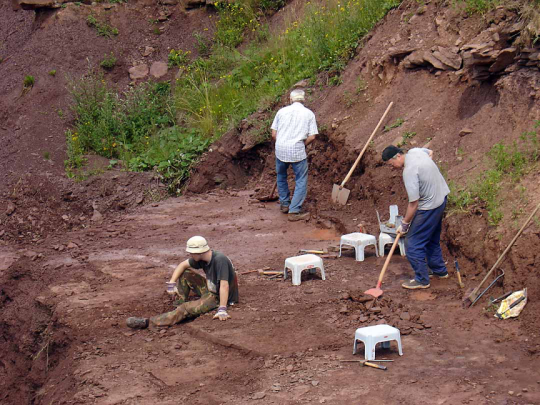
image
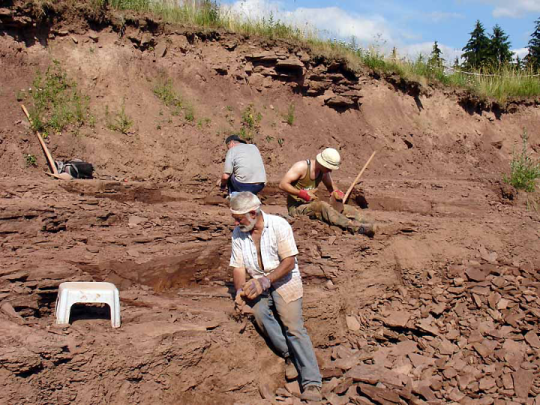
The Bromacker quarry on the first day of fieldwork in the 2006 field season. Shovels were used to clear loose rock from the surface of the quarry. Pictured (counterclockwise from left) graduate student Andrej Čerňanský and Dr. Jozef Klembara (Comenius University, Bratislava, Slovak Republic) and Dr. Dave Berman (Carnegie Museum of Natural History [CMNH]). Photo by the author, 2006.

We would each stake out an area of the quarry to work in and then proceed to work through the rock layers by using a hammer and chisel or pry bar to free a piece of rock. Its surfaces and edges would be checked for fossil bone, and if there was none, the rock piece would be broken into smaller pieces, which were also checked for bone. As is the case at many other fossil sites, the rock tended to split along the plane a fossil was preserved in, because the fossil would create a zone of weakness.
image
The quarry after a couple days of excavation. Pictured (clockwise from front) are Dave Berman, Jozef Klembara, and Andrej Čerňanský. Photo by the author, 2006.

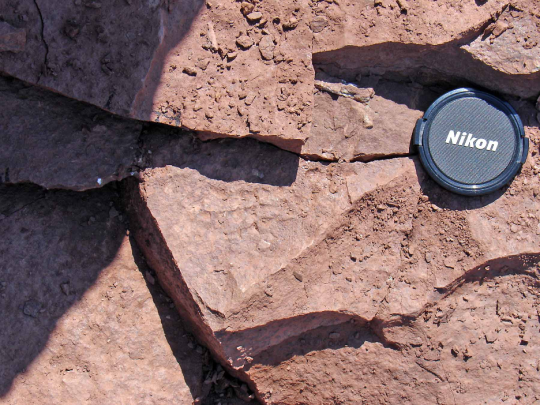
Once a fossil specimen was discovered—and there were a few frustrating years when this didn’t happen—the hard work of extracting it from the quarry began. Here, I’ll use a fossil discovered during the 2006 field season as an example of how this was done.
image
A discovery! Fossil bone and bone impression are exposed to the left of the lens cap. Photo by the author, 2006.

First, we would isolate the fossil specimen from the surrounding rock, exposing as little of the fossil as possible while determining its extent, because it would have been easy to lose pieces of bone in the dirt and mud. Then we would encase the specimen in a plaster and burlap jacket to protect it during extraction, shipping, and preparation.

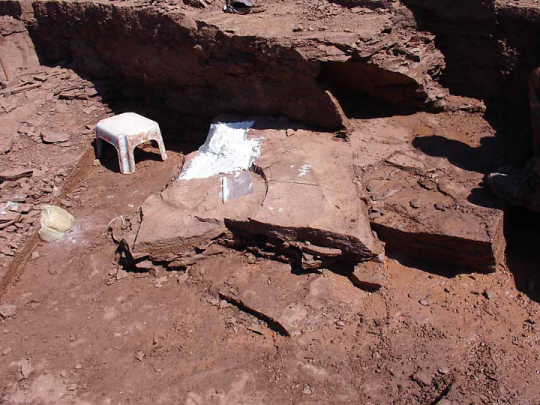
To make the jacket, we’d coat cut strips of burlap in wet plaster and then spread them across the surfaces of the rock containing the specimen, or block. A layer of plastic (plastic bags worked well) was applied to the top surface of the block to keep plaster from sticking to any exposed bone.
image
The block is partially isolated from surrounding rock. In this case, we decided to encase the top and some sides of the block in plaster and burlap bandages to hold the rock pieces together before we finished isolating the block from surrounding rock. Photo by the author, 2006.

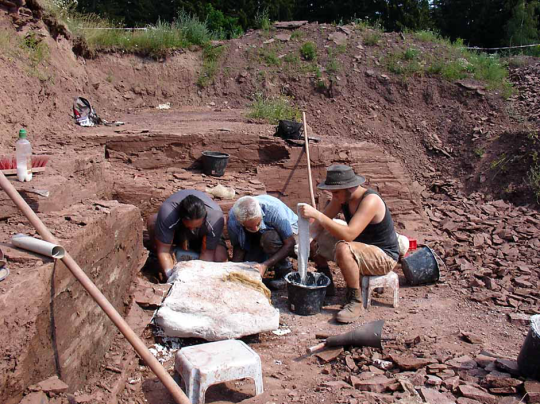
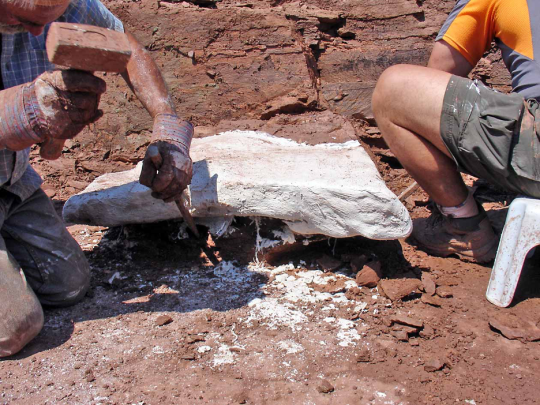
After a couple layers of plaster bandages were applied to the top and sides of the block, the block was undercut, with plaster bandages added periodically to hold the undercut rock in place.
image
Pictured (left to right) are Dr. Stuart Sumida (California State University, San Bernardino, CA), Dave Berman, and Mr. Jerome Gores (Museum der Natur, Gotha [MNG]). Jerome is holding a plaster and burlap bandage while Dave and Stuart are pressing plaster bandages against the bottom of the block. They must hold the bandages in place until the plaster sets. Photo by the author, 2006.

image
Using hammers and chisels to undercut the block. Photo by the author, 2006.

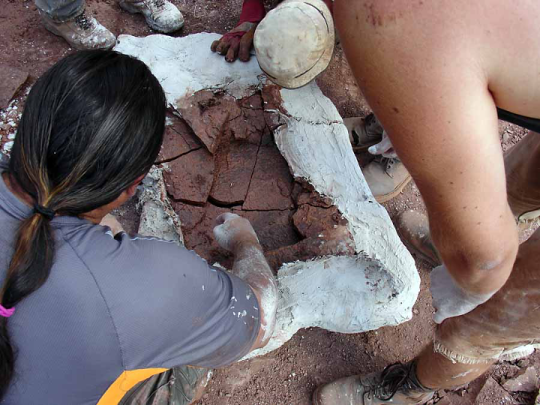
When deemed safe, we would crack the block free from the quarry floor using hammers and chisels, and flip it over, unless it broke free on its own. Excess rock would be removed from the bottom of the block to make it lighter in weight. Then we would apply burlap and plaster bandages to the bottom of the block. The block would be removed from the quarry and stored at the MNG until it was shipped to Pittsburgh.
image
The block has now been safely flipped over and excess rock is being removed. Photo by the author, 2006.

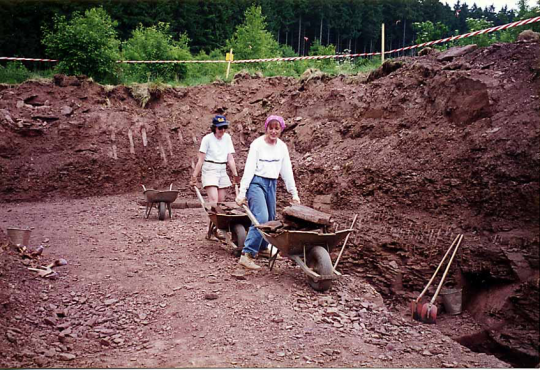
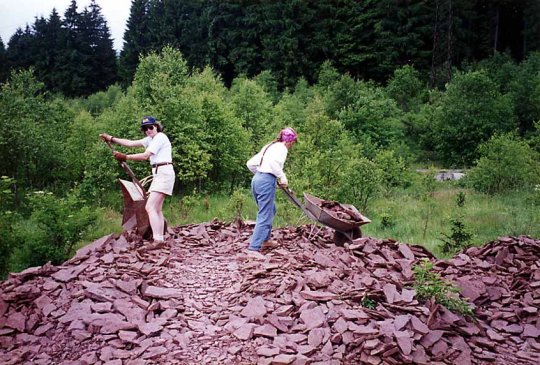
We encountered several problems during our quarry operations over the years. As we worked our way through the rock column in the quarry, processed rock piled up on the quarry floor. In the early years, we tossed or shoveled the processed rock into wheelbarrows and pushed the heavy, unwieldy wheelbarrows out of the quarry to a dump pile. Fortunately, the Bobcat eventually replaced the wheelbarrows for moving processed rock. As we ran out of space outside the quarry to dump processed rock, the rock was used to backfill older portions of the quarry.
image
Former CMNH volunteer Linda Rickets (front, right) and the author (left, rear) line up to push loaded wheelbarrows out of the quarry to the dump pile. Photo by Dave Berman, 1996.

image
At the dump pile. Over time rain and the freeze/thaw cycle would break down the rock and vegetation would grow on it. Photo by Dave Berman, 1996.

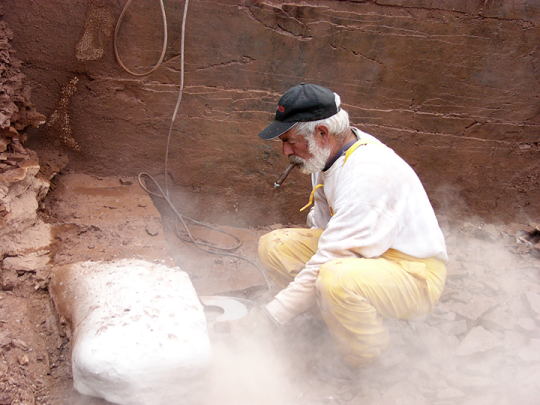
Another problem was that fossils found at the bottom of the quarry were often extremely difficult to undercut because the rock so was hard. Sometimes a well-hit chisel would just bounce off the rock instead of cracking or penetrating it. One year we had to resort to a rock saw to undercut a block.
image
Dave Berman uses a rock saw to undercut a block. Photo by the author, 2004.

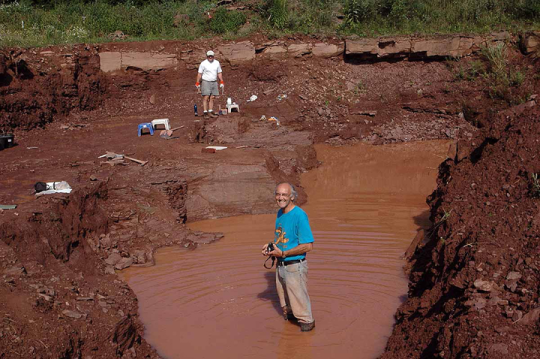
Rain was always a problem. We would shelter in our cars during intervals of rain, or work at the museum if the rain was heavy and persistent. Occasionally heavy rain would flood the quarry, forcing us to work in the ‘dry’ areas of the quarry while a pump drained the water. Of course, we had contests to see who could skip a rock the farthest or make the biggest splash.
image
A flooded quarry greeted us in the morning after heavy overnight rain. Pictured are Thomas Martens (front) and Stuart Sumida (rear). Photo by the author, 2010.

Next week’s post will describe the process of fossil preparation, that is, removing rock to reveal a specimen in the lab. The fossil collected in the 2006 field season will be used as an example.

Here are some videos taken by taken by Thomas Martens’ wife, Steffi, during the 1993 and 2006 field seasons. These show the process of searching for fossils (1993 video) and collecting the fossil highlighted in this post (2006 videos).

Bromacker Quarry 1993

https://youtu.be/DAEG0l1NotE

Bromacker Quarry 2006

https://youtu.be/UNL1s5ycJSM

https://youtu.be/lqYxheOZLQY

https://youtu.be/HrmSBrhde_E

Amy Henrici is Collection Manager in the Section of Vertebrate Paleontology at Carnegie Museum of Natural History. Museum staff, volunteers, and interns are encouraged to blog about their unique experiences and knowledge gained from working at the museum.
Keep Reading

The Bromacker Fossil Project Part III: Fossil Preparation

Filed Under: Blog Tagged With: Amy Henrici, dinosaurs in their time, fossils, Museum from Home, Science News, Vertebrate Paleontology

May 6, 2020 by wpengine

The Bromacker Fossil Project Part I: Introduction and History

If you follow Carnegie Museum of Natural History (CMNH) on social media, then you may have seen a post announcing that Section of Vertebrate Paleontology (VP) Curator Emeritus Dr. Dave Berman and I, along with our collaborators, had recently published a new genus and species of caseid synapsid (a large lizard-like, very distant relative of mammals), Martensius bromackerensis, the specimens of which were discovered at the Bromacker quarry, central Germany. Dave and I are part of an international team from Canada, Germany, Slovakia, and the USA who have discovered, named, and described exquisitely-preserved fossils from the Bromacker quarry over the past 27 years. This recent publication most likely represents the last of the new Bromacker discoveries that Dave and I will publish on, due, in part, to the quarry having been closed to excavation for the past nine years.

With CMNH’s role in the Bromacker project winding down, and much of the world currently staying home and practicing social distancing, I thought this might be a good time to present the project’s highlights as a series of blog posts for you to enjoy. This post will introduce and present the history of the project, while topics of subsequent posts will include the discovery and collection of the fossils, fossil preparation, descriptions of the animals discovered, the geologic history of the quarry, and, finally, a summary of what we learned.

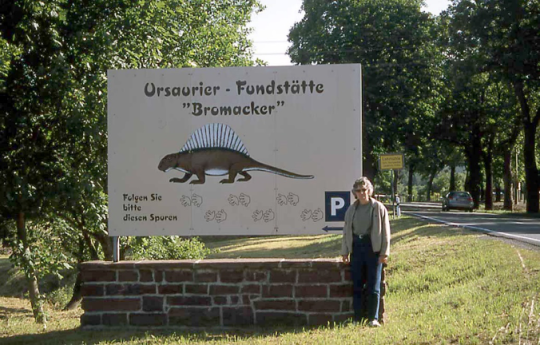
The author (Amy Henrici) standing next to a road sign for the Bromacker quarry in the Thuringian Forest of central Germany. Translation is as follows: “Ursaurier Discovery Site ‘Bromacker.’ Please follow these tracks.” Dr. Thomas Martens coined the term “Ursaurier,” which he translates as “primary saurian,” to indicate that the fossil animals from the Bromacker predate dinosaurs. Photo by Dave Berman.

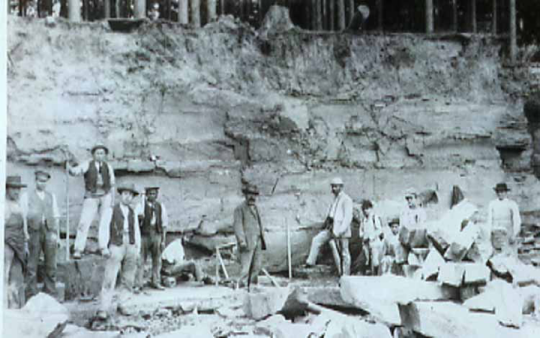
In the Bromacker area of Thuringia, central Germany, a thick rock layer known as the Tambach sandstone has been intermittently quarried for use as a building stone for more than 150 years. Evidence of life preserved in the Tambach sandstone in the form of tetrapod (four-footed backboned animal) footprints was discovered in 1887 and later studied by Professor Wilhelm Pabst from 1890 to 1908. Pabst was an amateur paleontologist who taught high school in the nearby city of Gotha.

Undated photograph showing quarry workers and Professor Pabst (right center in white jacket and hat). Photo provided by Thomas Martens.

Dr. Thomas Martens (now retired Curator, Museum der Natur Gotha [MNG]) discovered the first vertebrate (backboned animal) body fossils at the Bromacker quarry in the summer of 1974. He was trained as an invertebrate paleontologist and was sent there by his major professor to look for fossils of conchostracans (‘clam shrimp’), a type of very small crustacean. After his first discovery, Thomas continued to collect at the Bromacker from 1975 to 1991, finding a variety of early Permian-aged (approximately 290-million-year-old) fossil vertebrates that were otherwise known only from North America. At that time, Thuringia was part of East Germany, so Thomas’ travel to other countries was restricted by his government, but fortunately he could communicate by mail with paleontologists overseas. He eventually began a correspondence with an expert on the types of fossils that he was discovering, CMNH’s Dave Berman (then Associate Curator). In 1992, two years after the reunification of Germany, CMNH sponsored Thomas to come to Pittsburgh to study with Dave for six months, which began a long and productive collaboration.

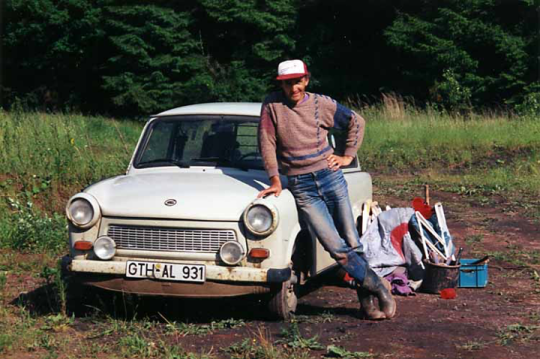
Thomas Martens with his East Germany-produced Trabant automobile. Though Thomas had to endure a long waiting list before he was able to purchase this car, he replaced it shortly after the reunification of Germany in 1990. The Trabant then became his field vehicle. Photo by the author, 1994.

The Bromacker quarry is in the Thuringian Forest near the village of Tambach-Dietharz. It lies in a large field surrounded by thick forest traversed by dirt roads. People from the surrounding villages who regularly visited the Bromacker area to walk, ride their bikes, and pick wild mushrooms would stop to ask us what we were doing. School groups came regularly to learn about the fossil ‘diggings’ and to watch us work.

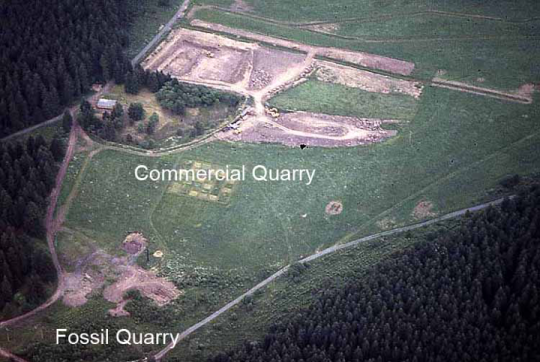
Aerial view of the commercial rock quarry and the fossil quarry at the Bromacker site. Photo provided by Thomas Martens.

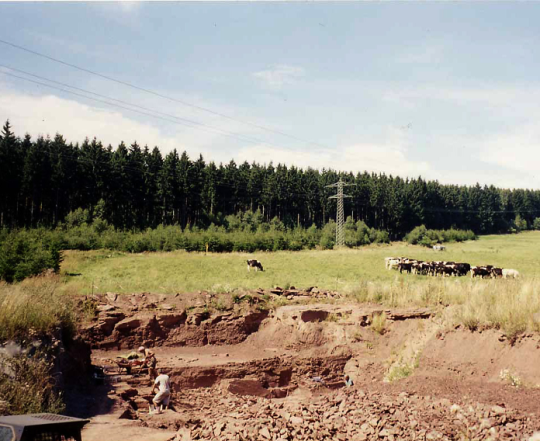
View of the fossil excavation at the Bromacker quarry. Photo by the author.

Field work at the Bromacker was conducted annually from 1993 to 2010 by Dave, Thomas, myself, and our other collaborators, which led to the discovery, collection, and scientific preparation and description of 13 fossil vertebrate species, 12 of which were new to science. Most of the fossils discovered were shipped to CMNH, where I prepared them in the paleontology lab in the museum’s basement. Once the fossils had been published in scientific journals, they would be shipped back to the MNG, because that museum is the legal repository for the Bromacker fossils. CMNH retained cast replicas made by VP staff of some of the more exquisite specimens, and some of these are exhibited in the Fossil Frontiers display case in the Dinosaurs in Their Time exhibition. Be sure to look for these once the museum reopens. And stay tuned for my next post, that will describe how we found and collected the fossils!

Amy Henrici is Collection Manager in the Section of Vertebrate Paleontology at Carnegie Museum of Natural History. Museum staff, volunteers, and interns are encouraged to blog about their unique experiences and knowledge gained from working at the museum.
Keep Reading

The Bromacker Fossil Project Part II: The Hunt for Fossils

Filed Under: Blog Tagged With: Amy Henrici, dinosaurs in their time, Museum from Home, Section of Vertebrate Paleontology, Vertebrate Paleontology

April 23, 2020 by Kathleen

NEW GENUS AND SPECIES OF 290-MILLION-YEAR-OLD CASEID DESCRIBED BY CARNEGIE MUSEUM OF NATURAL HISTORY RESEARCHERS AND INTERNATIONAL COLLEAGUES

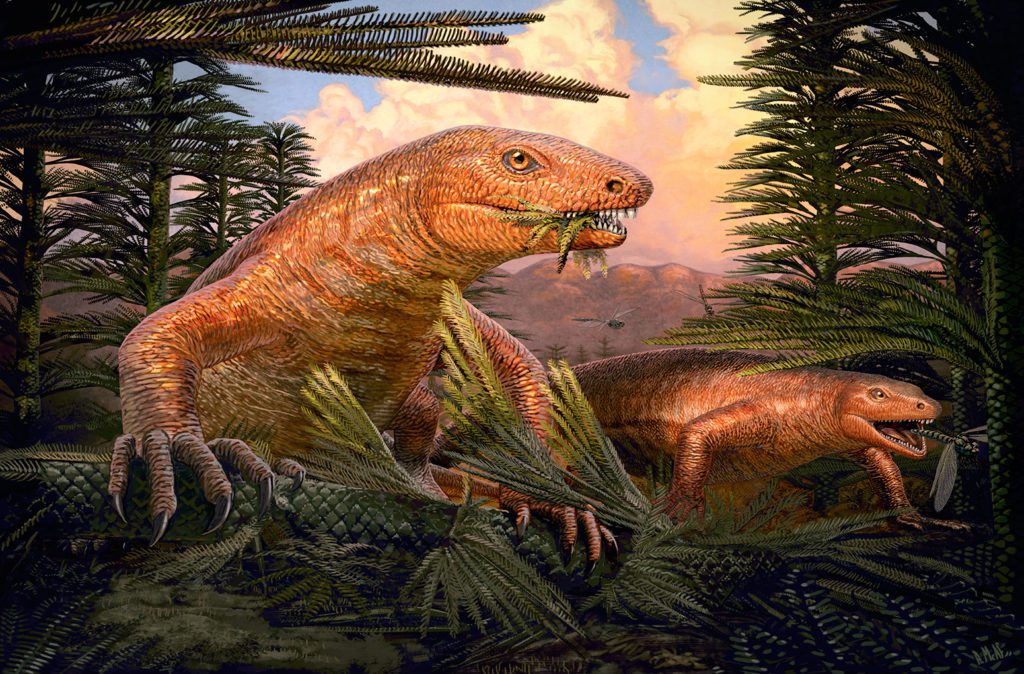
Martensius bromackerensis illustrated by Andrew McAfee.

[Pittsburgh, Pennsylvania, March 31, 2020] — Carnegie Museum of Natural History announces the discovery of Martensius bromackerensis, a basal synapsid from the Late Paleozoic (Early Permain, Artinskian) from 283.5­­ to 290.1 million years ago. The discovery, published today in a paper entitled “New Primitive Caseid (Synapsida, Caseasauria) from the Early Permian of Germany,” names the caseid in honor of Dr. Thomas Martens, retired curator at Germany’s Gotha Museum der Natur and discoverer of the famed Bromacker Quarry, site of many notable fossil discoveries. The paper’s authors include lead author David S Berman, Curator Emeritus at Carnegie Museum of Natural History and colleagues Hillary C. Maddin at Carleton University, Ontario; Amy C. Henrici, Collection Manager at Carnegie Museum of Natural History; Stuart Sumida at California State University, San Bernardino; Diane Scott at University of Toronto at Mississauga, Ontario, and Robert R. Reisz at University of Toronto at Mississauga.

The four well-preserved fossil skeletons, discovered between 1995–2006 at the Bromacker Quarry in Germany’s Thuringian Forest, provide comprehensive knowledge of skeletal morphology, suggesting an insectivorous juvenile dentition that was replaced in adults by a dentition suggestive of an omnivorous diet, though features of the skeleton indicate it was herbivorous. The researchers theorize that a juvenile diet of insects provided a source of bacteria to the gut to aid in processing the presumed adult diet of cellulose-rich, high-fiber plants, roots, and tubers that would have been otherwise difficult to digest. Caseids are an extinct family of pre-dinosaur synapsids, a group that later gave rise to mammals.

“This is an incredible find,” said Amy Henrici, research team member and Collection Manager of Vertebrate Paleontology at the Carnegie. “It has been theorized that among caseids, insectivores evolutionarily preceded herbivores. Martensius suggests this transition may have occurred ontogenetically, or within its lifespan.”

This discovery underscores a 50-year association with Carnegie Museum of Natural History for lead author and Curator Emeritus David Berman, who, along with Henrici, began expeditions to Germany’s Bromacker Quarry in 1993 after the reunification. Another milestone discovery by the team in 2010 led to the describing of Fedexia striegeli, a new genus and species of amphibian found on FedEx property near the Pittsburgh International Airport.

“This has been a highlight of my career as a vertebrate paleontologist,” said Berman. “When the Bromacker excavation was begun in 1993 by an international team of colleagues that included Thomas Martens and me, we never anticipated the great number and variety of discoveries we would make and report on in about three dozen prominent scientific publications. What’s been most personally gratifying are the connections made with the many renowned scientists who have joined Dr. Martens and me to make the Bromacker project so highly successful.”

Filed Under: Press Release Tagged With: Amy Henrici, Vertebrate Paleontology

December 27, 2018 by wpengine

Eorubeta: A Mysterious Ancient Frog Revealed

By Amy Henrici

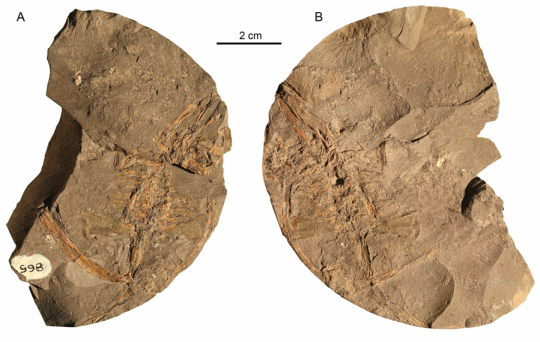
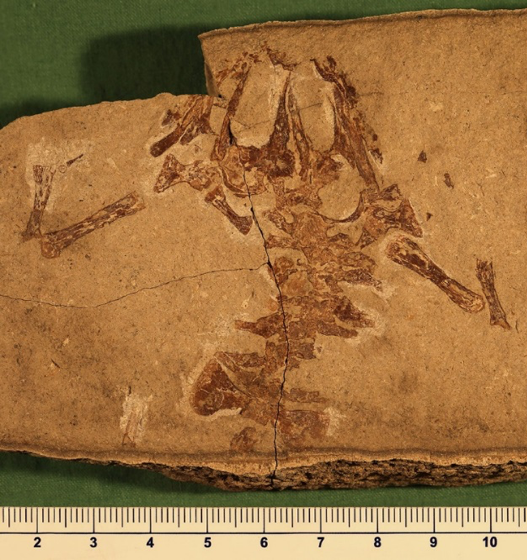
I recently completed a project on fossil frogs from east central Nevada that my collaborators and I identified as the enigmatic Eorubeta nevadensis Hecht, a species that was originally based on a single, poorly preserved specimen that had been discovered in a well core.

The new collection of Eorubeta came from the Sheep Pass Canyon area about 12.5 miles northeast of the well core site. Peter Druschke discovered fossil frogs here in 2005 while working on his PhD dissertation on a rock unit known as the Sheep Pass Formation. Peter and fellow University of Nevada Las Vegas graduate students Josh Bonde and Aubrey Shirk and colleagues Dick Hilton and Tina Campbell (of Sierra College in Rocklin, California) collected additional fossil frogs in subsequent years. I was very fortunate to be invited to join the team, and we collected over 60 specimens for Carnegie Museum of Natural History in 2012, 2013, and 2016.

ancient frog fossils
Part (A) and counterpart (B) of the first-known specimen of the fossil frog Eorubeta nevadensis. This specimen resides in the Vertebrate Paleontology collection of the American Museum of Natural History in New York.

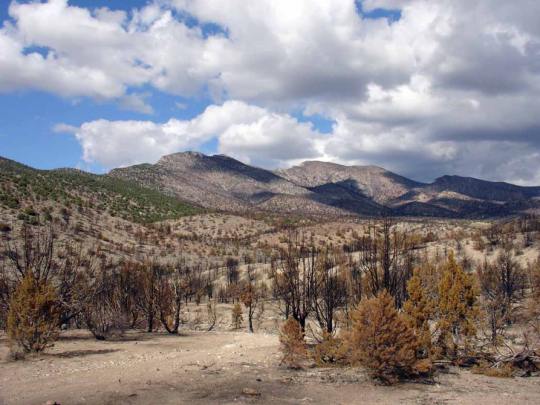
The field site lies in the South Egan Range Wilderness Area of east central Nevada. Being a wilderness area, we could only drive on existing roads, and had to hike nearly a mile to the fossil-producing slopes. The climate in Nevada is challenging to work and camp in, with temperatures reaching over 100 degrees Fahrenheit during the July 2013 field season and nighttime temperatures dipping into the high 20s during the November 2016 season.

White Pine County, Nevada.
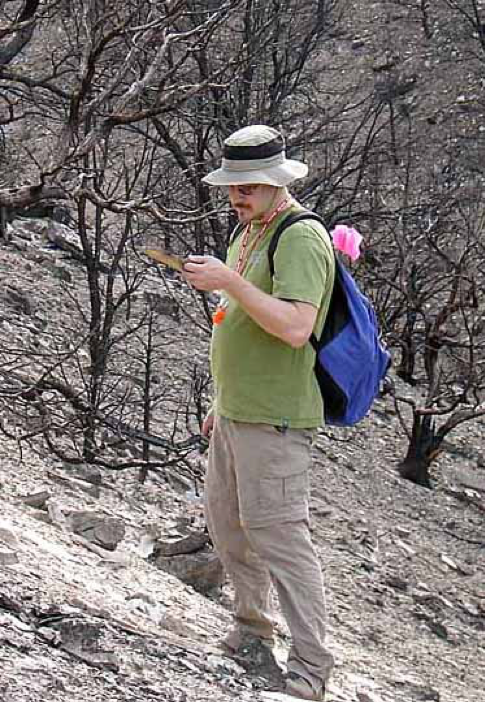
Road into the South Egan Range Wilderness area, White Pine County, Nevada. The area burned three months prior to the 2012 field season. The fire cleared vegetation from the fossil-producing slopes, making it easier to find fossils, though burnt tree branches left us streaked with charcoal.

When Eorubeta was originally named, the rock unit from which this frog came (Member B of the Sheep Pass Formation) was thought to date to a time interval known as the Early Eocene (56–47.8 million years ago). More recently, however, Peter has determined that this unit was probably latest Cretaceous–Paleocene (72.1–56 million years ago) in age instead. It is thus possible that Eorubeta spanned the Cretaceous–Paleogene boundary (66 million years ago) and survived the infamous asteroid impact that caused the extinction of non-avian dinosaurs and many other animal and plant species.

ancient frog fossil
ancient frog fossil
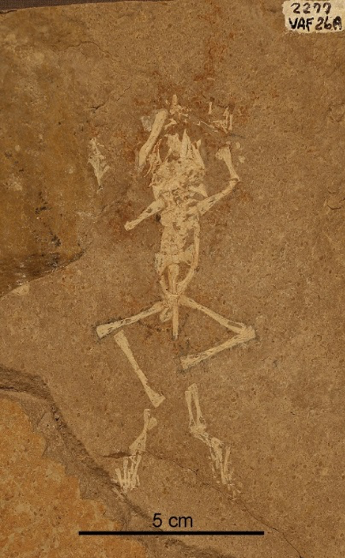
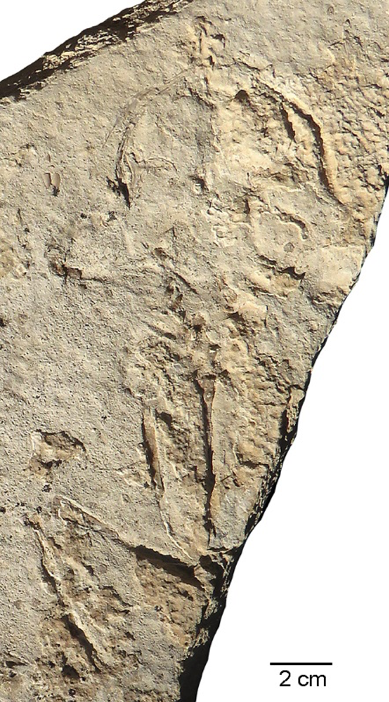
Two of the recently-collected specimens of Eorubeta nevadensis.

Peter determined that the beds in which the fossil frogs were preserved were part of a very high-elevation lake system (1.4–2.2 miles in elevation), similar in this way to today’s Lake Titicaca located in the Andes Mountains on the border of Bolivia and Peru. To date, Eorubeta is the only fossil frog known to have inhabited such a high-elevation environment. Most fossil frogs from this time come from prehistoric river and lake systems situated on coastal plains. The discovery of Eorubeta suggests that ancient frogs probably inhabited a greater variety of environments than the current fossil frog record indicates.

The first specimen discovered by Peter in 2005 indicates that Eorubeta may have reached a considerable size, though the fossil’s extremely weathered condition makes its identification uncertain. An analysis of the relationships of Eorubeta to other frogs reveals that it is more archaic than spadefoot toads, Neobatrachia (a group known as modern frogs), and their relatives.

ancient frog specimen
The largest known specimen of Eorubeta.
Peter Druschke, the team geologist who discovered the specimen.

To learn more about Eorubeta, please follow this link to our paper recently published online in the Journal of Vertebrate Paleontology: https://www.tandfonline.com/doi/full/10.1080/02724634.2018.1510413.

Amy Henrici is the collection manager for the Section of Vertebrate Paleontology at Carnegie Museum of Natural History. Museum employees are encouraged to blog about their unique experiences and knowledge gained from working at the museum.
Filed Under: Blog Tagged With: amphibians and reptiles, Amy Henrici, Ancient Frog, paleontology, Vertebrate Paleontology

October 15, 2018 by wpengine

Meet The Newest Addition To The Fossil Vertebrate Collection

by Amy Henrici

mammoth tooth from the side
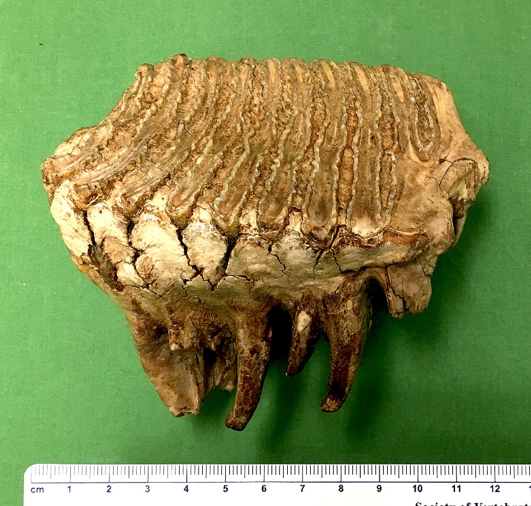
The new mammoth tooth as viewed from the side. The crown, or exposed part, of the tooth is at the top, and the root is at the bottom.

The Section of Vertebrate Paleontology at Carnegie Museum of Natural History acquires fossils in a variety of ways, most commonly through field work by Section staff, exchanges with other museums, donations, or (very rarely) purchases. The most recent addition to the collection came by way of a donation.

Gary Kirsch discovered the tooth shown above in a sand-gravel bar of a central Ohio stream in 1988 while collecting sediment samples. He had set his sampling equipment on the sand-gravel bar and was moving between the bar and the stream collecting samples. During one of his many forays, Gary noticed an edge of the tooth sticking out of the bar and pulled it out. It was covered in mud, which he quickly cleaned off in the stream to reveal the beautifully preserved tooth, which he identified as that of a mammoth.

Gary recently emailed photographs of the tooth to Assistant Curator of Vertebrate Paleontology Matt Lamanna because he wanted to donate it to the museum. Acceptance of his generous offer required some research: mammoth and Asian elephant teeth are very similar, and because none of the Section staff are experts in fossils of Pleistocene (Ice Age) mammals, we reached out to Pleistocene expert Blaine Schubert at East Tennessee State University, who often uses our collection, to verify Gary’s identification. Blaine was certain that it was a mammoth tooth because an Asian elephant tooth could only have come from a zoo or circus animal, which was highly unlikely. Blaine was curious about how teeth of the two species are distinguished, so he forwarded the photographs to an elephant expert at his university, Chris Widga.

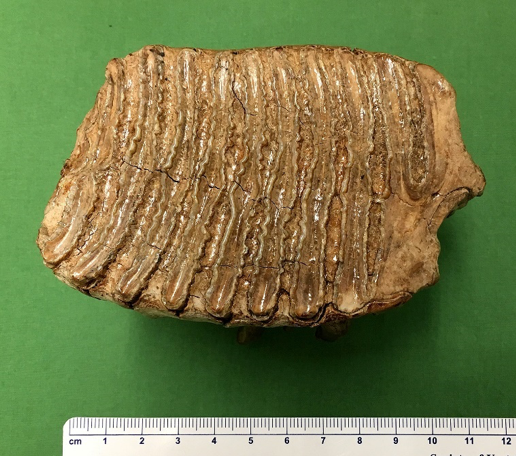
mammoth tooth from the top
The grinding (i.e., lower, occlusal) surface of the tooth, showing the fairly crenulated tooth enamel.

Chris determined that the tooth is the first (forward-most) molar from the left upper jaw, and because it has fairly crenulated enamel, that it is from a woolly mammoth (Mammuthus primigenius). Through comparison with tooth eruption and wear schedules (sequences) of modern elephants, Chris concluded that the animal was in its late teens to early 20s when it died. In the wild, modern elephants generally live to about their mid-50s, so this single specimen offers a window into mammoth mid-life.

The Section is grateful to Gary for his thoughtful donation. The specimen will be put on temporary display soon in the PaleoLab window on the first floor of the museum for public viewing.

Amy Henrici is the collection manager for the Section of Vertebrate Paleontology at Carnegie Museum of Natural History. Museum employees are encouraged to blog about their unique experiences and knowledge gained from working at the museum.
Filed Under: Blog Tagged With: Amy Henrici, fossils, ice age mammals, paleontology, Vertebrate Paleontology

April 2, 2018 by wpengine

Clues

By Amy Henrici

Collection Managers often solve fossil mysteries, and sometimes we have only a few clues to assist us. A recent mystery involved some rib fragments prepared by PaleoLab volunteers. Individual packages containing rib fragments found in an old cardboard box stashed in a Vertebrate Paleontology storage room proved to be perfect for PaleoLab volunteers to hone their preparation skills.

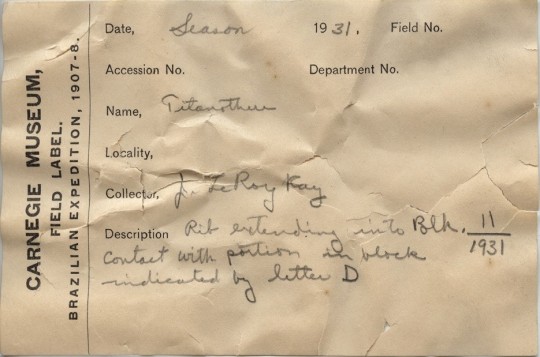
My task as Collection Manager is to catalog and integrate these ribs into the fossil mammal collection. Fortunately, most of the rib packages contained field labels, which are used to record information when the specimen is collected. My first clue came from the Description category of a field label with one of the rib packages, and it indicated that the rib connected with a block (which consists of fossil and rock). Because there are no blocks of unprepared fossil mammals in storage, I had to assume that this block had been prepared and the specimen was cataloged. The field label lacked a catalog number (Department No. on the label) and any locality information, which would normally assist in locating the rest of the specimen.

old label for a museum specimen

This field label must have been printed for an expedition to Brazil, and the left overs were used by all museum expeditions until they ran out.

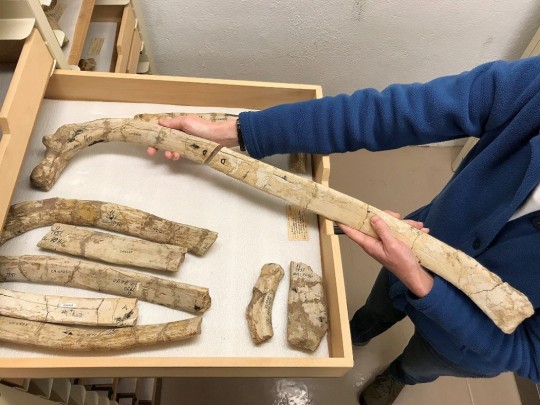
The only clue that I had to link the rib to a cataloged specimen in the Section’s computerized database was the block number (Blk. 11/1931), which are entered in the field number category of the database. A search of the database retrieved two specimens with this field number, CM 6425 and CM 36355. Both were brontotheres, formerly known as titanotheres, which are large, extinct rhinoceros-like herbivores. I located the specimens in the collections, and both included incomplete ribs. The field label shown here mentioned that the rib made contact with a “…portion in block indicated by letter D”. Amazingly, I found the letter D written on the broken end of a rib cataloged as CM 6425, and the rib fragment associated with the field label connects to it. I was able to fit all of the rib pieces prepared in PaleoLab onto other ribs cataloged as CM 6425.

two parts of a rib bone being held together
The rib piece held in the left hand fits onto a piece stored in this drawer. Both have the letter D written on them at the point where they join. (Photograph taken by Norm Wuerthele)


black and white image of a large mamal skelleton
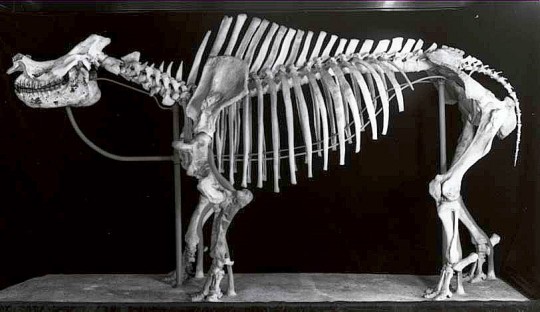
Archive image showing the skeleton of the brontothere, Brontops dispar, CM 767, which can be seen on exhibit in Cenozoic Hall.

Amy Henrici is the Collection Manager for Vertebrate Paleontology at Carnegie Museum of Natural History. Museum employees are encouraged to blog about their unique experiences of working at the museum.
Filed Under: Blog Tagged With: Age of Mammals: The Cenozoic Era, Amy Henrici, Paleolab

  • « Go to Previous Page
  • Page 1
  • Page 2
  • Page 3
  • Page 4
  • Page 5
  • Go to Next Page »

sidebar

About

  • Mission & Commitments
  • Directors Team
  • Museum History

Get Involved

  • Volunteer
  • Membership
  • Carnegie Discoverers
  • Donate
  • Employment
  • Events

Bring a Group

  • Groups of 10 or More
  • Birthday Parties at the Museum
  • Field Trips

Powdermill

  • Powdermill Nature Reserve
  • Powdermill Field Trips
  • Powdermill Staff
  • Research at Powdermill

More Information

  • Image Permission Requests
  • Science Stories
  • Accessibility
  • Shopping Cart
  • Contact
  • Visitor Policies
One of the Four Carnegie Museums | © Carnegie Institute | Privacy Policy | Terms of Use | Accessibility
Rad works here logo