• Skip to primary navigation
  • Skip to main content
  • Skip to primary sidebar

Carnegie Museum of Natural History

One of the Four Carnegie Museums of Pittsburgh

  • Visit
    • Buy Tickets
    • Visitor Information
    • Exhibitions
    • Events
    • Dining at the Museum
    • Celebrate at the Museum
    • Powdermill Nature Reserve
    • Event Venue Rental
  • Learn
    • Field Trips
    • Educator Information
    • Programs at the Museum
    • Bring the Museum to You
    • Guided Programs FAQ
    • Programs Online
    • Climate and Rural Systems Partnership
  • Research
    • Scientific Sections
    • Science Stories
    • Science Videos
    • Senior Science & Research Staff
    • Museum Library
    • Science Seminars
    • Scientific Publications
    • Specimen and Artifact Identification
  • About
    • Mission & Commitments
    • Directors Team
    • Museum History
  • Tickets
  • Give
  • Shop

Annie Lindsay

June 30, 2025 by Erin Southerland

A Year in Review: Bird Banding 2024

by Annie Lindsay

During the 2024 calendar year, we operated Powdermill Avian Research Center’s (PARC) bird banding station for 184 days across all four seasons, during which we banded 9,415 new birds, processed 4,581 recaptured individuals, and released 9 birds unbanded. These 14,005 birds represented 125 species, one of which was new to Powdermill’s banding dataset. 

The banding station at PARC has been running year-round since June 1961 and has accumulated over 850,000 banding records of nearly 200 species, so a new species for the station is a relatively rare event. But let’s not get ahead of ourselves and spoil the surprise, which happened near the end of 2024.

At Powdermill, we band birds year-round, which is somewhat unique among banding stations. We increase our effort during the spring and fall migration seasons and band fewer days each week during the breeding season and winter. This helps us track seasonal events like arrival and departure timing of migratory species, onset of breeding activities, relative abundance of different species, site fidelity (whether individuals come back to the same breeding or wintering areas every year), and longevity. Banding year round also allows us to observe the seasonal progression of birds from familiar to fancy and back again. 

Each year, there are species or events that cause excitement among the banding crew. Some of them might be species that are uncommonly caught at Powdermill or difficult to see in the wild, some might be individuals that are earlier or later in the season than expected, some might be favorite species that we never tire of seeing, and some might be days with unusually high capture rates or big days. As each year comes to a close, we reflect on the highlights and compile a list of our favorite moments, of which 2024 had an abundance.

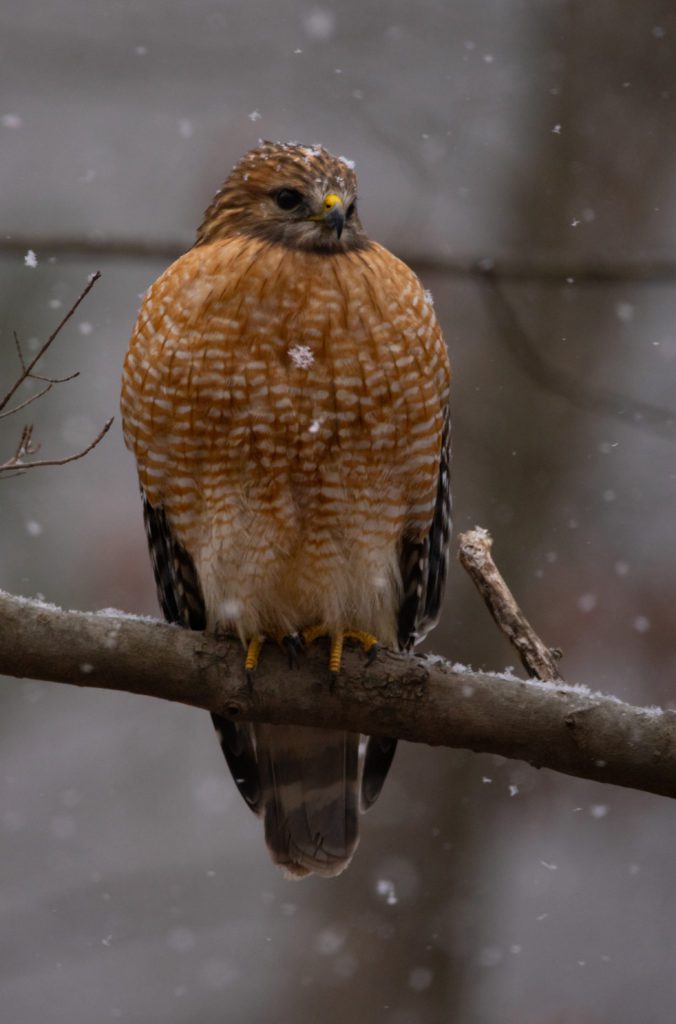
The first highlight of 2024 was a Red-shouldered Hawk that we caught and banded on January 24. A species that is a little too big for our songbird-size mist nets, raptors and other large birds generally bounce right out of the nets. This bird was holding on to a trammel line with its talons which gave the bander a split-second advantage. A species that seems to be expanding its range northward, Red-shouldereds can be found in southwest Pennsylvania year-round, although this is only the 6th ever banded at Powdermill.

As winter waned and we prepared for the spring migration season, we caught an unexpectedly early Gray Catbird on March 27, setting a record for the earliest catbird banded at Powdermill (the previous earliest banding record was on April 19). Spring progressed relatively normally until May 9 when we caught Powdermill’s ninth ever Swainson’s Warbler. This is a species that has historically bred in the southeastern part of the US but was confirmed as a breeding species in Pennsylvania (at Bear Run Nature Reserve just 30 minutes south of Powdermill) for the first time in the summer of 2023. These breeding records may represent a northward range shift for this species. 

The spring migration banding season ends at Powdermill at the end of May, but we continue to band, with reduced effort, through the summer. On June 7, we caught a Tennessee Warbler, a species that migrates annually between breeding sites across much of Canada and wintering grounds in the Caribbean, Central America, and northern South America. They are commonly found at Powdermill during the migration seasons when they stop over to rest and refuel between flights. Nearly all Tennessee Warblers have moved north of us by the end of May, making our June 7 capture the second latest spring record for this species in our dataset. There was something a bit unusual about this individual: it was molting feathers that suggested that it was undergoing the post-breeding molt, something that happens before, or sometimes during, the early stages of fall migration. Although there wasn’t time for this bird to have attempted breeding, perhaps something caused this individual to turn around and head south, representing the earliest (by more than a month!) fall migrant Tennessee Warbler in our dataset. 

Summer progressed relatively normally, but the lack of rain began to become noticeable as streams became trickles and small ponds dried up. By July each year, we begin to catch birds in their post-fledging period and our capture numbers increase, but we were not expecting to have one of the biggest summer banding days in our 63-year history when we caught 153 birds on July 17. For context, we were operating about 1/3 of the nets that we run during migration and had to close the nets early due to heat, so the 153-bird day was quite impressive and our third highest summer banding total. This was the beginning of a severe drought that gripped our region through much of the second half of the year, and the ponds near PARC held some of the only locally available drinking water for breeding and migrating birds. We suspect this concentrated birds in the banding area and increased capture rate in late summer and throughout fall.

The fall migration banding season begins in August as the current year’s fledglings begin to disperse and the first migrants begin to move south. Following the trend of a higher-than-usual concentration of birds in the banding area, we had several species with above average captures and two that broke the single-day high totals. On August 16, we caught 11 Blackburnian Warblers and on September 3 we caught 35 Ruby-throated Hummingbirds. Both species breed locally, but we catch the majority of individuals during the post-breeding and fall migration season.

The second half of September and the first half of October is the busiest part of the banding year, and interesting captures came in rapid succession during that period in 2024. Soras are a species of rail, a secretive marsh bird that is usually difficult to see, and that we average fewer than one capture per year. We caught a Sora on September 21 and a second one on September 24 – these were #22 and #23 in our dataset, and only once before did we catch two in one season.

Sora
Sora banded at PARC.

September 24 held the banding crew’s biggest highlight of the year: a Kirtland’s Warbler. Kirtland’s Warblers are one of the rarest species of wood warblers in North America – it was critically endangered with a population of about 167 pairs in the 1970s-80s. It is an Endangered Species Act success story: with habitat management and control of brood parasites, the species recovered to a healthy population of ~4,500-5,000 birds and was delisted in 2019. Although it’s not an abundant species, given its migratory route between breeding grounds in Michigan and wintering grounds in the Bahamas, we knew it was just a matter of time before one was spotted in southwest Pennsylvania. Remarkably, this was not the first Kirtland’s Warbler caught at Powdermill: one was banded on September 21, 1971 when the population was at its low point.

Kirtland's Warbler
Kirtland’s Warbler

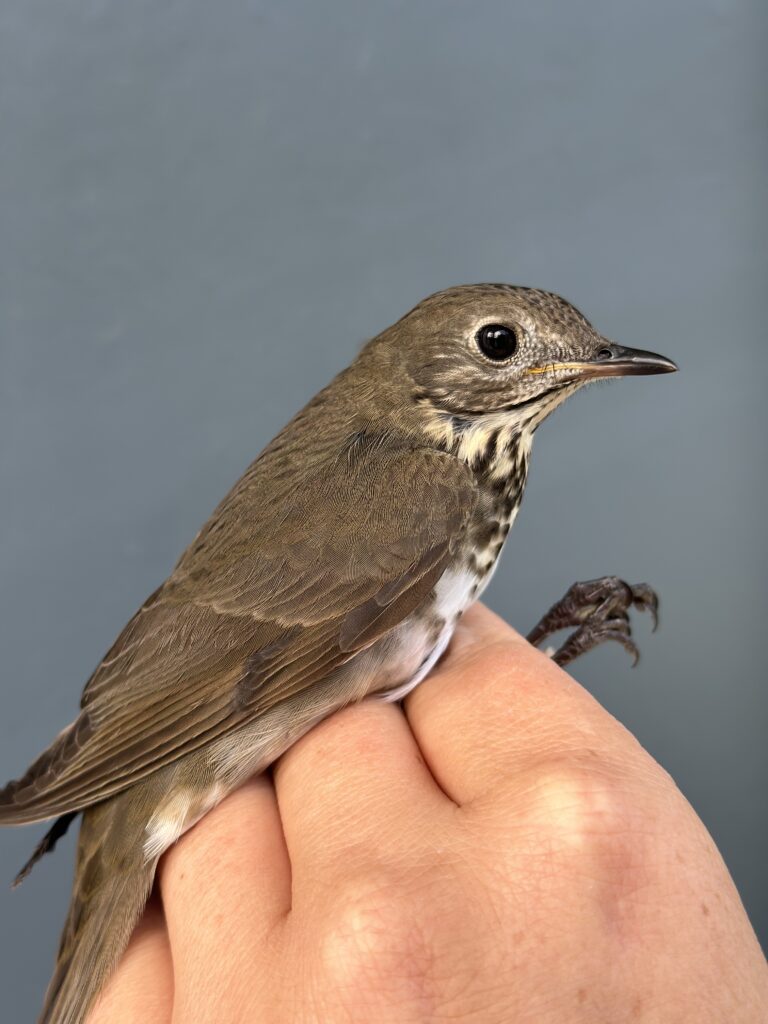
Over the years, a few possible Bicknell’s Thrushes were banded at Powdermill, but it wasn’t until 2023 that two were definitively identified here. They’re difficult to identify because they look very similar to Gray-cheeked Thrush, but average a bit smaller and more reddish in color. On September 27, we caught and banded another, this one noticeably reddish and falling well within Bicknell’s measurements. Gray-cheeked and Bicknell’s Thrushes were considered the same species until 1995, when there was enough evidence (based on morphology, vocalizations, habitat, and migration patterns) to elevate Bicknell’s Thrush to full species status.

Fall migration would not be complete without a fat bird highlight. During the migration seasons, migratory songbirds increase their food intake so that they can deposit fat reserves that they use as a source of energy to fuel their overnight flights. Songbirds flap their wings continuously while they fly, so they require a lot of energy to accomplish their migrations. A Swainson’s Thrush that we caught on September 27 had accumulated impressive fat deposits, weighing in at 51.4 grams. Powdermill’s dataset contains over 17,000 Swainson’s Thrushes and only three have been heavier than this bird. A fat bird is a bird that is well prepared for migration!
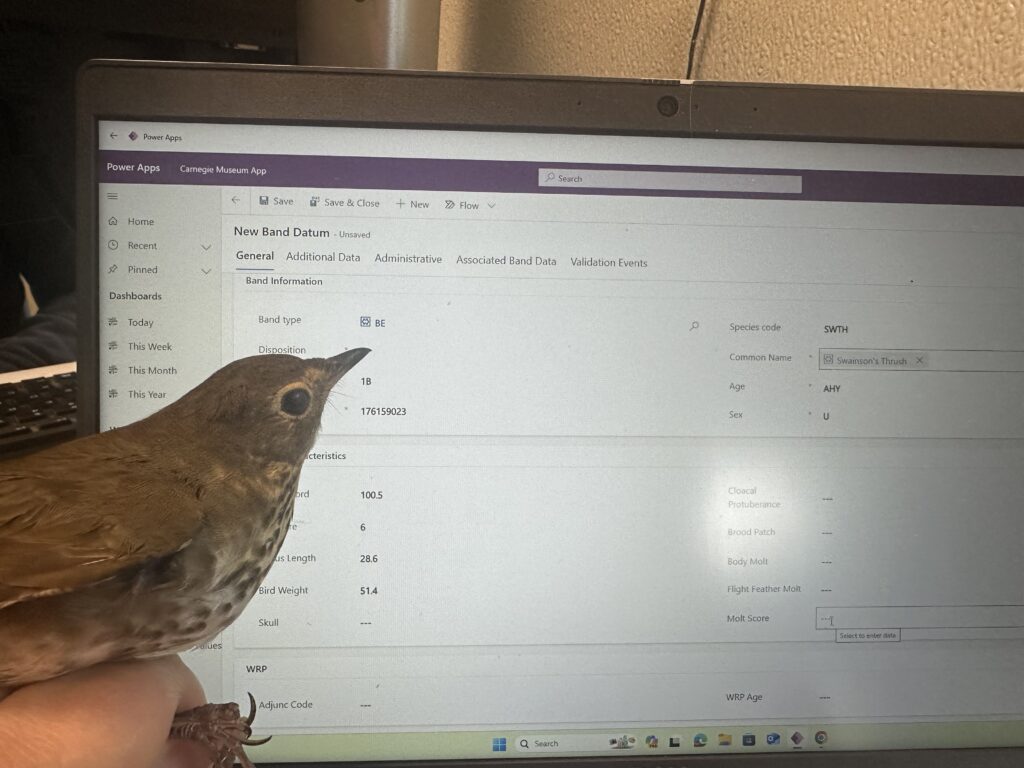
Swainson’s Thrush with its banding data.

Old birds are interesting captures, and a Wilson’s Snipe that we caught on October 11 was just that. This individual was banded in 2019 and aged as a bird that hatched at least in 2017, if not earlier. Not only is this a notably old bird, but it had been recaptured three other times at Powdermill, providing us a peek into its life.

The fall migration banding season began to wane as October progressed, and our seasonal field techs’ last day was November 2.  But the surprises hadn’t stopped yet! In the morning, we caught an unusual Empidonax flycatcher (Empidonax is the genus of flycatchers that tend to pose identification challenges) – it was quite yellow on its underparts and the face proportions were not quite right for any of the species expected in the east. Further, an Empidonax flycatcher in southwest Pennsylvania this late in the year would be exceptionally rare. After a series of diagnostic measurements done independently by three of the banders on staff, we determined that this individual was a Western Flycatcher, a species found in the western part of the continent from the Rocky Mountains west to the Pacific Coast, and a species never before banded at Powdermill.

western flycatcher
Western Flycatcher

Later that evening, we set up nets to catch owls for Powdermill’s public Owling at the Moon event. Using audio lures, we attempted to catch Northern Saw-whet Owls and Eastern Screech-Owls. Successfully catching owls is very weather-dependent, and luck was on our side this year. Not only did we catch several individuals of our two target species, but we had a big surprise when we caught a Barred Owl, the second ever caught at Powdermill. The crew was excited to get to study this species in the hand and to share it with Owling at the Moon attendees.

Barred Owl

It was a busy but satisfying year, full of visitors and events, bird banding workshops, and interesting birds, and we look forward to what 2025 will bring!

Annie Lindsay is the Bird Banding Program Manager at Powdermill Nature Reserve, the environmental research center of Carnegie Museum of Natural History.

Read More Science Stories

(De)Forested Flight: An Eagle Scout Project at Powdermill
A Year in Review: Bird Banding 2023

Hummingbird Lessons

Filed Under: Blog Tagged With: Annie Lindsay, bird banding, Powdermill, Powdermill Nature Reserve

February 8, 2024 by Erin Southerland

A Year in Review: Bird Banding 2023

by Annie Lindsay

Nestled between the Chestnut and Laurel Ridges near the town of Rector, Pennsylvania lies Powdermill Nature Reserve, Carnegie Museum of Natural History’s environmental field research station, where ornithologists have been operating a long-term bird banding station since June 1961. In 62 years of banding birds year-round, we’ve gathered more than 830,000 banding records of nearly 200 species. Some, like the Cedar Waxwing, have tens of thousands of records in our dataset, whereas single individuals are the only representatives of other species, like Kirtland’s Warbler.

Banding Field Tech Grace Muench releasing a Sharp-shinned Hawk.
Banding Field Tech Grace Muench releasing a Sharp-shinned Hawk, one of her favorite moments from the year.

At Powdermill, we band birds all year, varying our effort seasonally, which gives us a picture of what species we expect to see at any given time of year and the relative abundance of those species. Each season brings something new. By March we are eagerly awaiting the earliest spring migrants and as spring progresses, we revel in the flood of colorful songbirds in their breeding plumage. Summer brings breeding birds and our anticipation of which individuals will return year after year. As summer fades into fall, we enjoy the subtle beauty of birds in their non-breeding plumage as they migrate south to their wintering grounds. By mid-November, almost all migrating songbirds have passed through and we are in our winter banding season, dominated by cold-hardy birds that are often recaptured between years.

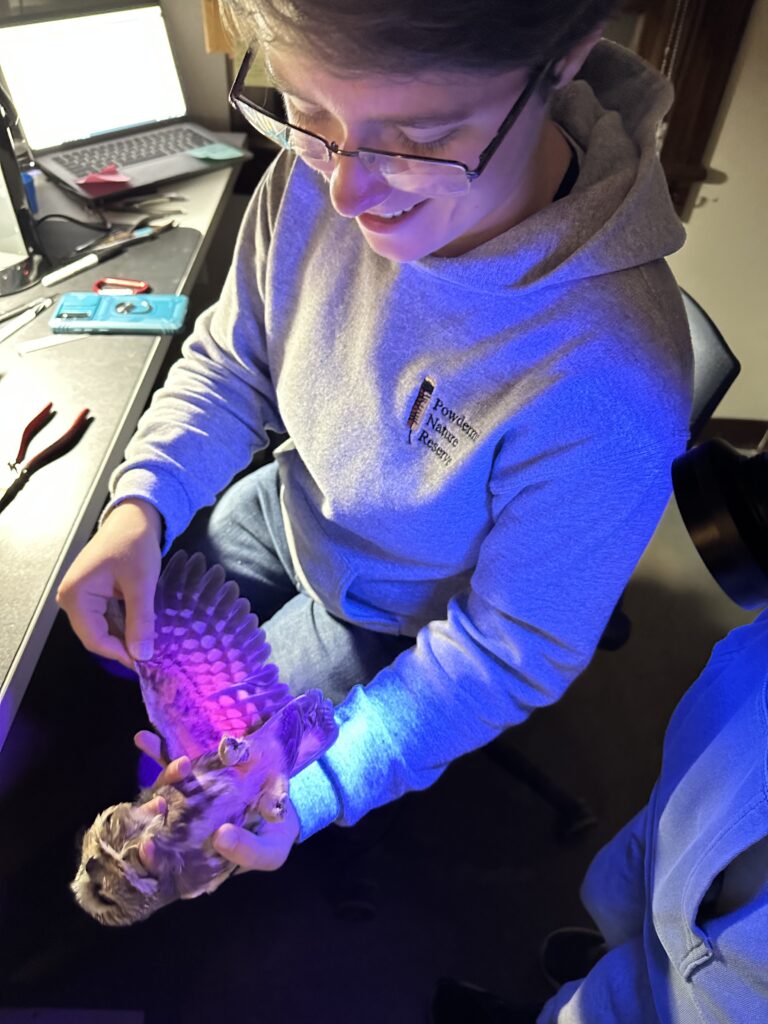
Fall Banding Field Tech Jordan Mouton using a black light to age a Northern Saw-whet Owl.
Fall Banding Field Tech Jordan Mouton using a black light to age a Northern Saw-whet Owl. Saw-whet and screech owls were the highlights of Jordan’s season.

In 2023, we banded 9,095 new birds and recaptured 5,074 individuals of 123 species (plus one hybrid). The most abundant species was Swainson’s Thrush with 631 new birds banded this year, followed by Ruby-crowned Kinglet (596), Gray Catbird (484), and Cedar Waxwing (447). The year saw slightly lower numbers than average overall, but several species had notably high captures and some even set spring or fall season records. In spring, 11 Black-billed Cuckoos edged out last year’s ten to claim that season’s record, and in the fall nine Louisiana Waterthrushes (a species that is a very early migrant and generally scarce during our fall months), 158 Ovenbirds, and two Bicknell’s Thrushes set fall high records.

We can use these numbers to compare 2023 to previous years and to totals from other banding stations, but the stories about the year’s highlights are most compelling. Each year when we analyze our data, we eagerly look for species that set new record high totals, individuals that represent early or late banding dates, or recaptures that are particularly old birds, and await reports that our banded birds have been recaptured at another station. 

This year, as in recent years, many of the species that had above average totals are species that have been increasing in southwestern Pennsylvania, which is a trend that is reflected in Christmas Bird Count data. The core of these species’ ranges has historically been a bit farther south, but they seem to have recently been expanding northward. For example, Carolina Wrens and Red-bellied Woodpeckers are year-round residents in southwestern Pennsylvania and are encountered far more often now than they were a few decades ago. Similarly, Yellow-throated Warbler is a species that tends not to breed much farther north than non-Appalachian Pennsylvania, but is a species that we’ve seen in spring attempting to establish territories and even breeding. 

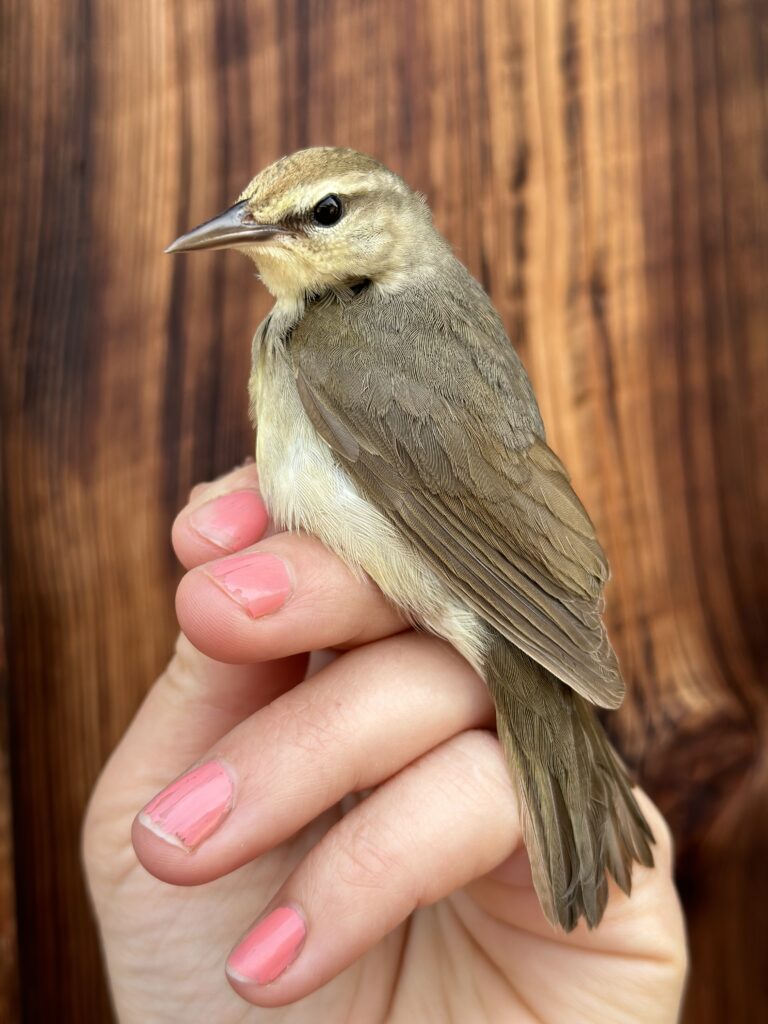
Swainson’s Warbler caught in spring 2023, the 8th of its species ever banded at Powdermill.
Swainson’s Warbler caught in spring 2023, the 8th of its species ever banded at Powdermill.

This year’s exciting captures began with a Swainson’s Warbler that was caught on May 11, only the eighth individual of that species in Powdermill’s banding dataset. Swainson’s Warblers breed significantly south of Pennsylvania in the very southern part of West Virginia, but since 2020, birders have spotted several nearby in the spring and summer and the first breeding record in the state was confirmed in summer 2023. This unexpected capture, affectionately nicknamed “Sword-billed Warbler” by the banding crew, was certainly a favorite.

Bicknell's Thrush
The first of two Bicknell’s Thrush banded in fall 2023, a new species for Powdermill’s dataset.

This fall, something happened that is rare for a 62-year-old banding station: we added a new species to our dataset. Bicknell’s Thrush was considered a subspecies of the more common Gray-cheeked Thrush until 1995 when there was enough evidence (based on morphology, vocalizations, habitat, and migration patterns) to elevate Bicknell’s to full species status. Over the years, a few possible Bicknell’s Thrushes were banded at Powdermill, but it wasn’t until this year that two were definitively identified here, one on September 14 and one on October 8. 

solitary sandpiper
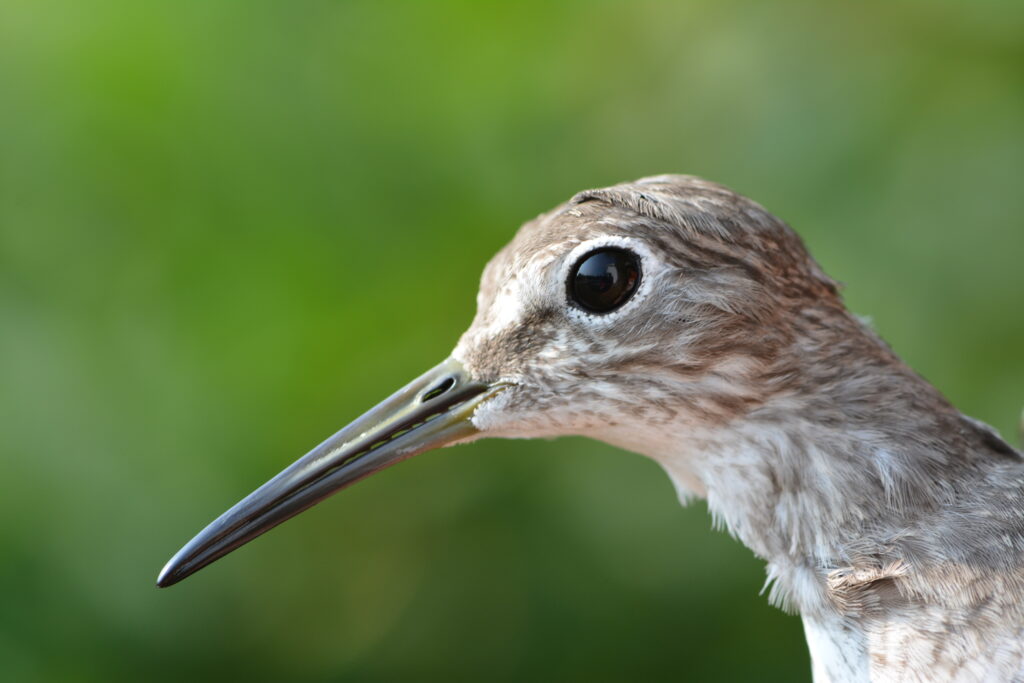
Solitary Sandpiper, fall Banding Field Tech Lindsey Doyel’s season highlight.

One of the questions we are frequently asked is how long birds live. While it’s difficult to know how long each species lives on average, recapturing birds between seasons tells us something about how long they can live. In general, smaller birds are shorter-lived and larger birds are longer-lived. Catching a bird with a band and looking back through the data to see how long ago it was initially banded and how many times it’s been captured over the years is a highlight for the banding crew. Several notable standouts in 2023 include:

  • A Ruby-throated Hummingbird that was banded in August 2021 and aged as a bird that had hatched in a previous year was recaptured exactly two years later, making her at least three years old.

  • A Kentucky Warbler that was banded in June 2018 and aged as a bird that had hatched the previous summer was recaptured in May, making it six years old.

  • A Gray Catbird that was banded in August 2015, the summer it hatched, was recaptured this fall when it had a refeathering brood patch (the bare patch of skin on the belly that songbirds develop to help incubate eggs). This catbird was eight years old and, because female catbirds develop brood patches when they’re breeding, we were able to determine that she was breeding at Powdermill that summer.

  • Black-capped Chickadees are frequently recaptured because they’re year-round residents at Powdermill and because they tend to spend time at feeders near the banding station. Because of this, we often have their band numbers memorized and sometimes can recognize individual mannerisms. This fall, we caught one such chickadee several times; it was banded in April 2016 and aged as a bird that had hatched the previous summer, making it eight years old!
Brewster's Warbler
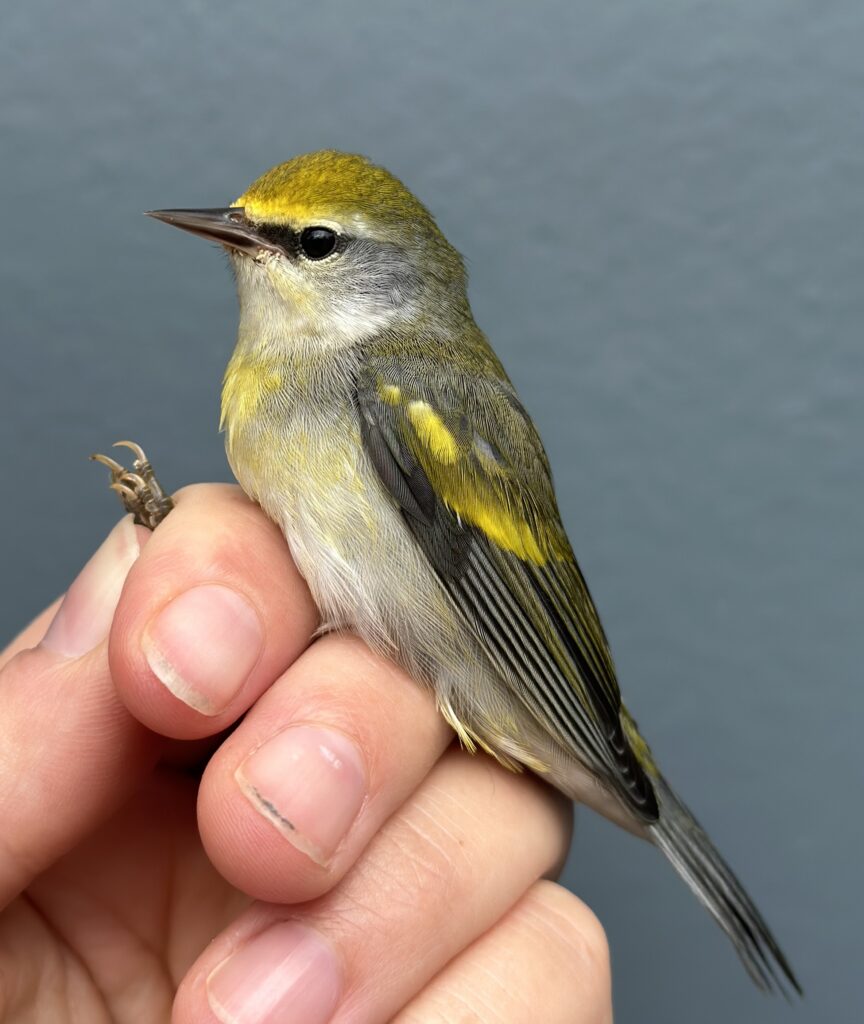
“Brewster’s” Warbler, a hybrid between Golden-winged and Blue-winged Warblers, was fall Banding Field Tech Connor O’Hea’s season highlight.

There were many more old birds captured in 2023, each one delighting the crew with its history. 

PARC is back to the winter banding schedule and we’re looking forward to what 2024 will bring us!

To learn more about bird banding, please see the post “What is bird banding?”

Annie Lindsay is the Banding Program Manager at Powdermill Nature Reserve.

Related Content

2023 Rector Christmas Bird Count Results

60 Years, One Bird at a Time

Spring Birds in Your Backyard

Carnegie Museum of Natural History Blog Citation Information

Blog author: Lindsay, Annie
Publication date: February 8, 2024

Share this post!

  • Share on Twitter Share on Twitter
  • Share on Facebook Share on Facebook
  • Share on Pinterest Share on Pinterest
  • Share on LinkedIn Share on LinkedIn
  • Share on Reddit Share on Reddit
  • Share via Email Share via Email

Filed Under: Blog Tagged With: Annie Lindsay, bird banding, Birds, parc, Powdermill Nature Reserve

January 24, 2024 by Erin Southerland

2023 Rector Christmas Bird Count Results

by Annie Lindsay
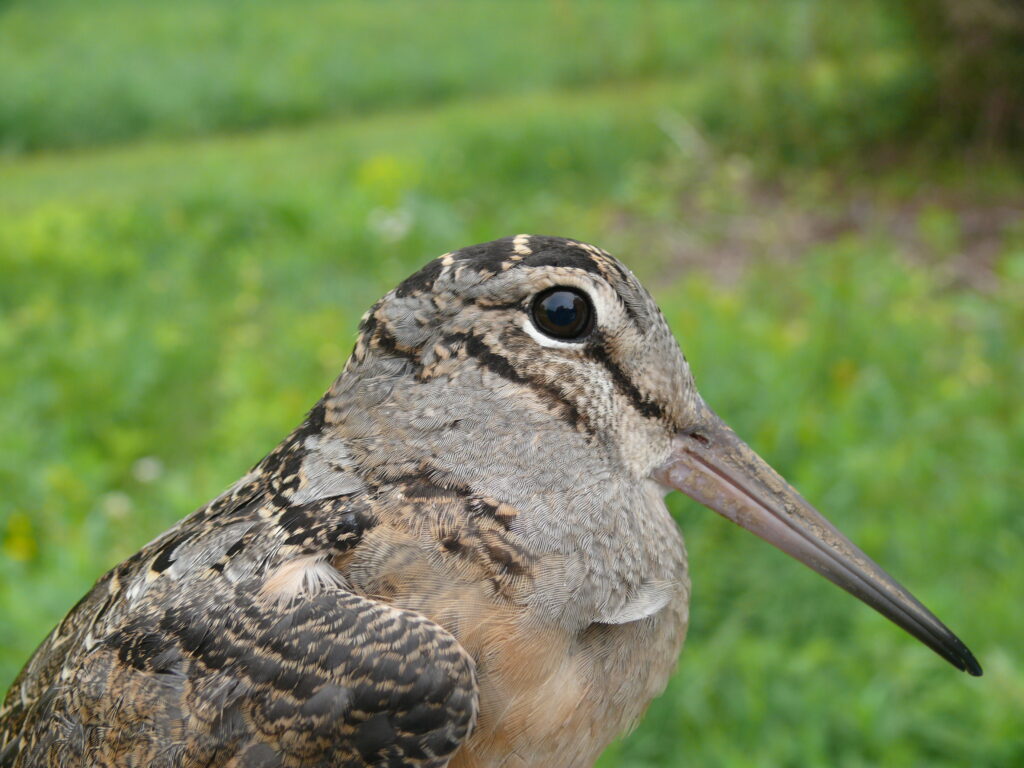
American Woodcock. Photo by Powdermill Avian Research Center.

For a few hours before dawn on the chilly morning of December 16, several intrepid birders scoured the Rector Christmas Bird Count circle for owls, and with a bit of luck, counted four species. Eastern Screech-Owl is a common, year-round resident and a respectable 14 individuals were heard calling that morning, in addition to one encounter each of Great Horned Owl, Barred Owl, and Northern Saw-whet Owl.

Once the sun rose that morning, the owlers were joined by many other birders to spend the day systematically searching for and tallying all the birds they could see and hear throughout the day. The Christmas Bird Count (CBC) is an annual citizen science tradition that began in 1900 with the goal of counting all the birds that participants encounter within an established 15-mile diameter circle on a selected day between December 14 and January 5. The Rector count, centered just northwest of Powdermill Nature Reserve, covers a variety of habitats and elevations spanning from the Chestnut Ridge to the Laurel Ridge, and has been going strong since 1974. Because of the diversity of habitats and the dedication of participants, Rector CBCers have totaled 132 species within the circle, including a new species added this year.

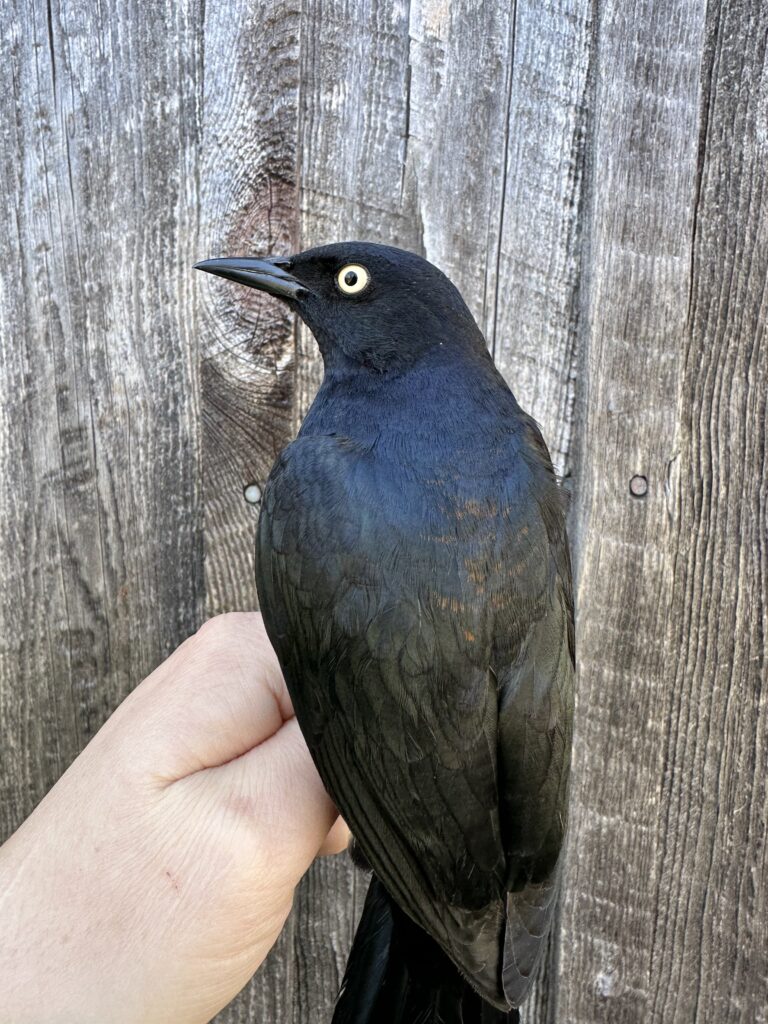
Rusty Blackbird. Photo by Powdermill Avian Research Center.

The Rector count circle is divided into sectors, and this year’s 43 participants fanned out to cover as much territory as they could within their assigned sectors, some opting to hike trails in the state parks and forest, some traveling the roads by car, stopping periodically to listen and watch, and eight birders counted the species they saw visiting their feeders and yards. At the end of the day, everyone gathered at Powdermill for the tally dinner, an evening to chat about the day’s events, share a delicious meal, and to add up the birds each group counted. This year’s total was above average with 6,131 individuals of 76 species tallied, surpassed in recent years only by 2021, a year with unseasonably warm temperatures extending quite late into the fall that garnered several species not normally expected to persist into December. Many species set new high-count records this year, including Canada Goose, Black Vulture, Red-tailed Hawk, American Woodcock, Red-bellied Woodpecker, Yellow-bellied Sapsucker, Hairy Woodpecker, Pileated Woodpecker, Carolina Wren, Eastern Bluebird, Northern Mockingbird, and Red-winged Blackbird. Although some of these high counts likely can be attributed to increased effort and number of participants, almost all of these species seem to be expanding their ranges northward, or are occurring in southwestern Pennsylvania in greater numbers, often year-round, a trend ornithologists have been noticing in recent years.

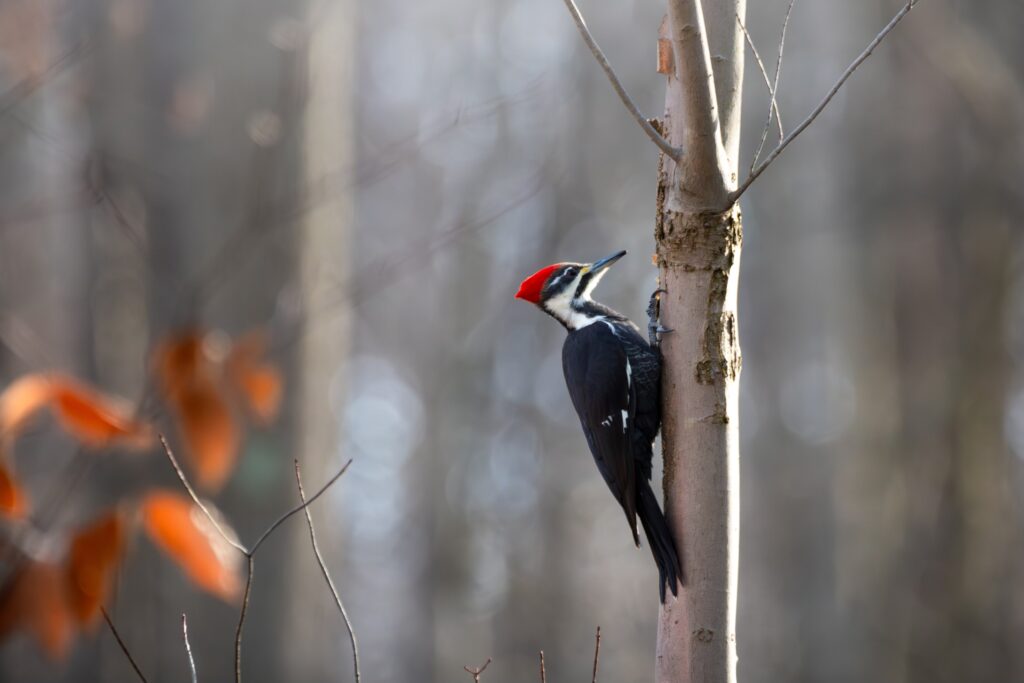
Pileated Woodpecker. Photo by Alex Busato.

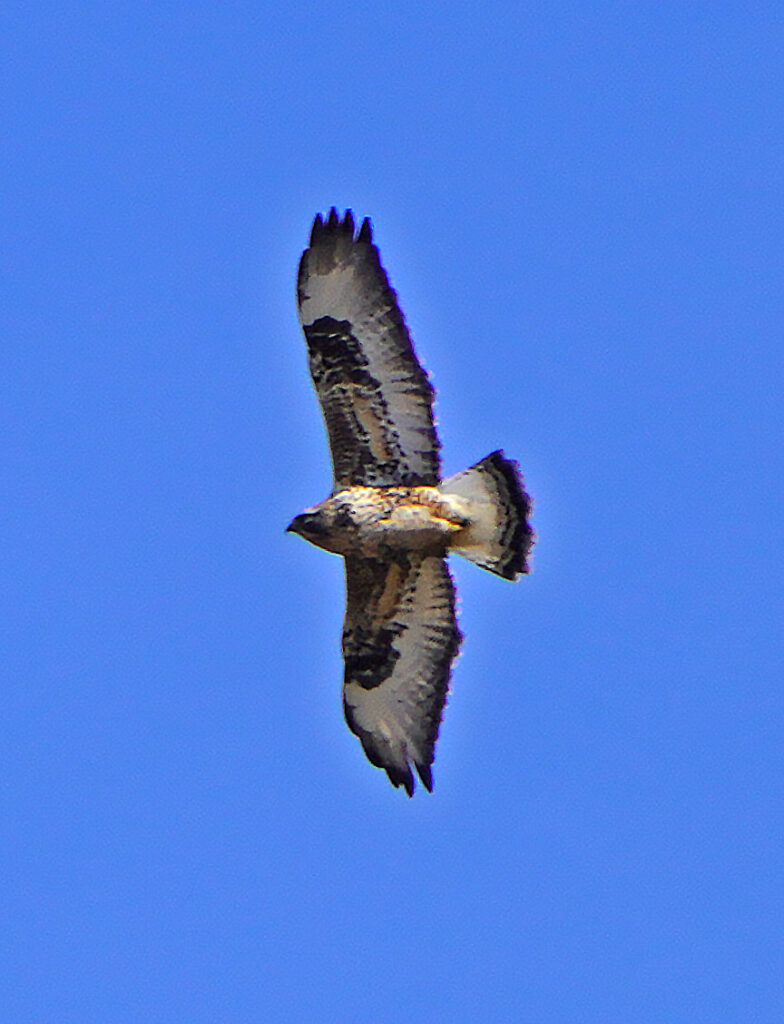
Excitement is always high at the tally, and this year was no exception. Highlights of the count were plentiful as participants shared photos and stories about their birds-of-the-day. One group found two Ruby-crowned Kinglets (nearly matching the count’s high total of three set in 2021) and a massive flock of 915 Canada Geese, which was the bulk of the day’s record-setting total. Another group found an Eastern Phoebe, a species recorded only twice before on the Rector CBC, perched in a tree pumping its tail up and down. Three participants photographed a Rough-legged Hawk, a species uncommon enough that they knew they would have to “prove” their identification, soaring over farm fields while driving to get lunch. And another group reported a flock of 150 Red-winged and 20 Rusty Blackbirds, setting a record for Red-wingeds and the highest count of Rusties since the mid-1990s. They also spotted an American Woodcock, a new species for the count, doing its bobbing walk in a wet spot along a road. 

Rough-legged Hawk. Photo by Mark McConaughy.

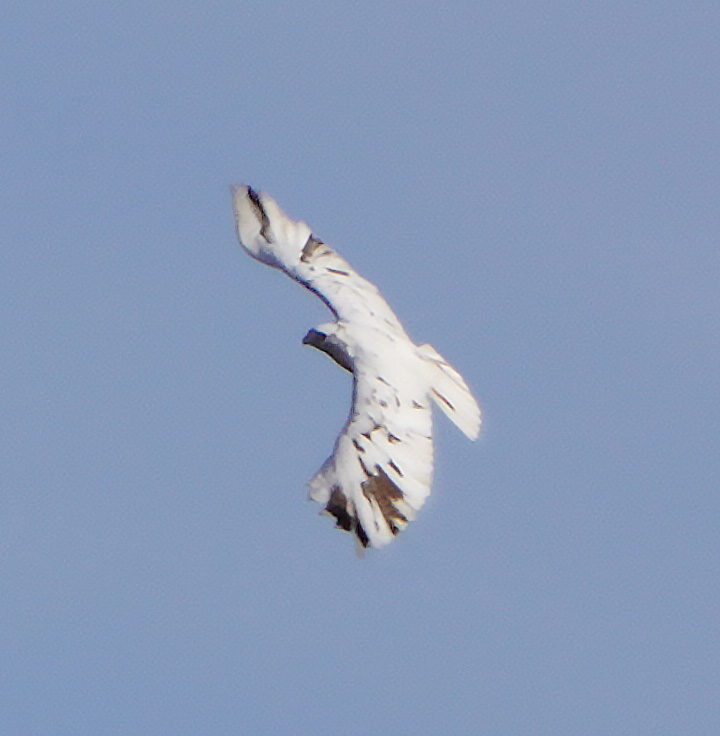
One more notable finding of the day was three leucistic Red-tailed Hawks. At least one had been spotted at the edges of fields near Powdermill for much of 2023, but on the day of the count, two different birds, with varying amounts of white, were spotted and photographed in those fields, and a third was spotted many miles to the northwest in a different sector. The word “leucistic” refers to lack of pigment, and these leucistic birds have one or, in the case of these particular hawks, many white feathers. Finding one leucistic bird is uncommon, but three relatively large birds showing this same coloration is quite rare.

Leucistic Red-tailed Hawk. Photo by Mark McConaughy.

As we wrap up the 124th Christmas Bird Count season and submit the Rector count’s data to the National Audubon Society, we thank all participants for their commitment to the birds and look forward to next year’s count!

For more information about the Christmas Bird Count and to see how the data are used, please visit: https://www.audubon.org/conservation/science/christmas-bird-count

Final 2023 Tally:

*Canada Goose – 1009

Mute Swan – 4

Tundra Swan – 1

Wood Duck – 1

American Black Duck – 13

Mallard – 74

Bufflehead – 2

Hooded Merganser – 11

Common Merganser – 3

Ruddy Duck – 6

Ring-necked Pheasant – 7

Wild Turkey – 14

Pied Billed Grebe – 6

*Black Vulture – 55

Turkey Vulture – 80

Northern Harrier – 1

Sharp-shinned Hawk – 1

Cooper’s Hawk – 2

Black Eagle – 2

Red-shouldered Hawk – 9

*Red-tailed Hawk – 66

Rough-legged Hawk – 1

Killdeer – 3

*American Woodcock – 1

Rock Pigeon – 37

Mourning Dove – 90

Eastern Screech-Owl – 14

Great Horned Owl – 1

Barred Owl – 1

Northern Saw-whet Owl – 1

Belted Kingfisher – 8

Red-headed Woodpecker – 6

*Red-bellied Woodpecker – 102

*Yellow-bellied Sapsucker – 16

Downy Woodpecker – 66

*Hairy Woodpecker – 28

Northern Flicker – 17

*Pileated Woodpecker – 38

American Kestrel – 2

Eastern Phoebe – 1

Blue Jay – 287

American Crow – 764

Common Raven – 25

Carolina Chickadee – 1

Black-capped Chickadee – 311

Tufted Titmouse – 212

Red-breasted Nuthatch – 7

White-breasted Nuthatch – 144

Brown Creeper – 8

Winter Wren – 3

*Carolina Wren – 86

Golden-crowned Kinglet – 60

Ruby-crowned Kinglet – 2

*Eastern Bluebird – 191

Hermit Thrush – 5

American Robin – 85

*Northern Mockingbird – 19

European Starling – 794

Cedar Waxwing – 45

Yellow-rumped Warbler – 7

American Tree Sparrow – 7

Field Sparrow – 5

Fox Sparrow – 1

Dark-eyed Junco – 411

White-throated Sparrow – 105

Song Sparrow – 117

Swamp Sparrow – 12

Eastern Towhee – 3

Northern Cardinal – 168

*Red-winged Blackbird – 151

Rusty Blackbird – 20

House Finch – 110

Purple Finch – 1

American Goldfinch – 90

House Sparrow – 61

Total Species: 76

Total Individuals: 6,131

*asterisk indicates high total for count

Annie Lindsay is Banding Program Manager at Powdermill Nature Reserve, Carnegie Museum of Natural History’s environmental research center.

Related Content

A Year in Review: Bird Banding 2023

What is Bird Banding?

Bird Banding with a Crew of One

Carnegie Museum of Natural History Blog Citation Information

Blog author: Lindsay, Annie
Publication date: January 24, 2024

Share this post!

  • Share on Twitter Share on Twitter
  • Share on Facebook Share on Facebook
  • Share on Pinterest Share on Pinterest
  • Share on LinkedIn Share on LinkedIn
  • Share on Reddit Share on Reddit
  • Share via Email Share via Email

Filed Under: Blog Tagged With: Annie Lindsay, Birds, Powdermill Nature Reserve, Science News

January 6, 2023 by Erin Southerland

2022 Rector Christmas Bird Count Results

by Annie Lindsay
Red-shouldered Hawk. Image credit: Brady Karg

On the morning of December 17, 2022, 41 birders assembled at Powdermill Avian Research Center to receive the maps and datasheets for the sectors they’d be visiting for the annual Rector Christmas Bird Count (CBC). During the CBC, participants identify and tally every bird they see or hear within a pre-established 15-mile-diameter circle on a selected day between December 14 and January 5. The Rector count was established in 1974, but the history of the CBC extends back to 1900, when a small group listed birds in 25 count circles on Christmas Day. Now sponsored by the National Audubon Society, the CBC has expanded to include nearly 3,000 circles throughout the Western Hemisphere. The CBC welcomes birders of all skill levels and is one of the largest and longest-term community science projects. 

The Rector count’s center point is just northwest of Powdermill Nature Reserve, and encompasses a variety of habitats including the ridge-top forests of Chestnut Ridge, Laurel Summit State Park, Laurel Mountain State Park, and Forbes State Forest, the mountain stream valleys and hillsides of Linn Run State Park and Powdermill Nature Reserve, two lakes that often attract migrating or overwintering waterfowl, and rolling farmland interspersed with small towns. This habitat variety means that species diversity can be quite high, and since 1974, birders have tallied 131 species in the Rector circle. 

Last year, warm weather extended far into the fall, and the Rector count recorded high totals of many species that we would normally expect to spend the winter a bit further south. This year, however, the fall weather was more typical of southwestern Pennsylvania, and temperatures on the day of the count hovered around freezing as large, fluffy snowflakes fell throughout the morning. The day began early as a few ambitious birders searched for owls before dawn, finding eight Eastern Screech Owls. By dawn, all participants headed to their sectors to count diurnal birds, while an additional eight birders counted what they saw and heard in their yards and visiting their feeders. As dusk fell, CBC participants met at Powdermill for a tally dinner, an evening of camaraderie and sharing stories from the day. Although the species total was only 59, which is slightly below average, individual numbers for each of these species were typical. A few, including Wild Turkey, Bald Eagle, Red-shouldered Hawk, Winter Wren, and Eastern Bluebird even saw new high-count records. 

Red-headed Woodpecker. Image credit: Tom Kuehl

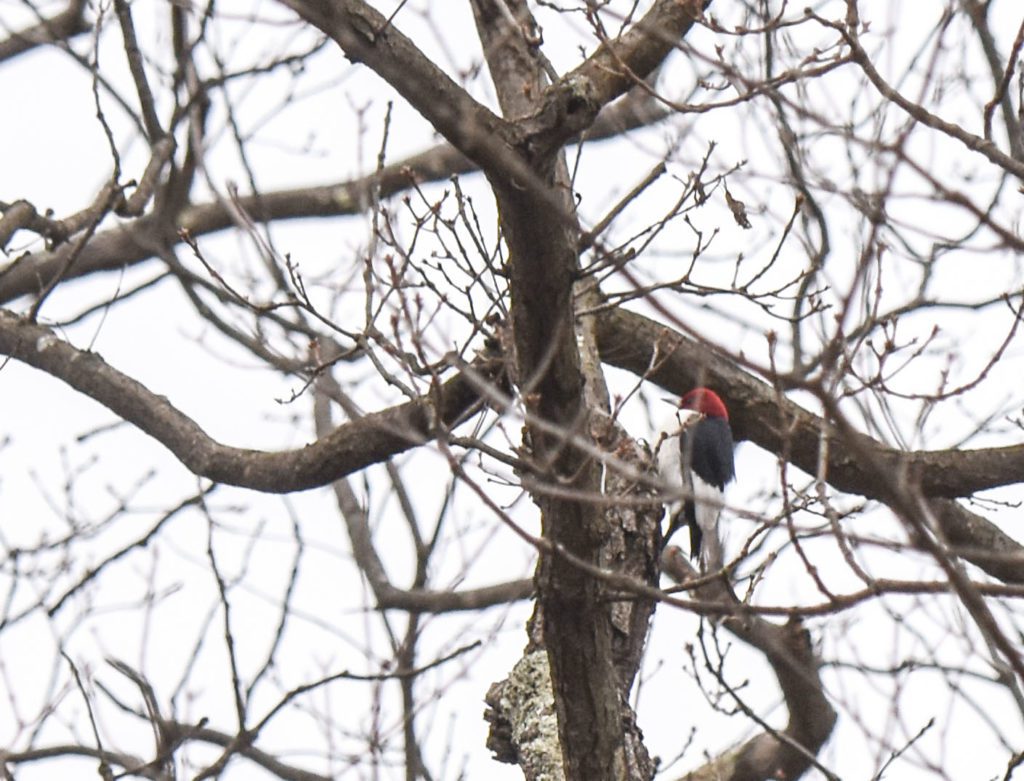
For the fifth year in a row, participants found Red-headed Woodpeckers during the count. This species is difficult to find in southwestern Pennsylvania, and the Rector count circle is one of the only reliable places to encounter them. A favorite of birders, this bold, color-block-patterned woodpecker always delights those lucky enough to spot one.

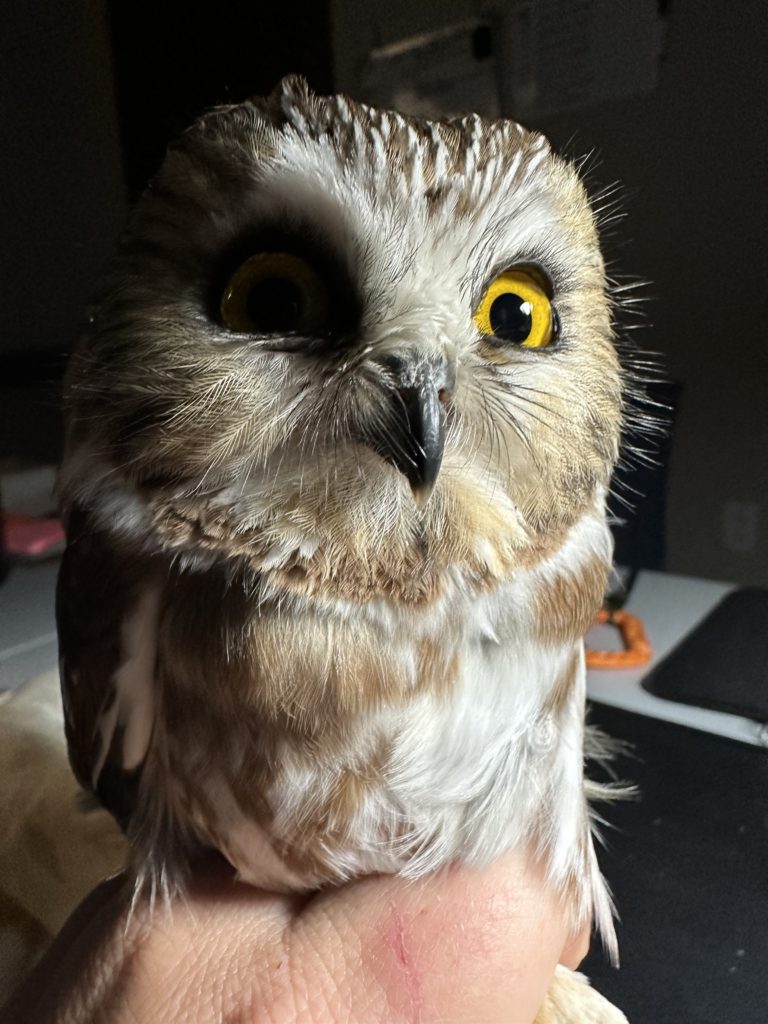
Northern Saw-whet Owl

One of the most exciting sightings of this year’s count, and the last bird encountered for the day, was a Northern Saw-whet Owl spotted near Powdermill’s nature center just as the tally dinner ended. Northern Saw-whet Owls are found in southwestern Pennsylvania primarily during fall migration, but some overwinter here, and there is evidence that a few pairs may breed locally. Saw-whets are small and do not vocalize as readily as most of the other owls, which make them difficult to find. This fall, Powdermill’s ornithologists caught and banded 99 of these tiny owls, nearly a high fall record! As the 2022 Christmas Bird Count season wraps up, we’re already looking forward to 2023. Thank you to all participants for spending the day searching every corner of the count circle looking for birds, and to all landowners for granting participants access to their properties for a much more thorough and complete count.

Related Content

2021 Rector Christmas Bird Count Results

Milestones at Powdermill’s Banding Lab

Holiday Stowaway: Northern Saw-whet Owl

Carnegie Museum of Natural History Blog Citation Information

Blog author: Lindsay, Annie
Publication date: January 6, 2023

Share this post!

  • Share on Twitter Share on Twitter
  • Share on Facebook Share on Facebook
  • Share on Pinterest Share on Pinterest
  • Share on LinkedIn Share on LinkedIn
  • Share on Reddit Share on Reddit
  • Share via Email Share via Email

Filed Under: Blog Tagged With: Annie Lindsay, Birds, Powdermill, Science News

January 6, 2022 by Erin Southerland

2021 Rector Christmas Bird Count Results

by Annie Lindsay

All week leading up to the Christmas Bird Count (CBC), the weather forecast threatened heavy rain for December 18, 2021, but that did not deter a group of 34 dedicated birders from going outside and counting birds all day! In fact, after a touch of rain before dawn, the weather cleared, and the day was mostly cloudy, pleasant, and perfect for birding. And what a Christmas Bird Count it was! The birders, along with six people who counted birds visiting their feeders and yards, tallied 7,239 birds of 79 species, broke the high-count records for several species, and added two new species that had never been seen during the Rector CBC before!

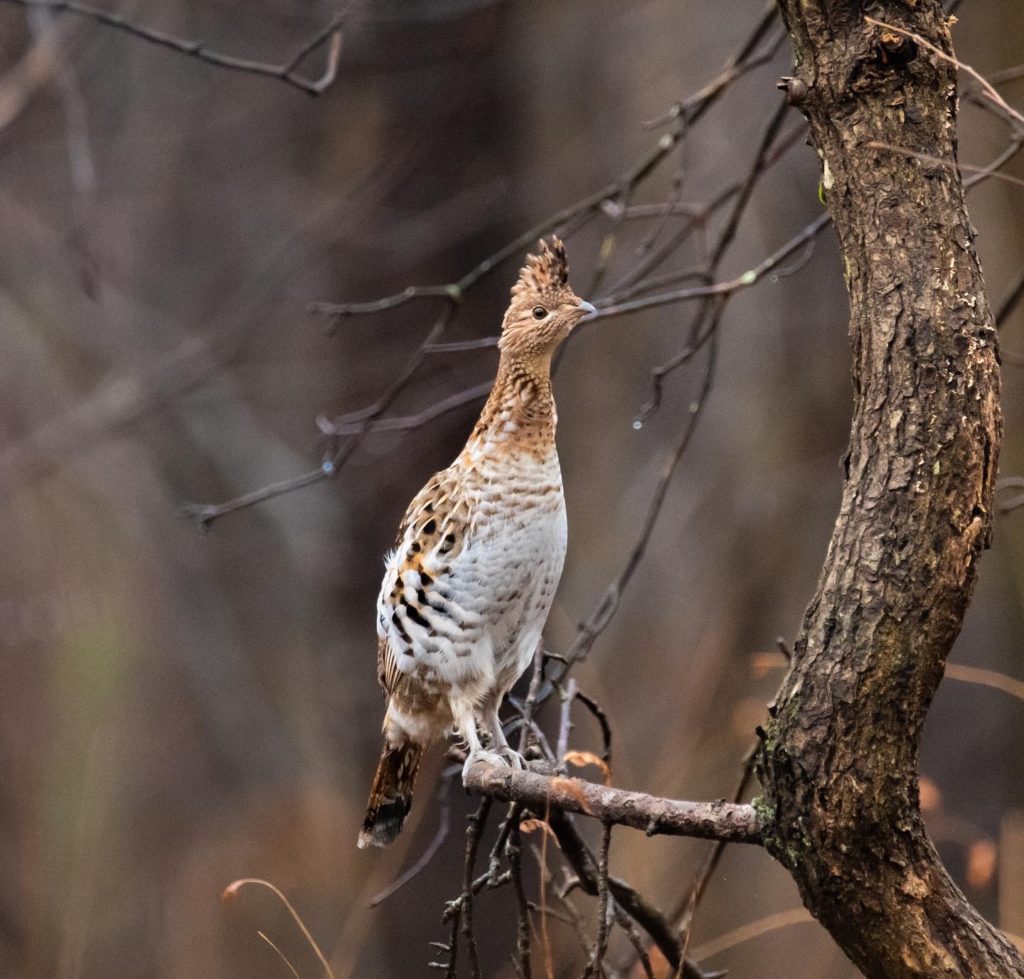
ruffed grouse on a branch in winter
Ruffed Grouse, photo by Alex Busato. Pennsylvania’s state bird can be difficult to find due to its well-camouflaged plumage and declining population, but one posed nicely on Laurel Moutain during this year’s Christmas Bird Count.

Christmas Bird Count History

The CBC is an annual tradition that began on Christmas in 1900. Participants counted birds they saw or heard all day, a step away from previous bird censuses during which people used shotguns to collect and count birds. The original group of 27 birders tallying birds in 25 count circles has now become an international event, sponsored by the National Audubon Society, with nearly 3,000 count circles spread across the Western Hemisphere. The compilers for each count circle choose a date between December 14 and January 5, and participants tally every bird they encounter within a designated 15-mile diameter circle. With such a large geographic range and over 100 years of data, the CBC is one of the largest community science projects. The data gathered has been used to study population trends and over 200 peer-reviewed publications have used CBC data.

The Rector count circle is centered just northwest of Powdermill Nature Reserve. Its variety of habitat types along an elevational gradient is excellent for species diversity. Begun in 1974, the Rector count has consistently tallied more than 50 species every year, with the highest species counts of 88 in 2012 and 80 in 2009. This year’s total of 79 species was the third highest in this count’s history! Although there are core species, like chickadees and cardinals, that we expect to see every year, rarities occasionally pop up, and Rector counters have tallied 131 species since 1974.

2021 Rector Christmas Bird Count Numbers and Highlights

The 2021 count started at 4:30 a.m. with several birders searching for owls. Despite the drizzle, the owlers counted three Great Horned Owls, three Barred Owls, a surprise Northern Saw-whet Owl that was spotted in headlights as it flew across the road, and an incredible 17 Eastern Screech-Owls, a number that shattered the previous record of 11. Off to a great start, the owlers were joined by the bulk of the participants to survey their assigned sectors within the count circle, and there were many surprises in store.

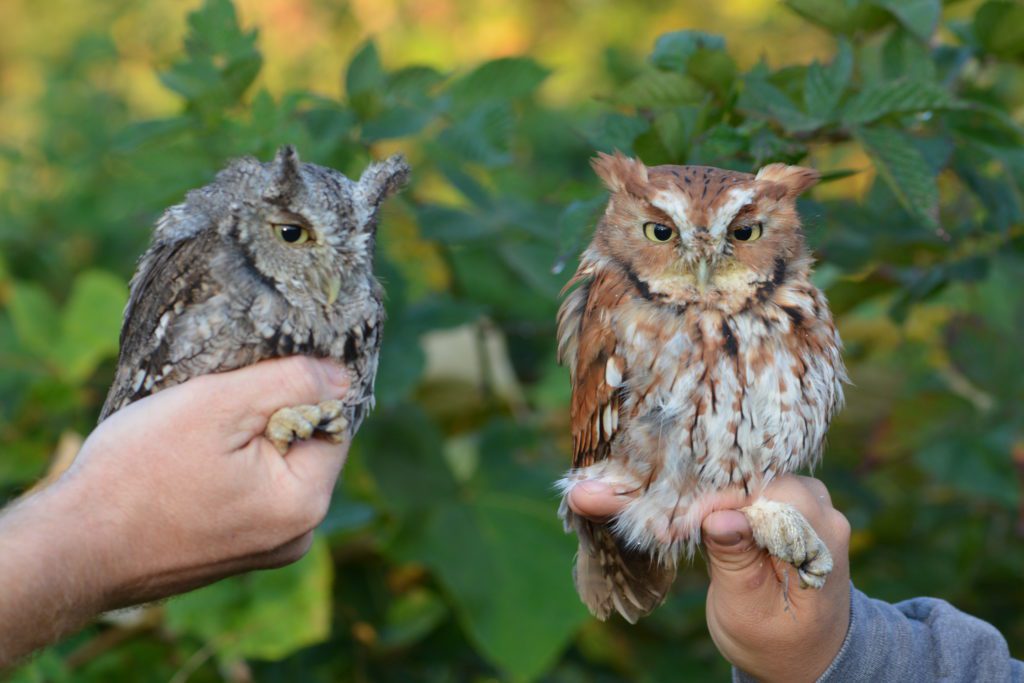
two eastern screech owls held in hands
Eastern Screech-Owls, gray morph and red morph. Although not encountered as frequently due to their nocturnal habits, Eastern Screech-Owls are a common species in our area. CBCers shattered the previous high count record for this species during this year’s count, tallying a total of 17 individuals!

At the end of the day, counters met at Powdermill for the tally dinner to report what they’d seen and share stories from the field. As we tallied, we quickly noticed that we were setting new high-count records, or tying existing records, for many species, including Ring-necked Duck, Bufflehead, Red-breasted Merganser, Black Vulture, Eastern Screech-Owl, Northern Saw-whet Owl (tie), Red-bellied Woodpecker, Yellow-bellied Sapsucker, Northern Flicker, Merlin (tie), Common Raven, Ruby-crowned Kinglet (tie), Eastern Bluebird, Hermit Thrush, American Robin, Gray Catbird, Yellow-rumped warbler, White-throated Sparrow, and Eastern Towhee.

The owls certainly set new records due to the increased effort to find them this year: screech owls are a common species in our area, and saw-whets, although quite difficult to find and usually not vocal at this time of year, are likely here in the appropriate habitat.

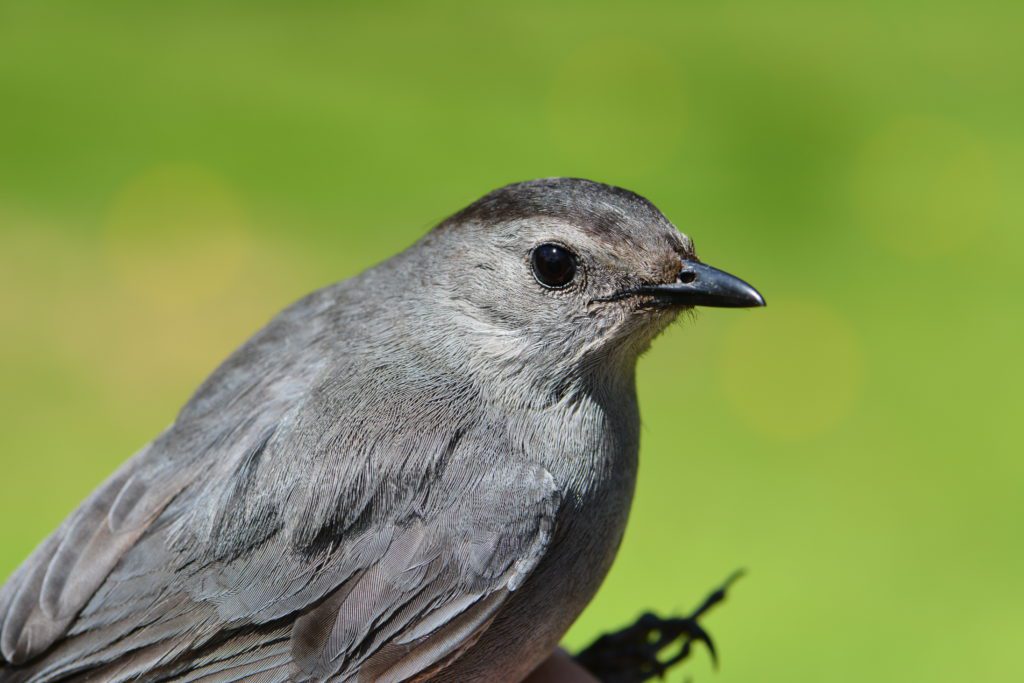
gray catbird
Gray Catbird. A species that winters from coastal Massachusetts through Central America, catbirds have popped up during the Rector Christmas Bird Count in the past. However, this year we tallied three catbirds, which is quite unusual.

We noticed an interesting trend in the species with high counts: most are species that tend to spend the winter a bit south of us, or if they are species that are expected during the Rector CBC, their winter range tends not to extend much farther north of us and we generally do not expect them in high numbers. We speculate that the combination of a late fall, mild temperatures through the end of 2021, and an abundance of berries may have contributed to some individuals of these shorter-distance migrants not migrating as far south as they usually do.

Our biggest surprises were two new species that had never been encountered during the Rector CBC before. The first was a Palm Warbler reported on a farm in Ligonier foraging with a flock of Yellow-rumped Warblers on the edge of a cow pasture. Palm Warblers are seen annually in our area during migration, and we band several of them at Powdermill every year. Many Palm Warblers spend the winter in the southeastern US, but it is not expected in southwest Pennsylvania in the winter. The second species was a Surf Scoter spotted at Donegal Lake. Surf Scoters are a species of duck usually seen in the ocean along the Atlantic and Pacific coasts in winter, or perhaps on the Great Lakes or human-made lakes if they’re forced down by bad weather during migration. This is a very unusual species for our area and an excellent find.

As we submit the Rector count’s data to Audubon and wrap up another CBC, we thank all of the participants and look forward to the 2022 count!

Annie Lindsay is the Bird Banding Program Manager at Carnegie Museum of Natural History’s Powdermill Nature Reserve. Museum employees are encouraged to blog about their unique experiences and knowledge gained from working at the museum.

Related Content

Milestones at Powdermill’s Banding Lab

Bird Safe Glass Installed at Carnegie Museums (Video)

Northern Saw-whet Owl (Video)

Carnegie Museum of Natural History Blog Citation Information

Blog author: Lindsay, Annie
Publication date: January 6, 2022

Share this post!

  • Share on Twitter Share on Twitter
  • Share on Facebook Share on Facebook
  • Share on Pinterest Share on Pinterest
  • Share on LinkedIn Share on LinkedIn
  • Share on Reddit Share on Reddit
  • Share via Email Share via Email

Filed Under: Blog Tagged With: Annie Lindsay, Powdermill Nature Reserve, Science News, We Are Nature 2

September 10, 2021 by wpengine

Milestones at Powdermill’s Banding Lab

by Annie Lindsay

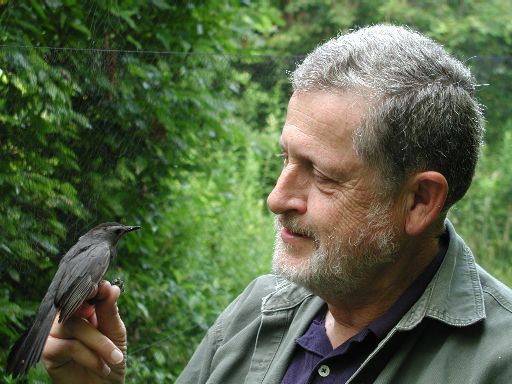
On the morning of July 11, 2001, Powdermill’s bird banding crew knew that was the day they’d catch the program’s 500,000th banding record (which includes new birds and recaptured birds). With only 10 birds to go, each person on the field crew guessed what species #500,000 would be, then set out on a net round together. As we checked each net, our eager anticipation grew with each bird we extracted. It turned out that I, a young, green banding intern, guessed correctly: number 500,000 was a Gray Catbird, a very common species at Powdermill during the breeding season, and a charismatically sassy species that endears itself to many banders and birders.

Man holding a bird outside.
Bob Leberman, founder of Powdermill’s bird banding program, with the 500,000th banding record, a Gray Catbird, caught and banded on July 11, 2001.

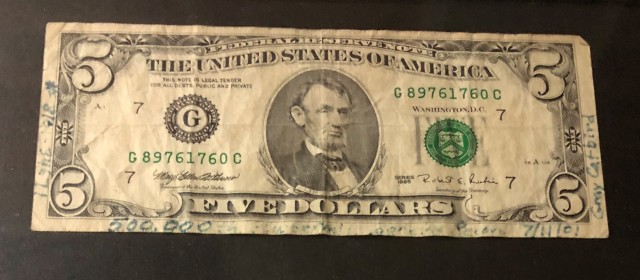
We released #500,000, celebrated with sparkling grape juice, then continued the banding day with a demonstration for children attending Powdermill’s summer camp. The catbird was made famous in the local newspaper, and because we’d each wagered a dollar on our guesses, I earned a $5 bill with the catbird’s band number on it for correctly guessing the species. That year marked the 40th anniversary of Powdermill’s banding program, and another milestone about two months prior: the 400,000th new bird banded.

Over the next two decades, the number of birds banded continued to creep up. Before spring migration this year, we determined that we needed just over 5,000 birds to reach 800,000 banding records. The countdown was on, and by mid-summer we knew that we could expect to reach that number by early- to mid-August, perfect timing to celebrate the banding program’s 60th anniversary.

The morning of August 6 was the day! With 45 birds to go after banding on August 5, we knew 800,000 was within sight. We opened the nets at 5:50 a.m., but the first two net checks yielded surprisingly fewer birds than we expected. At the 7:50 a.m. net check, we still had 20 birds to go, and given the pace of the morning we assumed The Bird wouldn’t be caught until the following round, so the banding crew set out in different directions to clear the nets. About five minutes later our long-term volunteer and colleague, Nick, radioed back to say that he had 11 birds in the second set of nets he was checking! The nets in the other directions had only a few birds, so we all converged on Nick’s location, and the final countdown began with five birds to go.

Two people outside removing birds from mist nets.
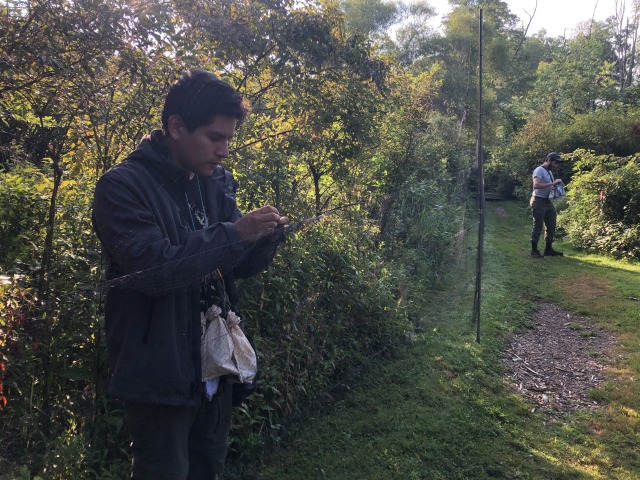
Kevin Chumpitaz and Nick Liadis, part of Powdermill’s banding crew, extracting birds #799,993 and #799,994.

The next three sets of nets were empty, but Long Lane, a series of nine nets connected in a long line, delivered a Black-and-White Warbler, a Black-throated Green Warbler, a Gray Catbird, and a Canada Warbler. With number 800,000 just ahead, Mallory, PARC’s Motus and banding assistant, called back to the rest of us, “It’s here!” Our milestone bird was a young Cedar Waxwing, a species that is quite common at Powdermill during the migration and breeding seasons, and often is spotted in nomadic flocks during the winter.

Cedar Waxwing held in a hand outside
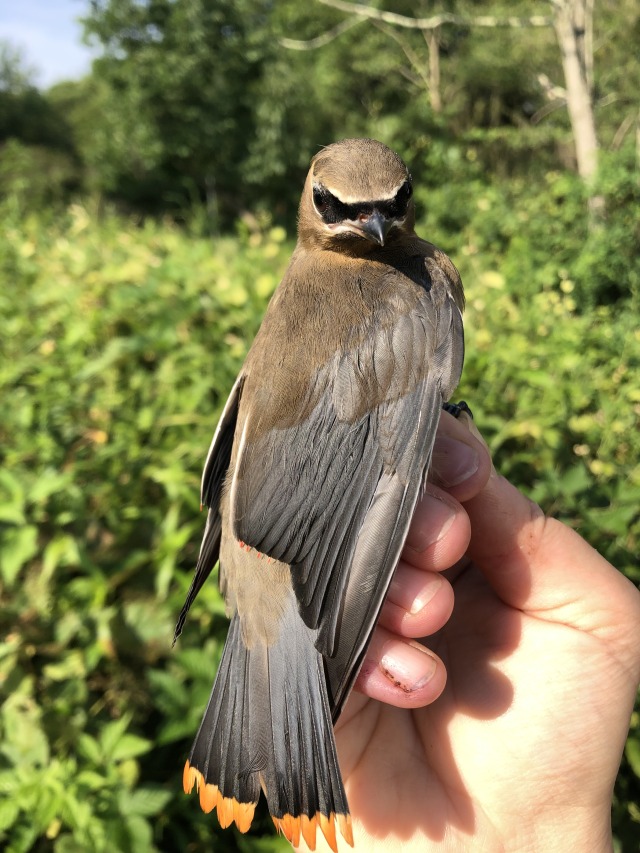
Powdermill’s 800,000th banding record, a young Cedar Waxwing, caught and banded on August 6, 2021.

Just beyond the waxwing was another Gray Catbird, which concluded the net round. We all made our way back to the lab where we banded the celebrity waxwing, recorded the usual data (age, sex, measurements, and mass), snapped a few photos and a quick video, and then released the bird.

Based on the waxwing’s plumage, we know that it hatched this summer, and it displayed an interesting plumage characteristic that is relatively common in young waxwings in southwest Pennsylvania. Cedar Waxwings have a yellow terminal band on their tails, but if an individual eats invasive honeysuckle berries while feathers are growing, the pigment from the berries, called rhodoxanthin, is incorporated into the yellow parts of the growing feathers. Honeysuckle berries are plentiful at Powdermill, and are ripe when young Cedar Waxwings are still in the nest and growing their first set of feathers. If they’re fed these berries, their tails have an orange tail band instead of the normal yellow! Adult waxwings molt when the berries are no longer ripe, so their tails have a yellow stripe. This phenomenon is a great example of how introduced plants can affect their environment.

Woman holding a bird outside
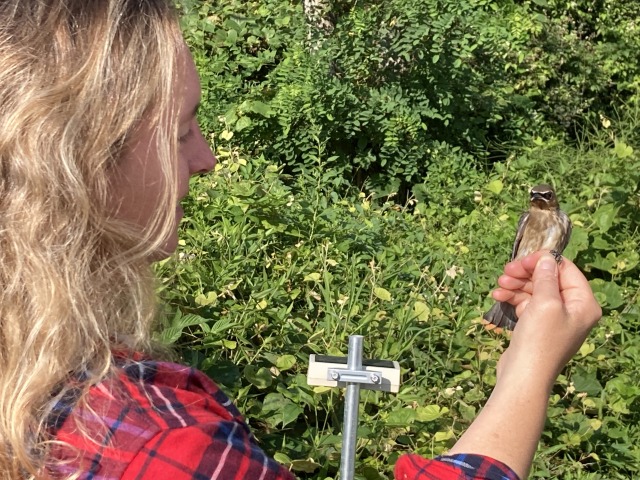
Annie Lindsay with the 800,000th banding record.

In keeping with previous milestones at Powdermill, #800,000 is a common species: Cedar Waxwing is the sixth most banded species at Powdermill, with over 24,000 of them banded in our 60-year history. We often like to attach meaning to notable events, and Cedar Waxwings lend themselves to this one in particular: the aberration in tail stripe pigmentation was described by Powdermill banders in a paper published in 1992, and the species was a favorite of the founder of Powdermill’s bird banding program, Bob Leberman.

Five-dollar bill with writing on the edges commemorating the 500,000th bird banding record at Powdermill.
The commemorative $5 bill for guessing correctly what species the 500,000th banding record would be.

I still have the $5 bill with #500,000’s band number on it, and feel honored to have been part of both milestones at Powdermill. The crew didn’t place bets on what species #800,000 might be, but several had guesses, and I was sure it would be another catbird. Cedar Waxwing was an excellent surprise, and we’re all looking forward to #900,000 and #1,000,000 in the coming years!

Annie Lindsay is the Bird Banding Program Manager at Carnegie Museum of Natural History’s Powdermill Nature Reserve. Museum employees are encouraged to blog about their unique experiences and knowledge gained from working at the museum.

Related Content

What Is Bird Banding?

Cedar Waxwing: Banding Record 800,000

Behind the Scenes…A Life in the Details

Carnegie Museum of Natural History Blog Citation Information

Blog author: Lindsay, Annie
Publication date: September 10, 2021

Share this post!

  • Share on Twitter Share on Twitter
  • Share on Facebook Share on Facebook
  • Share on Pinterest Share on Pinterest
  • Share on LinkedIn Share on LinkedIn
  • Share on Reddit Share on Reddit
  • Share via Email Share via Email

Share this post!

  • Share on Twitter Share on Twitter
  • Share on Facebook Share on Facebook
  • Share on Pinterest Share on Pinterest
  • Share on LinkedIn Share on LinkedIn
  • Share on Reddit Share on Reddit
  • Share via Email Share via Email

Filed Under: Blog Tagged With: Annie Lindsay, bird banding, Birds, Powdermill Nature Reserve

  • Page 1
  • Page 2
  • Go to Next Page »

sidebar

About

  • Mission & Commitments
  • Directors Team
  • Museum History

Get Involved

  • Volunteer
  • Membership
  • Carnegie Discoverers
  • Donate
  • Employment
  • Events

Bring a Group

  • Groups of 10 or More
  • Birthday Parties at the Museum
  • Field Trips

Powdermill

  • Powdermill Nature Reserve
  • Powdermill Field Trips
  • Powdermill Staff
  • Research at Powdermill

More Information

  • Image Permission Requests
  • Science Stories
  • Accessibility
  • Shopping Cart
  • Contact
  • Visitor Policies
One of the Four Carnegie Museums | © Carnegie Institute | Privacy Policy | Terms of Use | Accessibility
Rad works here logo