• Skip to primary navigation
  • Skip to main content
  • Skip to primary sidebar

Carnegie Museum of Natural History

One of the Four Carnegie Museums of Pittsburgh

  • Visit
    • Buy Tickets
    • Visitor Information
    • Exhibitions
    • Events
    • Dining at the Museum
    • Celebrate at the Museum
    • Powdermill Nature Reserve
    • Event Venue Rental
    • Gift Cards
  • Learn
    • Field Trips
    • Educator Information
    • Programs at the Museum
    • Bring the Museum to You
    • Guided Programs FAQ
    • Programs Online
    • Climate and Rural Systems Partnership
  • Research
    • Scientific Sections
    • Science Stories
    • Science Videos
    • Senior Science & Research Staff
    • Museum Library
    • Science Seminars
    • Scientific Publications
    • Specimen and Artifact Identification
  • About
    • Mission & Commitments
    • Directors Team
    • Museum History
  • Tickets
  • Give
  • Shop

Botany Blogs

These blogs are written about and by our Section of Botany researchers. The herbarium at the museum which contains approximately 3,000 type specimens--specimens that define an entire plants' species. These type specimens only represent about 0.6 % of the collection.

Mason Heberling, head of the section, regularly shares herbarium specimens that have been "Collected on this day" in history.

November 3, 2017 by wpengine

Witch Hazel

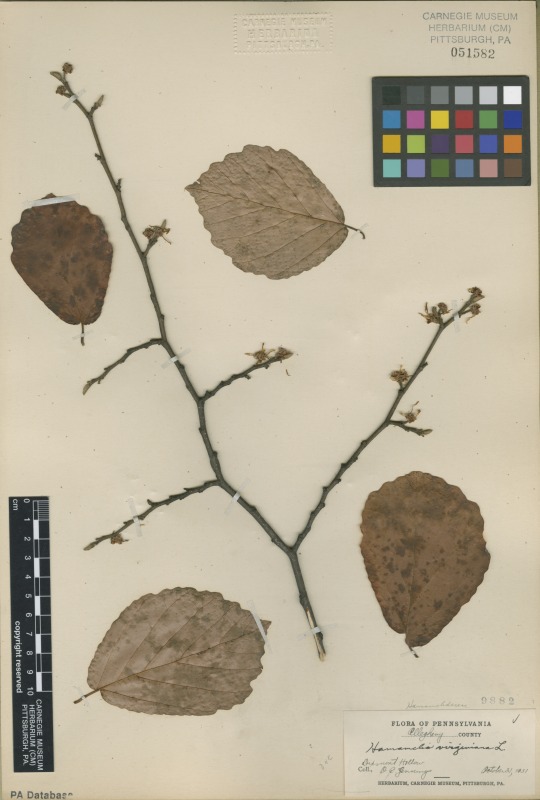
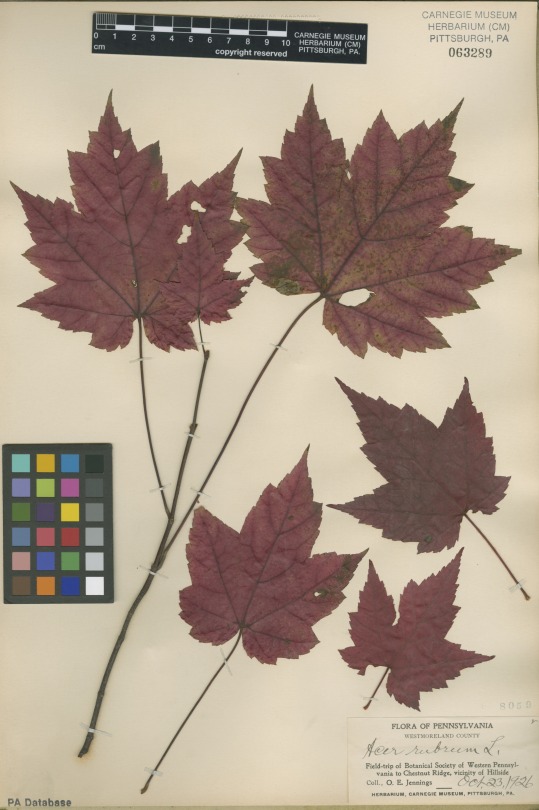
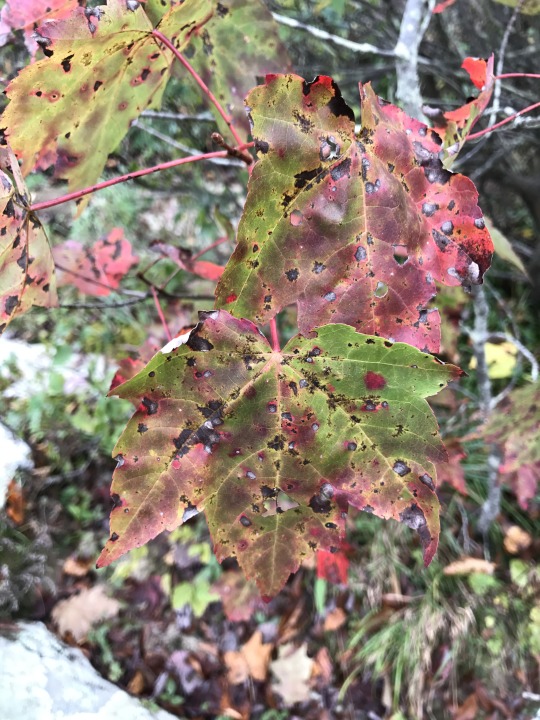
Collected on a spooky Halloween night in 1931 (well, it might have been during the day, but let’s just say night), this specimen was found by Curator of Botany Otto Jennings at Dixmont Hollow near Emsworth, Pennsylvania.

Collected on a spooky Halloween night in 1931 (well, it might have been during the day, but let’s just say night), this specimen was found by Curator of Botany Otto Jennings at Dixmont Hollow near Emsworth, Pennsylvania.

Witch hazel (Hamamelis virginiana) is a small deciduous tree found in forests and stream banks across the eastern United
States. This awesome native plant is notable for its fall flowering, with long ribbon-shaped bright yellow petals. The plant flowers as it drops its leaves for fall, leaving branches with no leaves but plentiful flowers. Witch hazel is among the last plants in our region to flower in the fall. As its fruit dry, it ejects the seeds, making a snapping sound.

Why the name witch hazel? Several explanations have been given. One is derivation from an old English word meaning bendable. More fitting for Halloween, another unverified claim is the plant was thought to be linked to witchcraft, both for its mysterious noises—snapping sounds during seed ejection—and supposed use in magic wands.


Botanists at Carnegie Museum of Natural History share pieces of the herbarium’s historical hidden collection on the dates they were
discovered or collected. Check back for more!
Filed Under: Blog Tagged With: Botany

October 23, 2017 by wpengine

Collected on this Day in 1926

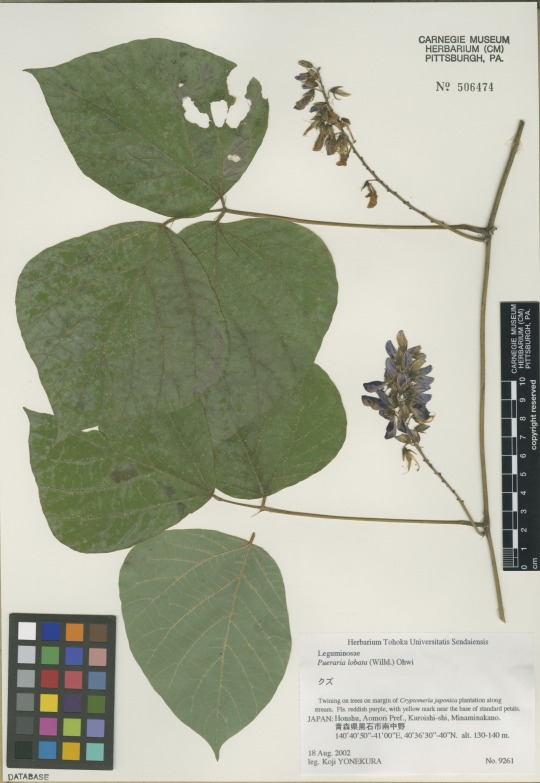
This red maple specimen was collected on October 23, 1926 by Otto Jennings during a field trip of the Botanical Society of Western PA to Chestnut Ridge.

Despite being over 90 years old, this specimen still has beautiful color! This red maple specimen was collected on October 23, 1926 by Otto Jennings during a field trip of the Botanical Society of Western PA to Chestnut Ridge in the beautiful Laurel Highlands of Pennsylvania. Red maple (Acer rubrum) is one of the most common trees in eastern North America. You can find it from southern Canada down to Florida and Minnesota down to eastern Texas. It is renowned for its beautiful scarlet red foliage in autumn. Happy fall!

Red maple is renowned for its bright red foliage in the autumn.

Botanists at Carnegie Museum of Natural History share pieces of the herbarium’s historical hidden collection on the dates they were discovered or collected. Check back for more!
Carnegie Museum of Natural History Blog Citation Information

Blog author: Heberling, Mason
Publication date: October 23, 2017

Share this post!

  • Share on Twitter Share on Twitter
  • Share on Facebook Share on Facebook
  • Share on Pinterest Share on Pinterest
  • Share on LinkedIn Share on LinkedIn
  • Share on Reddit Share on Reddit
  • Share via Email Share via Email

Filed Under: Blog Tagged With: Botany, collected on this day, Mason Heberling

October 16, 2017 by wpengine

Collected on this Day in 1997

Kudzu is one of the more well-known weeds, at least by name, sometimes known as “the vine that ate the South.”

Kudzu is one of the more
well-known weeds, at least by name, sometimes known as “the vine that ate the
South.”

Collected on October 13, 1997, this specimen was found by Sue Thompson and
Bonnie Isaac near the I-376 Squirrel Hill Tunnel, Pittsburgh. Kudzu (Pueraria lobata) was introduced to the
United States as an ornamental plant in 1876 at the Centennial International
Exhibition in Philadelphia. The vine was initially prized in the South to
provide shade.

The vine was later promoted
for use in erosion control.  Although
listed as a noxious weed in Pennsylvania, it is more invasive in southern
states. There, it has been estimated to spread at a rate of 2,500 acres per
year (some say up to 150,000 acres per year, although this estimate has been
questioned).

Infestations of this plant undoubtedly cause ecological and
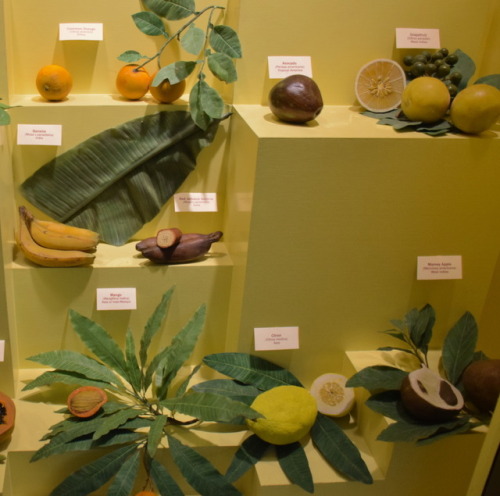
economic damage. Below is another specimen of kudzu, collected in its native
range in Japan in 2002.


Botanists at Carnegie Museum of Natural History share
pieces of the herbarium’s historical hidden collection on the dates they were
discovered or collected. Check back for more!
Filed Under: Blog Tagged With: Botany, Mason Heberling, Pittsburgh

October 9, 2017 by wpengine

Intercontinental Produce

a museum display of fruits

Thanks to modern farming practices and intercontinental trade, most produce can be found anywhere in the world. Can you spot some of your favorites from our display in the Hall of Botany?

Filed Under: Blog Tagged With: Botany

October 6, 2017 by wpengine

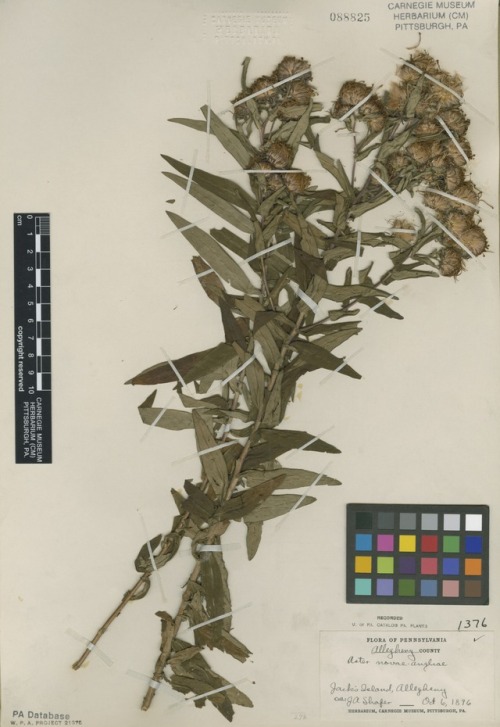
Collected on this Day in 1896

Collected on this day in 1896, a specimen of New England Aster.

Collected on this Day in 1896

Collected on October 6, 1896 (the same year Carnegie Museum was founded), this specimen was found by early museum botanist John Shafer on Jack’s Island, a small island on the Allegheny River (between Harrison Township and city of Lower Burrell).

Despite the name, New England aster can be found across eastern North America.  Along with many other species in the genus Aster, this species was recently reclassified in the Symphyotrichum genus. Symphyotrichum novae-angliae is a perennial (lives for several years) with beautiful deep blue-purple flowers. Like other plants in the sunflower family (Asteraceae), the flowers are actually a cluster of flowers (heads) composed of many flowers, with ray and/or disk flowers.

New England Aster in nature.

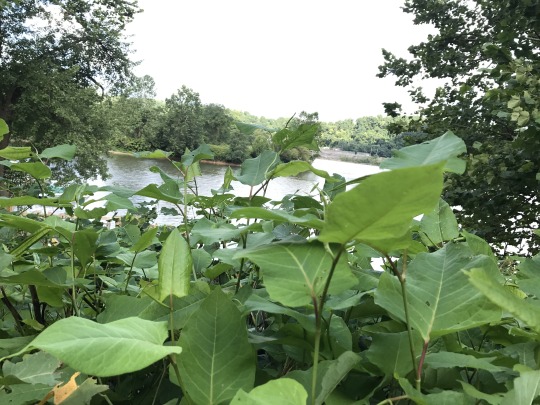
Photo caption: View of Jack’s Island from Braeburn (Lower Burrell), PA.  New England aster might still be on the island, but note the dense stands of invasive giant knotweed that now lines the river and island. Introduced to the United States as a garden plant in 1894, Giant knotweed (Fallopia sachilinensis) was not yet in our area when this aster specimen was collected in 1896.

Filed Under: Blog Tagged With: Botany, herbarium, Mason Heberling

October 5, 2017 by wpengine

Collected on this Day in 1900

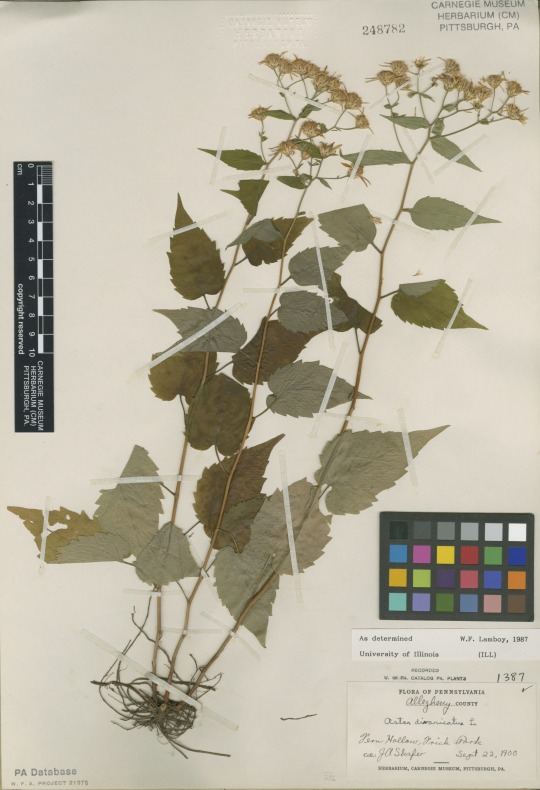
herbarium specimen of white wood aster

North America used to have over 150 species in the genus Aster. But now only one species remains. That isn’t because they went extinct, but instead, they were re-named. Many of these species are still referred to in general as “asters.”

Collected on September 22, 1900, this specimen was found in Fern Hollow, Frick Park, Pittsburgh by early museum botanist John Shafer.

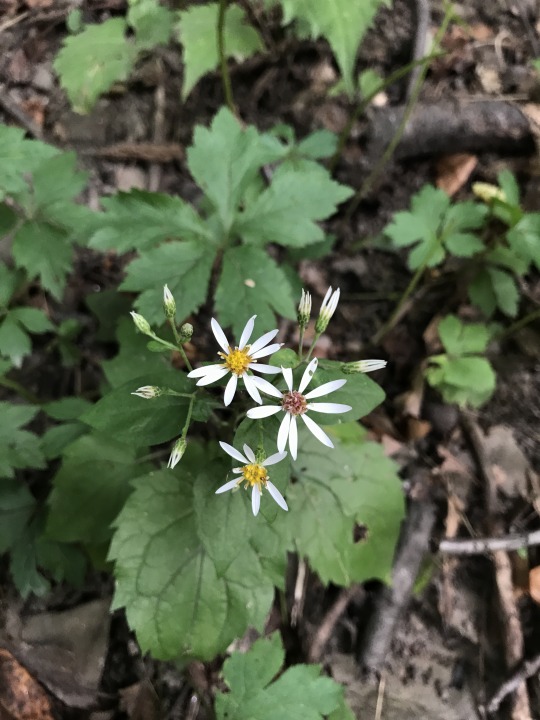
Eurybia divaricata (formerly Aster divaricatus) is commonly known as “white wood aster.” This beautiful fall blooming plant (like many asters) is a common native in eastern United States forests.

So why the new name? Taxonomy (the science of classifying organisms) is an ever-changing science, subject to revision as more research is done, especially at the molecular (DNA) level. As we understand how organisms are related, we can better understand the history of life on Earth. Taxonomic studies of plants often lead to the splitting of one species into many or the lumping of many species into one. In some cases, a “new” rare species may have been hiding under our noses, previously grouped with another species. These studies are important for the conservation and protection of vulnerable species. We must know what these species are to actually protect them!

Like most herbaria (plural for herbarium), the Carnegie Museum herbarium is organized by genus within families. Earlier this year, collections manager Bonnie Isaac and a team of interns and volunteers reorganized the sunflower family (Asteraceae), one of the largest families of flowering plants. After a month of reorganizing and renaming folders, the work is still ongoing. No surprise, as this family is represented by over 51,000 specimens (or about 10% of the entire collection)! Ongoing taxonomic rearrangements like these are just one reason why the work of herbarium staff is never done.

blooming white wood aster, white petals with yellow and red centers
White wood aster blooming on August 31, 2017 at Fern Hollow, Frick Park (same location as specimen pictured).


Botanists at Carnegie Museum of Natural History share pieces of the herbarium’s historical hidden collection on the dates they were discovered or collected. Check back for more!
Filed Under: Blog Tagged With: Botany, herbarium, Mason Heberling

  • « Go to Previous Page
  • Page 1
  • Interim pages omitted …
  • Page 18
  • Page 19
  • Page 20
  • Page 21
  • Page 22
  • Interim pages omitted …
  • Page 28
  • Go to Next Page »

sidebar

About

  • Mission & Commitments
  • Directors Team
  • Museum History

Get Involved

  • Volunteer
  • Membership
  • Carnegie Discoverers
  • Donate
  • Employment
  • Events

Bring a Group

  • Groups of 10 or More
  • Birthday Parties at the Museum
  • Field Trips

Powdermill

  • Powdermill Nature Reserve
  • Powdermill Field Trips
  • Powdermill Staff
  • Research at Powdermill

More Information

  • Image Permission Requests
  • Science Stories
  • Accessibility
  • Shopping Cart
  • Contact
  • Visitor Policies
Stay in the loop! Sign up for our newsletter(s).
One of the Four Carnegie Museums | © Carnegie Institute | Privacy Policy | Terms of Use | Accessibility
Rad works here logo