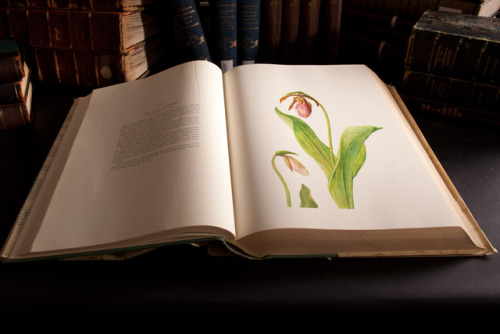
Did you know that we have specimens that were used by Andrey Avinoff for his paintings in the publication Wild Flowers of Western Pennsylvania and the Upper Ohio Basin?
Carnegie Museum of Natural History
One of the Four Carnegie Museums of Pittsburgh
These blogs are written about and by our Section of Botany researchers. The herbarium at the museum which contains approximately 3,000 type specimens--specimens that define an entire plants' species. These type specimens only represent about 0.6 % of the collection.
Mason Heberling, head of the section, regularly shares herbarium specimens that have been "Collected on this day" in history.
Did you know that we have specimens that were used by Andrey Avinoff for his paintings in the publication Wild Flowers of Western Pennsylvania and the Upper Ohio Basin?
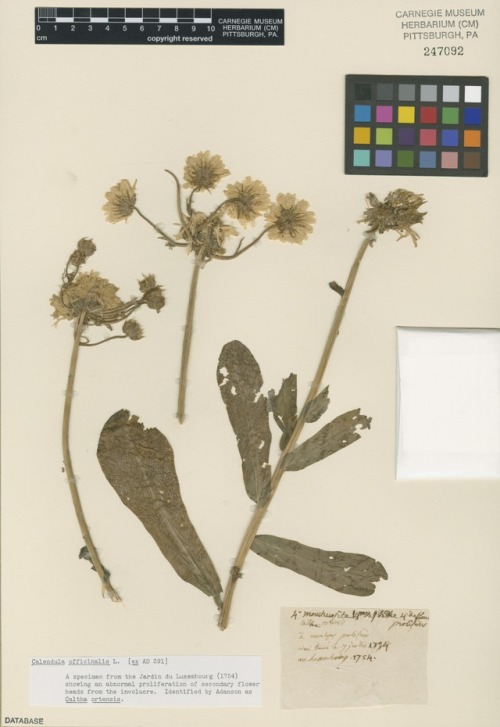
Carnegie Museum of Natural History has pressed and preserved plant specimens on paper that were collected way back in 1754!
The specimen above is one of the oldest specimens in the herbarium. It is pot marigold (Calendula officinalis) that was collected in France in 1754 by Michel Adanson, an influential naturalist.
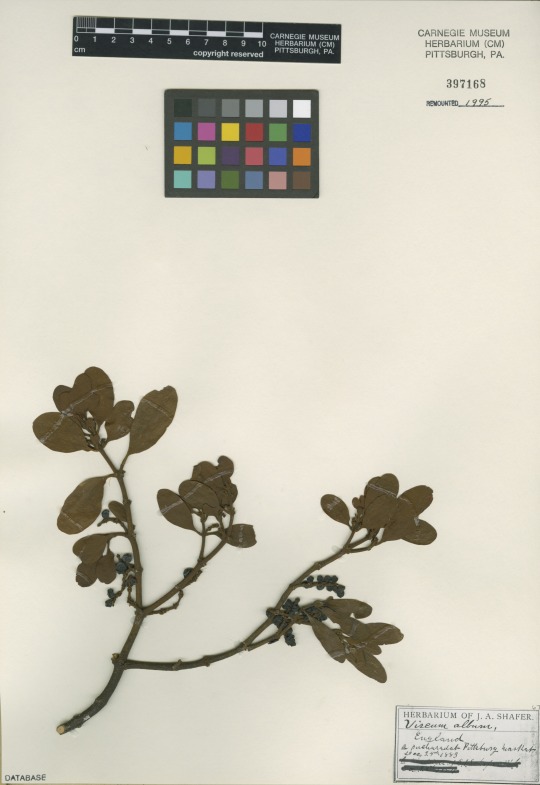
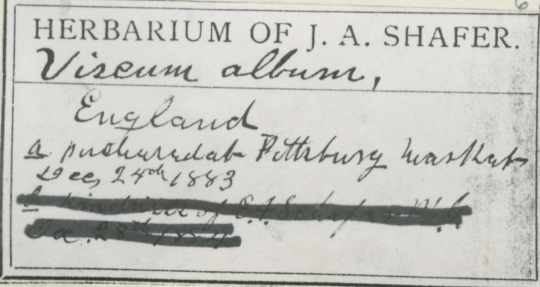
John A. Shafer bought this mistletoe at a market in Pittsburgh, Pennsylvania on Christmas Eve 1883. Sixteen years later, Shafer became the museum’s first botany curator. This mistletoe’s scientific name is Viscum album.
Mistletoes refer to many species within the genus Viscum. Usually, mistletoes refer to a species native to Europe, Viscum album. (“Album” is Latin for white.) European mistletoe has a deep cultural history, dating back to ancient Greece. It remains a well-known holiday decoration today.
Did you know that mistletoes are hemi-parasitic plants? They grow on the branches of trees like oaks, with special roots (called “haustorium”). These roots penetrate host trees to obtain water and nutrients. However, mistletoes don’t get all of their nutrients from their host plants. Hemi-parasitic plants like mistletoes make some of their own nutrients. They do this like other plants, through photosynthesis.
How do mistletoes germinate high up on the branches of trees? They have evolved to produce berries which birds like to eat. Birds then fly around, land on another branch, and poop viable mistletoe seeds. Without the help of birds, the seeds would likely just fall to the ground.
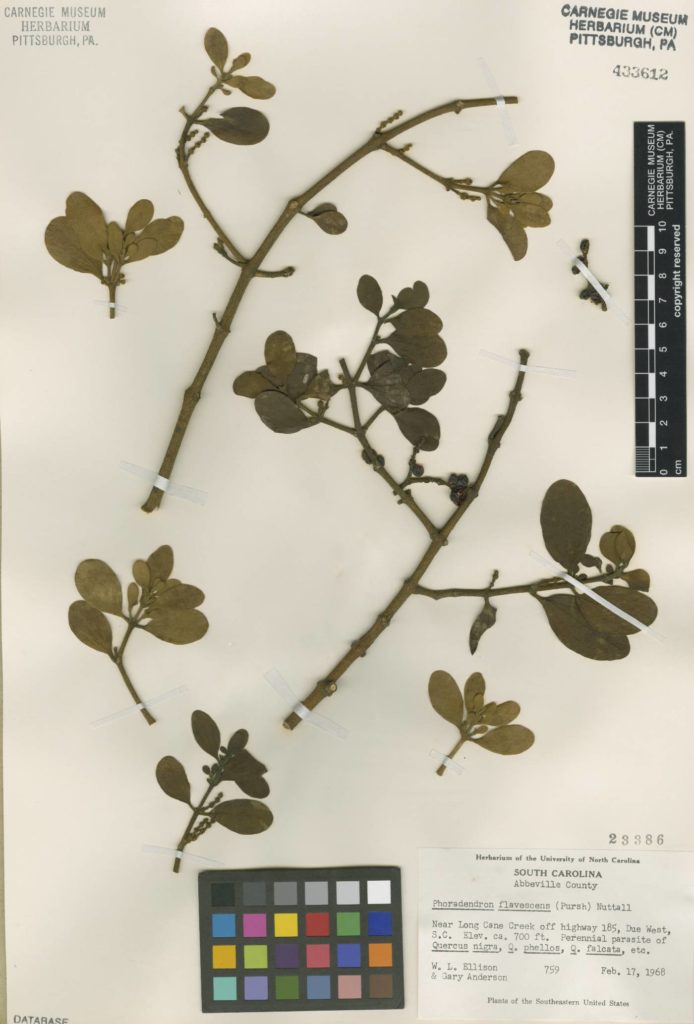
Mistletoes are native to the United States, too. American mistletoe (Phoradendron leucarpum) is native to southeastern states. People harvest and and sell this species in the United States in Christmas traditions, just like European mistletoe. The plant below is part of the museum’s herbarium and is from South Carolina in 1968. This specific American mistletoe had more than one host plant, all oak trees.
Botanists at Carnegie Museum of Natural History share pieces of the herbarium’s historical hidden collection on the dates they were discovered or collected. Check back for more!
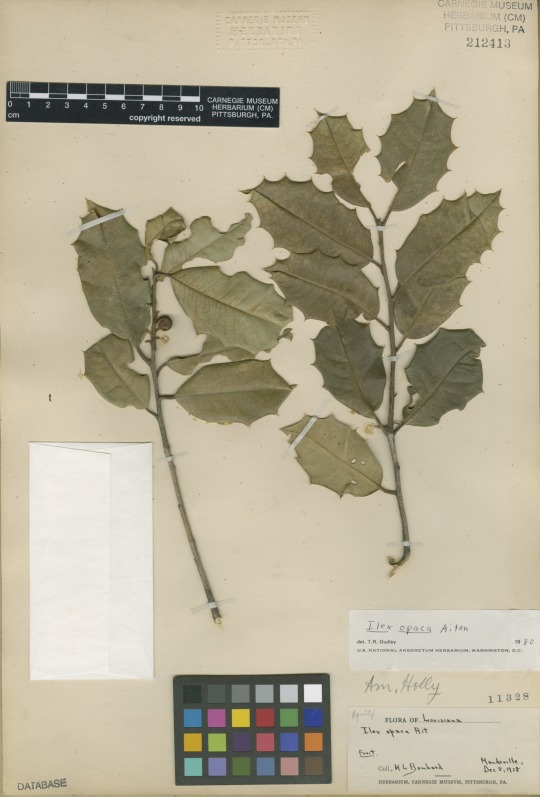
Are you decking your halls with boughs of holly? This specimen of American holly (Ilex opaca) was collected by M.L. Bomhard in Mandeville, Louisiana by on December 8, 1928. The holly revered for its holiday cheer usually refers to a related European species, Ilex aquifolium. But there are native holly species in North America that are equally (if not more) cheerful. Like most other hollies, American holly is dioecious, meaning it has male and female flowers on separate plants. Only the female plants have the characteristic bright red berries we all know and love. American holly stands out as one of the few broadleaved evergreen trees native to the Eastern United States (i.e., has green leaves during winter that are not needles). This species is near the northern edge of its range in Pennsylvania and is more common in southern states. It is listed in PA as a species of “special concern” due to its relative rarity.
Botanists at Carnegie Museum of Natural History share pieces of the herbarium’s historical hidden collection on the dates they were discovered or collected. Check back for more!
Afraid you missed our most recent Scientists Live with Mason Heberling in the Herbarium? You can tune in anytime here or on Carnegie Museum of Natural History’s Youtube channel. Binge watch the whole Scientists Live series in our Scientists Live playlist.
By Bonnie Isaac
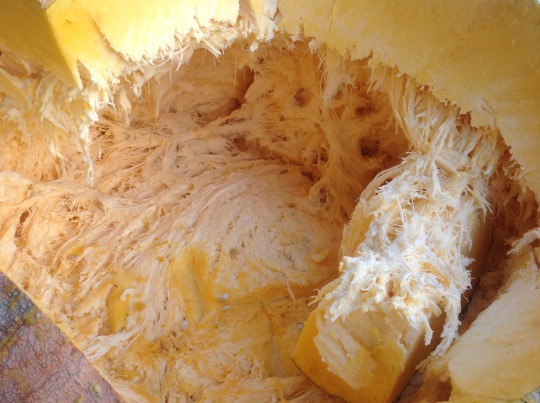
There was a giant pumpkin on display in the courtyard at the museum as part of We Are Nature: Living in the Anthropocene.
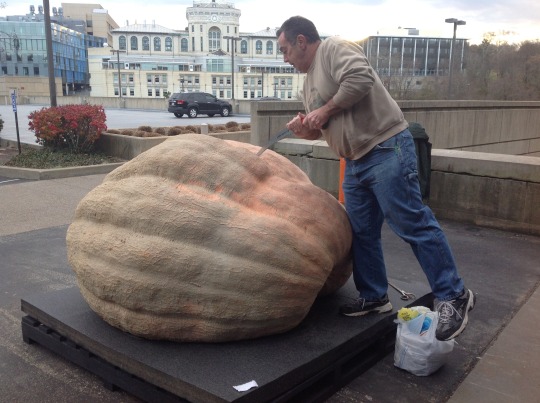
The farmer who grew the 2,090.5 pound pumpkin (above) recently came to the
museum on November 25th to harvest the seeds from the pumpkin.
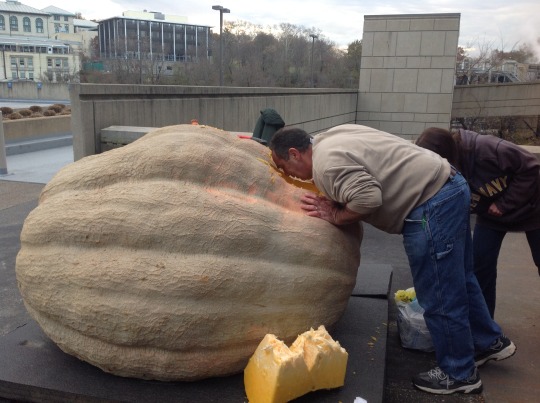
He will use the seeds from this pumpkin to try to grow an
even bigger pumpkin next year.
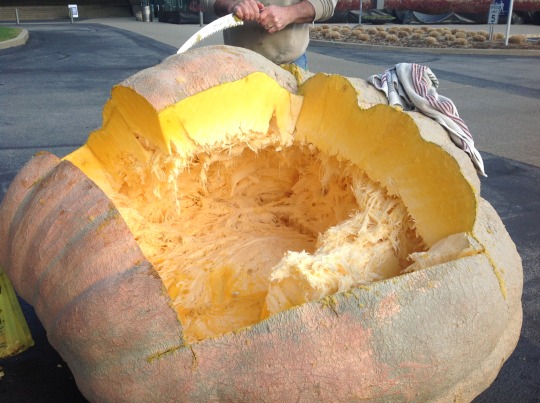
That was one big pumpkin!
Bonnie Isaac is the collection manager in the Section of Botany at Carnegie Museum of Natural History. Museum employees are encouraged to blog about their unique experiences and knowledge gained from working at the museum.
