• Skip to primary navigation
  • Skip to main content
  • Skip to primary sidebar

Carnegie Museum of Natural History

One of the Four Carnegie Museums of Pittsburgh

  • Visit
    • Buy Tickets
    • Visitor Information
    • Exhibitions
    • Events
    • Dining at the Museum
    • Celebrate at the Museum
    • Powdermill Nature Reserve
    • Event Venue Rental
  • Learn
    • Field Trips
    • Educator Information
    • Programs at the Museum
    • Bring the Museum to You
    • Guided Programs FAQ
    • Programs Online
    • Climate and Rural Systems Partnership
  • Research
    • Scientific Sections
    • Science Stories
    • Science Videos
    • Senior Science & Research Staff
    • Museum Library
    • Science Seminars
    • Scientific Publications
    • Specimen and Artifact Identification
  • About
    • Mission & Commitments
    • Directors Team
    • Museum History
  • Tickets
  • Give
  • Shop

conservation

August 9, 2018 by wpengine

New Rattlesnake Specimen

By Jennifer A. Sheridan
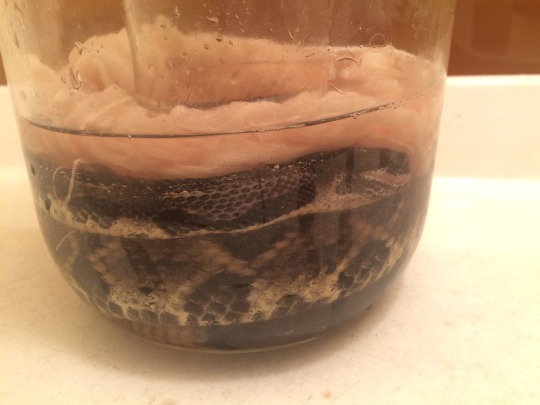
rattlesnake specimen

Last week the amphibian and reptile unit acquired a valuable specimen—a timber rattlesnake (Crotalus horridus). This species is federally protected, and females can take up to 10 years to reach sexual maturity. This long time to maturity means that they are particularly vulnerable to population declines, so for this and other reasons we would never harvest a live one. Fresh roadkills, however, while sad, are valuable to our collection and the collective database on rattlesnakes. This was found dead in the road at Powdermill Nature Reserve, so I brought it back to the museum to fix in formalin.

The formalin helps to harden the tissues so that they maintain a shape in long-term storage that is conducive to future morphological study. After about two weeks, the curatorial assistant, Kaylin Martin, will soak the specimen in water to remove as much formalin as possible (leaving it in formalin too long can make the specimen difficult to handle for future studies), and then transfer it to gradually stronger ethanol for long-term storage. Amphibian and reptile specimens are stored in ethanol (hence the name of our home, the Alcohol House) to prevent them from decaying over time.
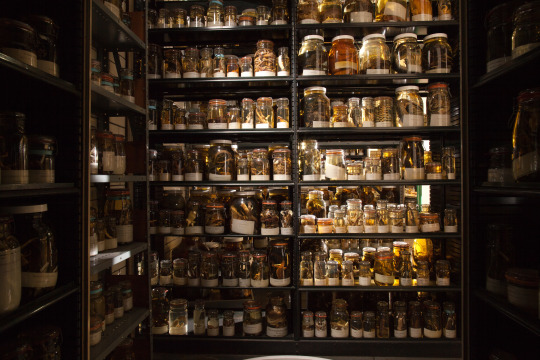
Alcohol House shelves

This particular specimen brings our total number of C. horridus at Carnegie Museum of Natural History to 597. Our earliest specimen dates back to 1872 (nearly 150 years ago!), and we have specimens representing every decade from 1890–1990, collected from 18 different states.

Prior to this roadkill, our last specimen was collected in 1991—so this is a good specimen to have considering the long time gap in our collection.

Researchers interested in studying long-term trends of rattlesnakes can search online databases such as VertNet to find which museums have specimens, and then examine specimens from several different museums to understand long-term changes in distribution, size, or breeding phenology, and how those may be associated with changes in land use due to increased human population sizes, or changes in climate. We’re sad to have found this beautiful specimen killed on the road, but I’m pleased to know that as part of our collection, it may provide a key element of understanding broader ecological patterns.

Jennifer A. Sheridan is the Assistant Curator in the Section of Herpetology at the Carnegie Museum of Natural History. Museum employees are encouraged to blog about their unique experiences and knowledge gained from working at the museum.
Filed Under: Blog Tagged With: amphibians and reptiles, conservation, herpetology, Jennifer Sheridan

August 1, 2018 by wpengine

Black Bears at Powdermill

By Andrea Kautz

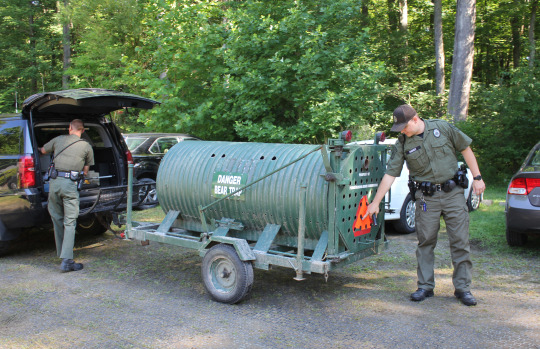
Recently, the PA Game Commission brought a black bear to Powdermill to release in the nearby state forest. It was a healthy, 300-pound male that was relocated because it was becoming a nuisance on a farm more than 30 miles away. Powdermill staff were grateful to have the opportunity to watch as the game wardens sedated and tagged the animal before release. The bear received two ear tags and a lip tattoo for identification. A small milk tooth was extracted which will be used later to determine his age. An infected claw was treated, but otherwise he appeared to be in good health.

Game Wardens arrive at Powdermill
Game Wardens Barron (left) and Harvey (right) arrive at Powdermill with the trap, which is on wheels for easy transport.

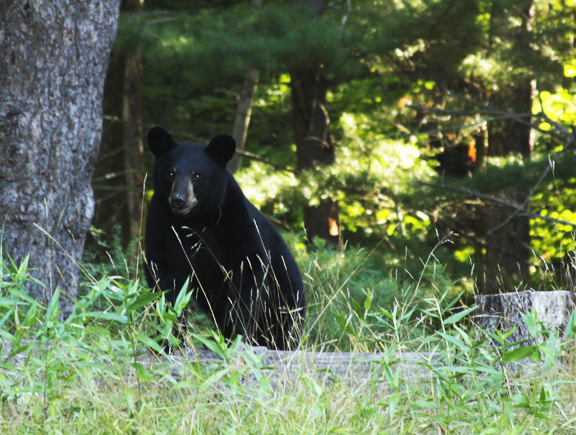
The Game Commission estimates the Pennsylvania bear population to be thriving at around 20,000 individuals. Compared to neighboring states, Pennsylvania black bears breed earlier and have more cubs. Bear populations are managed through seasonal harvesting, although only about 2% of those receiving permits are successful hunting a bear. In 2017, the largest bear taken was a 707-pound male from Monroe County!

black bear in Pennsylvania
American black bear. Photo credit: George Pankewytch

Hopefully, this male will find another place to call home, but relocating these animals can be tricky as they have a very good sense of direction and can cover long distances. At this time last year, one radio-collared male walked from Johnstown to Grove City to Pittsburgh, then east along the turnpike and up through the Laurel Highlands and back to Johnstown in about a month.  We give special thanks to the game commission for putting so much effort into maintaining a healthy population of bears that can live in harmony with humans and ensuring that Pennsylvania can continue to be a supportive environment for these spectacular beasts.

Andrea Kautz is a Research Entomologist at Carnegie Museum of Natural History’s Powdermill Nature Reserve. Museum employees are encouraged to blog about their unique experiences and knowledge gained from working at the museum.
Filed Under: Blog Tagged With: Andrea Kautz, conservation, mammals, nature, Powdermill, Powdermill Nature Reserve

July 26, 2018 by wpengine

Before Powdermill Nature Reserve

By Bonnie Isaac

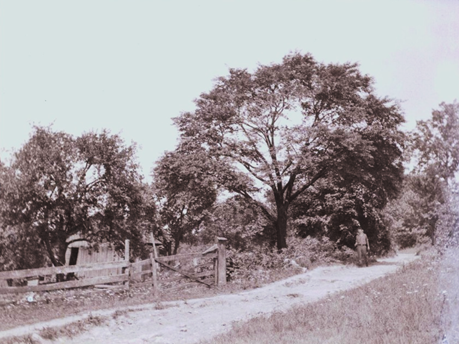
black and white photo of a dirt road and trees

While looking through some images in the archives in the section of Botany I came across this image from July 23, 1923 taken by Gus Link Jr. about 3 miles south of Rector, PA.  There is a good chance that this property later became part of our Powdermill Nature Reserve.

The museum began acquiring properties in 1956 to form Powdermill Nature Reserve. I wonder if the museum folks were out there surveying the area with a nature reserve in mind? What foresight the museum had to acquire properties that have over the past 60 plus years become a beautiful place for research.

In 1923 Gustav Link Jr. was an assistant preparator in Zoology for the natural history museum. Gus Link Jr. worked for the museum from 1912 to 1960.

Bonnie Isaac is the Collection Manager in the Section of Botany. Museum employees are encouraged to blog about their unique experiences and knowledge gained from working at the museum.
Filed Under: Blog Tagged With: Botany, conservation, museum history, nature, Powdermill, Powdermill Nature Reserve

October 27, 2017 by wpengine

Have you noticed this diorama is looking brighter?

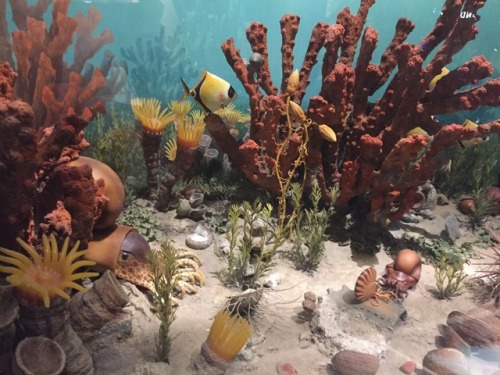
Have you noticed that this Benedum Hall of Geology diorama is looking a little brighter and more colorful?  That is because conservationists recently cleaned and preserved the exhibit, which shows an underwater scene in Pennsylvania between 286 and 320 million years ago.  Even they were surprised how bright the diorama’s colors were under the layer of dust!

Have you noticed that this Benedum Hall of Geology diorama is looking a little brighter and more colorful?

That is because conservationists recently cleaned and preserved the exhibit, which shows an underwater scene in Pennsylvania between 286 and 320 million years ago.

Even they were surprised how bright the diorama’s colors were under the layer of dust!

Filed Under: Blog Tagged With: Benedum Hall of Geology, conservation, pennsylvania

February 27, 2017 by wpengine

1920s Exhibit on Conservation

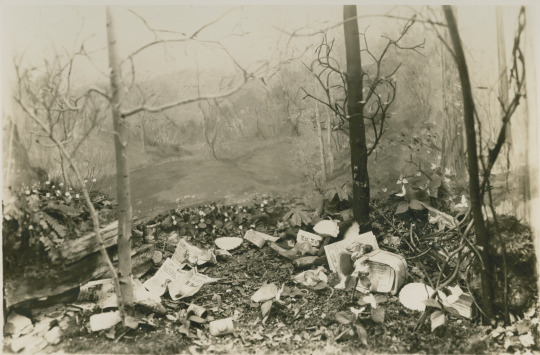
Sepia-toned photo of a 1920's diorama including trash littering the ground

by Bonnie Isaac

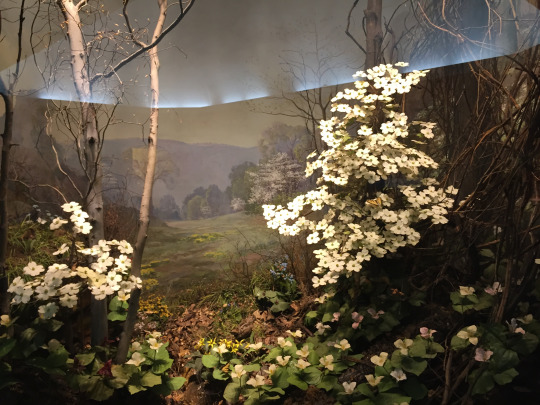
In looking through museum archives, I found a photograph that intrigued me. The image (above) looked very similar to the spring wildflower diorama in Botany Hall, but different in that there was litter on the ground. After some digging around, it turns out that our curators and exhibit designers here at the museum were way ahead of the curve on conservation awareness.

The 32nd annual report of Carnegie Museum from 1929 states:

“One of the ideas underlying the preparation of this group was that of stressing the importance of preserving our wildflowers. In order to present this idea without marring the natural appearance of the main exhibit, there were prepared two miniature exhibits, exact duplicates of the larger one, but showing on the one hand the desecration of such a beautiful spot by thoughtless and destructive picnickers, and, on the other hand, the bleak devastation wrought by fire. These miniature exhibits, one placed on each side of the main exhibit, have attracted much attention and undoubtedly help to serve the desired educational purpose.”

Smokey Bear was created in 1944, and the first Earth Day was celebrated in 1970. Carnegie Museum of Natural History was raising these concerns in 1928!

spring wildflower diorama
The spring wildflower diorama today


Bonnie Isaac is the collection manager in the Section of Botany at Carnegie Museum of Natural History. Museum employees are encouraged to blog about their unique experiences and knowledge gained from working at the museum.
Filed Under: Blog Tagged With: Bonnie Isaac, Botany, botany hall, conservation

October 18, 2016 by wpengine

A Wood Turtle at Powdermill

by Lauren Peele Horner

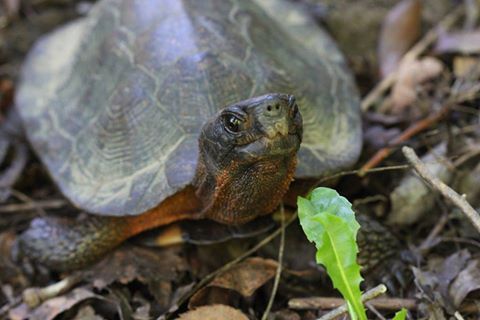
wood turtle

On an afternoon hike, this handsome male wood turtle (Glyptemys insculpta) made his presence known. The rings of a turtle’s scutes can be used much like the rings of a tree. If you count them, you can learn the age! This particular wood turtle is about 13 years old. We measured and marked him, then let him carry on about his business.

Wood turtles are a species of special concern, so seeing this fellow was a real treat. Because they are semi-aquatic and spend parts of the year on land and other parts in the water, wood turtles are affected by habitat destruction, farming, water pollution, traffic, and the pet trade. Keeping their natural habitat clean and letting them live their lives in nature are great ways you can help wood turtles.

Lauren Peele Horner is a naturalist and educator at Powdermill Nature Reserve, Carnegie Museum of Natural History’s environmental research center. Museum employees are encouraged to blog about their unique experiences. 

Related Content

Turtle Bottoms

Carnegie Museum of Natural History Blog Citation Information

Blog author: Horner, Lauren
Publication date: October 18, 2016

Share this post!

  • Share on Twitter Share on Twitter
  • Share on Facebook Share on Facebook
  • Share on Pinterest Share on Pinterest
  • Share on LinkedIn Share on LinkedIn
  • Share on Reddit Share on Reddit
  • Share via Email Share via Email

Share this post!

  • Share on Twitter Share on Twitter
  • Share on Facebook Share on Facebook
  • Share on Pinterest Share on Pinterest
  • Share on LinkedIn Share on LinkedIn
  • Share on Reddit Share on Reddit
  • Share via Email Share via Email

Filed Under: Blog Tagged With: conservation, hiking, nature, Pittsburgh

  • « Go to Previous Page
  • Page 1
  • Page 2
  • Page 3
  • Page 4
  • Go to Next Page »

sidebar

About

  • Mission & Commitments
  • Directors Team
  • Museum History

Get Involved

  • Volunteer
  • Membership
  • Carnegie Discoverers
  • Donate
  • Employment
  • Events

Bring a Group

  • Groups of 10 or More
  • Birthday Parties at the Museum
  • Field Trips

Powdermill

  • Powdermill Nature Reserve
  • Powdermill Field Trips
  • Powdermill Staff
  • Research at Powdermill

More Information

  • Image Permission Requests
  • Science Stories
  • Accessibility
  • Shopping Cart
  • Contact
  • Visitor Policies
One of the Four Carnegie Museums | © Carnegie Institute | Privacy Policy | Terms of Use | Accessibility
Rad works here logo