• Skip to primary navigation
  • Skip to main content
  • Skip to primary sidebar

Carnegie Museum of Natural History

One of the Four Carnegie Museums of Pittsburgh

  • Visit
    • Buy Tickets
    • Visitor Information
    • Exhibitions
    • Events
    • Dining at the Museum
    • Celebrate at the Museum
    • Powdermill Nature Reserve
    • Event Venue Rental
  • Learn
    • Field Trips
    • Educator Information
    • Programs at the Museum
    • Bring the Museum to You
    • Guided Programs FAQ
    • Programs Online
    • Climate and Rural Systems Partnership
  • Research
    • Scientific Sections
    • Science Stories
    • Science Videos
    • Senior Science & Research Staff
    • Museum Library
    • Science Seminars
    • Scientific Publications
    • Specimen and Artifact Identification
  • About
    • Mission & Commitments
    • Directors Team
    • Museum History
  • Tickets
  • Give
  • Shop

Deb Wilson

June 28, 2024 by Erin Southerland

Mineral Gazing

by Debra Wilson

Have you ever gazed up at the sky and noticed a cloud that looks like a face, or an animal, or an object? You can apply the same concept when you visit Hillman Hall of Minerals and Gems! Many minerals on display have nicknames because of how they resemble certain animals, objects, or even characters from movies or TV shows. As you walk through the exhibits, let your imagination wander and search for minerals that look like things. Here are some to get you started.

Silver mineral that looks like an American flag
“The Flag” – Silver in the Native Elements case of the Systematic Mineral Collection
Image of the American flag that says "we here highly resolve that these dead shall not have died in vain...rememeber Dec. 7th!"
Photo credit: Allen Saalburg, Public domain, via Wikimedia Commons.
Nessie silver mineral
“Nessie” – Silver in Minerals from the Former Soviet Union exhibit
Loch Ness monster sculpture in the water
Photo credit: Immanuel Giel, Public domain, via Wikimedia Commons
snowball calcite on quartz
“Snowball” – Calcite on quartz in the Maramures District of Romania exhibit
snowball held in mitten-covered hands
Photo from Shutterstock.
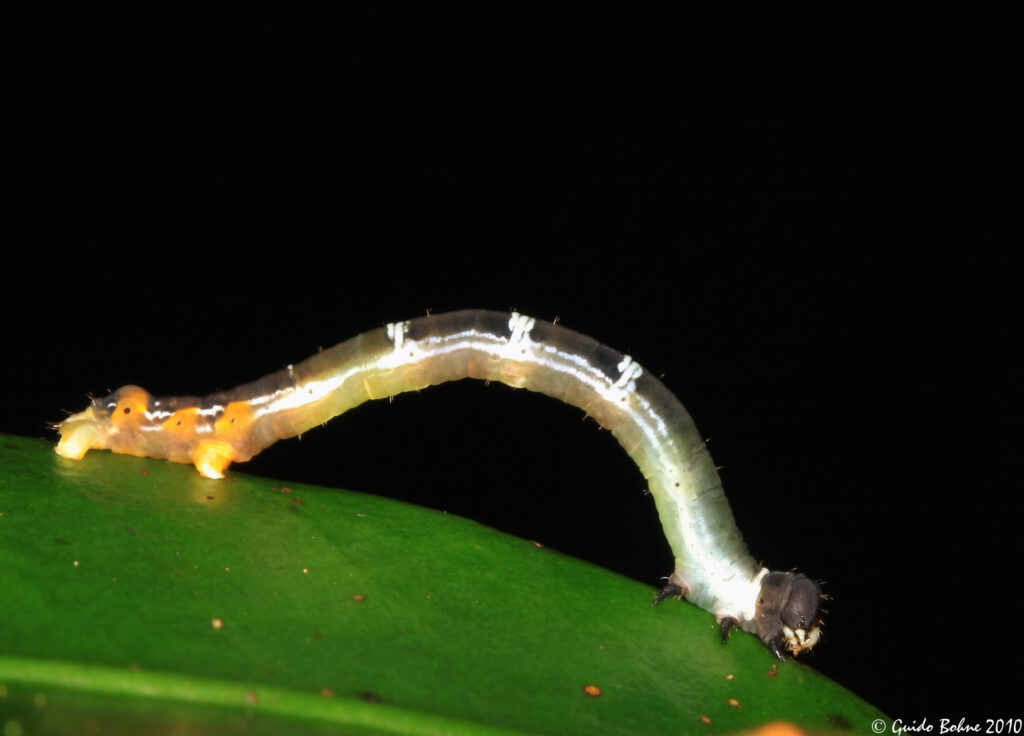
Inch Worm berthierite on quartz
“Inch Worm” – Berthierite on quartz in The Maramures District of Romania exhibit
photo of an inch worm
Photo credit: gbohne from Berlin, Germany, CC BY-SA 2.0, via Wikimedia Commons
The Scream septarian concretion
“The Scream” – Septarian concretion in the Weathering Processes exhibit
"The Scream" painting
Image credit: Edvard Munch, Public domain, via Wikimedia Commons
the oyster natrolite on quartz
“The Oyster” –  Natrolite on quartz in the Deccan Plateau of India exhibit
oyster shell with a pearl
Photo from Shutterstock.
French fries laumontite
“French Fries” – Laumontite in Masterpiece Gallery
cup of French fries
Image by ha11ok from Pixabay.

As you enter Hillman Hall, check out the minerals in the Entrance Cube, their nicknames are on the labels. There are many more minerals on display throughout the hall that have acquired nicknames. Here’s just a handful of other nicknames for minerals in the exhibits, see if you can find them. Good luck and enjoy your mineral gazing!

NicknameExhibit
The BatIgneous Rocks
Polar BearWeathering Processes
Sea SlugThe Maramures District of Romania
The ChariotsThe Maramures District of Romania
Smog MonsterThe Maramures District of Romania
Sea SerpentPennsylvania Minerals and Gems
Pine Trees On a CliffOxides
BBQ ChipsMasterpiece Gallery
Cookies and CreamMasterpiece Gallery

Debra Wilson is Collection Manager for the Section of Minerals at Carnegie Museum of Natural History.

Related Content

How Do Minerals Get Their Names?

What Does Pittsburgh Have in Common with Mount Vesuvius?

Master of Optical Illusion

Carnegie Museum of Natural History Blog Citation Information

Blog author: Wilson, Debra
Publication date: June 28, 2024
Share this post!

  • Share on Twitter Share on Twitter
  • Share on Facebook Share on Facebook
  • Share on Pinterest Share on Pinterest
  • Share on LinkedIn Share on LinkedIn
  • Share on Reddit Share on Reddit
  • Share via Email Share via Email

Filed Under: Blog Tagged With: Deb Wilson, Debra Wilson, Hillman Hall, Hillman Hall of Minerals and Gems, minerals, Science News

January 14, 2022 by Erin Southerland

How Do Minerals Get Their Names?

by Debra Wilson

The naming of minerals has changed over time from its alchemistic beginnings to the advanced science of today. During this span minerals have usually been named for their physical characteristics, the locality where they were discovered, or a person. I have often been asked, “why do most mineral names end in ite?” The suffix “ite” is derived from the Greek word ites, the adjectival form of lithos, which means rock or stone. 

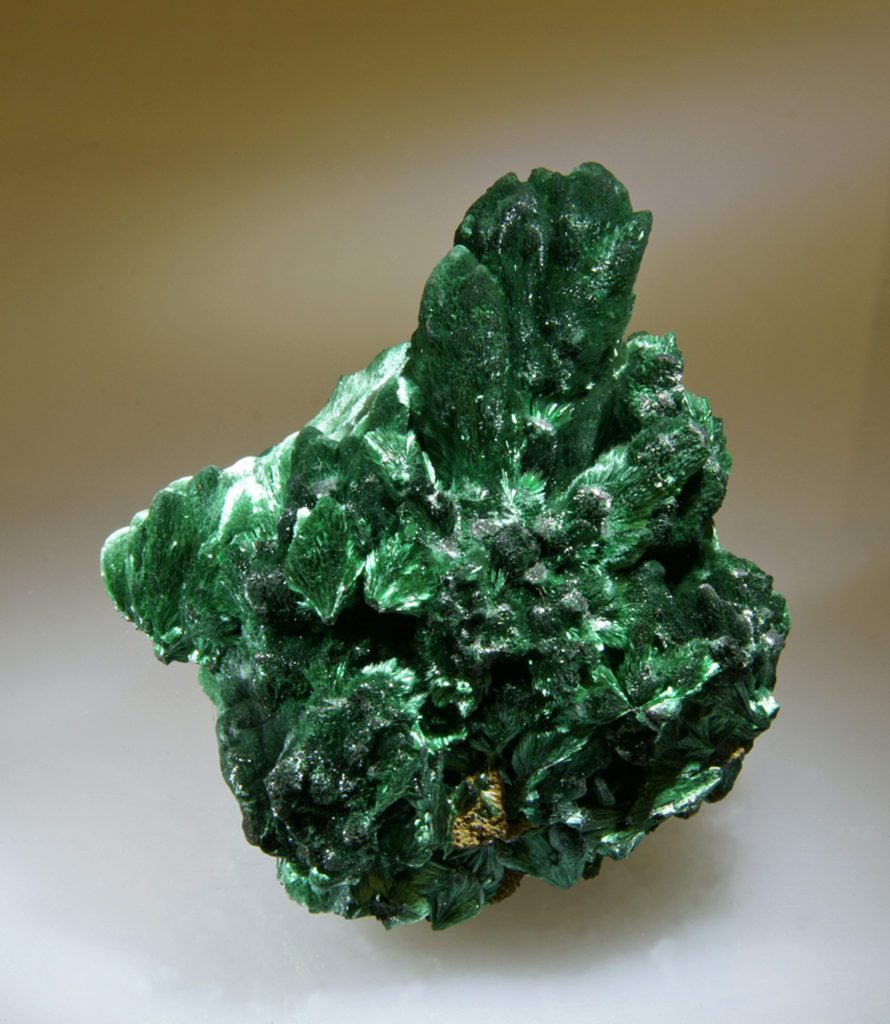
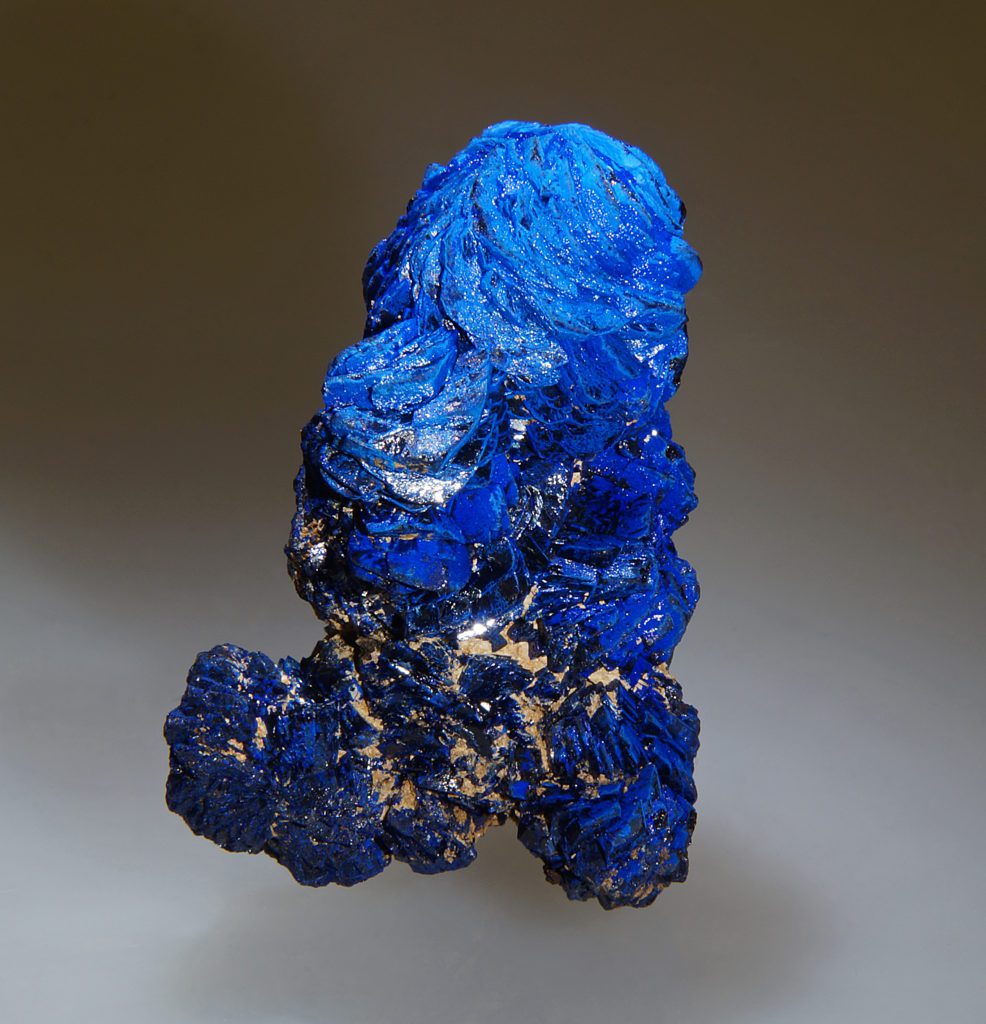
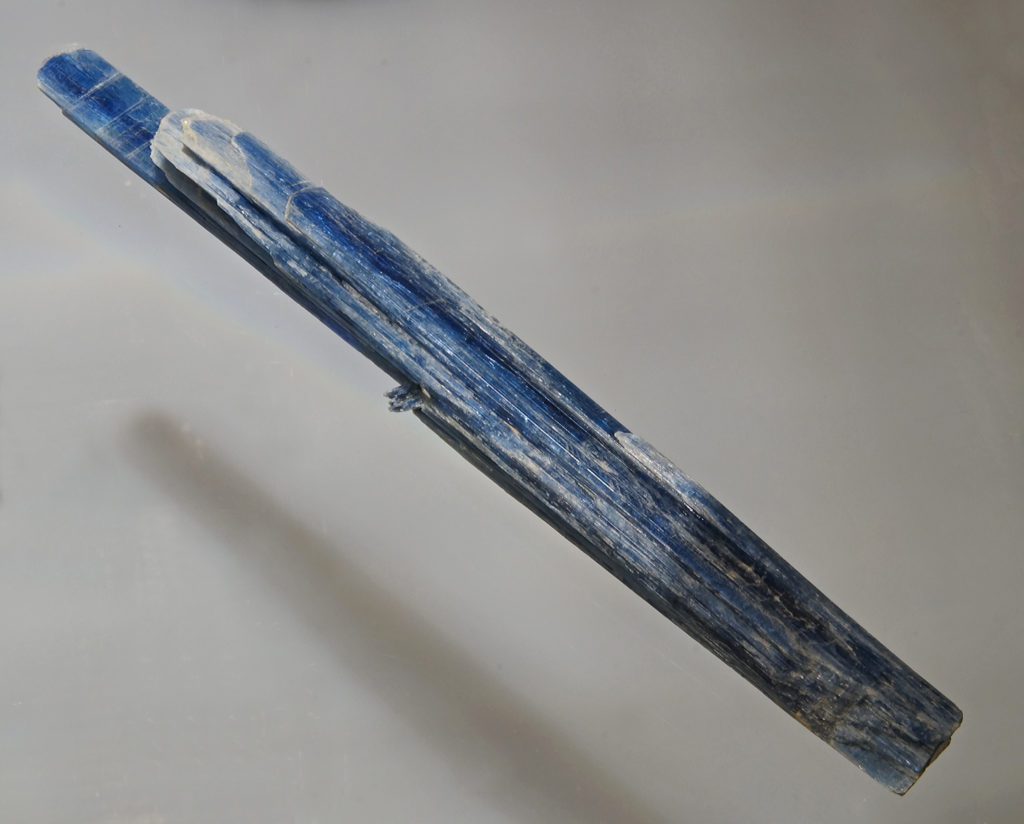
In antiquity, distinctive physical characteristics were often the source for the mineral name. One of these properties is color. For example, Malachite probably comes from the Greek word malakee or malache, used to describe the green leaves of the mallow bush. Azurite comes from azure, the Arabic word for blue, and Kyanite comes from kyanos, the Greek word for blue.  

green malachite mineral
Malachite
blue azurite mineral specimen
Azurite
blue kyanite specimen
Kyanite

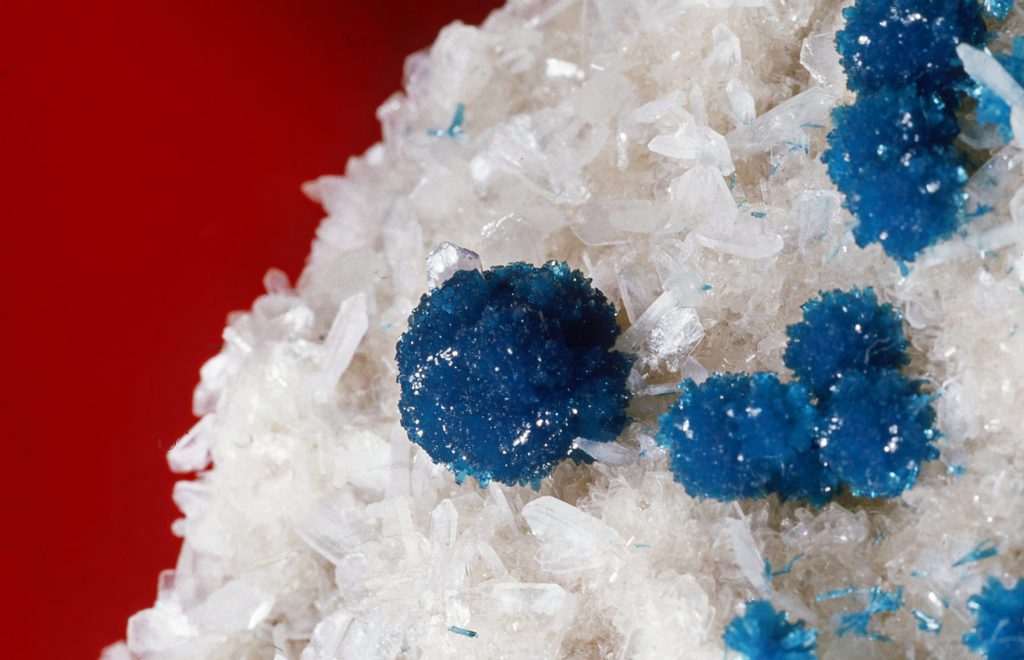
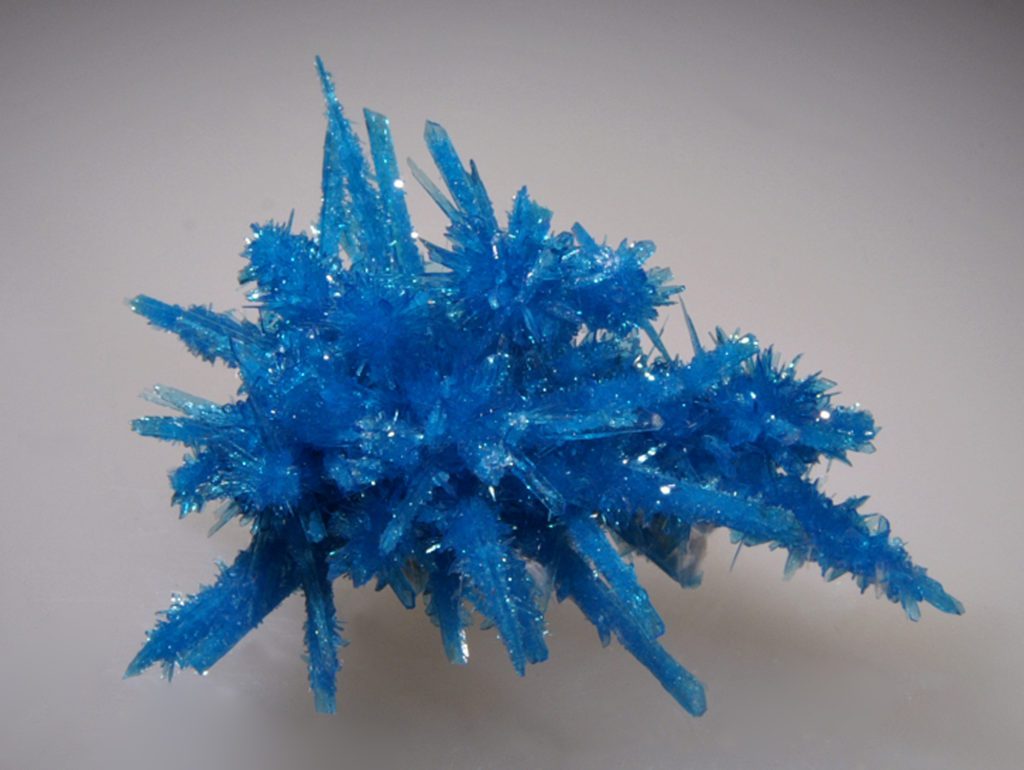
With the advancement of science, some minerals have been named for their chemistry or their structure. For example, Cavansite is named for its chemistry (calcium vanadium silicate), and Pentagonite is named for its five-fold symmetry (a pentagon is five-sided).

blue and white mineral specimen with red background
Cavansite
bright blue mineral specimen
Pentagonite

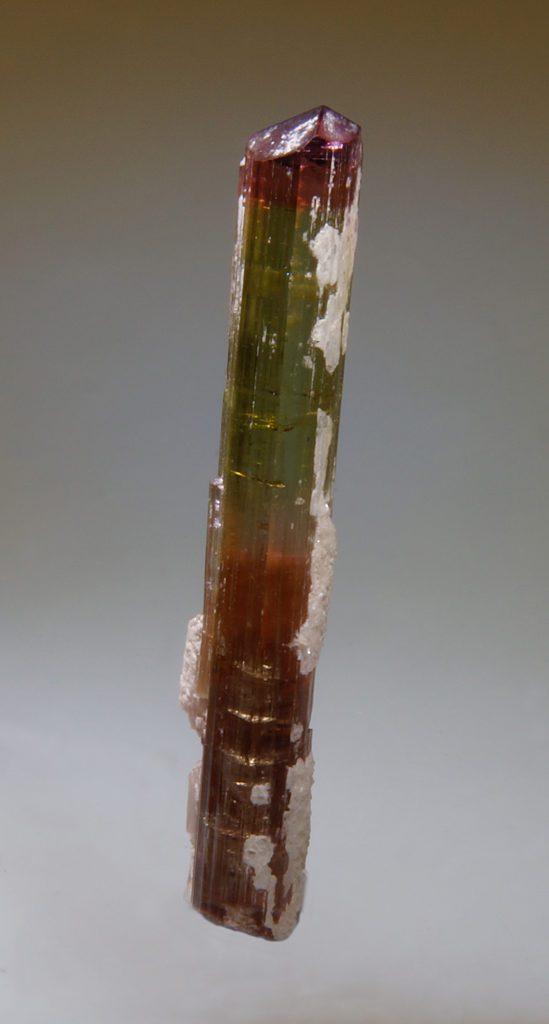
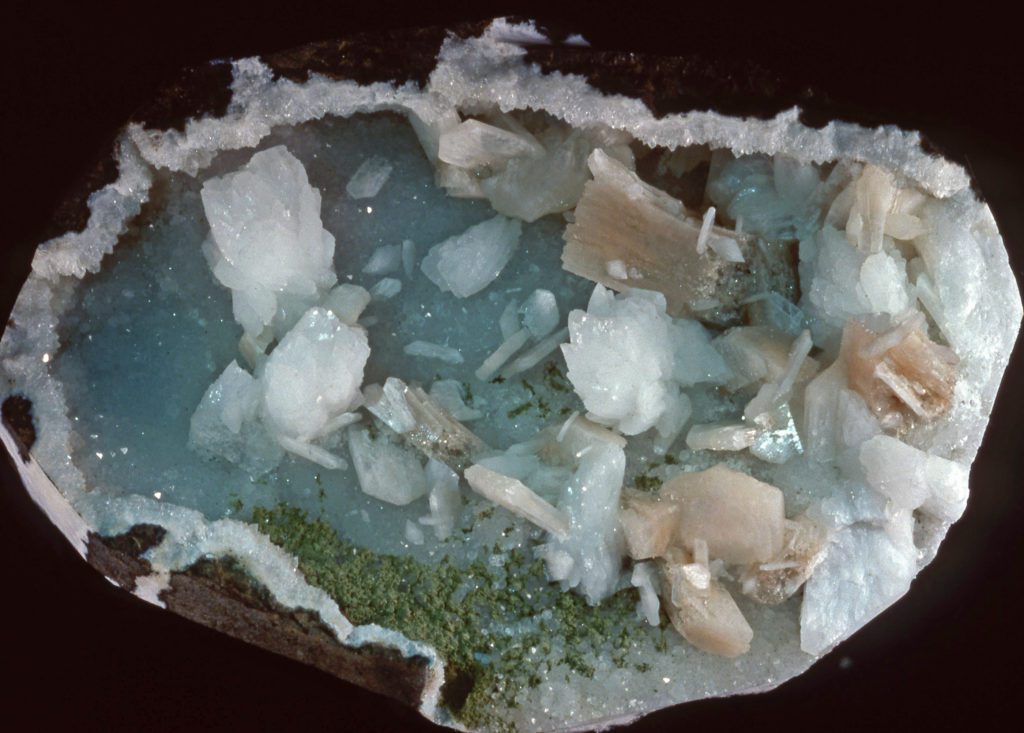
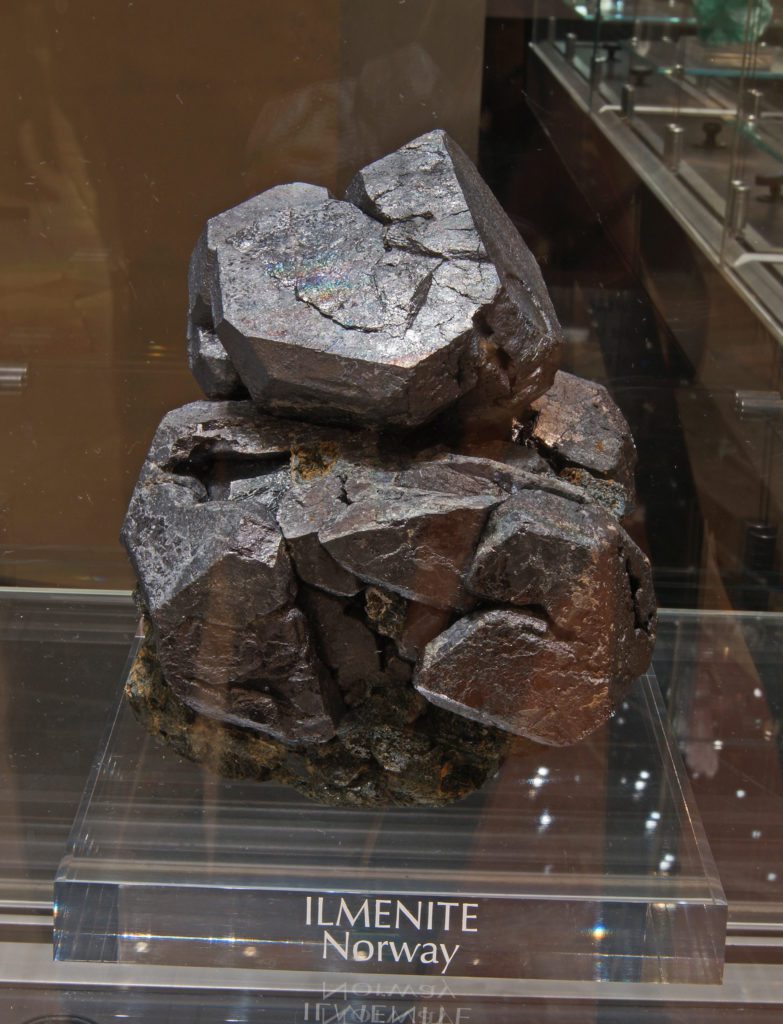
Minerals named for the first locality where they were found are quite obvious for those with a knack for geography: Elbaite was found on the Isle of Elba, Italy; Goosecreekite was found in the New Goose Creek Quarry in Leesburg, Virginia, and Ilmenite was found in the Ilmen Mountains of Russia; to name a few.

Elbaite
mineral specimen with white, pastel blue, pale pink, and mossy green coloration
Goosecreekite (white crystals)                                     
mineral specimen on a stand that says Ilmenite Norway
Ilmenite

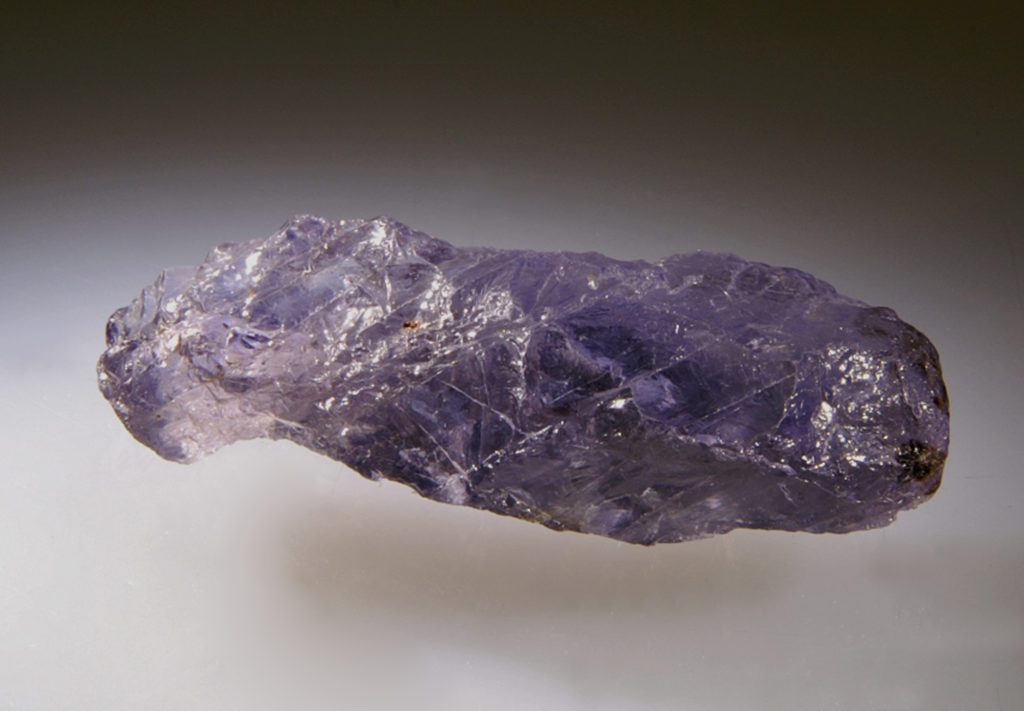
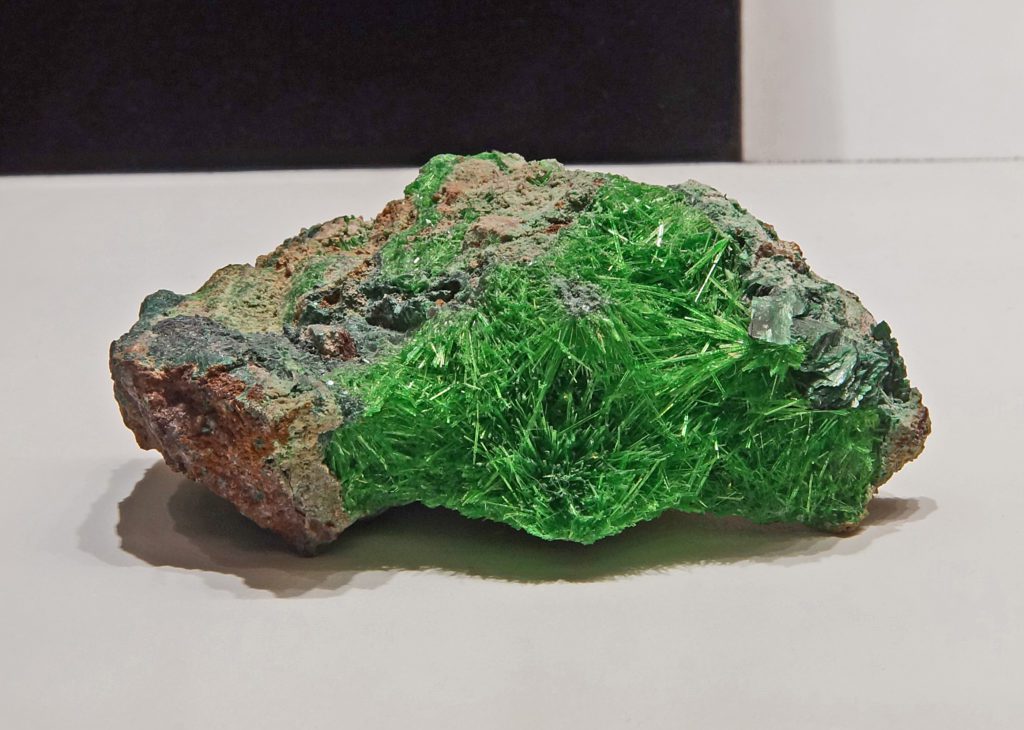
Minerals have also been named for people. Prehnite was the first mineral named for a person, Colonel Hendrik Von Prehn (1733-1785), who is credited with discovering the mineral in 1774 at the Cape of Good Hope in South Africa. Cordierite, a mineral known for its iolite gem variety, was named in 1813 for French mineralogist Louis Cordier (1777-1861), a pioneer in the field of microscopic mineralogy, and in honor of her pioneering research on radioactivity, Marie Sklodowska Curie (1867-1934) had two uranium minerals named for her, Sklodowskite (discovered in 1924) and Cuprosklodowskite (discovered in 1933).

Prehnite
Cordierite variety Iolite
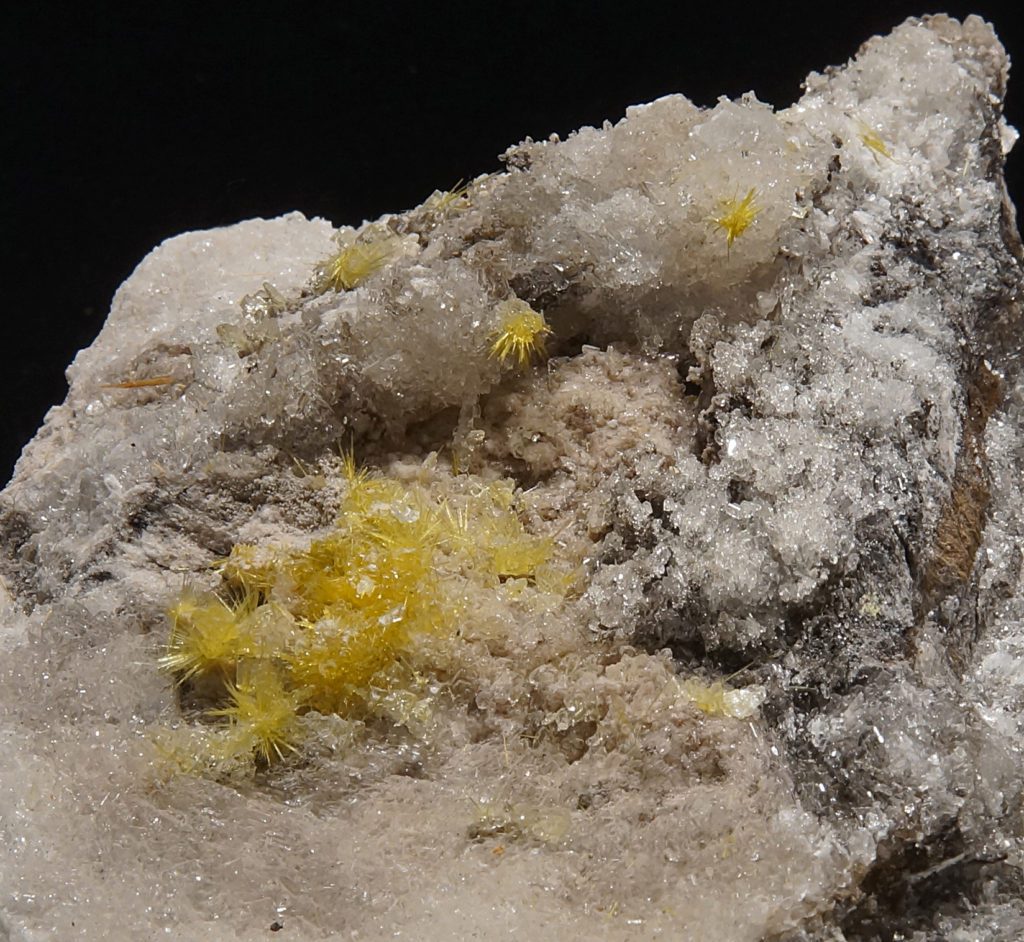
yellow and white mineral specimen
Sklodowskite
Cuprosklodowskite

Today new minerals, including the proposed species name, are approved by the Commission on New Minerals, Nomenclature and Classification (CNMNC), under the purview of International Mineralogical Association (IMA), which was formed in 1958. As of November 2021, the IMA recognizes 5,762 official mineral species. In October 2021, one of those species, Oldsite, was named in honor of one of our own museum scientists, Travis Olds, Assistant Curator of Minerals, for his contributions to uranium mineralogy. 

Congratulations Travis!

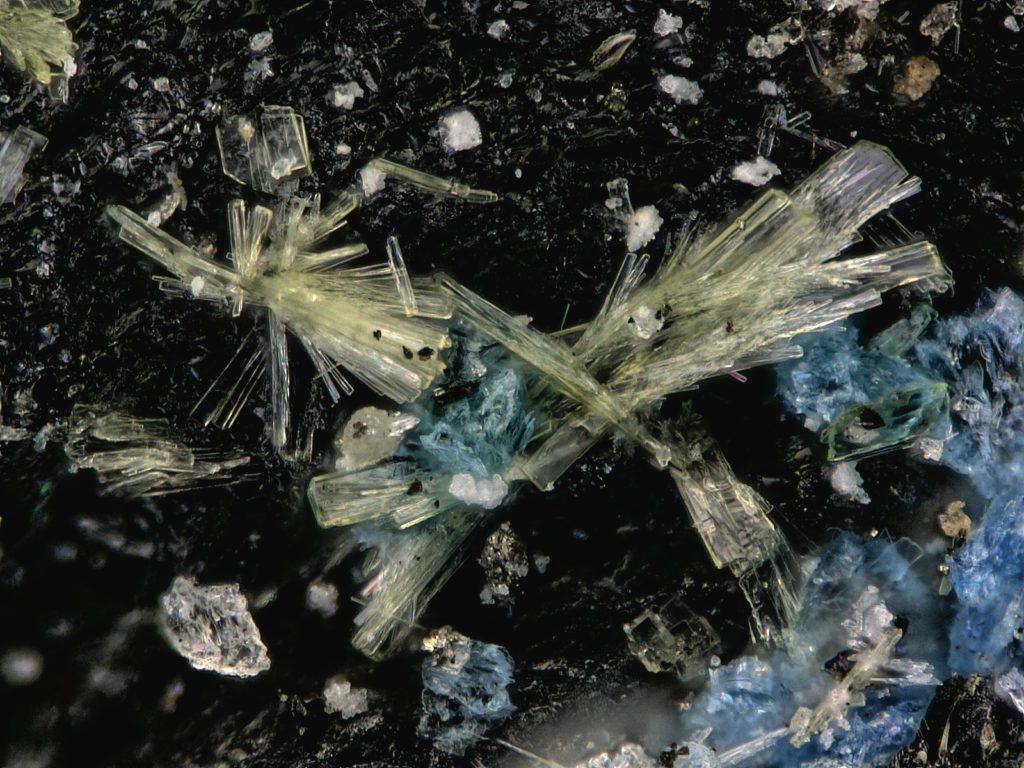
Oldsite (yellow crystals). Photo by Dr. Anthony Kampf. 

More information on Oldsite

More information about Dr. Travis Olds

Debra Wilson is the Collection Manager for the Section of Minerals at Carnegie Museum of Natural History. Museum employees are encouraged to blog about their unique experiences and knowledge gained from working at the museum.

Related Content

Roll Out the Beryl

Master of Optical Illusion

The Mineralogy of Ice Cream

Carnegie Museum of Natural History Blog Citation Information

Blog author: Wilson, Debra
Publication date: January 14, 2022

Share this post!

  • Share on Twitter Share on Twitter
  • Share on Facebook Share on Facebook
  • Share on Pinterest Share on Pinterest
  • Share on LinkedIn Share on LinkedIn
  • Share on Reddit Share on Reddit
  • Share via Email Share via Email

Filed Under: Visitor Info Tagged With: Deb Wilson, Hillman Hall of Minerals and Gems, minerals, Science News

July 15, 2019 by wpengine

Master of Optical Illusion

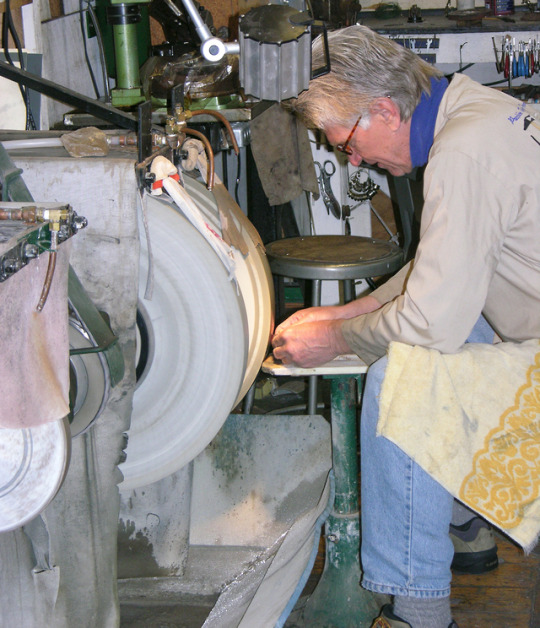
Michael Dyber, known as the Master of Optical Illusion, is among the world’s foremost lapidary artists today. He began working in metal and wood at the age of nine and won his first design competition while still in grade school. After earning his BA degree in Fine Arts and Humanities from New England College, he moved from metal and wood into jewelry design.  He opened his own shop in New Hampshire but began to feel restricted by the pre-cut gemstones available for his artwork. He then turned his artistic focus toward handcrafting his own unique gems. He started by acquiring top quality gem rough and instead of using standard carving and polishing equipment, Michael built his own specialized tools.

Michael Dyber at work in his studio.

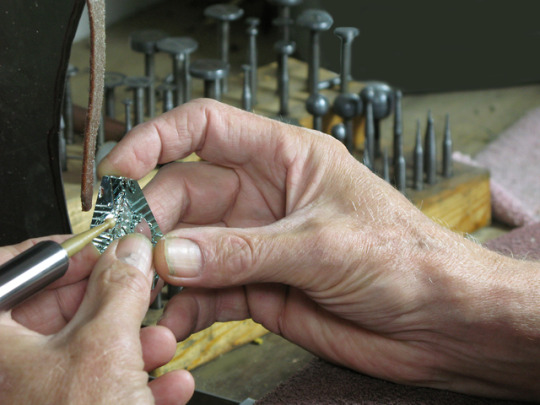
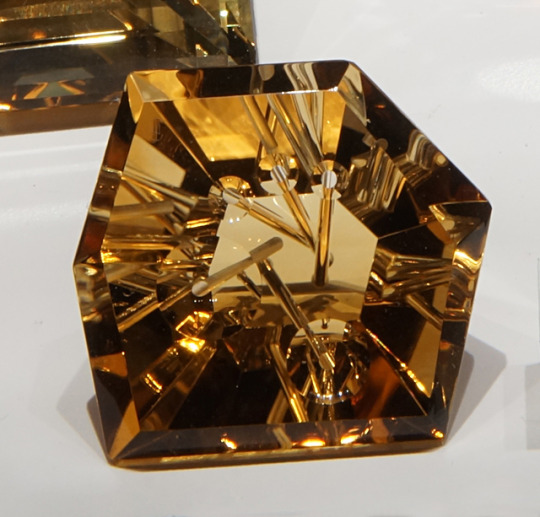
Using these custom-made tools enabled Michael to invent his own unique techniques to create the optical illusions you see within the stones. He calls them the Dyber Optic DishTM, LuminairesTM, Photon PhacetsTM, and ChannelsTM. Each artwork is a one-of-a-kind signed original, based on the characteristics of the individual gem, the hand-crafting skills like the old masters, and the added bonus of Michael’s unique artistic vision. To quote Michael, “My work is asymmetrical, but visually balanced, my goal is to go beyond what has been done, to create infinite designs.”

Wertz Gallery: Gems and Jewelry can now boast of having four pieces of lapidary art on display that were carved by the Master of Optical Illusion, Michael Dyber. Two carvings were purchased in anticipation of a new gem and jewelry gallery and were put on display when Wertz Gallery opened in 2007, one in the Birthstones exhibit and the other in the Quartz as a Gemstone exhibit.

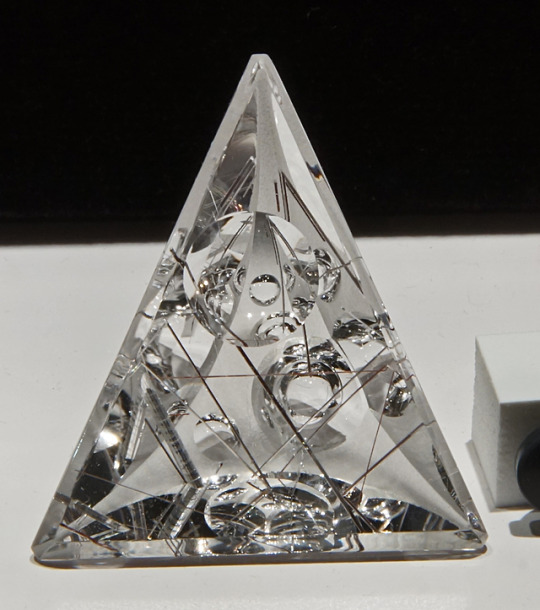
95.45 carat quartz variety citrine entitled “Straw” in the November section of the Birthstones exhibit.
74.15 carat rutilated quartz entitled “Sliders” in the Quartz as a Gemstone exhibit.

The third was on temporary display in 2014 (May 31st thru August 31st) during the special exhibit in Wertz Gallery that featured all of Michael’s twenty-three award-winning carvings and some of his new creations. We purchased one of his new creations after the exhibit and put it on permanent display later that year in the Quartz as a Gemstone exhibit.

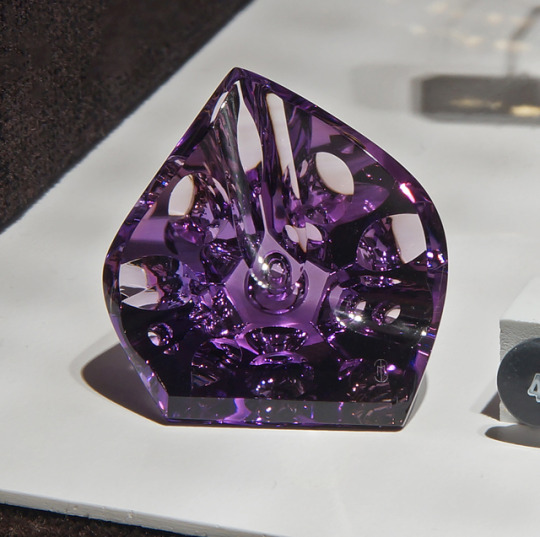
86.41 carat quartz variety amethyst entitled “Twist” in the Quartz as a Gemstone exhibit.

The fourth carving was put on display just last month (June 18th) in the Birthstones exhibit. It was donated to the museum by Michael in 2015.

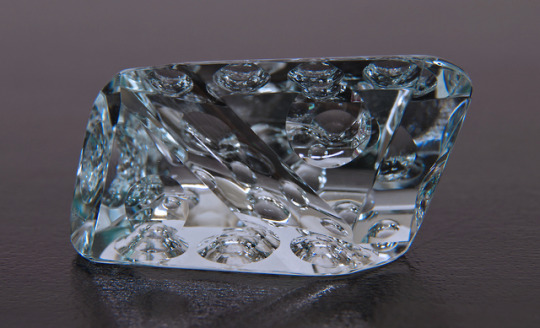
32.95 carat beryl variety aquamarine (untitled) in the March section of the Birthstones exhibit.

These carvings began with gem rough from Brazil and they utilize three of the four techniques that Michael has created. Straw has Dyber Optic DishesTM and LuminairesTM; Sliders has Dyber Optic DishesTM ; Twist and the untitled carving have Dyber Optic DishesTM and ChannelsTM. Eventually we would like to add to the collection a piece of lapidary art that has his Photon PhacetsTM technique. It will be exciting to see what new technique Michael comes up with next!

Debra Wilson is the Collection Manager for the Section of Minerals at Carnegie Museum of Natural History. Museum employees are encouraged to blog about their unique experiences and knowledge gained from working at the museum.

Filed Under: Blog Tagged With: Deb Wilson, Debra Wilson, Michael Dyber, minerals, minerals and gems, Section of Minerals

June 4, 2019 by wpengine

Roll Out the Beryl

four beryl gemstones

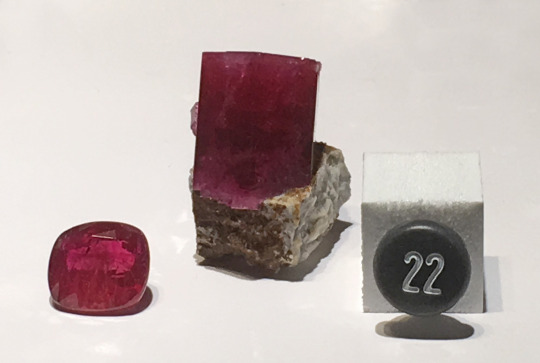
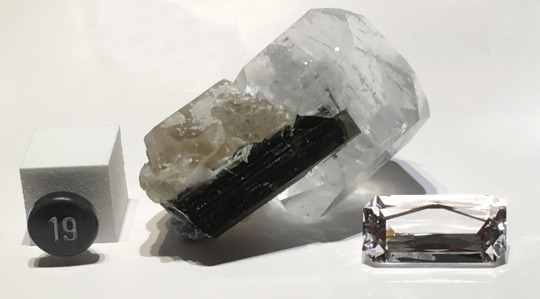
Beryl has many different varieties that you may be familiar with, the most recognized being: Emerald (green), Heliodor (yellow), Morganite (pink), and Aquamarine (blue or blue-green). One that you may not be familiar with is Red Beryl, a very rare variety of the species. The red is due to the trace element manganese. Red Beryl occurs in only a few places in the world and of those localities, only one of them produces crystals of the size and quality suitable for cutting gemstones, namely the Ruby Violet claims in the Wah Wah Mountains in Beaver County, Utah. For over a dozen years the Section of Minerals & Earth Sciences staff have been on the lookout for a faceted Red Beryl to put on display in the Beryl as a Gemstone exhibit in Wertz Gallery: Gems and Jewelry. But, alas, most of the Red Beryl gemstones on the market are very small because nearly all the gem rough that is produced is less than a carat in size. Faceting rough of that size usually yields gemstones of only ¼ to ½ carat, which would be too small to use in the exhibit. Occasionally we have come across gemstones of around one carat, but they were not of high enough quality for the exhibit due to poor color, poor cut, or numerous inclusions. But, as luck would have it, in March of this year I was able to acquire from Pala International a worthy, cushion cut Red Beryl gemstone with the amazing size of 2.45 carats! Together with the crystal from the same locality (acquired two years ago from Collector’s Edge) we now have a stunning rough & cut pair to represent the variety Red Beryl in the Beryl as a Gemstone exhibit.

Cut gemstone & crystal of Red Beryl from Utah

Another lesser known variety of Beryl is Goshenite, which is colorless. When Wertz Gallery opened in September of 2007 the Beryl as a Gemstone exhibit had a nice crystal of Goshenite on display from Pakistan but lacked a cut gemstone from Pakistan to go with it. In May, I acquired a beautiful 5.06 carat emerald cut Goshenite from Dudley Blauwet Gems to complement the crystal. Now every crystal on display in that exhibit has an accompanying gemstone.

Crystal & cut gemstone of Goshenite from Pakistan

Both of these new gemstones were placed on exhibit in Wertz Gallery on June 4, 2019, so stop by and see them in the Beryl as a Gemstone case!

Debra Wilson is the Collection Manager for the Section of Minerals at Carnegie Museum of Natural History. Museum employees are encouraged to blog about their unique experiences and knowledge gained from working at the museum.

Filed Under: Blog Tagged With: Deb Wilson, Debra Wilson, gems and minerals, Hillman Hall, Hillman Hall of Minerals and Gems, minerals, Section of Minerals, Wertz Gallery

May 7, 2019 by wpengine

Everything Pennsylvania

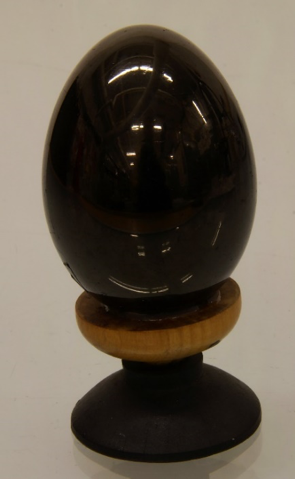
On May 10th a new temporary exhibit is scheduled to be installed in Wertz Gallery: Gems and Jewelry that will feature gemstones, cabochons, polished spheres and carvings made from minerals unearthed in our own state of Pennsylvania. While we may be known as a coal producing state, there are lapidary and faceting grade minerals that are found in Pennsylvania as well. And, believe it or not, one of the polished pieces in the exhibit is a type of coal known as JET.

A carved egg made from JET, a type of LIGNITE which is a precursor to COAL.

The English noun “Jet” derives from the French word for the same material: jaiet (modern French “jais”). The adjective “jet-black,” meaning as dark a black as possible, derives from this material.

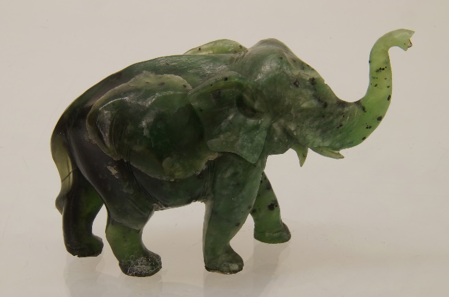
Another unusual piece in the exhibit is a carving of an elephant made from a translucent variety of ANTIGORITE known as WILLIAMSITE which is found in the State Line Chromite District in Lancaster County.

Elephant carved from WILLIAMSITE found at Lowe’s Chromite Mine in Fulton Township.

WILLIAMSITE was named in 1848 in honor of its discoverer, Lewis White Williams, a mineralogist and geologist of West Chester, Pennsylvania.

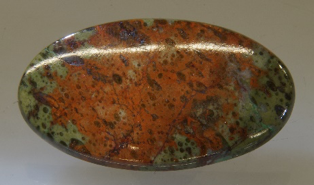
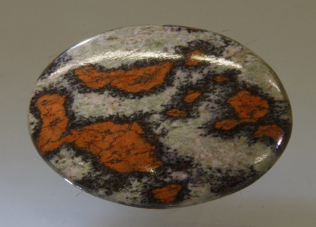
I don’t want to give away too much because I want you to come the museum to see the exhibit in person, but I will reveal two other pieces. They were personally collected at the Bingham Mine in Hamiltonban Township, Adams County, by the 1988 Carnegie Mineralogical Award winner, John Sinkankas, who also cut and polished them. The colors in these cabochons are due to the epidote and cuprite in the META-RHYOLITE, which is a silicified, or metamorphosed, RHYOLITE (an extrusive igneous rock).

META-RHYOLITE cabochons purchased from John Sinkankas in 1990.

Besides those pieces mentioned here, you will also see faceted gemstones of QUARTZ, AMETHYST, SMOKY QUARTZ, AQUAMARINE, and TITANITE; cabochons of MALACHITE, BLUE QUARTZ, SUNSTONE, and AMAZONITE; and polished spheres of COPPER & QUARTZ, and BLUE QUARTZ. The Cut and Polished Pennsylvania Gems and Minerals will be on exhibit in Wertz Gallery at least through the end of summer. Don’t miss it!

Debra Wilson is the Collection Manager for the Section of Minerals at Carnegie Museum of Natural History. Museum employees are encouraged to blog about their unique experiences and knowledge gained from working at the museum.

Filed Under: Blog Tagged With: coal, Deb Wilson, Debra Wilson, gems, gems and minerals, Hillman Hall, Hillman Hall of Minerals and Gems, minerals, pennsylvania, Wertz Gallery

March 26, 2019 by wpengine

New Mineral Acquisitions

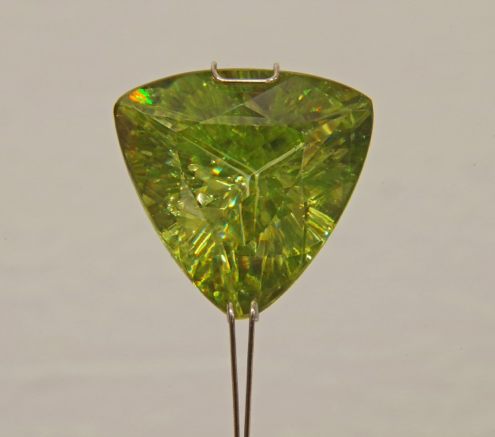
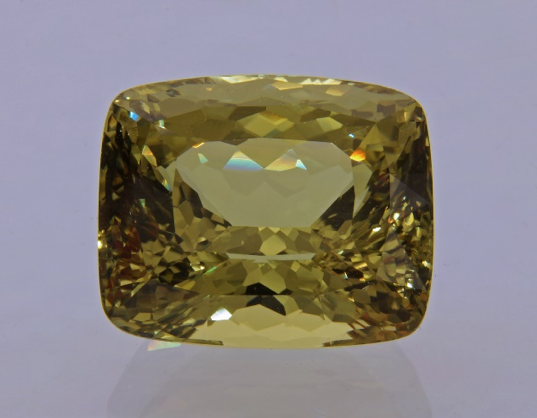
I had a successful trip to Tucson, Arizona in January/February of this year. This is an annual event where the Section of Minerals participates in the Tucson Gem & Mineral Show by not only exhibiting a mineral display, the Carnegie Mineralogical Award is also presented during the show, and many of the minerals acquired for the collection are found amongst the dozens of venues around the city where vendors are selling their specimens. Numerous motels turned into shopping centers starting as early as January 28th, where each room is a separate store for an individual vendor. Tent shows were set up along streets and in parking lots. The Tucson Convention Center housed two major shows: The American Gem Trade Association Show (AGTA), which was held February 5th through 10th, and the Tucson Gem & Mineral Show, which was held February 14th through 17th.  In total, I brought back 10 specimens acquired for the collection, five of which were acquired specifically for exhibit in Hillman Hall of Minerals and Gems or Wertz Gallery: Gems and Jewelry. Two gemstones were put on display in the “What is a Gemstone?” exhibit in Wertz Gallery on March 12th: a 44.27 carat, cushion cut spodumene from Afghanistan, and a 7.08 carat, trillion cut titanite (also known as sphene) from Zimbabwe.

CM33874: 7.08 carat Titanite, Zimbabwe
CM33876: 44.27 carat spodumene, Afghanistan

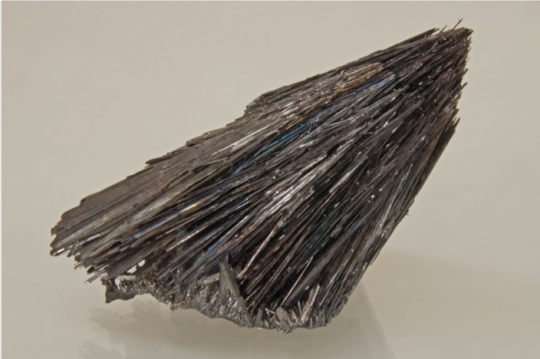
A special exhibit to highlight the museums acquisitions will be put in Hillman Hall on March 26th that will feature a world class Kermesite specimen from China. This specimen measures 20 cm and is probably the finest example of its species in the world. The largest kermesite in our collection prior to this acquisition is only 3cm.

CM33868: Kermesite, Caiwa mine, Shaanxi, China

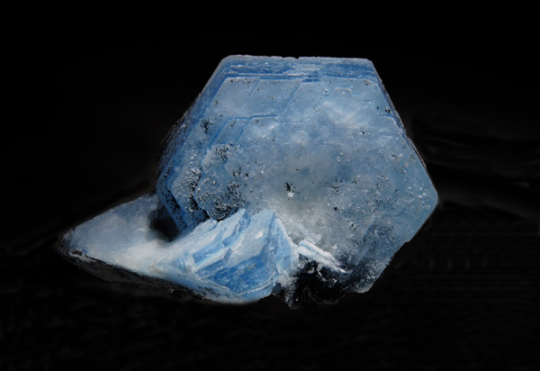
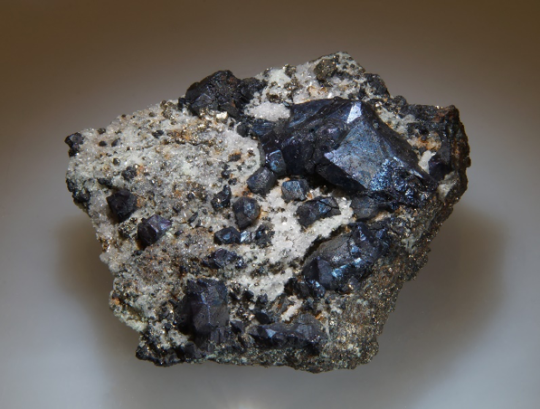
Two other specimens will be going on display soon in the Systematic Collection area of Hillman Hall: a blue tabular beryl from Afghanistan in the Silicates 2 case, and a bornite from Montana in the Sulfides 2 case. The beryl is a recent discovery in Afghanistan that is different than any other type of beryl, while the bornite was collected sometime in the 1950s in Butte, Montana which is known as the best locality in the United States for this species. Watch for announcements of when these two special pieces go on exhibit!

CM33875: Blue Alkali Beryl, Deo Darrah mine, Badakhshan, Afghanistan, 4.4 cm across
CM33877: Bornite, Butte, Montana, 6.6 cm across

Debra Wilson is the Collection Manager for the Section of Minerals at Carnegie Museum of Natural History. Museum employees are encouraged to blog about their unique experiences and knowledge gained from working at the museum.

Filed Under: Blog Tagged With: Deb Wilson, Debra Wilson, gems and minerals, Hillman Hall, Hillman Hall of Minerals and Gems, minerals and gems, Section of Minerals, Wertz Gallery

  • Page 1
  • Page 2
  • Go to Next Page »

sidebar

About

  • Mission & Commitments
  • Directors Team
  • Museum History

Get Involved

  • Volunteer
  • Membership
  • Carnegie Discoverers
  • Donate
  • Employment
  • Events

Bring a Group

  • Groups of 10 or More
  • Birthday Parties at the Museum
  • Field Trips

Powdermill

  • Powdermill Nature Reserve
  • Powdermill Field Trips
  • Powdermill Staff
  • Research at Powdermill

More Information

  • Image Permission Requests
  • Science Stories
  • Accessibility
  • Shopping Cart
  • Contact
  • Visitor Policies
One of the Four Carnegie Museums | © Carnegie Institute | Privacy Policy | Terms of Use | Accessibility
Rad works here logo