• Skip to primary navigation
  • Skip to main content
  • Skip to primary sidebar

Carnegie Museum of Natural History

One of the Four Carnegie Museums of Pittsburgh

  • Visit
    • Buy Tickets
    • Visitor Information
    • Exhibitions
    • Events
    • Dining at the Museum
    • Celebrate at the Museum
    • Powdermill Nature Reserve
    • Event Venue Rental
    • Gift Cards
  • Learn
    • Field Trips
    • Educator Information
    • Programs at the Museum
    • Bring the Museum to You
    • Guided Programs FAQ
    • Programs Online
    • Climate and Rural Systems Partnership
  • Research
    • Scientific Sections
    • Science Stories
    • Science Videos
    • Senior Science & Research Staff
    • Museum Library
    • Science Seminars
    • Scientific Publications
    • Specimen and Artifact Identification
  • About
    • Mission & Commitments
    • Directors Team
    • Museum History
  • Tickets
  • Give
  • Shop

Deborah Harding

March 30, 2017 by wpengine

Wooden Sokar Falcon

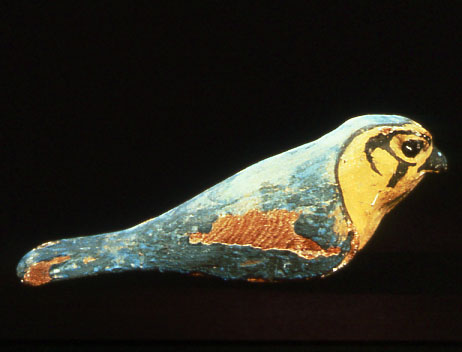
carved and painted wooden falcon

This carved falcon from ancient Egypt is associated with two gods, Ptah (the creator god) and Osiris (the god of the dead), and is often written as Ptah-Sokar or Ptah-Sokar-Osiris.

This particular carving is from the Late Period (664-332 BCE), right before the Greeks’ conquest of Egypt. The museum also has falcon mummies, which were given at temples as votive offerings by pilgrims.


Deb Harding is a collection manager in Carnegie Museum of Natural History’s Section of Anthropology. She frequently blogs and shares pieces of the museum’s hidden anthropology collection, which is home to over 100,000 ethnological and historical specimens and 1.5 million archaeological artifacts.
Filed Under: Blog Tagged With: anthropology, Deborah Harding

March 15, 2017 by wpengine

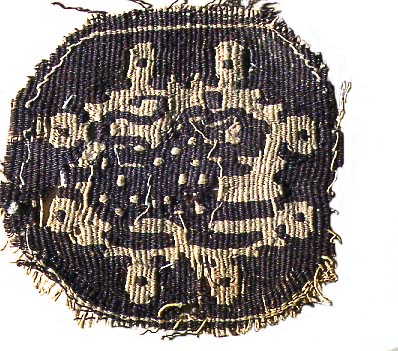
Tunic Decoration from Egypt

woven decoration in dark brown and light brown threadby Deb Harding 

This woven decoration depicting a picture of a leopard is from an Egyptian tunic, possibly from 3–4th
century C.E.

It is part of the museum’s “Coptic textile” collection. “Coptic” is the Greek word for Egyptian, and “Coptic textiles” are not only associated with Coptic Christians, they were made and worn by Egyptians of all faiths in the post-pharaonic period.

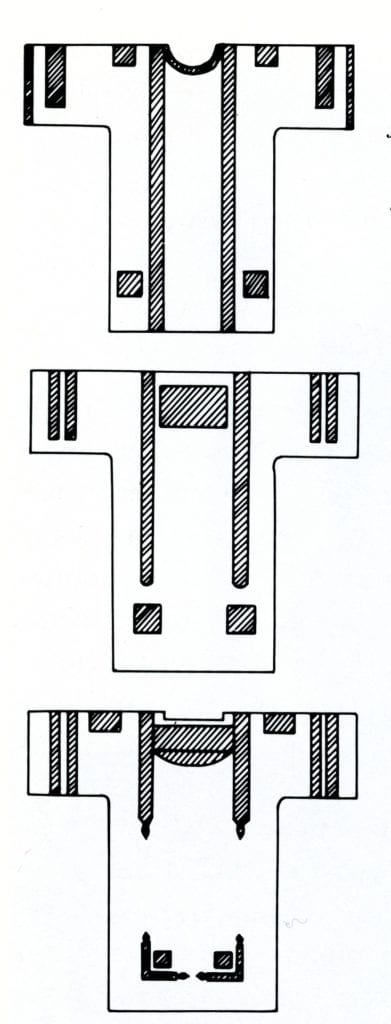
Basic tunic-style shirts were decorated with geometric and figurative patches woven into the otherwise plain linen cloth. There might be a border around the neck with a medallion at the end or bands over the shoulders. Medallions might also appear on the shoulders and near the hems of the shirt. Placement and decoration type changed with fashion, as did the length of hem and sleeves, just like today’s fashions.

The museum purchased this collection in 1934 from the Goebelen-Munchener Manufaktur company. The company said they purchased it in 1929 from the impoverished widow of a Swedish archaeologist.

The illustration of tunic styles below is from Textiles from Medieval Egypt, A.D. 300-1300 by Thelma K. Thomas, published by Carnegie Museum of Natural History in 1990. The leopard medallion is used as
the cover art for the booklet.


Deb Harding is a collection manager in Carnegie Museum of Natural History’s Section of Anthropology. She frequently blogs and shares pieces of the museum’s hidden anthropology collection, which is home
to over 100,000 ethnological and historical specimens and 1.5 million archaeological artifacts.

Filed Under: Blog Tagged With: ancient egypt, anthropology, Deborah Harding

March 2, 2017 by wpengine

The Unseen Museum

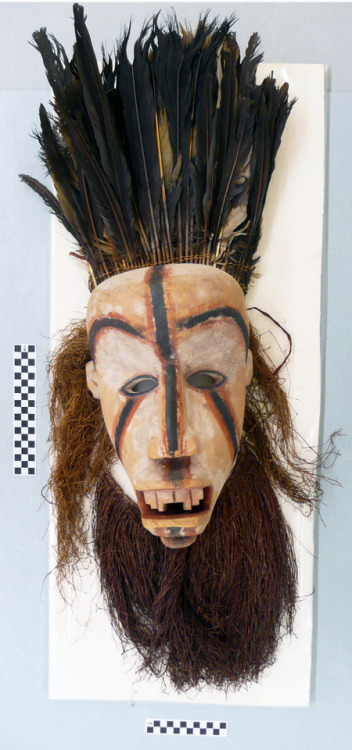
Clay human-like face mask with black and red striped accents. Feathers and course fibers make up the hair, beard, and headdress.

The Unseen Museum: “Magician’s Mask”

This mask is part of a collection purchased in 1902 from Walther Karl, who lived in Matadi, Congo. There is very little information with the Karl collection, usually nothing more than the tribal name. There is no data about why he called this a “magician’s mask.” Dealers in that period often “enhanced” the name of an object to increase its salability. Much of the museum’s African collection came from retired missionaries and from artifact dealers.


Deb Harding is a collection manager in Carnegie Museum of Natural History’s Section of Anthropology. She frequently blogs and shares pieces of the museum’s hidden anthropology collection, which is home to over 100,000 ethnological and historical specimens and 1.5 million archaeological artifacts.

Filed Under: Blog Tagged With: anthropology, Deborah Harding

February 22, 2017 by wpengine

The Unseen Museum

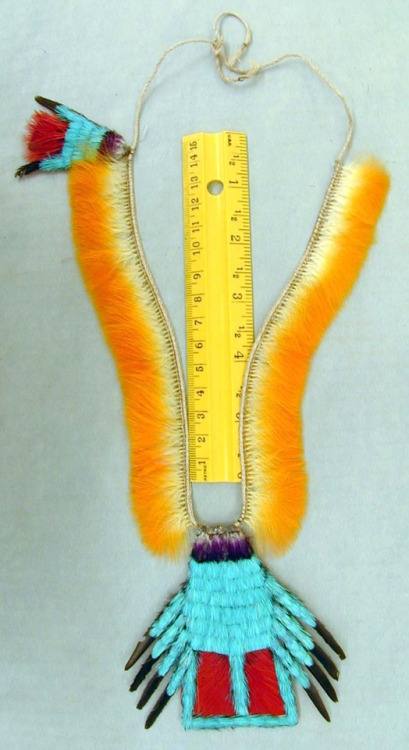
vibrant blue and orange tukaniwar necklace

The Unseen Museum: Ka’apor Necklace

This necklace (tukaniwar) was worn by women of the Ka’apor tribe of eastern Brazil for the Ta’i Rupi Taha
name-giving ceremony. The museum’s collections include beautiful feather work from the Amazon Basin of South America. The Ka’apor are particularly adept at working with small feathers.

The yellow feathers on the cord are from the breast of the channel-billed toucan (Ramphastos vitellinus ariel); they are twined to a tiny thread, which is lashed to the larger cord. The pendants are made of turquoise blue breast feathers and purple throat feathers from the spangled cotinga (Cotinga cayana) and black feathers from the white-tailed cotinga (Xipholena lamellipennis). The cotinga feathers are stuck to cut scarlet macaw (Ara macao) tail feathers with sap from the macarandua tree (Manilkara huberi).


Deb Harding is a collection manager in Carnegie Museum of Natural History’s Section of Anthropology. She frequently blogs and shares pieces of the museum’s hidden anthropology collection, which is home to over 100,000 ethnological and historical specimens and 1.5 million archaeological artifacts.

Filed Under: Blog Tagged With: anthropology, brazil, Deborah Harding

  • « Go to Previous Page
  • Page 1
  • Page 2

sidebar

About

  • Mission & Commitments
  • Directors Team
  • Museum History

Get Involved

  • Volunteer
  • Membership
  • Carnegie Discoverers
  • Donate
  • Employment
  • Events

Bring a Group

  • Groups of 10 or More
  • Birthday Parties at the Museum
  • Field Trips

Powdermill

  • Powdermill Nature Reserve
  • Powdermill Field Trips
  • Powdermill Staff
  • Research at Powdermill

More Information

  • Image Permission Requests
  • Science Stories
  • Accessibility
  • Shopping Cart
  • Contact
  • Visitor Policies
Stay in the loop! Sign up for our newsletter(s).
One of the Four Carnegie Museums | © Carnegie Institute | Privacy Policy | Terms of Use | Accessibility
Rad works here logo