• Skip to primary navigation
  • Skip to main content
  • Skip to primary sidebar

Carnegie Museum of Natural History

One of the Four Carnegie Museums of Pittsburgh

  • Visit
    • Buy Tickets
    • Visitor Information
    • Exhibitions
    • Events
    • Dining at the Museum
    • Celebrate at the Museum
    • Powdermill Nature Reserve
    • Event Venue Rental
  • Learn
    • Field Trips
    • Educator Information
    • Programs at the Museum
    • Bring the Museum to You
    • Guided Programs FAQ
    • Programs Online
    • Climate and Rural Systems Partnership
  • Research
    • Scientific Sections
    • Science Stories
    • Science Videos
    • Senior Science & Research Staff
    • Museum Library
    • Science Seminars
    • Scientific Publications
    • Specimen and Artifact Identification
  • About
    • Mission & Commitments
    • Directors Team
    • Museum History
  • Tickets
  • Give
  • Shop

Dinosaur Armor

February 24, 2021 by wpengine

Mesozoic Monthly: Nasutoceratops

Although much of the Western world recognizes January 1 as the first day of the new year, many other cultures around the globe celebrate Lunar New Year, an alternate calendar system based on the cycles of the moon. Lunar New Year began on February 12 this year, ushering in, according to repeating cycles of the traditional Chinese zodiac, the Year of the Ox. While bovines hadn’t evolved by the Mesozoic Era, there were plenty of dinosaurs that could be compared to an ox. So, in honor of Lunar New Year, this month’s Mesozoic Monthly features Nasutoceratops titusi, a ceratopsian with a rounded nose and curving, bull-like horns!
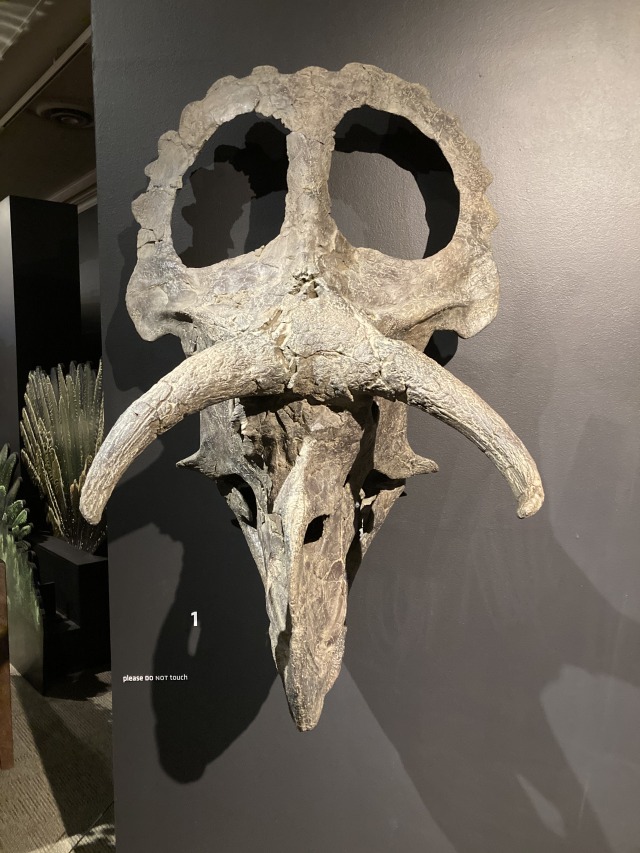
An anterior (head-on) view of the skull of Nasutoceratops, clearly displaying its most iconic features: the frill and horns. You can view this skull in the temporary exhibition Dinosaur Armor at Carnegie Museum of Natural History until July 5, 2021.

Ceratopsian dinosaurs are famous for their huge, elaborate skulls adorned with ornate frills and large horns. Several different bones make up these unique structures. If you haven’t taken an anatomy class, you may not have realized that your skull is made up of several bones that fuse together as you age (fun fact: baby humans have more bones than adults, and this is why!). The horns above a ceratopsian’s eye arise from the postorbitals, bones that sit right behind the eye hole in the skull. The frill is made of two types of bones: the parietals, which make up the central part of the frill, and the squamosals, which act as the corners. Humans actually have both of these bones: the parietal is the large bone at the crown of your head, and the squamosal is fused into the temporal bones above your ears. The bones that form the nose horn of a ceratopsian are aptly named nasals, and we have them too, supporting the cartilage structure of our noses. Of course, our bones are shaped markedly different from those of Nasutoceratops, but the fact that we (and all other vertebrates, aka animals with backbones) have similar skeletal compositions is a feature we inherited from our most recent common ancestor.

Life restoration of a herd of Nasutoceratops providing a convenient perch for a flock of enantiornithine birds in what’s now southern Utah roughly 75 million years ago. Artwork by Harrison Keller Pyle. You can find more of Keller Pyle’s work on DeviantArt under kepyle2055.

The skulls of ceratopsians are huge: they grow as long as one third of their body length! The skull of Nasutoceratops was almost five feet (1.5 meters) long, and although we don’t have many bones from the rest of its body, paleontologists estimate that the animal was almost 15 feet (4.5 meters) long. But Nasutoceratops wasn’t even the largest ceratopsian! The most famous ceratopsian, Triceratops, has a skull that can reach a whopping 8.2 feet (2.5 meters) long, but even that isn’t the largest. The largest skull of all dinosaurs belongs to Pentaceratops (sometimes called Titanoceratops), a ceratopsian with an absolutely massive 8.7 foot (2.7 meter) skull!
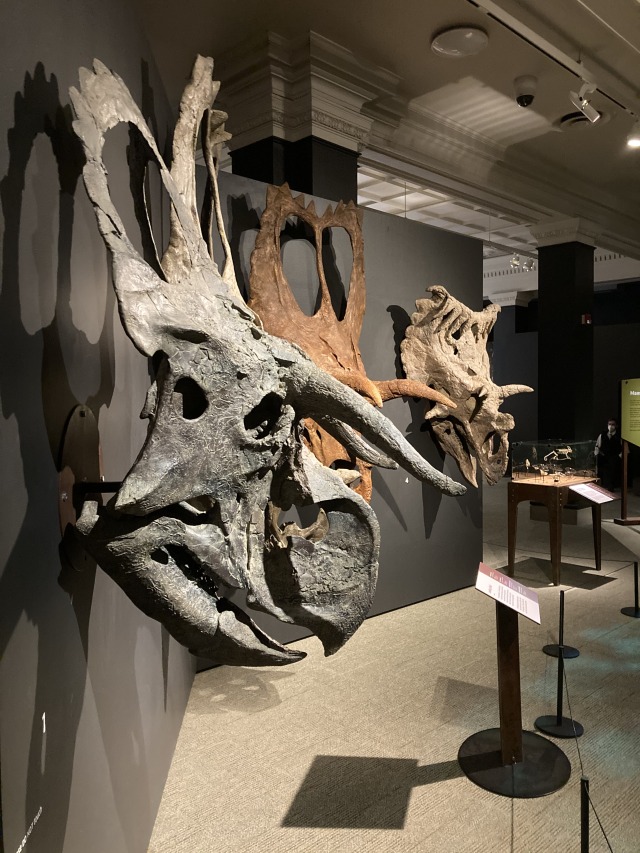
You can view the skull of Nasutoceratops (foreground) alongside those of other ceratopsians (including Utahceratops and Kosmoceratops, mentioned below) in the temporary exhibition Dinosaur Armor at Carnegie Museum of Natural History until July 5, 2021.

Nasutoceratops shared its environment with several other species of ceratopsian, including Kosmoceratops richardsoni and Utahceratops gettyi. Each of these had very different-looking headgear. Nasutoceratops, as previously mentioned, had bull-like horns and a big round nose. Kosmoceratops, in contrast, had weird horns at the top of its frill that curled forward and down, almost like it had bangs, and Utahceratops had short postorbital and nasal horns but a large frill surrounded by spikes. Since all these ceratopsian species lived together, it’s likely that the unique skull ornamentation of different species helped with intra-species recognition (in addition to other functions such as sexual signaling or defense from predators). This meant that each animal could regard shared cranial features as a way to tell who was part of their species. These visual cues might have been especially important for ceratopsians born during the Year of the Ox – according to the Chinese zodiac, “oxen” have poor communication skills, so clear and direct signaling is crucial!

Lindsay Kastroll is a volunteer and paleontology student working in the Section of Vertebrate Paleontology at Carnegie Museum of Natural History. Museum staff, volunteers, and interns are encouraged to blog about their unique experiences and knowledge gained from working at the museum.

Related Content

Ask a Scientist: What kind of dinosaur is a megaraptorid?
Mesozoic Monthly: Dreadnoughtus

A Visit to the Mammoth Site, Hot Springs, SD

Filed Under: Blog Tagged With: dinofest, Dinosaur Armor, dinosaurs, Lindsay Kastroll, Science News, Vertebrate Paleontology

August 24, 2020 by wpengine

Armored Advantage

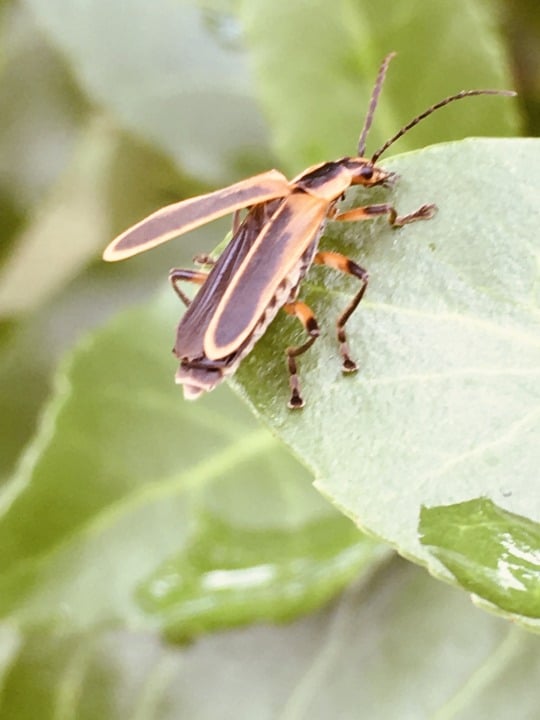
A folded hindwing of this lightning bug is visible beneath a raised forewing.

As adaptations go, the hardened forewings of beetles have a long track record of success. The paired structures, known as elytra (or singularly as elytron), don’t contribute significant aerodynamic advantage to beetle flight. Because they protect the delicate hindwings under all other circumstances, however, elytra help to ensure the capability of flight whenever it’s necessary.

Evidence for the survival advantages conveyed by the wing covers is impressive. The order Coleoptera, the scientific category of beetles, contains more than 380,000 named and described species, a figure that represents nearly a quarter of currently known animal species.

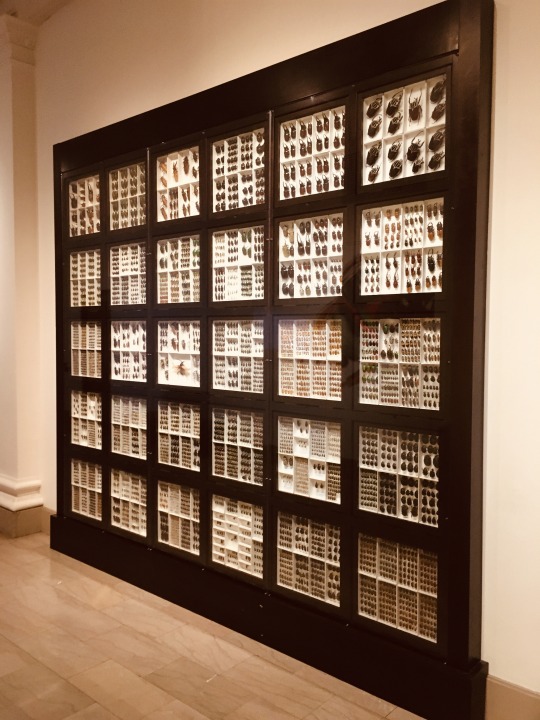
In Dinosaur Armor, the world premiere exhibition occupying the R. P. Simmons Family Gallery for the next 10 months, a colorful array of preserved beetles illustrates the insects’ built-in shield adaptation.

wall of beetle specimens

Visitors interested in elytra can visually study a far larger and more diverse beetle display just outside the Dinosaur Armor exit. Here hundreds of curated specimens from the scientific collection have been arranged in a wall-sized display.

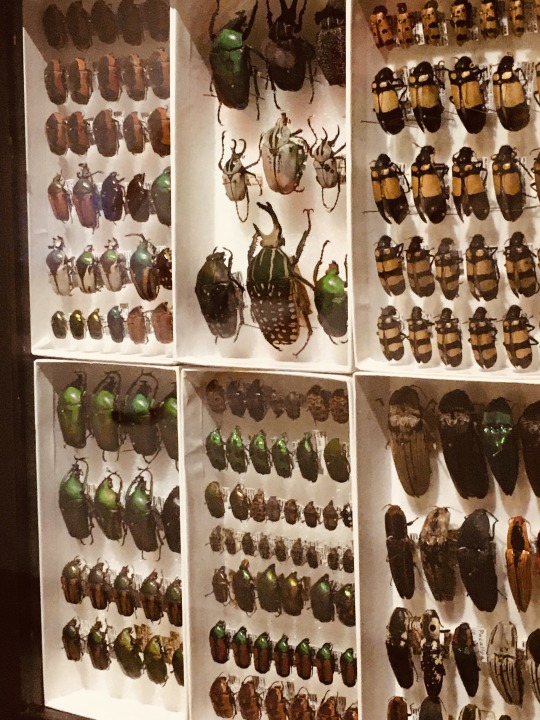
detail of beetle specimens on display

Collectively and individually, this mass of pinned beetles serves to reinforce an unstated theme of Dinosaur Armor: functional exterior armor does not necessarily preclude natural beauty.

Patrick McShea works in the Education and Visitor Experience department of Carnegie Museum of Natural History. Museum employees are encouraged to blog about their unique experiences and knowledge gained from working at the museum.

Related Content

Dinosaur Armor Behind the Scenes

Red Bug Bonus

Jurassic Days: Mighty Mosasaur

Filed Under: Blog Tagged With: beetles, Dinosaur Armor, Educators, Pat McShea, Patrick McShea

June 22, 2020 by Erin Southerland

Carnegie Museum of Natural History Re-opens with World Premiere Dinosaur Armor

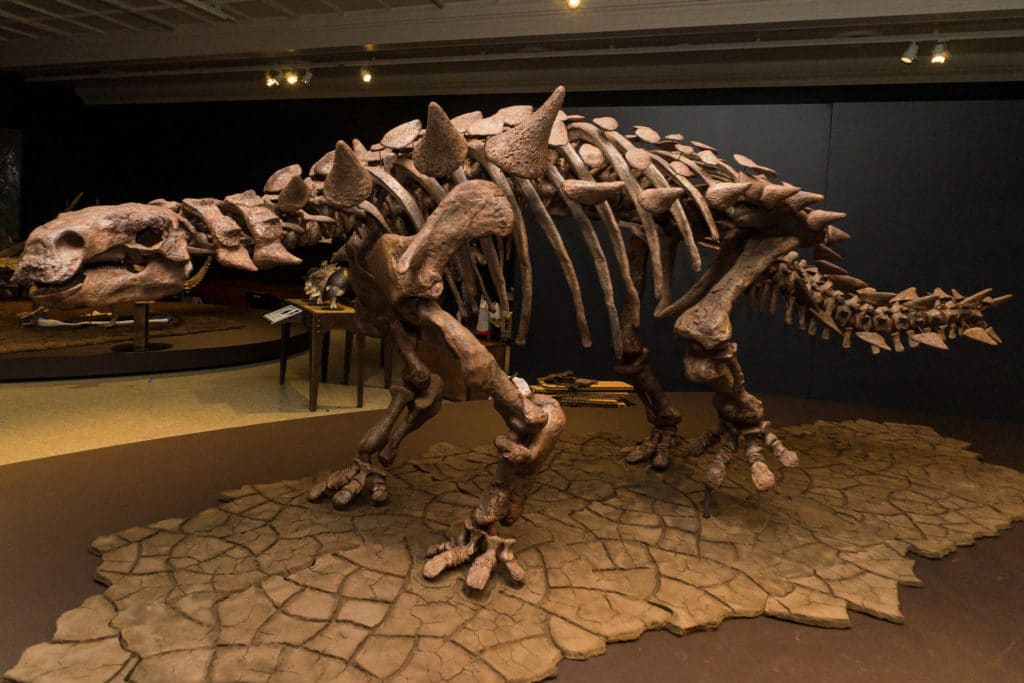
Peloroplites cedrimontanus (replica). Photo credit: Eddie Phillipps

Carnegie Museum of Natural History celebrates its public reopening with the world premiere of Dinosaur Armor, an exhibition that introduces visitors of all ages to the evolutionary development of body armor. Dinosaur Armor brings examples of these extraordinary adaptations to life, chronicling 500 million years of transformations that range from the combative to the ornamental to the bizarre. The exhibition opens to the public on June 29, 2020 and will extend for over a year, until July 5, 2021. Exclusive member previews will take place June 27 and 28. 

Combining the artistry and detail of Colorado-based Gaston Design and the scientific expertise of researchers at Carnegie Museum of Natural History, Dinosaur Armor features actual specimens, casts, and artistic representations of prehistoric invertebrates, fish, reptiles, dinosaurs, and mammals.

“I’m excited about Dinosaur Armor because it showcases extraordinary dinosaurs that have never been seen at Carnegie Museum of Natural History,” says Matt Lamanna, Mary R. Dawson Associate Curator, Vertebrate Paleontology, “including tank-like armored dinosaurs called ankylosaurs and the ferocious tyrannosaurs and giant raptors that would’ve tried to bring them down. But this exhibition isn’t about dinosaurs alone. It’s a march through time, through the evolution and diversity of body armor and ornament in myriad prehistoric and modern creatures, from invertebrates to fishes to reptiles to mammals and even ourselves.”

“As an evolutionary biologist I have never lost my sense of wonder in observing how incredibly inventive the evolutionary process can be,” says Stephen Tonsor, Daniel G. and Carole L. Kamin Interim Director of Carnegie Museum of Natural History. “This exhibit provides a profoundly engrossing view into that inventiveness.”

To ensure social distancing, visitors are required to wear masks and purchase timed tickets in advance at carnegiemnh.org/buy-tickets. For more information about safety procedures, including timed ticketing, visit carnegiemuseums.org/welcome-back.

Dinosaur Armor tickets may be purchased in addition to regular museum admission and cost $5 for adults and $3 for members, children, students, and adults over the age of 65.

Dinosaur Armor is presented by Gaston Design, Inc. and Carnegie Museum of Natural History, with support from Pennsylvania Virtual Charter School. 

Filed Under: Uncategorized Tagged With: Dinosaur Armor

sidebar

About

  • Mission & Commitments
  • Directors Team
  • Museum History

Get Involved

  • Volunteer
  • Membership
  • Carnegie Discoverers
  • Donate
  • Employment
  • Events

Bring a Group

  • Groups of 10 or More
  • Birthday Parties at the Museum
  • Field Trips

Powdermill

  • Powdermill Nature Reserve
  • Powdermill Field Trips
  • Powdermill Staff
  • Research at Powdermill

More Information

  • Image Permission Requests
  • Science Stories
  • Accessibility
  • Shopping Cart
  • Contact
  • Visitor Policies
One of the Four Carnegie Museums | © Carnegie Institute | Privacy Policy | Terms of Use | Accessibility
Rad works here logo