• Skip to primary navigation
  • Skip to main content
  • Skip to primary sidebar

Carnegie Museum of Natural History

One of the Four Carnegie Museums of Pittsburgh

  • Visit
    • Buy Tickets
    • Visitor Information
    • Exhibitions
    • Events
    • Dining at the Museum
    • Celebrate at the Museum
    • Powdermill Nature Reserve
    • Event Venue Rental
  • Learn
    • Field Trips
    • Educator Information
    • Programs at the Museum
    • Bring the Museum to You
    • Guided Programs FAQ
    • Programs Online
    • Climate and Rural Systems Partnership
  • Research
    • Scientific Sections
    • Science Stories
    • Science Videos
    • Senior Science & Research Staff
    • Museum Library
    • Science Seminars
    • Scientific Publications
    • Specimen and Artifact Identification
  • About
    • Mission & Commitments
    • Directors Team
    • Museum History
  • Tickets
  • Give
  • Shop

Education

January 15, 2021 by wpengine

Becoming a Science Educator

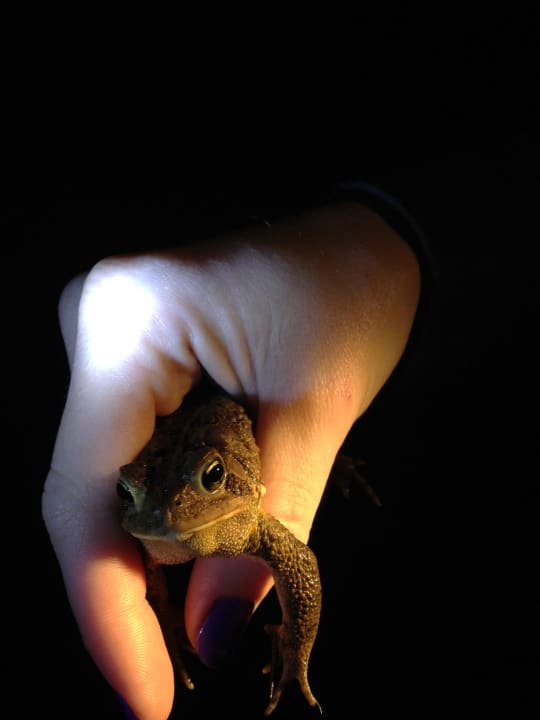
An American toad, similar to those found in the author’s childhood backyard.

Think back to when you were a child – what was your favorite way to learn how something works? Mine was to ask loads of questions and then jump in and get my hands dirty. I specifically remember catching toads in the backyard with my mom, asking questions about their appearance and where they lived. She would tell me about the myth of them giving you warts, that they might pee on your hand if they were scared, and how to hold them gently and then let them go.  Twenty years later, I became a research ecologist studying amphibian diseases, and I learned how to sharpen these inclinations into more robust skills: how to create focused questions and experiments, collect and analyze data, and present the findings to a range of audiences.

Today, I teach and design curriculum for home-school and summer camp programs at Carnegie Museum of Natural History. Fostering the learners’ own questions and devising hands-on ways to investigate them is the focus of my work. Science and nature provide unlimited opportunities for first-hand investigations, and the process of metamorphosis is one of my favorite examples.

An 8-year-old camper has likely learned about butterfly metamorphosis in school, and might be able to name the four stages: egg, caterpillar, pupa, and adult. Scientists call this four-stage process “complete metamorphosis,” a term whose qualifier invites one to wonder, “what is incomplete metamorphosis?” Enter the majestic dragonfly. Dragonflies also go through metamorphosis, but with only three stages: egg, nymph, and adult; their transformation is therefore termed “incomplete.” Noting this small difference suggests another question: what else is different about a dragonfly?
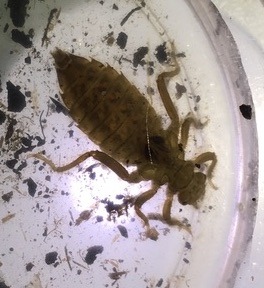
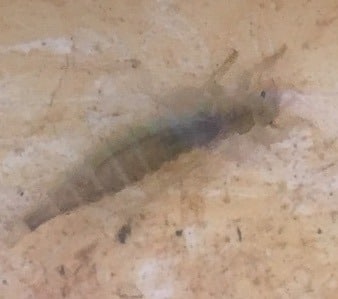
Above and below: Dragonfly nymphs collected and released in a Pittsburgh section of the Ohio River.
dragonfly nymph

Well those first two stages – eggs and nymphs – are in water! That is why they are part of the far larger group of aquatic macroinvertebrates, creatures with no backbone that can be seen without magnification and that live at least part of their life in water. Some dragonfly nymphs are impressive predators and can live for years in this aquatic phase, even though their adult lives last only a few weeks. In what ways, I challenge the 8-year-olds, is this transformation similar or different from that of a caterpillar and a butterfly?
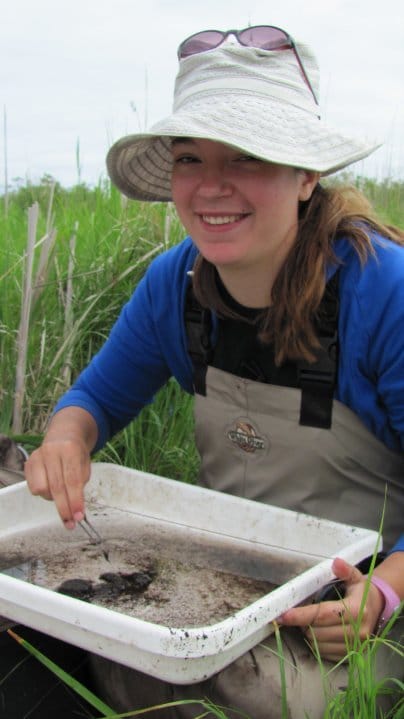
science educator Jenise Brown in a field looking through a tray of water
Jenise looking through a stream water sample for aquatic macroinvertebrates in a sorting tray.

After we’ve explored these questions, we make a trip behind the scenes to look at some insect specimens up close, and allow the students to directly ask the museum’s research scientists even more questions. Finally, we visit Powdermill Nature Reserve to get our hands muddy by looking for dragonfly nymphs and other aquatic macroinvertebrates in the research station’s namesake stream. And before we know it, we’ve done actual science: used the scientific method to gain understanding about the world around us!

I came to teaching from research science because I love building interactive experiences of the world around us like these into courses that can educate and inspire young people. This type of scientific inquiry is universal, and these practices can be adjusted for age. A class about dragonflies for a 12-year-old group, for example, might focus on data collection and include the presentation of our findings to the younger campers. Whatever the age level though…I get to get my hands dirty.

Jenise Brown is a Museum Educator with Carnegie Museum of Natural History. Museum staff, volunteers, and interns are encouraged to blog about their unique experiences and knowledge gained from working at the museum.

Related Content

We Are Nature: Living in the Anthropocene (Video)
Indiana Jones and the Rosetta Stone

Teaching in the Parks

Filed Under: Blog Tagged With: Education, Educators, Jenise Brown, Museum from Home

December 29, 2020 by wpengine

Milkweed Observations

Opportunities to capture dramatically different seasonal pictures of the same subject come with the territory of our temperate region. Next year, consider challenging yourself to document how a flower bed or prominent deciduous tree transforms seasonally in response to changing light, temperature, and moisture.

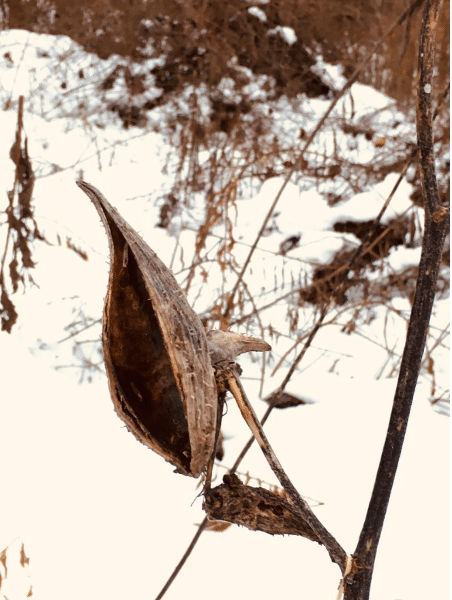
milkweed in winter with snow

The picture above, taken on the first day of winter, records the deteriorated condition of the common milkweed plant (Asclepias syriaca) I began observing during the first week of summer. The image might easily be termed an end point, but for documentation images that preceded it.

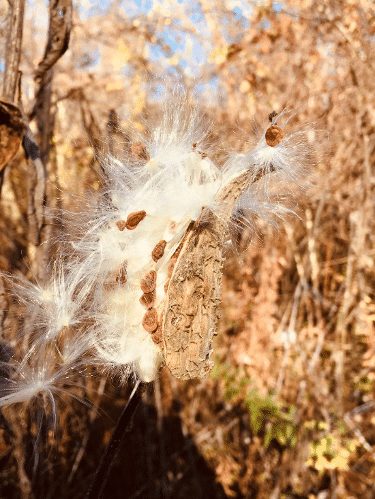
milkweed in autumn

Here, on a bright early November day, the burst seed pod offered dozens of matchhead-sized brown seeds, each attached to sparkling down-like filaments to the wind. With this picture as reference, the empty winter solstice pod implies continuance as much as conclusion.

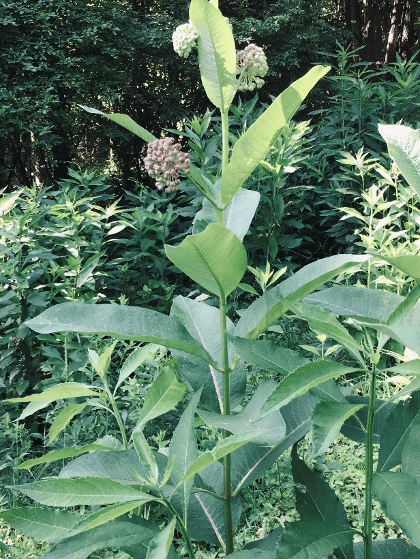
milkweed plant in summer

My observations began in late June, several days after the summer solstice, and just before the milkweed plant bloomed. My resolution for future observations is to begin them far earlier in the growing season, and to learn more about the insect fauna associated with the plant.

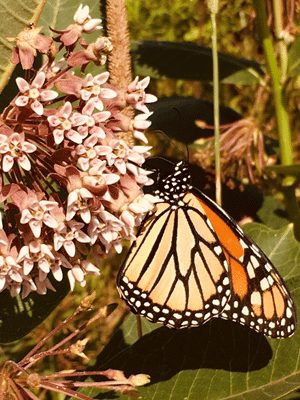
monarch butterfly on milkweed

Monarch butterflies (Danaus plexippus), a species currently experiencing alarming population declines, are the most well-known insects associated with milkweed. This one pictured above visited the plant’s lavender blossoms on July 25.

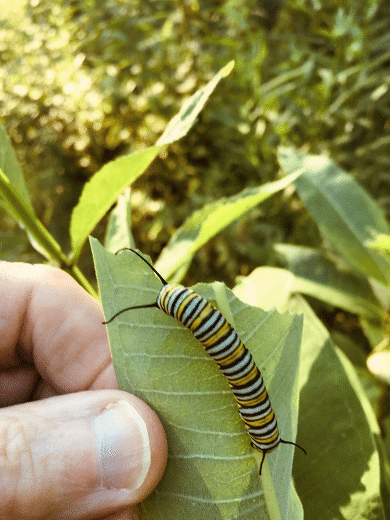
monarch caterpillar on milkweed leaf

Monarch butterfly caterpillars, such as the one photographed eating this leaf on August 19, are dependent on milkweed for nourishment and the predator protection they gain from the plant’s toxins.

milkweed tussock moth caterpillar on milkweed

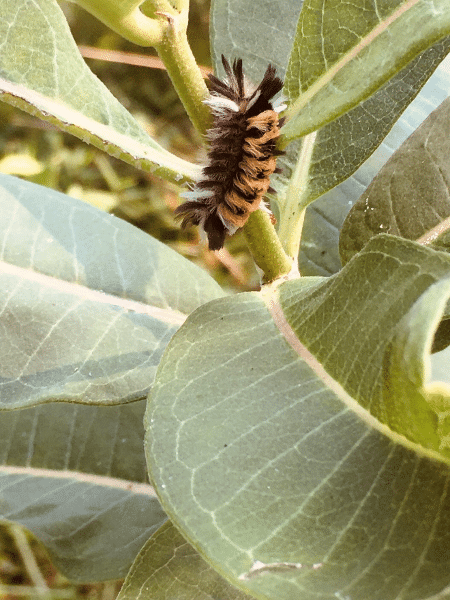
A lesser known milkweed dependent insect is the milkweed tussock moth (Euchaetes egle). A caterpillar of the species was photographed on the plant in mid-August.

large milkweed bug on milkweed plant

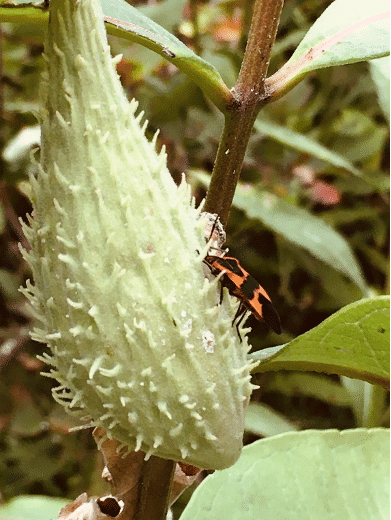
The diet of the large milkweed bug (Oncopeltus fasciatus) includes seeds, so the presence of seed pods does not necessarily guarantee a bountiful crop the next growing season. The insect pictured above visited the plant on August 21.

Patrick McShea works in the Education and Visitor Experience department of Carnegie Museum of Natural History. Museum employees are encouraged to blog about their unique experiences and knowledge gained from working at the museum.

Related Content

Collected on This Day in 1934: European larch

Ask a Scientist: How do you find rare plants?

A Steeler Prayer

Filed Under: Blog Tagged With: Botany, Education, Museum from Home, Pat McShea

November 12, 2020 by wpengine

Places to Visit During a Pandemic

Pandemic got your down? Don’t know what to do with your family on the weekend? Nature might be the answer!  During the pandemic places with enough space have been hard to find, but I’ve found the following three outdoor destinations to be perfect for keeping 6 feet apart.

1. Moraine State Park

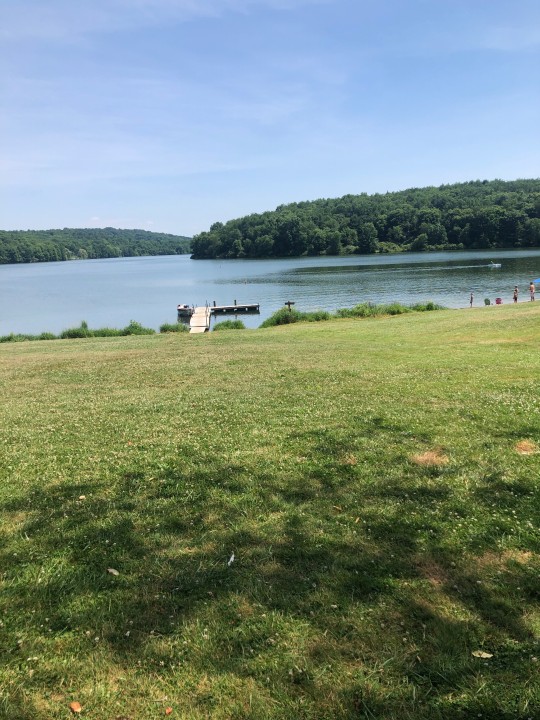
Moraine has something for the whole family to enjoy, from swimming to hiking. Lake Arthur, the park’s centerpiece, is much bigger than expected from looking at the park map! My family always loves fishing at Moraine because there are plenty of fish for us to catch, from bluegills to bass. Besides fishing another one of our favorite activities to do at Moraine is geocaching! If you are not familiar with geocaching, I highly suggest it. This outdoor interactive challenge is basically a “treasure” hunt hike! Participants can bring small toys or trinkets to switch out with the ones you discover within the small hidden containers, or caches. To reach these caches, you need to plug coordinates into a GPS unit and follow them to your destination. The activity is great for kids because sometimes hikes can be hard with small children, and the trinkets in the caches are a great way for them to stay engaged.  We plan for the day and pack a big lunch with lots of snacks. Maintaining social distancing at Moraine is easy because the park has tons of picnic areas to choose from.  Due to the pandemic we have visited there a lot more this summer!

lake with a dock on a sunny day

2. Keystone Safari

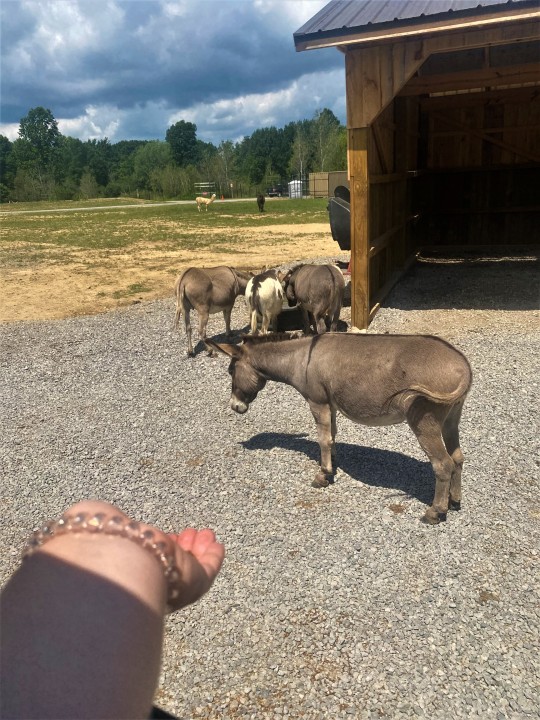
Keystone Safari is a place I never heard of until this year when my sister purchased a house about a mile away. I wished I had known about it sooner! It is a huge zoo near Grove City where you can encounter all sorts of different animals from the tiniest butterfly to the tallest giraffe. You can feed those animals if you do the walk-through park which has all sorts of other amenities such as ziplines. This year, due to COVID-19 the park added a feature where you can drive through a separate area of the park and feed all sorts of animals as they walk up to your vehicle. We decided to try it out since it was the ultimate social distancing activity!  It was such a cool experience. The park provides a bucket of food for you as you drive through the safari, and as you put your hand out with food the animals will walk right up to you. My niece is 3 and could not stop smiling and giggling the whole time! This was undoubtedly one of our favorite activities during the pandemic.

hand reaching out towards donkeys

3. Neighborhood Walks

Sometimes people forget they can enjoy nature right outside their own front door. Neighborhood walks are an out-of-the-house activity the whole family can get involved in, especially during the pandemic. Every time I walk around my neighborhood, I notice new things in nature. Whether the sighting is an interesting bird or a scary looking spider, I always learn something new. Sometimes, if you are lucky enough to snap a good picture, you can use an app called iNaturalist to help identify unknown life forms. The app is free and easy to use. You upload a picture, and other nature enthusiasts can help identify it!  My family uses this app all the time, especially for flowers and different spiders we see around our neighborhood. It makes a walk around your neighborhood ten times more fun. This is a great activity and fully compliant with COVID-19 guidelines.

During the pandemic everyone has been trying new things. Exploring new places in nature has been my favorite one and it is something people of all ages can enjoy. I love finding new places to go and cannot wait to discover more social distance friendly activities. Hopefully others can enjoy these places too!

Claire Ianachione is a Teen Volunteer in the Education Department. Museum employees, volunteers, and interns are encouraged to blog about their unique experiences and knowledge gained from working at the museum.

Related Content

The 12,000-Year Journey of the Cheeseburger

Looking for Bugs in Your Yard

Fantastic Beasts and Where to Find Them in Real Life

Filed Under: Blog Tagged With: Claire Ianachione, Education, Museum from Home

November 9, 2020 by wpengine

Teaching in a Pandemic

Full immersion in a different culture was the plan back in August 2019, when Rika Opio signed a yearlong contract to teach English in the port city of Busan, South Korea. The museum educator and Pittsburgh Public School substitute teacher could never have imagined that her adventure would include experiencing another nation’s response to a global pandemic.

Rika has been back in Pittsburgh since early September, engaging remotely with students at Sunnyside Elementary on a daily basis as part of her regular assignment to the Stanton Heights school. During a recent interview she offered striking examples of how, earlier this year, daily life in Busan differed from what we experienced in the Pittsburgh area.

photograph of bridge over a river with mountains in the background at sunset
Busan, South Korea

In response to the public health threat of COVID-19, South Korea went into lockdown at the end of February, with everyone strictly at home for two weeks. Schools, including the English language hagwon, or private academy, where Rika taught, remained closed through May. An enormous amount of effort was put into contract tracing. Anyone who had a Korean phone number would get the emergency alerts about those with confirmed cases. The alerts would say where that person lived and the places they may have been in contact with others. People who had direct contact with confirmed cases could get tested for free, and treated for free if they did have COVID. As Rika explains, “There were times when I would be awakened at night by my phone ringing with alerts for three minutes straight.”

Although Rika now recalls the weeks of lockdown and school closure as “a time when I tried to pick-up hobbies,” she summarized the nation-wide policies as “sensible rules that treated the pandemic as the serious threat it is.” Daily life began returning to normal in Busan by late spring. Rika’s English language hagwon operated at 50% capacity during its re-opening month, and attendance climbed steadily as the weeks passed.

Face mask wearing remained a key virus reduction strategy, and as Rika explains, “It was never a problem for students to wear masks. Korea has something of a culture of wearing masks to reduce disease transmission. The mindset is simply, you don’t want to infect other people.”

The teacher’s first hint that her life back in Pittsburgh would proceed under different circumstances occurred on her flight home. “On the International flight from Seoul to Dallas passengers sat in widely spaced seats, and everyone wore face masks. On the domestic flight from Dallas to Pittsburgh every seat was occupied, and most passengers didn’t wear masks.”

Patrick McShea works in the Education and Visitor Experience department of Carnegie Museum of Natural History. Museum employees are encouraged to blog about their unique experiences and knowledge gained from working at the museum.

Related Content

Changing Seats in Changing Times

Ask a Scientist: What does a museum science director do?

Sounds of Science

Filed Under: Blog Tagged With: Education, Educators, Pat McShea

October 29, 2020 by wpengine

Did Neanderthals Make Musical Instruments?

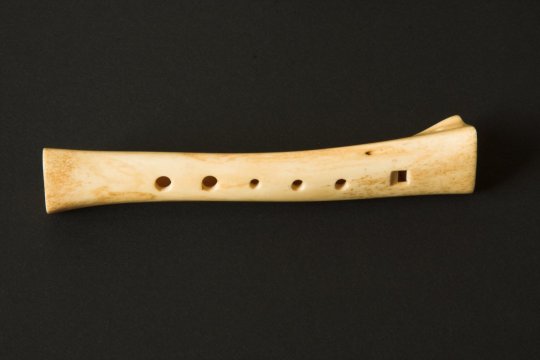
bone flute on black background

Do you like to listen to music? Have you ever admired the skill of a musician? Maybe you even know how to play an instrument yourself. Unsurprisingly, humans (Homo sapiens) have enjoyed this rewarding art for all of recorded history. In fact, the earliest evidence of musical instrument construction dates back to the great unknown ages of prehistory.

In 1995, researchers excavating deposits thought to be between 40,000 and 60,000 years old in a cave called Divje Babe (which translates to “Witch Cave”) in Slovenia found the femur (a leg bone) of a juvenile cave bear with an unusual line of small holes perforating one side. The find was recognized as being a fragment of a flute-like musical instrument. Due to the age and location of the discovery, the manufacture of the flute was attributed to Homo neanderthalensis (the Neanderthals) rather than Homo sapiens!

This discovery was extremely important in shaping our view of the Neanderthals, another species of hominid with which we share a common ancestor. Prior to this, they were often viewed as brutish, animalistic, and wholly incapable of aesthetic sensibilities. However, if they made musical instruments and played them for entertainment or ritual purposes, these activities mean that the Neanderthals were creating a complex culture reminiscent of our own when they went extinct around 40,000 years ago for reasons still unclear. The ability to modify a material so that it can then be used to create a variety of pitches implies, in the minds of some researchers, greater motor ability and a higher capacity for abstract thought.

There are many skeptics, however. Some posit that the holes in the bones are the result of hyenas making a meal of a juvenile cave bear, while others point to uncertainty about exactly when the perforations in the bone were created. Perhaps the interpretation of a modified bone as a musical instrument is all exaggeration brought on by our desire to relate to those who came so long before us. As of this writing, the scientific community is still undecided about how the holes into the bone were created and when it happened. There are two things we can all agree on, though: we hope someday to uncover the true origin of the Divje Babe bone flute, and musical instruments certainly rank among the greatest inventions of members of the genus Homo.

Niko Borish is a Teen Volunteer in the Education Department. Museum employees, volunteers, and interns are encouraged to blog about their unique experiences and knowledge gained from working at the museum.

Works Cited

Montagu, J. (2017, June 20). How Music and Instruments Began: A Brief Overview of the Origin and Entire Development of Music, from Its Earliest Stages (A. Nikolsky, Ed.). Frontiers in Sociology. Retrieved September 5, 2020, from https://www.frontiersin.org/articles/10.3389/fsoc.2017.00008/full

National Museum of Slovenia (Ed.). (n.d.). Neanderthal flute. Narodni Muzej Slovenije. Retrieved September 5, 2020, from https://www.nms.si/en/collections/highlights/343-Neanderthal-flute

The Royal Society. (2015, April 9). Are Neanderthal bone flutes the work of Ice Age hyenas? Phys.org. Retrieved September 5, 2020, from https://phys.org/news/2015-04-neanderthal-bone-flutes-ice-age.html

University of Wisconsin (Ed.). (2017). Neanderthal jam. The Why Files. Retrieved September 5, 2020, from https://whyfiles.org/114music/4.html

Related Content

Ancient Egypt Through its Pottery

Archaeology Merit Badge: Who Had More Fun, Me or the Boy Scouts?

History of Teddy Bears

Filed Under: Blog Tagged With: anthropology, Education, Educators, volunteers

October 22, 2020 by wpengine

Duck Bite

Most people assume that ducks are pretty friendly birds. That assumption was not necessarily demonstrated when I was sitting on a bench at a boardwalk in Myrtle Beach, South Carolina, enjoying a double scoop of Ben & Jerry’s with my friend. As we savored our ice cream, a well-deserved treat after practicing rigorously for an orchestra competition, one of the many ducks that spend their days along the boardwalk waddled close to our bench.

Unconcerned, we continued to converse. Soon, the duck was right by my foot, investigating my cone, and I was frozen, unsure about what to do. I nervously continued to eat my ice cream, ignoring my new feathered friend and hoping it would waddle on. That, however, was not the case. After examining my ice cream cone for a couple more seconds, the duck sounded two warning quacks, and then proceeded to grab my pinky finger. My beloved ice cream cone fell to the ground, as I sat shell shocked wondering why this duck had unleashed the wrath of its beak upon me.

My mind was left with one lingering question—why? In my experience, most ducks fly away if a human gets close to them. So why did this duck approach me with its eyes set on my ice cream cone? The answer was in the duck’s environment.

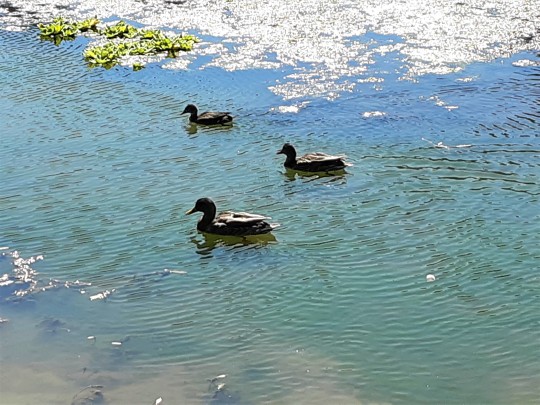
The large flocks of mallard ducks that swarmed that fated boulevard had a single temptation: the fish food dispensers stationed around the area that visitors used to feed the fish in the large pond nearby. As a result, many ducks patrolled the area, hoping to be fed by visitors. The constant contact with humans ​tamed​ the mallards; their inherent fear of humans was overridden by the hands that fed them.

three ducks on the water

Taming, often confused with domestication, is the process of making individual animals comfortable around humans. Domestication, on the other hand, is a process involving multiple generations of selective breeding, to strengthen favored traits.

Mallard ducks, the species of duck that inhabited the boulevard, are very easily tamed through regular feeding. Therefore, the ducks developed a learned behavior, one formed through experience, to approach humans for food. Thus, the duck, most likely familiar with humans feeding it, approached me. Assuming my waffle cone was intended for its stomach, it promptly bit me when I refused.

However, feeding (most) wild animals can be a detriment to their lives. A well-maintained bird feeder in your backyard is okay, as the feed can supplement birds’ diets. However, feeding other wildlife can cause a higher risk of disease transmission, as well as diet problems for wild animals. Feeding wild animals causes them to become more dependent on humans.

Consequently, they may start to hang around areas heavily populated with humans, which can lead to disease transmission and rash behavior towards us.

Moral of the story: don’t feed the ducks junk food, it’ll come back to bite someone else in the pinky.

Samhita Vasudevan is a Teen Volunteer in the Education Department. Museum employees, volunteers, and interns are encouraged to blog about their unique experiences and knowledge gained from working at the museum.

Works Cited
Bittel, Jason. “Why You Shouldn’t Feed Wild Animals (Except Maybe Birds).” ​National Geographic,​ National Geographic Partners, 5 July 2019, www.nationalgeographic.com/animals/2019/07/dont-feed-wild-animals-except-birds/. Accessed 15 Aug. 2020.

Brittingham, Margaret C., and Stanley A. Temple. “Does Winter Bird Feeding Promote Dependency?” ​Searchable Ornithological Research Archive,​ University of New Mexico, 1991, https://sora.unm.edu/sites/default/files/journals/jfo/v063n02/p0190-p0194.pdf. Accessed 1 October 2020.

“Don’t Feed the Wildlife.” ​United States Department of Agriculture​, 2 June 2020, www.aphis.usda.gov/aphis/ourfocus/wildlifedamage/sa_program_overview/ct_dontfeedw ildlife. Accessed 10 Aug. 2020.

“Learned Behavior of Animals.” ​LibreTexts,​ 15 Aug. 2020, bio.libretexts.org/Bookshelves/Introductory_and_General_Biology/Book%3A_Introducto ry_Biology_(CK-12)/10%3A_Animals/10.05%3A_Learned_Behavior_of_Animals. Accessed 16 Aug. 2020.

“Living with Wildlife.” ​Southwest Wildlife Conservation Center,​ 2020, www.southwestwildlife.org/resources/living-with-wildlife.html. Accessed 8 Aug. 2020.

“Mallard Duck.” ​National Wildlife Crime Unit,​ 2020, www.nwcu.police.uk/animal-of-the-month/mallard-duck/. Accessed 9 Aug. 2020.

Sadedine, Suzanne. “Why Can Some Animals Be Domesticated, but Not Others?” ​Forbes​, Forbes Media, 24 Oct. 2016 www.forbes.com/sites/quora/2016/10/24/why-can-some-animals-be-domesticated-but-no t-others/#68c454de5df4. Accessed 9 Aug. 2020.

Related Content

Superstitions and Black Cats

From Collector to Director

Ask a Scientist: What does a museum science director do?

Filed Under: Blog Tagged With: Anthropocene Living Room, Education

  • « Go to Previous Page
  • Page 1
  • Interim pages omitted …
  • Page 5
  • Page 6
  • Page 7
  • Page 8
  • Page 9
  • Interim pages omitted …
  • Page 15
  • Go to Next Page »

sidebar

About

  • Mission & Commitments
  • Directors Team
  • Museum History

Get Involved

  • Volunteer
  • Membership
  • Carnegie Discoverers
  • Donate
  • Employment
  • Events

Bring a Group

  • Groups of 10 or More
  • Birthday Parties at the Museum
  • Field Trips

Powdermill

  • Powdermill Nature Reserve
  • Powdermill Field Trips
  • Powdermill Staff
  • Research at Powdermill

More Information

  • Image Permission Requests
  • Science Stories
  • Accessibility
  • Shopping Cart
  • Contact
  • Visitor Policies
One of the Four Carnegie Museums | © Carnegie Institute | Privacy Policy | Terms of Use | Accessibility
Rad works here logo