• Skip to primary navigation
  • Skip to main content
  • Skip to primary sidebar

Carnegie Museum of Natural History

One of the Four Carnegie Museums of Pittsburgh

  • Visit
    • Buy Tickets
    • Visitor Information
    • Exhibitions
    • Events
    • Dining at the Museum
    • Celebrate at the Museum
    • Powdermill Nature Reserve
    • Event Venue Rental
  • Learn
    • Field Trips
    • Educator Information
    • Programs at the Museum
    • Bring the Museum to You
    • Guided Programs FAQ
    • Programs Online
    • Climate and Rural Systems Partnership
  • Research
    • Scientific Sections
    • Science Stories
    • Science Videos
    • Senior Science & Research Staff
    • Museum Library
    • Science Seminars
    • Scientific Publications
    • Specimen and Artifact Identification
  • About
    • Mission & Commitments
    • Directors Team
    • Museum History
  • Tickets
  • Give
  • Shop

gift shop

June 4, 2018 by wpengine

Agate and Wooden Boxes

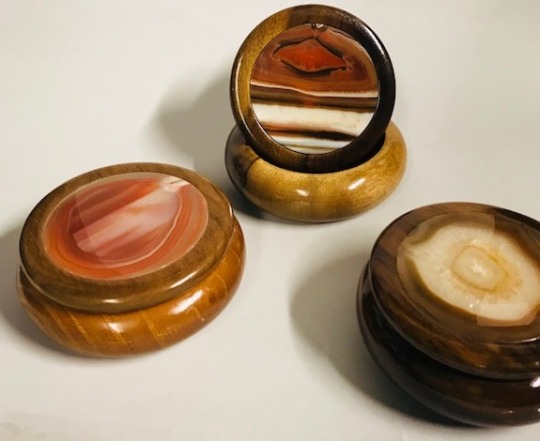
Agate and wooden boxes

Looking for a host or hostess gift that lasts longer than a bottle of wine?

Natural agate and wooden boxes made in Brazil are unique and useful.

Each lid is made of agate, a mineral that has as many different looks as you can imagine. Stripes, swirling clouds, and even moss-like patterns appear in agate. No two pieces are the same, every agate box is one of a kind.

Several pieces of agate from Brazil and around the world are on display in Hillman Hall of Minerals and Gems.
Filed Under: Blog Tagged With: gems and minerals, gift shop, minerals and gems

May 21, 2018 by wpengine

Artisan Glass Vases in the Museum Store

You might not expect a museum gift shop to carry one-of-a-kind decorations, but we value fun and distinctive items in our museum and that spirit extends to the museum store.

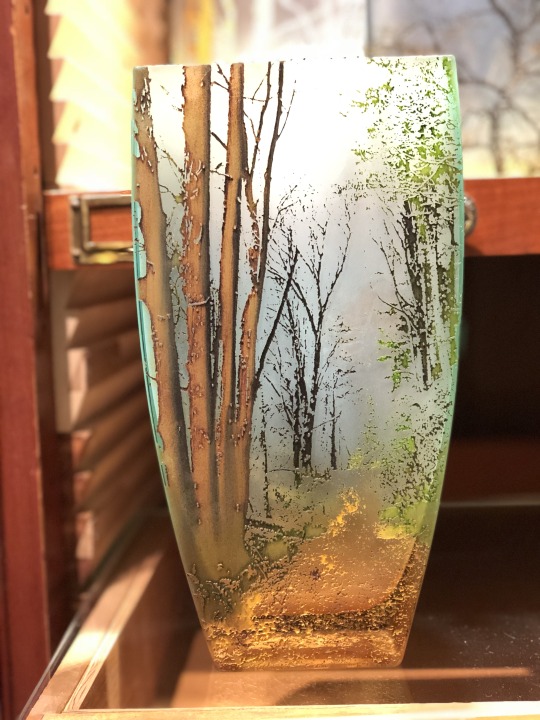
Artisan glass vase

Look closely at this glass vase and you might think you’re about to take a stroll down a woodland path. But don’t let your imagination get too far ahead of you. It’s oil paint and enamel on glass, not dirt, trees, and sky.

This vase and the others like it in our museum store are carefully handcrafted. Each vase is unique, just like every walk in the woods.

Filed Under: Blog Tagged With: gift shop

May 7, 2018 by wpengine

Dippy’s Looking Good in Our Museum Store

Thanks to our visitors for helping us to rebrand last year! You asked, and we listened: we are featuring Dippy on everything from coffee mugs to socks…

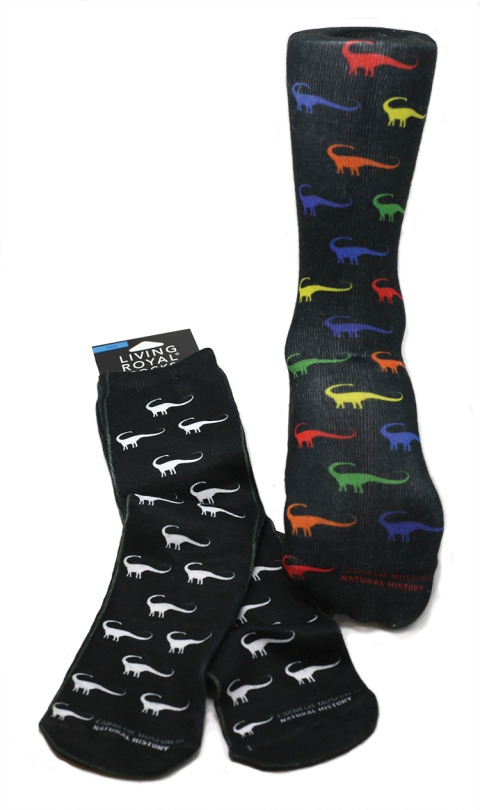
Socks with Dippy logo

We adore the socks and hope you will, too. The multi-colored Dippy’s bring a burst of fun to your wardrobe. The black and white ones are classy enough to pair with your wedding tux!

The Dippy silhouette is truly a community-created design that reflects our most famous (and first!) dino in Dinosaur Hall. Thank you for your role in bringing Diplodocus carnegii to life in a fresh, new way.

Did you get some Dippy swag? Take a selfie and tag us in it on Instagram @carnegiemnh! We’d love to see you loving Dippy.

Filed Under: Blog Tagged With: dinosaurs, diplodocus carnegii, dippy, gift shop

April 6, 2018 by wpengine

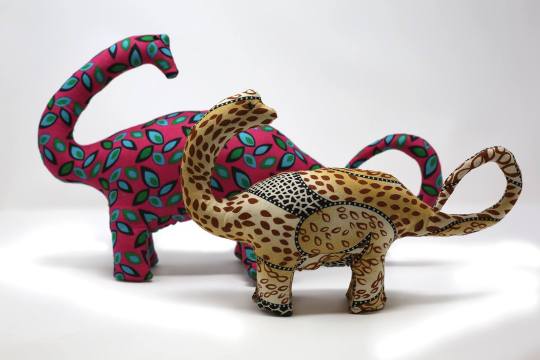
Dippy via Project Have Hope

Dippy plush toys in colorful fabrics

Handmade by Ugandan artisans, these Dippy plushes are a product through the organization Project Have Hope. Project Have Hope aims to empower Ugandan artists through the sale of their crafts. Each purchase supports the mission of educating women and children, providing business opportunities to empower women and give them the courage to dream. You can purchase your own at the Carnegie Museum of Natural History gift store. Visit www.projecthavehope.org for more information and how you can help.


Filed Under: Blog Tagged With: dinos, dippy, gift shop

October 5, 2017 by wpengine

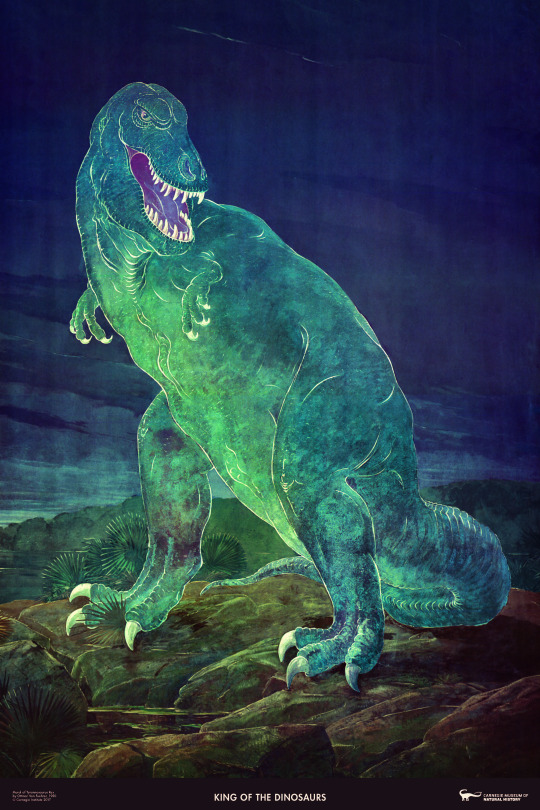
Carnegie History: T. Rex Mural

painted mural of a T. Rex dinosaur in blues and greens

Do you remember when this mural towered over Carnegie Museum of Natural History’s Dinosaur Hall?

It brought one of our fiercest specimens to life when the museum’s chief artist Ottmar von Fuehrer painted it on the south
end of the hall in 1950. Von Fuehrer recognized the value that art brought to science and paid enormous attention to detail in order to give a face and an environment to the ferocious fossilized skeleton that stood nearby. As he painted, visitors returned to the museum month after month to watch, sometimes offering feedback and asking questions.

Though the mural is no longer in the hall, you can take home new merchandise inspired by a vintage piece of Carnegie history.

Filed Under: Blog Tagged With: dinosaurs, gift shop

October 3, 2016 by wpengine

5 Surprising Conservation Facts

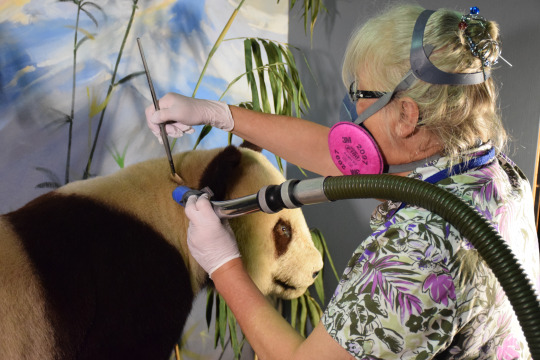
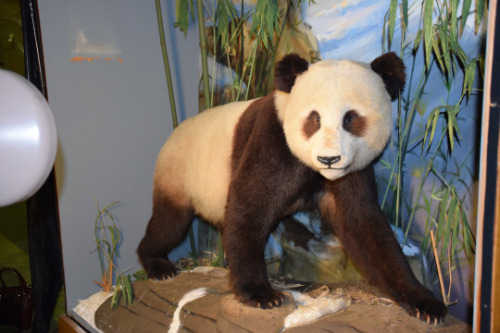
cleaning a panda diorama

by Kathleen Bodenlos

Gretchen Anderson is a conservator at Carnegie Museum of Natural History. She is restoring a panda diorama that will be prominently placed in our newly renovated gift shop. (Stay tuned for more on the gift shop in the next few weeks).

Here are 5 surprising things about conservation of a diorama.
1. Less is more: Use as few chemicals as possible

  • Soot sponges, water, and vacuums are the top
    choices in lieu of harsh chemicals. Water is one of the most powerful solvents!
  • Gretchen begins with a fan brush and a HEPA (high-efficiency particulate air filter) vacuum to remove as much dust and arsenic traces as possible.
  • She is wearing a protective face mask and gloves to protect herself from any arsenic that might be stirred up.
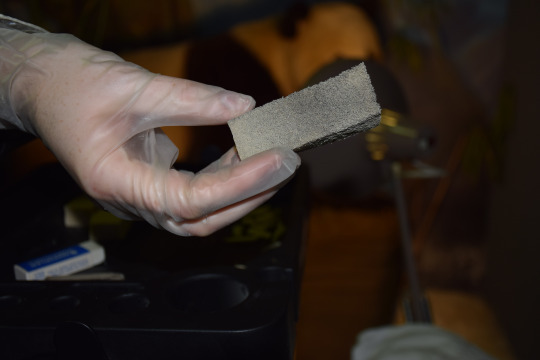
  • Soot sponges are a rubber sponge designed to absorb soot and are used dry. Another handy tool is a makeup sponge. A make-up sponge is used when just a little tiny bit of water is needed to move the dirt.
  • Particulate dust (dust, dirt and soot) is extremely damaging to museum collections. It is best to remove it.
sponge covered in dust

2. Some conservationists also do a little restoration on paint

  •  When in doubt go lighter to match a color
  • Think impressionism and mottle with several colors if possible. A good example is the natural colors on a rock.
restored panda diorama

3. Move ‘em up and head ’em out—RAWHIDE!

  • For many older dioramas, the skin of the animal is literally a raw hide. They are often treated with arsenic to keep the hide from becoming infested with insects and being eaten/damaged
  • Mercury, and other pesticides were also used to prevent insect attack on some museum collections.
  • A sealed exhibit case helps to keep the diorama safe from damage. Dust and insects are kept out. If there are any pesticides inside the case these are kept in – protecting the public.
  • Plant material
    ·  Not all of it is fake. Some of the actual plant materials are painted to make them look alive
    ·  Even a non-expert can discern what is fake and what is real upon close examination
  •  Save money—use less
    ·  When washing clothes the soap is to keep dirt from settling back on clothes
    ·  Agitation and water are the real cleaner
    ·  Use 1/3 less soap and your clothes will be clean
    and you will ensure that all the soap is removed which will help protect your
    skin

Kathleen Bodenlos is the Director of Marketing at Carnegie Museum of Natural History. Museum employees are encouraged to write about their unique experiences.

Filed Under: Blog Tagged With: behind the scenes, Collection Care and Conservation, conservation, diorama, gift shop, Gretchen Anderson, museums, Pittsburgh

  • « Go to Previous Page
  • Page 1
  • Page 2
  • Page 3

sidebar

About

  • Mission & Commitments
  • Directors Team
  • Museum History

Get Involved

  • Volunteer
  • Membership
  • Carnegie Discoverers
  • Donate
  • Employment
  • Events

Bring a Group

  • Groups of 10 or More
  • Birthday Parties at the Museum
  • Field Trips

Powdermill

  • Powdermill Nature Reserve
  • Powdermill Field Trips
  • Powdermill Staff
  • Research at Powdermill

More Information

  • Image Permission Requests
  • Science Stories
  • Accessibility
  • Shopping Cart
  • Contact
  • Visitor Policies
One of the Four Carnegie Museums | © Carnegie Institute | Privacy Policy | Terms of Use | Accessibility
Rad works here logo