• Skip to primary navigation
  • Skip to main content
  • Skip to primary sidebar

Carnegie Museum of Natural History

One of the Four Carnegie Museums of Pittsburgh

  • Visit
    • Buy Tickets
    • Visitor Information
    • Exhibitions
    • Events
    • Dining at the Museum
    • Celebrate at the Museum
    • Powdermill Nature Reserve
    • Event Venue Rental
    • Gift Cards
  • Learn
    • Field Trips
    • Educator Information
    • Programs at the Museum
    • Bring the Museum to You
    • Guided Programs FAQ
    • Programs Online
    • Climate and Rural Systems Partnership
  • Research
    • Scientific Sections
    • Science Stories
    • Science Videos
    • Senior Science & Research Staff
    • Museum Library
    • Science Seminars
    • Scientific Publications
    • Specimen and Artifact Identification
  • About
    • Mission & Commitments
    • Directors Team
    • Museum History
  • Tickets
  • Give
  • Shop

herpetology

June 8, 2016 by wpengine

A Holotype with a History

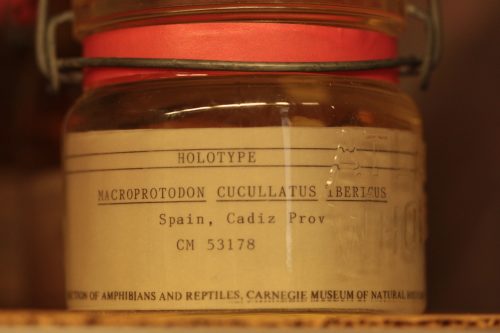
jar with a label that reads "Macroprotodon cucullatus iberius"by José Padial

This jar contains the holotype of Macroprotodon cucullatus iberius, a subspecies of false smooth snake, in the herpetology collection of Carnegie Museum of Natural History.

The holotype is the name-bearer of a species and every species recognized by scientists is associated to an holotype.

The specimen was collected in Cadiz Province, Spain by American herpetologist Stephen Busack. Because of his knowledge of
Spanish, Stephen Busack was deployed in Rota Naval Base during the Vietnam War, and he used his spare time to research the area’s poorly known local fauna of amphibians and reptiles.

His research revealed new species, and the precise locality data he collected is now key to demonstrate the radical transformation that the environment of the area has experienced during the last 40 years.

Many of the populations studied by Busack are now gone. Populations from Cadiz Province are now considered to belong to the species Macroprotodon brevis and it is the smaller and rarest snake of the Iberian Peninsula. It feeds on lizards, baby snakes, blind snakes, and even individuals of its own species!

José Padial is the William and Ingrid Rea Assistant Curator of Herpetology at Carnegie Museum of Natural History. He most recently traveled to the remote Vilcabamba mountains of Peru in the pursuit of biodiversity research. Read more at www.tumblr.com/blog/expeditions-carnegiemnh.
Filed Under: Blog Tagged With: collections, conservation, herpetology, museums, Pittsburgh, snakes

May 4, 2016 by wpengine

Fire Destroys Museum Collection  in Delhi

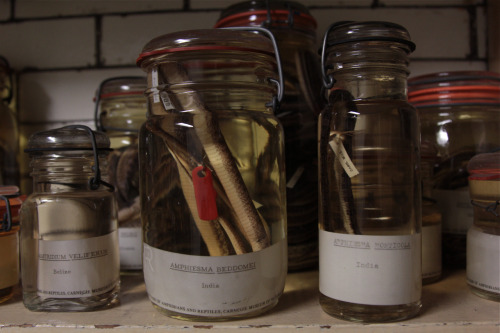
Specimens in Carnegie Museum of Natural History's Alcohol House
Carnegie Museum of Natural History’s collection includes 2855 specimens from India, mostly collected by Carl Gans and collaborators from the National Museum of Natural History in Delhi.

by Jose M. Padial

On April 26, a massive fire devoured the National Museum of Natural History in Delhi,
India.

The museum was home to invaluable collections and played a crucial role in environmental education in a country suffering of rampant habitat destruction.

This is a great loss for nature lovers and for the museum world but also a particular tragedy for the Carnegie Museum of Natural History. The Carnegie has an important historical connection with the museum in Delhi, for during the early stages of its development, curatorial staff from the Carnegie helped to train museum personnel and build their collections.

We have selected some items from the herpetology collection and archives to pay homage to the National Museum in Delhi and express our support and condolences to our colleagues in India.

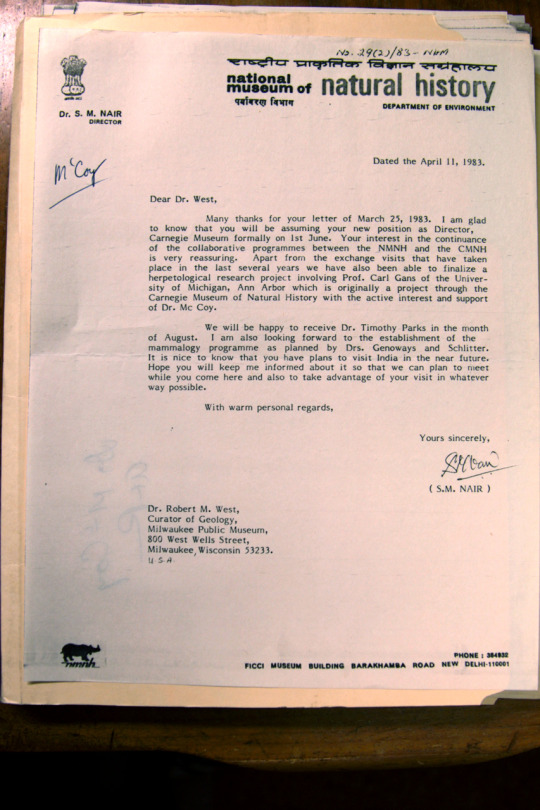
photo of a letter described below

Letter dated April 11, 1983, written by Dr. Nair, director of the National Museum of Natural History in Delhi, and addressed to Dr. Robert M. West, Curator of Geology at the Milwaukee Public Museum, who was about to become director of the Carnegie Museum of Natural History. The letter mentions ongoing collaborations between the two museums, especially in the area of herpetology under the supervision of Dr. Jack McCoy and Dr. Carl Gans.

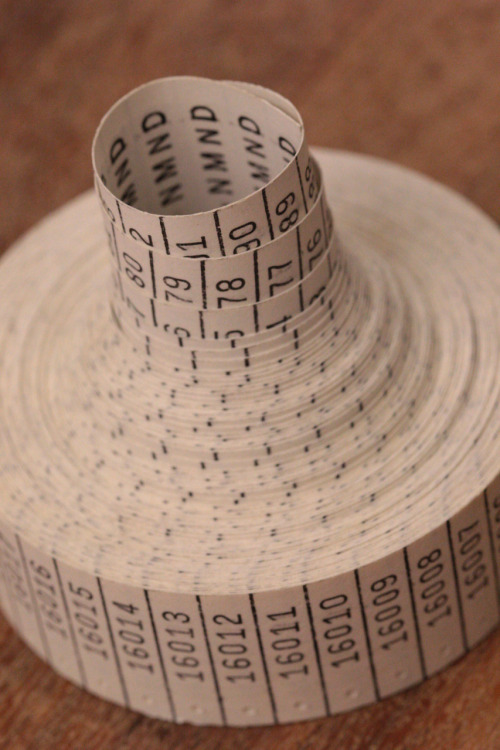
Museum tags for the National Museum of Natural History in Delhi ordered by Carnegie Curator of Amphibians and Reptiles Jack McCoy and fabricated in the US by the National Tag Company
Museum tags for the National Museum of Natural History in Delhi ordered by Carnegie Curator of Amphibians and Reptiles Jack McCoy and fabricated in the US by the National Tag Company.

Museum tags for the National Museum of Natural History in Delhi ordered by Carnegie
Curator of Amphibians and Reptiles Jack McCoy and fabricated in the US by the
National Tag Company.


José Padial is the William and Ingrid Rea Assistant Curator of Herpetology at Carnegie Museum of Natural History. He most recently traveled to the remote Vilcabamba mountains of Peru in the pursuit of biodiversity research. Read more at www.tumblr.com/blog/expeditions-carnegiemnh.
Filed Under: Blog Tagged With: collections, herpetology

April 21, 2016 by wpengine

Carnegie Museum Scientist Discovers New Species of Frog

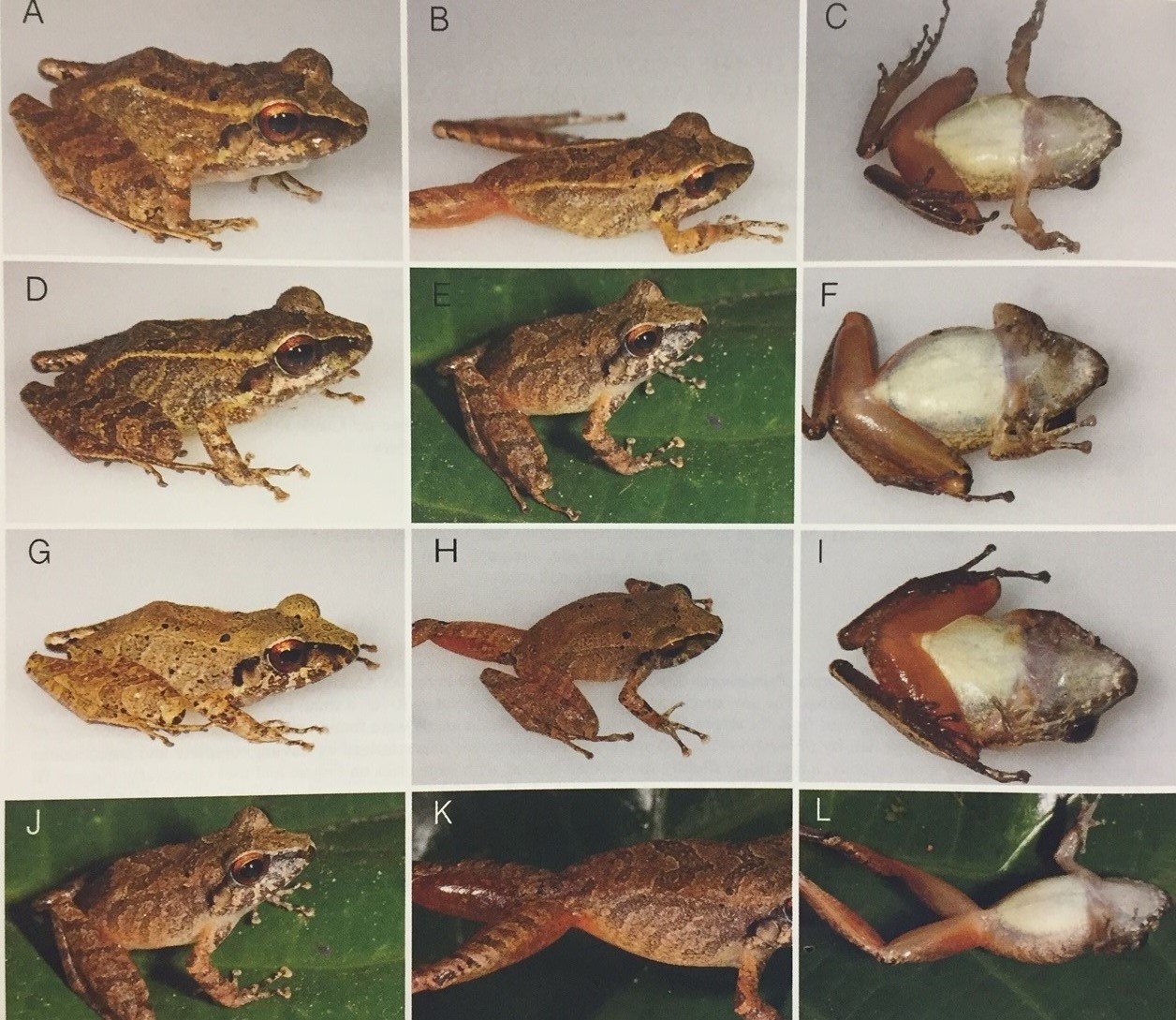
Pristimantis iiap frog
Discovering a new species is no easy undertaking in 2016.

Dr. José Padial and a team of scientists had to venture deep into the Amazonian rainforest where they trod through dense bamboo and the dark of night to discover a new species of frog that was unknown to science until now.

Padial, the Carnegie Museum of Natural History assistant curator of amphibians and reptiles, led the team of scientists into the Peruvian back country in 2014, where they identified a new species of frog – Pristimantis iiap. The frog was named and described in the February 2016 Annals of the Carnegie Museum of Natural History.

The team found and identified a species of frog in the lowland forests of the Peruvian Amazon calling after dark along the bamboo dominated forests of the Sepahua River, a small tributary of the Urubamba River.

Pristimantis iiap, was named after the Instituto de Investigaciones de la Amazonia Peruana (Peruvian Amazon Research Institute or IIAP) for its role in biodiversity research and conservation.

Pristimantis iiap belongs to the Pristimantis conspicillatus species group, a group that has a broad distribution in northern South America across a diversity of habitats that include the Amazonian forests, Andean hills, the dry forests of the Cerrado, and the Mata Atlantica of eastern Brazil. Analyses of its mating call and anatomical traits provided evidence of the distinctiveness of this new species.

The 2014 trip was part of a series of expeditions in the Fitzcarrald Arch in southeastern Peru, one of the least explored areas of the Amazon basin. Little is known about the herpetofauna there, but this expedition and other recent explorations have discovered that there are more reptiles and lizards in that area than was previously thought. Several other new species are still being described, so stay tuned for more fascinating discoveries!

José Padial is the William and Ingrid Rea Assistant Curator of Herpetology at Carnegie Museum of Natural History. He most recently traveled to the remote Vilcabamba mountains of Peru in the pursuit of biodiversity research. Read more at www.tumblr.com/blog/expeditions-carnegiemnh.
Filed Under: Blog Tagged With: discovery, herpetology, new species

March 28, 2016 by wpengine

Unseen at Carnegie Museum of Natural History: The Alcohol House

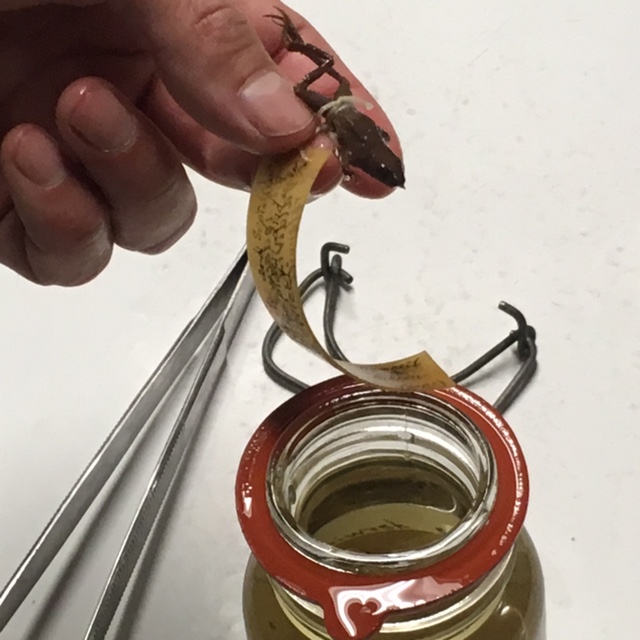
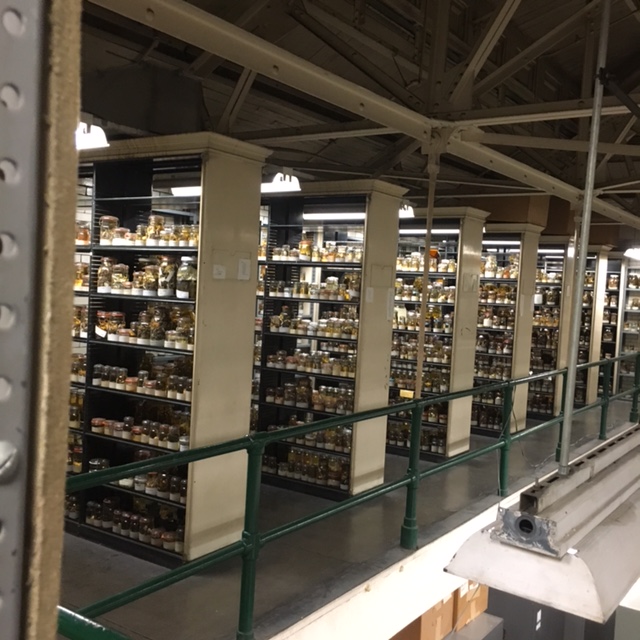
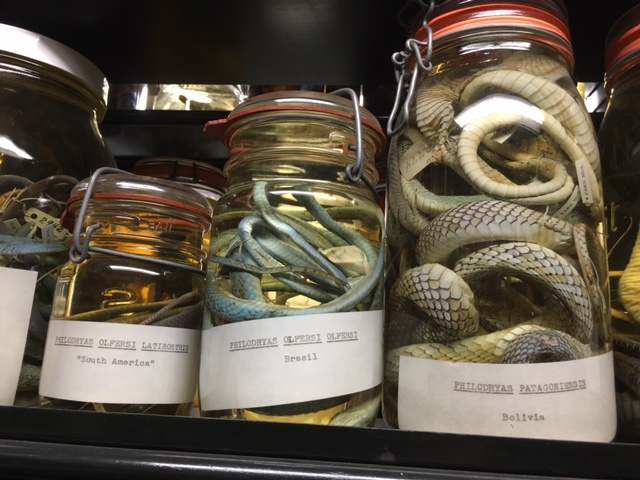
specimen in a jar shelves of specimens at alcohol house snakes in jars with labels
Away from the public eye, scientists at Carnegie Museum of Natural History have access to more than 200,000 jarred, labeled, and perfectly preserved specimens stored in The Alcohol House.

The three-story storage room has been a part of the museum for more than 100 years and is a herpetologist’s dream. It boasts about 65,000 salamanders, 54,000 frogs, 29,500 snakes, 29,500
turtles, and 30,500 lizards, all preserved in ethyl alcohol.

A past curator of the Alcohol House, C. J. McCoy, said the room is like “a three-way hybrid between a pickle warehouse, a reference library, and a mail-order establishment.”

Scientists use the specimens for their research, and can compare the size, shape, and extremities of reptiles and amphibians from 100 years ago with those found today and identify new species.

Filed Under: Blog Tagged With: alcohol house, herpetology

  • « Go to Previous Page
  • Page 1
  • Interim pages omitted …
  • Page 4
  • Page 5
  • Page 6

sidebar

About

  • Mission & Commitments
  • Directors Team
  • Museum History

Get Involved

  • Volunteer
  • Membership
  • Carnegie Discoverers
  • Donate
  • Employment
  • Events

Bring a Group

  • Groups of 10 or More
  • Birthday Parties at the Museum
  • Field Trips

Powdermill

  • Powdermill Nature Reserve
  • Powdermill Field Trips
  • Powdermill Staff
  • Research at Powdermill

More Information

  • Image Permission Requests
  • Science Stories
  • Accessibility
  • Shopping Cart
  • Contact
  • Visitor Policies
One of the Four Carnegie Museums | © Carnegie Institute | Privacy Policy | Terms of Use | Accessibility
Rad works here logo