• Skip to primary navigation
  • Skip to main content
  • Skip to primary sidebar

Carnegie Museum of Natural History

One of the Four Carnegie Museums of Pittsburgh

  • Visit
    • Buy Tickets
    • Visitor Information
    • Exhibitions
    • Events
    • Dining at the Museum
    • Celebrate at the Museum
    • Powdermill Nature Reserve
    • Event Venue Rental
    • Gift Cards
  • Learn
    • Field Trips
    • Educator Information
    • Programs at the Museum
    • Bring the Museum to You
    • Guided Programs FAQ
    • Programs Online
    • Climate and Rural Systems Partnership
  • Research
    • Scientific Sections
    • Science Stories
    • Science Videos
    • Senior Science & Research Staff
    • Museum Library
    • Science Seminars
    • Scientific Publications
    • Specimen and Artifact Identification
  • About
    • Mission & Commitments
    • Directors Team
    • Museum History
  • Tickets
  • Give
  • Shop

herpetology

March 26, 2018 by wpengine

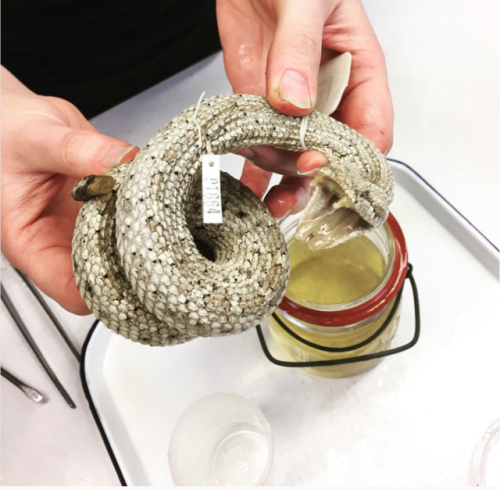
Crotalus cerastes laterorepens; Sidewinder

grey snake specimen, Crotalus cerastes laterorepens; Sidewinder

This is a venomous pit viper species. Pit vipers are distinguished by the heat sensing pit organ located on each side of their head. This specimen was collected from California in 1958.


This post was originally posted on our curatorial assistant’s Instagram, which features specimens in the museum’s historic Alcohol House.
Filed Under: Blog Tagged With: herpetology, poisonus

March 6, 2017 by wpengine

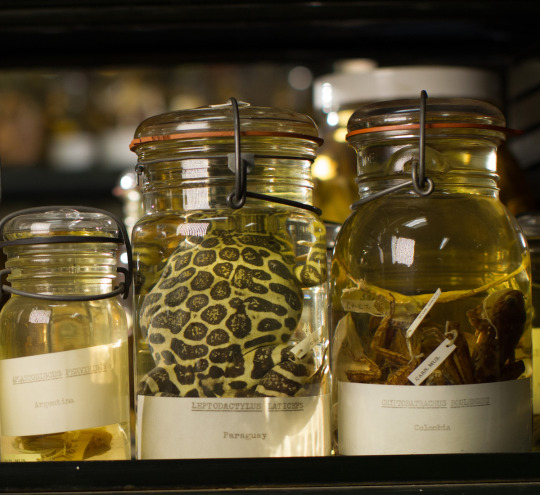
Preserving museum specimens

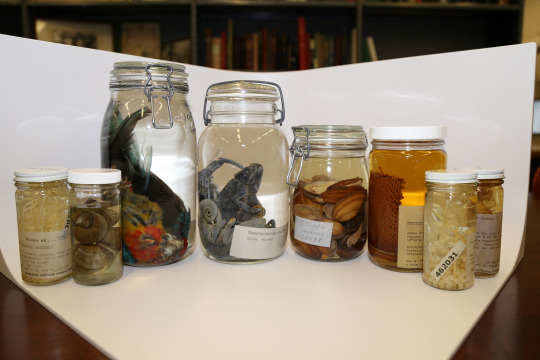
plant and animal specimens preserved in glass jars
Pictured above from left to right: Maianthemum racamosum flowers, Cipangopaludina chinensis, Platycercus eximius, Chameleo gracilis gracilis, Elliptio jayensis, Monstera of Costa Rica, Maianthemum racamosum fruits, and Polygonatum biflorum

by Kaylin Martin

Reptile and amphibian specimens are not the only things stored in 70% ethanol in Carnegie Museum of Natural History’s Alcohol House!

Departments such as Ornithology, Botany, and Mollusks preserve select specimens in fluid for further scientific use. This method preserves soft tissues that would otherwise need to be removed, maintains the natural three-dimensional shape, and slows down DNA degradation.

Fluid collections are more difficult to maintain, however, as they take up more space and have to be regularly monitored to prevent the specimens from drying out.

Keep an eye out for our future Alcohol House public tours to see these specimens up close and to meet collection managers.


Kaylin Martin is a curatorial assistant in the Section of Herpetology. She blogs about the collection in Carnegie Museum of Natural History’s historic Alcohol House, which is home to thousands of fluid-preserved specimens.

Filed Under: Blog Tagged With: alcohol house, herpetology, Kaylin Martin

March 2, 2017 by wpengine

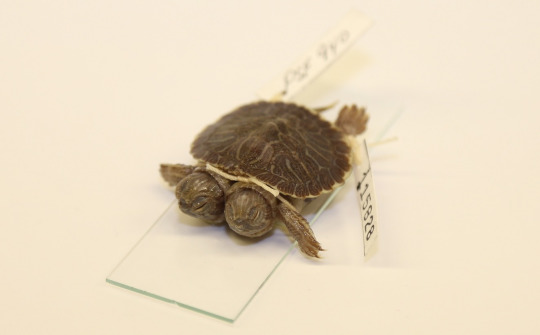
Two-headed Turtle Specimen

Small brown turtle with two fully developed heads.

by Kaylin Martin

Red-eared sliders (Trachemys scripta elegans) are the most popular pet turtles in the United States. This one in Carnegie Museum of Natural History’s Alcohol House has two heads. Due to extensive trading and people releasing their pets into the wild, red-eared sliders are listed as one of the world’s 100 most invasive species.


Kaylin Martin is a curatorial assistant in the Section of Herpetology. She blogs about the collection in Carnegie Museum
of Natural History’s historic Alcohol House, which is home to thousands of fluid-preserved specimens.

Filed Under: Blog Tagged With: alcohol house, herpetology, Kaylin Martin

February 22, 2017 by wpengine

Alcohol House Improvements

Reptile specimens in jars

by Kaylin Martin

Tucked away under the public galleries of Carnegie Museum of Natural History are thousands of glass jars containing decades of collecting efforts. This collection space, known as the Alcohol House, is the ninth largest herpetology collection in the United States and the most complete collection of Pennsylvanian amphibians and reptiles in existence. The Alcohol House is named for the 70% ethanol alcohol that collection managers use to preserve specimens and prevent
degradation and the formation of bacteria.

The importance of this collection prompted the museum to find funding to improve collection preservation and facilitate public interaction. The Alcohol House secured a three-year grant from the National Science Foundation to hire a full time curatorial assistant, Kaylin Martin, to coordinate efforts to revamp the storage facilities.

The grant will enable Collection Manager Stephen Rogers and Kaylin to purchase new equipment, such as jars, gaskets, tanks, photography equipment, shelving inserts, and specialized cabinets, to update the storage facilities.

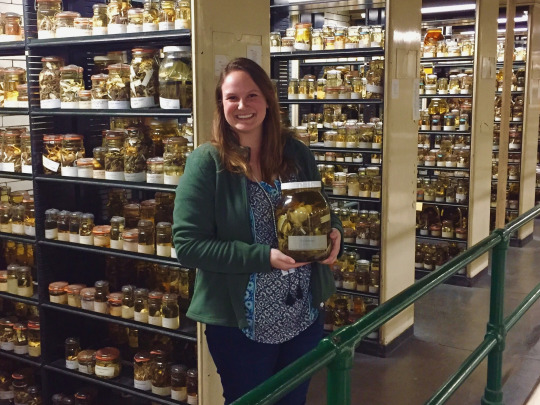
Collections Assistant Kaylin Martin.

During this revamp, they will streamline the database that contains specimen records, reorganize the facility based on updated taxonomy, and tackle the project of digitizing holotype and paratype specimens. The public web interface iDigBio hosts 170,000+ specimen records for public use and research.

The goal is to link the most important specimen records with images. Digitizing the collection makes it accessible to researchers around the world in a few short clicks without the need to travel to Pittsburgh.

Renovations are also under way to make the Alcohol House accessible to the public for guided tours. An accompanying exhibit is being planned for the museum’s public galleries, as well as an introductory exhibit to herpetology at the start of
the planned guided tours. Keep an eye out for the grand opening of these in the near future!

How can you contribute? Carnegie Museum of Natural History is always in need of volunteers to help maintain the wet specimen collection and catalog and update the database. Volunteers are invaluable assets to any museum collection in order to prevent degradation and mobilize data for researchers on a public interface.

If you are interested in helping to maintain this collection for future generations, please contact Kaylin Martin at martink@carnegiemnh.org


Kaylin Martin is a curatorial assistant in the Section of Herpetology. She blogs about the collection in Carnegie Museum of Natural History’s historic Alcohol House, which is home to thousands of fluid-preserved specimens.

Filed Under: Blog Tagged With: herpetology, Stephen Rogers

January 24, 2017 by wpengine

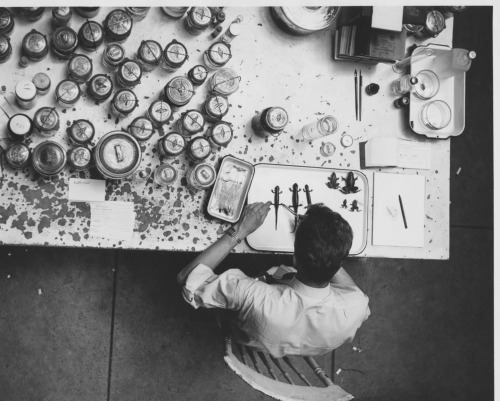
Neil Richmond at work

Neil Richmond at work in his lab
This photo shows Neil Richmond at work in his lab at Carnegie Museum of Natural History.

Richmond was the curator of Herpetology from 1955-1971 and the curator of Environmental Studies from 1971-1979.

Filed Under: Blog Tagged With: herpetologist, herpetology, museum history

November 9, 2016 by wpengine

Snake ID with a 3D Field Guide

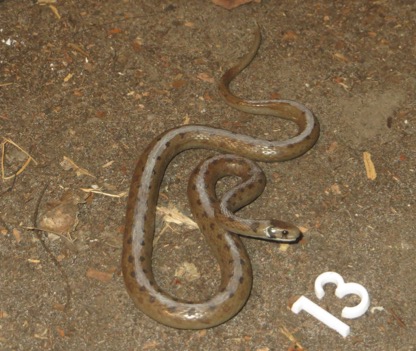
brown snake, Storeria dekayi

by Patrick McShea

In the wild, even the limited wild of our backyards, snakes don’t pose for identification near the numbers of convenient reference keys. Still, the small snake I encountered one cool November morning while raking leaves remained still enough for a prolonged close inspection.

The pencil-thin and ruler-length reptile was in a tight coil beneath a pile of leaves I had neglected to remove the previous afternoon. The unfamiliar creature apparently found both cover and relative warmth in the isolated pile, and I guessed it would depart on its own once the day warmed. As I gently replaced its leafy blanket I remembered where to find its identity.

Some natural museum exhibits function as three-dimensional field guides. Number 13 in the Non-Poisonous Snakes of Pennsylvania display case on the Daniel G. & Carole L. Kamin T-rex Overlook bears the simple descriptive name brown snake, and is known scientifically as Storeria dekayi.

With that information I found out more about the harmless creature I had unknowingly been sharing space with by visiting the website PAHERPS, which specializes in images and data related to Pennsylvania’s amphibians and reptiles and is a great tool for educators and curious gardeners alike.


Patrick McShea works in the Education and Visitor Experience department of Carnegie Museum of Natural History. Museum employees are encouraged to blog about their unique experiences of working at the museum.

Filed Under: Blog Tagged With: herpetology

  • « Go to Previous Page
  • Page 1
  • Interim pages omitted …
  • Page 3
  • Page 4
  • Page 5
  • Page 6
  • Go to Next Page »

sidebar

About

  • Mission & Commitments
  • Directors Team
  • Museum History

Get Involved

  • Volunteer
  • Membership
  • Carnegie Discoverers
  • Donate
  • Employment
  • Events

Bring a Group

  • Groups of 10 or More
  • Birthday Parties at the Museum
  • Field Trips

Powdermill

  • Powdermill Nature Reserve
  • Powdermill Field Trips
  • Powdermill Staff
  • Research at Powdermill

More Information

  • Image Permission Requests
  • Science Stories
  • Accessibility
  • Shopping Cart
  • Contact
  • Visitor Policies
Stay in the loop! Sign up for our newsletter(s).
One of the Four Carnegie Museums | © Carnegie Institute | Privacy Policy | Terms of Use | Accessibility
Rad works here logo