• Skip to primary navigation
  • Skip to main content
  • Skip to primary sidebar

Carnegie Museum of Natural History

One of the Four Carnegie Museums of Pittsburgh

  • Visit
    • Buy Tickets
    • Visitor Information
    • Exhibitions
    • Events
    • Dining at the Museum
    • Celebrate at the Museum
    • Powdermill Nature Reserve
    • Event Venue Rental
  • Learn
    • Field Trips
    • Educator Information
    • Programs at the Museum
    • Bring the Museum to You
    • Guided Programs FAQ
    • Programs Online
    • Climate and Rural Systems Partnership
  • Research
    • Scientific Sections
    • Science Stories
    • Science Videos
    • Senior Science & Research Staff
    • Museum Library
    • Science Seminars
    • Scientific Publications
    • Specimen and Artifact Identification
  • About
    • Mission & Commitments
    • Directors Team
    • Museum History
  • Tickets
  • Give
  • Shop

Hillman Hall of Minerals and Gems

June 28, 2024 by Erin Southerland

Mineral Gazing

by Debra Wilson

Have you ever gazed up at the sky and noticed a cloud that looks like a face, or an animal, or an object? You can apply the same concept when you visit Hillman Hall of Minerals and Gems! Many minerals on display have nicknames because of how they resemble certain animals, objects, or even characters from movies or TV shows. As you walk through the exhibits, let your imagination wander and search for minerals that look like things. Here are some to get you started.

Silver mineral that looks like an American flag
“The Flag” – Silver in the Native Elements case of the Systematic Mineral Collection
Image of the American flag that says "we here highly resolve that these dead shall not have died in vain...rememeber Dec. 7th!"
Photo credit: Allen Saalburg, Public domain, via Wikimedia Commons.
Nessie silver mineral
“Nessie” – Silver in Minerals from the Former Soviet Union exhibit
Loch Ness monster sculpture in the water
Photo credit: Immanuel Giel, Public domain, via Wikimedia Commons
snowball calcite on quartz
“Snowball” – Calcite on quartz in the Maramures District of Romania exhibit
snowball held in mitten-covered hands
Photo from Shutterstock.
Inch Worm berthierite on quartz
“Inch Worm” – Berthierite on quartz in The Maramures District of Romania exhibit
photo of an inch worm
Photo credit: gbohne from Berlin, Germany, CC BY-SA 2.0, via Wikimedia Commons
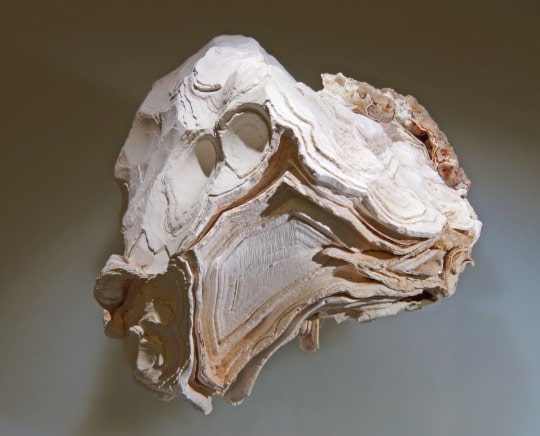
The Scream septarian concretion
“The Scream” – Septarian concretion in the Weathering Processes exhibit
"The Scream" painting
Image credit: Edvard Munch, Public domain, via Wikimedia Commons
the oyster natrolite on quartz
“The Oyster” –  Natrolite on quartz in the Deccan Plateau of India exhibit
oyster shell with a pearl
Photo from Shutterstock.
French fries laumontite
“French Fries” – Laumontite in Masterpiece Gallery
cup of French fries
Image by ha11ok from Pixabay.

As you enter Hillman Hall, check out the minerals in the Entrance Cube, their nicknames are on the labels. There are many more minerals on display throughout the hall that have acquired nicknames. Here’s just a handful of other nicknames for minerals in the exhibits, see if you can find them. Good luck and enjoy your mineral gazing!

NicknameExhibit
The BatIgneous Rocks
Polar BearWeathering Processes
Sea SlugThe Maramures District of Romania
The ChariotsThe Maramures District of Romania
Smog MonsterThe Maramures District of Romania
Sea SerpentPennsylvania Minerals and Gems
Pine Trees On a CliffOxides
BBQ ChipsMasterpiece Gallery
Cookies and CreamMasterpiece Gallery

Debra Wilson is Collection Manager for the Section of Minerals at Carnegie Museum of Natural History.

Related Content

How Do Minerals Get Their Names?

What Does Pittsburgh Have in Common with Mount Vesuvius?

Master of Optical Illusion

Carnegie Museum of Natural History Blog Citation Information

Blog author: Wilson, Debra
Publication date: June 28, 2024
Share this post!

  • Share on Twitter Share on Twitter
  • Share on Facebook Share on Facebook
  • Share on Pinterest Share on Pinterest
  • Share on LinkedIn Share on LinkedIn
  • Share on Reddit Share on Reddit
  • Share via Email Share via Email

Filed Under: Blog Tagged With: Deb Wilson, Debra Wilson, Hillman Hall, Hillman Hall of Minerals and Gems, minerals, Science News

September 22, 2022 by Erin Southerland

How to Hunt for Microbes

by Carla Rosenfeld

The definition of microorganism is any organism that is too small to be seen by the naked eye. They can be single-celled, like bacteria and archaea, or multi-celled, like fungi. Though they are extremely tiny as individuals, these organisms have major impacts on every one of our lives and the environment as a whole. For example, if you’ve ever eaten bread, yogurt, pickles, sauerkraut, or cheese, you have various microbes to thank for the distinctive form or flavor of those foods. But have you ever wondered how we study these tiny organisms out in the field? If they are so small, how do we find them? And once we find them, how do we collect them? 

In my research, I try to understand the role microbes play in cycling various elements through the environment. Recently, I’ve been working on a project with a team of people from University of Minnesota School of Earth and Environmental Sciences and Argonne National Lab, to try to understand how microbes influence wetland sediment geochemistry. To do this, a group of us have been trekking around to different riparian wetlands from northern Minnesota to South Carolina. 

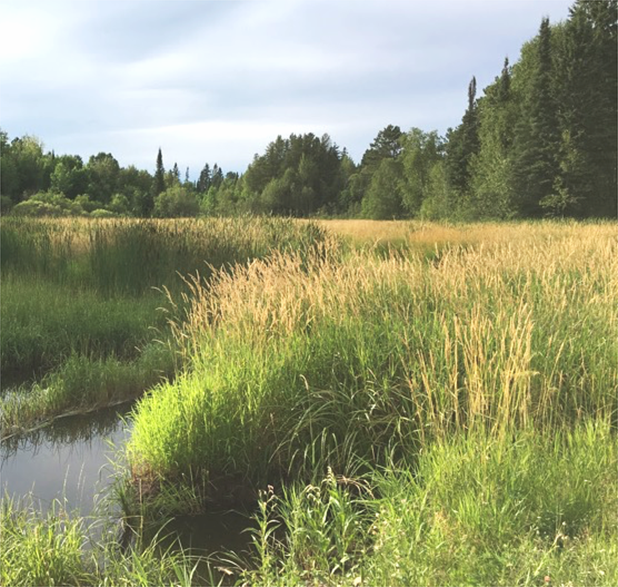
Riparian wetland in northern MN in our current studies.

To get our essential equipment to our field sites, we first pack everything we’ll need into giant coolers, and then seal the sturdy containers. If we’re flying to a distant site, we can ship the coolers to a location near our work site. If we’re driving, we just pack the coolers in a van to haul with us. The coolers are packed to the brim with our field equipment, clothing, gear (including waders and snake-proof boots), and lots of sunscreen and snacks. For work at some sites, we also take a canoe!

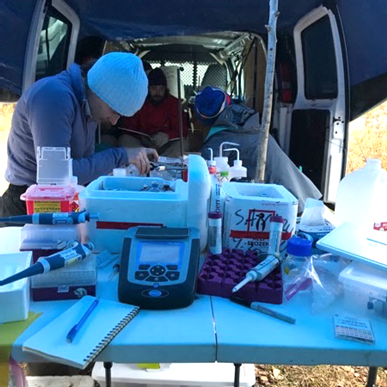
The packed coolers do double duty on our trips, because once we have emptied all our equipment out of them, we can fill them with ice to store the samples collected each day. Upon arrival at the field site, we set up a mobile lab on top of a folding table so that we can process our samples and do any time sensitive analyses. One key component of our mobile lab is a portable glove box, which is essentially a big plastic tent that we fill with nitrogen (yep, you guessed it… we also bring a tank filled with nitrogen gas!). We process our samples inside this tent so that we can cut, scrape, and separate our samples in the absence of oxygen. The controlled atmosphere within the tent is essential because the samples we collect come from underneath the water line, where little to no oxygen is present. Microbes that live below the water line have evolved different metabolic processes that don’t rely on oxygen. So, while we animals are all stuck breathing oxygen, many microbes can use different inorganic molecules like sulfate or nitrate in their respiration. The minerals that form and persist below the water line are also extremely sensitive and may start changing if we expose them to oxygen. 

Mobile lab setup for time-sensitive analyses and sediment core processing.

To collect our samples, we use a coring device…which is a fancy term for something that shoves sturdy 7 cm diameter plastic tubes down into the sediment. The tubes are approximately 60 cm-long sections of clear PVC pipe, and we push them as far down as we can. Then we pull up a sediment-filled core that ranges in length from 30-50 cm (that’s about the length of 2-6 bananas placed end to end). Once the core is removed, the clock is ticking for us to separate all our samples out and do our analyses as quickly as possible.

To buy some extra processing time, the first thing we do is dunk our entire sediment-filled PVC tube into a container of liquid nitrogen. The temperature of liquid nitrogen is -90 ˚C… which is cold enough to immediately freeze our samples on contact! We freeze our samples because it slows down or stops essentially all chemical and biological activity and preserves important molecules like DNA (deoxyribonucleic acid) and RNA (ribonucleic acid) that, once collected, can give us clues into what microbes are present in our system. Once our cores are frozen, we transfer them into our oxygen free tent, and remove the full core and separate sections of it based upon depth below the water line, sediment type, or other distinguishing features. We collect some samples to send off to labs for DNA or RNA sequencing. Other samples are collected to bring back to our labs to determine what minerals are present, and for further analysis of other chemical components present in sediment cores.

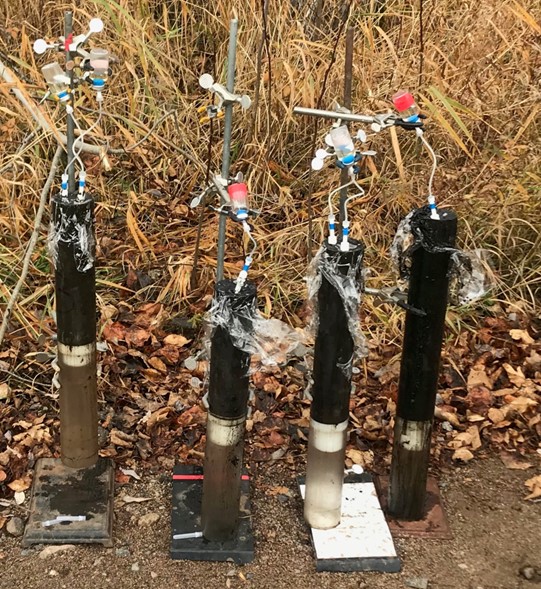
We also collect some cores that we don’t freeze so that we can collect the porewater, the liquid filling all the spaces between sediment grains, and living microbes. The chemistry of the porewater is highly related to sediment microbial activity and geochemistry of the solid sediments. To collect the waters, we stick porous tubes into the sediment cores, and connect those tubes to vials that have a vacuum inside of them, the same mechanical process used when you have your blood drawn at the doctor’s office. To collect living microbes, we take small scoops of sediment and store them in a refrigerator until we get back to the lab and can use the sediment to inoculate microbial growth media. That’s how we eventually add to our microbial culture library, a collection of living microbes with various living strategies and traits that we keep at the museum for research and to lend out to other researchers all over the world. 

Collecting sediment porewaters from cores collected from two different locations within the riparian wetland.

For a comprehensive understanding of how minerals and microbes vary within the riparian wetland, we repeat procedures of collecting and processing core samples throughout the wetland and at intervals along predetermined lines known as transects, that cross streams and intersect important hydrologic features of the ecosystem. Often, we’ll return to field sites many times over the course of a year or multiple years, so we can better investigate how the microbial activity and geochemical processes change over time with the seasons, as a result of major storm events, or with other environmental factors.   

Carla Rosenfeld is Assistant Curator of Earth Sciences at Carnegie Museum of Natural History.

Related Content

Fungi Make Minerals and Clean Polluted Water Along the Way

What Do Minerals and Drinking Water Have To Do With Each Other?

Wulfenite and Mimetite: CMNH’s Crystal Banquet

Carnegie Museum of Natural History Blog Citation Information

Blog author: Rosenfeld, Carla
Publication date: September 22, 2022

Share this post!

  • Share on Twitter Share on Twitter
  • Share on Facebook Share on Facebook
  • Share on Pinterest Share on Pinterest
  • Share on LinkedIn Share on LinkedIn
  • Share on Reddit Share on Reddit
  • Share via Email Share via Email

Filed Under: Blog Tagged With: Carla Rosenfeld, Hillman Hall of Minerals and Gems, minerals, Science News

June 1, 2022 by Erin Southerland

Cryptocurrency and Its Environmental Impact

by Dr. Travis A. Olds

Since the onset of the pandemic, millions of new miners have begun working to uncover raw resources; however, these miners are not the typical rock movers at your local quarry. They are instead making cryptographic calculations that reward newly minted digital currency – cryptocurrency.

You have likely heard a great deal about cryptocurrency lately, but may not understand what it is and may be wondering how something that doesn’t exist physically could hold any value? Gold and silver, as minerals with unique physical properties, have market value beyond that of currency, but consider for a moment the $20 bill. This paper currency itself has little physical value; it costs just under 14 cents to produce it, but the value of the bill is based on the fact that millions of people use and rely on it daily. The situation is similar for cryptocurrency. High demand for use and ownership of cryptocurrency creates its value.

Some cryptocurrencies have experienced a meteoric rise, and recently, an equally dramatic fall in value. The details are complex from a technical perspective, but people find crypto attractive for several reasons: using and owning it is significantly more secure than traditional banking, there are no limits to how much can be moved, and you can move it at any time. All transactions, even those made internationally, can be completed in just seconds and with significantly lower fees than those charged by traditional banks. Additionally, new mining methods, called “proof of stake,” even allow people to invest with crypto and earn interest over time. 

Of course, there are new risks and controversies surrounding cryptocurrency that are not encountered in everyday banking and investing. Because crypto is decentralized, there is no governmental or organizational control, and this has many people questioning how to regulate and protect its use. Only a few vendors accept payments in cryptocurrency because of this. With conventional banking, every purchase, withdrawal, or deposit you make through a bank or credit union with cash or credit is tracked by an electronic ledger to verify and secure your activities. The government helps to regulate and ensure the safety of these required systems. 

Cryptocurrency, on the other hand, uses a shared and system-wide electronic ledger called the “blockchain.” All transactions made through the blockchain are tracked, verified, and securitized using rapid cryptographic calculations made via individual miners. This ongoing electronic verification process ensures the massive digital transaction ledger cannot be controlled or altered by individual users. Crypto miners contribute to the ongoing verification process by operating machines to run the necessary calculations. A fraction of a freshly minted electronic coin is awarded for the cryptography calculations one miner does to help secure a transaction, what is termed the “proof of work” consensus mechanism.

Cryptocurrency mining machine
A water-cooled computer used for mining cryptocurrency. A graphics card, the large rectangular component in the center of the image, makes the cryptographic calculations. 

Performing proof of work calculation consumes electricity. Globally, the amount of electricity used by crypto miners has increased exponentially since its inception and this has drawn controversy regarding its impact on our environment. Some large mining farms use more electricity in one day than most small cities or countries do in several; however, the total electricity used by crypto miners still makes up just a small percentage of that used by the traditional electronic banking and investing systems. In fact, traditional banking and crypto systems are both environmentally unfriendly in places that get their electricity from carbon-based power generation, such as coal, heating oil, and natural gas. In early 2022 here in Pennsylvania, 66% of our power came from carbon-based sources, with 30% from nuclear, and the remaining 3% from hydroelectric and other renewable sources. While that cocktail of energy sources makes electricity cheaper here than in most other states, it also means that Pennsylvanians indirectly emit considerably more carbon to keep their lights on. Coal, oil, and natural gas are the cheapest but also the three least efficient fuels for electricity generation and have collectively done the most harm to the environment. 

Specialized crypto mining hardware, including graphics cards and ASIC units, generates heat while performing rapid calculations, so it helps to mine in areas with cool weather. If the hardware can operate at a cooler temperature, it can perform more calculations, which is measured in hashes/second, and is used to quantify the rewards received. Many miners take advantage of the easy scalability of mining hardware, by building large farms that can contain thousands of graphics cards and make thousands of dollars per day, but that also consume enormous amounts of electricity.

The output from mining software shown in real time. Jobs (in magenta) are sent from the blockchain over the internet to your hardware to make calculations that secure transactions and mint new coins. Sometimes, your work is awarded with a share (green), which is redeemable for coins. 

Electrical inefficiency and negative environmental impact have encouraged some cryptocurrency coin developers to come up with more energy efficient algorithms for rewards, but implementation is a slow and complex process. Many miners focus on whichever cryptocurrency is most profitable on any given day, regardless of its efficiency. Many of the largest mining farms are built in areas where energy is cheapest, or where local governments provide property or other tax incentives. Typically, no consideration of environmental impact is made when establishing new farms. In contrast, small amateur and at-home miners with only a few graphics cards can mine cryptocurrency without much increase to their monthly electrical bill. It is possible to make a small profit if you live in an area with cheap electricity, or if you can offset the use with renewable energy, for example, by using solar panels. With two graphics cards, one can make up to $6 a day mining Ethereum, a currently extremely popular crypto coin. 

A screenshot with common metrics used to judge performance and profitability while mining Ethereum (ethermine.org). A high computation rate, or hashrate, given in units of Megahash/second, defines the chances for finding shares, which translate roughly to earnings based on the value of the coin that day.

The visible costs to start mining include buying the hardware, which can cost up to several thousand dollars, and paying for the electricity to power it. A mining “rig” with two graphics cards consumes 600 W, and costs $1.50 per day to mine $6 of Ethereum. Put that another way, the electricity needed to realize a $4.50 profit in one day is equivalent to leaving a 60W light bulb on continuously for 10 days. The invisible and usually overlooked cost of that profit is how roughly two-thirds of the electricity needed to profit was generated by burning fossil fuels and has indirectly but significantly contributed to climate change. 

Cryptocurrency is fraught with inefficiency, complexity, and controversy. The framework is constantly evolving and improving, and although it is far from replacing the day to day use of physical currency, many argue that digital currency is here for the long run. The development of less power-intensive mining methods and more energy efficient hardware is helping to offset the carbon footprint of crypto mining. Crypto mining will become more environmentally friendly in the future, as nuclear power and other renewables like solar and wind energy become cheaper, replacing the dirty and archaic coal and natural gas-burning power stations. 

Dr. Travis A. Olds is Assistant Curator of Minerals at Carnegie Museum of Natural History.

Related Content

Understanding Fossil Fuels Through Carnegie Museums’ Exhibits

Unidentified Gold Nugget

Sea Snails from Christmas Island (Money Cowries and Castor Bean Shells)

Carnegie Museum of Natural History Blog Citation Information

Blog author: Olds, Travis A.
Publication date: June 1, 2022

Share this post!

  • Share on Twitter Share on Twitter
  • Share on Facebook Share on Facebook
  • Share on Pinterest Share on Pinterest
  • Share on LinkedIn Share on LinkedIn
  • Share on Reddit Share on Reddit
  • Share via Email Share via Email

Filed Under: Blog Tagged With: climate change, Hillman Hall of Minerals and Gems, minerals, Science News, Travis Olds

January 14, 2022 by Erin Southerland

How Do Minerals Get Their Names?

by Debra Wilson

The naming of minerals has changed over time from its alchemistic beginnings to the advanced science of today. During this span minerals have usually been named for their physical characteristics, the locality where they were discovered, or a person. I have often been asked, “why do most mineral names end in ite?” The suffix “ite” is derived from the Greek word ites, the adjectival form of lithos, which means rock or stone. 

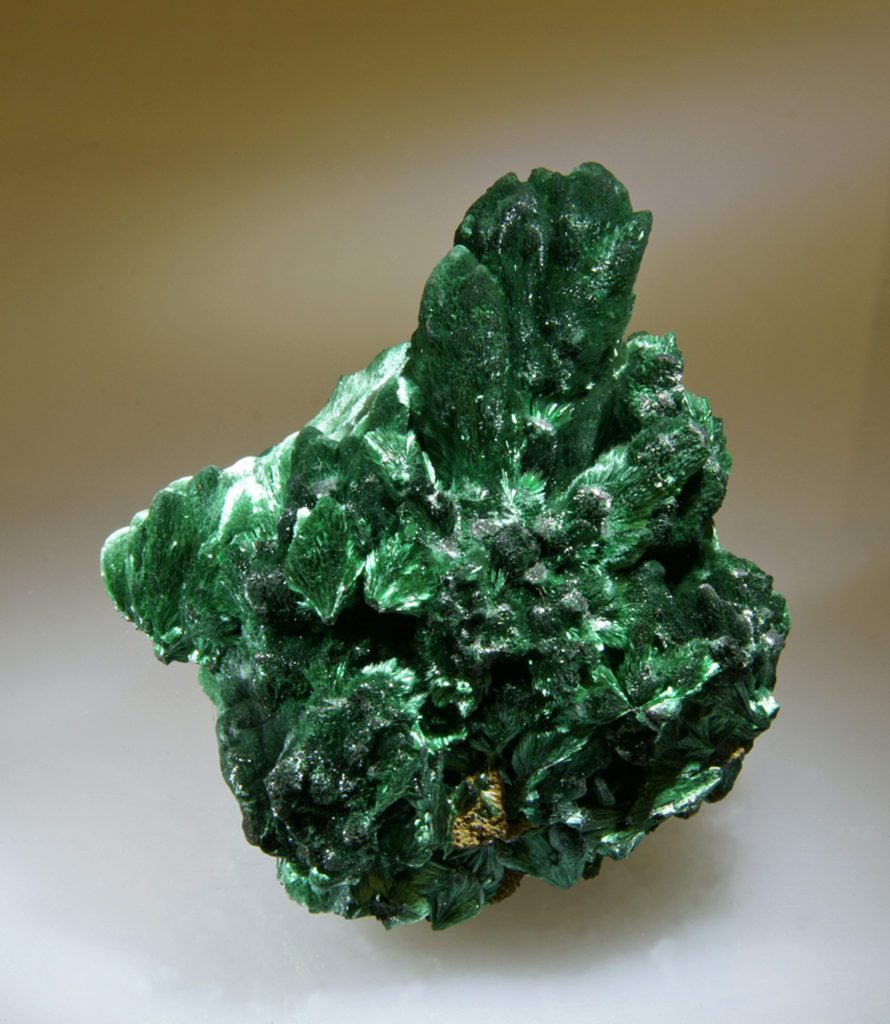
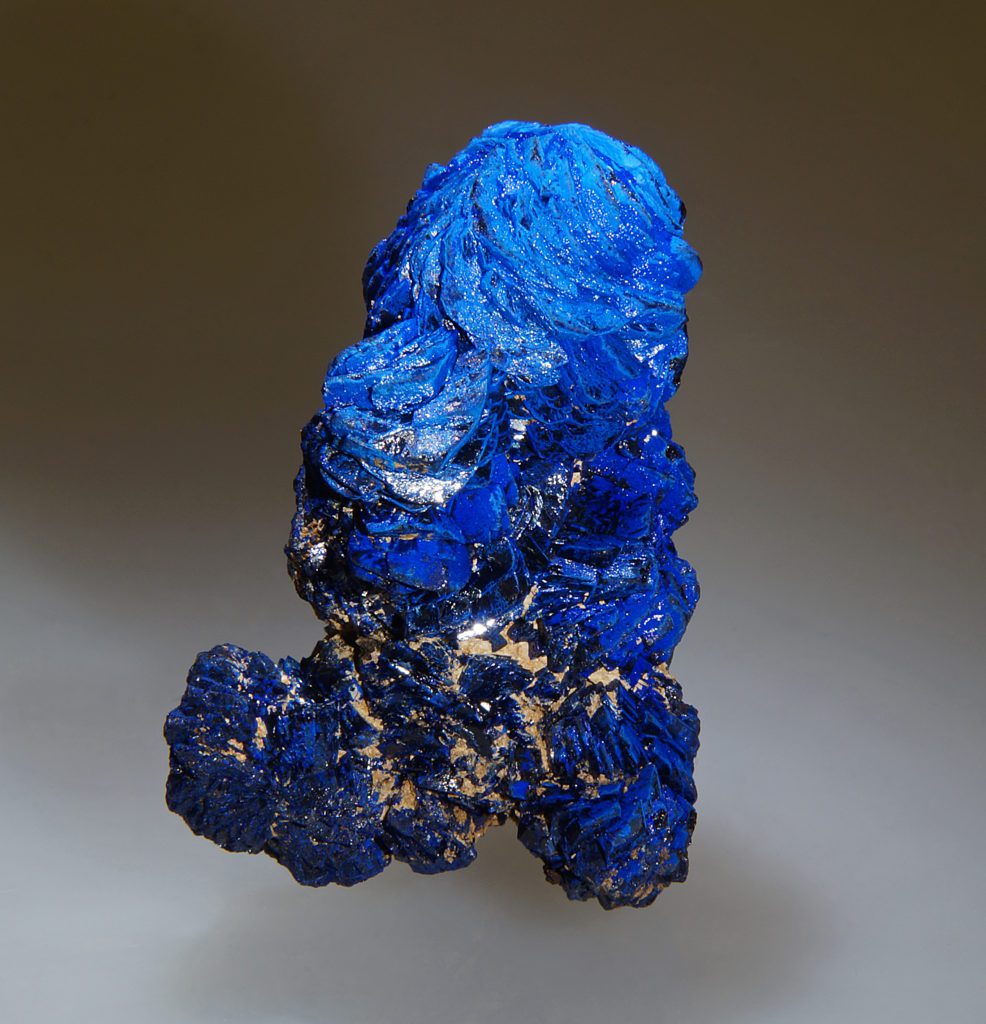
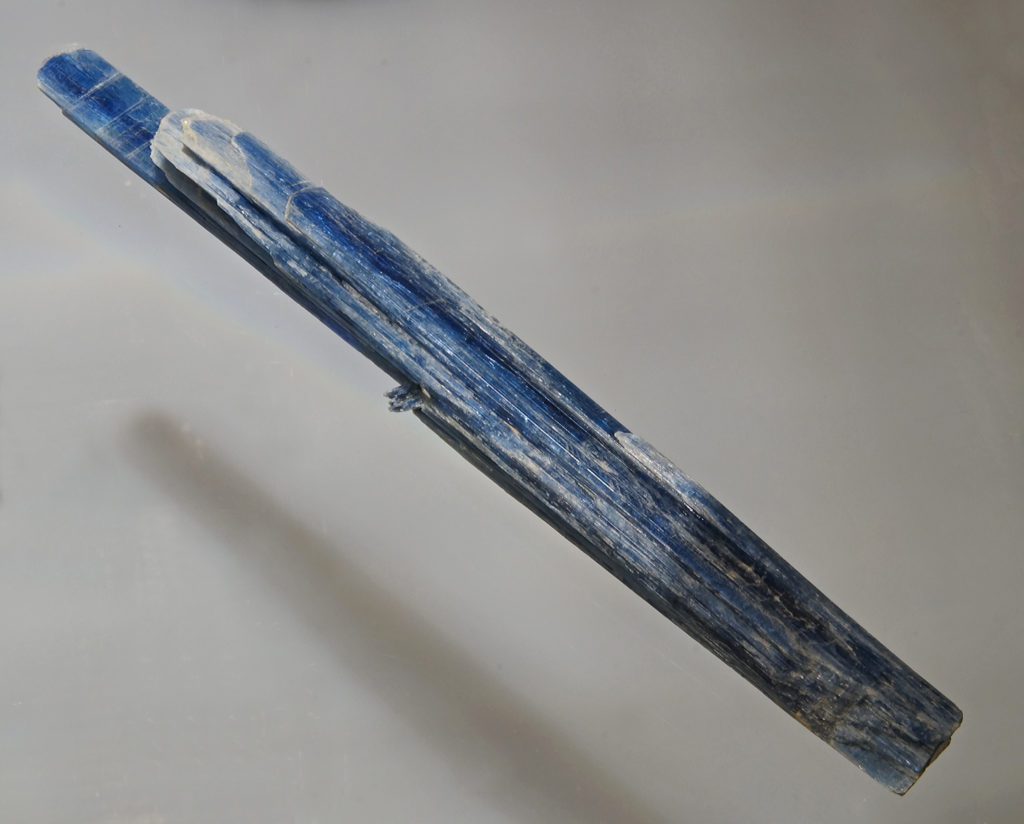
In antiquity, distinctive physical characteristics were often the source for the mineral name. One of these properties is color. For example, Malachite probably comes from the Greek word malakee or malache, used to describe the green leaves of the mallow bush. Azurite comes from azure, the Arabic word for blue, and Kyanite comes from kyanos, the Greek word for blue.  

green malachite mineral
Malachite
blue azurite mineral specimen
Azurite
blue kyanite specimen
Kyanite

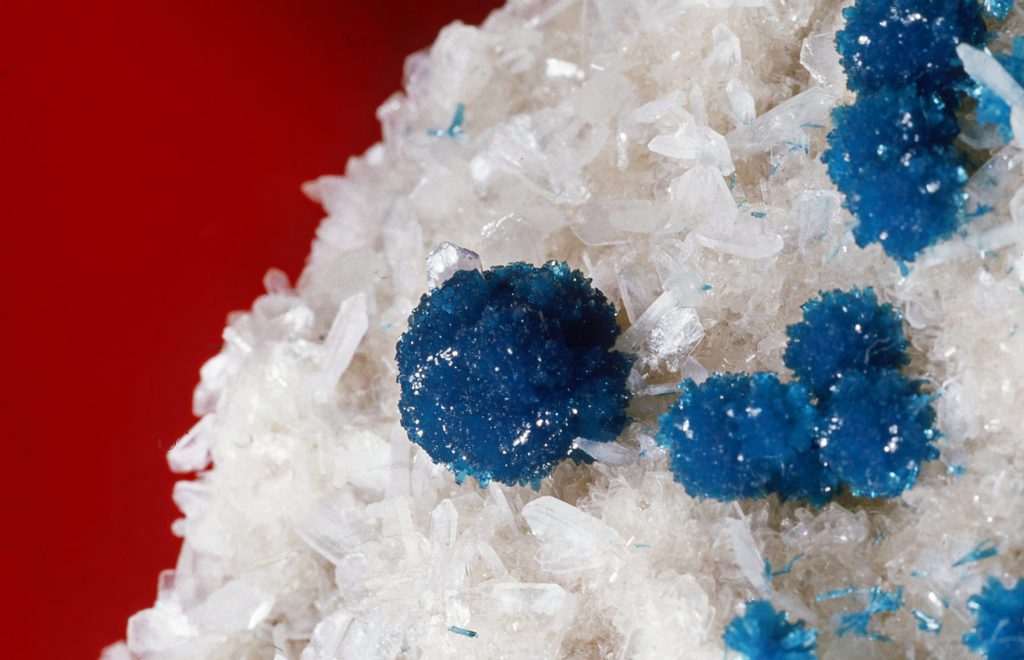
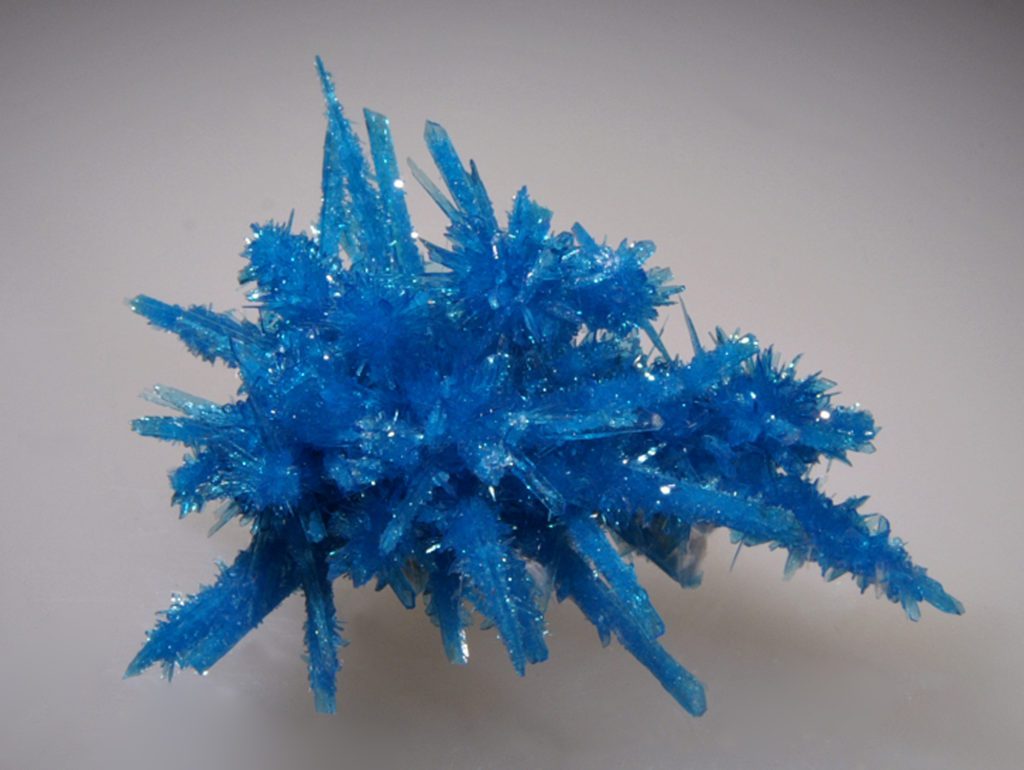
With the advancement of science, some minerals have been named for their chemistry or their structure. For example, Cavansite is named for its chemistry (calcium vanadium silicate), and Pentagonite is named for its five-fold symmetry (a pentagon is five-sided).

blue and white mineral specimen with red background
Cavansite
bright blue mineral specimen
Pentagonite

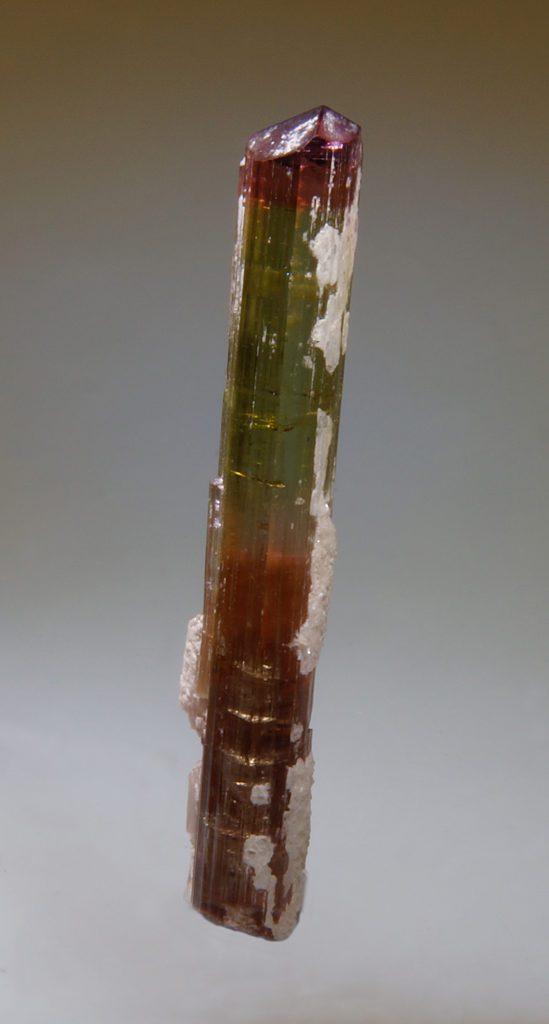
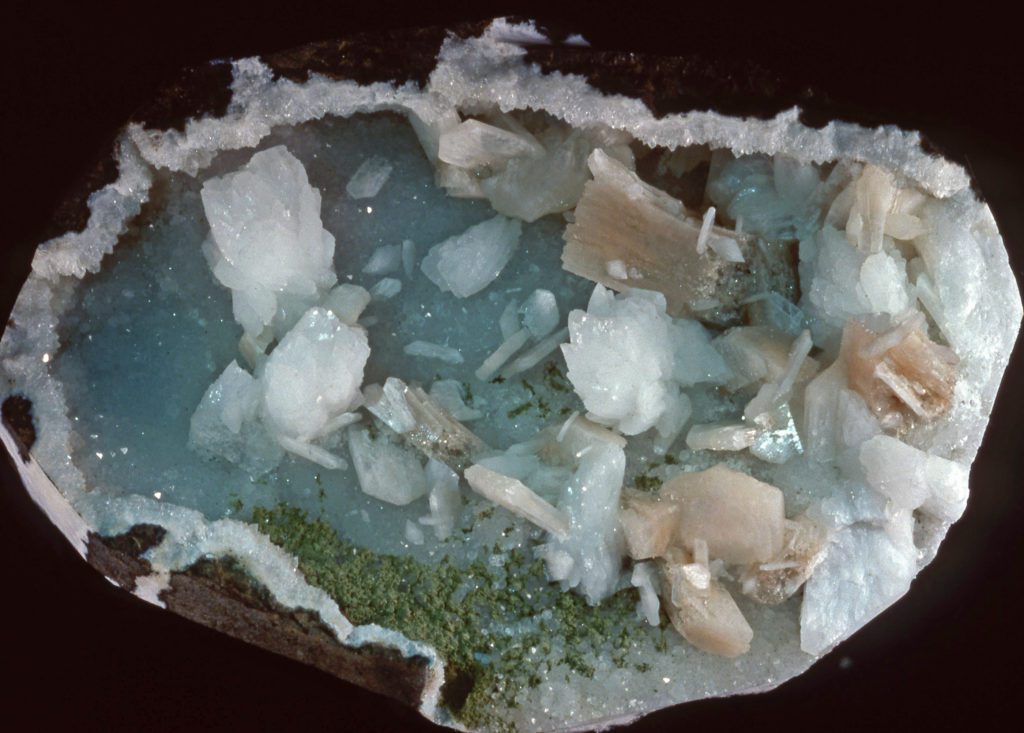
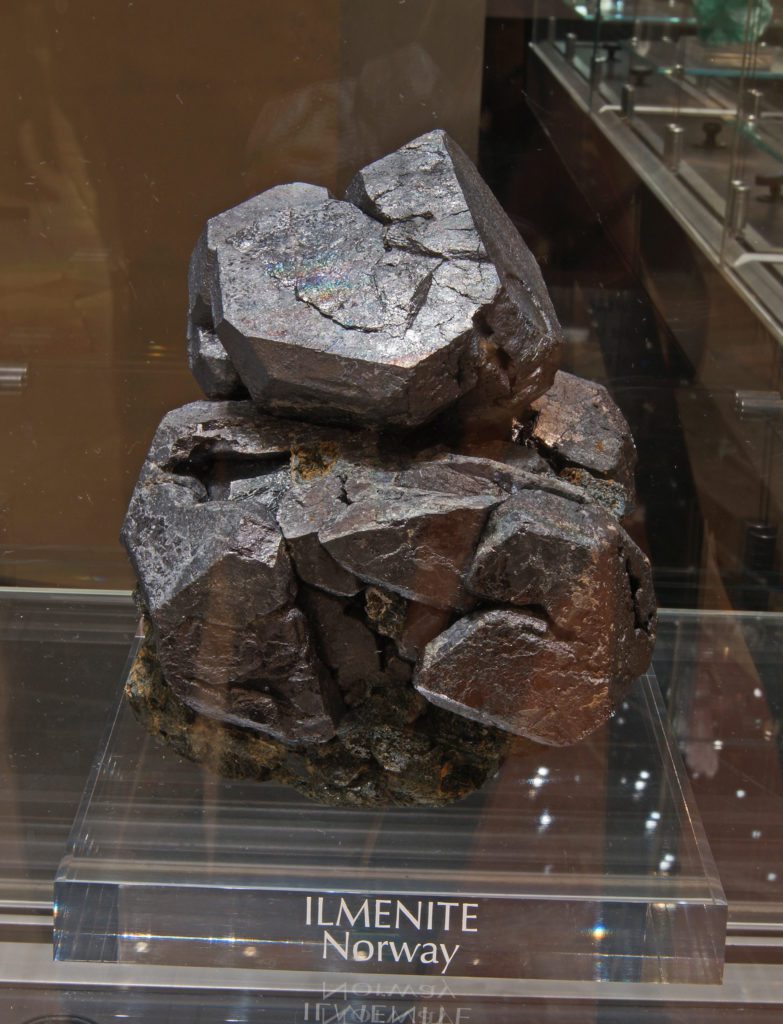
Minerals named for the first locality where they were found are quite obvious for those with a knack for geography: Elbaite was found on the Isle of Elba, Italy; Goosecreekite was found in the New Goose Creek Quarry in Leesburg, Virginia, and Ilmenite was found in the Ilmen Mountains of Russia; to name a few.

Elbaite
mineral specimen with white, pastel blue, pale pink, and mossy green coloration
Goosecreekite (white crystals)                                     
mineral specimen on a stand that says Ilmenite Norway
Ilmenite

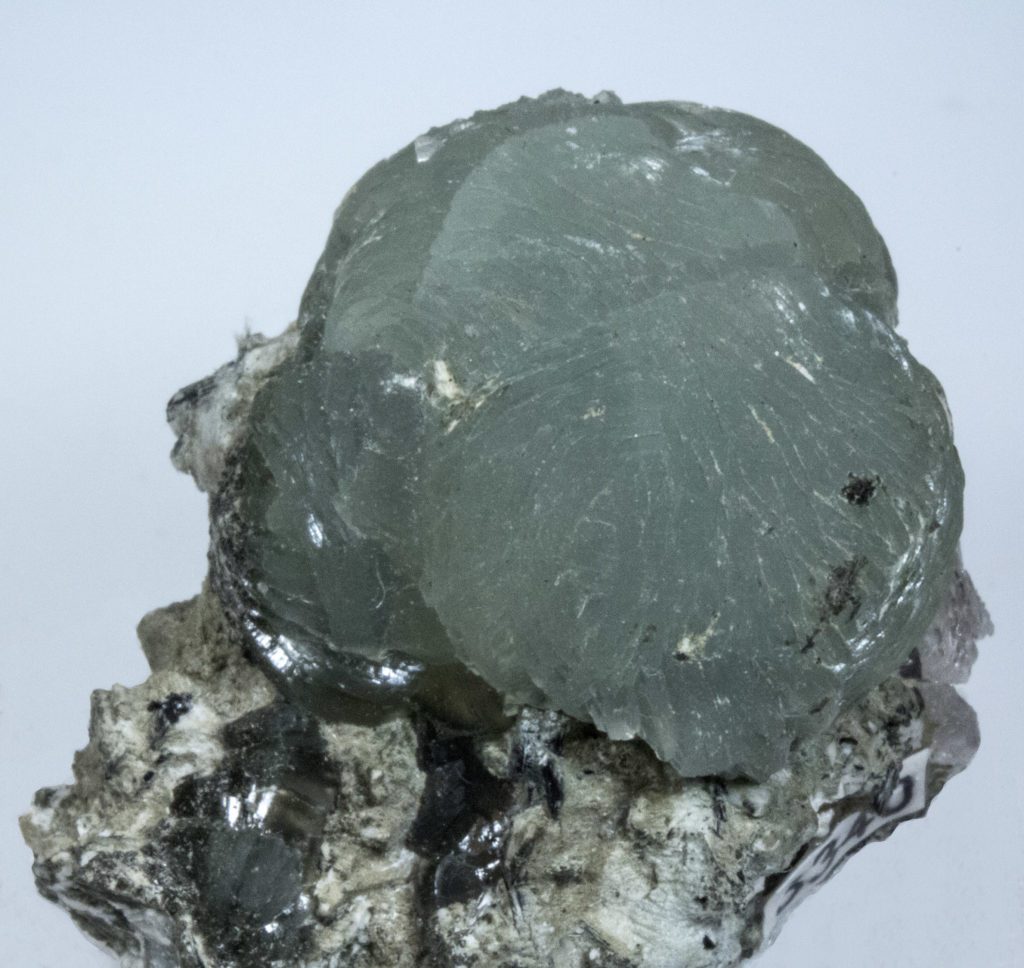
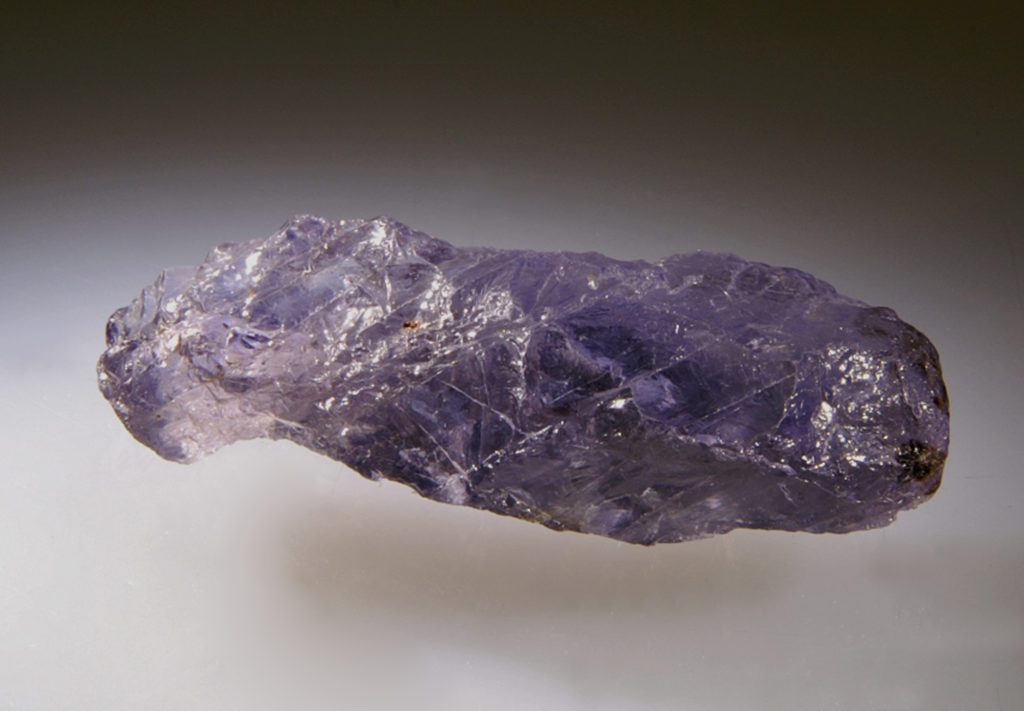
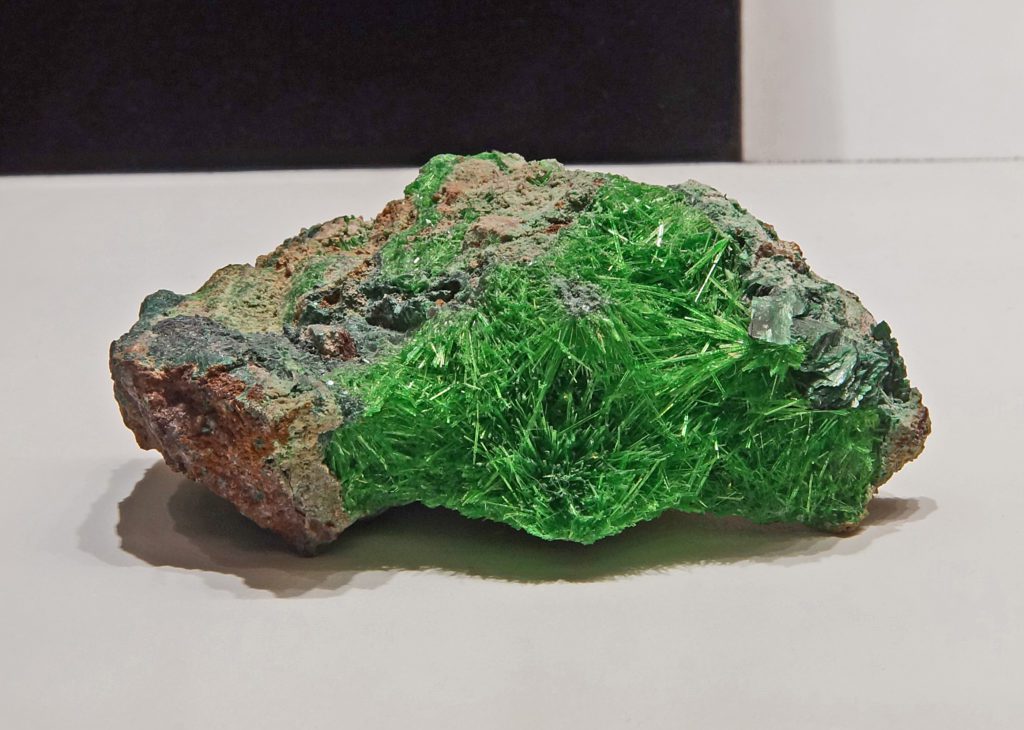
Minerals have also been named for people. Prehnite was the first mineral named for a person, Colonel Hendrik Von Prehn (1733-1785), who is credited with discovering the mineral in 1774 at the Cape of Good Hope in South Africa. Cordierite, a mineral known for its iolite gem variety, was named in 1813 for French mineralogist Louis Cordier (1777-1861), a pioneer in the field of microscopic mineralogy, and in honor of her pioneering research on radioactivity, Marie Sklodowska Curie (1867-1934) had two uranium minerals named for her, Sklodowskite (discovered in 1924) and Cuprosklodowskite (discovered in 1933).

Prehnite
Cordierite variety Iolite
yellow and white mineral specimen
Sklodowskite
Cuprosklodowskite

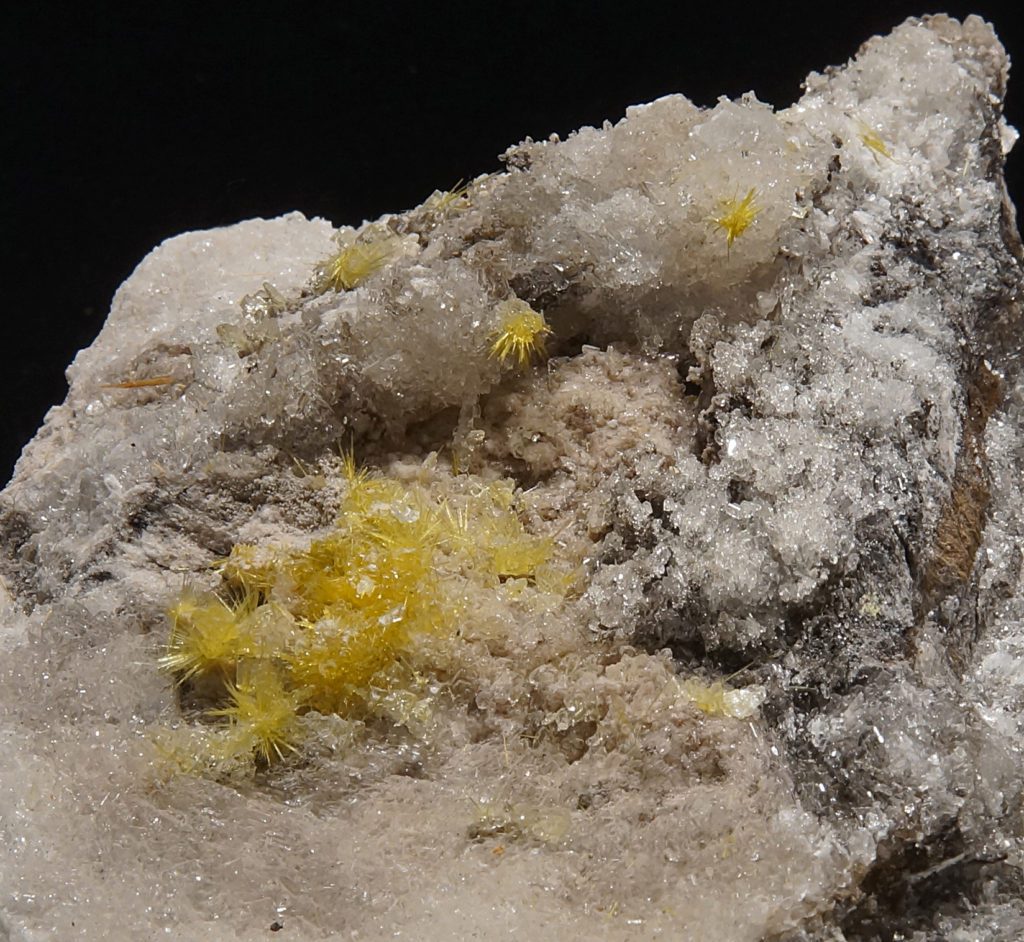
Today new minerals, including the proposed species name, are approved by the Commission on New Minerals, Nomenclature and Classification (CNMNC), under the purview of International Mineralogical Association (IMA), which was formed in 1958. As of November 2021, the IMA recognizes 5,762 official mineral species. In October 2021, one of those species, Oldsite, was named in honor of one of our own museum scientists, Travis Olds, Assistant Curator of Minerals, for his contributions to uranium mineralogy. 

Congratulations Travis!

Oldsite (yellow crystals). Photo by Dr. Anthony Kampf. 

More information on Oldsite

More information about Dr. Travis Olds

Debra Wilson is the Collection Manager for the Section of Minerals at Carnegie Museum of Natural History. Museum employees are encouraged to blog about their unique experiences and knowledge gained from working at the museum.

Related Content

Roll Out the Beryl

Master of Optical Illusion

The Mineralogy of Ice Cream

Carnegie Museum of Natural History Blog Citation Information

Blog author: Wilson, Debra
Publication date: January 14, 2022

Share this post!

  • Share on Twitter Share on Twitter
  • Share on Facebook Share on Facebook
  • Share on Pinterest Share on Pinterest
  • Share on LinkedIn Share on LinkedIn
  • Share on Reddit Share on Reddit
  • Share via Email Share via Email

Filed Under: Visitor Info Tagged With: Deb Wilson, Hillman Hall of Minerals and Gems, minerals, Science News

June 23, 2021 by wpengine

Diamonds Are the World’s Best Friend: The Important Roles Diamonds Play in Society

by Shelby Wyzykowski

In the classic 1953 movie “Gentlemen Prefer Blondes” is a memorable musical number performed by silver screen legend Marilyn Monroe. Wearing a striking pink satin gown and dripping in dazzling jewels, she is surrounded on the stage by a bevy of handsome suitors that are dressed to the nines. In this glamorous setting, she sings the praises of diamonds…how nothing in the world can compare to how it feels to possess these glittering gemstones. But off-screen, Monroe’s taste in brilliant baubles was radically different, preferring costume jewelry to the real thing. I have to admit that I agree with Marilyn. Diamonds have never held much interest for me. That is until now. After doing a little research, I’ve discovered that, besides their use in the jewelry industry, there are other ways in which diamonds are utilized in society today. In fact, there is so much more to these captivating stones than just their scintillating sparkle.

Perhaps you’ve heard the adage “one person’s trash is another person’s treasure.” Well, it just might surprise you that this saying holds true for diamonds. In the jewelry world, a diamond with perfect clarity is the much-desired ideal. But in the scientific world, a so-called “poor” specimen that is full of inclusions (imperfections), could hold a treasure trove of geologic information. Researchers are studying them to try and uncover the secrets of the deep-Earth environment. The majority of diamonds are created fairly close to the Earth’s surface, between 93 and 150 miles down. But there are some diamonds, called super-deep diamonds, that come from far down in the Earth’s mantle and are as deep as 500 to 600 miles (the mantle, which is mostly made up of solid and very hot rock, is directly below the Earth’s surface layer, or crust, and makes up more than 80 percent of our planet’s volume). These 3.5 billion-year-old gems formed at a pressure that is 240,000 times the atmospheric pressure at sea level, and this fact makes these tiny stone time capsules extremely valuable to researchers. No doubt geologists would love to travel deep under our planet’s surface like the characters in Jules Verne’s 1864 science fiction novel Journey to the Center of the Earth. Unfortunately they can’t, but these super-deep diamonds are the next best thing to journeying there themselves!

With these diamonds, scientists are uncovering clues to the origins of water on Earth. Did water come from incoming asteroids and comets, or was water an integral component at the planet’s formation? We’re still not quite sure. But diamond research has brought us closer to figuring out how much water lies deep underground. Scientists think that there may in fact be as much water present in our planet’s deep subsurface as there is found in our oceans. They have developed this idea after discovering a special water encased in the inclusions of deep diamonds. Called ICE-VII, this water ice can only be formed under tremendous deep-Earth pressure. In addition to water, geologists have found an elusive mineral in diamond inclusions. Scientists had theorized it to be an extremely common mineral that makes up to 38 percent of the Earth’s volume, but it’s been impossible to create in a lab. Now that it’s been found in nature, researchers have the proof of its existence and have named it Silicate-Perovskite (or Bridgmanite). In addition to Bridgmanite, they have discovered other trace minerals and elements that are commonly present in the Earth’s crust. This means that the materials were subducted (drawn back down into the Earth) billions of years ago by plate tectonics. Deep in the mantle, the materials were encased in a forming deep-diamond and then eventually sent back up to the surface by way of volcanic eruptions. Even more exciting than all of these discoveries is the thought of what geologists still have yet to uncover. They still hope to find carbon from primordial organic matter in these special diamonds. That matter could be a clue to the origins of life on Earth!

specimen of bridgmanite
“Earth’s most abundant mineral finally has a name” by Argonne National Laboratory is licensed under CC BY-NC-SA 2.0

In addition to their contributions to the scientific field, diamonds also have practical uses in society. In the mid-1950’s, synthetic diamonds were invented. Created in a lab, they are chemically and physically exactly the same as natural diamonds. However, these man-made gems do not possess the allure and mystery of natural diamonds, so they are not very desirable in the jewelry market. But since diamonds are the hardest known natural substance, they are ideal for industrial use. For example, they can be pulverized into a fine abrasive that can be made into a “diamond paste” and used for polishing other jewelry-grade gemstones. Small particles of diamond can also be embedded in tools like saw blades, drill bits, and grinding wheels. These diamond-coated tools are very wear-resistant and can be used for mining, deep-sea drilling, and road construction. And there are some ingenious uses for diamonds that you may find to be very surprising. Diamond windows can be made from very thin (thinner than a human hair) diamond membranes. These windows cover X-ray machines, laser openings, and vacuum chambers. A diamond can also make your music sound better. A speaker dome made out of diamonds can vibrate very rapidly because this gem is such a stiff material. So it is ideal for enhancing the performance of high-quality speakers. Diamonds can even help you keep track of time. Small mechanical devices, such as watches, have tiny bearings inside of them that make everything move (in a watch, it’s called its “movement”). A thin coating of diamond makes these parts wear-resistant and ensures accurate time-telling and lasting durability. From helping to build highways to making your timepiece tick, who knew that diamonds could be so useful in so many ways!

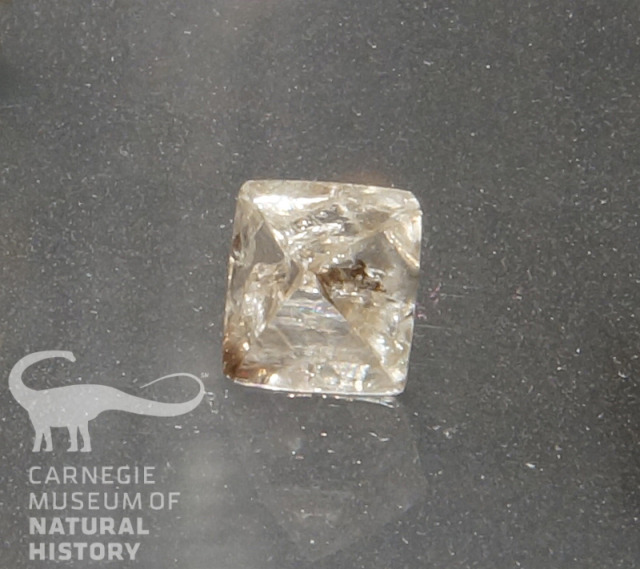
diamond specimen on gray background with dinosaur logo watermark in the left corner
CM18561 is located in the Native Elements case in Hillman Hall of Minerals and Gems. Source: https://carnegiemnh.org/emu_widgets/mineralogy.html#details=ecatalogue.2019718

Yet another important role that diamonds have played in our world is how they have influenced history. The brilliantly blue, supposedly cursed Hope Diamond, for example, has not brought much luck to its owners since it was discovered over 350 years ago. It was in the possession of Marie Antoinette and Louis XVI until their untimely deaths during the French Revolution. Subsequent owners also met with unfortunate outcomes until it was donated to the Smithsonian National Museum of Natural History where it is now safely on display. Another famous diamond, the 750 year-old Koh-i-Noor, has been owned by many royal rulers. It once decorated the Peacock Throne that was used by the Mughal Emperors of India, including Shah Juhan, the builder of the Taj Mahal. Now in England, the stone is part of the Imperial Crown. Due to an alleged curse, it can only ever be worn by the royal family’s female members. Finally, there is the Regent Diamond, which was unearthed in the early 1700’s. After being owned by several rulers, it disappeared during the French Revolution. Years later, it reappeared in the sword of Napoleon. But he was unable to hold onto it for long. After being defeated by the British in the Battle of Waterloo, the once-great ruler was exiled to the tiny island of Elba in disgrace. Since 1987, the Regent’s home has been at the French Royal Treasury in the Louvre in Paris. But you don’t need to travel to France or Great Britain or Washington D.C. to see the Regent Diamond, the Koh-i-Noor, and the Hope Diamond. Replicas of these three stones plus many more world-famous diamond replicas are on display at the Hillman Hall of Minerals and Gems. While you’re there, you can also admire some expertly crafted pieces of authentic diamond jewelry that would make any gem lover’s heart skip a beat.

Even though Hillman’s diamond collection is truly amazing, I can’t help but wonder if it would have impressed someone like Marilyn Monroe. Apart from a single piece of jewelry, the diamond wedding band that was given to her by Joe DiMaggio, she had no real affinity for diamonds. Apparently, the legendary actress didn’t believe that they’re a girl’s best friend. But if she had been given the opportunity to find out about all of the other meaningful ways in which diamonds benefit our world, perhaps this screen siren might have developed a new appreciation for these precious gems. I know that I have. I’d like to think that Marilyn would have too.

Shelby Wyzykowski is a Gallery Experience Presenter in CMNH’s Life Long Learning Department. Museum staff, volunteers, and interns are encouraged to blog about their unique experiences and knowledge gained from working at the museum.

Related Content

Wulfenite and Mimetite: CMNH’s Crystal Banquet

Rockin’ Minerals Coloring Pages

Ask a Scientist: Why do some minerals glow?

Carnegie Museum of Natural History Blog Citation Information

Blog author: Wyzykowski, Shelby
Publication date: June 23, 2021

Share this post!

  • Share on Twitter Share on Twitter
  • Share on Facebook Share on Facebook
  • Share on Pinterest Share on Pinterest
  • Share on LinkedIn Share on LinkedIn
  • Share on Reddit Share on Reddit
  • Share via Email Share via Email

Share this post!

  • Share on Twitter Share on Twitter
  • Share on Facebook Share on Facebook
  • Share on Pinterest Share on Pinterest
  • Share on LinkedIn Share on LinkedIn
  • Share on Reddit Share on Reddit
  • Share via Email Share via Email

Filed Under: Blog Tagged With: Hillman Hall of Minerals and Gems, minerals, minerals and gems, Shelby Wyzykowski, sssminerals, Super Science, Wertz Gallery

November 9, 2020 by wpengine

Thanksgiving and Nutritional Mineralogy

by Travis Olds

We each have plenty to be thankful and hopeful for this year, but did you know that our traditional American Thanksgiving feast “with all the fixings,” would not be possible without minerals or the people who mine, process, and manufacture the mineral-related materials found in our kitchens?

Kaolinite
Kaolinite. Photo Credit: Debra Wilson

You should thank miners, in part, for the kaolinite clay used to make the fine porcelain china or ceramic plates at your dinner table. When kaolinite is fired in the factory, it partially melts, and crystals of an aluminum-silicate mineral called mullite that hold the ceramic together and give it high heat resistance form on cooling. Also, whether you eat and serve food with silver, steel, or aluminum utensils, extensive work and energy were needed to extract and refine the silver, iron, or aluminum metal necessary for their creation. Silver ore, for example, usually contains many other elements, including lead, zinc, copper, and gold, which can require lengthy chemical or electrochemical processes to separate.

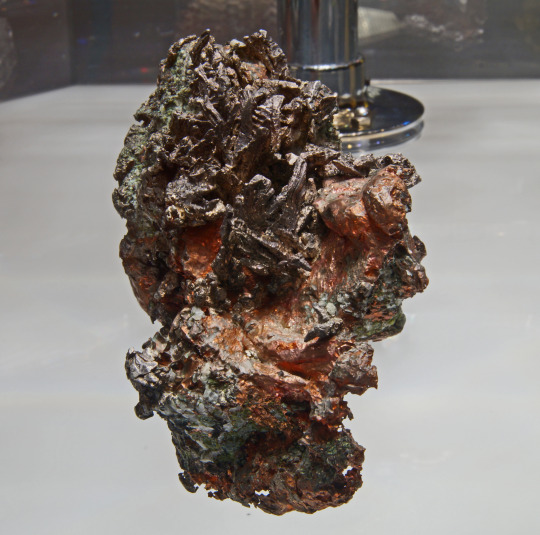
silver on copper
Silver on copper. Photo credit: Debra Wilson

There might also be some unwanted mineral interactions occurring at the dinner table. If your gluttonous Uncle Ned consumes too much salt (sodium) with his gravy and potatoes (high in oxalate) this year, his body may begin to form kidney stones; which are biologically formed minerals made up of crystals of the phosphate mineral struvite and the calcium oxalate mineral whewellite. These biominerals, which can form when your bladder isn’t fully emptied after a sodium or oxalate-rich meal, can be extremely painful, so be sure to drink plenty of water with your meal. Large crystals take time to grow and drinking more water can reduce the concentration of sodium and oxalate in your body, slowing growth of the kidney stones.

Turkey meat, the mainstay of many Thanksgiving meals, also depends heavily on minerals. Did you know that turkeys actually need to swallow small rocks and pebbles, which are made of minerals, in order to digest their food? “Gastroliths,” or stomach stones, are used by other species of birds, reptiles, amphibians, worms, whales, and even some fish to crush their food and provide more nutrients! Fortunately, we humans have a variety of enzymes and strong stomach acids to break down nutrients in the food we eat.

A surprising amount of nutritional science is applied to raising turkeys; their diet is closely monitored and controlled for proper protein and “mineral” content so that they grow large. You have likely heard the term “mineral” applied to many of our dietary items as well, from mineral water, to a variety of products being fortified with vitamins and minerals, or even the advice that it’s important to maintain a healthy balance of minerals in your diet. The term is somewhat misleading because “minerals” in this sense typically refers to individual atomic elements such as potassium or iron, or to other compounds containing these elements, rather than actual minerals in the strict sense. To a mineralogist like me, minerals are naturally occurring crystalline solids made from a specific combination of elements.

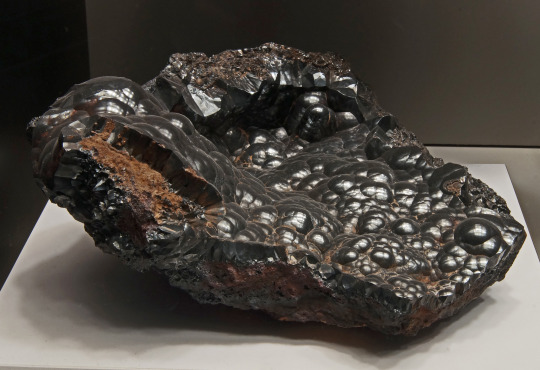
hematite
Hematite. Photo credit: Debra Wilson

Most often, the elements essential for our diet have been pre-digested, extracted or processed by another plant or animal, or have been chemically separated from a mineral source that makes it easier for our bodies to absorb. For example, most rice and cereal in the U.S. is fortified with B-vitamins and iron with a coating of finely ground nutrient powder. While the source of iron used in the fortifying powder varies, it all originates with the iron-oxide minerals hematite and goethite. Plants, bacteria, or stomach acids break down these minerals into iron cations that are easier for our body to process.

Thanksgiving vegetable dishes deserve special attention because plants can be the best sources for certain nutrients. In many cases, fruits and veggies grown on the farm also need help with their diet. Feldspar minerals present in soil hold on strongly to certain elements like K, more commonly known as potassium, making it hard for plants to extract this element. Farmers address this problem by using fertilizers like manure, containing predigested and readily absorbed phosphorous, nitrogen, and potassium, to produce a bountiful harvest

This year, please extend a bit of thankfulness to minerals, but mostly give thanks and recognition to the people that work hard to make your Thanksgiving possible; be it a miner, factory worker, your grocer, butcher, farmer, doctor, or all those working behind the scenes and on the front lines that keep us happy, healthy, and well fed.

Travis Olds is Assistant Curator of Minerals at Carnegie Museum of Natural History. Museum employees are encouraged to blog about their unique experiences working at the museum.

Related Content

Ask a Scientist: What is biogeochemistry? 

Why Do Leaves Change Color?

Beauty From the Ashes

Carnegie Museum of Natural History Blog Citation Information

Blog author: Olds, Travis
Publication date: November 9, 2020

Share this post!

  • Share on Twitter Share on Twitter
  • Share on Facebook Share on Facebook
  • Share on Pinterest Share on Pinterest
  • Share on LinkedIn Share on LinkedIn
  • Share on Reddit Share on Reddit
  • Share via Email Share via Email

Filed Under: Blog Tagged With: gems and minerals, Hillman Hall of Minerals and Gems, minerals, minerals and gems, Museum from Home, Science News, Section of Minerals, Travis Olds

  • Page 1
  • Page 2
  • Page 3
  • Page 4
  • Go to Next Page »

sidebar

About

  • Mission & Commitments
  • Directors Team
  • Museum History

Get Involved

  • Volunteer
  • Membership
  • Carnegie Discoverers
  • Donate
  • Employment
  • Events

Bring a Group

  • Groups of 10 or More
  • Birthday Parties at the Museum
  • Field Trips

Powdermill

  • Powdermill Nature Reserve
  • Powdermill Field Trips
  • Powdermill Staff
  • Research at Powdermill

More Information

  • Image Permission Requests
  • Science Stories
  • Accessibility
  • Shopping Cart
  • Contact
  • Visitor Policies
One of the Four Carnegie Museums | © Carnegie Institute | Privacy Policy | Terms of Use | Accessibility
Rad works here logo