• Skip to primary navigation
  • Skip to main content
  • Skip to primary sidebar

Carnegie Museum of Natural History

One of the Four Carnegie Museums of Pittsburgh

  • Visit
    • Buy Tickets
    • Visitor Information
    • Exhibitions
    • Events
    • Dining at the Museum
    • Celebrate at the Museum
    • Powdermill Nature Reserve
    • Event Venue Rental
  • Learn
    • Field Trips
    • Educator Information
    • Programs at the Museum
    • Bring the Museum to You
    • Guided Programs FAQ
    • Programs Online
    • Climate and Rural Systems Partnership
  • Research
    • Scientific Sections
    • Science Stories
    • Science Videos
    • Senior Science & Research Staff
    • Museum Library
    • Science Seminars
    • Scientific Publications
    • Specimen and Artifact Identification
  • About
    • Mission & Commitments
    • Directors Team
    • Museum History
  • Tickets
  • Give
  • Shop

invertebrate paleontology

April 16, 2024 by Erin Southerland

Remembering Albert Kollar, Collection Manager of Invertebrate Paleontology

Albert D. Kollar, Collection Manager of Invertebrate Paleontology

Last year, when Albert Kollar, Collection Manager of Invertebrate Paleontology at Carnegie Museum of Natural History, was planning for, and later recovering from, knee surgeries, it was common to hear people wish him well by saying, “You’ll be back on the outcrop soon.” In the wake of his untimely death last week, those wishes are worth examining for all they capture of Albert’s generous and long-standing sharing of geologic knowledge.
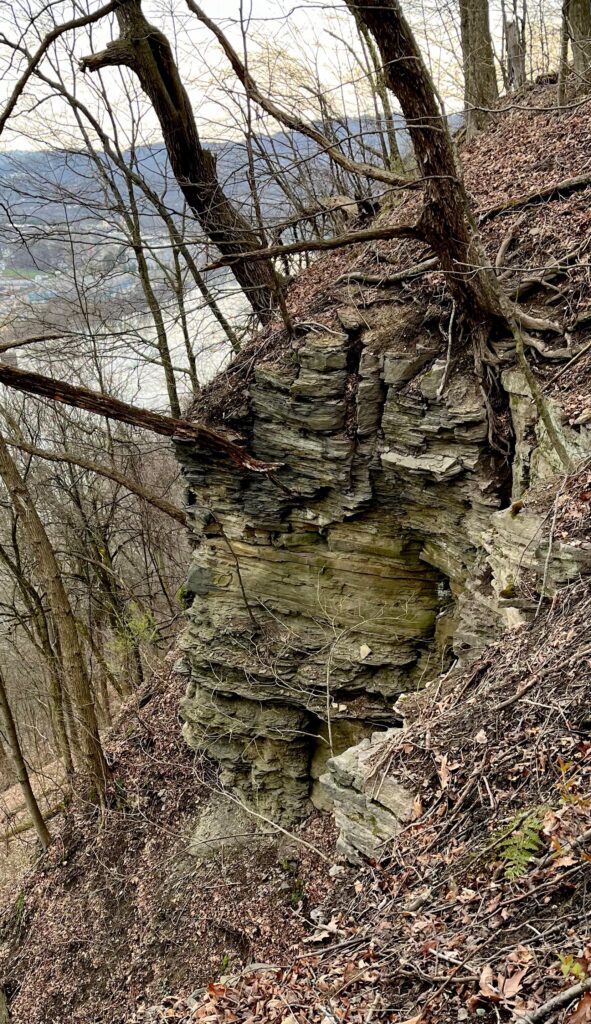
outcrop

Outcrop, as anyone who participated in one of his geology-focused hikes already knows, refers to the part of a rock layer that can be seen at the Earth’s surface. Pittsburgh’s location amid a deeply eroded Appalachian plateau assures a richness of local outcrops. In river and stream cuts, natural features that in many places acquired sharper edges through the construction of road or railway terraces, multiple sedimentary units appear stacked like layers of a cake. Albert had a deep and working understanding of each of these massive rock units. He could patiently explain how their differing composition implied dramatic past changes in climate, sea level, plant cover, and even continent position. 
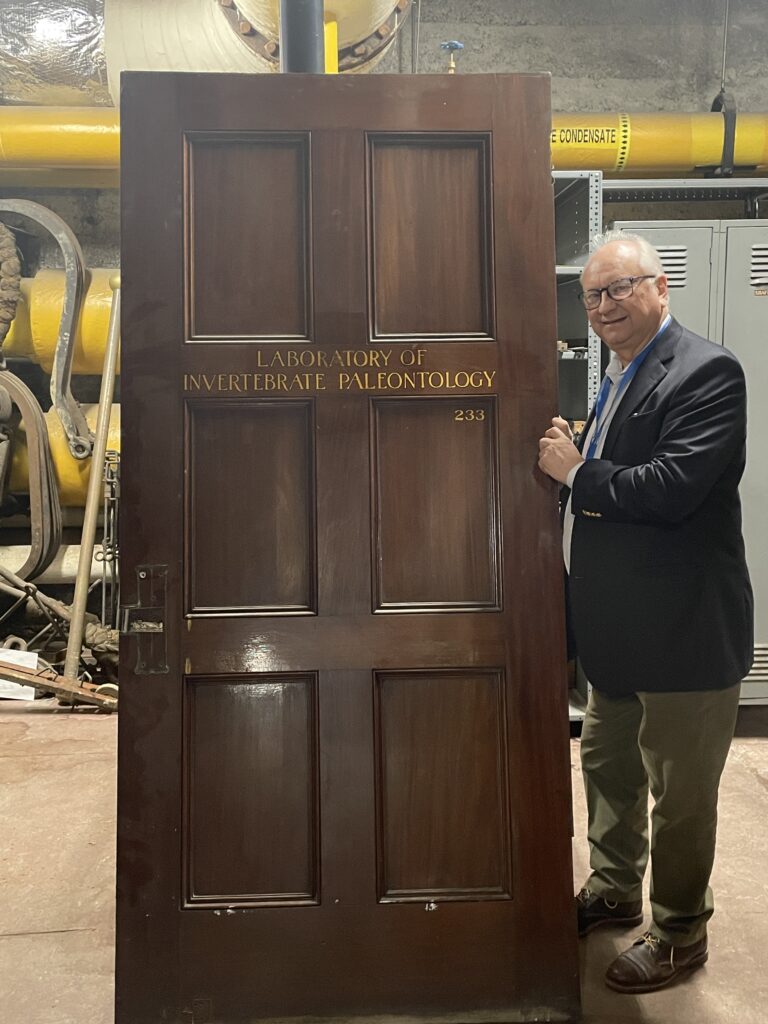
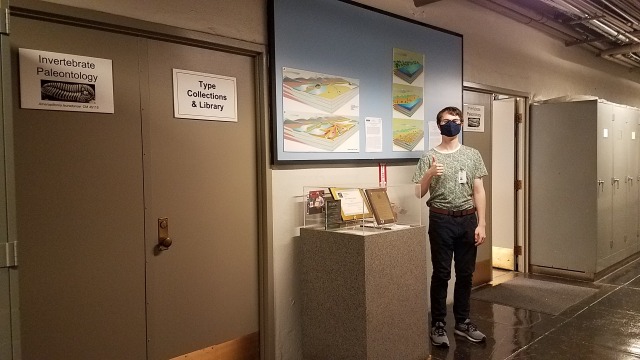
Albert with the original Invertebrate Paleontology door.

For prolonged discussions of local geology, Albert introduced audiences to several rock units prominent or economically important enough to have earned names, the Birmingham Shale, the Morgantown Sandstone, the Ames Limestone, and the Pittsburgh Coal. In explaining that every rock unit, whether it held fossils or not, contained a story about its formation, Albert would frequently distribute hand samples from these units. When the audience was a middle school class, the students could take the samples home, souvenirs not just from the museum, but from the outcrop.
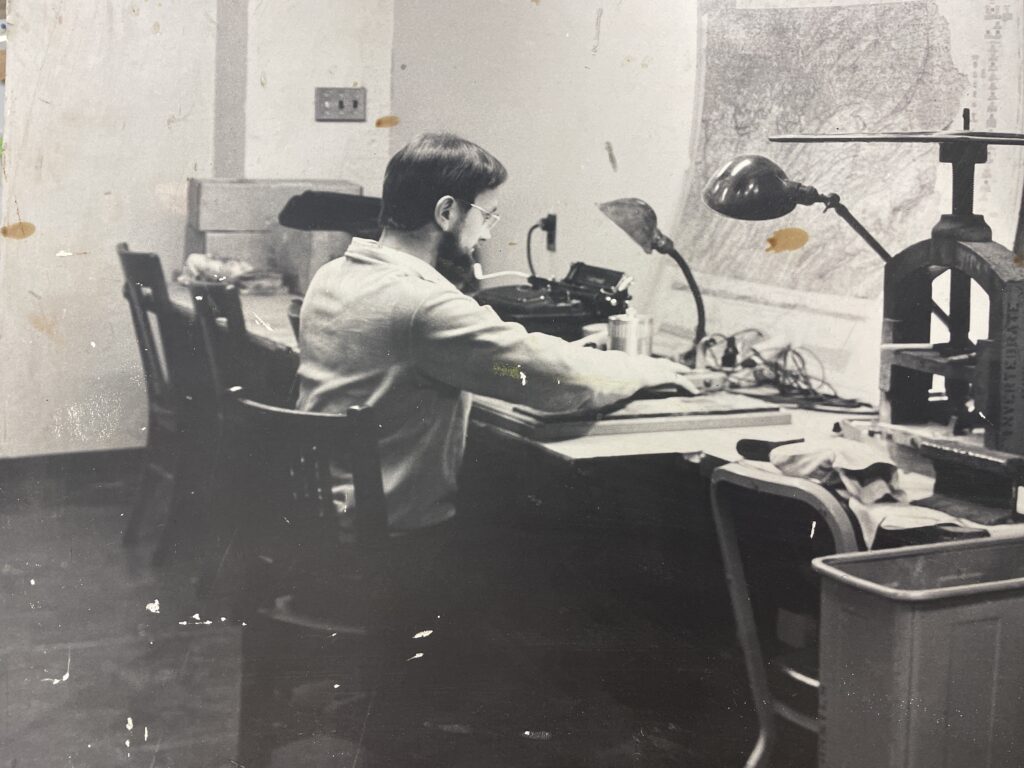
Albert at work in the museum.
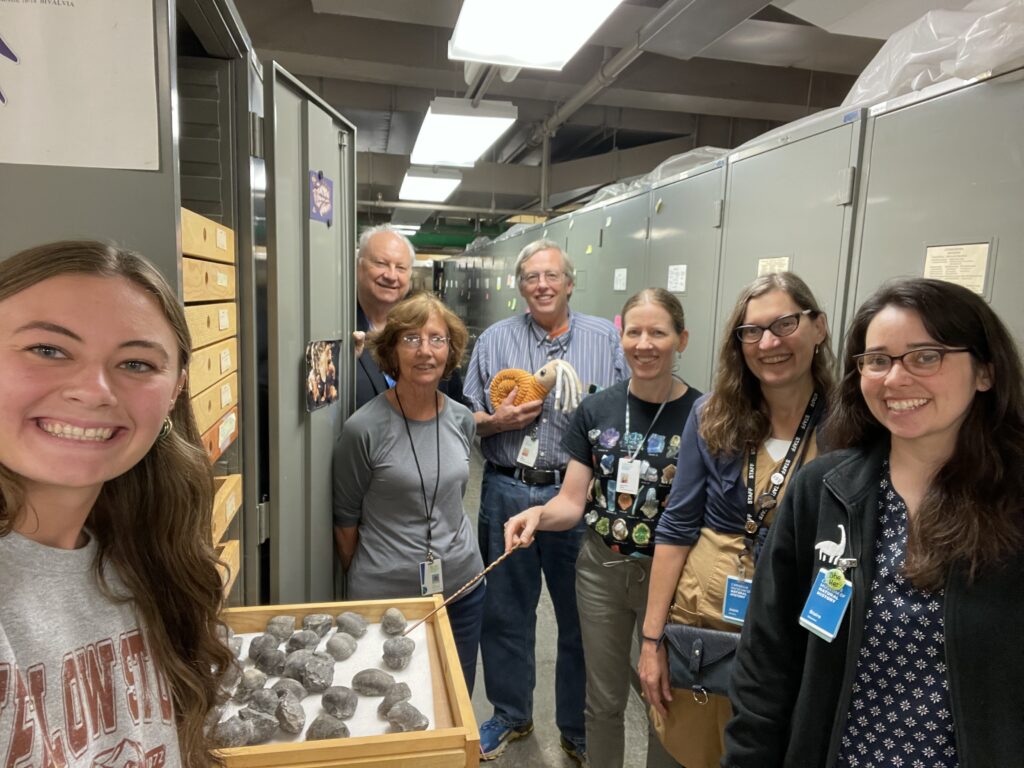
The Invertebrate Paleontology team doing a spotlight on Bayet fossils. Fall 2023.
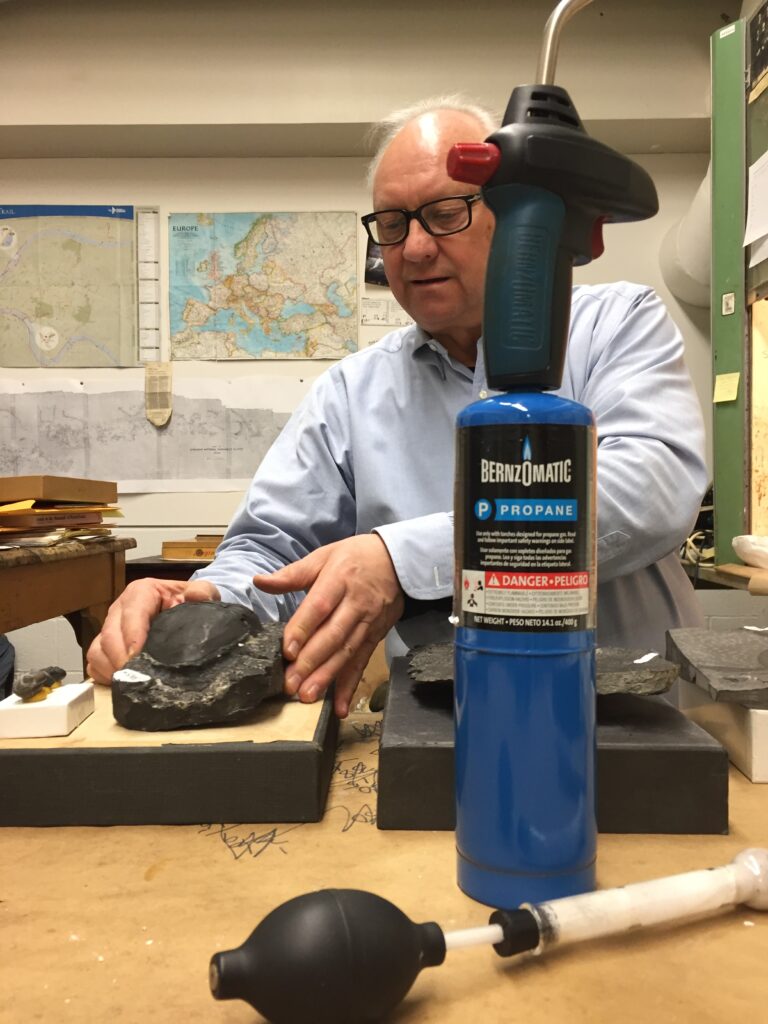
Albert smoking fossils.

Read Blog Posts by Albert D. Kollar

Meet the Mysterious Mr. Ernest Bayet

Smoking Fossils

Carnegie’s Water Fountains

Thank you to Joann Wilson and the Invertebrate Paleontology team for the photos.

Carnegie Museum of Natural History Blog Citation Information

Blog author: McShea, Patrick
Publication date: April 16, 2024
Share this post!

  • Share on Twitter Share on Twitter
  • Share on Facebook Share on Facebook
  • Share on Pinterest Share on Pinterest
  • Share on LinkedIn Share on LinkedIn
  • Share on Reddit Share on Reddit
  • Share via Email Share via Email

Filed Under: Blog Tagged With: Albert Kollar, invertebrate paleontology

March 1, 2024 by Erin Southerland

When Nature Meets Art: Crinoid Fossils as Cultural Beads

by Elizabeth A. Begley and Albert D. Kollar

Did you know that invertebrate fossils make up more than 50% of the specimens on exhibit in Dinosaurs in Their Time (DITT)? It’s true! But these fossils can be easy to miss among the giant dinosaurs and vertebrate reptiles. Luckily, ongoing research on the biodiversity within our gallery spaces, from locations including England, Germany, and the United States, will help visitors better understand the importance of the Carnegie Museum of Natural History’s Invertebrate Paleontology collection research, exhibition, and education initiatives1. With few exceptions, these specimens are part of the vast Ernest de Bayet fossil collection purchased for the museum by Andrew Carnegie in 19031,2.

What are Crinoids?

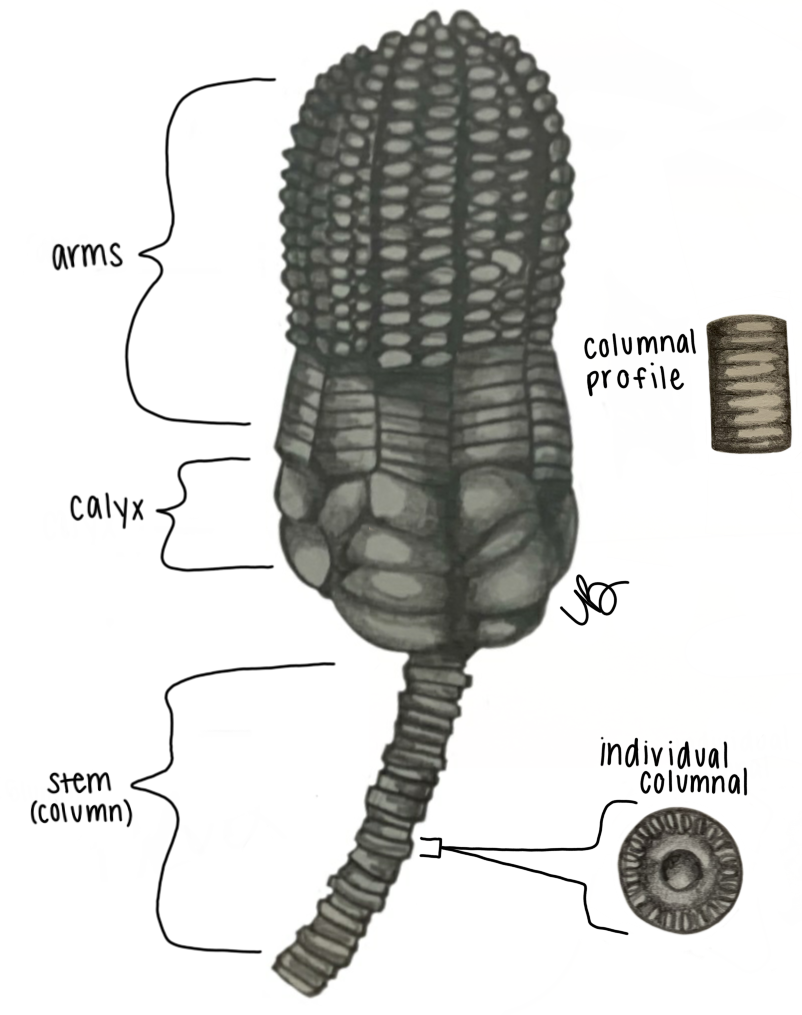
Among these invertebrates are a unique group of sea bearing animals called crinoids. Crinoids are an ancient fossil group that belong to the phylum Echinodermata. Crinoids first appeared in the fossil record in the mid-Cambrian Period of the Paleozoic Era (490 – 250 million years ago) and became a significant group that formed mid-Silurian reefs in Dudley, Wales; Gotland Island, Sweden; and Milwaukee, Wisconsin. In the Mesozoic Era, crinoids formed the famous middle Triassic reefs of Germany3. Few crinoid groups live in oceans today. Examples of crinoids are on display in the museum’s Triassic Seas, Holzmaden, and Solnhofen dioramas (all locations in Germany)1. Crinoids are also called sea lilies because they look like flowers – but don’t be fooled, they’re animals! Crinoids are related to starfish, sea urchins, and brittle stars; this relationship can be noted in the crinoids five-part radial symmetry3,4. They lived on stems (or stalks) and attached to the sea floor by roots, as in the Triassic Muschelkalk Formation, but were floating animals in the Jurassic Holzmaden seas. They relied on waves and currents to bring small food particles past their petal-like arms which opened as a mode of filter-feeding micro-organic food3,4. Today, Crinoids are few in numbers living among shallow coral reefs and in the deep sea. The Bayet Collection of crinoid fossils are represented from the Silurian, Mississippian, and Triassic rock formations1.

Fig. 1. In DITT, you may see crinoid fossils such as the specimen sketched above, CM29840. This crinoid’s scientific name is Encrinus liliiformis and comes from the famous middle Triassic Muschelkalk Formation in Brunswick, Germany. This specimen was collected by Dr. Fredrick Krantz within the Bayet Collection. Several parts make up the crinoid. Once dead, the crinoid’s muscles decompose resulting in the disarticulation of the arms, calyx, stem, and individual columnals4. Most crinoid fossils are found in separate parts for this reason. Artwork by Elizabeth Begley. 

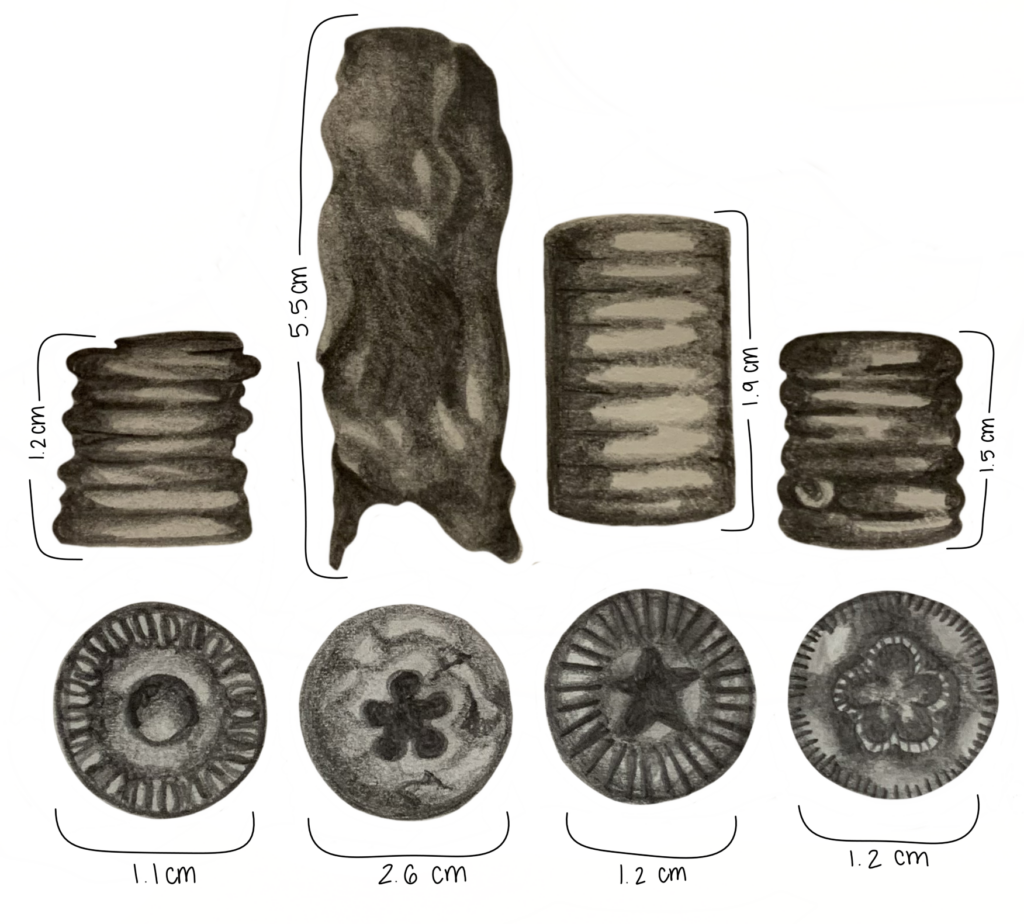
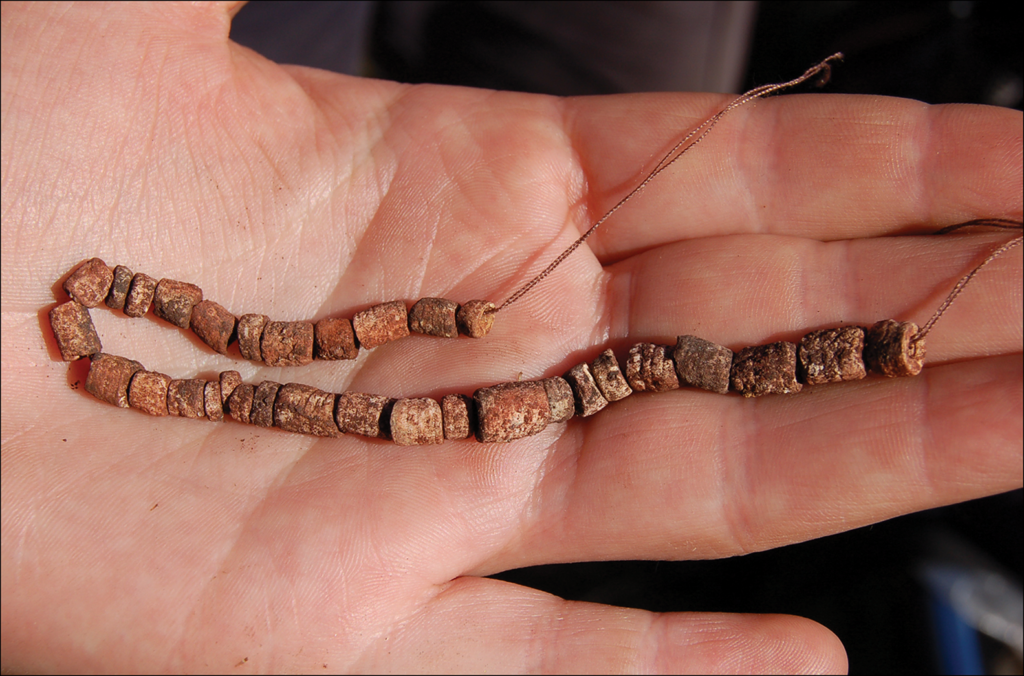
However, crinoid fossils are more than scientific material reserved for use by paleontologists alone, in fact, this invertebrate animal is unique as it gives us the opportunity to see how humans have long interacted with nature. Specifically, fossilized crinoid stems have been used in several communities and throughout history as beads. This is due to their small size, cylindrical shape, and the usual occurrence of a hole in the center (fig. 2). So, let’s explore how crinoid fossils have been used on different continents and in different eras of human history.

Fig. 2. CM63017 consists of crinoid parts from the Vanport Limestone, Lower Pennsylvanian age (~312 million years ago), Butler Co., PA. These crinoid fragments illustrate crinoid stem cross-sections and side profiles from the Invertebrate Paleontology collection. The cross-section view offers insight into the crinoid’s bead-like build. Artwork by Elizabeth Begley.

Crinoid Beads in North America

In Kentucky, amateur fossil hunters commonly refer to crinoid stem fossils as beads5 and the Illinois Archaeological Survey has reported “crinoid stems suggested to function as beads” at a historic site in Buckman Flats6. This finding joins crinoid stems already uncovered in Kickapoo territories in 2011 and 1992 as well as a 2001 discovery at a Potawatomi settlement6. To illustrate an example of historic beadwork by North American indigenous groups, Harvard’s Peabody Museum of Archaeology and Ethnology has published a photograph depicting a “string of prehistoric beads made from different sizes of fossilized crinoid stem[s]” discovered in Tennessee7.

Crinoid Beads in Asia

From the lower paleolithic period in Israel, a deposit at the archaeological site of Gesher Benot Ya’aqov revealed two “beadlike” crinoid fossils among stone artwork and polished wood artifacts. This collection is thought to hint at the group’s cognitive ability regarding the manipulation of nature for artistic and cultural purposes and has brought the hypothesis that lower paleolithic hominids collecting crinoid stems, among other marine objects, may be the origin of the modern bead shape8. The thought process behind this theory relies on our understanding that crinoids, and their fossilized stems, have existed for far longer than the modern bead has. Bednarik argues, “perhaps this is how the very concept came into being, and the humanly made disc beads were merely substitutes for the fossils that were in short supply”9.

Crinoid Beads in Europe

While there are several instances of crinoid stems being recognized in historic European art and culture, the cemetery at Zvejnieki in Latvia is a unique case as the stems, or “beads,” seem to be a part of funerary practice. Zvejnieki was in use during the region’s Mesolithic and Neolithic periods and rediscovered by archaeologists in the 1960s. Work at the site has continued and a re-analysis of a double burial revealed that a beaded ornament among the remains, previously believed to have been made of bird bone, is a string of fossilized crinoid stems10. This case brings us to an interesting question in assessing the use of fossils, such as crinoid stems, throughout human history, and the impact of such encounters on our current relationship with the natural world.

Fig. 3: Threaded crinoid beads. Photo credit: L. Larsson, CC BY¹⁰

So, the next time you walk through the museum, we invite you to take a closer look at the crinoids, and other invertebrate fossils on display, and imagine how else we may incorporate them in our lives!

Elizabeth A. Begley is Collection Assistant and Albert D. Kollar Collection Manger in the Section of Invertebrate Paleontology at Carnegie Museum of Natural History.

References: 

  1. Kollar, A.D., J. L. Wilson, and S.K. Mills. 2024. The Ernest de Bayet Fossil Collection at the Carnegie Museum of Natural History: A Century of Stewardship in Exhibition. Annals of Carnegie Museum.
  2. Wilson, J. L., A.D. Kollar, and S.K. Mills. 2024. Unraveling the 120 Year Mystery of Ernest Bayet and his Fossil Collection at Carnegie Museum. Annals of Carnegie Museum.
  3. Hess, H., W. I. Ausich, C. E. Brett, and M.J. Simms. 1999. Fossil Crinoids. Cambridge University Press.  
  1. Brezinski, D.K., and A.D. Kollar. 2008. Geology and Fossils of the Tri-State Region Learning/Activities/Coloring Book. PAlS Publication 8. 
  2. Kentucky Geological Survey. Identifying Unknown Fossils. https://www.uky.edu/KGS/fossils/fossilid.php
  3. Fishel, R. 2017. The Historic Indian Artifact Assemblage at Buckman Flats, Knox County, Illinois. Illinois Archaeology Vol. 29. 
  4. Peabody Museum of Archaeology and Ethnology. String of prehistoric beads made from different sizes of fossilized crinoid stem. Artstor. https://www-jstor-org.cmu.idm.oclc.org/stable/community.20420806
  5. Bednarik, R. 1994. The Pleistocene Art of Asia. Journal of World Prehistory, 8(4), 351–375. http://www.jstor.org/stable/25800655
  6. Bednarik, R. 2005 .Middle Pleistocene Beads and Symbolism. Anthropos, 100(2), 537-552. http://www.jstor.org/stable/40466555  
  7. Macāne, A. 2020. Petrified animals: Fossil beads from a Neolithic hunter-gatherer double burial at Zvejnieki in Latvia. Antiquity, 94(376), 916-931. doi:10.15184/aqy.2020.124 https://www.cambridge.org/core/journals/antiquity/article/petrified-animals-fossil-beads-from-a-neolithic-huntergatherer-double-burial-at-zvejnieki-in-latvia/A325BCCE572DA6DD3AE913E7C22C18C2

Related Content

Meet the Mysterious Mr. Ernest Bayet

Behind the Scenes with the Baron de Bayet and L.W. Stilwell Collection, Part 1: Crossing the Atlantic with a Boatload of Fossils

Bayet and Krantz: 16 Words (Part 1)

Carnegie Museum of Natural History Blog Citation Information

Blog author: Begley, Elizabeth A.; Kollar, Albert D.
Publication date: March 1, 2024

Share this post!

  • Share on Twitter Share on Twitter
  • Share on Facebook Share on Facebook
  • Share on Pinterest Share on Pinterest
  • Share on LinkedIn Share on LinkedIn
  • Share on Reddit Share on Reddit
  • Share via Email Share via Email

Filed Under: Blog Tagged With: Albert Kollar, Elizabeth Begley, invertebrate paleontology, Science News

February 23, 2022 by Erin Southerland

“To Cross A Bridge”: Fern Hollow Bridge in Pittsburgh, A Geology Story

by Albert D. Kollar and Wendy T. Noe

In the early morning of January 28, 2022, Pittsburgh’s 52-year-old Fern Hollow Bridge collapsed into Fern Hollow Run of Frick Park. Thankfully, there were no fatalities. The event made local and national news1. On February 7, the National Transportation Board (NTSB) reported it could take 12 to 18 months for a final report to determine the cause of the collapse2. 

Fern Hollow Bridge

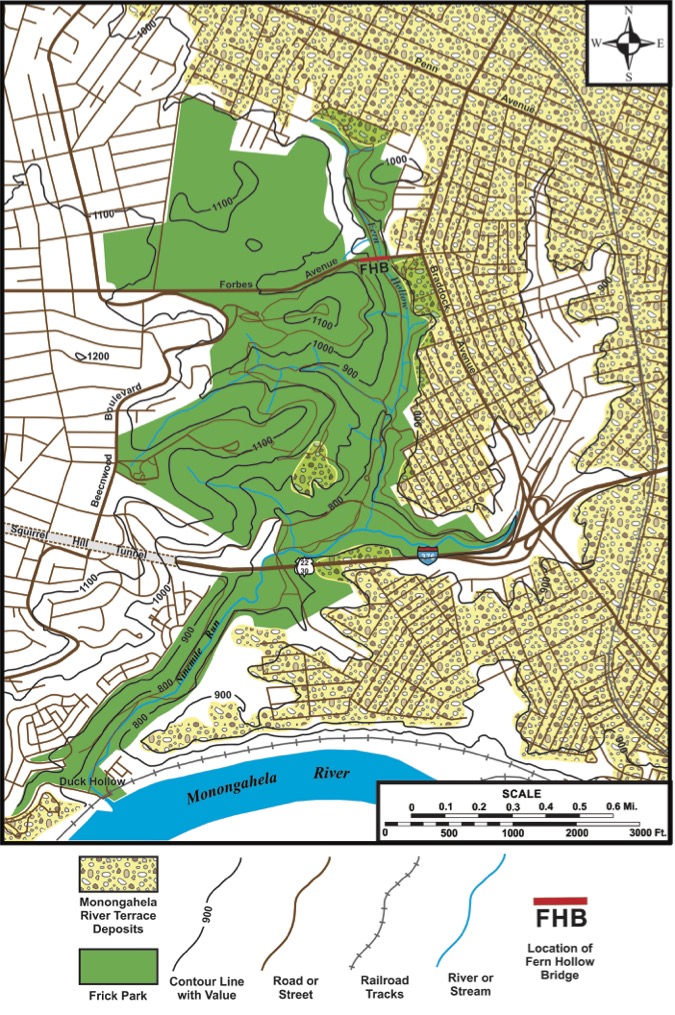
Geological map of the Fern Hollow Bridge and surrounding area.
Fig. 1

The now infamous bridge, which carried Forbes Avenue’s vehicle and pedestrian traffic between Squirrel Hill and Regent Square, crossed a Frick Park hollow at the 900-foot contour level from anchor points at the base of the sedimentary rock unit known as the Morgantown Sandstone (fig. 1, fig. 4b). The bridge, one of 446 bridges in the City of Pittsburgh,1 was a steel rigid frame, a design in which the superstructure and substructure are rigidly connected to act as a continuous unit. The structure included three spans, with a total length of 447 feet (48.7 meters). Its road surface was 160 feet above (48.7 meters) Fern Hollow Run, and the bridge operated with a weight limit of 26 tons2. 

To Cross a Bridge

Bridges are built to carry people, all manner of the materials we require, and the vehicles used to transport both, across obstacles that would otherwise disrupt the smooth and timely flow of traffic. In our modern world bridges are frequently constructed to cross other built structures. Think pedestrian bridges over roadways, or highway bridges over busy rail lines. Mostly, however, bridges cross geologically formed features such as rivers and the myriad forms of depressions carved into the landscape over time by flowing water. Whether we call them valleys, ravines, or hollows, our region’s familiar landscape features are evidence of the impact of erosion on what was once far more level terrain.

Pittsburgh, with 446 bridges within the city limits, has long been known as the City of Bridges. The title is appropriate because the tally far exceeds the number of bridges in Venice that cross the Italian city’s network of canals3. Bridges are so common in Pittsburgh that for many residents it’s a daily experience to both cross over and pass under a bridge.

In human history, one of the oldest existing bridges dating from antiquity is the single-arch stone bridge over the Meles River, built c. 850 BC in Izmir (formerly Smyrna) Turkey.4

In Pittsburgh, the first fixed river crossing structure was the Monongahela Bridge, which was built in 1818. The form of this landmark can be inferred from Russell Smith’s Old Monongahela Bridge, a painting in the Carnegie Museum of Art (CMOA) collection that depicts the bridge during its construction. This largely wooden bridge burned during the great Pittsburgh fire of 1845, destruction captured in another CMOA landscape painting, View of the Great Fire of Pittsburgh, by William C. Wall. In 1883 the award-winning Smithfield Street Bridge rose from the ashes at the site of the former bridge. The Pittsburgh History and Landmarks Foundation designated the Romanesque Pauli lenticular truss as an historic bridge in 1970, recognition reinforced in 1977, when it was also cited as a City of Pittsburgh Historic Structure. It’s therefore reasonable to hope that a new Fern Hollow Bridge may one day be cited as having an award-winning design like the Smithfield Street Bridge.

Pittsburgh Geology

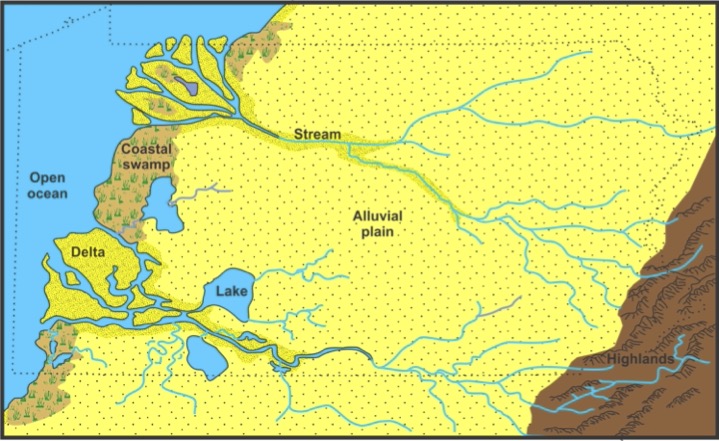
Paleogeography map of Pennsylvania
Fig. 2

Understanding the origins of the landscape features in Pittsburgh that make hundreds of bridges a necessity requires background knowledge of two long and widely spaced periods of Earth’s geologic history. Conditions during the first period help explain why rock layers here appear (mainly in roadcuts) stacked in relatively flat layers. During the Pennsylvanian Period (319 million to 299 million years ago), what is now Pittsburgh was centered near the equator where the fluctuating levels of a tropical sea deposited lime mud that later hardened to limestone. In lush swamps that covered much of a broad sea edge coastal plain, tropical plants grew so dense that their remains were later transformed into coal deposits. Large rivers that flowed from the eroding ancestral Appalachian Highlands, hundreds of miles east of Pittsburgh, carried sand, silt, and mud to the coastal plain, forming sandstone, siltstone, and shale along the way5 (fig. 2). 

The lithified sediments formed strata that became the bedrock beneath the Pittsburgh area. Geologic forces have been changing the landscape ever since. First through formation of the Appalachian Mountains by the action of plate tectonics, c. 260 million to 250 million years ago, followed by 250 million years of erosion. The majestic Appalachians were reduced to a broad plateau in western Pennsylvania where rivers and creeks meandered across a gently rolling plain creating wide shallow valleys.

Before the Ice Age

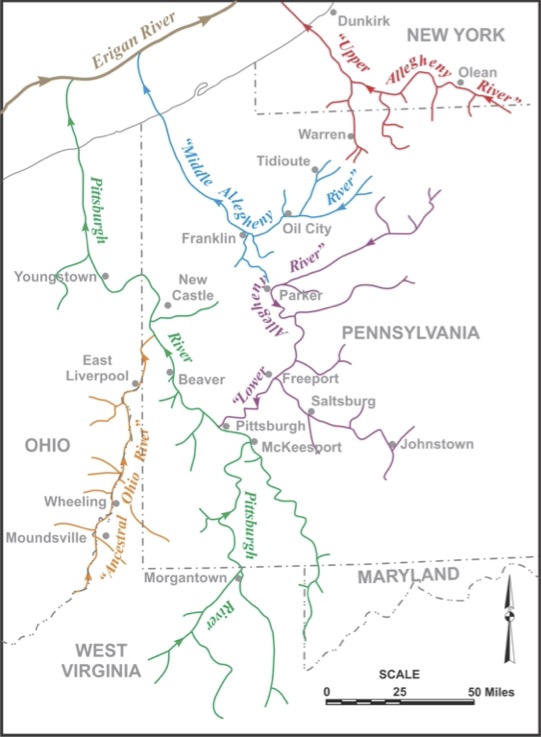
Map showing the drainage pattern of Western Pennsylvania before the Ice Age.
Fig. 3

As global climate cooled after the warm Pliocene Epoch (5.3 to 2.6 million years ago), glaciers started to form in Arctic Canada. In Western Pennsylvania at the time the drainage patterns of the ancestral Three Rivers and their tributaries flowed north and northwest from southern West Virginia through the Pittsburgh area and eastern Ohio, eventually converging with the Erigan River in what is present day Lake Erie (fig. 3). The Erigan River, thought by geologists to have been ancestral to the St. Lawrence River, flowed to the Atlantic Ocean6. 

In Pittsburgh, Monongahela River sediments were laid down as terrace deposits (clay, silt, cobbles, and boulders), creating a relatively flat bottomland, a base for the major traffic arteries of the city’s East End (fig. 1)9. 

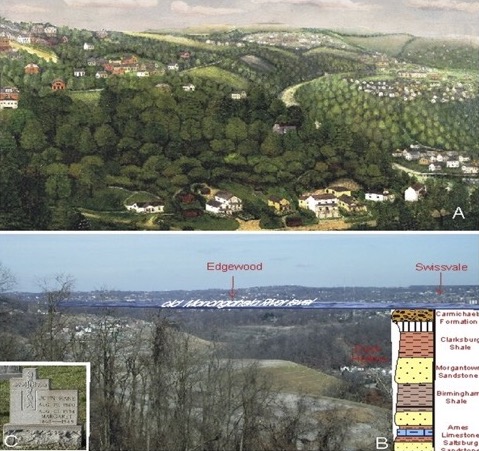
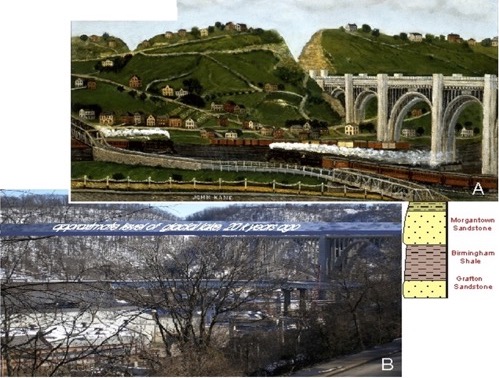
Fig. 4a: Nine Mile Run Seen from Calvary c. 1928, John Kane. Fig. 4b: modern image with old Monongahela River level and Frick Park rock units.
Fig. 4
Fig. 5a: Panther Hollow, Pittsburgh c. 1933-1934 John Kane. Fig. 5b: modern image of Prehistoric Monongahela River with Schenley Park rock units
Fig. 5

Kollar and Brezinski (2010) visualized the pre-Ice Age ancestral Monongahela River through a geologic lens using two paintings by John Kane, “Nine Mile Run Seen from Calvary,” c. 1928 (fig. 4a) and fig. 4b geology version and “Panther Hollow, Pittsburgh,” c. 1930 – 19349 (fig. 5a) and fig. 5b geology version.

Here Comes the Ice Age: The Pleistocene Epoch in Western Pennsylvania

It was during the Ice Age or Pleistocene Epoch (2.6 million to 11,700 years ago)7, when the erosional actions of water impacted Pittsburgh’s landscape.

Thick glacial ice sheets advanced into western Pennsylvania at least three times, starting with the earliest known advance, 700,000 years ago. The last glacial incursion occurred some 20,000 years ago, when the Laurentian Ice Sheet advanced to the N400, about 40 miles northwest of Pittsburgh, depositing terminal moraine sediments in southern Butler and Lawrence counties8. 

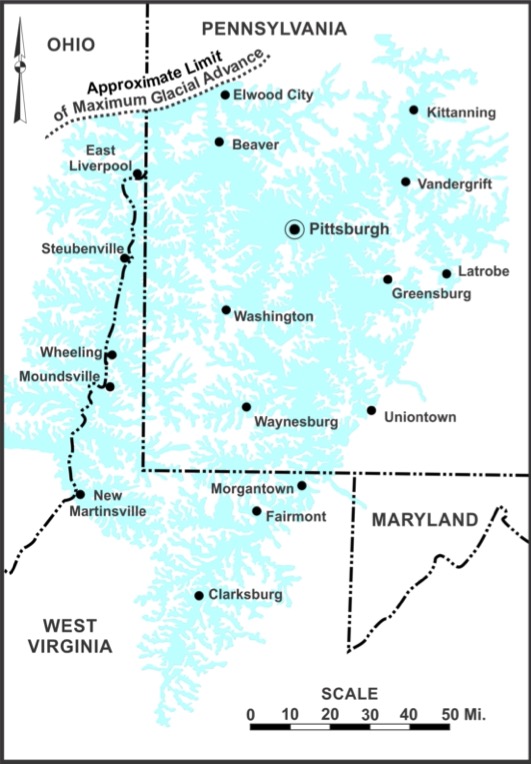
Fig. 6: Reconstruction of Lake Monongahela (blue) of the tri-state area with modern towns and state boundaries for reference.
Fig. 6

With each advance of the glaciers, ice dammed the northwest flowing rivers (fig. 3). Like a clogged bathtub, water levels rose, backing up into creeks, streams, and runs to an elevation of approximately 1,100 feet (335 meters)6 to form Lake Monongahela7. Fig. 6 indicates in blue the highest water level of Lake Monongahela, a level high enough to breach and subsequently erode channels over drainage divides. 

This erosion through existing divides changed the region’s drainage from northwest towards the ancestral Great Lakes, to southwest towards the Gulf of Mexico, with the present-day Ohio River as the primary channel7. 

An example of geology changing the course of history.   

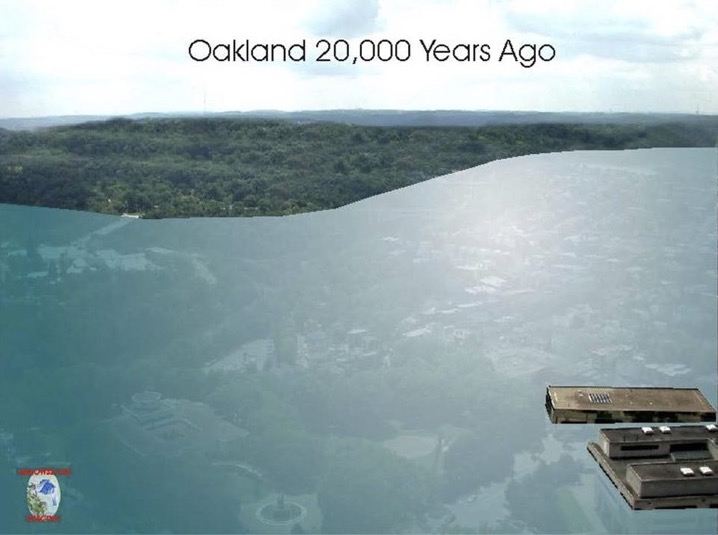
Lake Monangahela, Oakland 20,000 years ago
Fig. 7
Fig. 8a: Turtle Creek Valley No. 1 c. 1930 John Kane. Fig. 8b: modern image with approximate level of glacial ice 20,000 years ago.
Fig. 8

Lake Monongahela was geographically extensive. It extended east to Latrobe, south to Clarksburg, WV, west to eastern Ohio, and north to Elwood City (fig. 6). All of Oakland, including the current locations of Carnegie Museums and the University of Pittsburgh campus were flooded (fig. 7)5. Even the George Westinghouse Memorial Bridge (1932) in East Pittsburgh standing 240 feet (73.1 meters) above Turtle Creek would have been covered by Lake Monongahela (fig. 8b). See John Kane’s landscape painting, Turtle Creek Valley No. 1, c. 1930 (fig. 8a)10.  

Geology of Fern Hollow

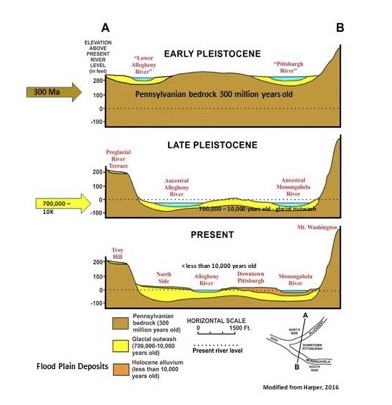
Fig. 9: Evolution of three rivers at downtown Pittsburgh from Early Pleistocene to the present.
Fig. 9

As the glaciers advanced into, and melted back from, northwestern Pennsylvania, the weight of the ice had impacts on the Earth’s crust in the northern latitudes of North America. The crust would compress with the advance of the ice, and then slowly rebound each time the ice sheets melted. As a result of these fluctuations and continued erosion, during the time period stretching from Early Pleistocene to the present, the landscape shifted from a gently rolling plain dissected by shallow, meandering stream valleys into broader, deeper valleys, deeper hollows, and ravines6 (fig. 9). 

In Frick Park, the strata exposed along the eastern flank of the ravine at the Fern Hollow Bridge, as shown in (fig.1, fig. 4b,) consists of sedimentary rocks from the Carmichaels Formation9. The current floor of Fern Hollow is Saltsburg Sandstone, a unit formed about 300 million years ago9. Sedimentary rocks are, by nature, more prone to erode than igneous and metamorphic rocks, which don’t occur in western Pennsylvania. Some estimates propose that it takes about a million years to erode approximately 164 feet (50 meters) of rock11 within the river valleys and hollows of this region. Assuming this estimate is valid, which might not be the case, it would have taken a million years for the valley of Fern Hollow Run, and that of nearby Nine Mile Run, to be eroded to their present elevations.

Summary

Every bridge crossing is a potential encounter with geology. This scientific discipline offers insight into the natural dynamics that shape landscapes through deposition of sediments, mountain building, and erosion, all factors that help account for the locations where our region’s hundreds of bridges were built as transportation necessities. 

 Albert D. Kollar is Collections Manager for the Section of Invertebrate Paleontology at the museum Kollar and Wendy T. Noe serve on the Board of Directors of Pittsburgh Geological Society. Museum employees are encouraged to blog about their unique experiences and knowledge gained from working at the museum.

References

Brezinski, D. K. Fig. 7.

Harper, J. A. Figs. 1, 2, 3, 6, 9.

Kollar, A. D., and Brezinski, D. K. Figs. 4, 5, 8.

1New York Times, 28 January 2022.                                                                                                

2Guza, M. 2022. NTSB report: Pittsburgh’s Fern Hollow Bridge collapse started on Squirrel Hill side. Pittsburgh Tribune Review.                                                                                          

3Bramgati, A., et al. 2003. The Lagoon of Venice: Geological setting, evolution and land subsidence. Episodes, 26, 264-268.                                                                                   

4ASMOSIA XII INTERNATIONAL CONGRESS. 8 – 14 October,2018, Izmir, Turkey. 

5Brezinski, D. K. and A.D. Kollar. 2005. The Geology of Schenley Park: A Record of Climate and Sea Level Change 300 Million Years in the Making. PAlS Publication Number 1, 5 p. 

6Harper, J. A. 2016. The Geological Evolution of Pittsburgh’s Three Rivers. PAlS Publication 21, 5 p.                                                                                                                                            

7Harper, J. A. 2002. Lake Monongahela: Anatomy of an immense Ice Age Pond. Pennsylvania Geology, 32, p. 2-12.                                                                                                                

8Harper, J. A., and A. D. Kollar. Geology of a Former Pleistocene Bog in Bridgeville, Allegheny County, Pennsylvania. Pennsylvania Geology. In review.                                                 

9Brezinski, D.K. and A. D. Kollar. 2005. The Geology of Frick Park A 300 Million Years Record of Climate and Sea Level Change. PAlS Publication Number 3, 5 p.                                    

10Kollar, A.D.,and 10D.K. Brezinski. 2010. Geology, Landscapes and John Kane’s Landscape Paintings. PAlS Publication 10, 5.                                                                                                                              

11 Kurak, E., et al. 2021. INCISION OF THE YOUGHIOGHENY RIVER THROUGH THE LAUREL HIGHLANDS DETERMINED BY A NEW RIVER TERRACE STRATIGRAPHIC AGE MODEL, OHIOPYLE STATE PARK, SOUTHWESTERN PENNSYLVANIA. Eds. Shaulis, J., Pazzaglia, F., and Lindberg, S. Guidebook for the 85th ANNUAL FIELD CONFERENCE OF PENNSYLVANIA GEOLOGISTS October 7 — 9, 2021.  

Related Content

Carnegie’s Water Fountains

Understanding Fossil Fuels Through Carnegie Museums Exhibits

The Connemara Marble: A Cross-Atlantic Connection Between Ireland and Pittsburgh

Carnegie Museum of Natural History Blog Citation Information

Blog author: Kollar, Albert D; Noe, Wendy T.
Publication date: February 23, 2022

Share this post!

  • Share on Twitter Share on Twitter
  • Share on Facebook Share on Facebook
  • Share on Pinterest Share on Pinterest
  • Share on LinkedIn Share on LinkedIn
  • Share on Reddit Share on Reddit
  • Share via Email Share via Email

Filed Under: Blog Tagged With: Albert Kollar, Benedum Hall of Geology, Carnegie Museum of Natural History, invertebrate paleontology, Science News

December 14, 2021 by Erin Southerland

Carnegie’s Water Fountains

by Albert D. Kollar

Potable Water Sources

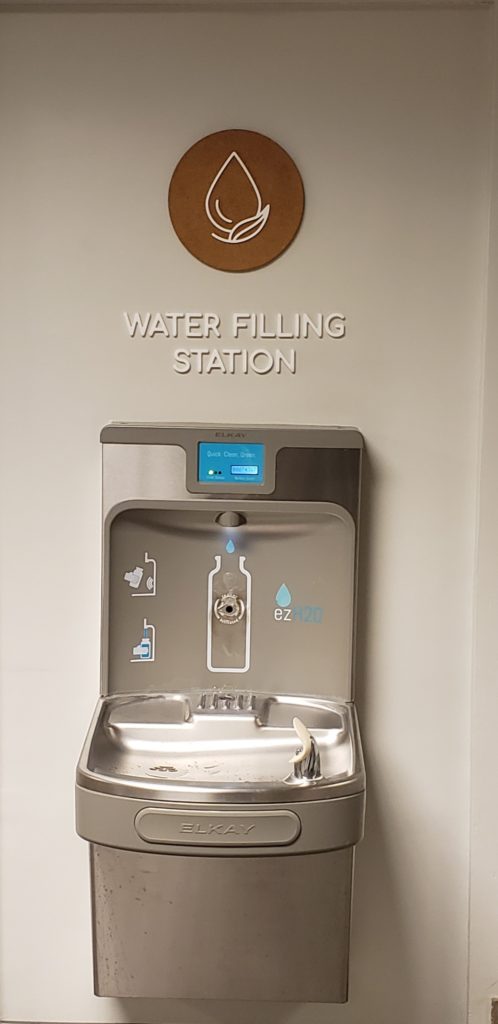
Access to drinking water from a water fountain seems to be passé today with the ubiquitous availability of plastic water bottles from vending machines. In 2018, as an effort to ‘change the culture’ in the use of plastic water bottles by museum staff and patrons, the Oakland museums, Carnegie Museum of Natural History, and Carnegie Museum of Art (respectively CMNH and CMOA), installed filling stations for reusable water bottles. These eco-friendly “fountains” are located adjacent to the Fossil Fuels Cafeteria in CMNH, and in the rest room lobby of CMOA1 (Fig. 1), and their rapid and wide acceptance invites a deeper consideration of drinking water as an amenity in a public facility.  

gray and silver water fountain
Fig. 1.

The public water supply in the massive Oakland building comes from the Pittsburgh Water and Sewer Authority’s Herron Hill Reservoir, which in turn draws its supply from the Highland Park Reservoir in the city’s East End1. The water, which is initially sourced from the Allegheny River, undergoes several treatments before it is pumped to the reservoir. 

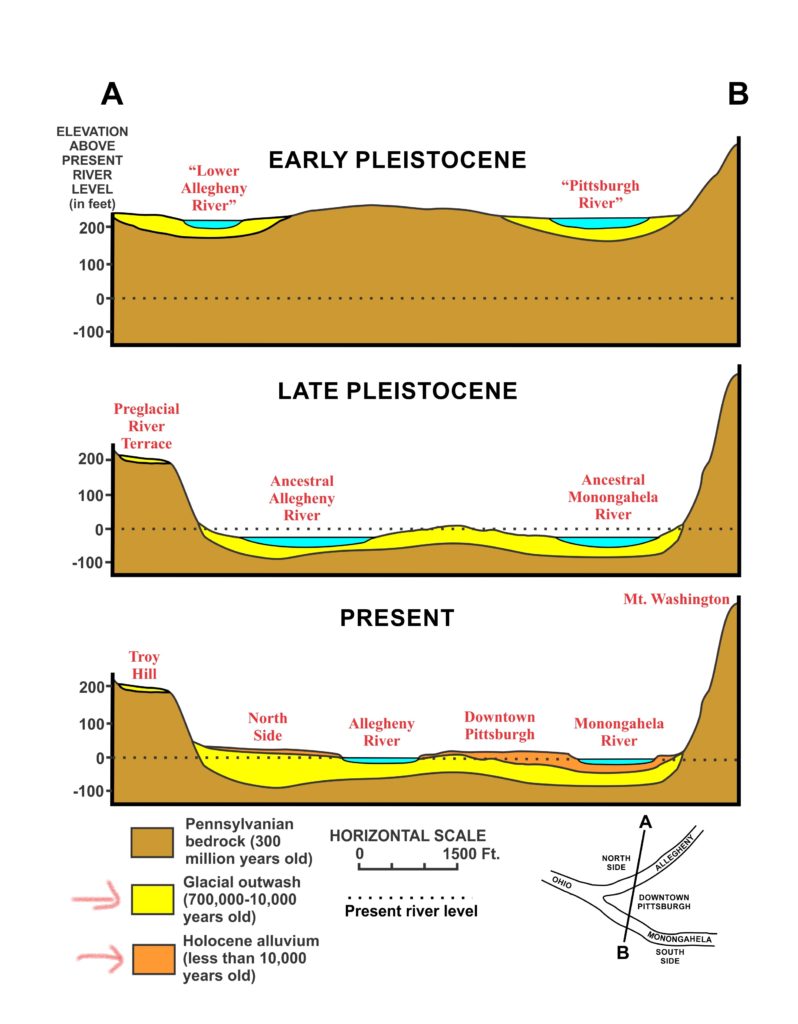
The geologic perspective on our water supply also bears mention here. The glacial melt waters of the Pleistocene Epoch filled the potable aquifers of western Pennsylvania2 (Fig. 2 red arrows). With population growth in the 20th Century, water demands for agricultural, industrial, and residential uses led to the depletion of these aquifers within the Allegheny River Basin. Today potable waters stored in reservoirs are principally drawn from the three rivers of Pittsburgh, waterways replenished to a significant degree by rain fall and snow melt.

chart looking at glacial outwash in the Allegheny River Basin in the Pleistocene and at present
Fig. 2

A myth in the minds of many Pittsburghers is the city’s Fourth River. According to a 2016 publication by John Harper2, the Fourth River does not exist as underground caves, fissures, or cavities under any of the three rivers. As shown in Fig. 2, (red arrows) glacial outwash and Holocene alluvium comprise thick deposits of sediment within the river valleys, and tiny interconnected pore spaces between sand grains and pebbles allow water from the rivers and their adjoining floodplains and riverbanks, to move slowly but freely through this sediment. At some locations this subterranean flow is accessed by artesian wells, the most prominent example being the fountain in Point State Park.  

Carnegie’s Water Fountains

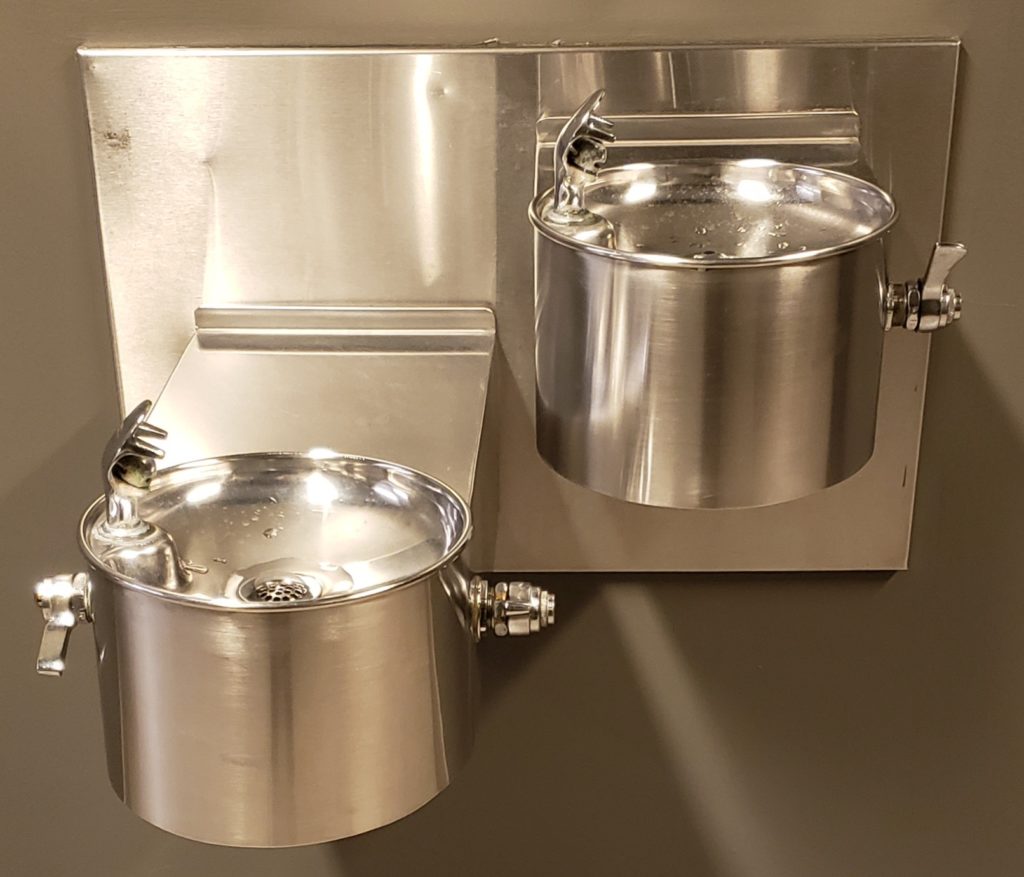
Presentation is important, especially for something as vital as drinking water, and within the halls and hallways of the Carnegie building complex in Oakland, carved stone is frequently part of the refreshment package. Visitors encounter three types of water fountains. In the 1907 Carnegie Institute Extension, a Beaux-Arts masterpiece designed by architects Alden and Harlow, water fountains are plumbed through either white Carrara Marble from Italy or yellow Hauteville fossil limestone of France. In the Museum of Art wing built in 1974, thirsty patrons are served by chrome water fountains (Fig. 3). 

two chrome water fountains
Fig. 3

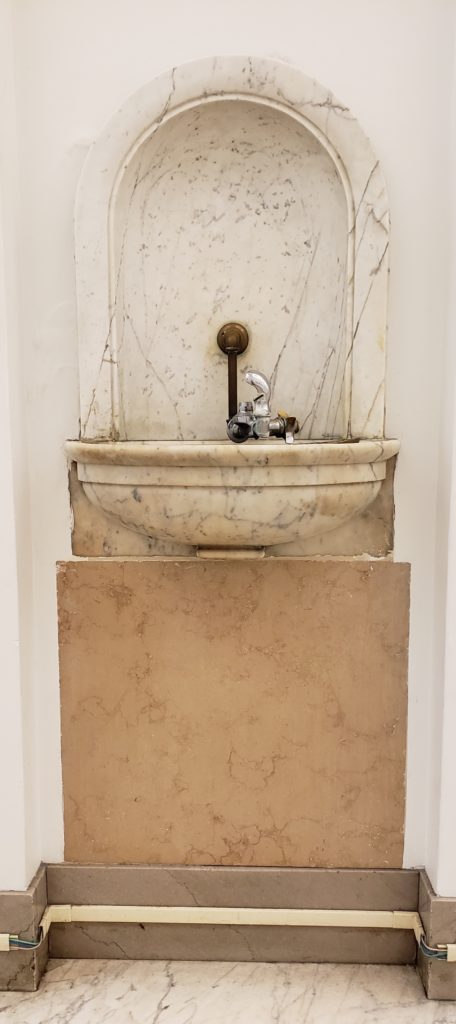
Carrara Marble was created during the Cenozoic Era when limestones formed during the Triassic or early Jurassic age limestones underwent metamorphosis.4 The locations of the eighteen Carrara Marble fountains in the 1907 building include the engine room, basement hallways, the Carnegie Library of Pittsburgh first floor lobby (Fig. 4), Carnegie Music Hall vestibule hallway, the Carnegie Lecture Hall, and exhibit halls on the second and third floors of Carnegie Museum of Natural History.3 Although the Carrara Marble fountains originally had red brass fixtures (Fig. 4), some now operate with replacement fixtures of chrome1. 

marble water fountain
Fig. 4

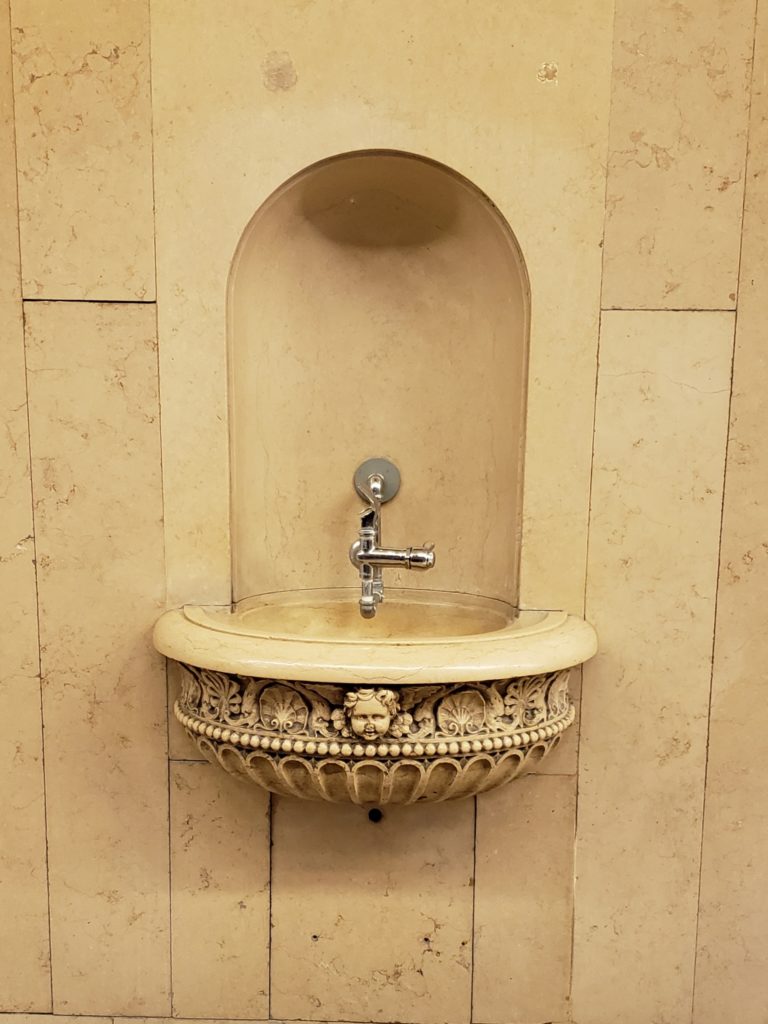
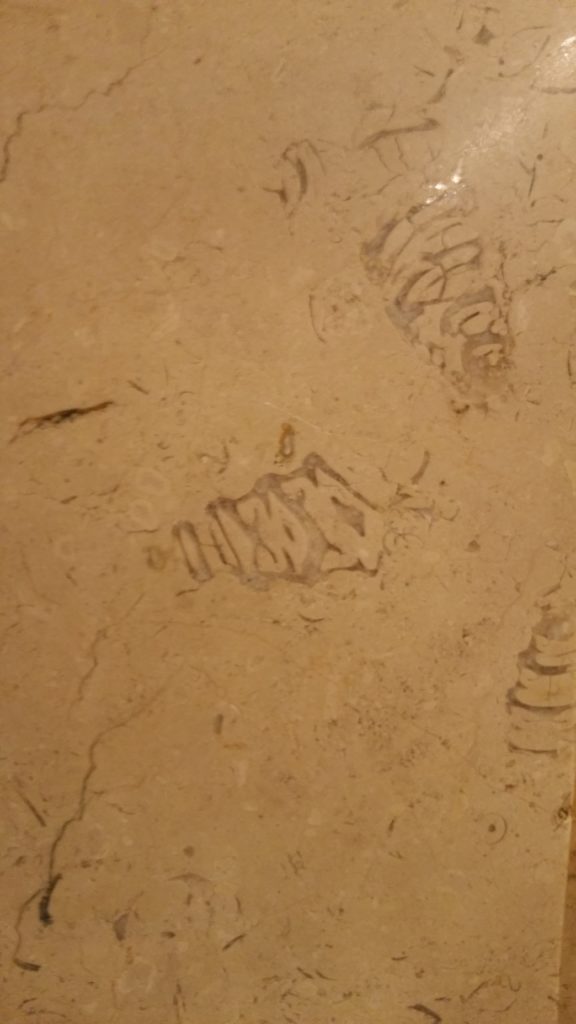
There are three Hauteville limestone fountains along the walls of the three floors in the Grand Staircase Hall. These neo-Baroque fountains feature carvings that represent a diverse group of invertebrate fossils and an allegory human face (Fig. 5). The fountains are surrounded by the Hauteville limestone wall panels with Cretaceous age snail Nerinea (Fig. 6) visible in many Hauteville floor tiles, walls, door framing, and pedestals.5 Some 350 tons of Hauteville limestone were used for the interior stone in the Grand Staircase and throughout the Carnegie Institute Extension.6 The Hauteville fountains also originally used red brass fixtures, and now function with chrome replacements.

limestone water fountain
Fig. 5
snail fossils in limestone
Fig. 6

A World-Famous Fountain In Rome And More

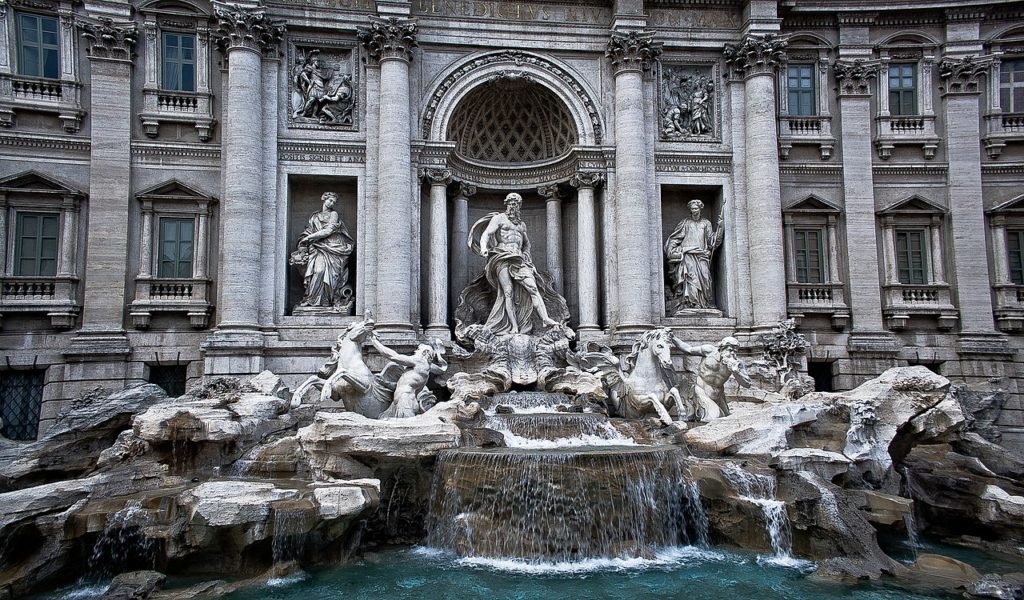
If there’s a place in a discussion of fountains to consider the top of the scale, an Italian reference belongs here. One of the most famous water fountains in the world is the Baroque Trevi Fountain (Nicola Salvi, Giuseppe Pannini, architects) that opened in 1762 in Rome7. The fountain had its moments in classic movies such as, Federico Fellini’s La Dolce Vita (1960) with Marcello Mastroianni and Anita Ekberg in the leads8 (Fig. 7, image by Hernán Piñera).  

Trevi Fountain
Fig. 7

Around 19 BC, aqueducts were constructed in ancient Rome to bring pure water to the city from mountains 13 km (8.1 mi) from Rome9. Roman citizens enjoyed the function of a fountain not only as a source of clean water but as a gathering place.  

The Trevi Fountain is made of travertine, a sedimentary limestone (calcium carbonate) quarried in the Italian village of Bogni di Tivoli10. The village is noted for travertine quarries that produced the exterior stone for the Roman Amphitheater opened in 80 AD11 and the building of the Getty Museum in Los Angeles, California (1997). 

Travertine forms when ground water combines with carbon dioxide in the soils to form carbonic acid waters that then dissolve subsurface limestone. As these calcium carbonate-concentrated waters flow through the cracks in the bedrock they eventually precipitate a new rock called travertine. 

An excellent example of travertine formation can be observed at Mammoth Hot Springs in Yellowstone National Park. High above the Hot Springs, rainwater seeps into the buried Cretaceous age limestone where it mixes with carbon dioxide gas that rises from a subterranean magma chamber dissolving the calcium carbonate that is carried along in the underground streams through fractures in the overlying strata. Once the water exits the bedrock, travertine terraces start to build as the carbon dioxide gas escapes, leaving behind the calcium carbonate mineral. 

Travertine in Oakland: In an abandoned sandstone quarry behind Phipps Conservancy in Schenley Park travertine deposits is preserved on the exterior of the quarry rock12.  The site is no longer open for visitors.

Albert D. Kollar is the Collection Manager for the Section of Invertebrate Paleontology. Museum employees are encouraged to blog about their unique experiences and knowledge gained from working at the museum.

References

  1. Young, T. Carnegie Museum of Pittsburgh Facilities. 
  2. Harper, J. A. 2016. The Geological Evolution of Pittsburgh’s Three River. PAlS Publication 21. 
  3. Kollar et al. 2020. Connemara Marble at the Carnegie Institute Extension. ACM, 86, 207-2
  4. Price, M. T. 2007. The Sourcebook of Decorative Stone: An Illustrated identification guide. 287 pp.
  5. Kollar, A. D. 2020. https://carnegiemnh.org/carnegie-museum-grand-staircase/
  6. Kollar, A. D. 2021 DE L’ÉCHAILLON À L’ANNEXE DU CARNEGIE INSTITUTE DE PITTSBURGH Saint-Quentin-sur-Isère, 18 Septembre 2021.
  7. Pinto, J. A. 1986. The Trevi Fountain. Yale University Press. 326 pp. 
  8. Fellini, F. 1960. La Dolce Vita. The Criterion Collection, Paramount Home Entertainment
  9. Beard, M. 2015. SPOR A History of Ancient Rome. Liveright Publishing Corporation. 606 pp.
  10. Hirt, A. M. 2010. Imperial Mines and Quarries in the Roman World Organizational Aspects 27 BC-AD 235. Oxford Press, 551 pp. 
  11. Acocella, A. 2013. Travertine, An Italian Stone. Journal ARCHITETTURA DI PIETRA.
  12. Kollar, A. D. The Geology of Oakland, in manuscript. 

Related Content

Understanding Fossil Fuels through Carnegie Museum Exhibits

A Century Ago, a Donor Walked into the Museum

The Connemara Marble: A Cross-Atlantic Connection Between Ireland and Pittsburgh

Carnegie Museum of Natural History Blog Citation Information

Blog author: Kollar, Albert D.
Publication date: December 14, 2021

Share this post!

  • Share on Twitter Share on Twitter
  • Share on Facebook Share on Facebook
  • Share on Pinterest Share on Pinterest
  • Share on LinkedIn Share on LinkedIn
  • Share on Reddit Share on Reddit
  • Share via Email Share via Email

Filed Under: Blog Tagged With: Albert Kollar, Carnegie Museum of Natural History, invertebrate paleontology, Science News

October 29, 2021 by Erin Southerland

Meet the Mysterious Mr. Ernest Bayet

by Joann Wilson and Albert Kollar

Imagine accumulating tens of thousands of fossils? While the exact number of fossils in Bayet’s collection has yet to be determined, estimates range from 20,000 to over 100,000. In 1903, William Holland, Director of the Carnegie Museum, negotiated a blockbuster deal to bring Bayet’s entire collection to Pittsburgh. The deal dazzled the public and made front page news in the New York Times. For over two years, the Section of Invertebrate Paleontology has been uncovering the stories of the collectors and dealers behind Bayet’s magnificent collection. Notable dealers include Lucien Stilwell, Frederick Stearns, and Dr. Friedrich Krantz, to name a few. But what about Bayet himself? What is his story?

Thanks to ongoing translations of the Bayet archive by volunteer Lucien Schoenmakers, we are excited to begin a series introducing Ernest Bayet, the person behind the collection.  

How old was Bayet when he sold his fossil collection?

Bayet, who was Born in 1859, was just 44 years old in 1903 when he sold his collection to the Carnegie Museum.  

How long did Bayet collect fossils?

Archival documents, that in 1903 arrived in Pittsburgh from Brussels with the purchased materials, indicate Bayet acquired the bulk of his collection in under 20 years. Assuming a range of 20,000 -100,000 fossils, Bayet would have acquired fossils at the blistering pace of 1,000-5,000 specimens per year. When you consider the logistics of shipping, along with the perpetual letter writing required to transact deals in the late 19th century, his acquisition rate is an amazing feat. 

Signature on a piece of paper
Is this Ernest Bayet’s signature? Portion of a recently re-discovered fossil label.

Why did Bayet sell his collection?

In July of 1902, Bayet married countess, Maria van der Burch. The Bayet family had their first child in 1903. A second child followed in 1905. Was this a factor in Bayet’s decision to downsize his entire fossil collection? We are not yet sure of Bayet’s plans or motives. For over a century it was rumored that Bayet sold his fossils to pay for a new chateau, or home.  In a letter to Andrew Carnegie dated June 8, 1903, William Holland, then Director of the Carnegie Museum, reported this as a possible explanation for the fossil sale. Although we have yet to verify that a chateau was acquired within that period, such a purchase is a possibility.  

How long did Bayet live?

The Mysterious Mr. Ernest Bayet died in 1935 at the age of 76. What was his life like after the sale? To learn more about Bayet and how his fossils arrived in Pittsburgh, check out Annals of Carnegie Museum’s new publication, “Unraveling the 120 Year Mystery of Ernest Bayet and His Fossil Collection at Carnegie Museum”.

We are continually grateful to volunteer and Netherlands resident Lucien Schoenmakers for ongoing efforts to translate archival Bayet documents. Joann Wilson is an Interpreter in the Education Department at Carnegie Museum of Natural History. Albert Kollar is Collections Manager for the Section of Invertebrate Paleontology. Museum employees are encouraged to blog about their unique experiences and knowledge gained from working at the museum.   

Related Content

Bayet and Krantz: 16 Words

Bayet’s Bounty: The Invertebrates That Time Forgot

From Collector to Director

Carnegie Museum of Natural History Blog Citation Information

Blog author: Wilson, Joann; Kollar, Albert
Publication date: October 29, 2021

Share this post!

  • Share on Twitter Share on Twitter
  • Share on Facebook Share on Facebook
  • Share on Pinterest Share on Pinterest
  • Share on LinkedIn Share on LinkedIn
  • Share on Reddit Share on Reddit
  • Share via Email Share via Email

Filed Under: Blog Tagged With: Albert Kollar, invertebrate paleontology, Joann Wilson, Science News, SWK2

October 1, 2021 by wpengine

Meet the Fossil Detectives in the Basement

by Suzanne Mills and Albert Kollar

Gray metal storage cabinets march in rows across the concrete floor. The collection space has no windows and there is a constant hissing sound from the overhead air ducts. No matter, the staff is looking for clues of the geologic and paleontological past, or History of the Earth, through the vast collection of fossil invertebrates. The staff and volunteers of the Section of Invertebrate Paleontology (IP) are tasked to reorganize, preserve, and curate fossils through the leadership of the Collection Manager Albert Kollar.

Person in a hallway lined with gray cabinets
Collection Assistant Kevin Love at the doors of the Invertebrate Paleontology section.

On any given workday, you’ll find us hefting drawers full of fossil-bearing rocks and playing specimen-box Tetris to make fossils fit in the available cabinet space. We examine century-old inventory books, search out (usually Google) maps to find absconded valuables (historical fossil sites), and decipher written scripts in unfamiliar French and German for valuable geologic data.

Long-term volunteers in IP include Rich Fedosick, a researcher assisting in the project to document the Carnegie building stones; John Harper, an expert on fossil snails taxonomy, Roman Kyshakevych, who is deciphering the famous Coppi collection from Italy; Tamra Schiappa, a paleontologist at Slippery Rock University who is updating fossil cephalopod identifications; and Vicky Sowinski, who performs collection support. Student researchers include collection assistant and graphic artist Kay Hughes, a 2021 Mount Holyoke College graduate who coauthored four peer-reviewed scientific publications produced by IP; and collection assistant Will Vincentt, who researched two Bayet collections, the Hunsruck Slate of Germany and Lyme Regis of England. Tara Pallas-Sheetz, a part-time assistant, has worked on various projects over the years.

Hear from some of our newest staff and summer volunteers in their own words below.

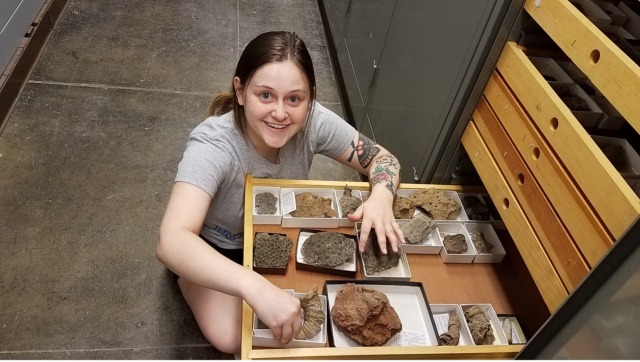
Woman with a drawer of coral fossils
Lizzie Begley with large fossil corals

Name: Lizzie Begley

About me: B.A. Anthropology Penn State 2021; masters candidate in Museum Studies and Non-profit Management certification in progress at Johns Hopkins University

Why IP: Working “behind the scenes” in IP has helped me develop a better sense of what it looks like to work in a museum such as the Carnegie. As an aspiring museum professional, experience behind gallery floors is invaluable as I work to find my place in the field. For this experience I couldn’t be more grateful and, honestly, couldn’t be having more fun!

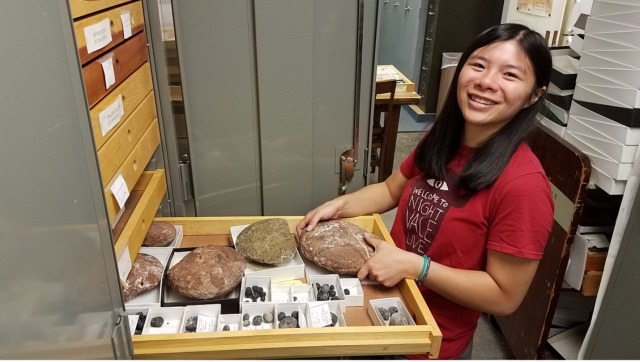
woman with a drawer of fossil ammonites
Katie Golden with fossil ammonites

Name: Katie Golden

About me: B.S. Biology, Juniata College 2023 (expected)

Why IP: When I was in preschool, I told people I wanted to be a paleontologist when I grew up. Here in IP, I like exploring a part of the museum that most people don’t get to see. I particularly enjoy puzzle-piecing together fossils that need repair. The intricate ammonites, trilobites, and insects preserved in amber are especially beautiful. My favorite fossil organism is Anomalocaris.

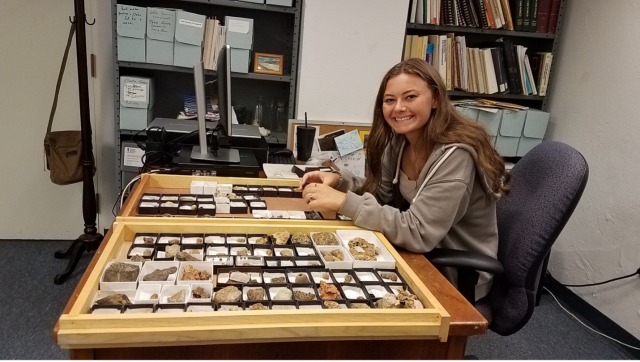
Woman at a table with fossil corals
Tori Gouza with fossil corals

Name: Tori Gouza

About me: B.A. History and Anthropology, University of Pittsburgh 2023 (expected)

Why IP: I love working in IP. It is so exciting to be able to interact with others in the section and to learn what projects they are currently working on. Albert Kollar has encouraged not only discussion but also collaboration. It is great to converse with others who are passionate about their work.

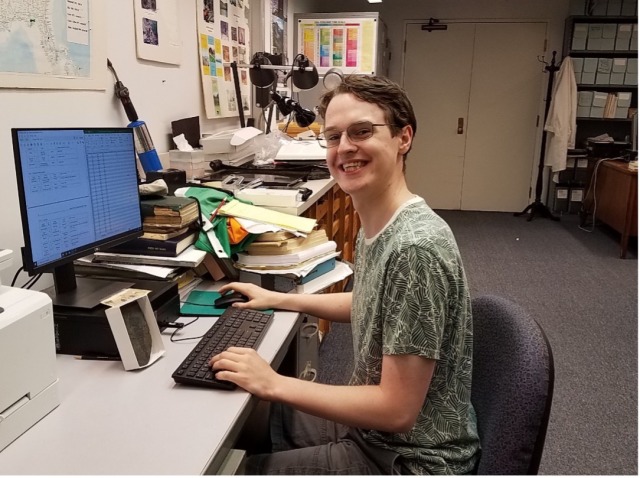
Man sitting at a computer in an office
Kevin Love enters data about a fossil eurypterid

Name: Kevin Love

About me: IP Collection Assistant; B.S. Geology and Ecology & Evolution summa cum laude, University of Pittsburgh 2021

Why IP: I like solving puzzles at work. I find invertebrate fossils aesthetically appealing, but the main reason I like this job is that I get to understand little enigmas from Earth’s past. I like solving historical questions and compiling more information about fossils in the collection.

woman with a fossil trilobite
Suzanne Mills with fossil trilobite Isotelus gigas

Name: Suzanne Mills

About me: IP Collection Assistant, Professional Geologist, mom

Why IP: Every day is different when you work with a collection of 800,000 specimens. I may come across a 100-million-year-old ammonite sparkling with crystals inside, or a drawer full of trilobites acquired by the museum in 1903, when Andrew Carnegie was alive. I love that my work requires me to learn more about fossils which are beautiful, historical, and scientifically significant.

person with a drawer of fossil crinoids
Ellis Peet with fossil crinoids

Name: Ellis Peet

About me: B.S. Environmental Geoscience with Geology concentration, Slippery Rock University 2021

Why IP: The management and staff of IP are smart, kind, personable, and they take paleontology seriously. I also like the environment at IP because it smells like a library and limestone dust, which reminds me of the geology department at Slippery Rock.

Woman with a fossil trilobite
Joann Wilson with fossil trilobite Paradoxides spinosus from the Baron de Bayet collection.

Name: Joann Wilson

About me: Interpreter for the Department of Education, Carnegie Museum of Natural History

Why IP: Fossils inspire awe.  I enjoy unravelling the stories behind the individuals that discovered, studied and collected these breathtaking specimens.

Suzanne Mills is a Collection Assistant and Albert Kollar is Collections Manager in the Section of Invertebrate Paleontology at Carnegie Museum of Natural History. Museum employees are encouraged to blog about their unique experiences and knowledge gained from working at the museum.

Related Content

Smoking Fossils

From Collector to Director

Bayet and Krantz: 16 Words

Carnegie Museum of Natural History Blog Citation Information

Blog author: Mills, Suzanne; Kollar, Albert
Publication date: October 1, 2021

Share this post!

  • Share on Twitter Share on Twitter
  • Share on Facebook Share on Facebook
  • Share on Pinterest Share on Pinterest
  • Share on LinkedIn Share on LinkedIn
  • Share on Reddit Share on Reddit
  • Share via Email Share via Email

Filed Under: Blog Tagged With: Albert Kollar, invertebrate paleontology, Science News, Suzanne Mills

  • Page 1
  • Page 2
  • Page 3
  • Interim pages omitted …
  • Page 7
  • Go to Next Page »

sidebar

About

  • Mission & Commitments
  • Directors Team
  • Museum History

Get Involved

  • Volunteer
  • Membership
  • Carnegie Discoverers
  • Donate
  • Employment
  • Events

Bring a Group

  • Groups of 10 or More
  • Birthday Parties at the Museum
  • Field Trips

Powdermill

  • Powdermill Nature Reserve
  • Powdermill Field Trips
  • Powdermill Staff
  • Research at Powdermill

More Information

  • Image Permission Requests
  • Science Stories
  • Accessibility
  • Shopping Cart
  • Contact
  • Visitor Policies
One of the Four Carnegie Museums | © Carnegie Institute | Privacy Policy | Terms of Use | Accessibility
Rad works here logo