• Skip to primary navigation
  • Skip to main content
  • Skip to primary sidebar

Carnegie Museum of Natural History

One of the Four Carnegie Museums of Pittsburgh

  • Visit
    • Buy Tickets
    • Visitor Information
    • Exhibitions
    • Events
    • Dining at the Museum
    • Celebrate at the Museum
    • Powdermill Nature Reserve
    • Event Venue Rental
  • Learn
    • Field Trips
    • Educator Information
    • Programs at the Museum
    • Bring the Museum to You
    • Guided Programs FAQ
    • Programs Online
    • Climate and Rural Systems Partnership
  • Research
    • Scientific Sections
    • Science Stories
    • Science Videos
    • Senior Science & Research Staff
    • Museum Library
    • Science Seminars
    • Scientific Publications
    • Specimen and Artifact Identification
  • About
    • Mission & Commitments
    • Directors Team
    • Museum History
  • Tickets
  • Give
  • Shop

Jennifer Sheridan

November 9, 2023 by Erin Southerland

Museum Researchers Describe Five New Amphibian and Reptile Species in 2023

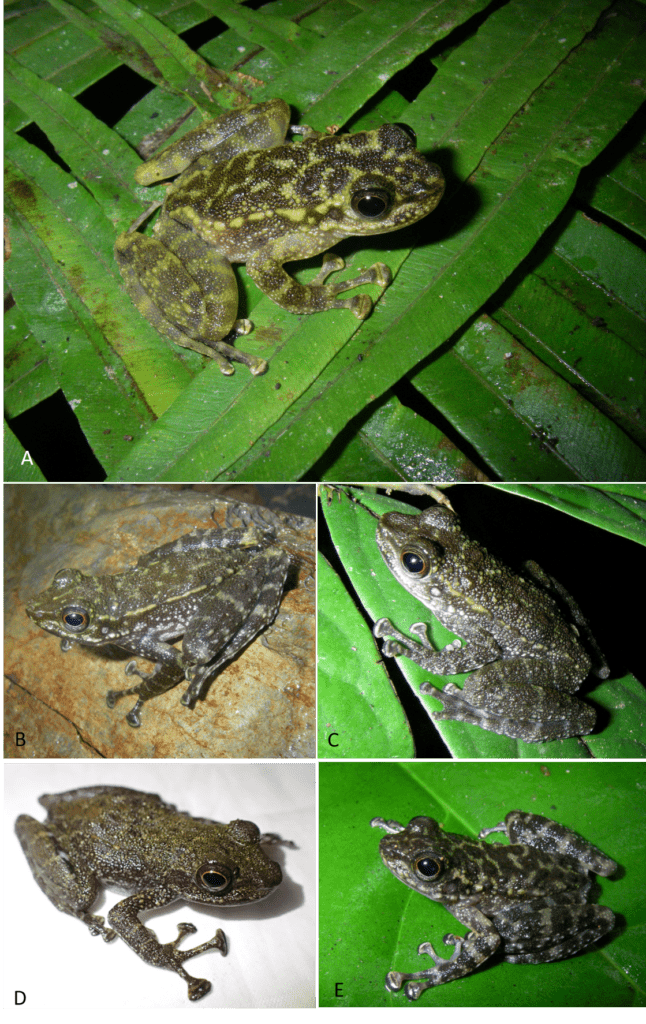
Five frogs in the genus Amolops: A: Amolops cremnobatus, B: A. tanfuilianae sp. nov., C: A. sengae sp. nov., D: A. kottelati sp. nov., E: A. attiguus sp. nov.
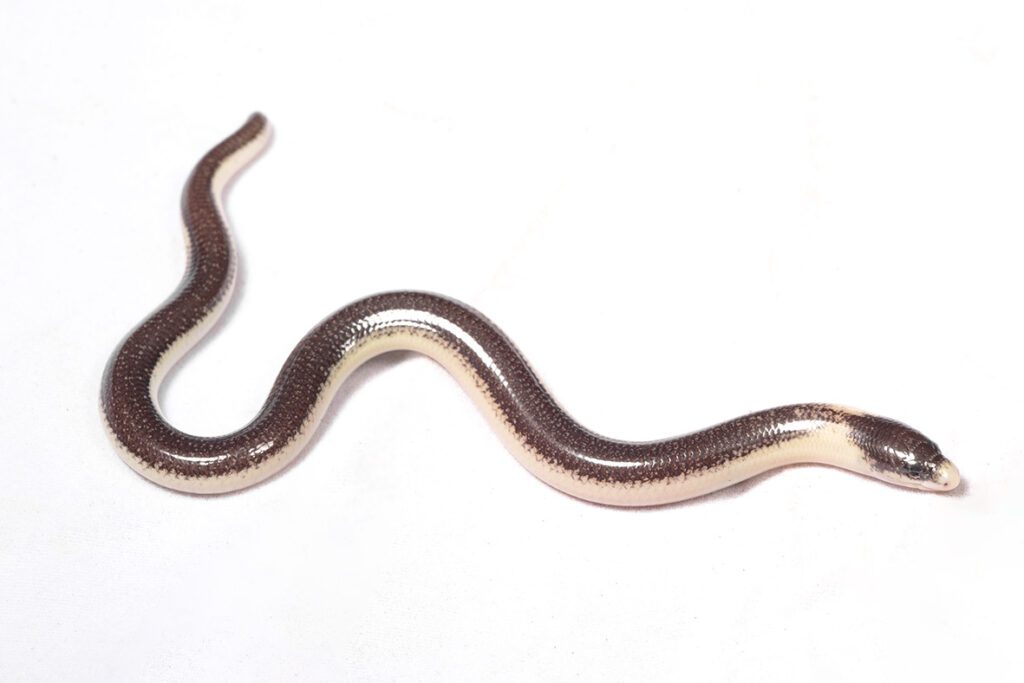
Acontias mukwando. Photo credit: Arthur Tiutenko.

Researchers in Carnegie Museum of Natural History’s (CMNH) Section of Amphibians and Reptiles celebrate five new species described in 2023. Associate Curator Dr. Jennifer Sheridan and an international research team describe four new species of Southeast Asian frogs in the genus Amolops in the journal Vertebrate Zoology. Collection Manager Mariana Marques and international colleagues describe a new species of legless skink (small lizard) from Angola in the African Journal of Herpetology. Both museum researchers are lead authors of their respective studies. 
 
Marques and Sheridan’s discoveries took place 6,000 miles apart on different continents, yet both provide new scientific insights about their respective regions. In the face of a worldwide decline in biodiversity due to human impact, the documentation of new-to-science species fills vital knowledge gaps for a better understanding of ecosystem health. The better scientists can document biodiversity, the better they understand the effects of biodiversity loss and how to identify future conservation goals. 
 
“Publishing five new species within less than three weeks is exciting for us and the museum,” said Sheridan. “Both discoveries required a combination of field work and research back at the museum. Mariana knew in the field that she had likely encountered an undescribed species, while in my case, these frogs were labeled as Amolops cremnobatus in the field because that’s what they looked like. Years later, once we started looking closely at numerous individuals collected by many researchers, we began to fully realize the diversity hidden in the Amolops genus.”
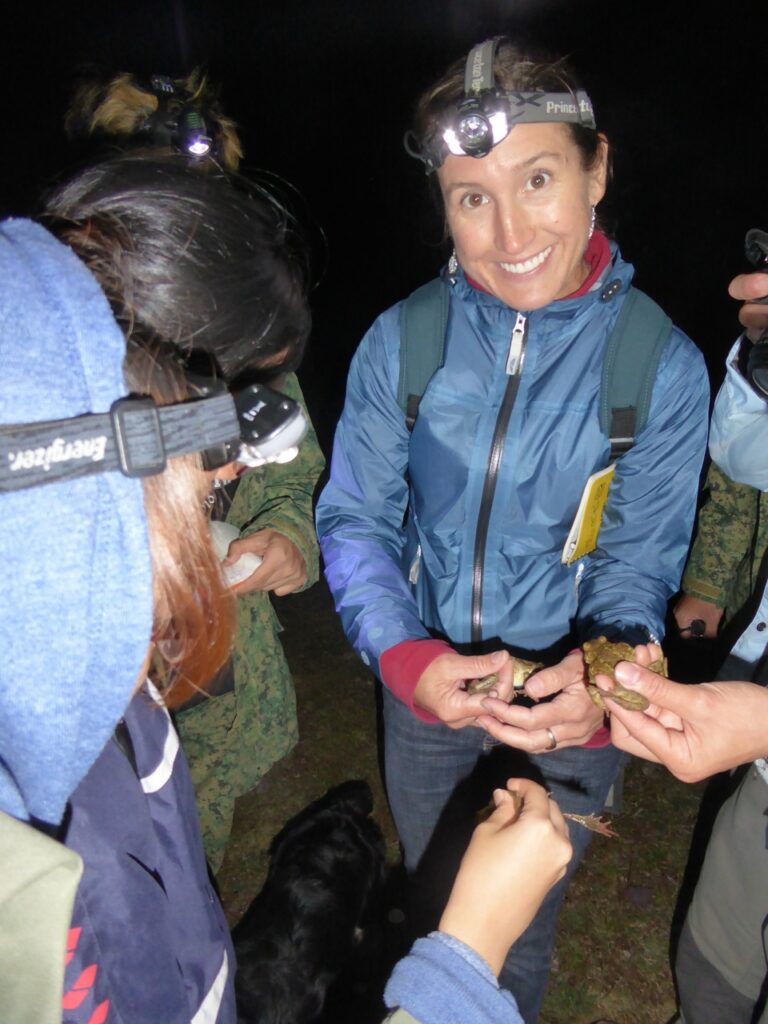
Dr. Jennifer Sheridan, Associate Curator of Amphibians and Reptiles.

Sheridan and researchers from Laos and North Carolina hypothesized that the Lao torrent frog Amolops cremnobatus, first described in 1998, is actually five species in the genus Amolops based on mitochondrial DNA analysis of specimens from Laos, Vietnam, and Thailand. Their paper in Vertebrate Zoology describes the four new species Amolops tanfuilianae, Amolops kottelati, Amolops sengae, and Amolops attiguus. 

“These are extremely cryptic species,” said Sheridan. “So, determining the differences is not as simple as ‘specimen A has different coloration than cremnobatus’ or anything like that.” The visual differences between adult specimens were small and included varied finger lengths and the number of vomerine teeth (used to capture and hold prey). Tadpole morphology (size, shape, and structure) was key; even though adults are collected more often than tadpoles for scientific study, tadpole information is important. Body length, presence or absence of glands, and other physical features in tadpoles provided crucial data to differentiate the new Amolops species. Molecular data including mtDNA and nuDNA analysis also revealed differences the research team needed to describe the four new species. The team recognizes that continued research in Thailand may reveal additional species. 

Meanwhile, Marques and an international team of researchers discovered the skink Acontias mukwando on Serra da Neve, an inselberg, or isolated, rocky outcrop, in Angola, one of the most ecologically diverse countries in Africa. Moveable eyelids and distinct coloration distinguish the new species, Acontias mukwando, from other species in the genus Acontias. The research team chose the species name in honor of the local Mukwando tribe to recognize their support and friendship during field work.

Both Sheridan and Marques used specimens from the collections of multiple other museums to fully determine how these newly described species are unique, and how they relate to their closest relatives. They relied on collections made by numerous researchers from multiple countries, highlighting the value of collaborative museum networks for understanding global biodiversity.

“Finding a specimen like Acontias is always exciting,” said Marques. “These animals spend most of their time under rocks and foliage, and they are not usually seen by people. There is so much we don’t know about them. Discovering that a member of a little-known group occurs on top of an equally obscure mountain was such an exciting mystery to solve. It was one of those rare ‘wow’ moments in your career as a scientist! My goal is to provide a solid and scientific overview of the fauna occurring in Serra da Neve, in order to support its conservation and contribute to the understanding of its rare biodiversity.”

CMNH’s Section of Amphibians and Reptiles maintains a collection of more than 230,000 specimens and ranks as the ninth largest amphibian and reptile collection in the United States. It includes 156 holotypes, the single type specimens upon which the descriptions and names of their respective species are based. 
Filed Under: Press Release Tagged With: amphibians and reptiles, herpetology, Jennifer Sheridan, Mariana Marques, Science News

July 20, 2022 by Erin Southerland

Scientists Call for New Research Studying the Combined Effects of Climate Change and Urbanization on Body Size Across Species

Rhacophorus dulitensis (jade tree frog). Photo by Dr. Jennifer Sheridan, Carnegie Museum of Natural History

Researchers from Carnegie Museum of Natural History have described impacts of climate change and land use on the size of organisms. Dr. Jennifer Sheridan, Assistant Curator of Amphibians and Reptiles, and Dr. Amanda Martin, post-doctoral researcher, review the causes that lead to changes in size as well as ecological interactions, while making the case for more research studying the combined effects of climate change and urbanization. The paper, entitled “Body size responses to the combined effects of climate and land use changes within an urban framework,” was published in in the journal Global Change Biology on June 27. 

Body size is considered one of the most important traits of an organism, affecting thermal regulation, mobility, reproductive output, and capacity to acquire resources. Over many generations, body sizes usually increase within lineages. Recent observations, however, show a decrease in size over relatively short time periods. This could have profound ramifications for individual organisms and ecosystems alike. For example, size-related reproductive success means that interacting populations in the same location will be dominated by smaller species, leading to long-term changes in predator-prey dynamics. Most research suggests climate change as the primary driver of changes in size, but emerging research indicates that land use—especially urbanization—may also contribute.  

Human-induced climate change has significantly altered temperatures since the 1950s, and temperature affects the size of organisms. At roughly the same time, the Earth has experienced rapid urbanization and a tripling of the human population. Unlike climate change, urbanization has been shown to cause an increase in size of some organisms due to the advantage size has on mobility, and the greater availability of food and other resources. Urbanization does not affect all organisms equally; however, and some species—including some birds—are unable to take advantage of food abundance in urban settings and have become smaller.

“There is a gap in the literature,” says Dr. Sheridan. “Given that climate change and urbanization are projected to continue their rapid growth, there is an urgency to understanding how their respective effects may be working in concert. Specimens from museum collections are a unique data source that can shed light on changes in size with respect to climate and land use changes over time.”  

Sheridan and Martin recommend several steps researchers can take to better understand biodiversity loss and ultimately work toward species conservation. These include expanding the taxonomic and geographic scope of research–including the use of museum collections; increasing the use of quantitative data—such as impervious surface area–over categorical data such as urban versus rural zones; and increasing the testing of climate change and land use interactions. Better understanding of the combined effects of climate change and urbanization is imperative for responding to rapid environmental change. 

Filed Under: Press Release Tagged With: Amanda Martin, amphibians and reptiles, climate change, Jennifer Sheridan, Science News

March 31, 2021 by Erin Southerland

RESEARCHERS ANNOUNCE “RESURRECTION” OF SKINK SPECIES

Philippine species Brachymeles burksi bears unique evolutionary lineage distinguishing it from other skinks

 
Discovery intensifies need for conservation

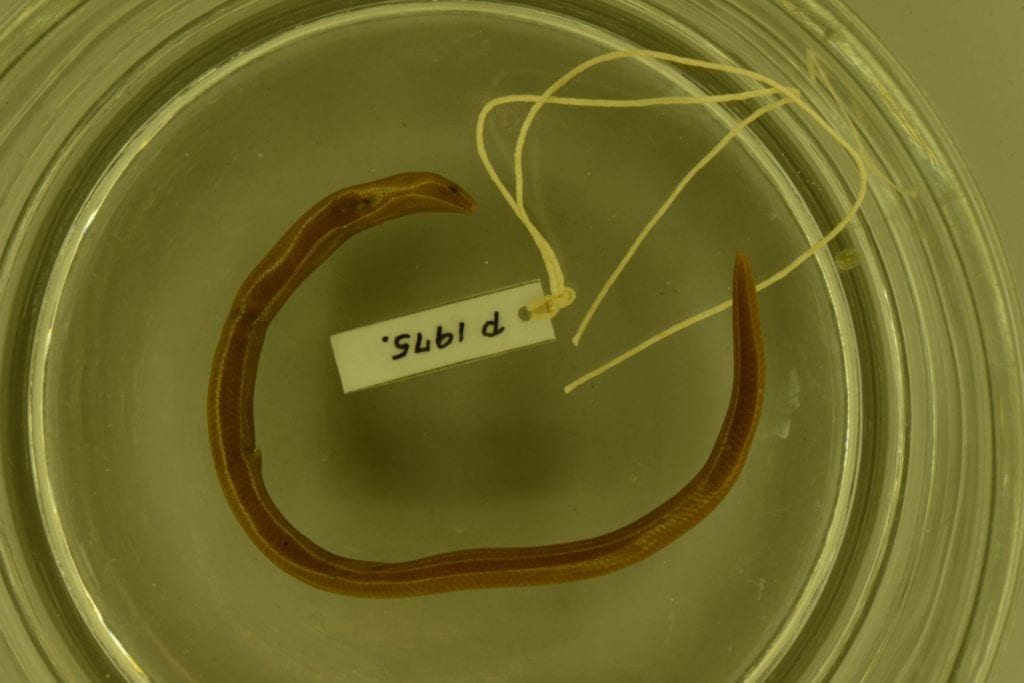
Holotype specimen of Brachymeles burksi in the Carnegie Museum of Natural History collection. 

An international team of researchers announces the “resurrection” of the Philippine skink species Brachymeles burksi. The species, originally named in 1917 by Edward Harrison Taylor, was recategorized in 1956 as Brachymeles bonitae and has not been considered its own species since. In a paper published by the Philippine Journal of Systematic Biology, colleagues from Carnegie Museum of Natural History, Sam Noble Museum at the University of Oklahoma, University of Texas Rio Grande Valley, Philippine National Museum, and University of Kansas conclude that B. burksi represents a distinct evolutionary lineage making it a unique species.

Skinks, among the most diverse groups of lizards, are generally recognized for their small legs and, in most cases, lack of a pronounced neck.  The holotype, or single specimen upon which a new description and species name are based, of B. burksi is held in the herpetology collection at Carnegie Museum of Natural History (CMNH). 

“We are really lucky here at CMNH to have an incredible collection of 157 holotypes, many from the Philippines,” says Jennifer Sheridan, CMNH’s Curator of Amphibians and Reptiles. “My collaborators and I have worked on amphibians and reptiles of Southeast Asia for several decades, and I was excited to be invited to be part of this work. Southeast Asia has a high rate of new species description, which means that there are lots of species that haven’t yet been officially named and thus, whose conservation status cannot be assessed.”

The team confirmed that B. burksi is not only different from B. bonitae, but also confined to the islands of Marinduque and Mindoro, whereas B. bonitae is found on the much larger island of Luzon. “This means that B. burksi actually has quite a small geographic distribution,” Sheridan says, “which in turn means that populations on Marinduque and Mindoro are of even greater conservation concern than previously thought.”

Unlike B. bonitae, B. burksi has fewer presacral vertebrae, as well as fewer axilla–groin scale rows and paravertebral scale rows. Further, B. burksi represents a distinct evolutionary lineage from B. bonitae. 

When scientists examine organisms, especially from groups that have variable morphologies, they sometimes reclassify species. Sheridan says, “Think of it as having two groups of individuals, A and B. Group A was described in 1839, and in 1917, scientists found group B and named it as a new species. Then in 1956 scientists said wait, group B individuals look the same as species A, so group B gets lumped with group A. Our recent work shows that actually, A and B are different, based on a combination of genetics, morphology, and geographic distribution.”

The Philippines, an archipelago of more than 7,100 islands, is recognized globally as a megadiverse nation and a biodiversity hotspot. Understanding of the diversity of Philippines amphibians and reptiles has increased significantly in the last decade thanks in part to closer analysis of poorly understood species complexes that are erroneously thought to be one species. This study, and others like it that identify and species-level diversity, will prove critical to developing effective conservation strategies for the Philippines. 

Filed Under: Press Release Tagged With: amphibians and reptiles, herpetology, Jennifer Sheridan

January 21, 2021 by wpengine

Nerding Out Over Masting, or Why Unusual Plant Reproduction Excites Animal Ecologists

As for many people, every pandemic month that passes marks another month since I’ve been able to travel. I realized recently that this is the longest time I’ve gone without getting on a plane since about the 5th grade (my parents divorced and lived in different states), and the longest I’ve gone without leaving the country since 2004. One reason I became an ecologist is because the work afforded me the opportunity to travel as part of my job, and that aspect is one of the main things I love about my work. For many tropical ecologists, the pandemic has marked a year of lost opportunities to travel to our field sites. Though my ongoing projects will survive this missed year of data, I miss the forest, and have spent many hours remembering all the things that made me fall in love with tropical field work in the first place.

image
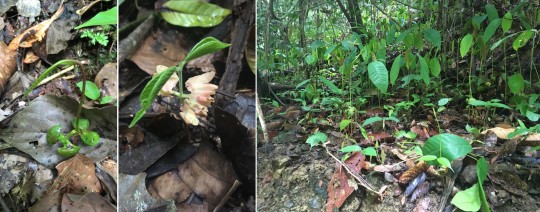
Figure 1. Seedlings at Danum Valley, Sabah, Malaysia, October 2019.

One of my favorite forest phenomena is masting. Trees in the family Dipterocarpacae dominate SE Asian rainforests. These are the world’s tallest rainforest trees, reaching more than 90 meters in height, and they reproduce by masting, which are irregular fruiting events. In northern Borneo, there is no set wet or dry season; rain falls year-round but there are sporadic dry periods that vary from year to year. Thus, there is no regular spring/flowering season like we have here in the US. Instead, the Dipterocarps reproduce in masting events, usually following strong droughts. The reason animal ecologists get excited by these masting events is because during these periods the forest seems to explode with life. The first time I went to one of my field sites (Danum Valley) was during a masting event (2010), and I had no idea how rare and special it was. I thought that it was normal to see two clouded leopards eating a mouse deer, or to see orangutans pretty much every day, or to have elephants tip over your car while you’re out surveying frogs (true story!). In the following years, I realized how incredible it was to have been there at that time. I was a little sad that my chances of seeing another masting event were low, but I got lucky again in 2019 when I spent a month at Danum during its most recent masting year.

As a herpetologist, I admit that I don’t fully appreciate all of the botanical intricacies of masting. But the most visually noticeable thing about a masting event is that it makes the forest look as though someone has planted thousands and thousands of seedlings all over the forest floor. This is incredibly striking because much of the forest doesn’t normally have a lot of undergrowth, but rather widely spaced giant trees. It would be like seeing the redwood forest with seedlings blanketing the forest floor. I have a ridiculous number of pictures of both the forest floor and individual seeds and seedlings in an enormous variety of shape and size, and will gladly bore anyone willing to look at them.

image
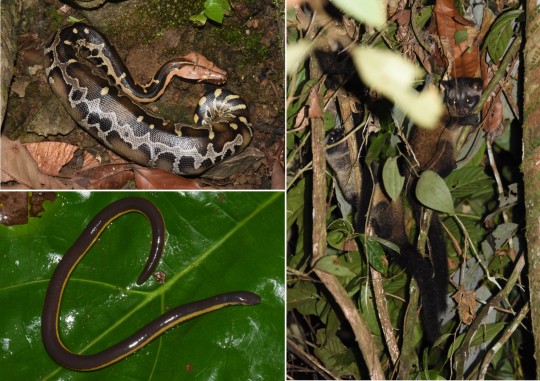
Figure 2. Borneo short python (Python breitensteini), caecilian (Ichthyophis sp.), and palm civet (Paradoxurus philippensis).

As I mentioned above, masting events also bring out heaps of animals that I don’t often otherwise see. In my first week, while setting up an introduction to electro-fishing for my students, we saw an orangutan about 30 meters away. He then came down to the forest floor, crossed the stream a little ways up from us, and walked off into the forest on the other side. Later that afternoon as I was setting up the exercise on a different stream, a lizard known as a water monitor (Varanus) was swimming downstream toward us, got spooked up onto shore by our presence, and ran right into the mouth of a concealed king cobra–!! While we couldn’t see the cobra’s full body, we clearly saw its unmistakable head scales as it was pulling the Varanus back into its hiding spot, and heard the incredible growl that cobras let out when they don’t want to be bothered. The rest of the month saw numerous species of snakes, a giant softshell turtle, my 4th ever caecilian (a limbless amphibian), mom and baby civets (a small carnivorous mammal), and in keeping with the field session’s mission, awesome frog data collected together with my students. While these animals are always present in the forest, masting events seem to bring them out in force, making all of them much easier to see.

As we start 2021, I am cautiously hoping that this year will see us all getting vaccinated, making travel safe once again. I hope to return to Borneo for more incredible encounters alongside my regular data collection, to better understand the incredible forest that hooked me into tropical field ecology in the first place.

Jennifer Sheridan is Assistant Curator in the Section of Amphibians and Reptiles at Carnegie Museum of Natural History. Museum employees are encouraged to blog about their unique experiences and knowledge gained from working at the museum.

Related Content

A Head Above the Rest: Unearthing the Story of Our Leatherback Sea Turtle

The Enduring Appeal of Snakes

Ask a Scientist: What is the creepiest specimen in the Alcohol House?

Filed Under: Blog Tagged With: amphibians and reptiles, herpetology, Jennifer Sheridan, Museum from Home, Science News

October 13, 2020 by wpengine

Is this what they call overkill? Toxin and venom in the herp world

preserved frog specimen
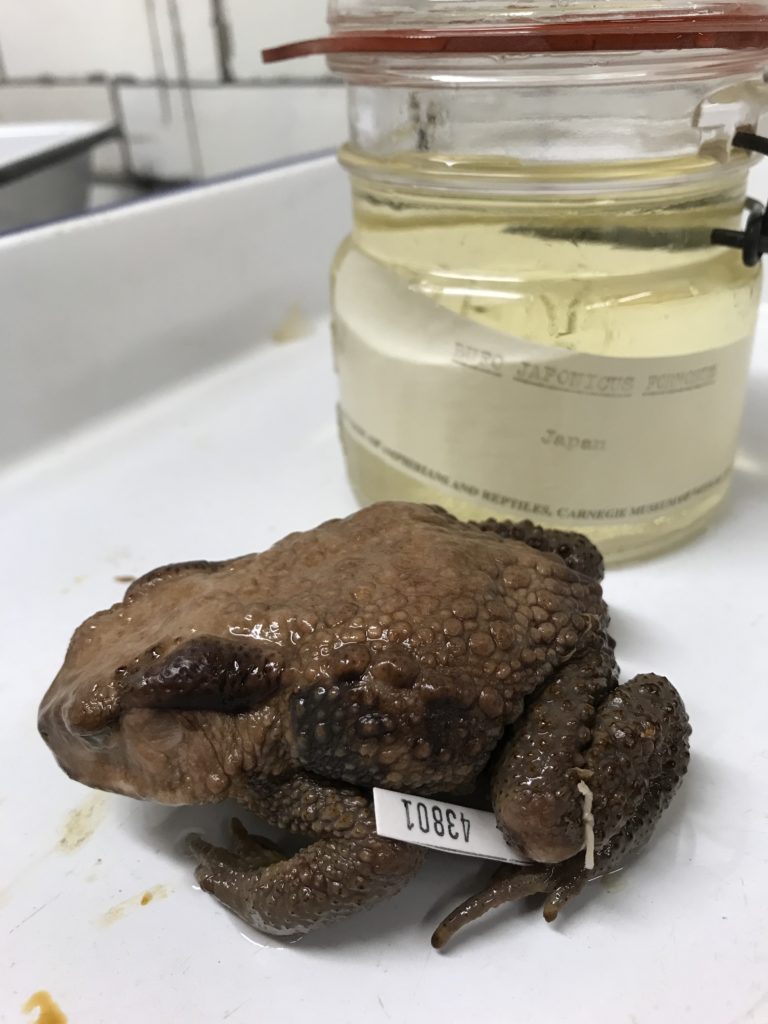
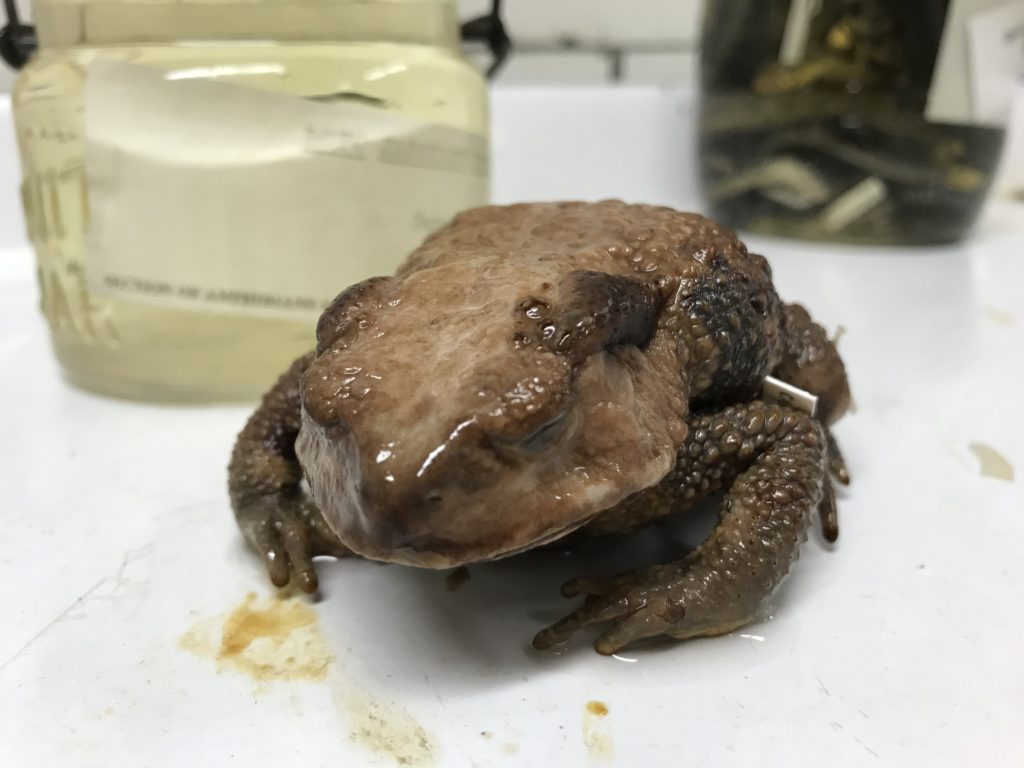
Figure 1. Bufo japonicus. The large glands behind the eyes are called parotid glands, and are a source of toxins in toads. Additionally, all of the bumps you see all over the body are glands that produce skin toxins. Image credit: Stevie Kennedy-Gold.

I recently participated in a Zoom event for Museum members focused on toxins and venom in the natural world. Mason Heberling, Assistant Curator of Botany, and Ainsley Seago, Associate Curator of Invertebrate Zoology, spoke about how the organisms they study produce toxins, and how these chemicals impact their environments and other organisms around them. As an ecologist focused on impacts of climate and land use change, I don’t consider myself an expert on toxins and venoms in amphibians and reptiles, but researching my portion of the joint presentation reminded me once again why herps are the best.

First, a refresher: toxins are poisons, and they have to be consumed or encountered (touched) by an organism to do harm. For example, many frogs produce toxins in their skin, but you would have to either consume that frog or touch its skin for the toxin to do you any harm. Most frogs don’t produce toxins strong enough to hurt humans, though a few notable exceptions exist. Some species of poison dart frogs have skin toxins strong enough that if you touched them and then touched your eyes, nose, or mouth, or if you had a cut on your hand, you could indeed become very ill and perhaps die. Venom, on the other hand, is a toxin that one organism can inject into another. Typically, we think of snakes when we think of injectable toxins. Many snake species have venom glands that produce toxins, and they can forcibly inject that toxin into their prey. The action, which can occur in a flash, involves the use of fangs to puncture the skin, and muscles surrounding the venom gland to force the toxin out along the fang and into the other organism.

preserved frog specimen, two preserved snake specimens, and two specimen jars
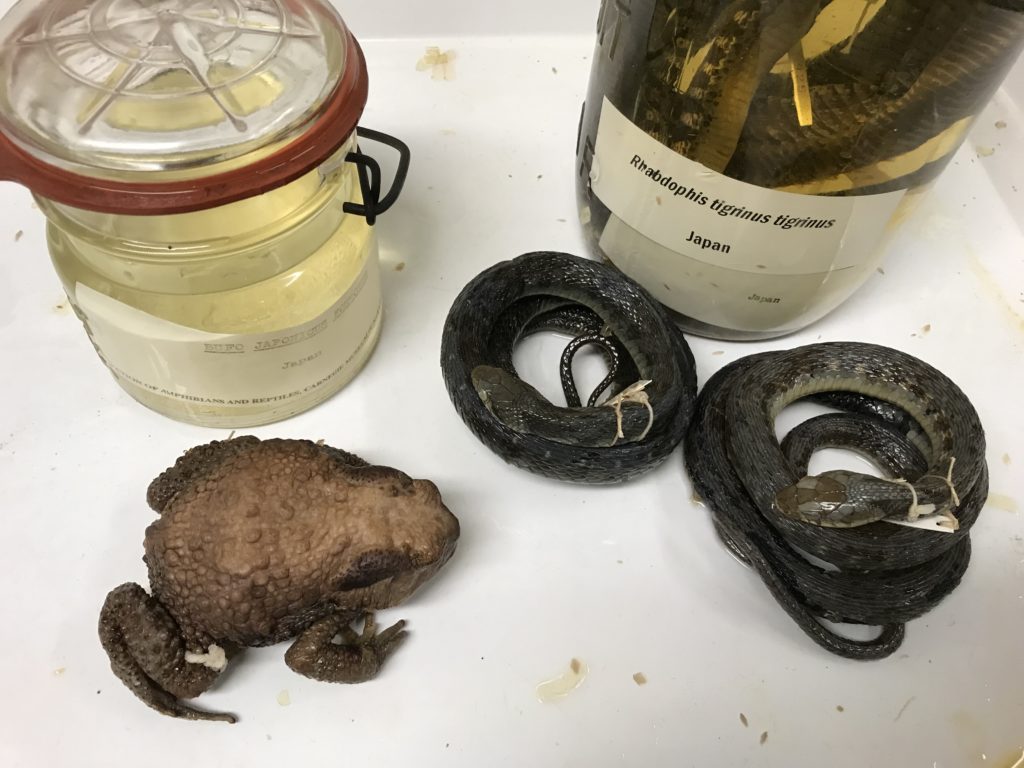
Figure 2. Bufo japonicus and Rhabdophis tigrinus. Rhabdophis are one of the only snakes that are both venomous and toxic. They sequester toxins from the toads they eat into a gland called the nuchal crest. Image credit: Stevie Kennedy-Gold.

Most people tend to think of amphibians as toxic and snakes as venomous. This is true, but it turns out that snakes aren’t the only venomous reptiles, and amazingly two frogs are known to be venomous. Gila monsters (Helodermatidae) and water monitors (Varanidae) produce venom, but their venom glands are in their lower jaws (unlike snakes whose venom glands are in their upper jaws), and they lack the muscles to forcibly inject that toxin the way snakes do. Instead, the act of chewing on their prey causes their jaw motion to work the venom toward their grooved teeth, which then enables the venom to be injected through the bite wound. Using a very different delivery system, two frogs in the family Hylidae (tree frogs from the Americas) have very spiny skulls. Their skin produces toxins, and by “head-butting” another organism, they can effectively inject that toxin into another organism. This unusual delivery system technically makes them both toxic (the toxin can be transferred to you if you touch their skin) and venomous (they can inject that toxin into you).

two preserved snake specimens and one specimen jar
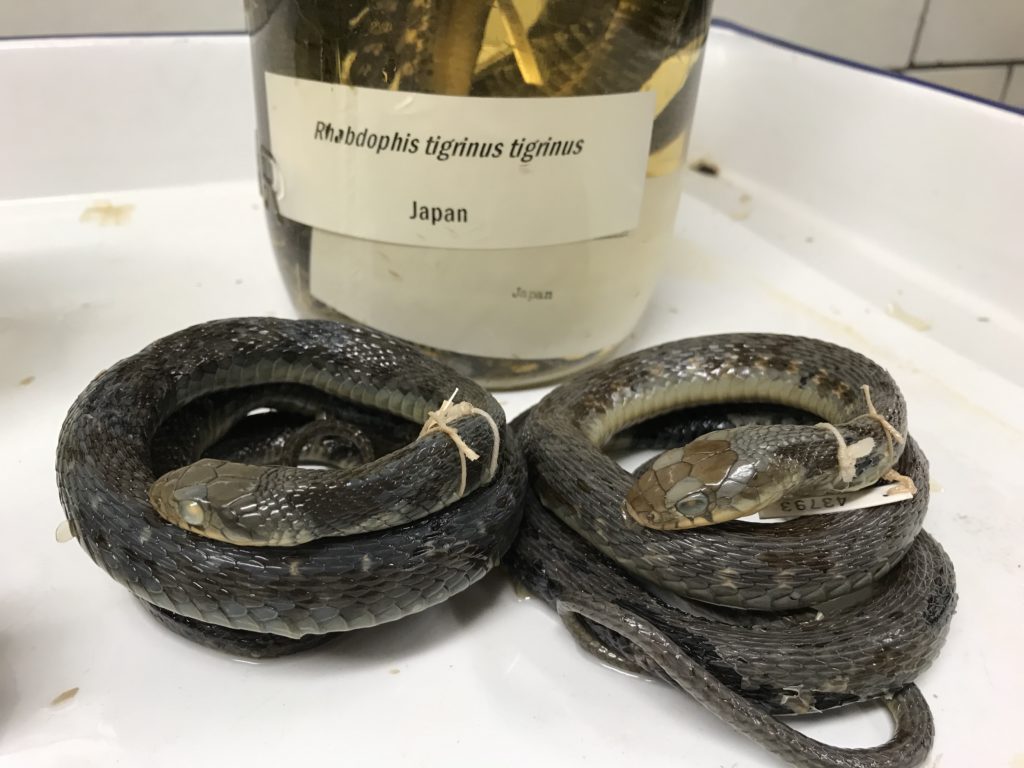
Figure 3. Rhabdophis tigrinus. If you look closely at the back of the neck just behind the head on the snake on the left, you can see a slightly raised bit of skin, which is the nuchal crest used to store toxins sequestered from toads. Image credit: Stevie Kennedy-Gold.

One of the most surprising things I learned is that there are snakes that are both toxic and venomous, and these are snakes I see frequently in the field. The genus Rhabdophis is common across South and Southeast Asia, and have long been known to be venomous. What I didn’t know is that in addition to making their own venom, they sequester toxins from their prey, and store it in a gland on the back of their neck called a nuchal crest. Rhabdophis feed on toads, which are toxic, and the snakes are able to sequester that toxin, rather than being adversely affected by it. Interestingly, scientists have shown that Rhabdophis tigrinus are toxic only where their range overlaps with Bufo japonicus, a highly toxic toad—so on some islands of Japan the snakes are toxic, while on other islands they are not.

preserved toad specimen
Figure 4. Bufo japonicus with its many toxin glands! Image credit: Stevie Kennedy-Gold.

There are numerous other interesting adaptations involving toxin and venom in the herp world—tweet me (@JenASheridan) if you want to learn more!

Jennifer Sheridan is Assistant Curator in the Section of Amphibians and Reptiles at Carnegie Museum of Natural History. Museum employees are encouraged to blog about their unique experiences and knowledge gained from working at the museum.

Related Content

Early Bats: Ancient Origins of a Halloween Icon

Invasion of the Leaf Galls! 

Jumping Spiders with Sebastian 

Filed Under: Blog Tagged With: booseum, halloween, Jennifer Sheridan, Science News, Super Science Days

September 14, 2020 by wpengine

Overwintering for Amphibians and Reptiles

by Amanda Martin

With Autumn upon us, temperatures are dropping, and it is getting colder out. Especially in the northern regions, amphibians and reptiles need to prepare for brumation (essentially, hibernation for ectotherms). Ectotherms like frogs, salamanders, snakes, and turtles are highly sensitive to changes in their environment and need to stay warm by actively moving in and out of areas with heat. When temperatures increase, ectotherm metabolism increases, and when temperatures go down, so does their metabolism. But how do they survive during winter, won’t they freeze?

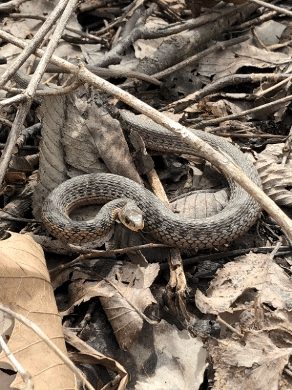
Fig. 1. Eastern garter snake. Photo by A.K. Martin.

Many snakes, like eastern garter snakes (Fig. 1) find shelters called hibernacula and curl up inside, sometimes intermixed with other snake species. These hibernacula are often small mammal burrows, dens, or tunnels below the frost line. During winter, typically between October and March, several hundred individuals will gather in the same den, tightly coiling their bodies together to stay warm enough to survive. They stop eating during this period because it is too cold to properly digest food and will stay hydrated by absorbing moisture through their scaly skin. Even though snakes are awake and sluggishly active, they expend very little energy during this time and do not lose much weight.

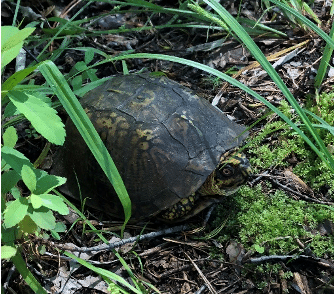
Fig. 2. Eastern box turtle. Photo by A.K. Martin.

Turtles, on the other hand, are a bit different. Aquatic turtles survive winter underwater, and the terrestrial eastern box turtle (Fig. 2) buries itself underground by digging into the soil. One extreme overwintering survivor is the painted turtle, which spends most of its time in ponds and slow-moving freshwater. When these ponds freeze, painted turtles bury themselves up to 45 cm (nearly 18 inches) in mud beneath the pond’s surface. Amazingly, these turtles can survive for months in low or no oxygen environments. During warmer months, they breathe air, but when submerged for overwintering they absorb oxygen through the thin skin of their cloaca, a phenomenon called cloacal respiration.

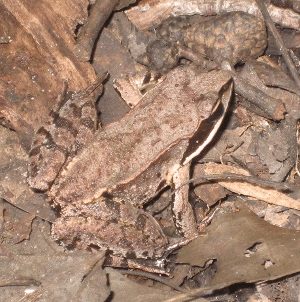
Fig. 3. Wood frog. Photo by A.K. Martin.

Another amazing overwintering feat is the freeze tolerance of wood frogs (Fig. 3) which can become frogsicles! Wood frogs are unable to bury themselves completely, like turtles, so part of their body is often exposed when trying to stay underneath the mud. This is beneficial for obtaining oxygen through their skin. However, they still need to avoid freezing and will move around to warmer areas as needed. Many frogs stay in burrows or under leaf litter to escape the frost, but wood frogs will stay at shallower depths because they have high concentrations of glucose, which produces an “antifreeze” effect. This protects their organs when over two-thirds of their body freezes!

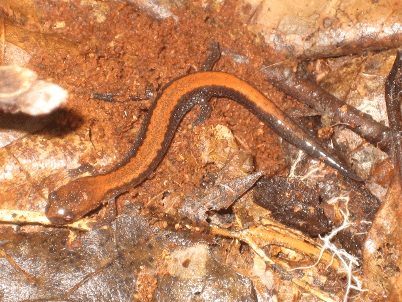
Fig. 4. Red-backed Salamander. Photo by A.K. Martin.

Other amphibians, like salamanders, do not have freeze tolerance like the wood frog. Red-backed salamanders (Fig. 4) are one of the most abundant species in the eastern United States. They are typically found underneath logs and leaf litter at shallow depths, but during winter when temperatures drop below 30°F, they travel as much as 15 inches under the ground in animal burrows. Other species, like spotted salamanders, will also look for deep burrows that are below the frost line.

In early spring when temperatures warm, amphibians and reptiles emerge from overwintering to look for basking sites, sunny spots to warm themselves. With warmer temperatures, the prey of many of these species also become more available. Garter snakes will look for slugs, earthworms, amphibians, minnows, and rodents, for example, and red-backed salamanders will eat a wide variety of invertebrates, such as spiders, worms, snails, and insects. The exact timing of emergence for amphibians and reptiles depends on a given year’s weather, resulting in variable emergence times from year to year that correspond to temperature. Not every individual makes it to the spring, but it is amazing that species that are so dependent on the temperature of their environment are capable of surviving up north!

Written by Amanda Martin, Post-doctoral Researcher in the Section of Amphibians and Reptiles at Carnegie Museum of Natural History. Edited by Jennifer Sheridan, Assistant Curator in the Section of Amphibians and Reptiles at Carnegie Museum of Natural History. Museum employees are encouraged to blog about their unique experiences and knowledge gained from working at the museum.

Related Content

An Illuminating Tale of Tracking Turtles

How to Catch 311 Amphibians in 10 Days

Pitfall Traps: Fieldwork Surprises

Carnegie Museum of Natural History Blog Citation Information

Blog author: Martin, Amanda
Publication date: September 14, 2020

Share this post!

  • Share on Twitter Share on Twitter
  • Share on Facebook Share on Facebook
  • Share on Pinterest Share on Pinterest
  • Share on LinkedIn Share on LinkedIn
  • Share on Reddit Share on Reddit
  • Share via Email Share via Email

Filed Under: Blog Tagged With: Amanda Martin, amphibians and reptiles, herpetology, Jennifer Sheridan, Science News

  • Page 1
  • Page 2
  • Go to Next Page »

sidebar

About

  • Mission & Commitments
  • Directors Team
  • Museum History

Get Involved

  • Volunteer
  • Membership
  • Carnegie Discoverers
  • Donate
  • Employment
  • Events

Bring a Group

  • Groups of 10 or More
  • Birthday Parties at the Museum
  • Field Trips

Powdermill

  • Powdermill Nature Reserve
  • Powdermill Field Trips
  • Powdermill Staff
  • Research at Powdermill

More Information

  • Image Permission Requests
  • Science Stories
  • Accessibility
  • Shopping Cart
  • Contact
  • Visitor Policies
One of the Four Carnegie Museums | © Carnegie Institute | Privacy Policy | Terms of Use | Accessibility
Rad works here logo