• Skip to primary navigation
  • Skip to main content
  • Skip to primary sidebar

Carnegie Museum of Natural History

One of the Four Carnegie Museums of Pittsburgh

  • Visit
    • Buy Tickets
    • Visitor Information
    • Exhibitions
    • Events
    • Dining at the Museum
    • Celebrate at the Museum
    • Powdermill Nature Reserve
    • Event Venue Rental
  • Learn
    • Field Trips
    • Educator Information
    • Programs at the Museum
    • Bring the Museum to You
    • Guided Programs FAQ
    • Programs Online
    • Climate and Rural Systems Partnership
  • Research
    • Scientific Sections
    • Science Stories
    • Science Videos
    • Senior Science & Research Staff
    • Museum Library
    • Science Seminars
    • Scientific Publications
    • Specimen and Artifact Identification
  • About
    • Mission & Commitments
    • Directors Team
    • Museum History
  • Tickets
  • Give
  • Shop

John Wenzel

June 14, 2021 by wpengine

Who put the Smile in Smilax?

by John Wenzel

Smilax plants

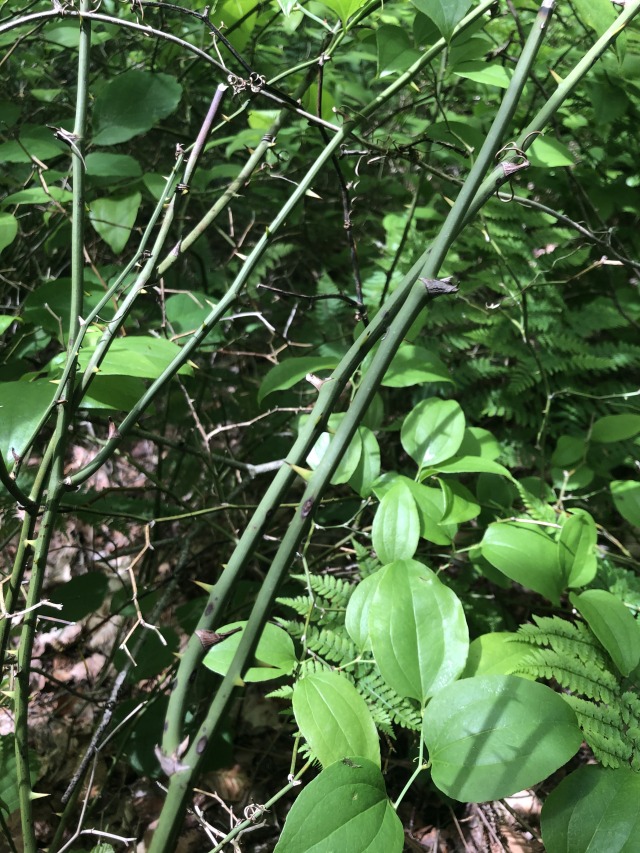
The genus Smilax is one of our most common woodland plants. Known as greenbriar, sweetbriar, or catbriar, there are about 20 species in North America, and about 300 world-wide. Technically, the plant is defended by “prickles,” which are outgrowths of the outer tissue of the stem, and not “thorns,” which are modified woody branches, as are found on hawthorn or locust trees. By contrast, “spines,” as found in cactuses, are actually modified leaves. Male and female Smilax flowers occur on different plants, with females producing dense bunches of showy black, blue, or red berries. Some species are deciduous and some are evergreen. Light loving, they are typical of disturbed habitats, and will climb up and over shrubs, up to 30 feet high. The green stems have chlorophyll, meaning that even if deer eat all the leaves, the plants will continue to photosynthesize and survive.

Thickets of briars that have their tops bitten off are an indication of severe browsing by deer. When deer densities are high, other plants may be browsed out entirely, leaving behind an understory composed of only briars and a few plants deer do not eat, such as ferns. Briars may provide good cover for small mammals to escape from larger predators, as is related in Uncle Remus’ African folktales of Bre’r Rabbit. The stout prickles have different orientations along a stem and can be difficult to remove if more than one pierces the skin at the same time. Getting into (and out of!) a briar thicket is a very sticky situation, as we have inadvertently demonstrated after a minor slip-and-fall in the woods!
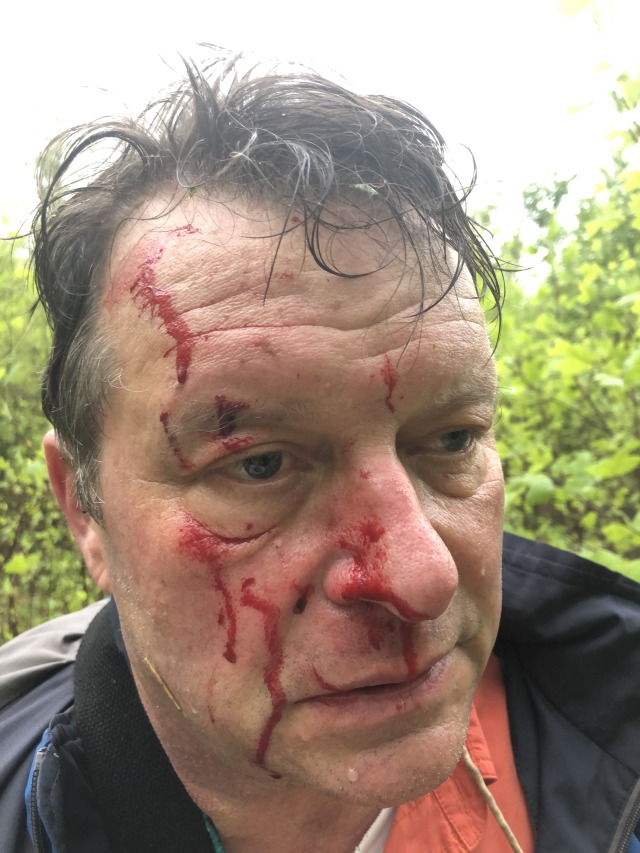
Close up of man's face with blood on it after injury from briar prickles.

John Wenzel is the Director at Powdermill Nature Reserve, Carnegie Museum of Natural History’s environmental research center. Museum employees are encouraged to blog about their unique experiences and knowledge gained from working at the museum.

Related Content

Can’t Touch This

Expanding the Scope of Environmental Education

Called On This Day in 1982: One Specimen Isn’t Always Enough

Carnegie Museum of Natural History Blog Citation Information

Blog author: Wenzel, John
Publication date: June 14, 2021
Share this post!

  • Share on Twitter Share on Twitter
  • Share on Facebook Share on Facebook
  • Share on Pinterest Share on Pinterest
  • Share on LinkedIn Share on LinkedIn
  • Share on Reddit Share on Reddit
  • Share via Email Share via Email

Share this post!

  • Share on Twitter Share on Twitter
  • Share on Facebook Share on Facebook
  • Share on Pinterest Share on Pinterest
  • Share on LinkedIn Share on LinkedIn
  • Share on Reddit Share on Reddit
  • Share via Email Share via Email

Filed Under: Blog Tagged With: John Wenzel, Powdermill Nature Reserve

December 8, 2020 by wpengine

Bobcats

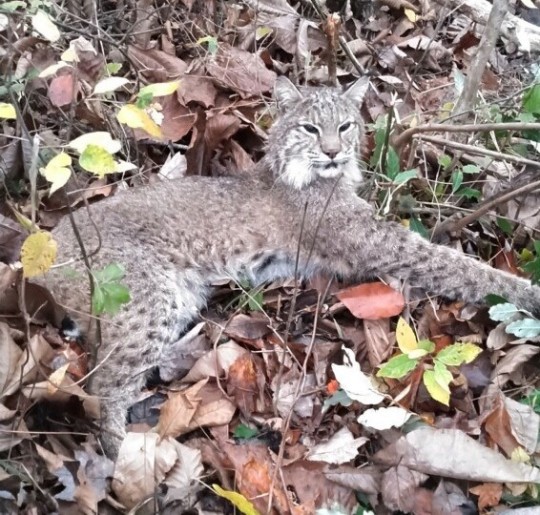
With winter approaching, visitors to Powdermill Nature Reserve can anticipate seeing the tracks in the snow of one of our most splendid residents, the bobcat! These wild felines do not hibernate, rather they remain very active in winter because of their high metabolism. Although they are commonly photographed on trail cameras at Powdermill Nature Reserve, bobcats have excellent vision and hearing and are unlikely to show themselves to people. The stealthy and efficient predators are found state-wide, and the range for the species known scientifically as Lynx rufus stretches across the North American continent from southern Canada to northern Mexico.

This adult female was photographed in late October, but photos do not really capture the full beauty of these animals. Image credit: John Wilkinson.

Bobcats are known to walk on top of fallen logs to move silently through the understory. Adults weigh up to 20 pounds, feed mostly on rodents and birds, but are capable of taking small fawns and perhaps even yearling deer. Bobcats are highly adaptable and do well even in close proximity to humans and coyotes. In our area, males wander over areas as large as 10 square miles, territories that span the smaller territories of several females. Bobcats are protected except for a brief trapping season in winter. Their coats are highly variable, and pelts are considered prime in winter, and more valuable when spotted. The highest quality, large pelts from the Rocky Mountains may sell for as much as $900. However, luckily for our cats, the market here is unlikely to provide $40 for a pelt, which will keep them safe from most trappers.

John Wenzel is the Director at Powdermill Nature Reserve, Carnegie Museum of Natural History’s environmental research center. Museum employees are encouraged to blog about their unique experiences and knowledge gained from working at the museum.

Related Content

The Christmas Bird Count During an Irruption Year

Ask a Scientist: What are murder hornets?

Brood VIII Birthday Bash

Filed Under: Blog Tagged With: John Wenzel, mammals, Powdermill, Powdermill Nature Reserve

July 13, 2020 by wpengine

Relevance and the Spirit of Research at Powdermill

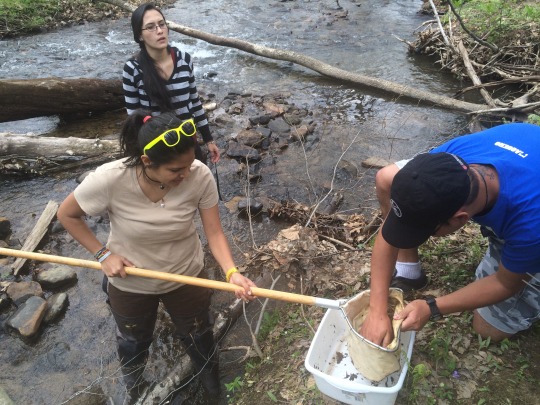
three people collecting specimens from a stream

When people think of scientists doing research, they tend to think of a laboratory with microscopes, technical machinery, exotic chemicals, and a person in a white coat doing “experiments” to invent a miraculous new compound, or maybe cure a disease. We have a technical laboratory with microscopes, machines, and chemicals at Powdermill, and we enjoy that kind of work. In reality, most of our research is done outside, with living plants and animals in the field. Usually we are in muddy boots, and we are more likely to be wearing rain gear and backpacks than white coats.

Our research comes in several flavors. Because we own the land, we can invest in long-term studies that require strong continuity. Examples of this would be our studies of birds that migrate in spring and autumn along the Appalachian ridges, traversing routes from the Caribbean and South America to Pennsylvania, Canada, and the Arctic. Since these studies were initiated in 1961, we have compiled the longest continuous data set of this type for any American research institute.  Another example would be our forest succession research, initiated in 2012, and intended to last several decades. These long-term studies are not likely to be undertaken by the college professor who must show results promptly for promotion and tenure, so it is important that places like Powdermill commit to them.

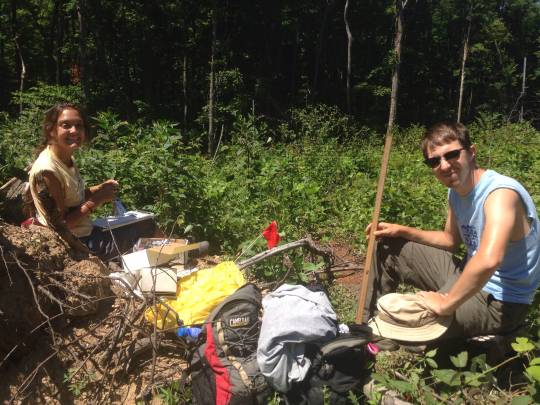
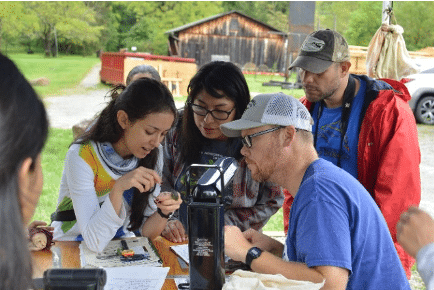
two people doing field research in the woods

On the flip side, we support student researchers to use Powdermill for their projects that have to be completed in a short time, between one summer and three years, depending on whether the research is for a senior thesis or a PhD. Together, the students embrace many topics across the entire diversity of biological systems: What do trout eat? How effective are birds at dispersing seeds? The work of the long-term studies can be thought of as composing a careful symphony, where student projects represent the catchy tunes coming from a dance club: each centered on a good riff, immediate and focused; then another tune, and another. Both the symphony and the dance band are important to our scientific culture, and together they demonstrate the relevance of the nature reserve.

Field stations necessarily focus on topics that occur on their landscape. Most of our work has a strong relevance to Pennsylvania in particular, but also to Appalachia and eastern North America in general. Sometimes our work in Pennsylvania connects us to a much broader audience, as the migrating birds that spend the winter in South America do. We often host researchers from other countries who view Powdermill as an exotic locale. Every year we host a series of workshops to train the next generation of scientists, and every year we have far more applicants than spaces. In the last decade, an award-winning program that sponsors Latin American guests (so that the actual cost of the program is not a barrier to applicants) has trained about 120 scientists from 10 nations who came to Powdermill to learn our research techniques. When they return to their home countries to resume their scientific careers, some of our Powdermill culture goes with them.

The visitor traffic through Powdermill presents a learning opportunity for us. Getting to know our visitors sometimes introduces us to new methods or entirely new fields of research.  We expand our research interests and capacity, too.

A pleasing and unique aspect of a research career at a field station is being in tune with the pulse of the natural world. You care about when it rained last, how cold it was the previous night, and why you have seen so many porcupines this year. The late freeze hurt the beeches and spice bush, but the maples and oaks are okay. Observing a small wildflower where you did not see it last year is like finding a gemstone. Training your eye to notice when certain plants bloom or when certain animals appear becomes rewarding, like playing a favorite game. We expect hummingbirds to arrive from Mexico on April 30. On May 1, they appear at our feeders. All of these observations make each day an experience with its own reward and mystery. And being connected to the natural world makes you feel very much alive.

John Wenzel is the Director at Powdermill Nature Reserve, Carnegie Museum of Natural History’s environmental research center. Museum employees are encouraged to blog about their unique experiences and knowledge gained from working at the museum.

Related Content

What is a Pitfall Trap?

Bird Banding with a Crew of One

Mystery Spit

Filed Under: Blog Tagged With: John Wenzel, Museum from Home, Powdermill Nature Reserve, Science News

July 2, 2020 by wpengine

Powdermill at a Glance

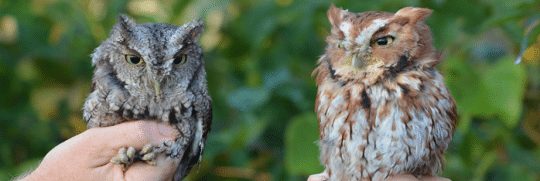
gray owl and brown owl

Facilities: Comprising 2,200 acres with various habitats typical of central Appalachia, Powdermill Nature Reserve is one of the larger private experiment stations in the USA. We maintain 20 buildings including the Nature Center (12,800 sq. ft), a state-of-the-art DNA laboratory, and eight fully furnished buildings for overnight guests, totaling about 40 beds and featuring campus wide Wi-Fi. For material, mechanical, and motorized support, we have a carpentry shop, barns and garages, two pickup trucks, passenger car, two-person ATV with dump bed, tractor, and mini backhoe. Our ample technical gear includes laptop computers, GPS devices, and two helicopter-type drones with cameras and spectral sensors.

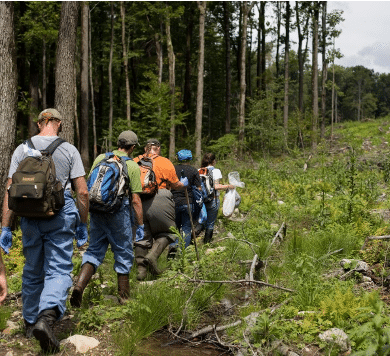
five people walking along a trail in a wooded area

Staff: The number of employees varies with grant funding. Presently, we have 15 year-round staff and up to 12 seasonal staff. These are (full time) Director John Wenzel; Operations Coordinator MaryAnn Perkins; maintenance workers Bobby Ankney, Rick Paesano, and Ryan Carter; educators Lauren Horner and Sara Klingensmith; scientists at Powdermill are Luke DeGroote, Annie Lindsay, Mary Shidel, James Whitacre, and Andrea Kautz; scientists stationed in Oakland are Chase Mendenhall, Jonathan Rice, and Mallory Sarver. Seasonal (temporary) staff include about two for avian research in spring and three in autumn, four or five summer camp instructors, and usually two summer assistants in other programs.

Visitors: About 5,000 people visit Powdermill per year, of which 600-700 are school groups, some of which get transportation grants from us to pay for bussing. We host about 2,000 person-nights in our lodging by visiting researchers and students, primarily from May to September.

students with teacher looking at small animals

Education: Our free public programs include “Storytime And More” every first Sunday of the month. Every second Sunday (fall, winter, and spring) a “Science And Nature” lecture for adults is offered concurrently with “Nature Explorers” for children. Every third Wednesday, we host “Nature At Night,” nighttime nature walks or films. Themed, seasonal special events attract approximately 100 visitors. In 2019, these events were “Cicada-Palooza” and “Pollinator Festival.” Children’s summer camps support about 110 enrollments every year. For researchers, we host professional workshops that offer advanced technical training. In 2019, 100 people participated in seven such programs, the most notable of which was our award-winning Latin American graduate-level training, now in its ninth year. Our gardens are home to more than 200 species of native plants in their typical environment, and our web site provides information to gardeners for growing about 120 of these featured plants.

Public profile: The Powdermill Facebook page, which has 3,950 followers, reached 450,000 users and engaged 58,000 of them in 2019. We have a separate website for anyone interested in following our avian research programs closely, and that website logged 45,000 visits by 21,146 visitors in 2019. We appeared in popular media outlets nine times in 2019, including twice in National Geographic. A number of scientific datasets are made available through web tools we created, including the definitive resource for tracking unconventional (hydro-fractured) gas wells in PA, a water quality data set of 1.3 million specimens from nearly 7,000 surface water locations across PA, an interactive gigapixel digital teaching collection for identifying aquatic macroinvertebrates, and a tool to explore the data compiled in a vegetation survey of Powdermill.

Scientific productivity and roles: Our staff members are annually featured in approximately 20 presentations at scientific society meetings. The staff also serve regularly as Councilors, Associate Editors, Board members, etc., of professional societies in their fields, currently collectively holding 22 such offices. Powdermill as a research site is prominent. In the last three years, 32 papers in journals were published by our staff, or other scientists who conducted their research at Powdermill or used publicly archived Powdermill data. Using Google Scholar to assess significance, Powdermill publications earn an H index of 25, meaning that Powdermill’s importance as an engine of research is comparable to a Full Professor at a major university. Our main research threads include biology of migratory birds (for which we are known historically, and still provide international leadership), Geographical Information Services, pollination and aquatic entomology, and forest plant ecology. We enjoy close partnerships with more than 40 scientists and institutions that share our research goals and efforts.

Extramural funding: Our funding sources in the last three years include grants and contracts from National Science Foundation, Richard King Mellon Foundation, Colcom Foundation, Laurel Foundation, US Fish and Wildlife Foundation, PA Wildlife Resource Conservation program, American Bird Conservancy Foundation, and Western Pennsylvania Conservancy. These proposals are conceived, initiated, and largely written by Powdermill staff, with strong support from Advancement and Community Engagement, and total more than $2,000,000. We currently have about $3,000,000 in proposals under review.

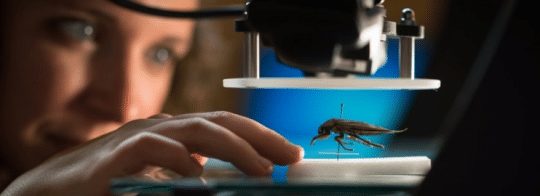
woman looking at a bug under a microscope

John Wenzel is the Director at Powdermill Nature Reserve, Carnegie Museum of Natural History’s environmental research center. Museum employees are encouraged to blog about their unique experiences and knowledge gained from working at the museum.

NOTE: Information about educational programming and visitors refers to activity before the COVID-19 pandemic. Visit Powdermill’s website for information about visiting and programs in 2020. 

Related Content

What is Bird Banding? 

Ask a Scientist: What are Murder Hornets? 

Many Ways to be a Forest Wildflower

Filed Under: Blog Tagged With: John Wenzel, Museum from Home, Powdermill Nature Reserve

August 21, 2019 by wpengine

Lasius will Amaze-i-Us

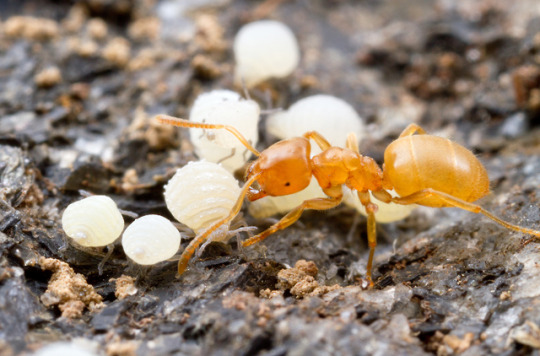
Lasius workers tending a flock of aphids underground. Photo by Alex Wild.

Common Lasius ants tend aphids that live underground feeding on plant roots. They protect the herd of aphids from other ants, and move them to more productive roots if the plant dies back. Sometimes the future queen will pick up an aphid in her mandibles and carry it along on the mating flight, and place it on a good root in the wall of the first nest chamber to start a new herd of aphids.

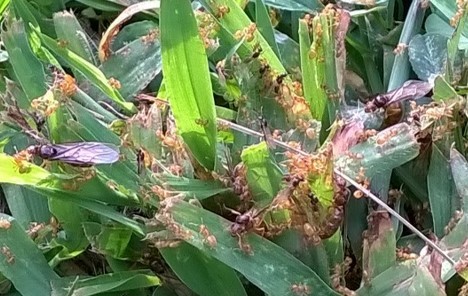
At this time of year, Lasius have their mating flights. A warm day with some rain in the afternoon to soften the soil, and then a clear sky near sundown would be perfect. The ants will be in the top of the nest, awaiting the exact right moment. Somewhere between about 4:00 pm and 7:00 pm, when the atmosphere is just right, workers dig several passages to the surface, and usually the small and slender male ants emerge first, taking flight quickly. Future queens, much larger than the workers or males, and bearing large wings, emerge next and take flight. All the colonies in the landscape where the weather is appropriate may emerge in a time span as short as five or ten minutes.  We found dozens of colonies of two species (below) emerging in an area of our lawn about 20 feet by 40 feet.

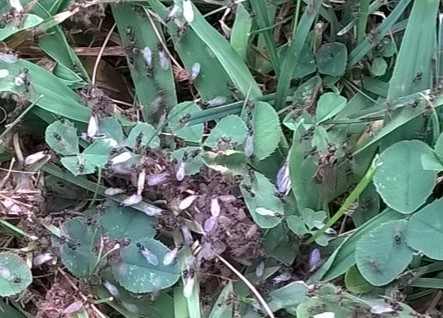
Silver wings of many male Lasius neoniger are obvious as they prepare to take flight. Photo by Donna Wenzel.

The many gossamer wings may give the impression of smoke rising from the soil. Swallows, swifts, and other birds will fly in circles snapping up the winged ants. The queens will mate with one or a few males, who die promptly, and then the queens will dig into the moist soil and create a chamber for her new nest, maybe with an aphid she carried along the way to start her new colony.

But the life of Lasius ants is not all pastoral peace and harmony. Two different methods of parasitic attack have evolved where a queen of one species of Lasius will invade the nest of a different species of Lasius to take it over. In one of these methods, the parasitic queen releases citronella, a lemon-like odor that is pleasant to humans but communicates alarm to ants. The workers avoid the invading queen who works her way into the chamber where the host queen is. Quickly, the parasitic queen accumulates the odor of the host colony, and the workers will not recognize her as an alien usurper.

Here we see several large, winged Lasius claviger queens among many small workers, preparing to fly. These queens will parasitize mature colonies of other species, such as L. neoniger above. A few small, dark males are visible top, center. Photo by Donna Wenzel.

A different method used by some species is that the queen is very hairy or armored, and simply fights her way into the host nest. There, the invader may kill the host queen. By either method, the parasitic queen takes over the host nest, and the workers of the original colony, not knowing any better, spend their lives raising the offspring of the parasitic queen. As the original workers die out, the workers of the parasitic queen replace them until the colony is entirely of the parasitic species.

If you keep a sharp eye out at this time of year, you have a good chance of observing a mating flight of Lasius or another ant species, but you have to be in the right place at exactly the right time!

John Wenzel is the Director at Powdermill Nature Reserve, Carnegie Museum of Natural History’s environmental research center. Museum employees are encouraged to blog about their unique experiences and knowledge gained from working at the museum.

Filed Under: Blog Tagged With: bugs, insects, Invertebrate Zoology, John Wenzel, Powdermill Nature Reserve

July 23, 2019 by wpengine

Brood VIII Birthday Bash

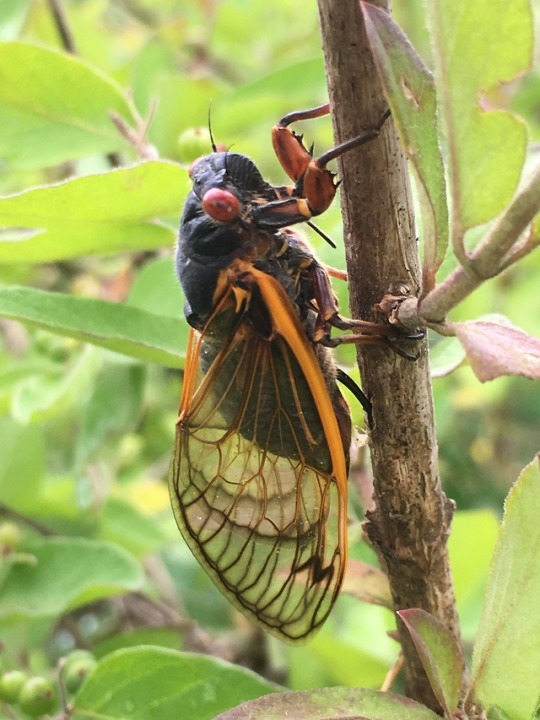
Photo by Andrea Kautz.

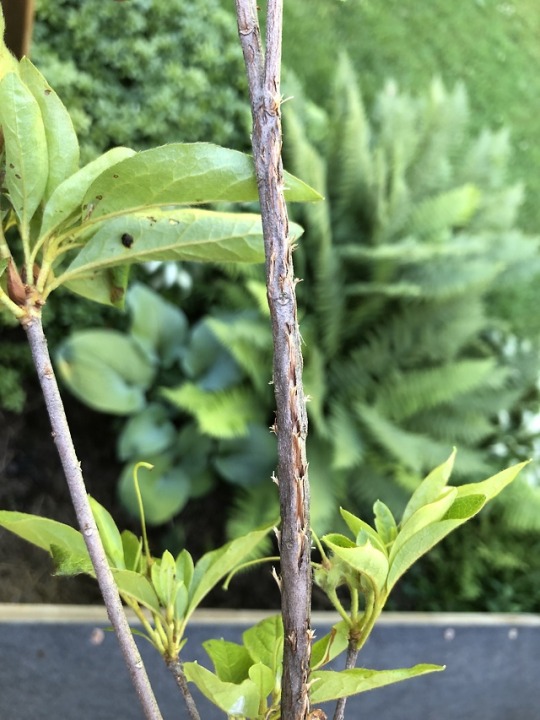
Millions upon millions of tiny cicada nymphs are being born. The periodical cicadas that emerged in our area (called “Brood VIII”) earlier this summer mated and laid eggs in the twigs of woody plants. Cicadas do not feed on twigs; they pierce the twigs on the underside, with a knife-like egg-laying tube called an ovipositor, and lay 10 to 20 eggs per incision. In the photo above, you can see the ovipositor behind the female’s back leg, inserted into the twig. At rest, the ovipositor would extend the length of the abdomen, so this one is about half embedded in the twig. In mid or late July, those eggs will hatch and the tiny nymphs will fall to the ground. They burrow down to find roots, where they will remain for 17 years, sucking plant juice.

Females can make dozens of separate incisions to lay hundreds of eggs in total. Because the cicadas need to leave their offspring on roots that will persist for 17 years, they prefer laying eggs in trees rather than shrubs, and tend to pick harder species, such as oaks, rather than softer woods like tulip poplar. Although they can feed on evergreen roots, the resinous nature of the sap in the twigs tends to suffocate the eggs, and they rarely lay eggs in evergreens. They can also feed on grass roots, and a big tree above a lawn becomes a popular egg-laying site. The many separate wounds on the twig interrupt water flow from the roots, and the twig often breaks or dies.

Photo by John Wenzel.

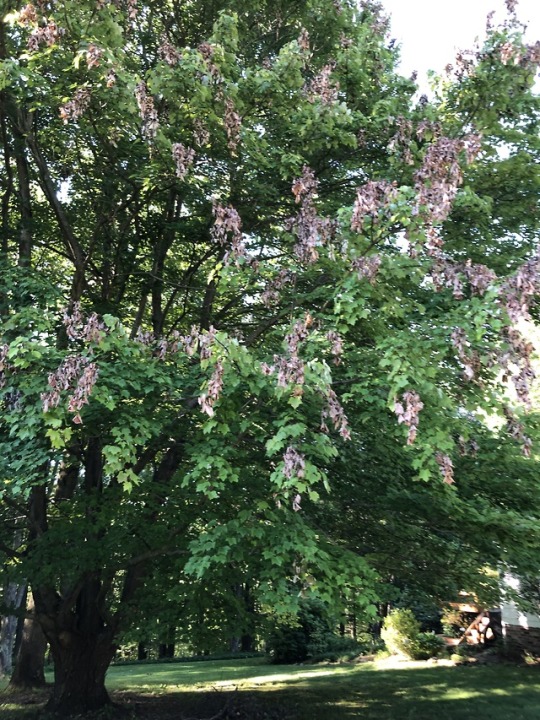
These damaged twigs are called “flagging” by cicada biologists, and they are a clear indicator of the density of females at a site.  This red maple over a lawn shows extensive flagging. A big tree may be supporting hundreds of thousands of eggs.

Photo by John Wenzel.

Despite the obvious damage to the tree, it appears that most trees do not suffer much unless they are little saplings. In fact, fruit tree farmers in the 1800s reported that their trees produced better crops the year after this natural pruning process.  Another benefit of the cicadas is that the millions of emergence holes open up the soil for air and water penetration and provide an avenue for nutrients at the top to pass into lower soil layers.  Although many people find the mass emergence of periodical cicadas to be annoying, they represent an inspiring and beneficial piece of our ecosystem, unique to eastern North America.

John Wenzel is the Director at Powdermill Nature Reserve, Carnegie Museum of Natural History’s environmental research center. Museum employees are encouraged to blog about their unique experiences and knowledge gained from working at the museum.

Filed Under: Blog Tagged With: Cicadas, insects, Invertebrate Zoology, John Wenzel, Powdermill Nature Reserve

  • Page 1
  • Page 2
  • Page 3
  • Go to Next Page »

sidebar

About

  • Mission & Commitments
  • Directors Team
  • Museum History

Get Involved

  • Volunteer
  • Membership
  • Carnegie Discoverers
  • Donate
  • Employment
  • Events

Bring a Group

  • Groups of 10 or More
  • Birthday Parties at the Museum
  • Field Trips

Powdermill

  • Powdermill Nature Reserve
  • Powdermill Field Trips
  • Powdermill Staff
  • Research at Powdermill

More Information

  • Image Permission Requests
  • Science Stories
  • Accessibility
  • Shopping Cart
  • Contact
  • Visitor Policies
One of the Four Carnegie Museums | © Carnegie Institute | Privacy Policy | Terms of Use | Accessibility
Rad works here logo