• Skip to primary navigation
  • Skip to main content
  • Skip to primary sidebar

Carnegie Museum of Natural History

One of the Four Carnegie Museums of Pittsburgh

  • Visit
    • Buy Tickets
    • Visitor Information
    • Exhibitions
    • Events
    • Dining at the Museum
    • Celebrate at the Museum
    • Powdermill Nature Reserve
    • Event Venue Rental
  • Learn
    • Field Trips
    • Educator Information
    • Programs at the Museum
    • Bring the Museum to You
    • Guided Programs FAQ
    • Programs Online
    • Climate and Rural Systems Partnership
  • Research
    • Scientific Sections
    • Science Stories
    • Science Videos
    • Senior Science & Research Staff
    • Museum Library
    • Science Seminars
    • Scientific Publications
    • Specimen and Artifact Identification
  • About
    • Mission & Commitments
    • Directors Team
    • Museum History
  • Tickets
  • Give
  • Shop

Blogs by Mason Heberling

Mason Heberling is the assistant curator in the Section of Botany and co-chair of collections at Carnegie Museum of Natural History. Heberling is a plant ecologist and botanist whose research explores plant functional strategies in deciduous forest understories, especially in the context
of environmental change. Much of his current research focuses on the ecology
and evolution of non-native, invasive plants in the eastern United States, the ecophysiological strategies of the herbaceous layer in deciduous forests, and the impacts of climate change on the timing of leafing out and flowering in temperate deciduous forests.

January 11, 2022 by Erin Southerland

Collected on this Day in 1951: Bittersweet

by Mason Heberling
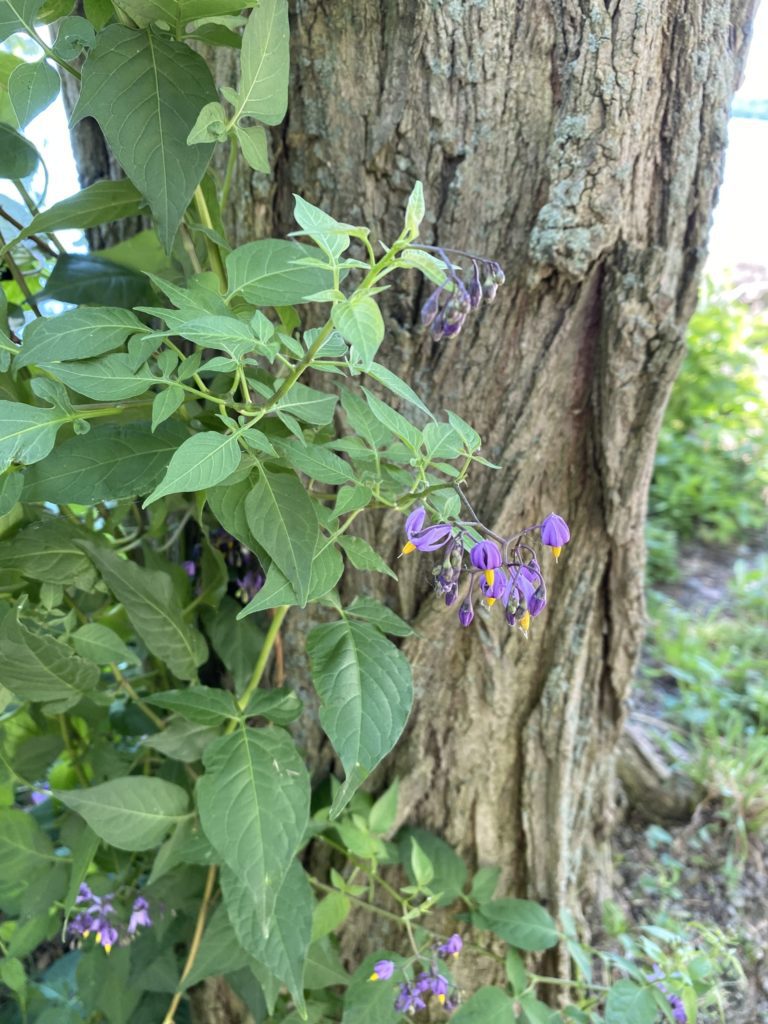
Bittersweet plant in spring

Leaves are gone, but fruits hang on
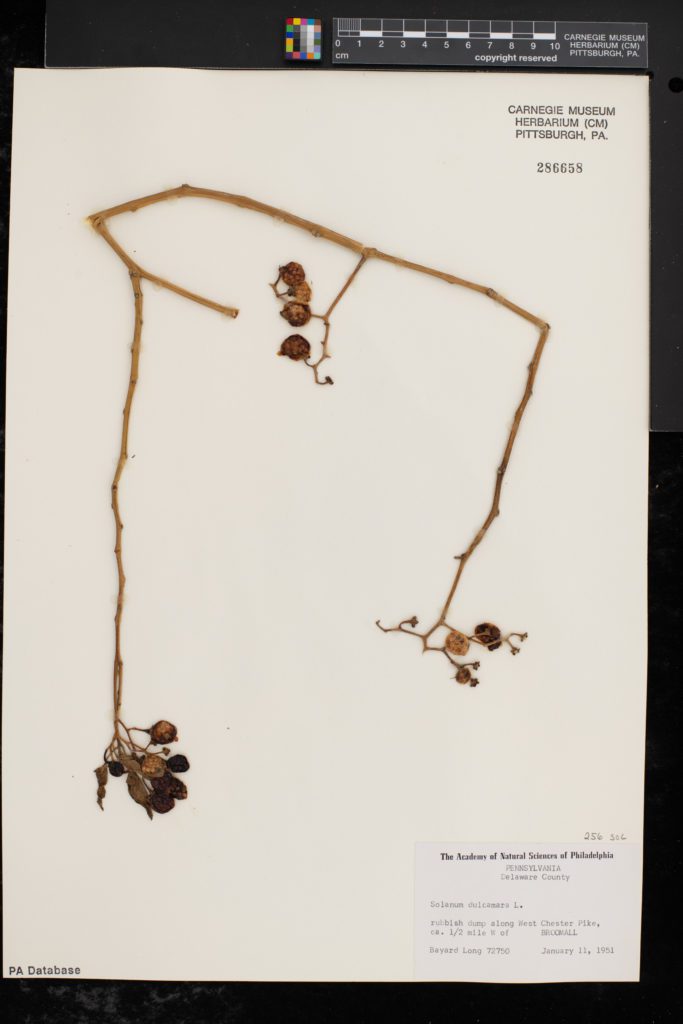
Bittersweet plant specimen on herbarium sheet

This specimen of bittersweet (Solanum dulcamara) was collected by Bayard Long on January 11, 1951 in a “rubbish dump” on West Chester Pike, near Broomall, Pennsylvania (outside of Philadelphia). Bayard Long (1885-1969) was a Philadelphia-area botanist and an active member of the Philadelphia Botanical Club (founded in 1891 and still an active organization). He was a prolific collector and for 56 years served as Curator of the Club’s Local Herbarium, which is housed at the Academy of Natural Sciences. 

Bittersweet nightshade (Solanum dulcamara) is in an herbaceous vine in the potato or nightshade family (Solanaceae), not to be confused with the similarly named Asian bittersweet (Celastrus orbiculatus), which is also a woody vine in the staff vine or bittersweet family (Celastraceae).

Bittersweet is an invasive species, introduced from its native range in Europe and Asia as early as the 1800s. It is common to see climbing along fences in urban areas and elsewhere across North America.

In the winter, its fleshy red berries are commonly still attached to the vines, long after the leaves are gone.
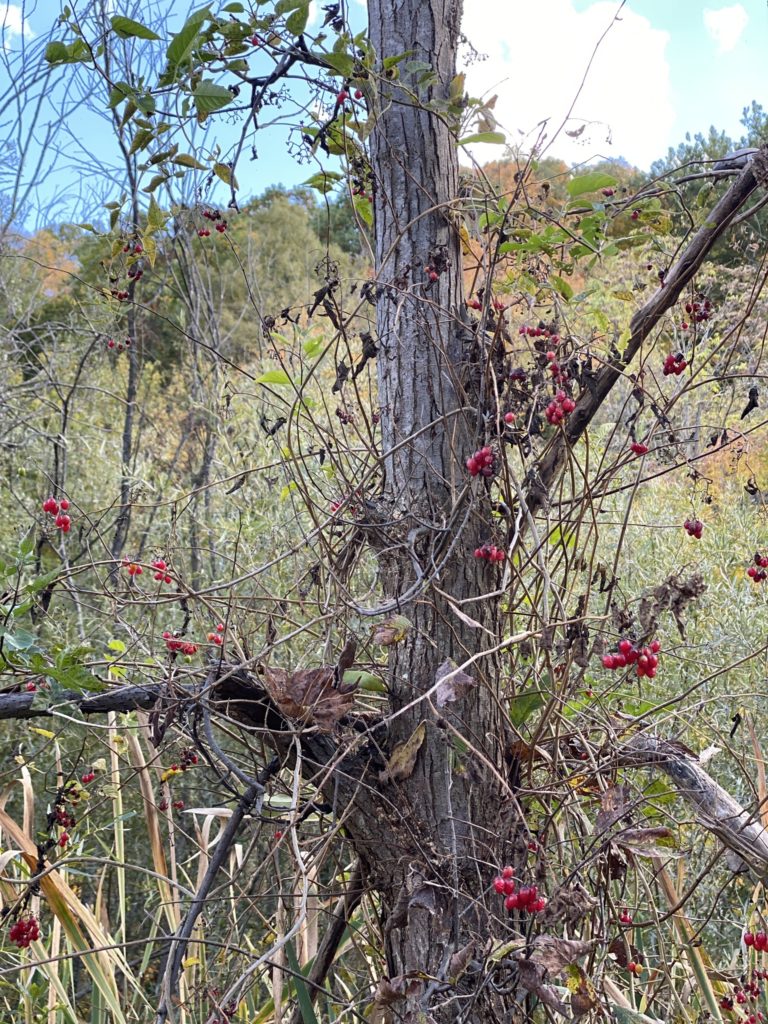
bittersweet plant in the fall

Find this specimen of bittersweet. 

Check back for more! Botanists at the Carnegie Museum of Natural History share digital specimens from the herbarium on dates they were collected. They are in the midst of a three-year project to digitize nearly 190,000 plant specimens collected in the region, making images and other data publicly available online. This effort is part of the Mid-Atlantic Megalopolis Project (mamdigitization.org), a network of thirteen herbaria spanning the densely populated urban corridor from Washington, D.C. to New York City to achieve a greater understanding of our urban areas, including the unique industrial and environmental history of the greater Pittsburgh region. This project is made possible by the National Science Foundation under grant no. 1801022.

Mason Heberling is Assistant Curator of Botany at Carnegie Museum of Natural History. Museum employees are encouraged to blog about their unique experiences and knowledge gained from working at the museum.

Related Content

Plants with Bladders?

Collected on this Day in 1998: Common Chickweed

Collected on this Day in 1925: A Flower with No Leaves?

Carnegie Museum of Natural History Blog Citation Information

Blog author: Heberling, Mason
Publication date: January 11, 2022
Share this post!

  • Share on Twitter Share on Twitter
  • Share on Facebook Share on Facebook
  • Share on Pinterest Share on Pinterest
  • Share on LinkedIn Share on LinkedIn
  • Share on Reddit Share on Reddit
  • Share via Email Share via Email

Filed Under: Blog Tagged With: Botany, Mason Heberling, Science News, Uprooted, We Are Nature 2

November 12, 2021 by Erin Southerland

Collected on this Day in 1930: Native…or Not?

by Mason Heberling

Though the supercontinent Pangea broke apart many millions of years ago, the Anthropocene is marked by a new kind of Pangea. The globalization of human activities has brought species from around the world into contact which otherwise would never interact. Though the seven continents as they are today may not be physically connected into a single landmass, they are perhaps more connected than they have ever been. 

Some species are intentionally moved from one continent to another, such as the plants in gardens, while other introductions are accidental, mere unintentional passengers of humans increasingly global activities. Introduced species can fundamentally alter the landscape and are regarded as one of the top threats to native biodiversity.

Invasive species are those introduced species which are non-native and spread without human intervention. Many invasive species alter ecosystem functioning and change regional biodiversity. Invasive plant species have become a common part of our landscape. Some were brought over hundreds of years ago by European colonists. Others have arrived much more recently. 

In Pennsylvania, the invasion of some plant species is obvious – that is, a unique species arrives, thrives, and become abundant. These invasive species have no record of being in the area and can spread rapidly, sometimes over the course of a human lifetime or shorter. Many invasive species are still actively spreading across the landscape. For instance, garlic mustard (Alliaria petiolata) is a well-known forest herb from Europe introduced to North America in the mid-1800s. After more than a century, the plant is now common across Pennsylvania’s forests. Another obvious example is giant knotweed (Reynoutria sachalinensis), a native to parts of East Asia, first recorded in western Pennsylvania in the 1920s, and since spread to line many of Pennsylvania’s rivers and streams. You can’t go far in the Pittsburgh region without seeing invasive knotweed.

Other species invasions are less obvious. These so called “cryptic invasions” are the introductions of very closely related species or subspecies which originated elsewhere. 

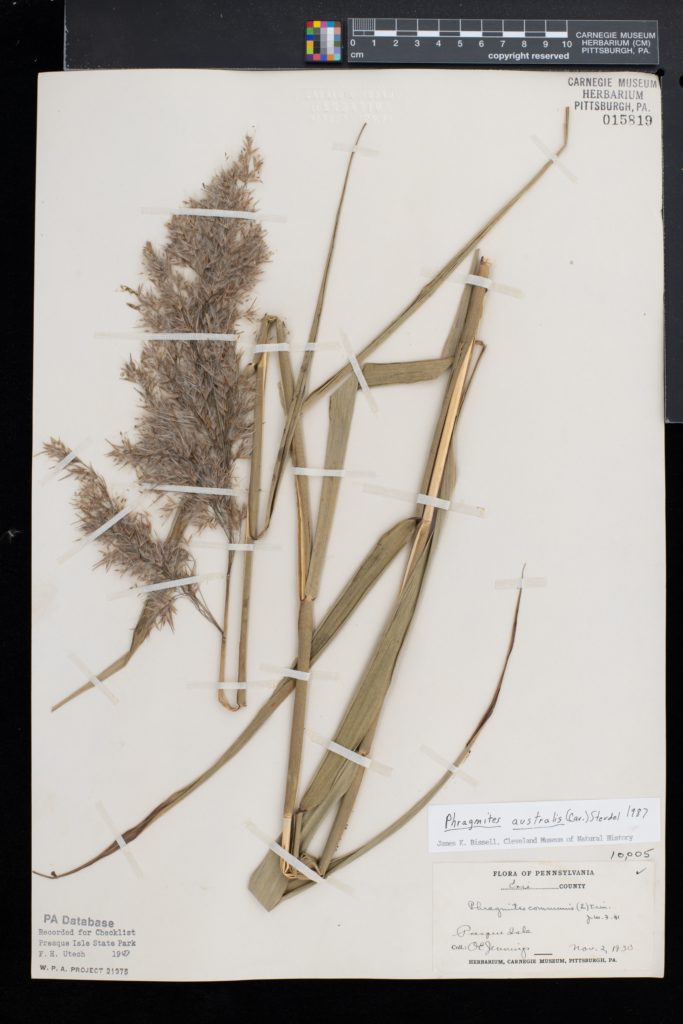
specimen of common reed on an herbarium sheet

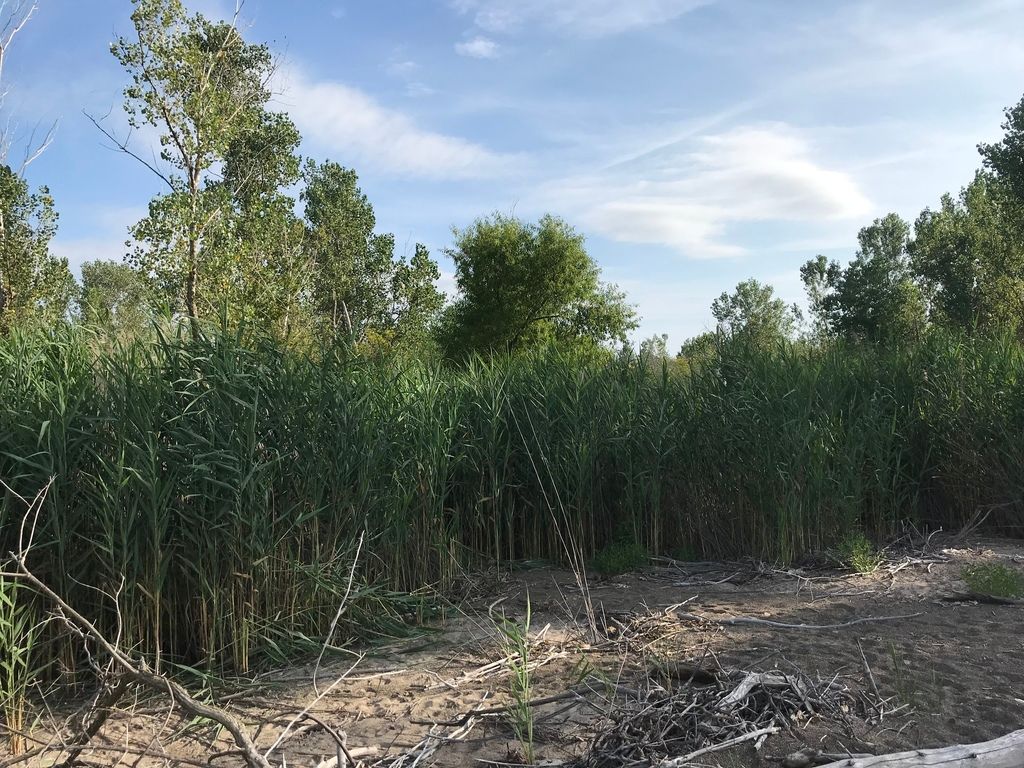
This specimen of common reed (Phragmites australis) tells the tale of a widespread cryptic invasion. The specimen was collected by Carnegie Museum botany curator Otto Jennings on November 2, 1930 along the shores of Lake Erie at Presque Isle, Pennsylvania. Common reed is a major problematic invasive species, crowding out native species in this unique habitat at Presque Isle. When this specimen was collected over 90 years ago, it was not nearly as abundant as it is now. 

common reed plants with trees outside
A large stand of Phragmites at Presque Isle State Park, August 2019.

But is it non-native? Common reed, or often simply called Phragmites, has a very widespread distribution, found in wetlands and shores across all continents except Antarctica. It is even a common site along wet areas near highways. Common reed is among the most widely distributed plants in the world.

Reed is non-native to the United States…well, mostly. In the 1800s, botanists considered Phragmites to be a relatively uncommon plant. Evidence from fossils and paleoecological research show that the species has indeed been in North America for many thousands of years. However, it didn’t start to become abundant until the early 1900s and after. Some botanists suggested the sudden success of the species could be due to human disturbance.  A pioneering herbarium-based study from 2002 published in PNAS by Dr. Kristin Saltonstall sequenced DNA from herbarium specimens collected before 1910 and recent collections to show that the spread of Phragmites in the United States was due to the introduction of a non-native strain of the species that originated from Europe. 

Pretty cool, huh? And this finding was made possible with herbarium specimens.

So, is this particular specimen native or not? I don’t actually know, but with expert examination and genetic analysis, we could find out! 

Find this specimen and 149 more in the Carnegie Museum herbarium here.

Check back for more! Botanists at the Carnegie Museum of Natural History share digital specimens from the herbarium on dates they were collected. These scientists are in the midst of a three-year project to digitize nearly 190,000 plant specimens collected in the region, making images and other data publicly available online. This effort is part of the Mid-Atlantic Megalopolis Project (mamdigitization.org), a network of thirteen herbaria spanning the densely populated urban corridor from Washington, D.C. to New York City to achieve a greater understanding of our urban areas, including the unique industrial and environmental history of the greater Pittsburgh region. This project is made possible by the National Science Foundation under grant no. 1801022.

Mason Heberling is Assistant Curator of Botany at Carnegie Museum of Natural History. Museum employees are encouraged to blog about their unique experiences and knowledge gained from working at the museum.

Related Content

The Circle of Life…and Invasion

Ask a Scientist: How do you find rare plants? [Video]

Collected on This Day in 1982: One specimen isn’t always enough!

Carnegie Museum of Natural History Blog Citation Information

Blog author: Heberling, Mason
Publication date: November 12, 2021

Share this post!

  • Share on Twitter Share on Twitter
  • Share on Facebook Share on Facebook
  • Share on Pinterest Share on Pinterest
  • Share on LinkedIn Share on LinkedIn
  • Share on Reddit Share on Reddit
  • Share via Email Share via Email

Filed Under: Blog Tagged With: Botany, collected on this day, Mason Heberling, Science News, Uprooted, We Are Nature 2

July 30, 2021 by wpengine

Collected on this Day in 1925: A flower with no leaves?

by Mason Heberling
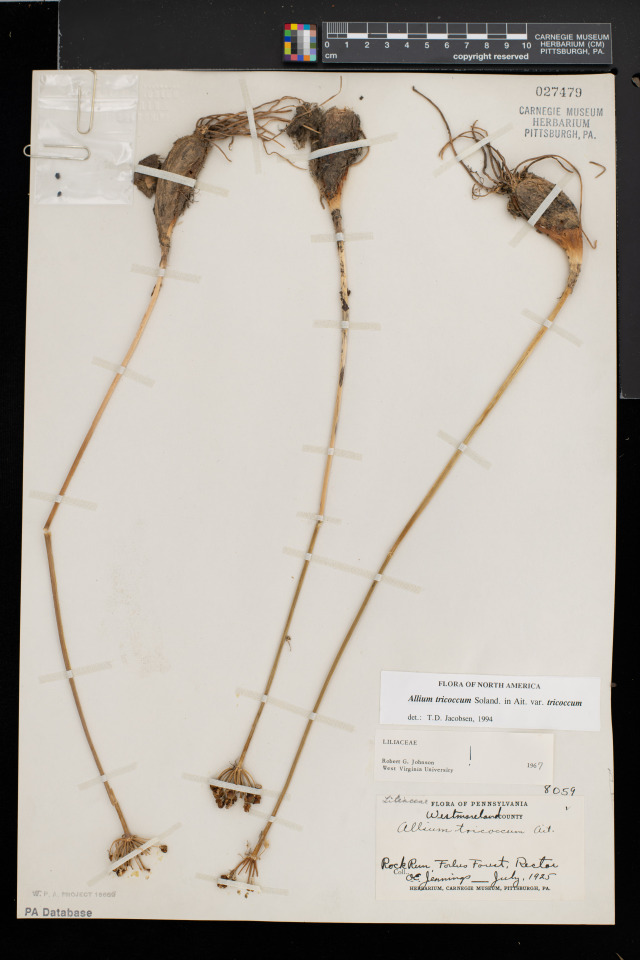
Dried allium specimen on an herbarium sheet.

This leafless specimen was collected in July 1925 in Rock Run, Forbes State Forest in Rector, Pennsylvania. This site is not far from what would only a few decades later became Powdermill Nature Reserve, the field station of Carnegie Museum of Natural History.

This specimen was collected by Otto Jennings, an influential botanist and curator at Carnegie Museum. Jennings had many roles during his 60 years at the museum (1904 until his death in 1964), including Director of Education, and even Director of the museum. He was also a professor at the University of Pittsburgh, serving as the Head of the Department of Botany, and later as Head of the newly formed Department of Biological Sciences in 1935. On top of that, Jennings somehow was a prolific plant collector. He ranks among the top contributors to the Carnegie Museum Herbarium with nearly 35,000 specimens, and additional plants he collected are preserved in herbariums across the world.

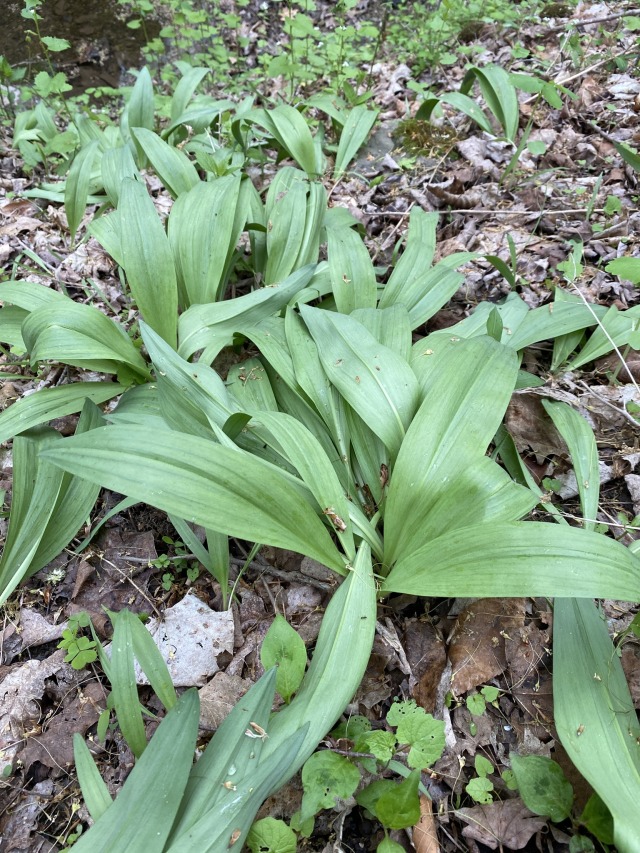
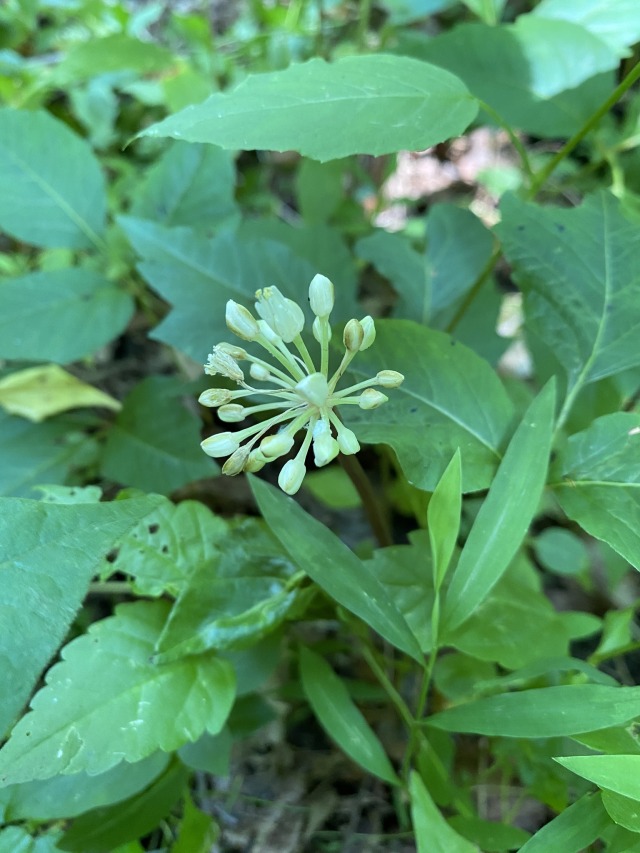
So, where’d the leaves go on this specimen? No, it isn’t parasitic. Wild leeks (also called ramps), Allium tricoccum, have a unique phenology, or timing, of leaf out and flowering. The species emerges very early in the spring, among the earliest in our woods. In this way, the species is a typical “spring ephemeral.” The long leaves soak up the sun before being shaded out by tree canopies a month or two later. At that point, the leaves die back. However, unlike other spring ephemerals, wild leek does not flower in the spring. Instead, months later, in July, the leafless plants send up a solitary flowering stalk. This is quite unusual – a flower coming out of the ground in the middle of the woods, with no signs of leaves.

Wild leeks in early spring.

The leaves of wild leeks carpeting the forest floor in early spring.

Flowering wild leek in summer.

The solitary flower stalks poking through other vegetation in mid-summer.

Wild leeks or ramps are in the onion family (Amaryllidaceae, formerly Alliaceae), forming bulbs with a distinctive onion flavor and ball-shaped flower heads typical in the onion family. Ramps are edible, with a long history of human use by Native people and European settlers. Ramp festivals are common throughout Appalachia to this day. However, the species is prone to exploitation and overharvesting, so never harvest without permission, and where harvesting is allowed, follow sustainable practices to protect the plant population.

The species is often treated as having two varieties: var. tricoccum (wild leek) and var. burdickii (narrow leaved wild leek). It depends who you ask, but more studies are now more clearly showing that this species may in fact be multiple species based on very distinct phenology (timing of flowers) and leaf traits (color, width). This case highlights the importance of herbarium specimens in documenting our flora and understanding the complexities of biological diversity.

Also note the small label added to this particular specimen recording this specimen was used in the taxonomic treatment of the species in the Flora of North America, identified by T.D. Jacobsen who co-authored the treatment. Dr. Jacobsen is the current director of the Hunt Institute for Botanical Documentation at nearby Carnegie Mellon University.

Keep an eye out for those leafless flower stalks in the woods!

Find this ramps specimen and 174 more in the Carnegie Museum Herbarium here: https://midatlanticherbaria.org/portal/collections/list.php?db=328&taxa=Allium+tricoccum&usethes=1&taxontype=2

Check back for more! Botanists at the Carnegie Museum of Natural History share digital specimens from the herbarium on dates they were collected. They are in the midst of a three-year project to digitize nearly 190,000 plant specimens collected in the region, making images and other data publicly available online. This effort is part of the Mid-Atlantic Megalopolis Project (mamdigitization.org), a network of thirteen herbaria spanning the densely populated urban corridor from Washington, D.C. to New York City to achieve a greater understanding of our urban areas, including the unique industrial and environmental history of the greater Pittsburgh region. This project is made possible by the National Science Foundation under grant no. 1801022.

Mason Heberling is Assistant Curator of Botany at Carnegie Museum of Natural History. Museum employees are encouraged to blog about their unique experiences and knowledge gained from working at the museum.

Related Content

Collected On This Day in 1957: Coltsfoot

Plants with Bladders?

Collected On This Day in 1982: One Specimen Isn’t Always Enough!

Carnegie Museum of Natural History Blog Citation Information

Blog author: Heberling, Mason
Publication date: July 30, 2021

Share this post!

  • Share on Twitter Share on Twitter
  • Share on Facebook Share on Facebook
  • Share on Pinterest Share on Pinterest
  • Share on LinkedIn Share on LinkedIn
  • Share on Reddit Share on Reddit
  • Share via Email Share via Email

Share this post!

  • Share on Twitter Share on Twitter
  • Share on Facebook Share on Facebook
  • Share on Pinterest Share on Pinterest
  • Share on LinkedIn Share on LinkedIn
  • Share on Reddit Share on Reddit
  • Share via Email Share via Email

Filed Under: Blog Tagged With: Botany, collected on this day, Mason Heberling

June 4, 2021 by wpengine

Collected on this Day in 1982: One specimen isn’t always enough!

Archiving biological variation.

by Mason Heberling

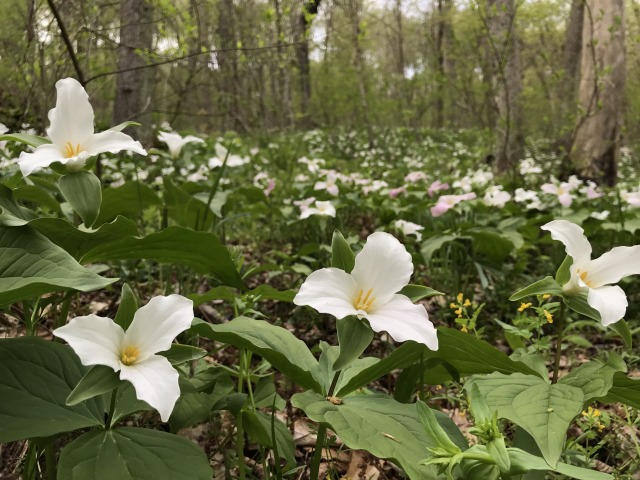
Flowering trillium in the woods

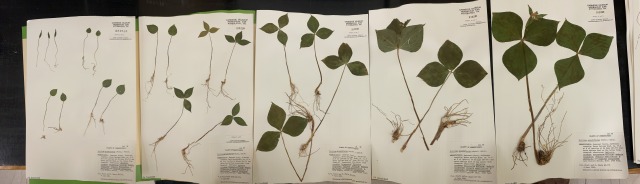
Five herbarium sheets with specimens of trillium on them arranged with the smallest leaves on the left and largest on the right.

This specimen is not a specimen but a set of five specimens! Same species (large flowered trillium, Trillium grandiflorum). Same site (in Somerset county, PA). All collected on same date (June 4, 1982) by Frederick H. Utech and Masashi Ohara.

We know that one specimen of every species is not enough. Having many specimens of many species, across many sites, and through time are necessary to document what organisms lived where, when, how far species ranges extend, and how these change through time. We study these specimens to understand biodiversity and biodiversity change across many scales.

But why collect that many vouchers of the same species, from the same site, on same date? One reason might be to send “duplicate” vouchers to other herbaria, both to help other collections expand their holdings, to get expert opinions on identification, and/or to protect against (unlikely but very possible) damage that may happen in one herbarium (like fire, flood, insect damage – oh my!).

But that isn’t what happened here. All specimens are stored together at Carnegie Museum of Natural History.

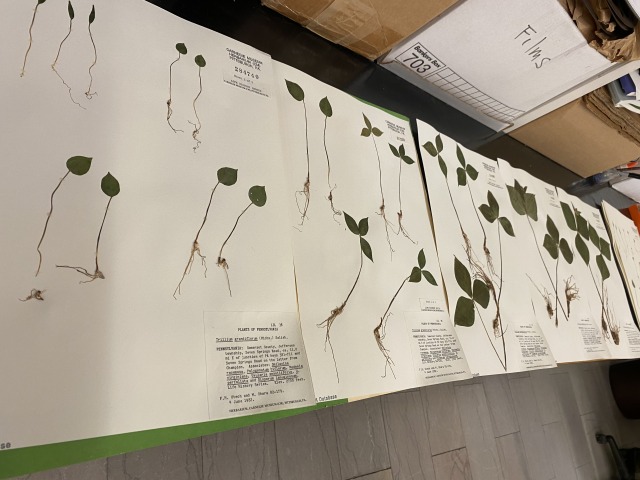
Voucher series of trillium herbarium specimen sheets.

So why? Well, it is simple, but quite genius, really. Utech and Ohara collected a “life history” voucher series. That is, these specimens each show different stages of the species’ development from small cotyledon-bearing seedlings just germinating above ground, to one leaved plants, to small to large three leaved juvenile trilliums that have not yet flowered, to large adult plants with flowers.

Utech and Ohara, along with Shoichi Kawano, pioneered this method of collecting and advocated for its importance in a 1984 essay in the Journal of Phytogeography and Taxonomy. Historically, plant specimens are collected with a major specific purpose in mind – to document the plant was there at a given time. To do that, botanists of course collect specimens that are best for identification, such that others can verify the species. For most species, that means plants tend to be collected when they are adults and reproductive (with flowers and/or fruits). Specimens without reproductive organs (called “vegetative” specimens) are generally viewed as less useful for this purpose and often avoided.

But Utech and others found that this standard approach, though useful for some research, did not cut it for their work. As organismal biologists studying the life history, ecology, and life cycle of species, they found many species were not well represented in herbarium collections.

Many species, like trillium, have distinct life stages from seedling to juvenile to adult. Many species form overwintering leaves or juvenile leaves that differ dramatically, even unrecognizably, from “typical” adult specimens.

So there’s good reasons to collect across life history and across individuals within a population. Biological collections are all about archiving biodiversity in its many forms, whether across deep time with fossils, across species, within species, or even within populations at a specific site.

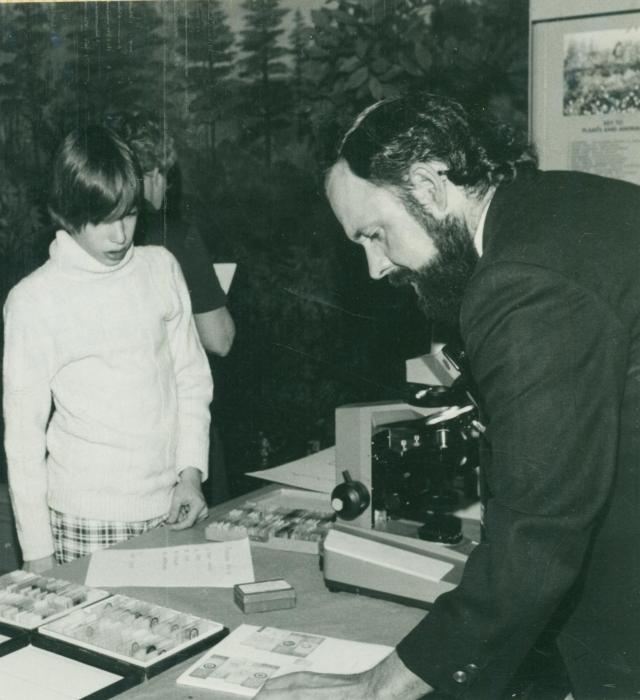
Man at a table of plant specimens talking to a child about them.
Dr. Frederick H. Utech, past curator at Carnegie Museum, at a member’s night in 1979.

Dr. Utech (1943-2021) was a curator at the museum from 1976 until 1999. He was then a research botanist at the nearby Hunt Institute for Botanical Documentation until his retirement in 2011, notably contributing to three volumes of the Flora of North America project. More than 23 thousand specimens in the Carnegie Museum herbarium were collected by him. Dr. Utech passed away earlier this year but his legacy lives on. You can find his obituary here.

Inspired by the method of life history series and the need for new perspectives in the way we collect, CMNH Botany staff are working to promote and expand these ideas. We are presenting some of these ideas at the Society of Herbarium Curators annual meeting later this summer.

Find many more specimens (24,662 to be exact!) collected by Dr. Utech (including other life history series vouchers) here.

Check back for more! Botanists at the Carnegie Museum of Natural History share digital specimens from the herbarium on dates they were collected. They are in the midst of a three-year project to digitize nearly 190,000 plant specimens collected in the region, making images and other data publicly available online. This effort is part of the Mid-Atlantic Megalopolis Project (mamdigitization.org), a network of thirteen herbaria spanning the densely populated urban corridor from Washington, D.C. to New York City to achieve a greater understanding of our urban areas, including the unique industrial and environmental history of the greater Pittsburgh region. This project is made possible by the National Science Foundation under grant no. 1801022.

Mason Heberling is Assistant Curator of Botany at Carnegie Museum of Natural History. Museum employees are encouraged to blog about their unique experiences and knowledge gained from working at the museum.

Related Content

Collected On This Day: September 6

Ask a Scientist: How do you find rare plants?

Do Plants Have Lips? No, But One Genus Sure Looks Like it Does!

Carnegie Museum of Natural History Blog Citation Information

Blog author: Heberling, Mason
Publication date: June 4, 2021

Share this post!

  • Share on Twitter Share on Twitter
  • Share on Facebook Share on Facebook
  • Share on Pinterest Share on Pinterest
  • Share on LinkedIn Share on LinkedIn
  • Share on Reddit Share on Reddit
  • Share via Email Share via Email

Share this post!

  • Share on Twitter Share on Twitter
  • Share on Facebook Share on Facebook
  • Share on Pinterest Share on Pinterest
  • Share on LinkedIn Share on LinkedIn
  • Share on Reddit Share on Reddit
  • Share via Email Share via Email

Filed Under: Blog Tagged With: Botany, collected on this day, Mason Heberling, plants, Science News, We Are Nature 2

March 15, 2021 by wpengine

Collected on this Day in 1957

Spring at Powdermill.

An early bloomer.

dried specimen of coltsfoot on an herbarium sheet

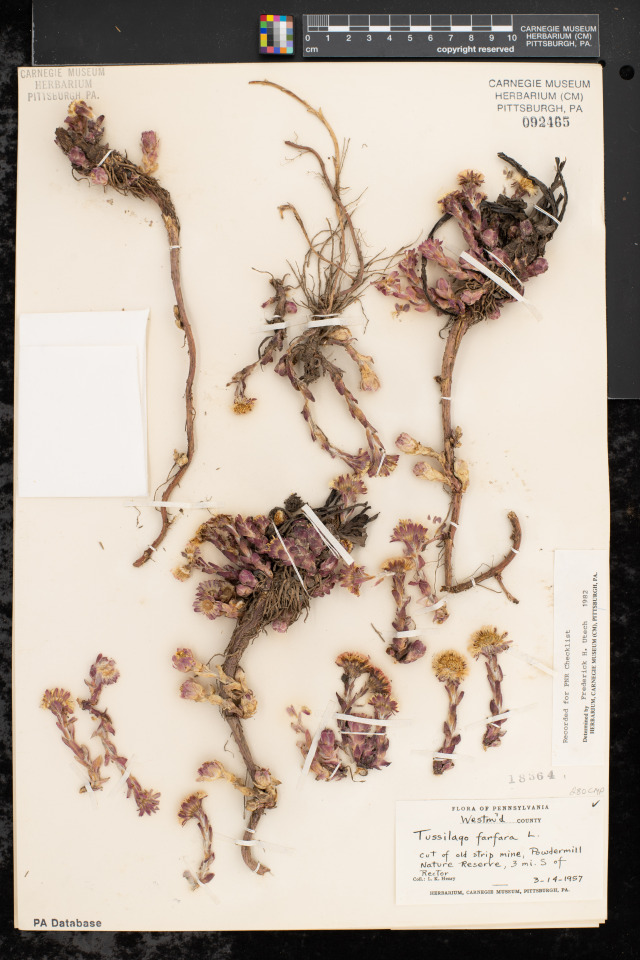
This specimen of coltsfoot (Tussilago farfara) was collected at Powdermill Nature Reserve, the field station of Carnegie Museum of Natural History in 1957, just one year after the facility was established. It was collected by Leroy Henry, a Curator of Botany at the museum from 1937 until 1972 (though he was also affiliated with the museum before and after this period). Henry is an important collector for our region, with >36,000 specimens in the Carnegie Museum herbarium.

coltsfoot flowering in spring

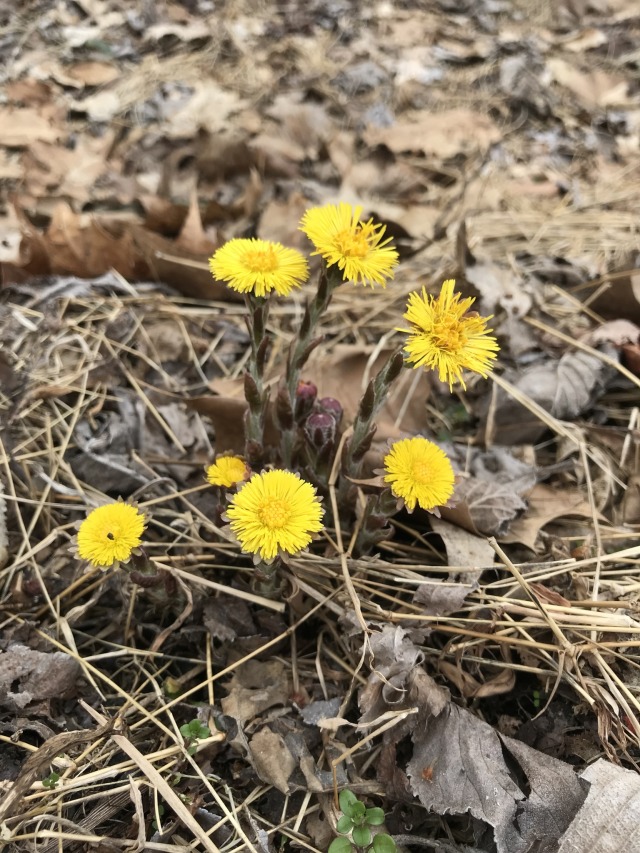
At first look, the plant may be confused with your common dandelion. It has definite similarities, as it is in the same plant family, Asteraceae, and bears yellow flowers. But, as you’ll notice from the specimen – flowering coltsfoot doesn’t have leaves!

Coltsfoot, which is native to Europe, was introduced to Pennsylvania, and is quite unique in our state’s flora. The plant blooms very early in the spring, with dandelion-like flowers frequently poking through the soil of otherwise barren slopes. The leaves soon follow, and they are shaped like – well – a colt’s foot! Quite different than the familiar serrated edge shape of dandelion leaves.

Coltsfoot’s early appearance also makes it a great species to track changes in bloom time using herbarium specimens. The species was among the first to be used in a pioneering study published in 2006 using herbarium specimens by Claud Lavoie and Daniel Lachance. In Southern Quebec, they found coltsfoot bloomed 15-31 days earlier in recent decades, compared to pre-1950. Earlier blooming was strongly linked to climate change in the region. The plants also showed a clear signal of flowering earlier in the city (due to a phenomenon known as urban heat island effect).

coltsfoot leaves in the fall

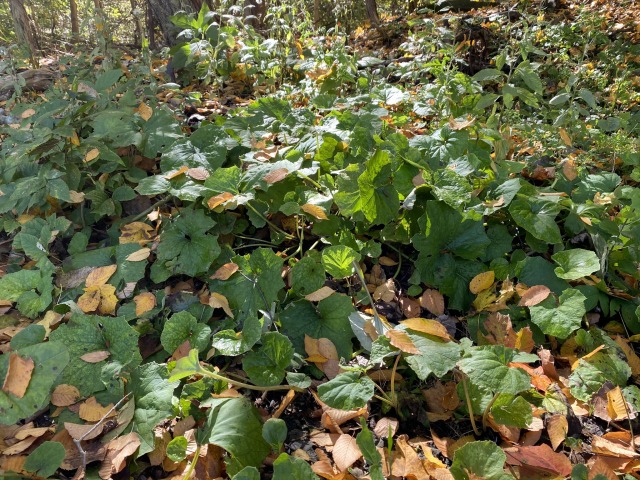
We have plenty of spring ephemerals that bloom early, but unlike these plants, coltsfoot doesn’t die off by summer. The plant keeps its leaves well after it blooms, into late fall.

This strategy is interesting, and I can’t think of many plants in our flora with similar growth patterns. Is the plant on to something?

Keep an eye out for coltsfoot, especially along wooded roadsides. Once you see a big bloom, check the same site later in the year. The leaves can grow to a surprisingly large size.

Find this specimen and more here.

Check back for more! Botanists at the Carnegie Museum of Natural History share digital specimens from the herbarium on dates they were collected. They are in the midst of a three-year project to digitize nearly 190,000 plant specimens collected in the region, making images and other data publicly available online. This effort is part of the Mid-Atlantic Megalopolis Project (mamdigitization.org), a network of thirteen herbaria spanning the densely populated urban corridor from Washington, D.C. to New York City to achieve a greater understanding of our urban areas, including the unique industrial and environmental history of the greater Pittsburgh region. This project is made possible by the National Science Foundation under grant no. 1801022.

Mason Heberling is Assistant Curator of Botany at Carnegie Museum of Natural History. Museum employees are encouraged to blog about their unique experiences and knowledge gained from working at the museum.

Related Content

Collected on this Day in 1998: Common chickweed

Spring is in the Air, Botanists are in the Field

Ask a Scientist: What is biogeochemistry? 

Carnegie Museum of Natural History Blog Citation Information

Blog author: Heberling, Mason
Publication date: March 14, 2021

Share this post!

  • Share on Twitter Share on Twitter
  • Share on Facebook Share on Facebook
  • Share on Pinterest Share on Pinterest
  • Share on LinkedIn Share on LinkedIn
  • Share on Reddit Share on Reddit
  • Share via Email Share via Email

Share this post!

  • Share on Twitter Share on Twitter
  • Share on Facebook Share on Facebook
  • Share on Pinterest Share on Pinterest
  • Share on LinkedIn Share on LinkedIn
  • Share on Reddit Share on Reddit
  • Share via Email Share via Email

Filed Under: Blog Tagged With: Botany, collected on this day, Mason Heberling, Science News

March 8, 2021 by wpengine

Collected on this Day in 1998

Spring is springing as we speak.

In the city and beyond.

dried common chickweed specimen on herbarium sheet

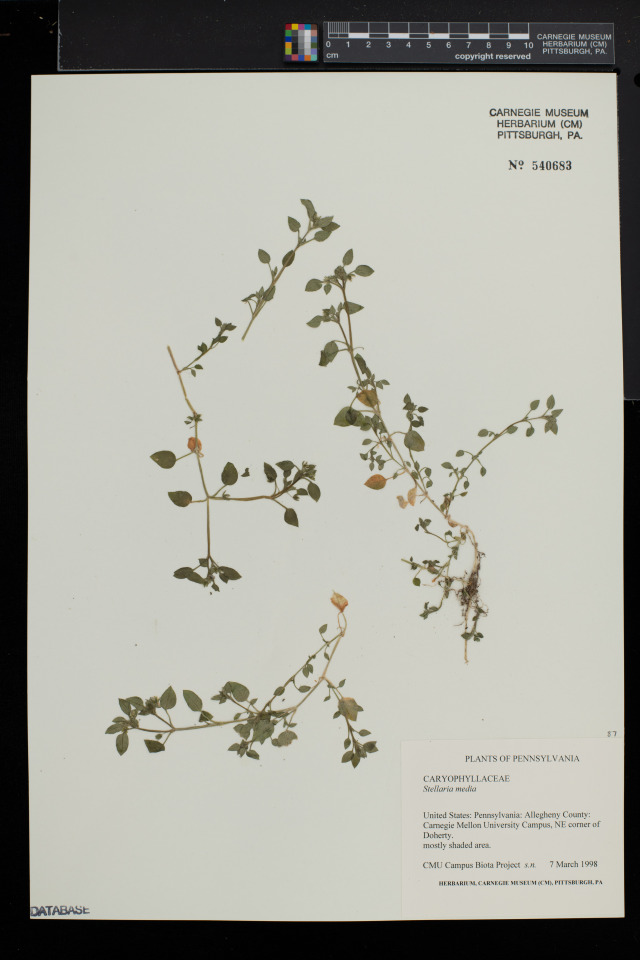
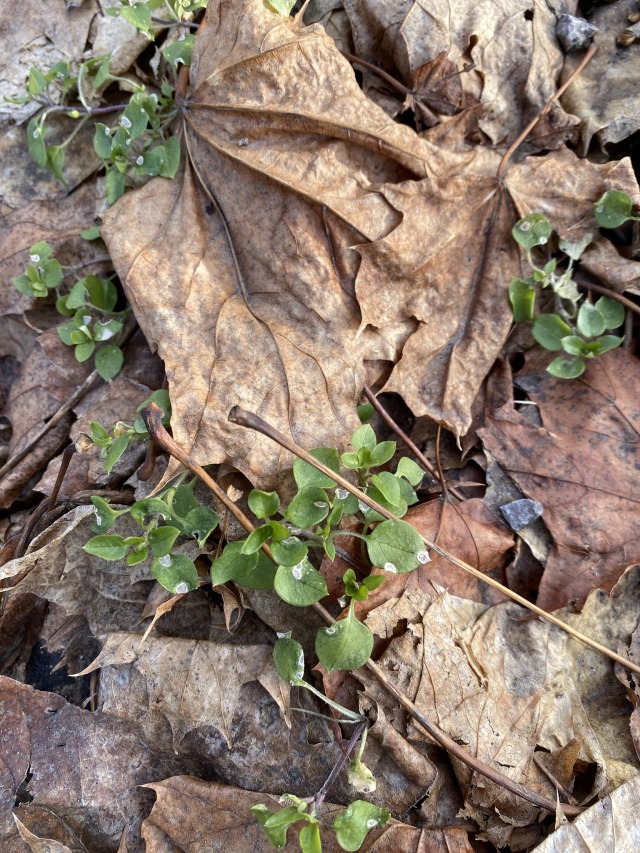
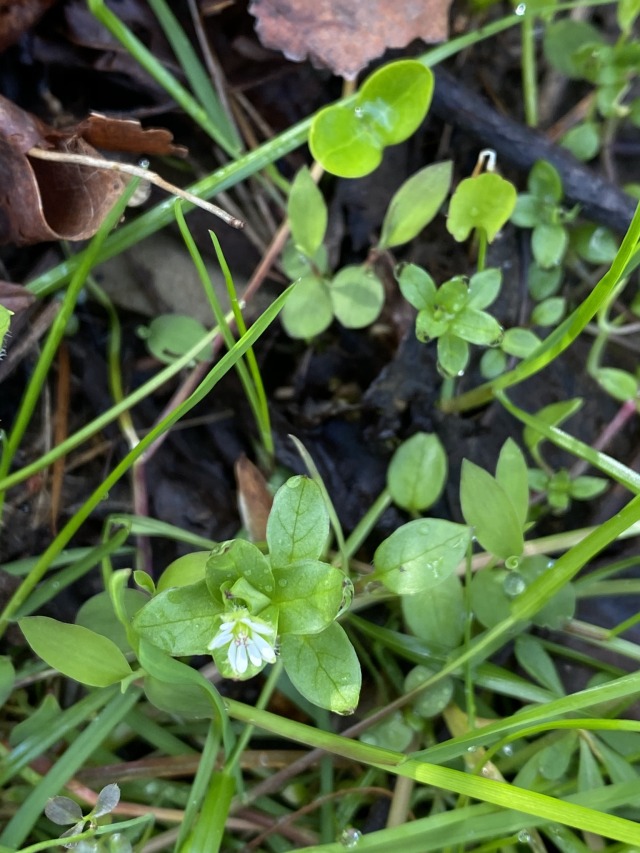
This specimen of common chickweed (Stellaria media) was collected on the campus of Carnegie Mellon University, in Pittsburgh, in a “mostly shady area.” Though small, if you look closely you’ll encounter a charismatic tiny flower. Common chickweed is a familiar plant across the world, found in every continent (except perhaps Antarctica?). Like many cosmopolitan lawn weeds, it is native to “Eurasia.” The plant’s exact native range is unclear, but it is considered not native to North America.

In Pennsylvania, common chickweed can be found in habitat ranging from urban lawns to forests. In some locations dense growth of the plant can form a mat along the ground. Common chickweed can be found just about year-round when snow isn’t on the ground, and like dandelion, the plant flowers throughout the year.

Stellaria media on January 30 in southwest Pennsylvania.

The tiny flowers now are also sending a signal – spring is on the way. For some plants, such as skunk cabbage and red maple, spring has already sprung.

Stellaria media on April 24 in southwest Pennsylvania.

This species is a good one to look out for during the upcoming City Nature Challenge!

Find this specimen and more here.

Check back for more! Botanists at the Carnegie Museum of Natural History share digital specimens from the herbarium on dates they were collected. They are in the midst of a three-year project to digitize nearly 190,000 plant specimens collected in the region, making images and other data publicly available online. This effort is part of the Mid-Atlantic Megalopolis Project (mamdigitization.org), a network of thirteen herbaria spanning the densely populated urban corridor from Washington, D.C. to New York City to achieve a greater understanding of our urban areas, including the unique industrial and environmental history of the greater Pittsburgh region. This project is made possible by the National Science Foundation under grant no. 1801022.

Mason Heberling is Assistant Curator of Botany at Carnegie Museum of Natural History. Museum employees are encouraged to blog about their unique experiences and knowledge gained from working at the museum.

Related Content

Collected On This Day in 1949: Honeysuckle

Collected On This Day in 1940: Plants with bladders?

Looking for Bugs in Your Yard! 

Share this post! 

  • Share on Twitter Share on Twitter
  • Share on Facebook Share on Facebook
  • Share on Pinterest Share on Pinterest
  • Share on LinkedIn Share on LinkedIn
  • Share on Reddit Share on Reddit
  • Share via Email Share via Email

Carnegie Museum of Natural History Blog Citation Information

Blog author: Heberling, Mason
Publication date: March 8, 2021

Share this post!

  • Share on Twitter Share on Twitter
  • Share on Facebook Share on Facebook
  • Share on Pinterest Share on Pinterest
  • Share on LinkedIn Share on LinkedIn
  • Share on Reddit Share on Reddit
  • Share via Email Share via Email

Filed Under: Blog Tagged With: Botany, City Nature Challenge, collected on this day, Mason Heberling, Science News

  • « Go to Previous Page
  • Page 1
  • Page 2
  • Page 3
  • Page 4
  • Interim pages omitted …
  • Page 21
  • Go to Next Page »

sidebar

About

  • Mission & Commitments
  • Directors Team
  • Museum History

Get Involved

  • Volunteer
  • Membership
  • Carnegie Discoverers
  • Donate
  • Employment
  • Events

Bring a Group

  • Groups of 10 or More
  • Birthday Parties at the Museum
  • Field Trips

Powdermill

  • Powdermill Nature Reserve
  • Powdermill Field Trips
  • Powdermill Staff
  • Research at Powdermill

More Information

  • Image Permission Requests
  • Science Stories
  • Accessibility
  • Shopping Cart
  • Contact
  • Visitor Policies
One of the Four Carnegie Museums | © Carnegie Institute | Privacy Policy | Terms of Use | Accessibility
Rad works here logo