• Skip to primary navigation
  • Skip to main content
  • Skip to primary sidebar

Carnegie Museum of Natural History

One of the Four Carnegie Museums of Pittsburgh

  • Visit
    • Buy Tickets
    • Visitor Information
    • Exhibitions
    • Events
    • Dining at the Museum
    • Celebrate at the Museum
    • Powdermill Nature Reserve
    • Event Venue Rental
  • Learn
    • Field Trips
    • Educator Information
    • Programs at the Museum
    • Bring the Museum to You
    • Guided Programs FAQ
    • Programs Online
    • Climate and Rural Systems Partnership
  • Research
    • Scientific Sections
    • Science Stories
    • Science Videos
    • Senior Science & Research Staff
    • Museum Library
    • Science Seminars
    • Scientific Publications
    • Specimen and Artifact Identification
  • About
    • Mission & Commitments
    • Directors Team
    • Museum History
  • Tickets
  • Give
  • Shop

museum history

July 26, 2018 by wpengine

Before Powdermill Nature Reserve

By Bonnie Isaac

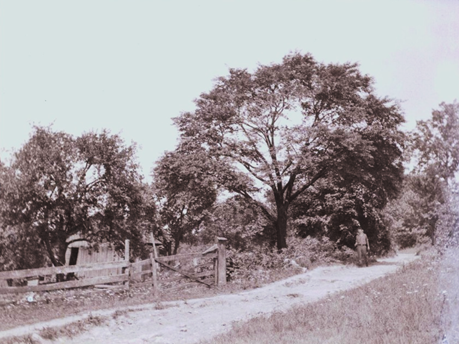
black and white photo of a dirt road and trees

While looking through some images in the archives in the section of Botany I came across this image from July 23, 1923 taken by Gus Link Jr. about 3 miles south of Rector, PA.  There is a good chance that this property later became part of our Powdermill Nature Reserve.

The museum began acquiring properties in 1956 to form Powdermill Nature Reserve. I wonder if the museum folks were out there surveying the area with a nature reserve in mind? What foresight the museum had to acquire properties that have over the past 60 plus years become a beautiful place for research.

In 1923 Gustav Link Jr. was an assistant preparator in Zoology for the natural history museum. Gus Link Jr. worked for the museum from 1912 to 1960.

Bonnie Isaac is the Collection Manager in the Section of Botany. Museum employees are encouraged to blog about their unique experiences and knowledge gained from working at the museum.
Filed Under: Blog Tagged With: Botany, conservation, museum history, nature, Powdermill, Powdermill Nature Reserve

February 27, 2018 by wpengine

Celebrating Carnegie History: Dr. Andrey Avinoff

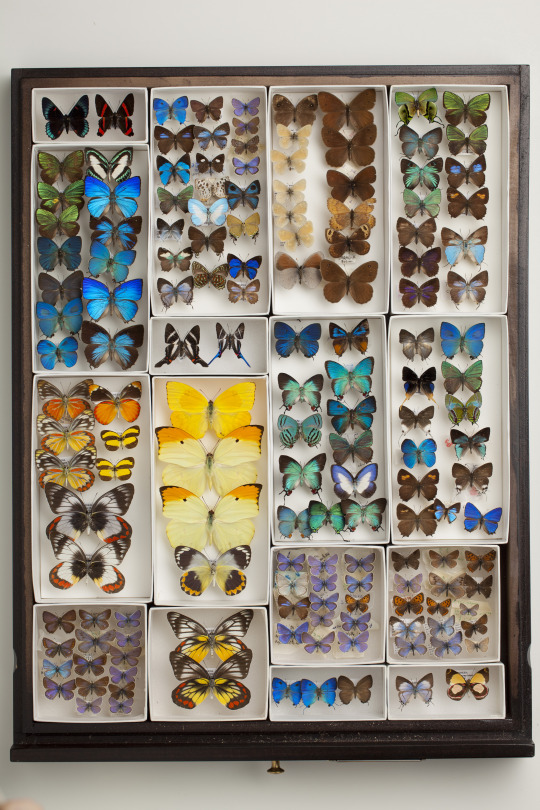
butterfly and moth collection

Since Carnegie Museum of Natural History was founded in the late 1800s, it has been the home of an impressive group of alumni scientists who made great progress in their fields. One in this group who stands out is Dr. Andrey Avinoff, the director of the museum from 1926-1946.

Dr. Avinoff’s career began in Russia, where he studied geographical variation in moths and butterflies across different mountain ranges in Asia. He studied how smaller sub-ranges of the Himalayas led to the prevention of interbreeding in some species, but allowed it in others, depending on the geography and geology of the specific area. As he put it, “the study of variation divorced from geographical distribution is futile.”

Throughout his studies, he amassed a huge collection of specimens, but his collection was appropriated and held by the Zoological Institute of the Russian Academy of Sciences.

When he began his tenure at Carnegie Museum of Natural History, Dr. Avinoff virtually replicated his moth and butterfly collection through financed expeditions and trades with other collectors.

Dr. Avinoff was also an avid artist; “I bow to scientific fact until 5 o’clock,” he said. In 1941, he brought his two passions together and began the ambitious project to collect, describe, and illustrate the flora of western Pennsylvania. Partnering with the curator of Botany at the time, Otto E. Jennings, living plants were found growing wild, then brought to the museum for Dr. Avinoff to capture in paint. When the specimens were no longer needed for painting, they were dried and pressed to be saved in the herbarium.

Dr. Avinoff’s paintings were published in the book Wildflowers of Western Pennsylvania and the Upper Ohio Basin, which was printed in 1953.


Throughout the month of September, Carnegie Museum of Natural History is celebrating Pittsburghers living longer and better through enriching cultural engagement. We will be reflecting on cool pieces of museum history on our blog and social media and offering a series of programming at the museum that will range from dancing to specialized tours, geared towards visitors who are 45 and older. Visit our website for more information and programming details.

Filed Under: Blog Tagged With: Andrey Avinoff, Botany, Invertebrate Zoology, museum history

February 1, 2018 by wpengine

Carnegie Museum of Natural History has an extremely…

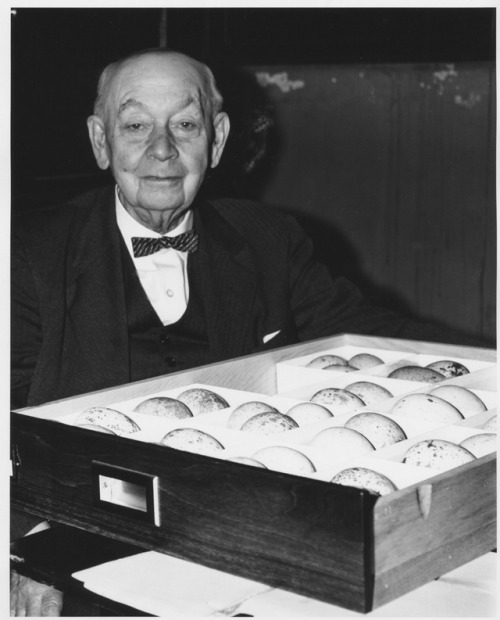
black and white photo of W.E. Clyde Todd with a drawer of large bird eggs

Carnegie Museum of Natural History has an extremely valuable collection of birds from northern South America because W.E. Clyde Todd, curator of ornithology, had an interest in the area and the ability to purchase specimens during the early years of the museum. We hold almost 59,000 specimens from the continent. Todd was curator from 1919–1944, but began at the museum in 1899 and continued to visit the museum as an emeritus until 1969—a full 70 years!

Picture above in 1966, Todd is shown with a drawer of bird eggs.

Filed Under: Blog Tagged With: Birds, museum history, Section of Birds

January 11, 2018 by wpengine

Did you know that in addition to needing a larger museum…

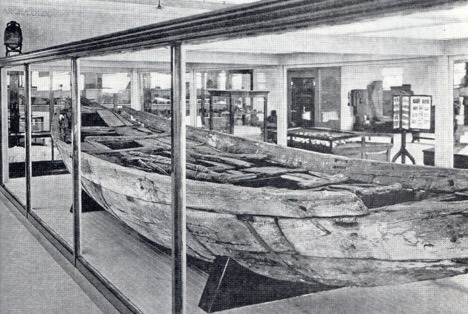
Egyptian funerary boat

Did you know that in addition to needing a larger museum building to house our Diplodocus, Dippy, the 1907 expansion was required because Andrew Carnegie purchased our 32-foot long wooden Egyptian funerary boat?

Carnegie apparently purchased the boat without the knowledge of then Director, W.J. Holland, who upon its
arrival, told The Pittsburgh Times that he “had not been in correspondence with anyone regarding such a relic.”

Still, by July 24, 1901, Holland reported to The Pittsburgh Post that “Mr. Carnegie is ever on the lookout to purchase antiquities that will tend to carry out his idea of making the Carnegie Museum the most comprehensive and complete institution of the kind in the world… Mr. Carnegie is thoughtful to the extreme in this respect and we are never at a loss to find a good place for anything that may come.”

This boat is still on display today in Walton Hall of Ancient Egypt!

Filed Under: Blog Tagged With: Andrew Carnegie, museum history, Walton Hall of Ancient Egypt

October 5, 2017 by wpengine

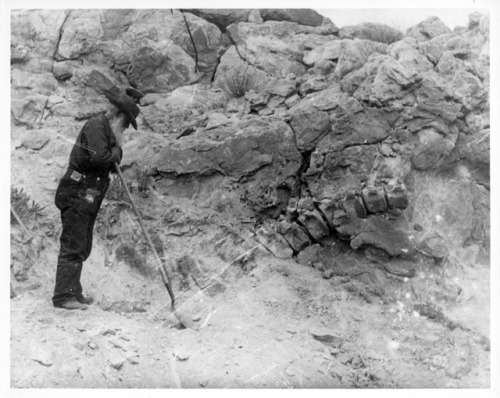
Celebrated fossil quarry

old black and white photo of fossil quarry at Dinosaur National Monument in Utah

The celebrated fossil quarry at what is now recognized as Dinosaur National Monument in Utah was discovered in 1909 by Carnegie Museum field collector Earl Douglass.

From 1909–1923, Douglass and his crews collected more than 350 tons (700,000 pounds) of fossils from that site alone. Several dinosaur skeletons discovered by Douglass at this quarry are featured in our core exhibition hall, Dinosaurs in Their Time.

Others grace the exhibit halls of other prominent North American museums, such as the American Museum of Natural History in New York, the Smithsonian Institution’s National Museum of Natural History in Washington, DC, the Denver Museum of Nature and Science, and the Royal Ontario Museum in Toronto.

Filed Under: Blog Tagged With: dinosaurs, dinosaurs in their time, museum history

July 18, 2017 by wpengine

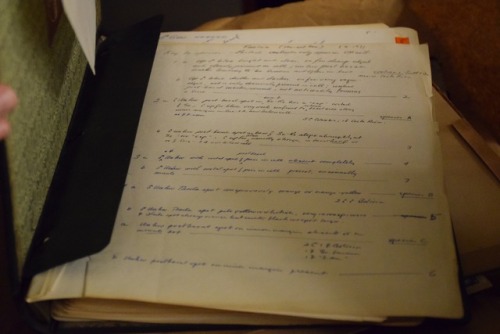
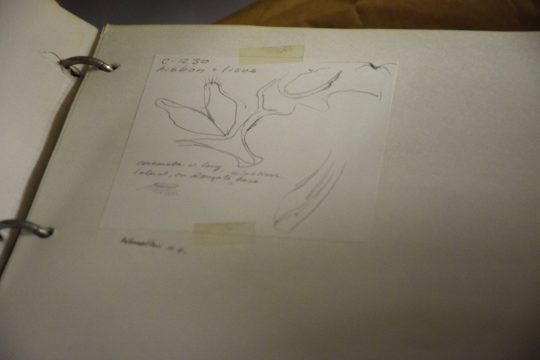
Handwritten notes and sketches

old pages with handwritten notes

Handwritten notes and sketches penned by a former curator are kept in the museum’s hidden Invertebrate Zoology collection.

hand drawn sketches in a book

Filed Under: Blog Tagged With: Invertebrate Zoology, museum history

  • Page 1
  • Page 2
  • Page 3
  • Go to Next Page »

sidebar

About

  • Mission & Commitments
  • Directors Team
  • Museum History

Get Involved

  • Volunteer
  • Membership
  • Carnegie Discoverers
  • Donate
  • Employment
  • Events

Bring a Group

  • Groups of 10 or More
  • Birthday Parties at the Museum
  • Field Trips

Powdermill

  • Powdermill Nature Reserve
  • Powdermill Field Trips
  • Powdermill Staff
  • Research at Powdermill

More Information

  • Image Permission Requests
  • Science Stories
  • Accessibility
  • Shopping Cart
  • Contact
  • Visitor Policies
One of the Four Carnegie Museums | © Carnegie Institute | Privacy Policy | Terms of Use | Accessibility
Rad works here logo